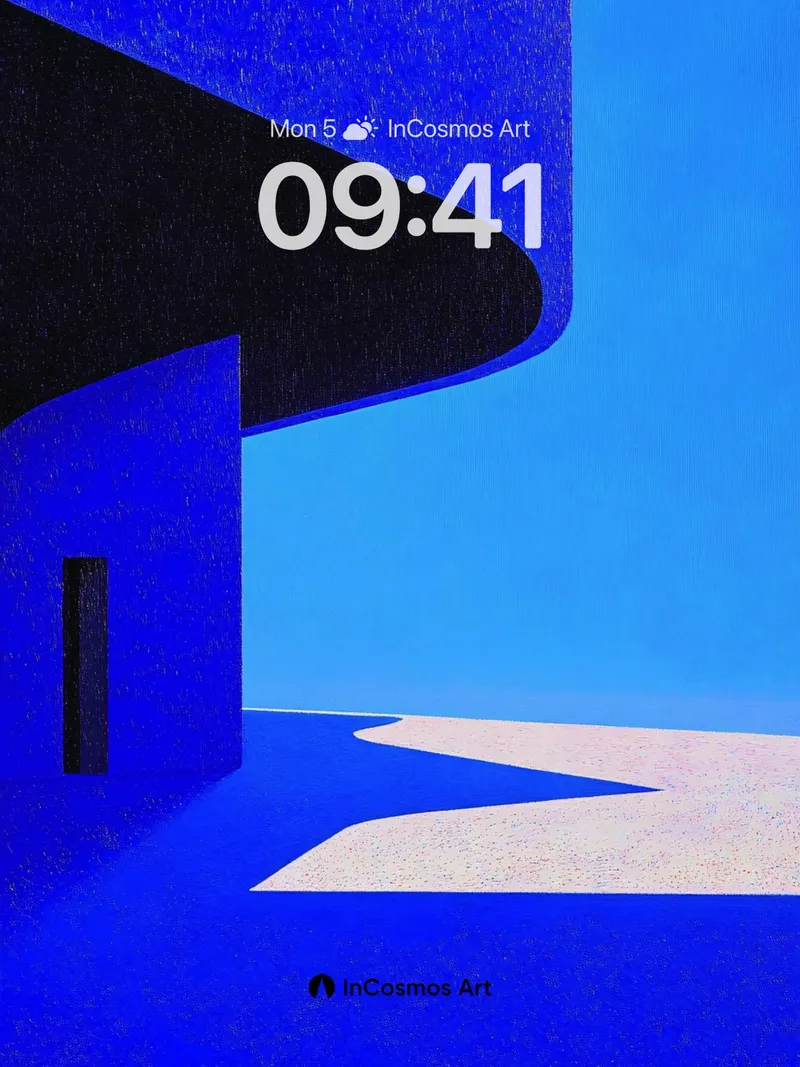
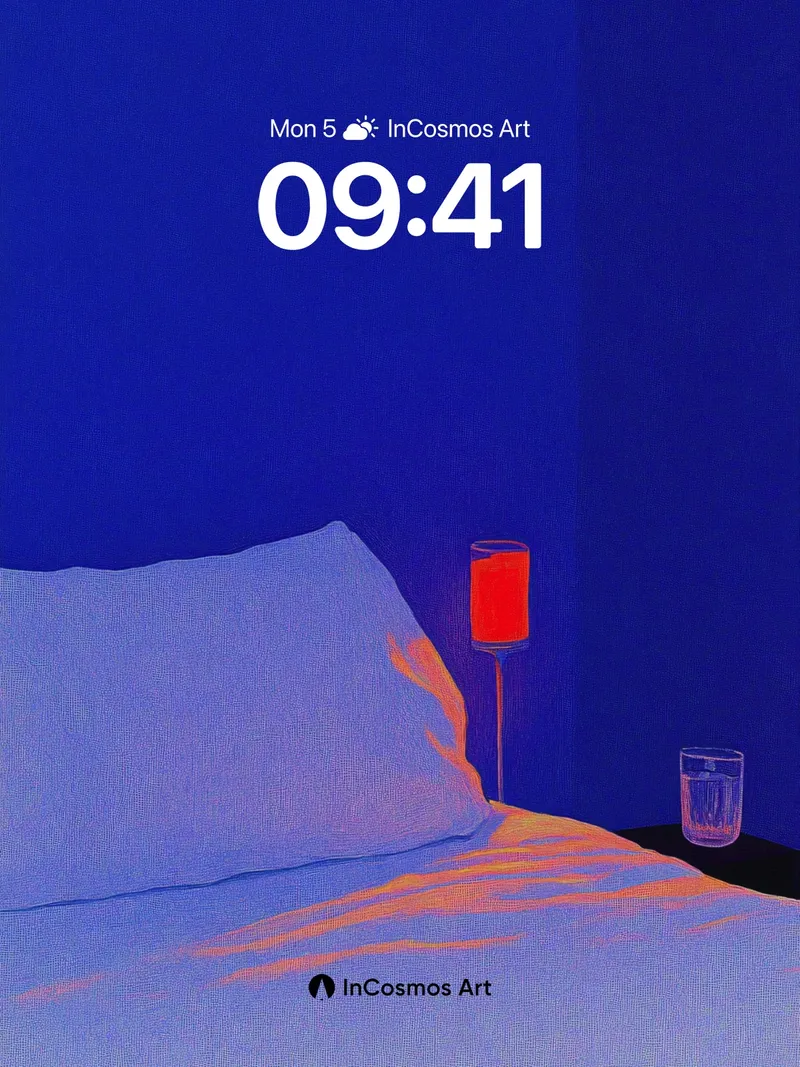
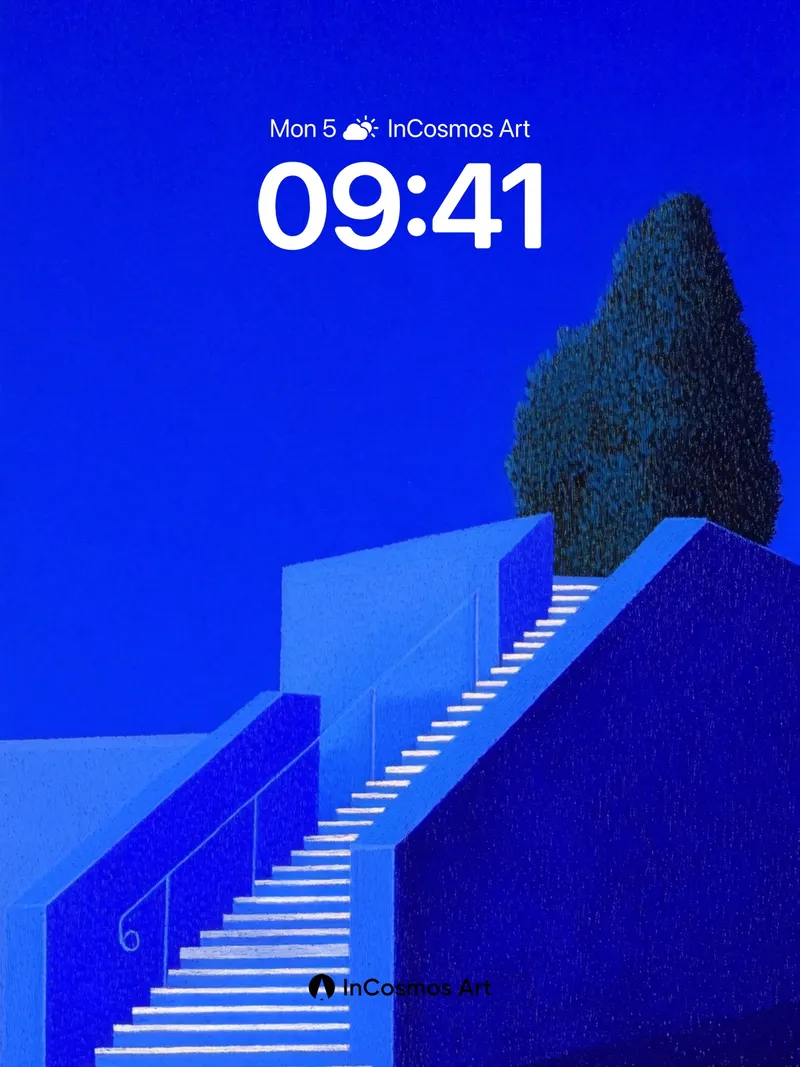
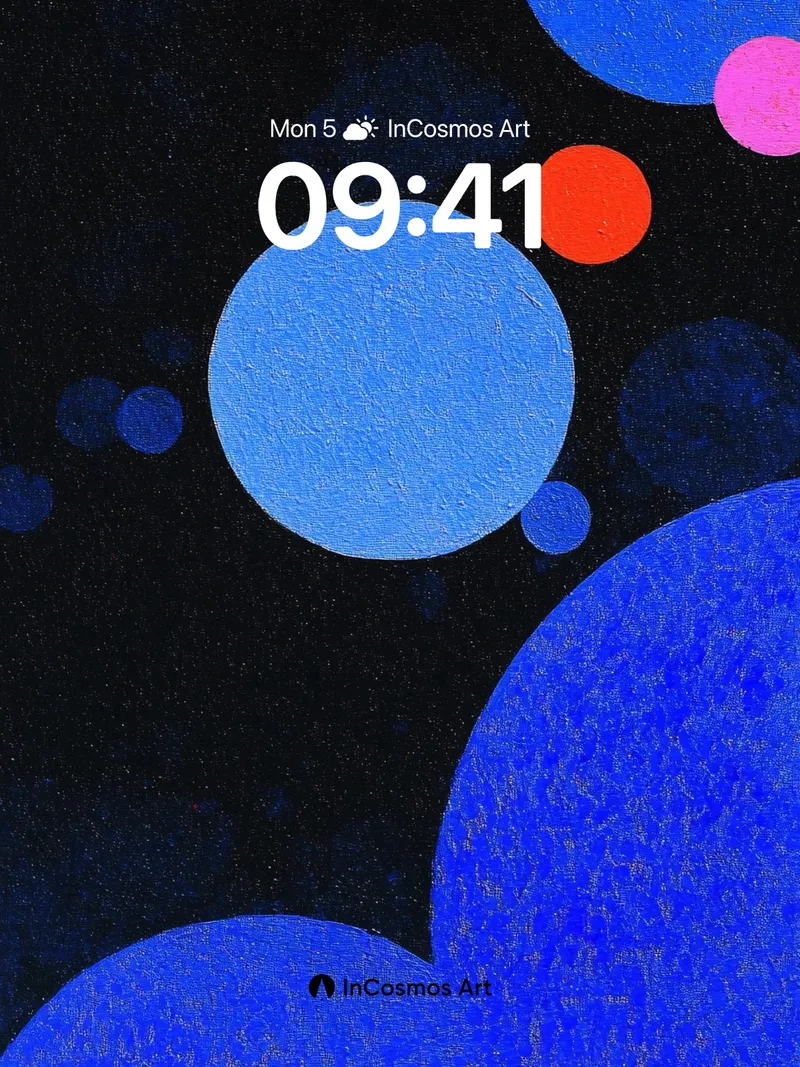
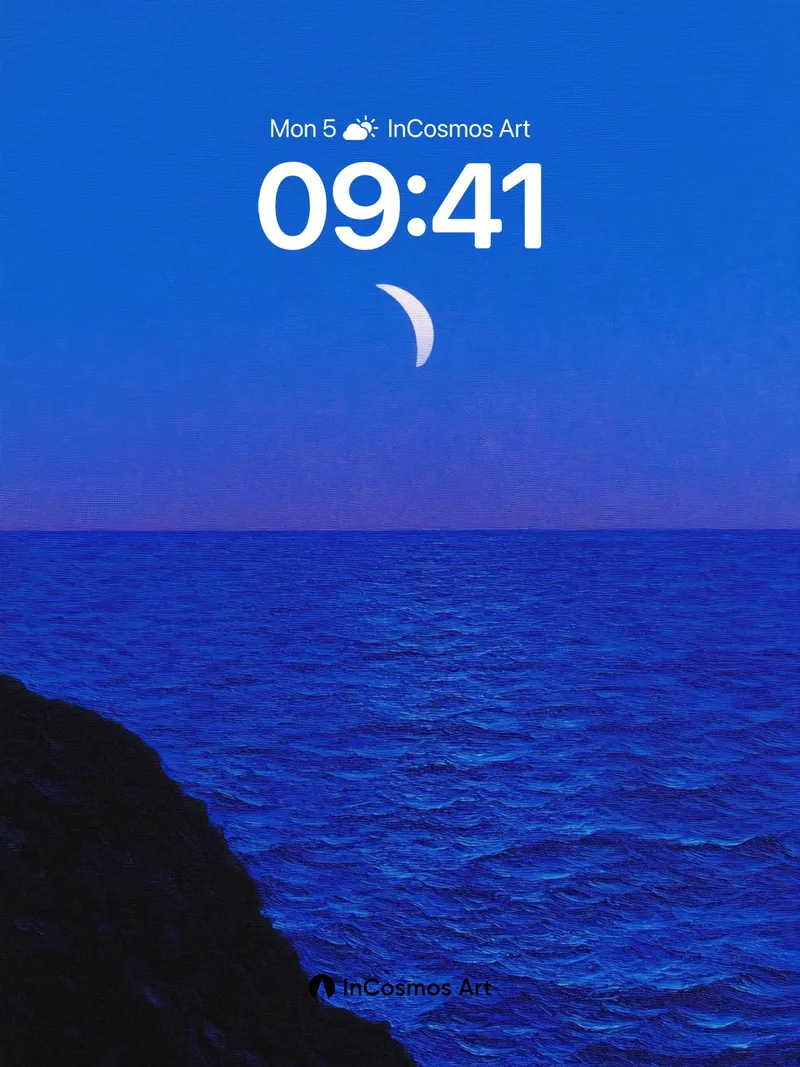
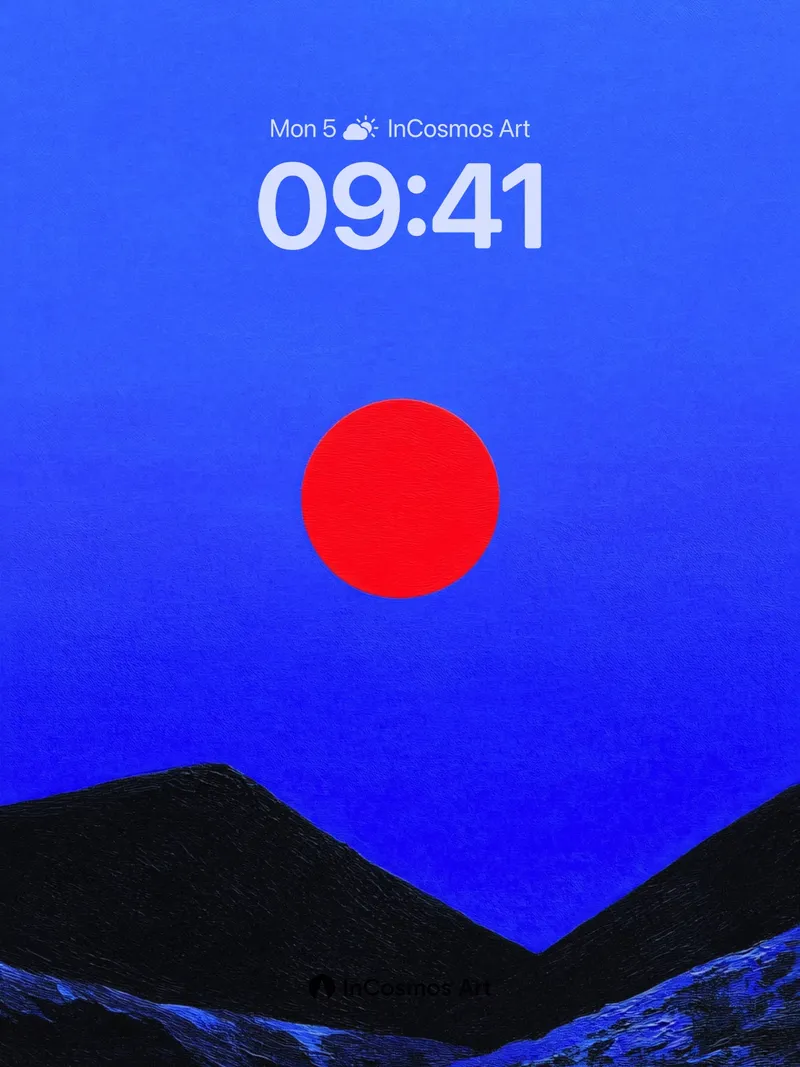
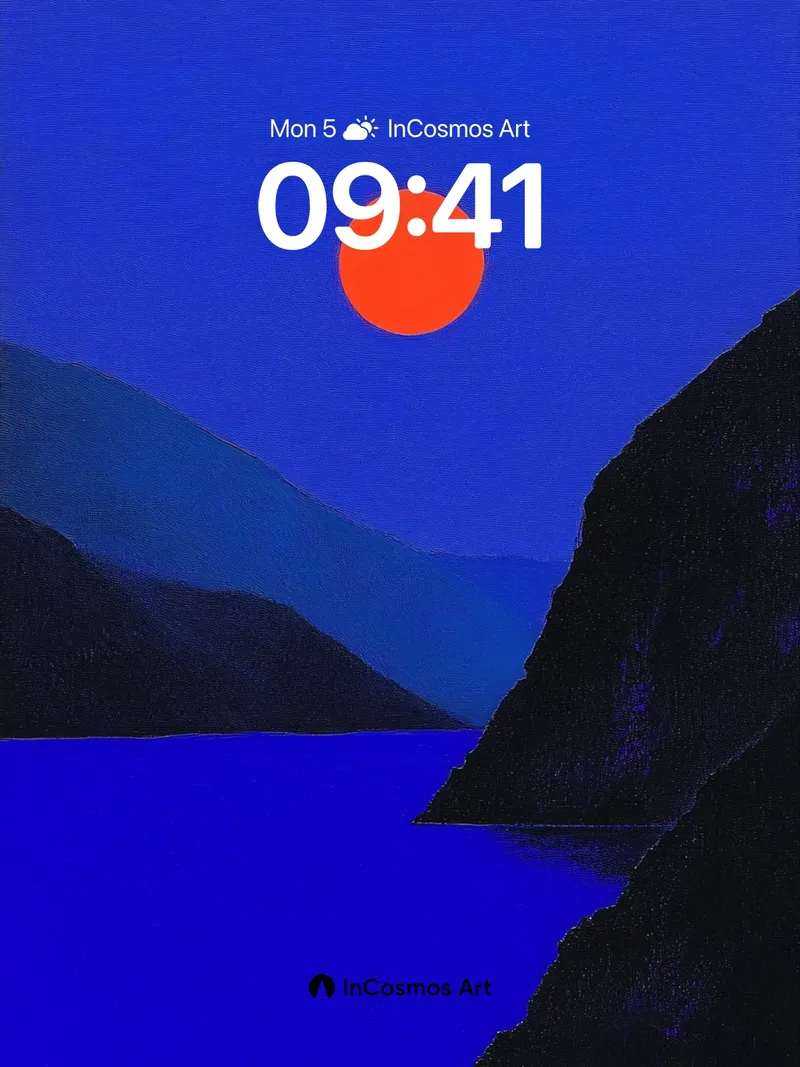
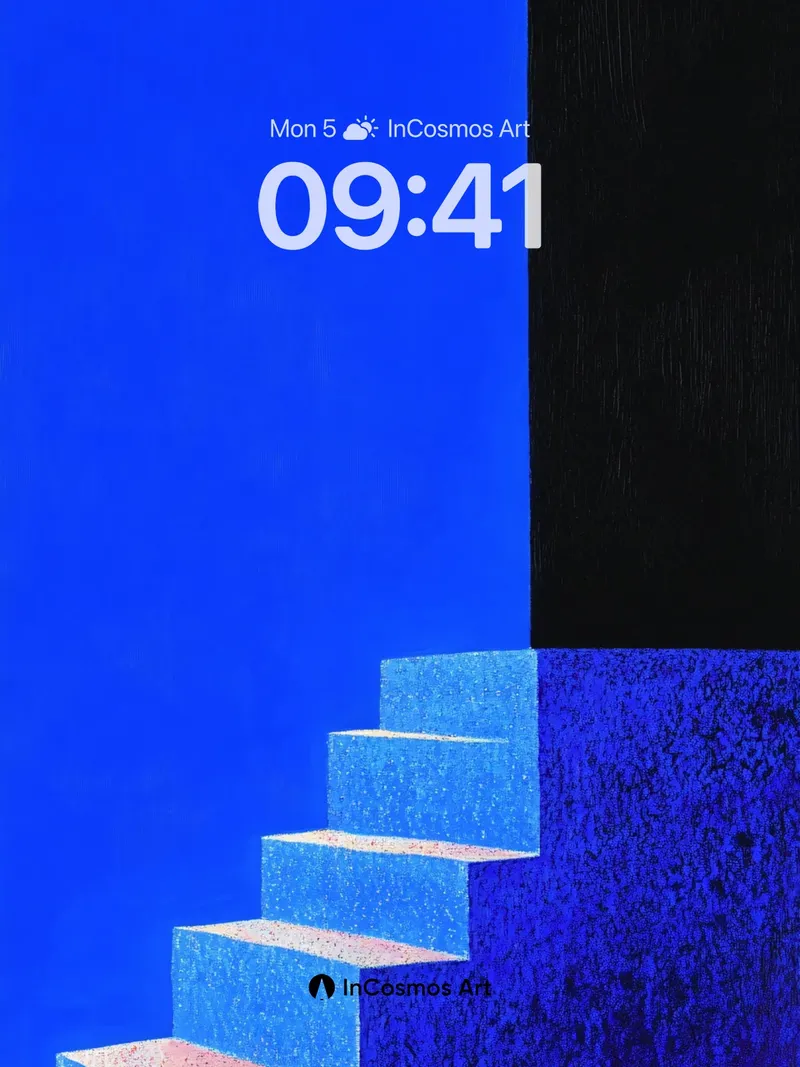
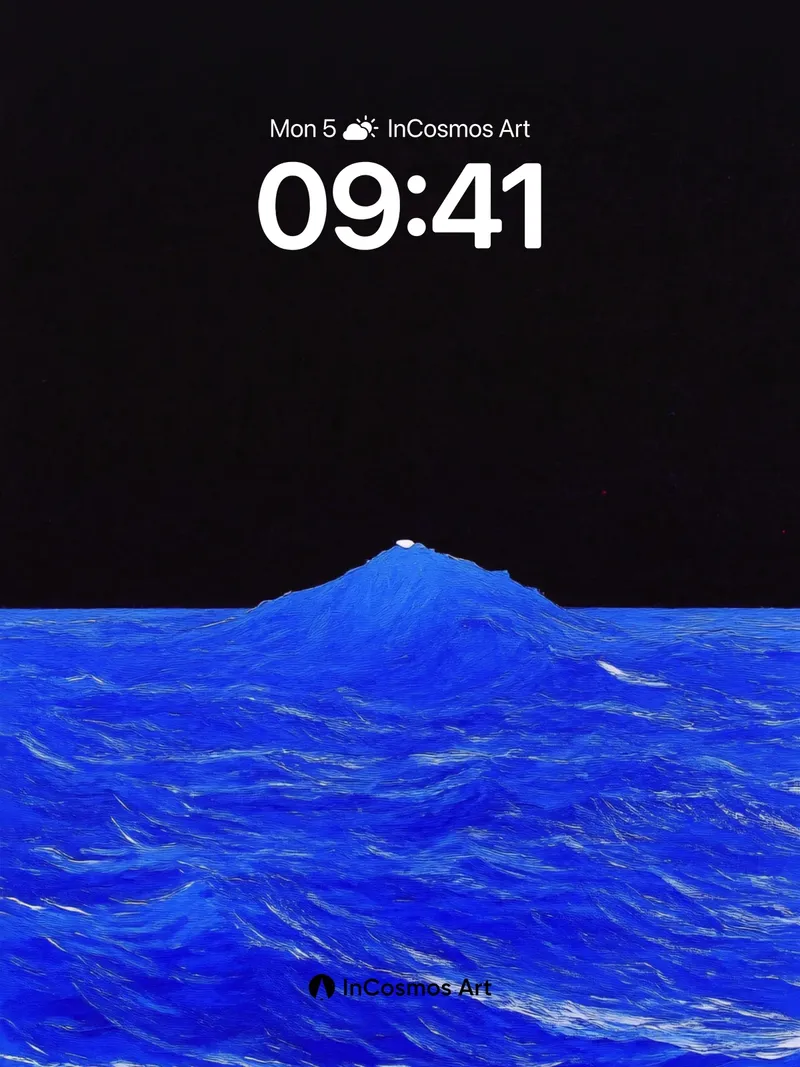
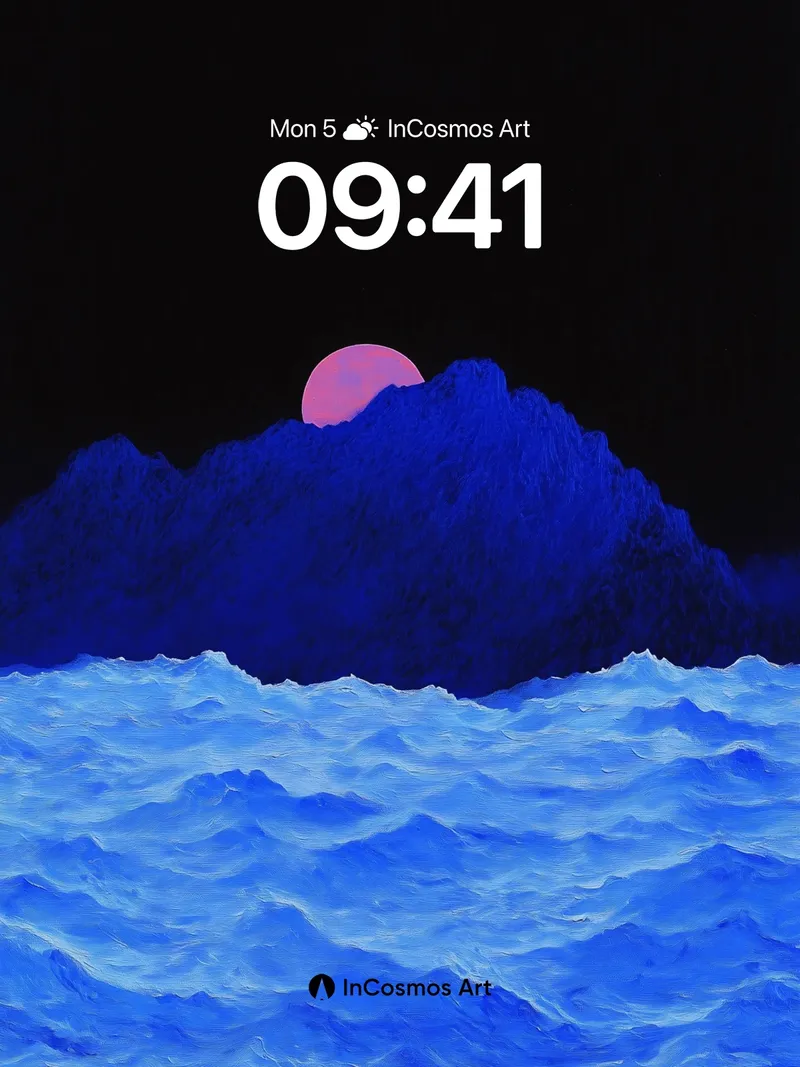
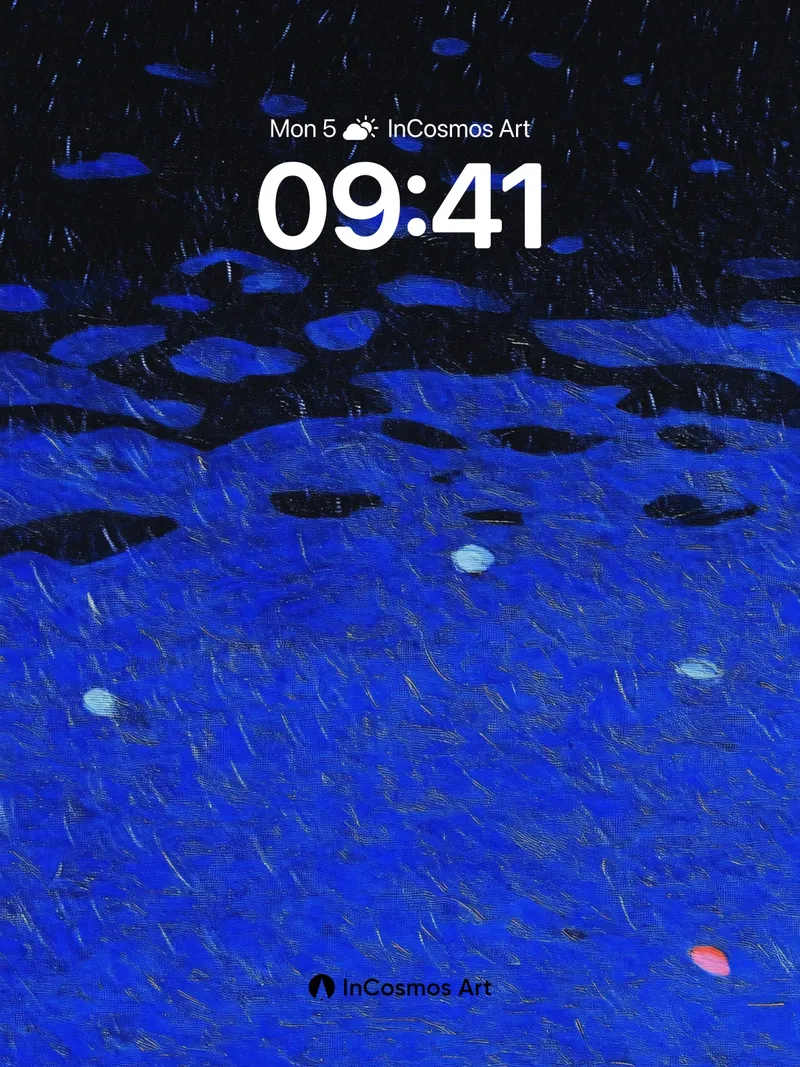
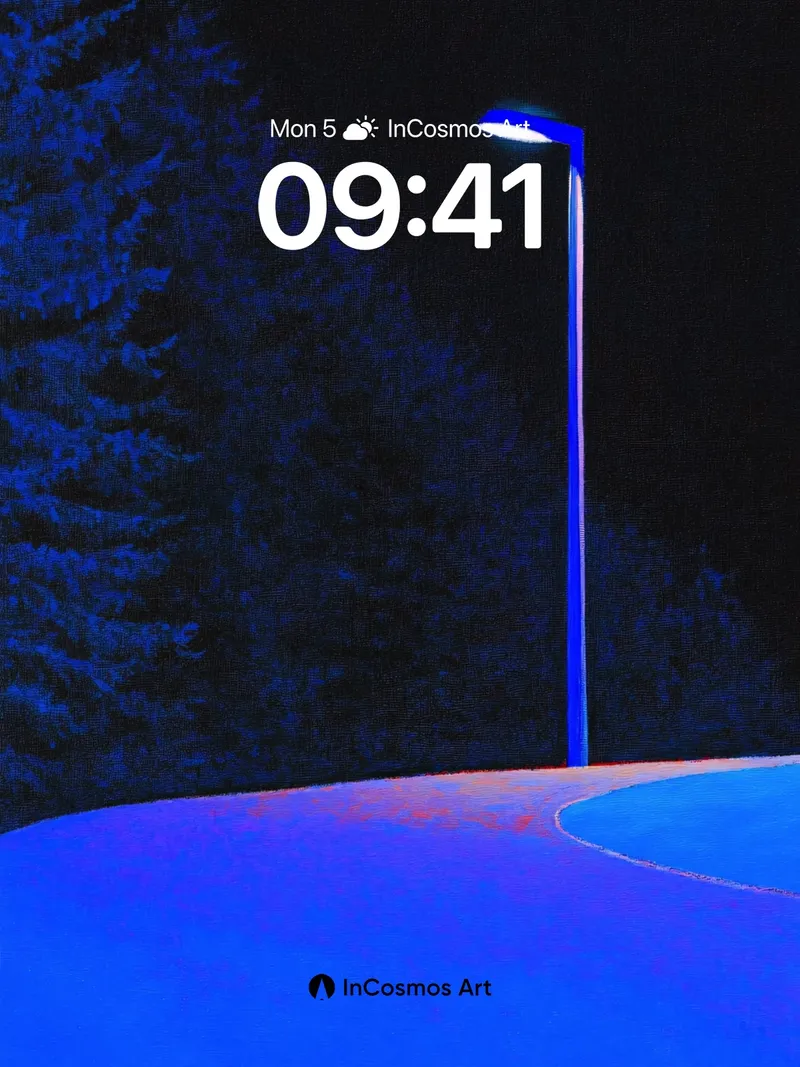
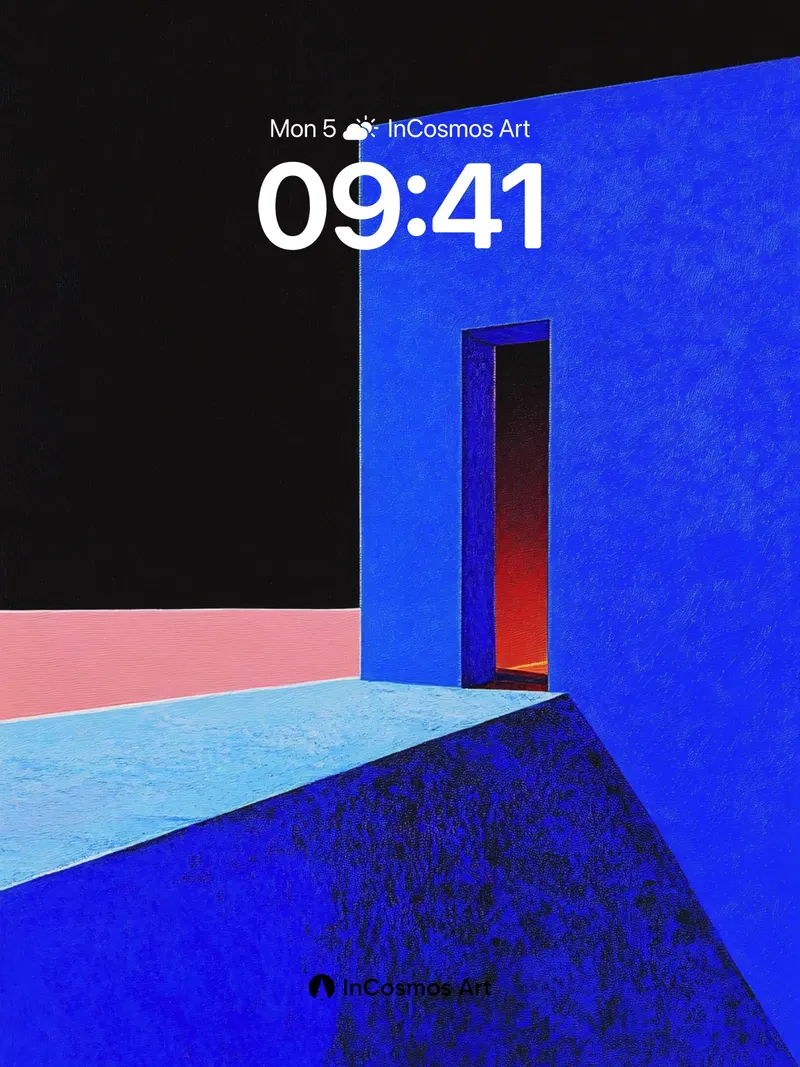
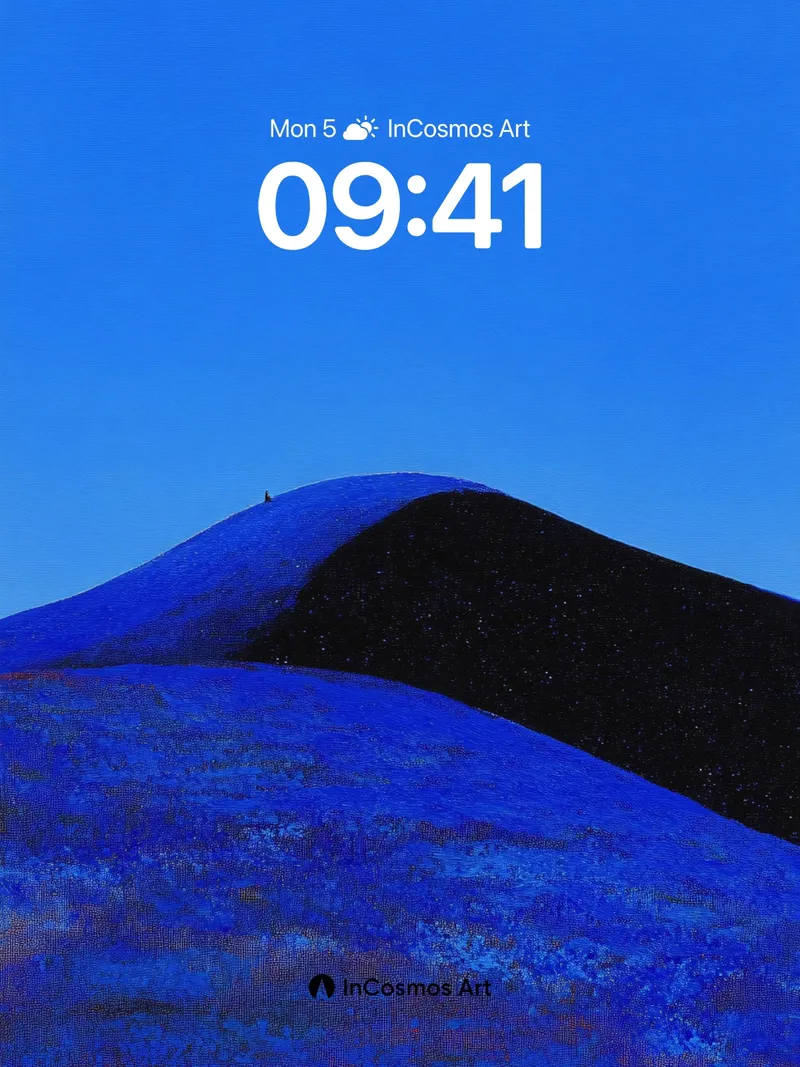
As night descends, the world slips into a near-meditative silence. Blue becomes the dominant hue—not as a symbol of coldness, but as an emotional vessel holding solitude, contemplation, and quiet tenderness. Within this blue expanse, a red sun or moon emerges with striking clarity, creating visual contrast while emotionally balancing light and darkness, presence and absence. This chromatic structure is more than aesthetic; it mirrors the inner landscape of modern consciousness. Streetlamps cast solitary glows in urban voids, a red bedside lamp warms a private chamber, mountains and oceans stretch under deep blue, as if time has paused. Together, these scenes form an atmosphere of solitude, observation, and self-awareness. Humanity appears small before nature, yet finds belonging within the interplay of light and shadow.
Ritual of Light
Light transcends functionality to become a ritualistic medium. Whether a distant red orb or a solitary streetlamp, its presence punctuates space and marks the passage of time. This intervention is not abrupt but solemn and measured against the deep blue backdrop. Light asserts order, hinting at humanity’s resistance to darkness. When a figure stands atop a mountain, diminished in scale, light draws them into a cosmic narrative, forging a subtle bond between individual and infinity.
The Language of Color
Blue signifies depth; red denotes energy. Their juxtaposition creates tension without conflict. This relationship reflects the modern psyche’s negotiation between reason and emotion. There is a yearning for calm and structure, yet an irrepressible pull toward passion and desire. Abstract circular forms—floating spheres—suggest multiple universes or layers of inner awareness. They do not denote place but invite entry into internal realms.
The Aesthetics of Solitude
Solitude is no longer seen as deficiency, but as essential condition. In empty streets, vast mountains, silent bedrooms, isolation becomes fertile ground for thought. These spaces lack noise, only light flows and color breathes. They call upon the observer to halt routine rhythms and re-experience the texture of existence. The night’s blue is both the afterglow of urban civilization and the canvas on which the soul emerges.
Emotional Geography
Topography transforms into an emotional map. Mountain ridges resemble silent spines, lakes mirror the weight of sky. Waves ripple under moonlight, echoing memory. Each terrain carries distinct emotional charge—from repression to release, from isolation to connection. This is a silent journey of feeling, guided by light, culminating in the innermost self.