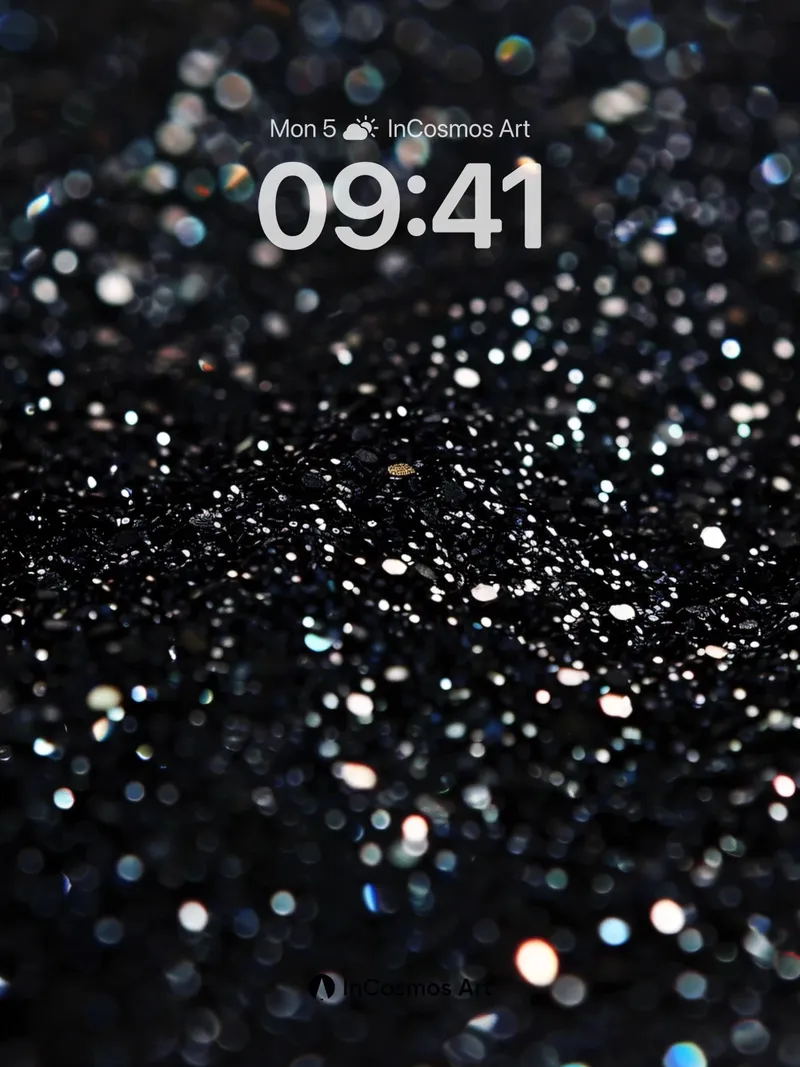
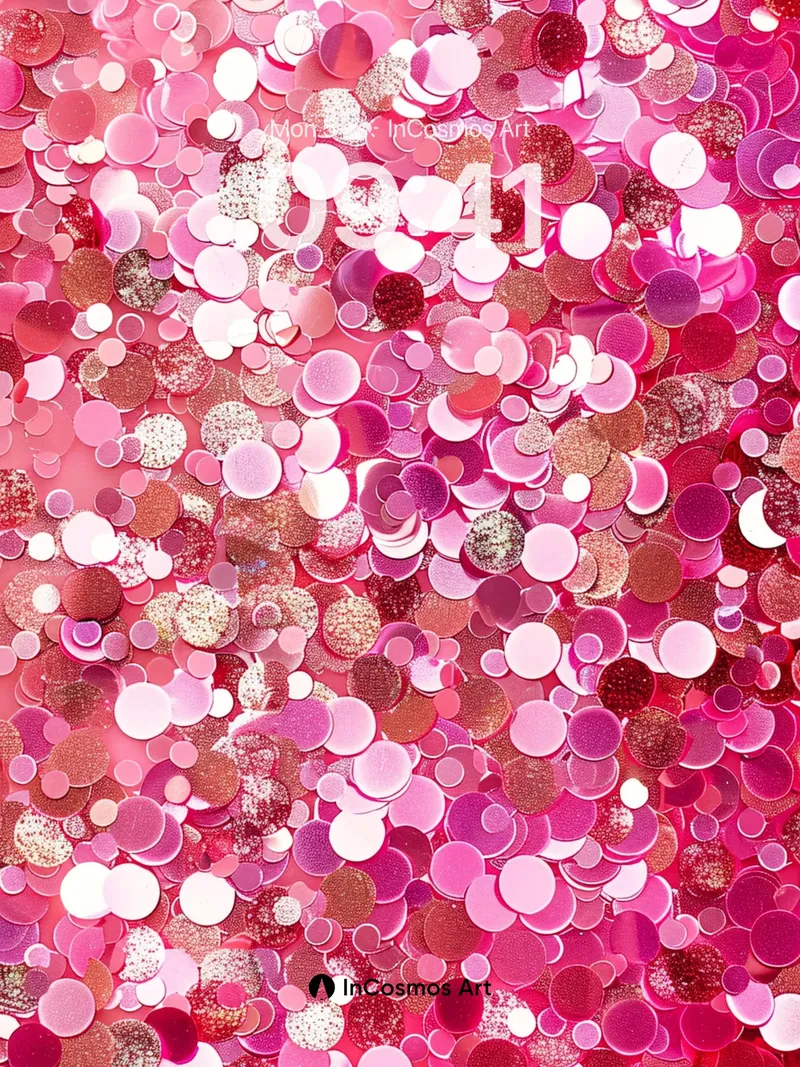
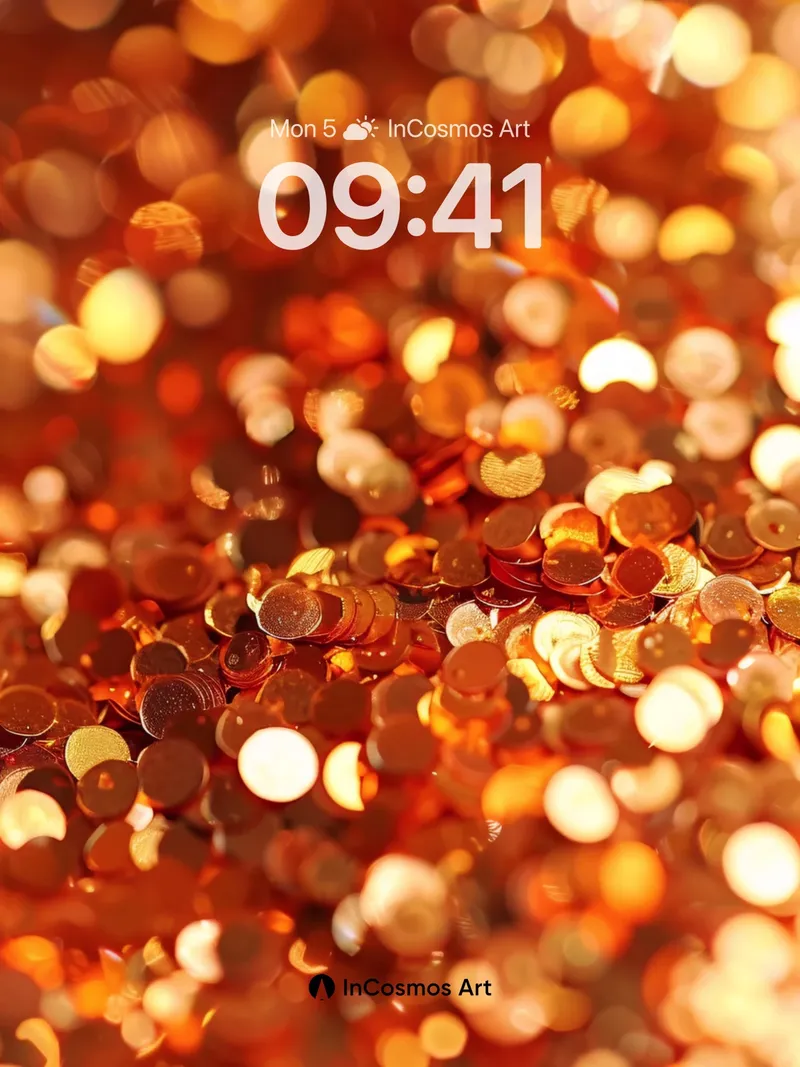
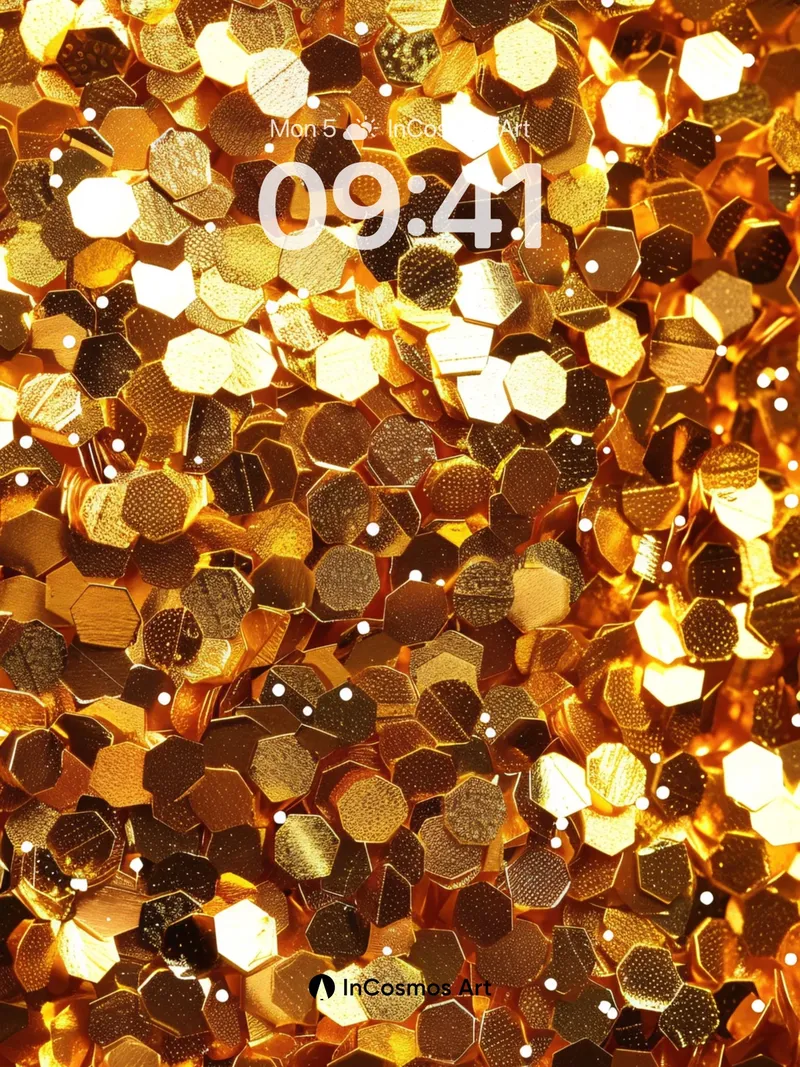
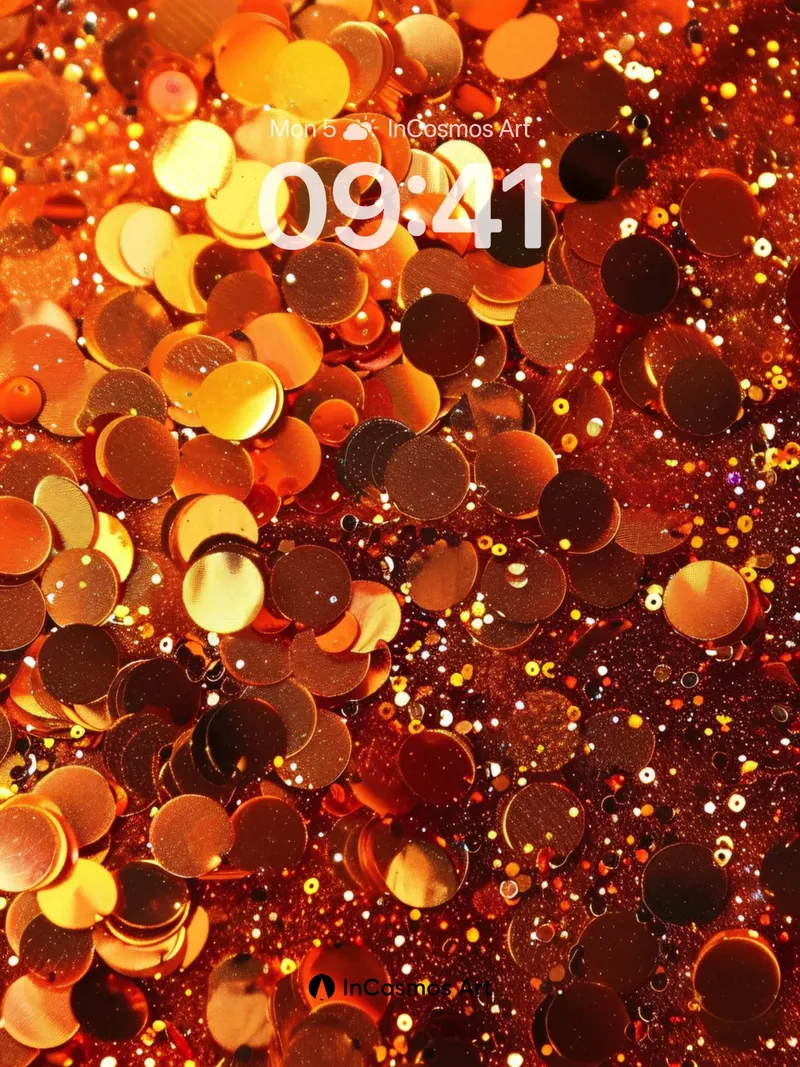
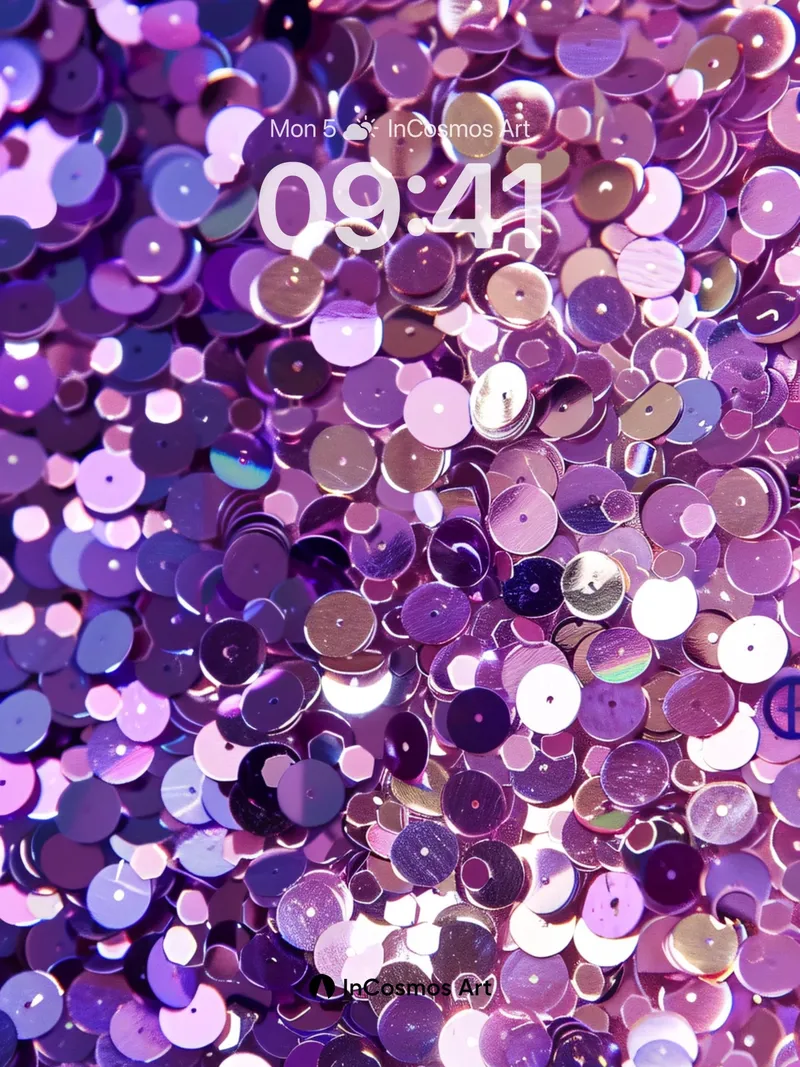
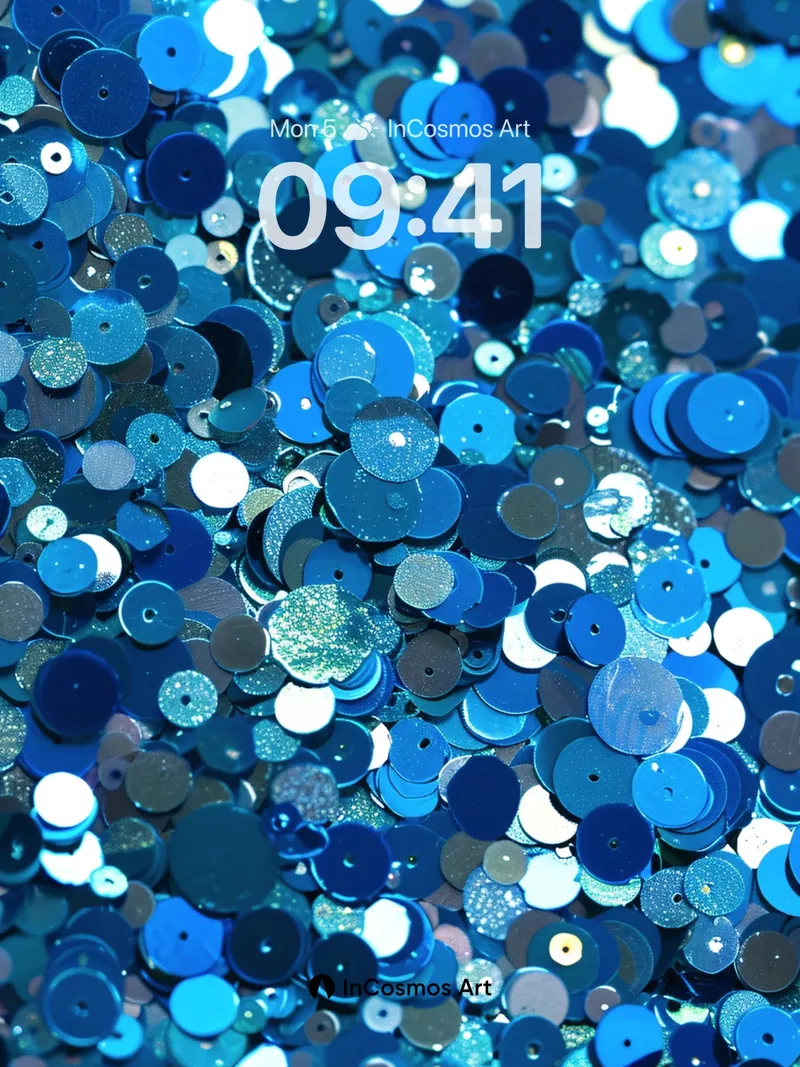
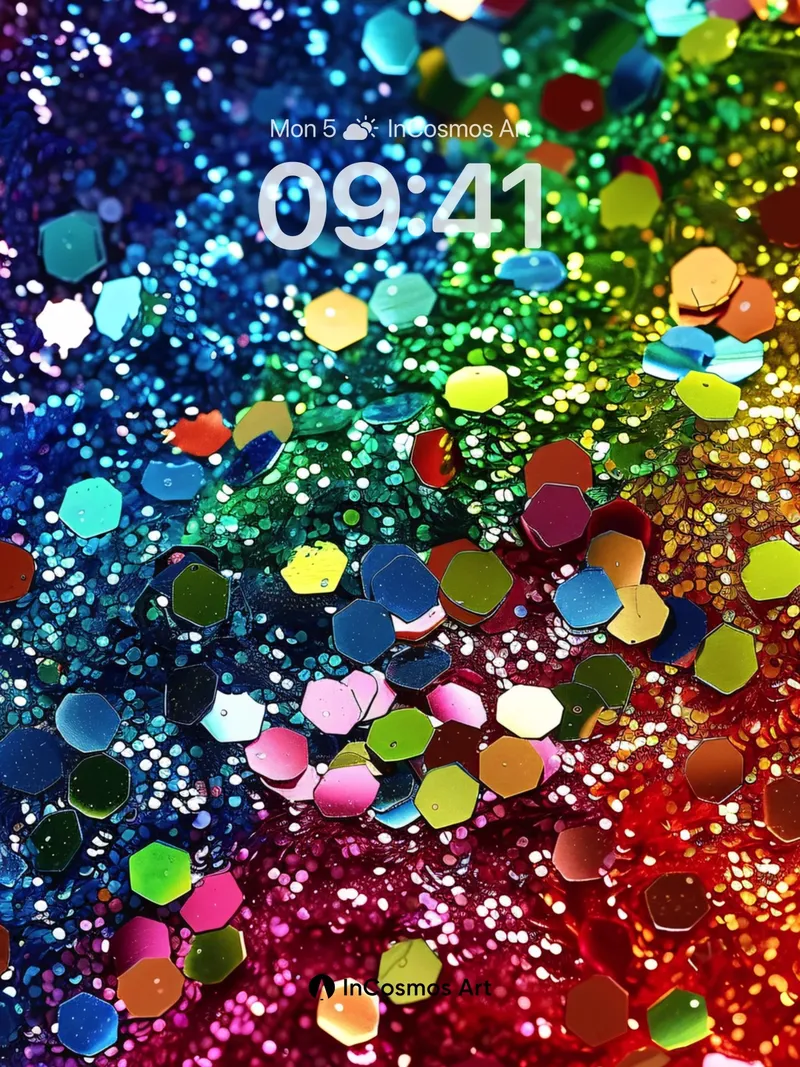
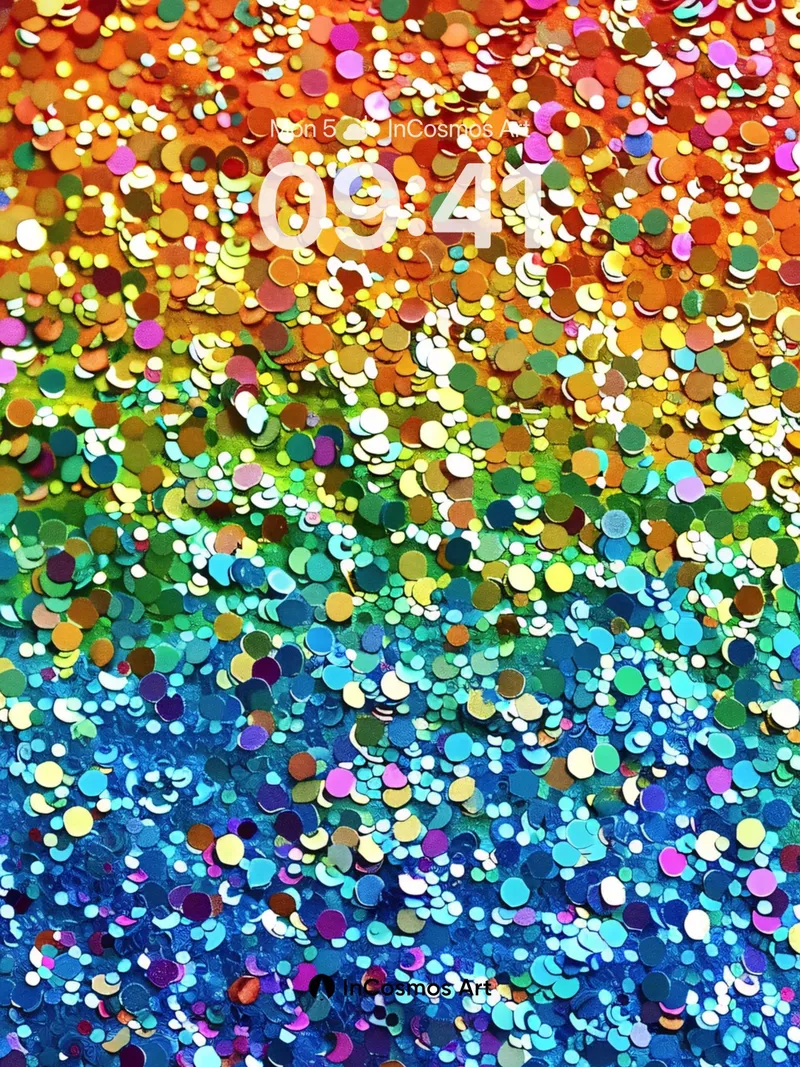
Color gains weight through the accumulation of tiny particles. When light passes through these flat circular facets, reflection ceases to be a passive phenomenon and becomes an active, almost aggressive release of energy. This dense materiality evokes the neon glow of a city night or a festival memory amplified to an extreme degree. Here, color is not merely a visual attribute but a physical presence, an entity capable of occupying space and altering atmosphere.
The Order of Particles
Each disc acts as an independent reflection unit. They are tightly packed, overlapping one another to form a microstructure that appears chaotic yet remains orderly. This structure resembles cellular tissue or a digital pixel grid. In the golden zones, this sense of order is particularly evident; every facet captures light and reprojects it. This repetitive geometric form is both a result of standardized industrial production and an organic pattern of natural growth.
The Flow of Color
From warm gold to cool blue, and then to a rainbow-like gradient, the transition of color is not a smooth blend but a拼接 of different color blocks. This拼接 creates a unique rhythm. The softness of the pink zone contrasts sharply with the calmness of the blue zone, while the rainbow zone displays a carnival of colors. This sense of flow is not the flow of liquid but the flow of light, a leap of energy between different wavelengths.
The Tactility of Matter
Although these particles cannot be touched through a screen, the visual density evokes a certain tactile memory. This memory might stem from a childhood fascination with glitter stickers or the decorations scattered on the floor after a party. The texture of sequins is hard and smooth, yet their collective presence exhibits a soft fluidity. This contradiction is precisely where the charm lies: it is both solid and fluid; both static and shimmering.
The Refraction of Emotion
Different color combinations trigger different emotional responses. The warmth and luxury of gold, the romance and dreaminess of pink, the calmness and depth of blue, the diversity and inclusivity of the rainbow. These emotions are not abstract concepts but are transmitted through specific physical properties of color. The refraction and reflection of light on the surface of these particles are essentially encoding and decoding emotions. What the viewer receives is not just color but an emotional signal processed through physics.