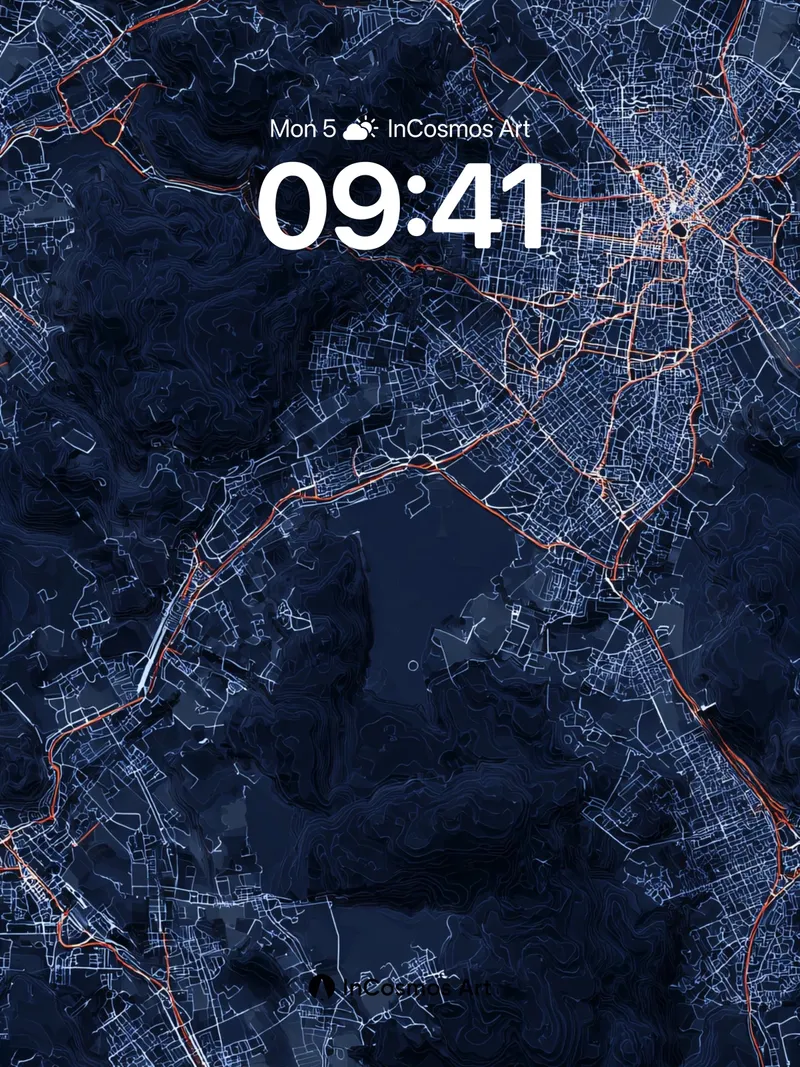
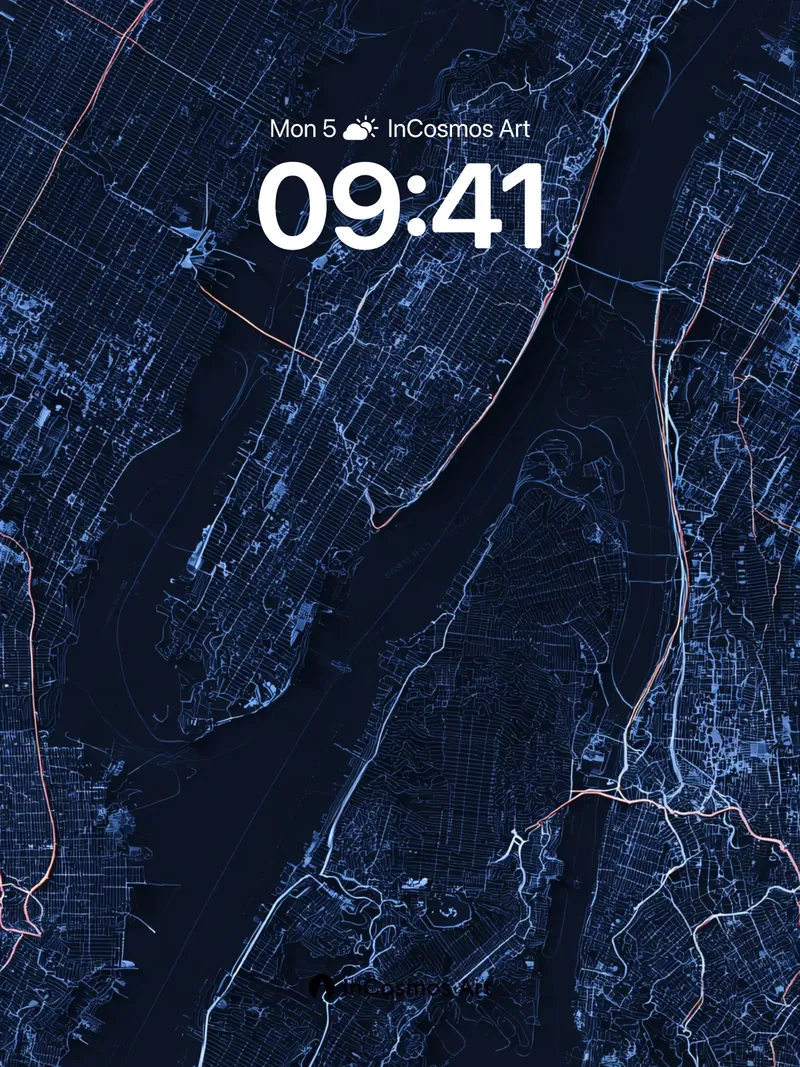
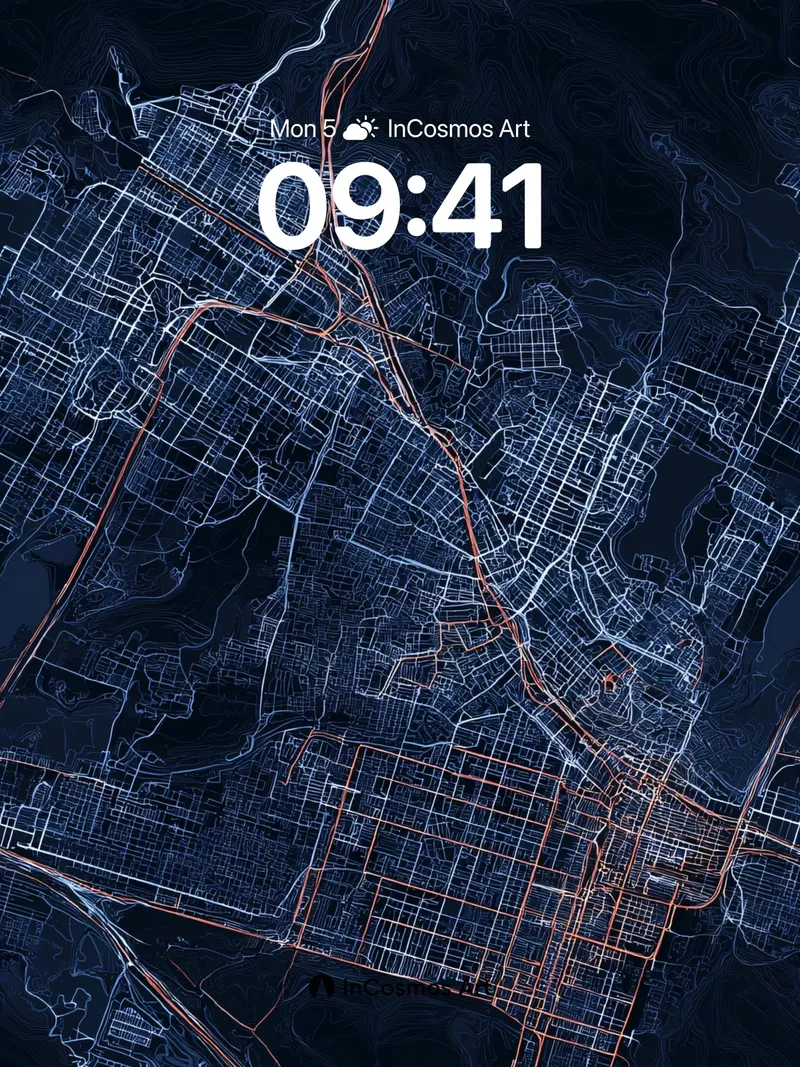
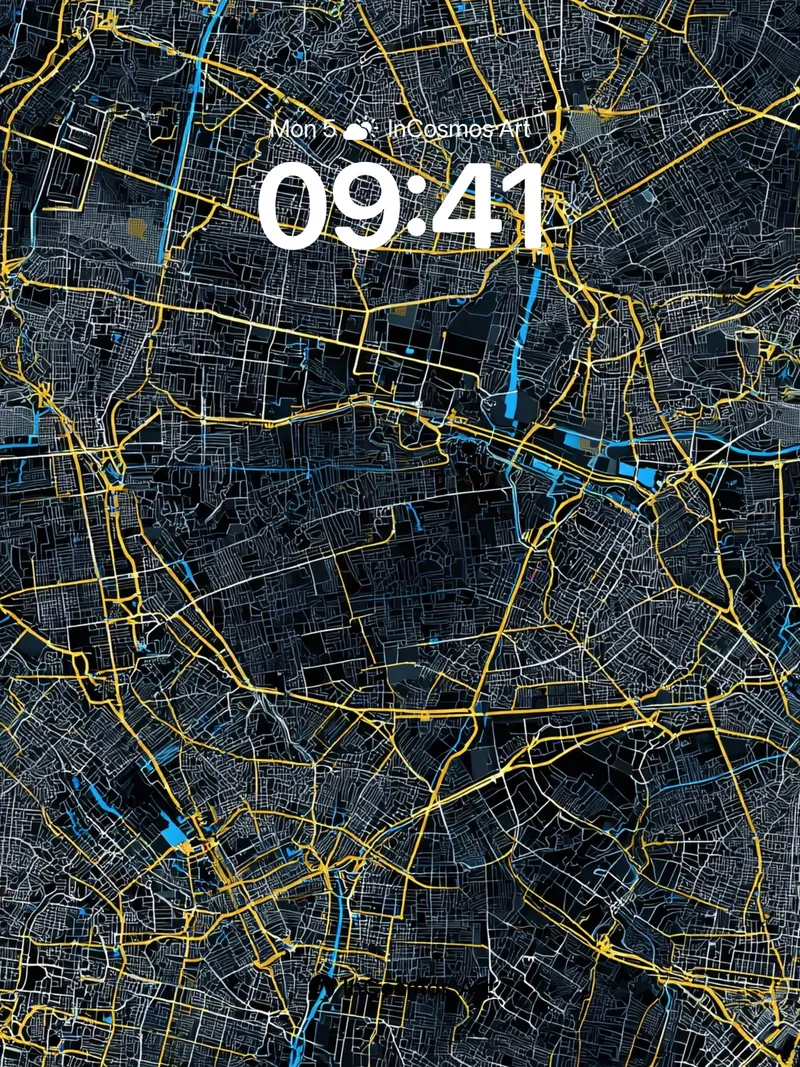
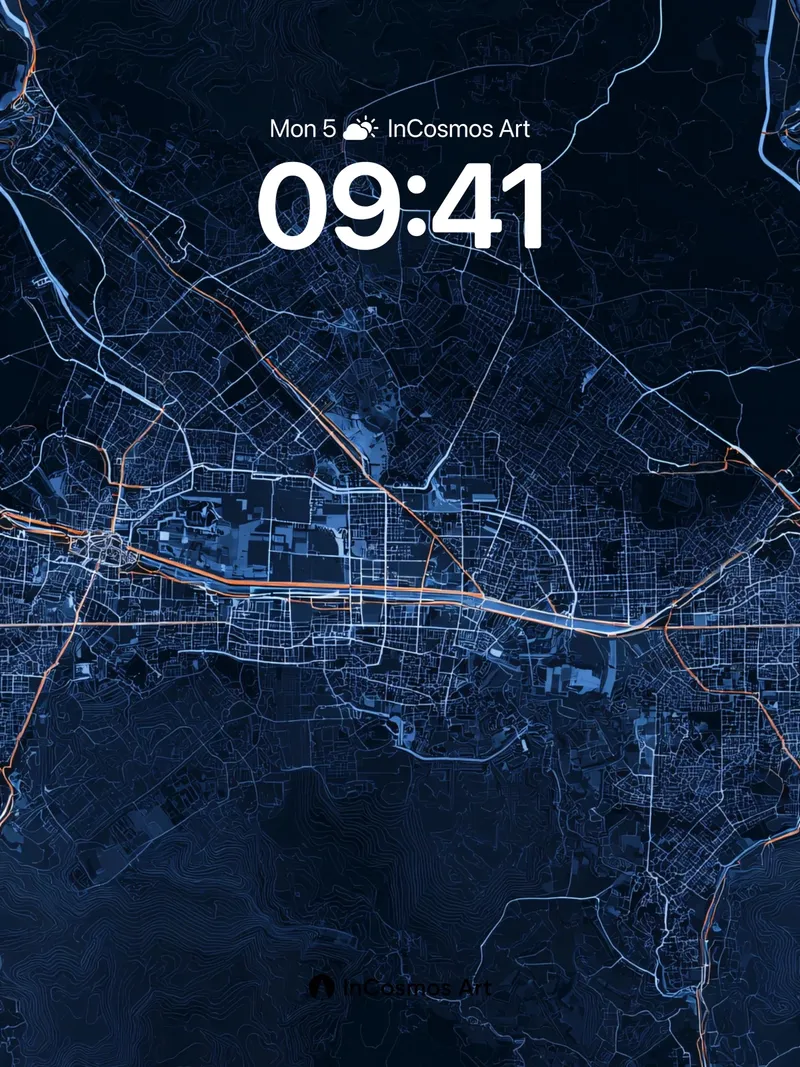
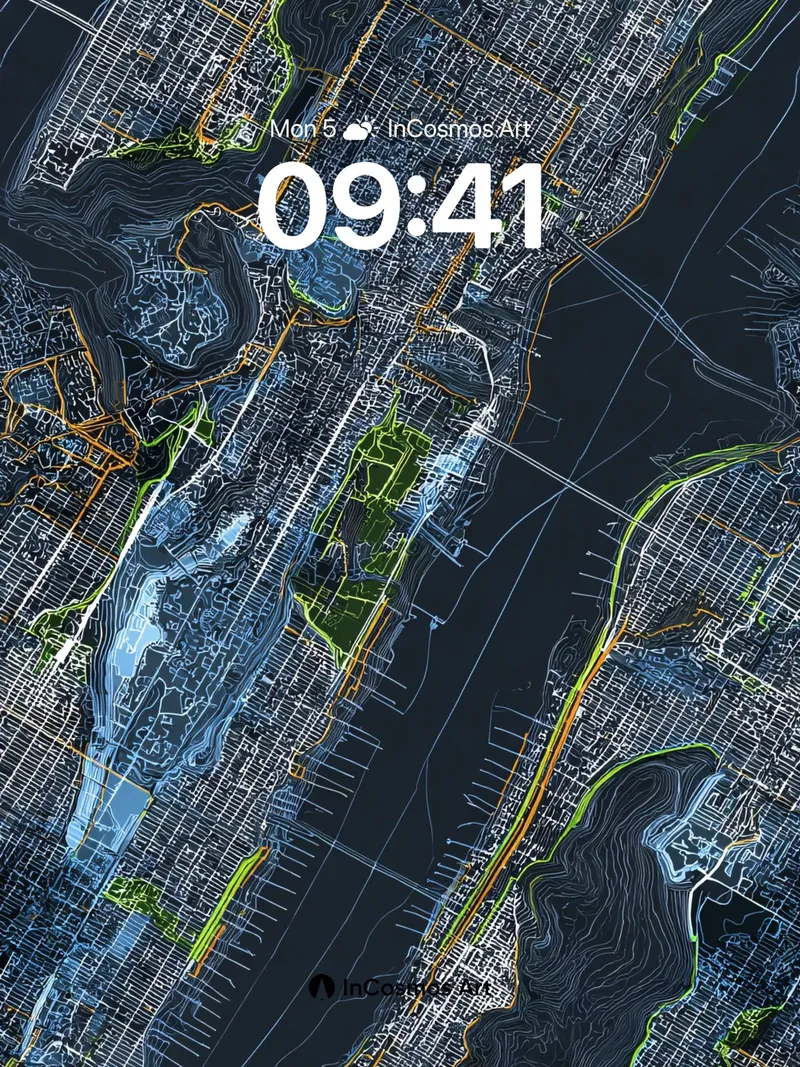
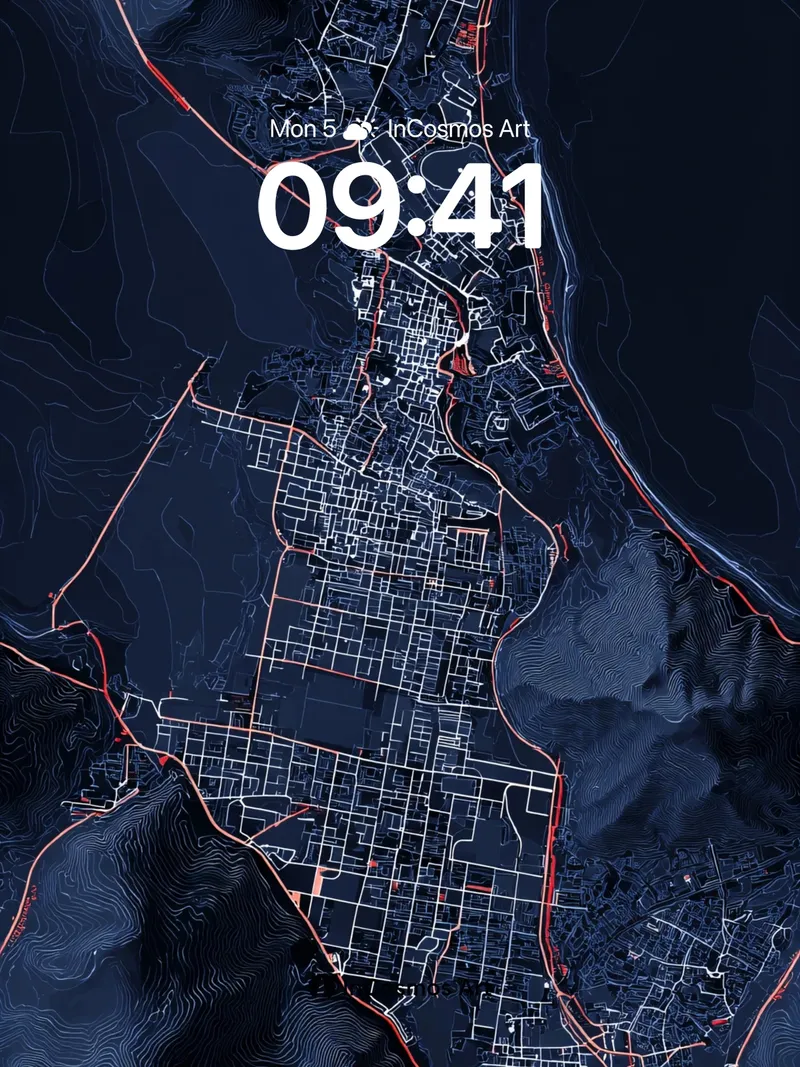
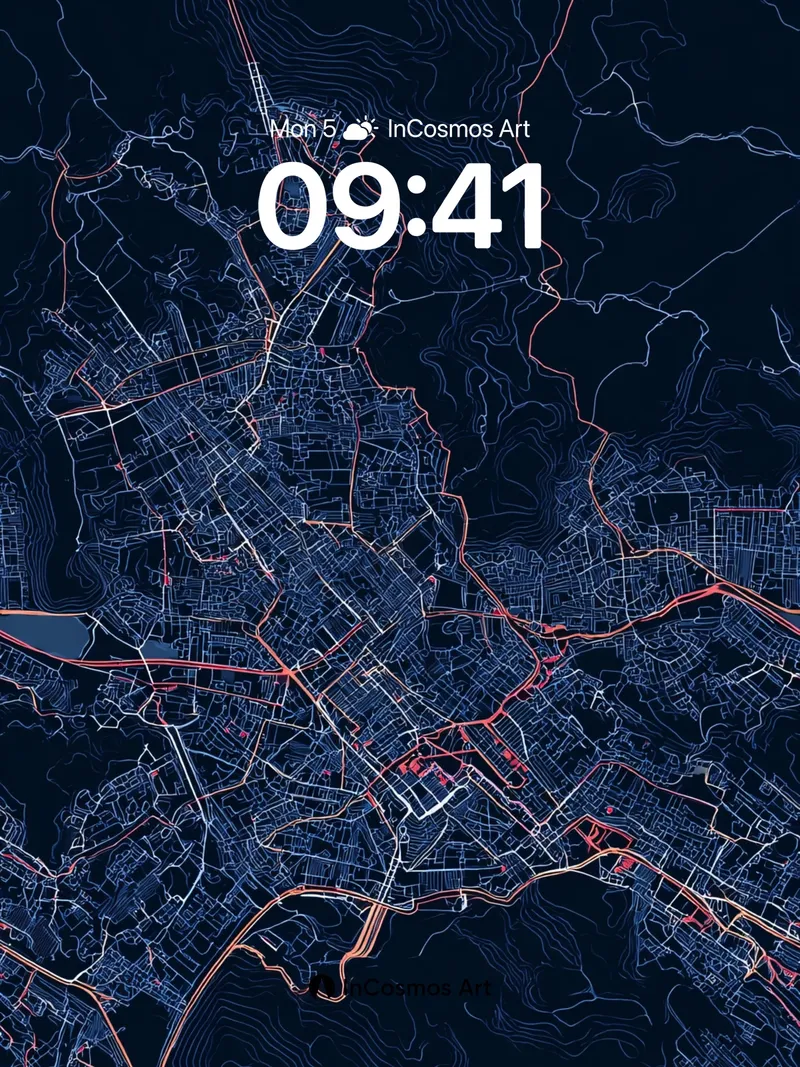
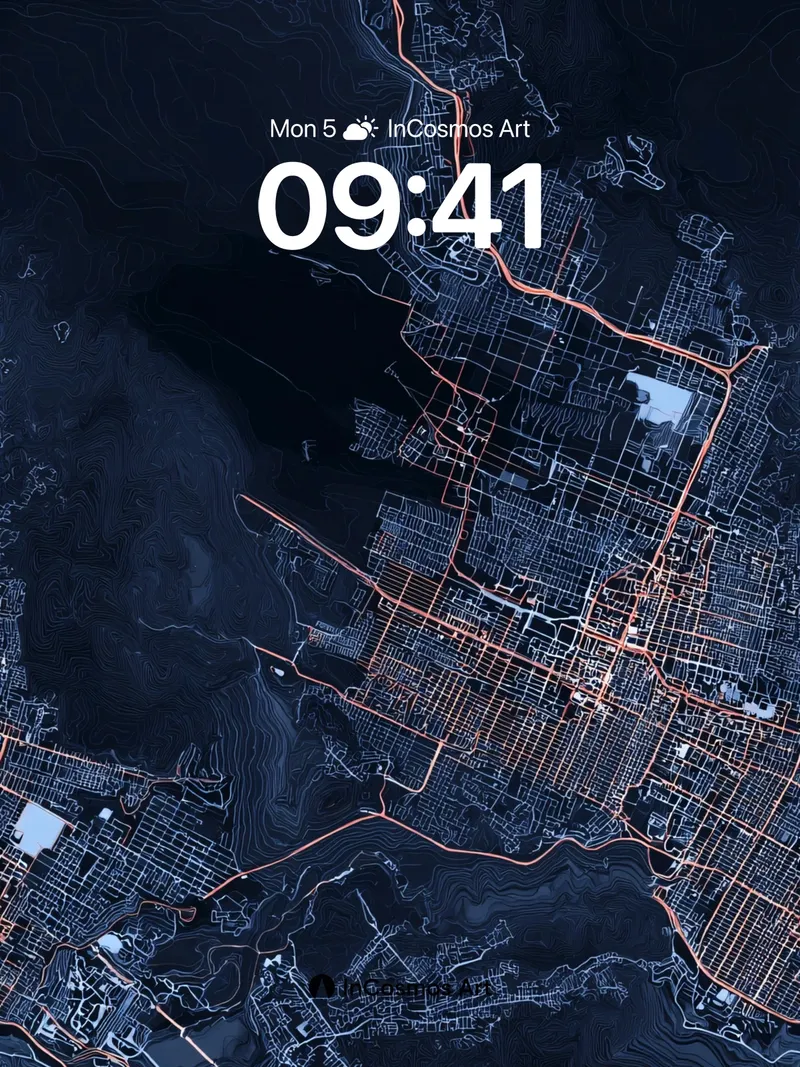
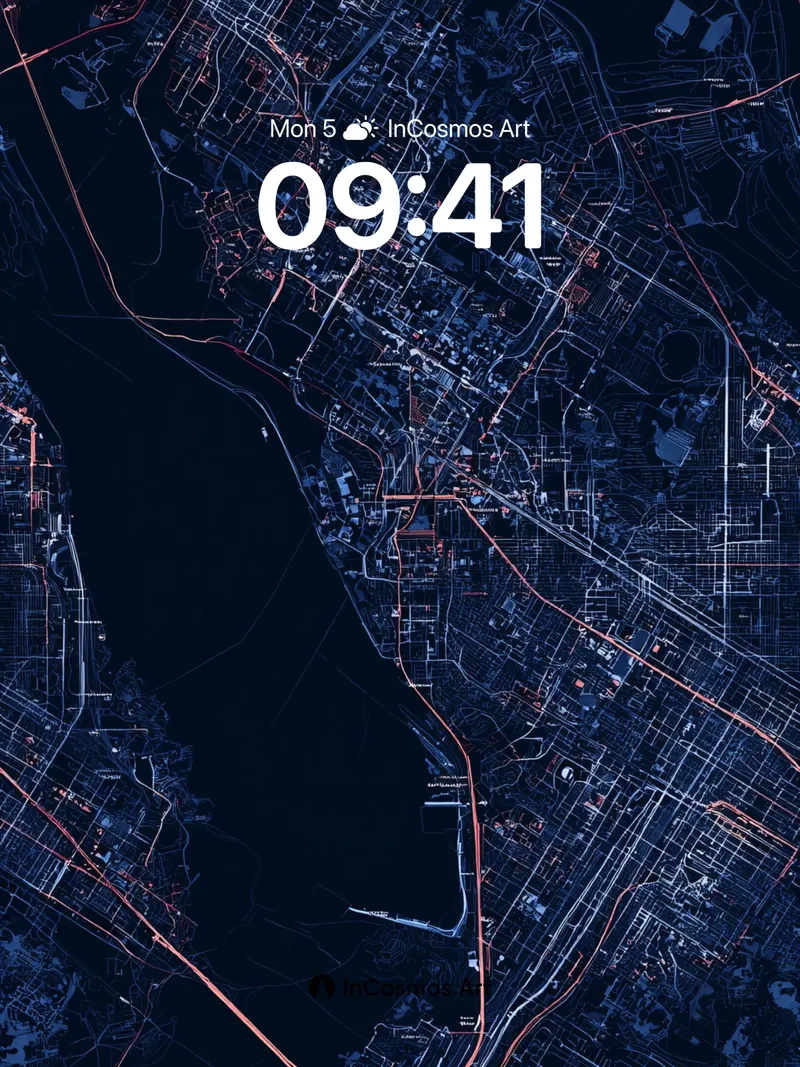
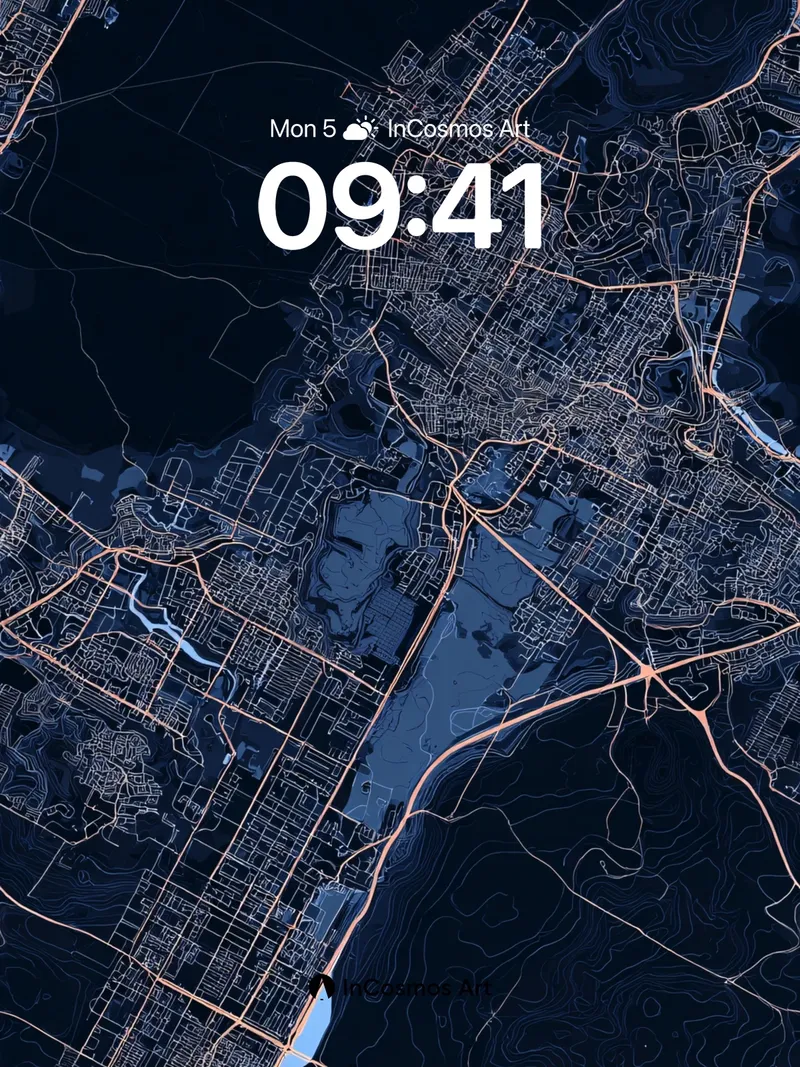
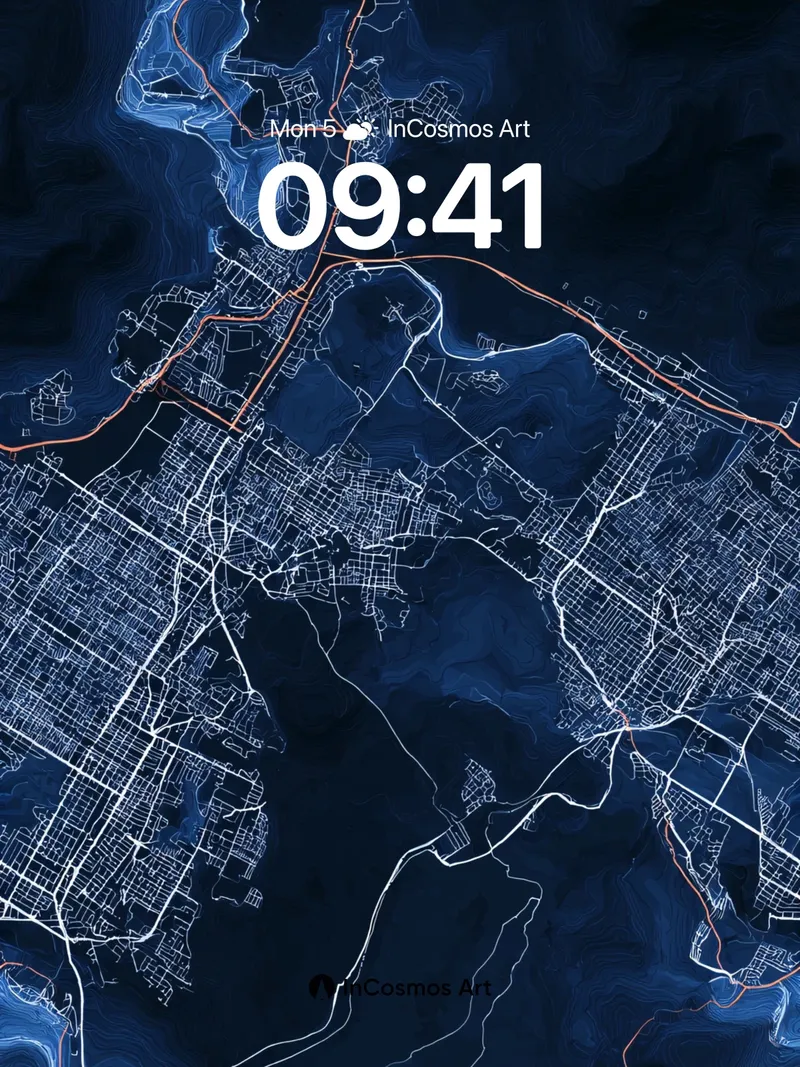
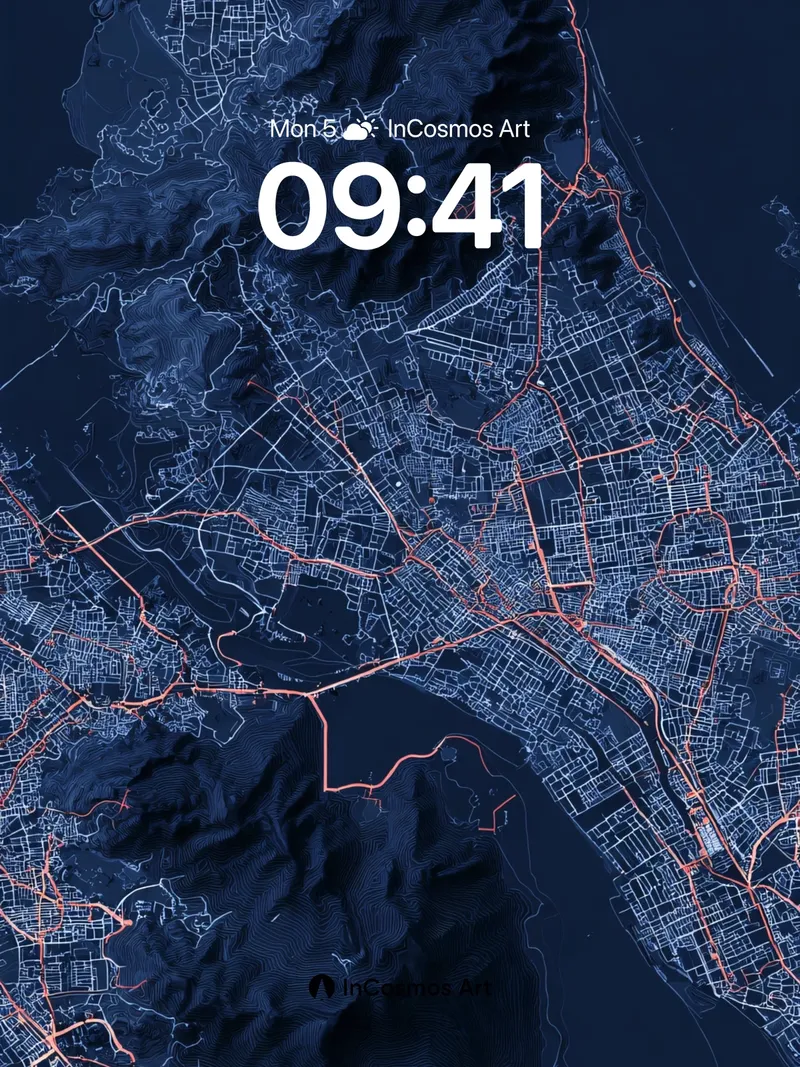
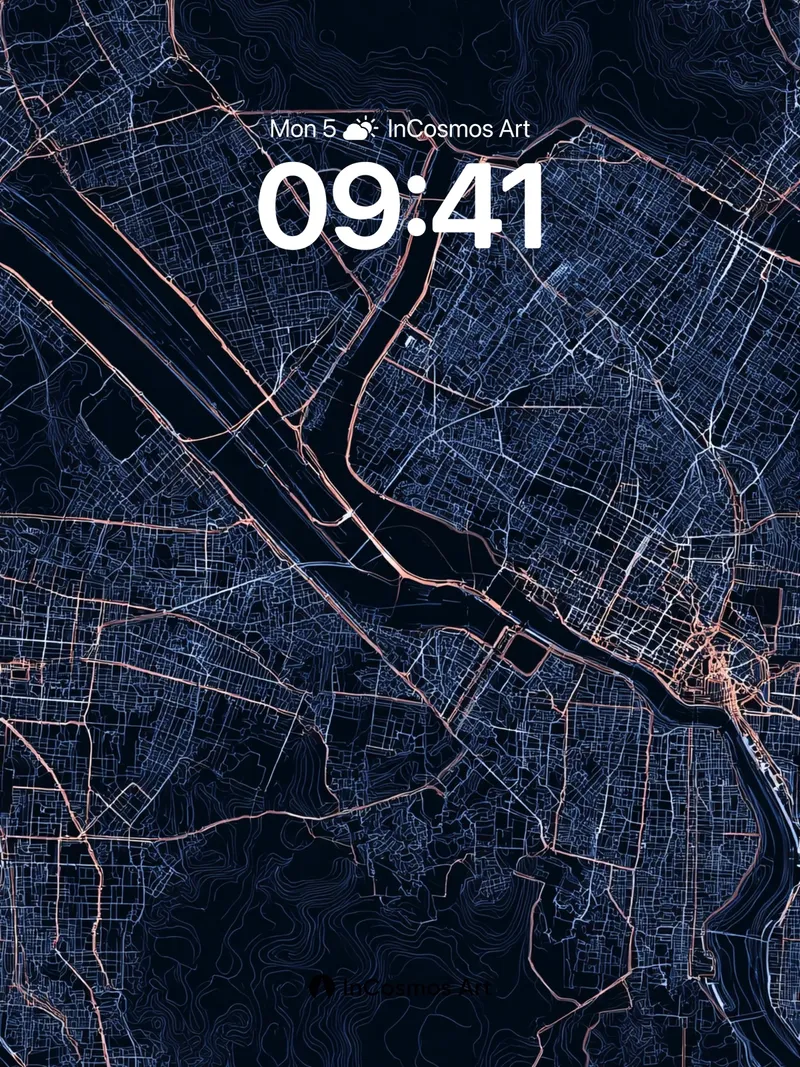
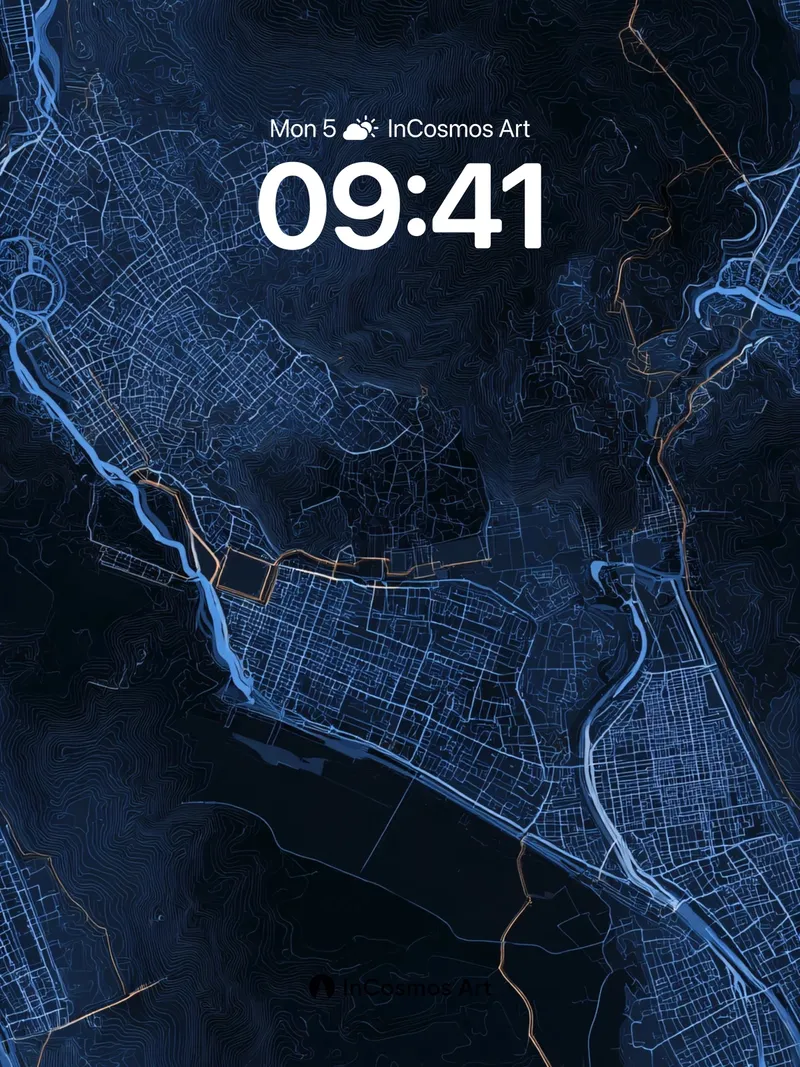
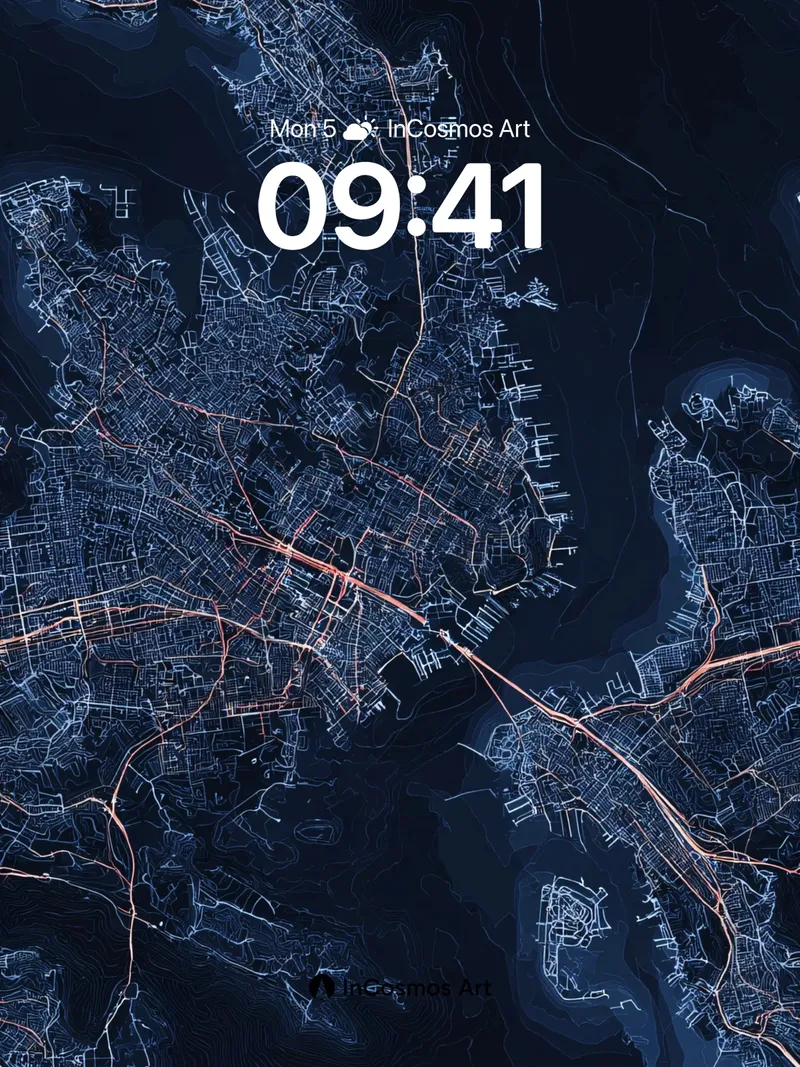
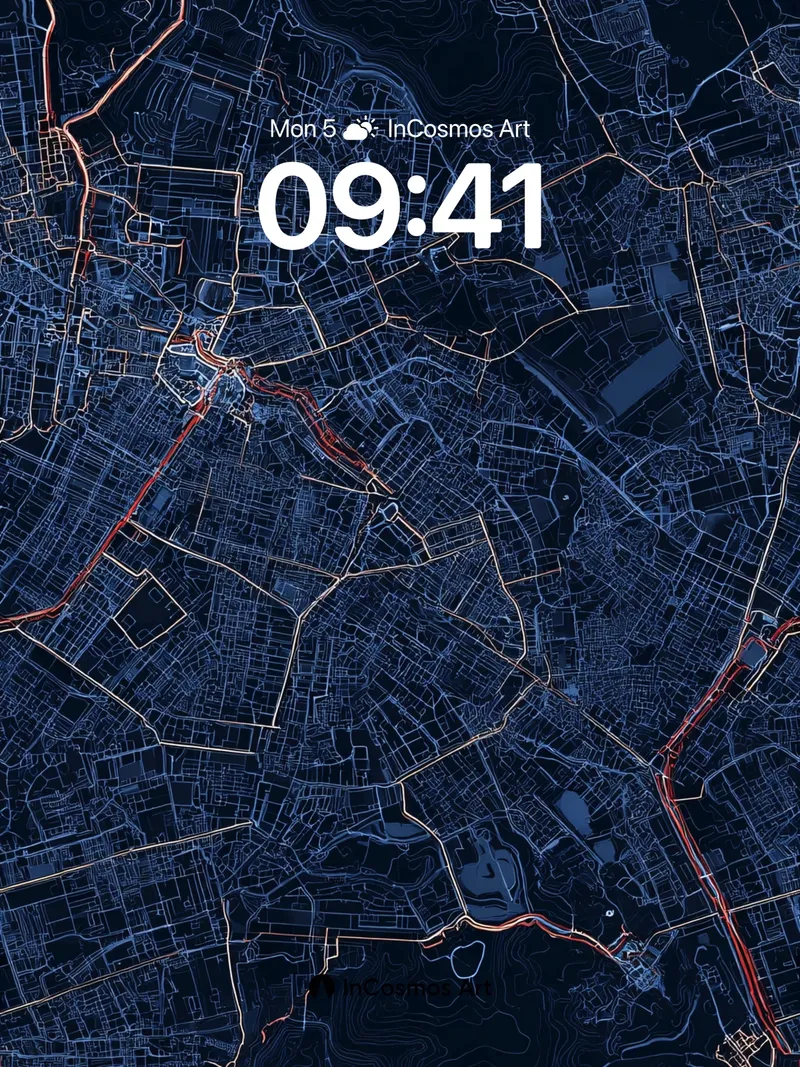
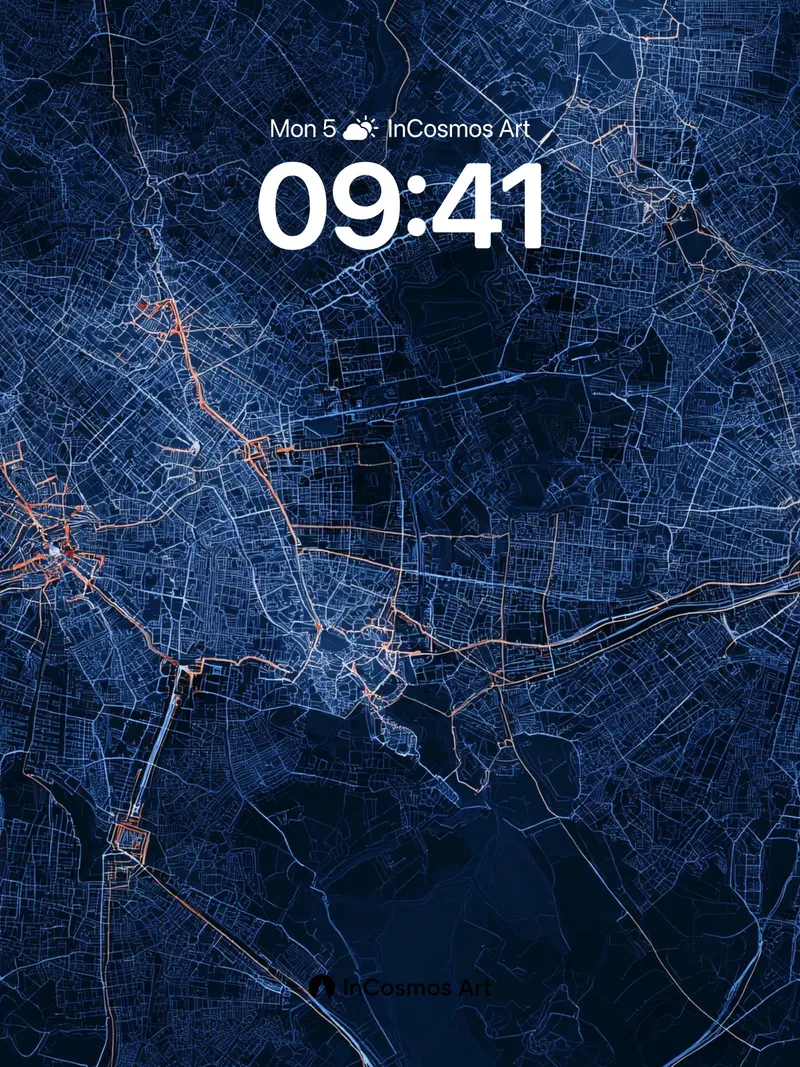
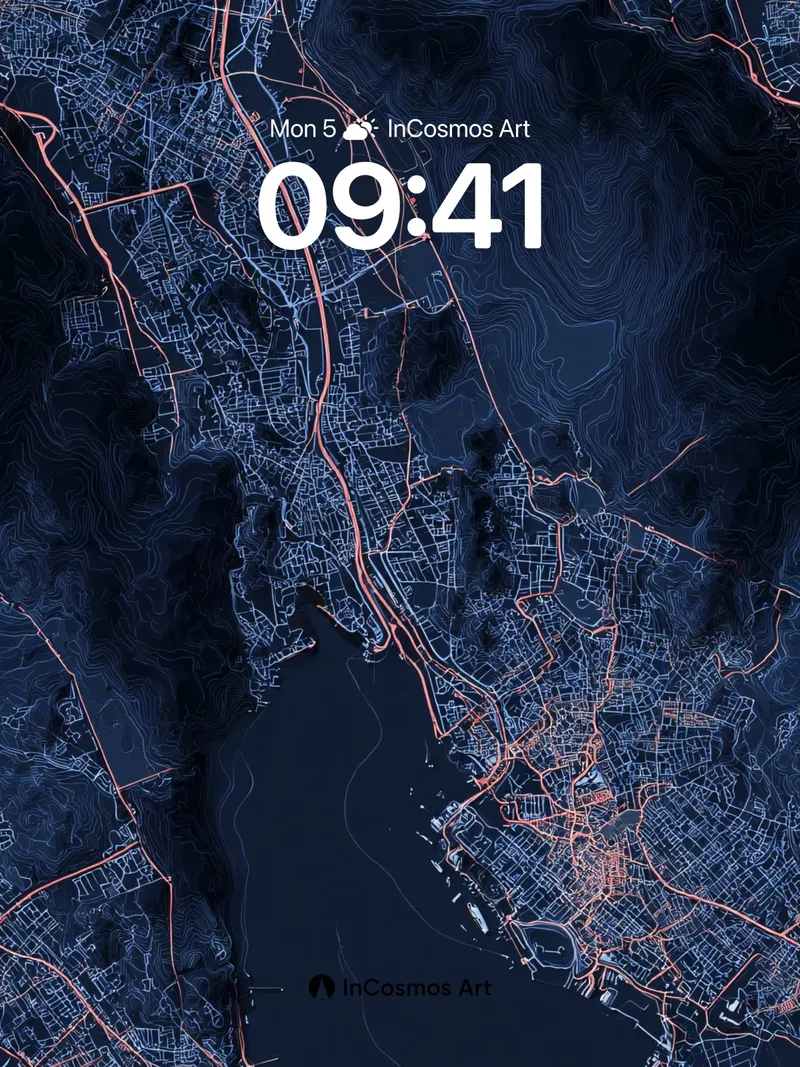
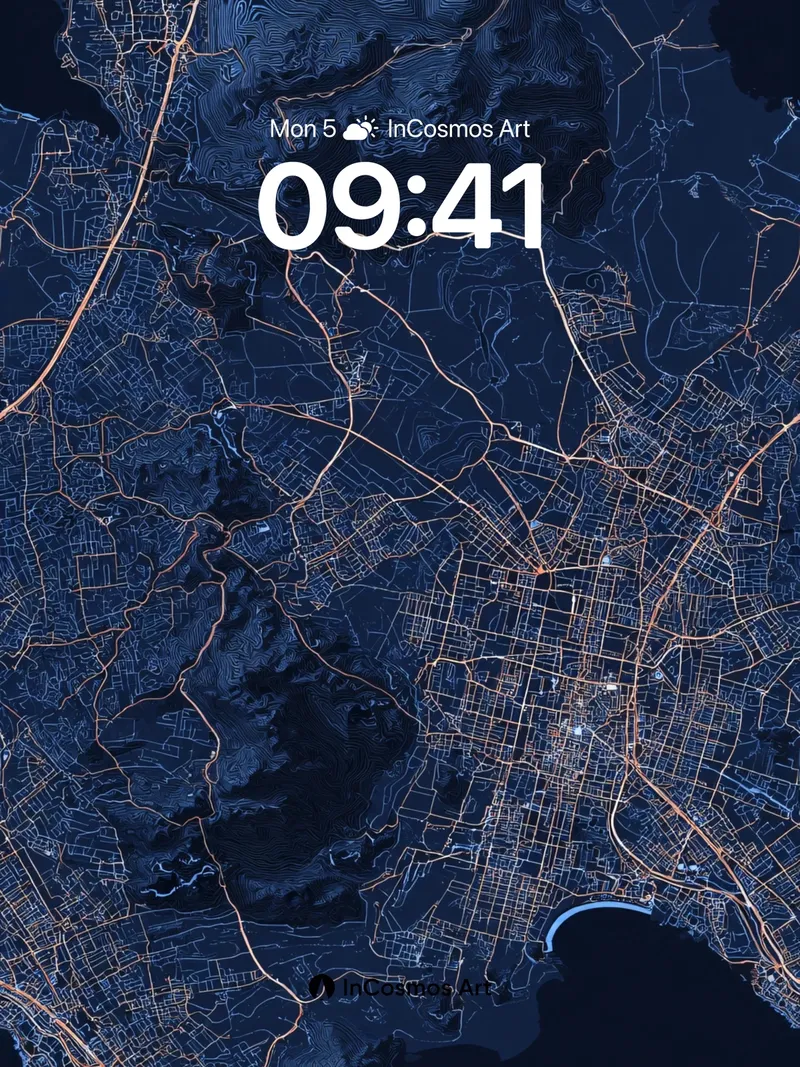
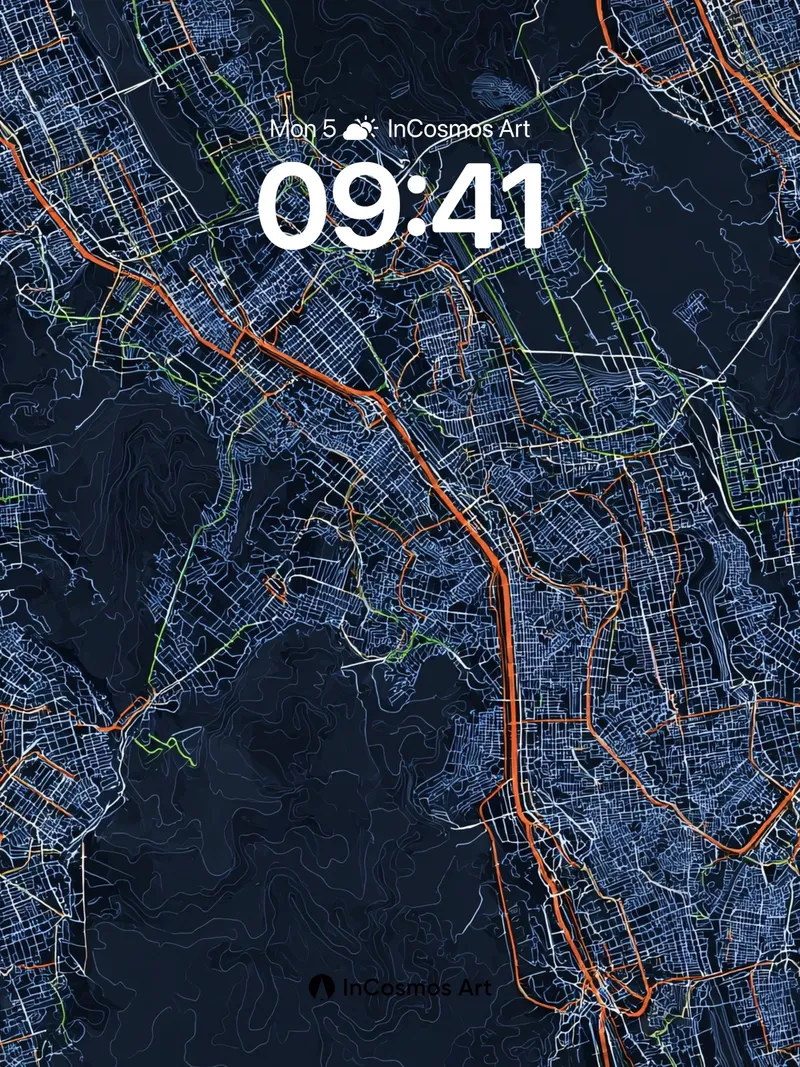
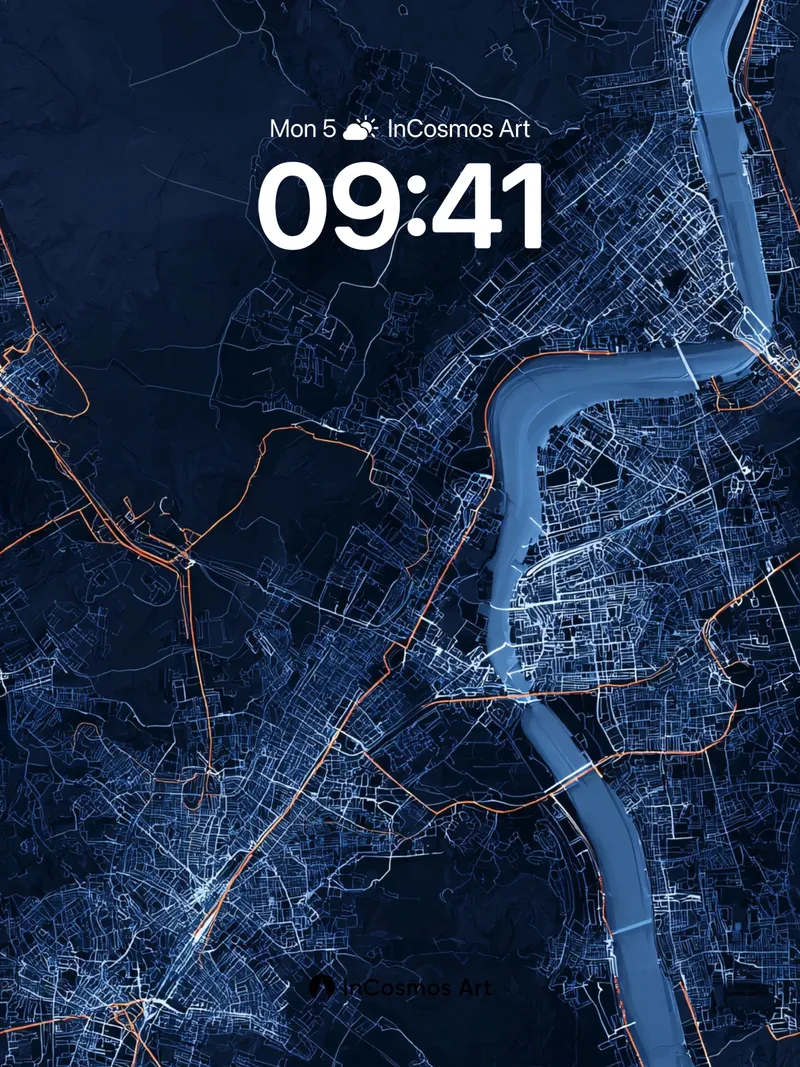
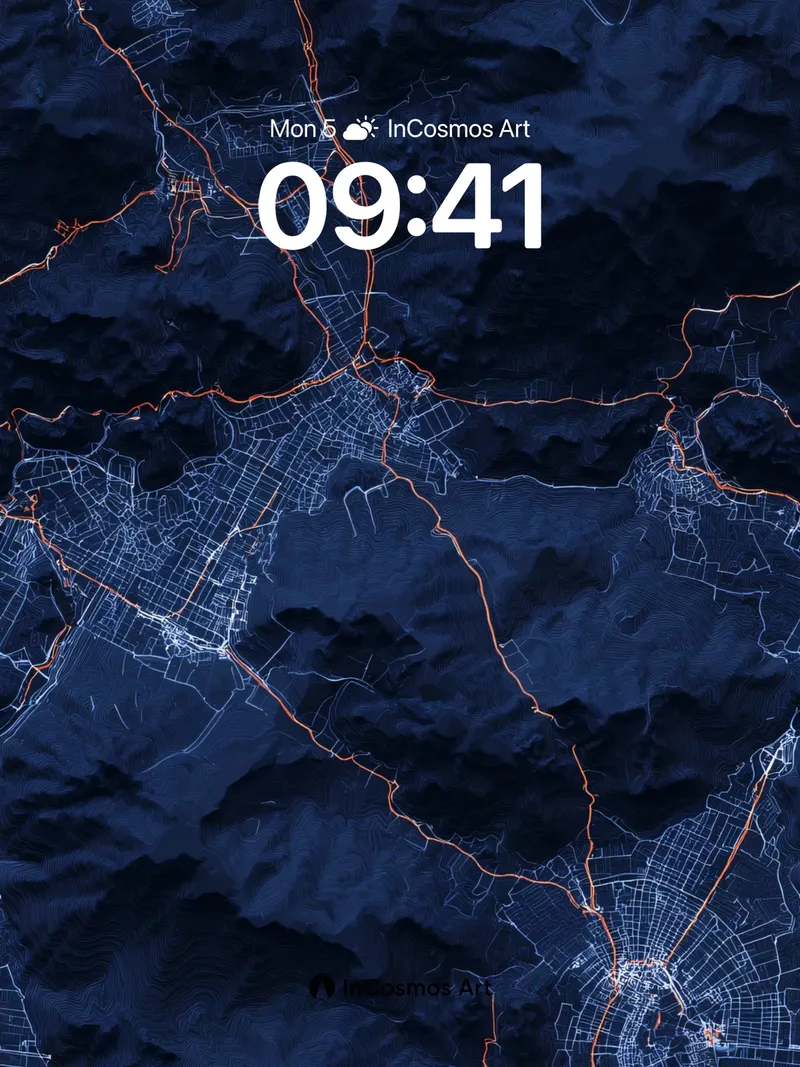
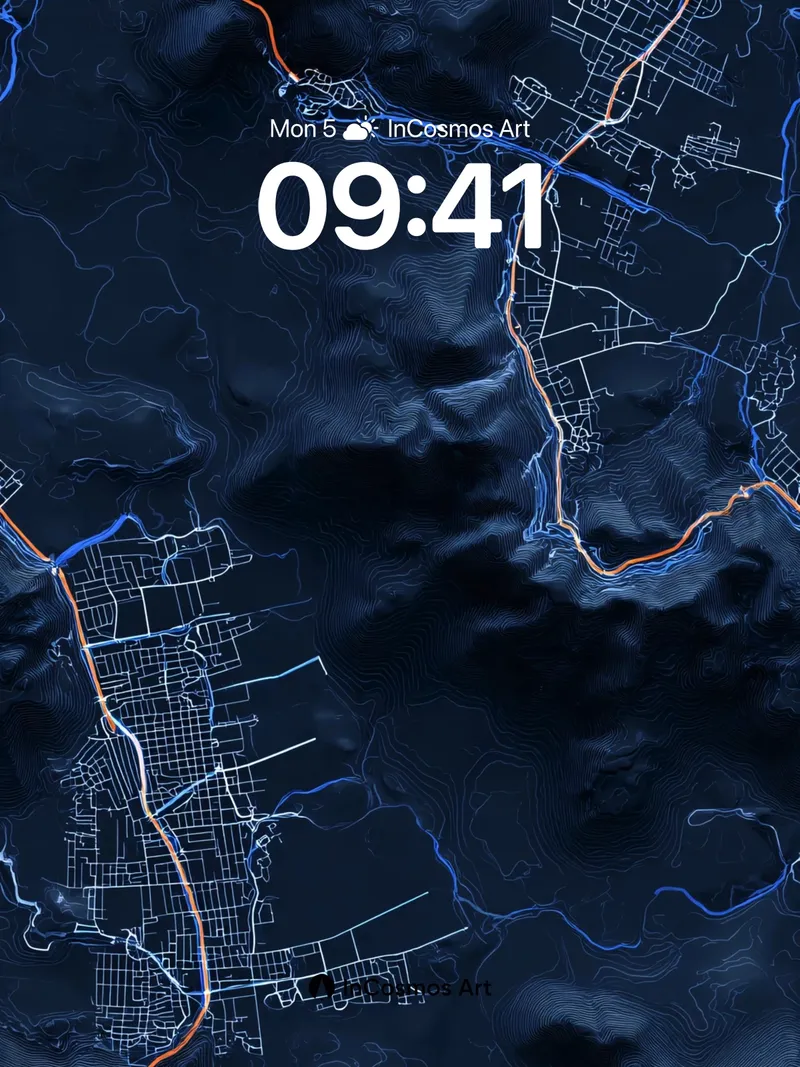
Cities awaken under the cover of night, their roads extending like nerve endings, connecting every named corner. These luminous lines do not merely depict geography but record the rhythm and density of human activity. Each line carries commutes, transactions, encounters, and departures, forming a flowing collective consciousness. The distribution of light reveals centers of power and peripheries, exposing inequalities in resource allocation. Street width and brightness become metaphors for social hierarchy—arterial roads as main arteries, secondary paths as capillaries, while dark zones suggest neglected territories. This visual order is a modern epic co-written by planners, capital, and residents.
Topology of Light
The urban fabric uses light as its language, constructing a new kind of topographic map. Water bodies reflect faint blue glows, hills emerge through contour lines, and building clusters appear as dense nodes. This is not just spatial representation but temporal condensation—the lighting patterns at night mirror daytime usage frequency. Some areas remain consistently bright, symbolizing commercial vitality; others fluctuate over time, reflecting residential cycles. The topology of light becomes the key to understanding urban behavior, transcending two-dimensional maps into perceptual dimensions.
The Breath of the City
Transportation networks function as the city's respiratory system. Orange light bands on major roads indicate high-speed flow, while pale green and gray secondary routes show slower or intermittent movement. Intersections gather light points, forming energy hubs resembling heartbeats. Bridges span waterways, linking isolated landmasses into organic wholes. These pathways serve physical mobility but also shape spatial forms of social relations. People migrate, work, and consume along these lines, reproducing new social structures.
Invisible Borders
Absence of light often holds more meaning than presence. Dark areas are not empty—they represent alternative forms of existence: undeveloped land, industrial zones, slums, or nature reserves. They contrast sharply with illuminated regions, forming invisible urban borders. These boundaries are not legally drawn but defined by light intensity, infrastructure density, and population flow. They remind us that cities are not merely collections of buildings but fields of power and exclusion.
Poetics of the Grid
Regular grid layouts once symbolized rationality and efficiency, yet in practice they often evolve into rigid spatial hierarchies. When light covers the entire grid, its geometric beauty peaks; but when gaps or voids appear, systemic fragility is exposed. This tension between aesthetics and functionality captures the true essence of modern cities. The light grid functions both as a tool and an ideological carrier—it illuminates reality while obscuring truths.