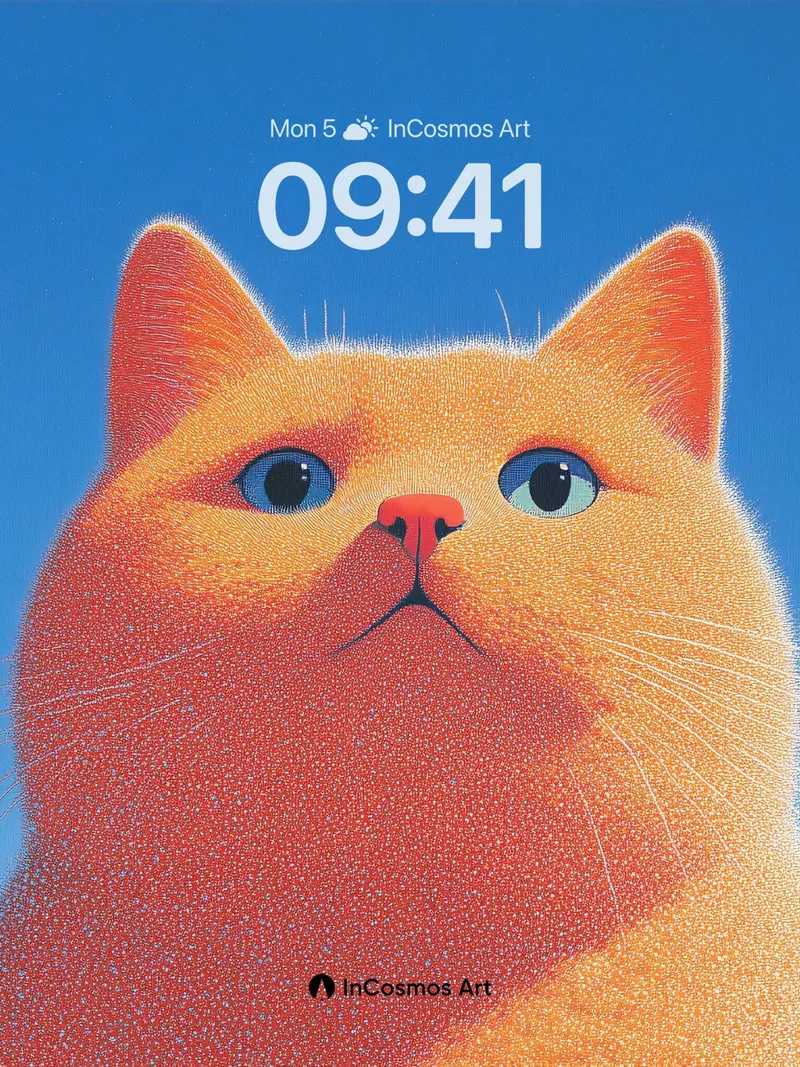
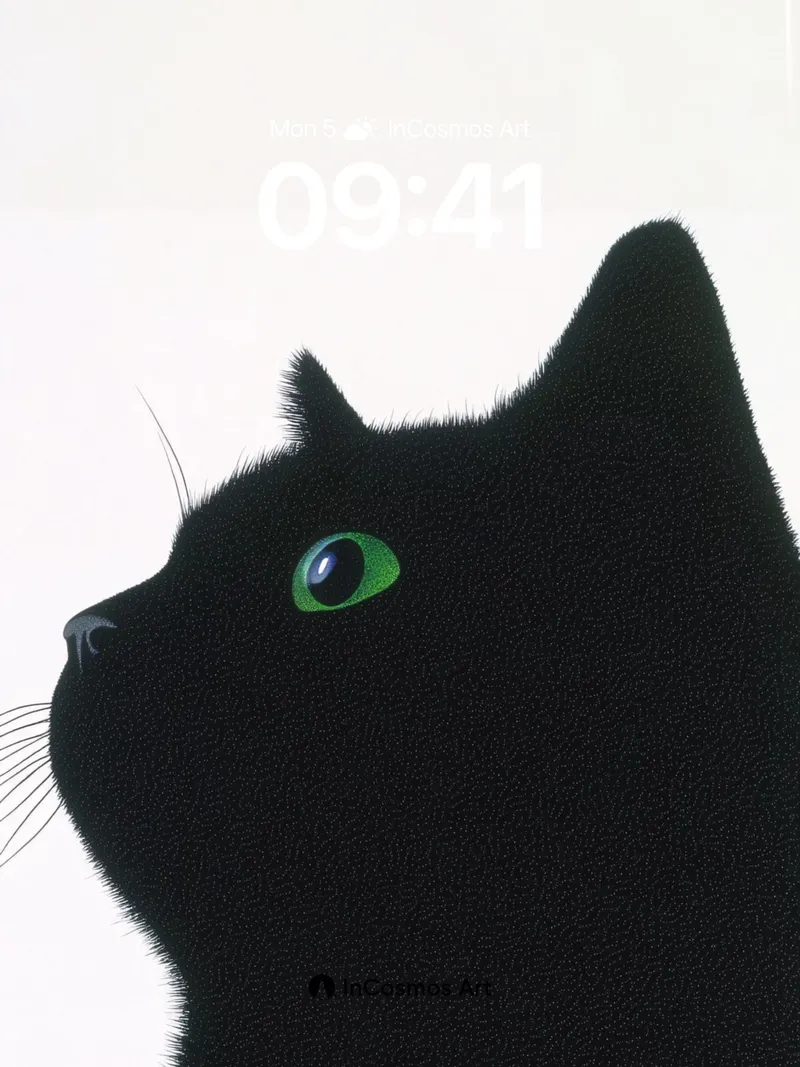
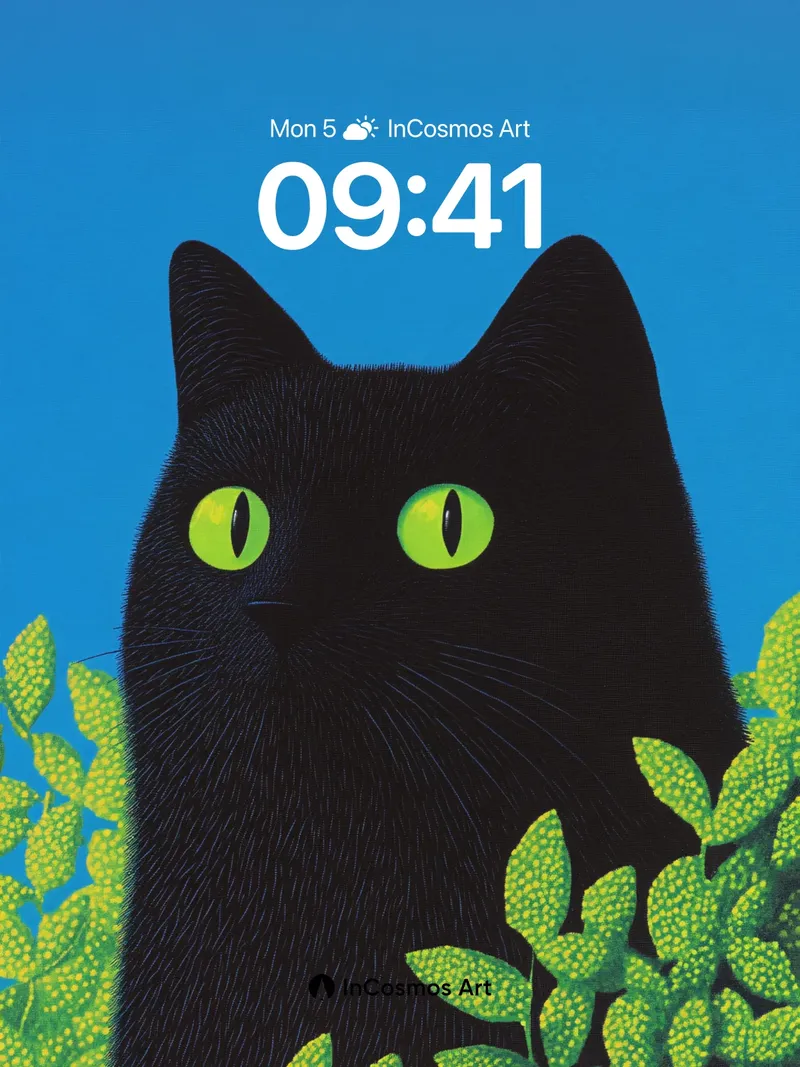
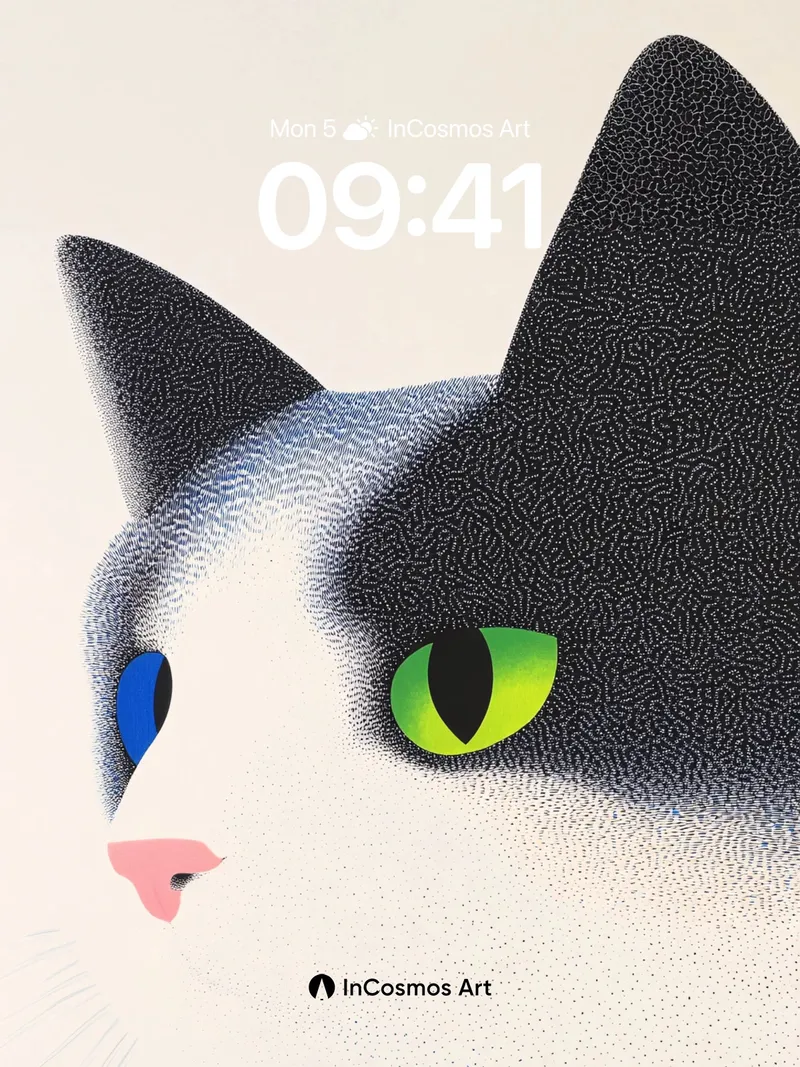
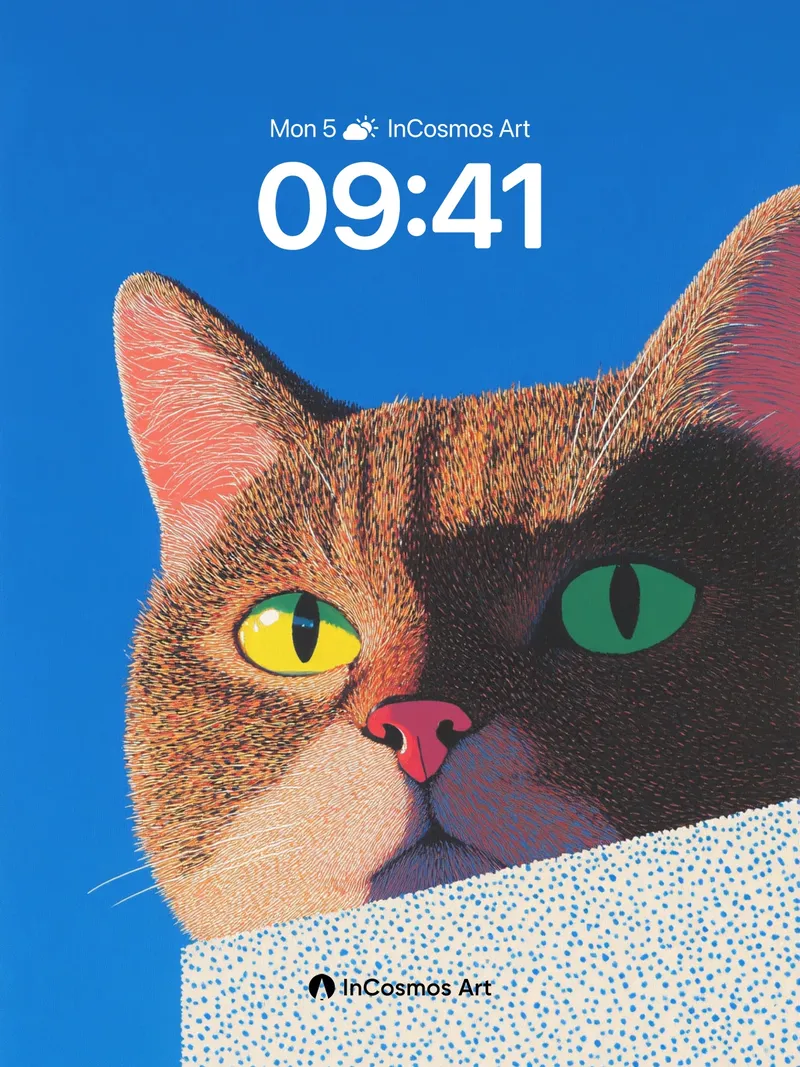
Against a pure blue backdrop, feline silhouettes emerge as if descending from another dimension. These are not ordinary creatures but symbolic entities endowed with visual language, using color as brush and silence as speech. Each cat is an emotional projection, a question about the state of being. The orange cat opens its eyes wide, green pupils like light spots deep in a forest—what it sees is not reality, but unspoken desire. The black cat stands among flowers, back straight, gaze fixed on the horizon, resembling a solitary watcher at the edge of a city, yet paradoxically immersed in vibrant nature—belonging to it while remaining apart. The two-toned cat's face splits into two colors, two gazes—one yellow, one green—symbolizing cognitive division and the dilemma of choice. The closed-eyed white cat embodies Zen-like stillness, fur soft as snow, breath nearly imperceptible, as if time has paused. These forms are more than decoration; they are metaphors for the modern psyche: seeking peace amid noise, searching for self-identity amid contradiction, rediscovering pure perception through chromatic fantasy.
Color as Emotional Carrier
The cats' fur hues are not random but carefully constructed emotional symbols. Orange signifies warmth and alertness, green implies nature and mystery, black carries silence and depth, while white points to purity and transcendence. When these colors contrast against a unified blue background, they create strong visual tension, revealing the conflict between individual and environment. Color transcends mere aesthetics—it becomes a tool expressing inner psychological states, guiding viewers through a silent emotional journey.
Philosophy in Silence
The cats’ gaze always holds distance. They do not participate actively but observe constantly. This passive watching itself becomes a philosophical stance—curious without intervention, perceptive without possession. The closed-eyed cat exemplifies this most profoundly: not fleeing, but immersing, achieving a higher form of awareness. In an era of digital overload, such silence offers healing power, reminding people to pause, breathe, and return to the self.
Mirror of Self-Identity
Multiple cat figures together form a narrative about identity. The two-toned cat’s asymmetrical face suggests complexity of personality; the black cat’s profile reveals caution toward the outside world; the white cat’s serenity presents an idealized state of self. These images act as mirrors, reflecting modern struggles between multiple roles and societal expectations, and the ongoing negotiation of self.
Poetic Existence
When cats peek from beneath surfaces or hide behind foliage, their presence becomes inherently poetic. They neither rush to perform nor deliberately conceal—they simply exist. This mode of existence challenges modern obsession with efficiency and visibility, redefining what it means to 'live'—profound meaning can be achieved without words.