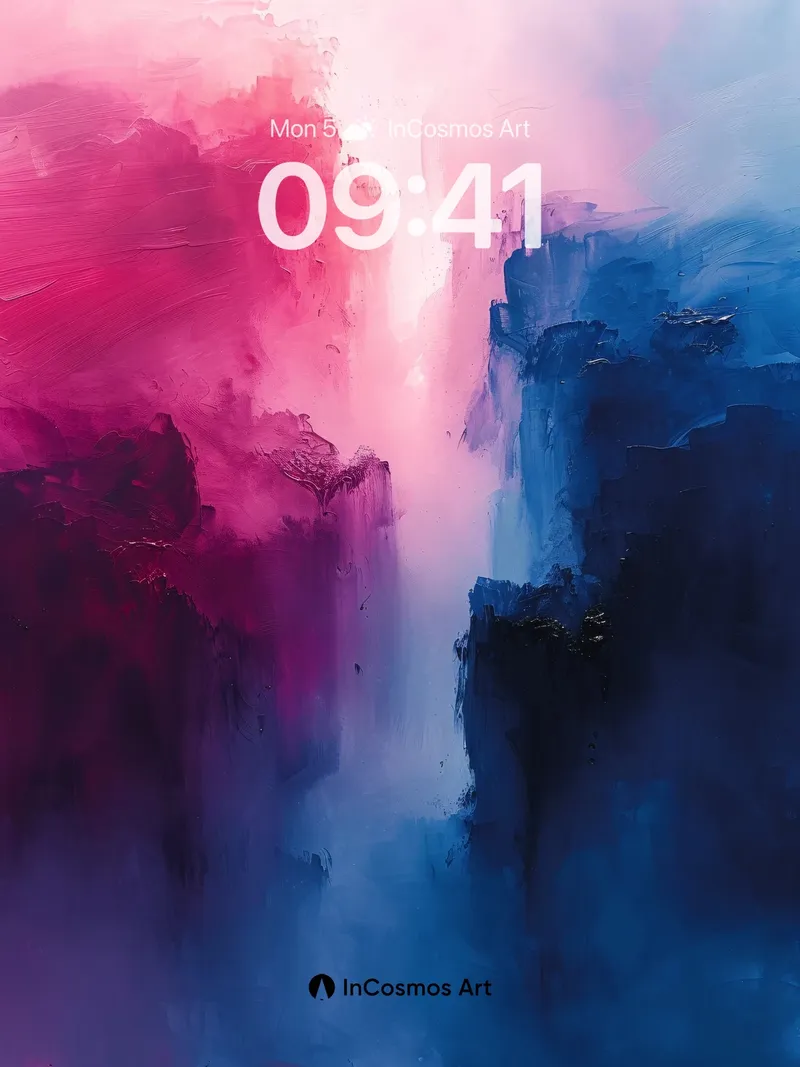
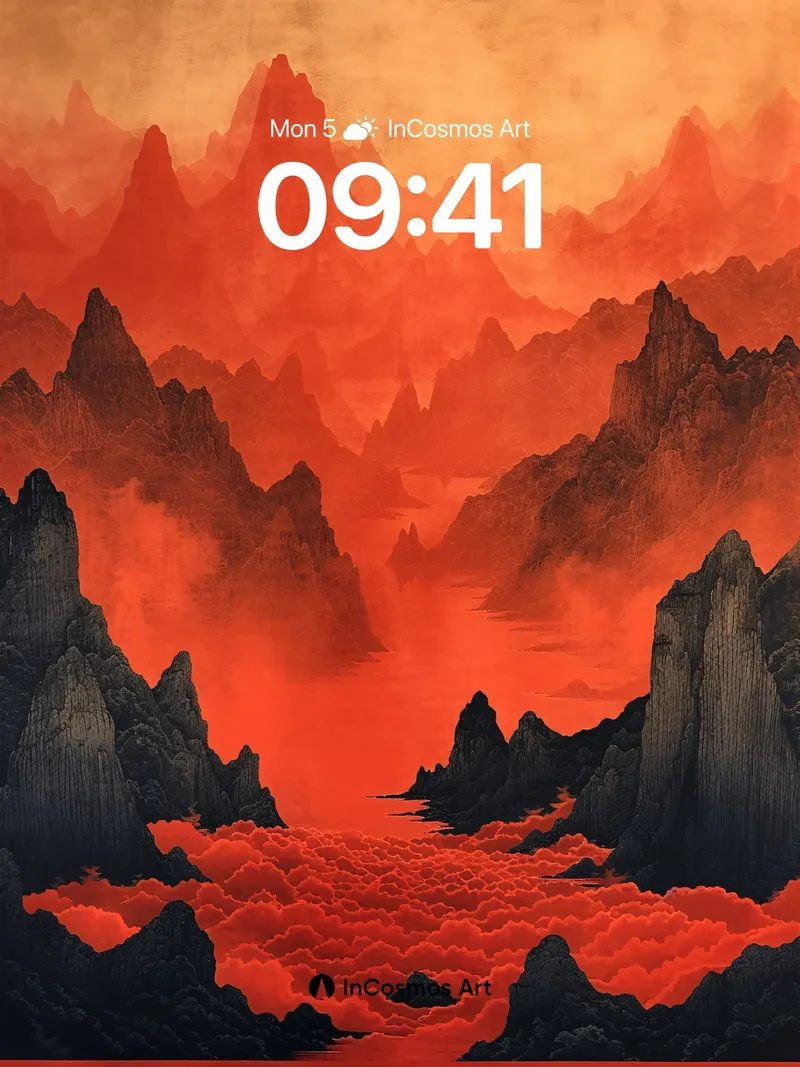
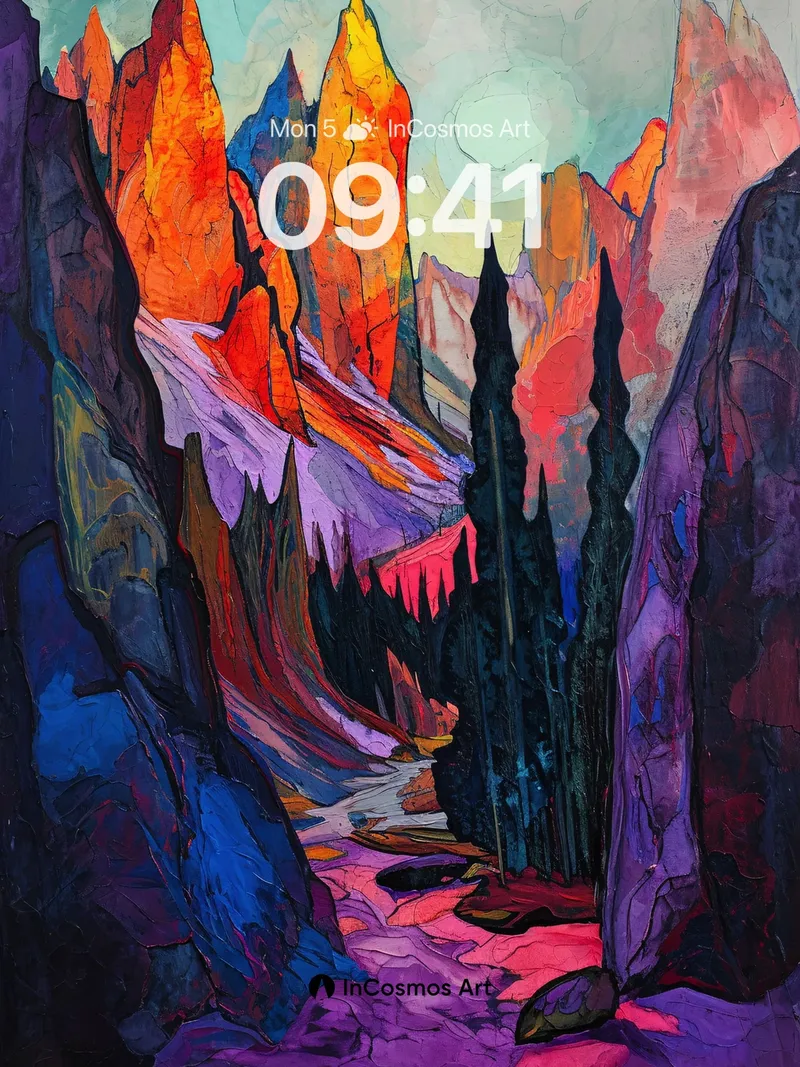
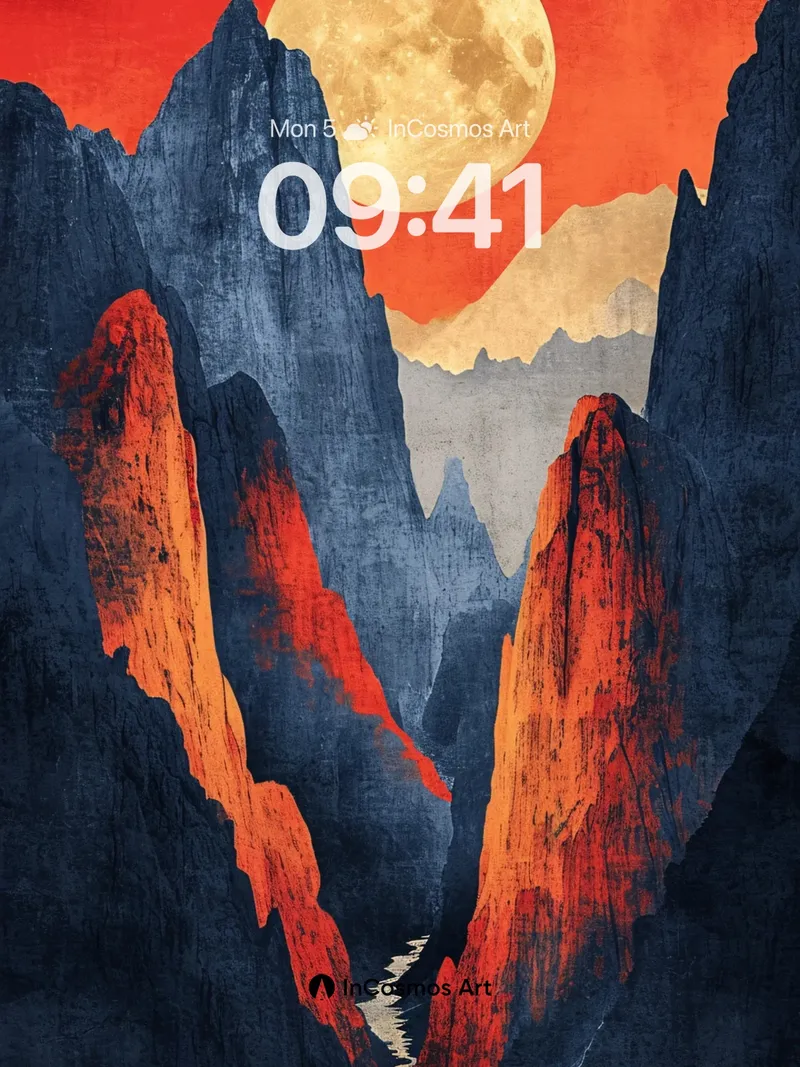
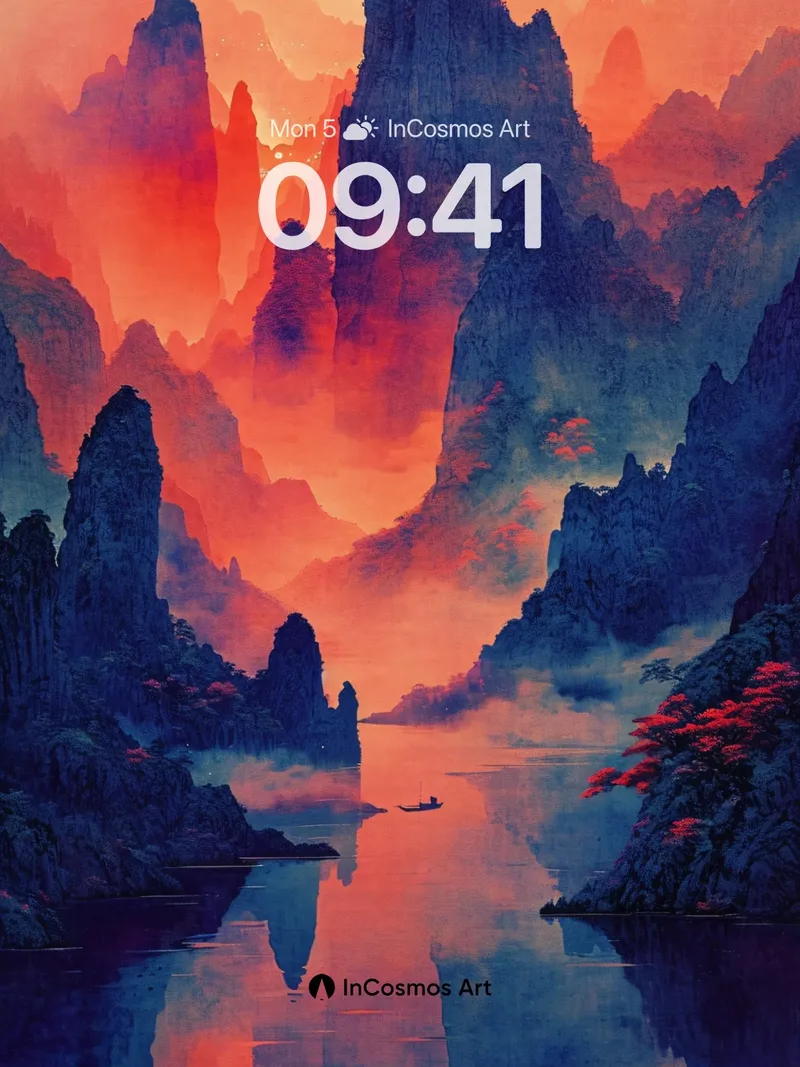
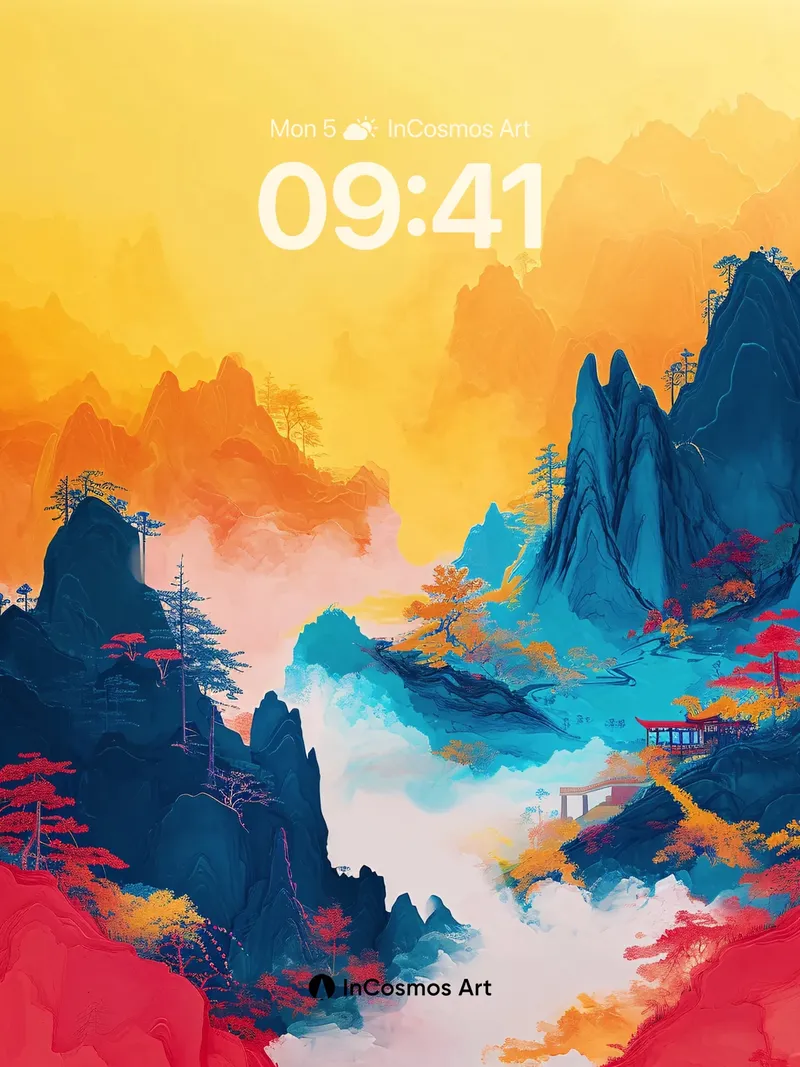
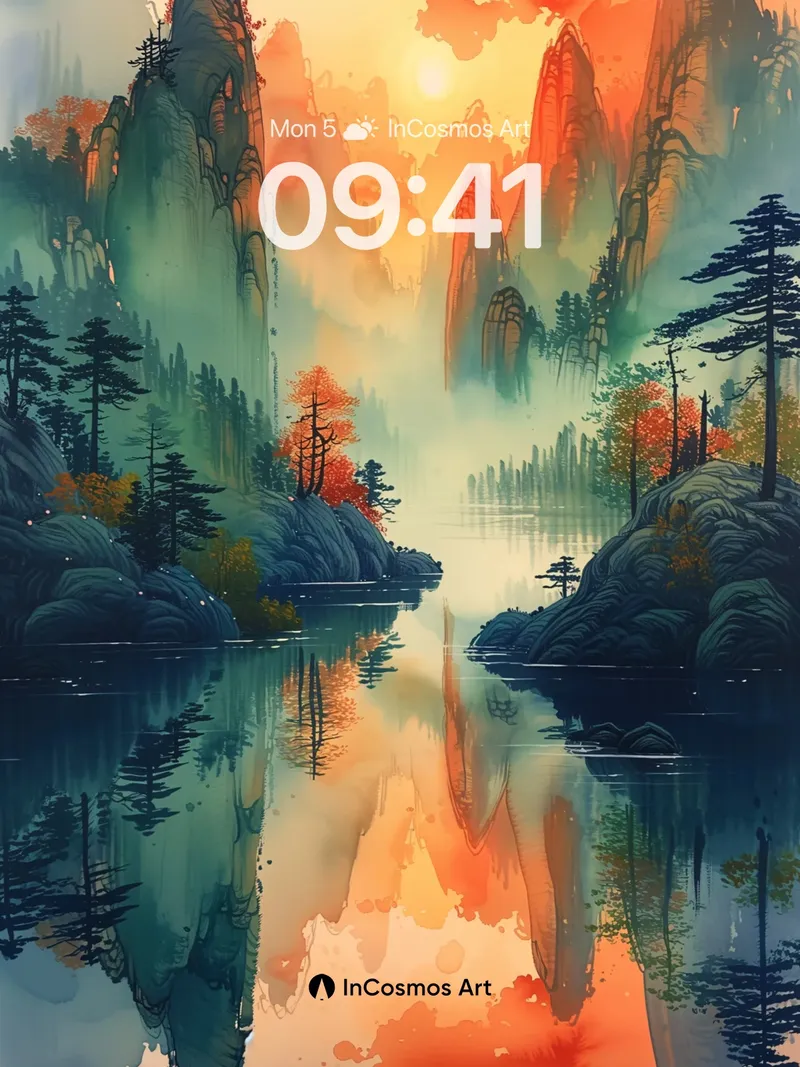
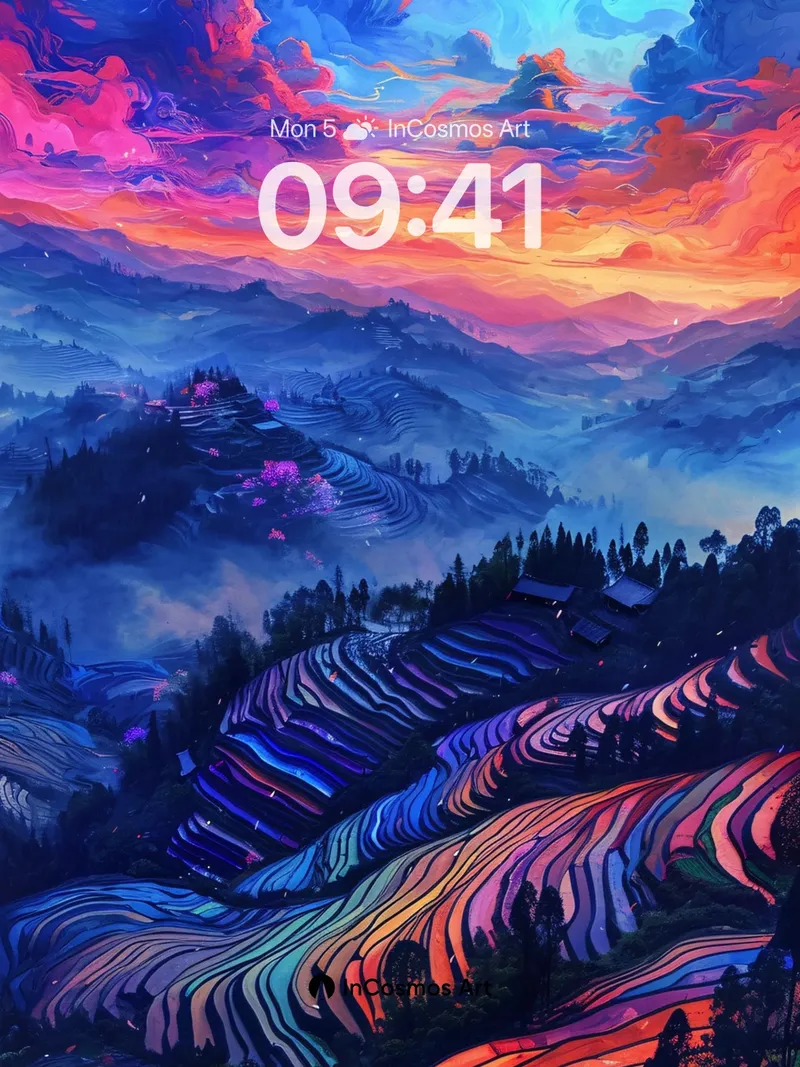
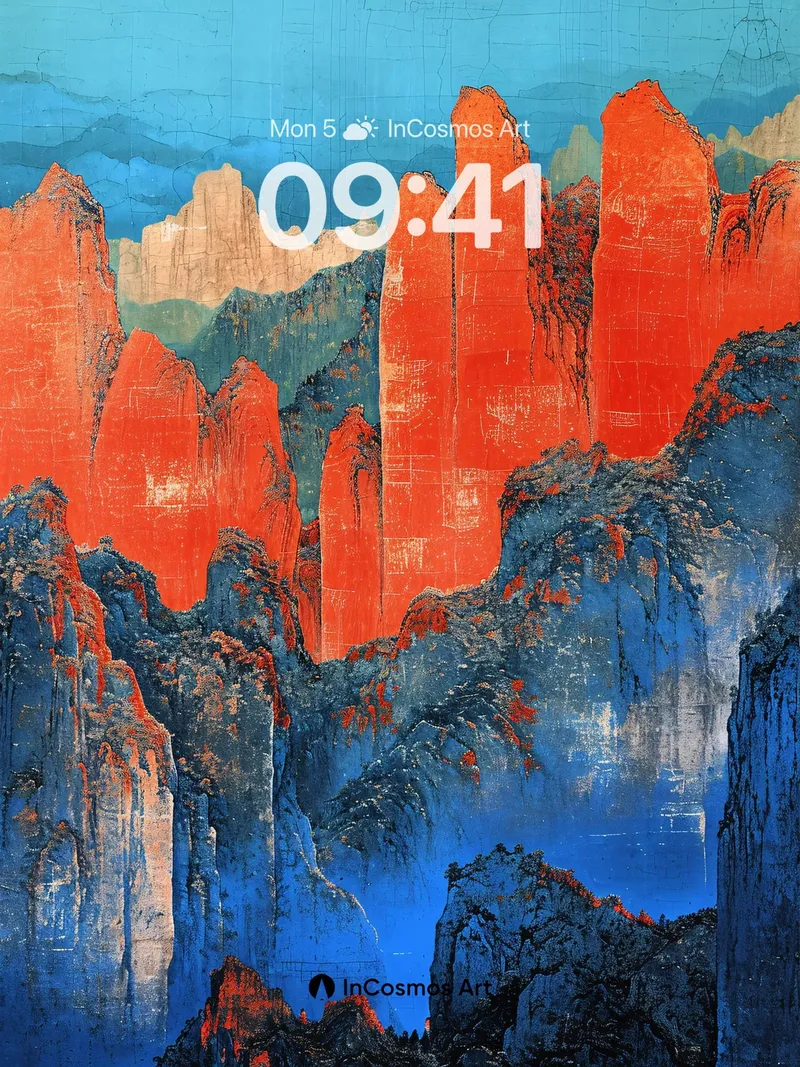
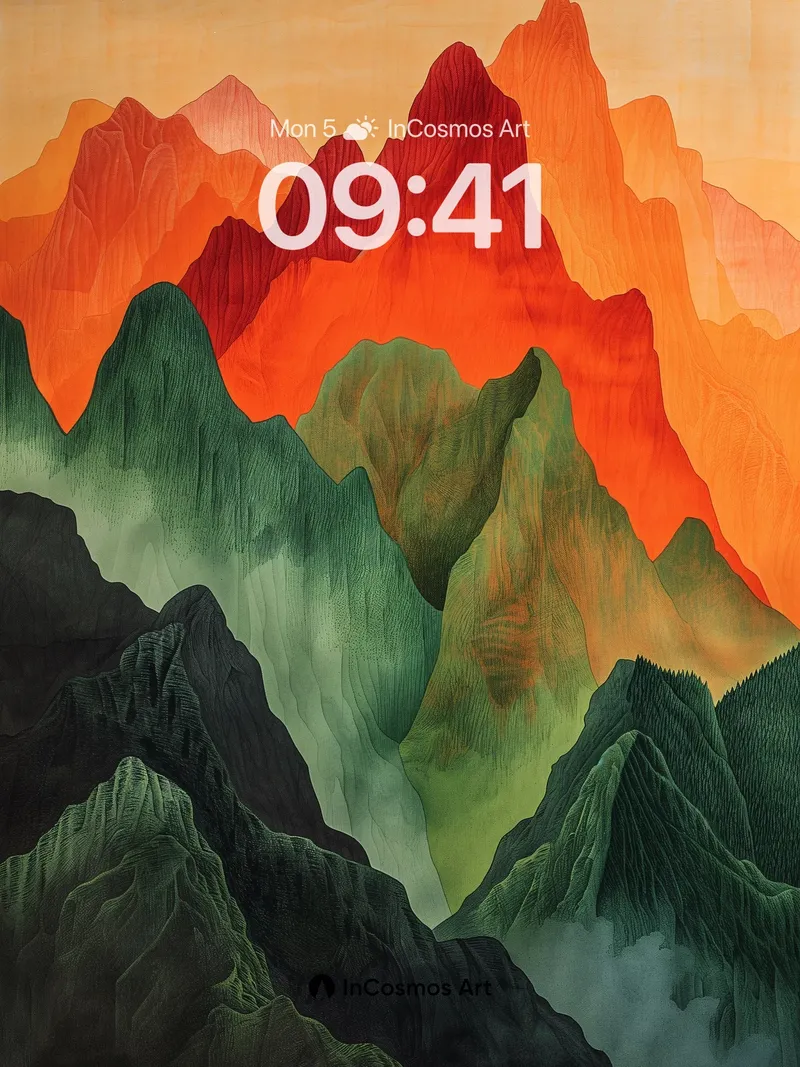
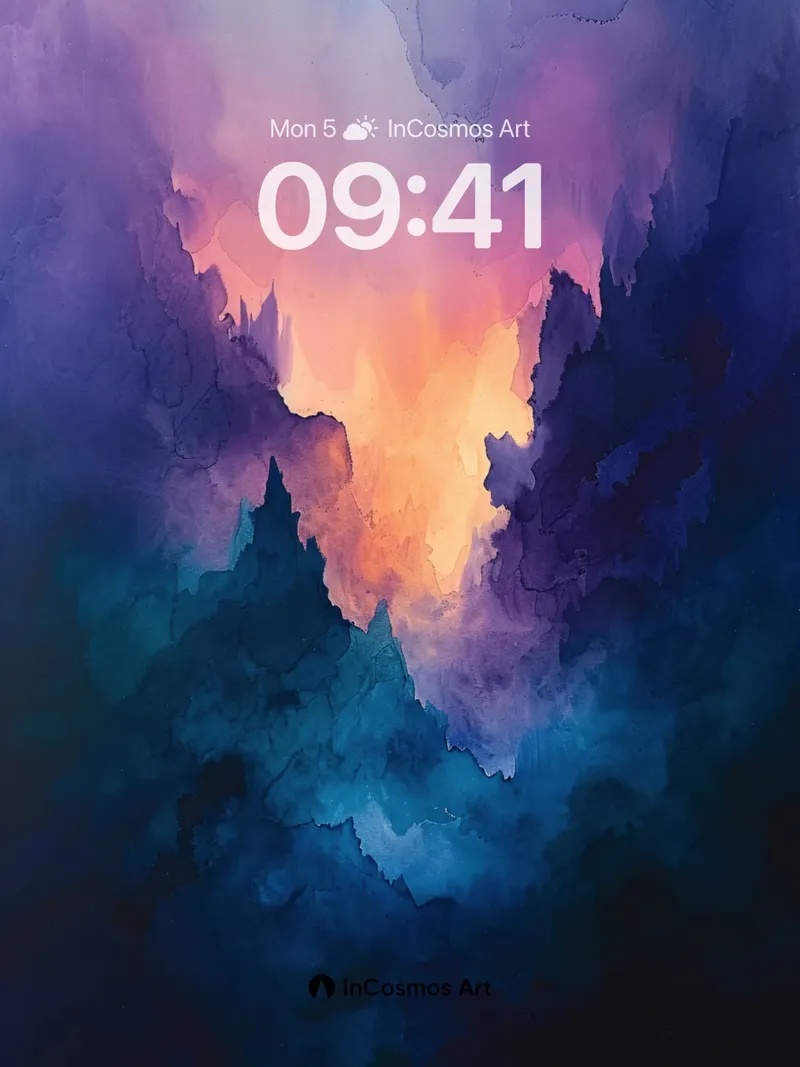
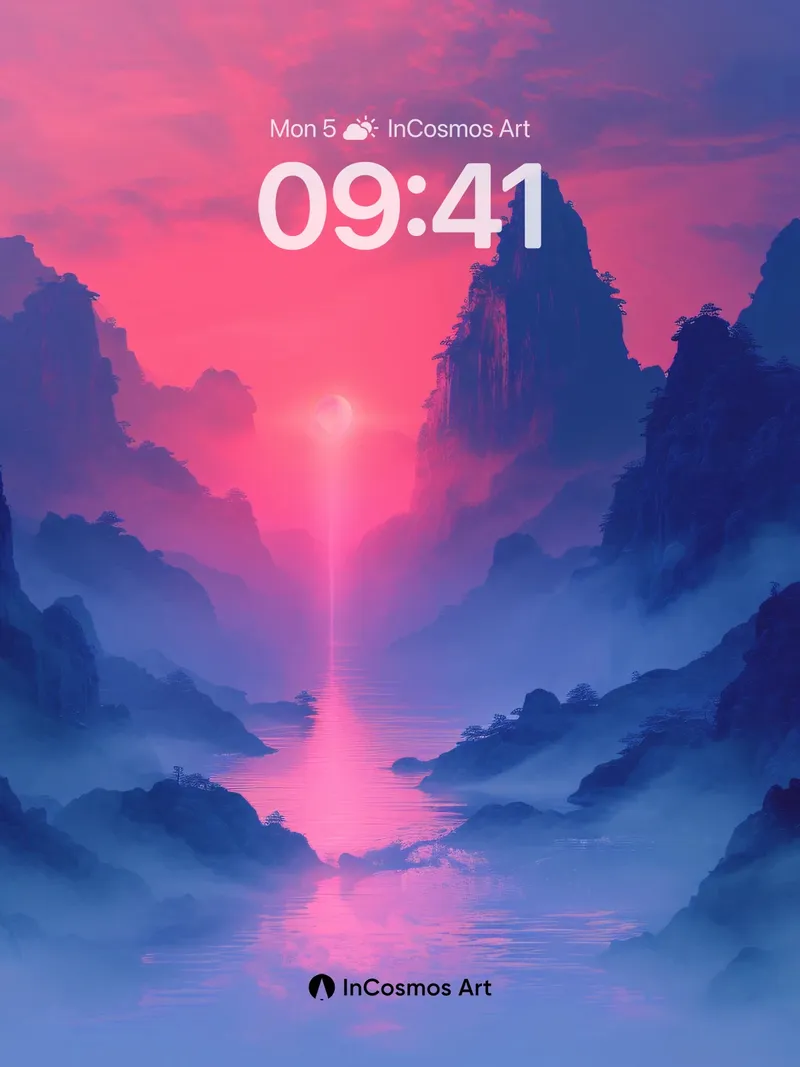
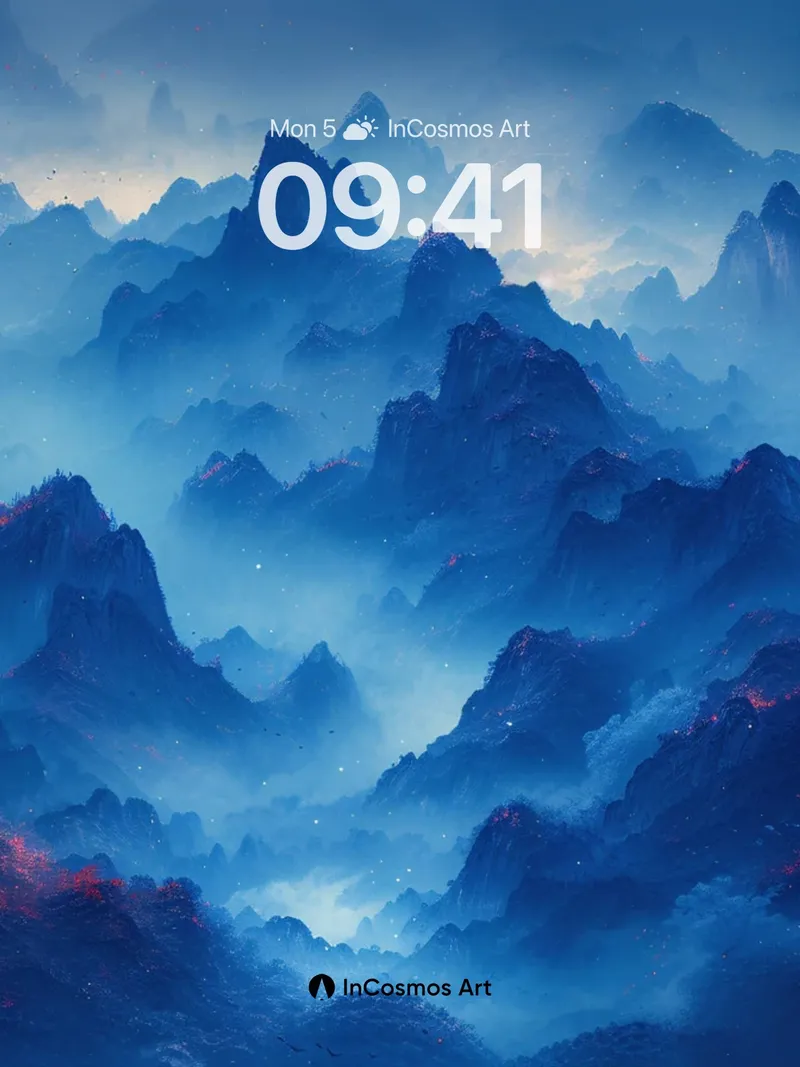
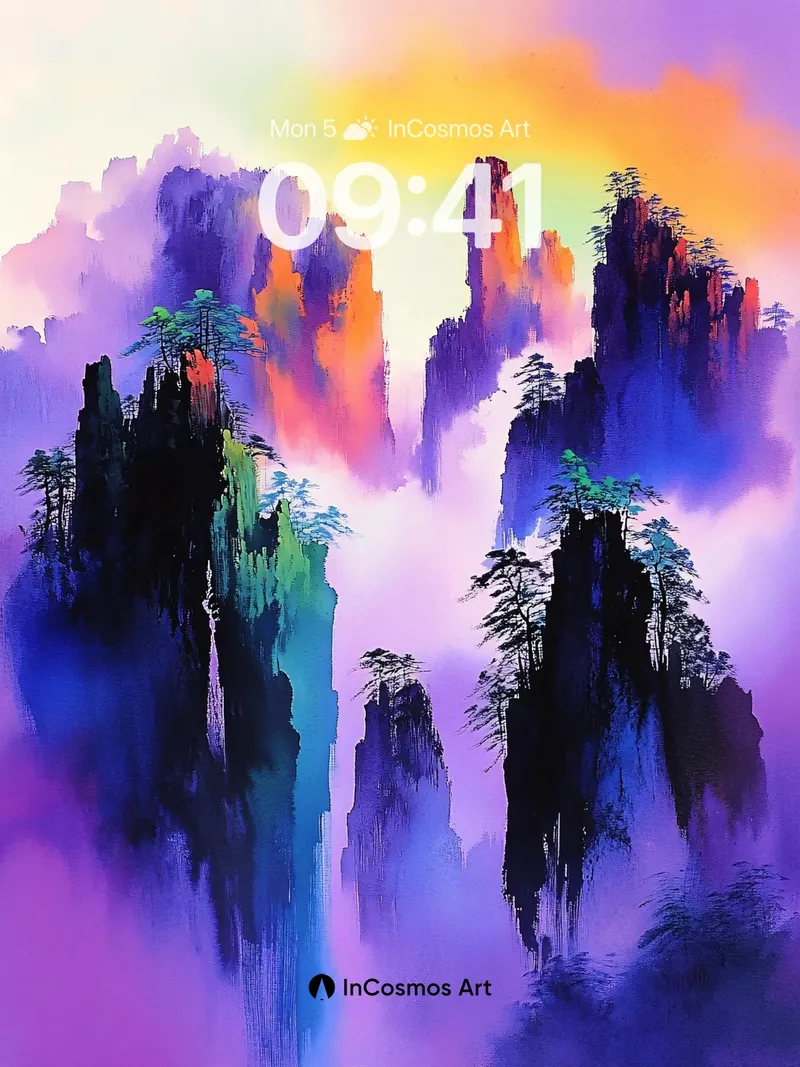
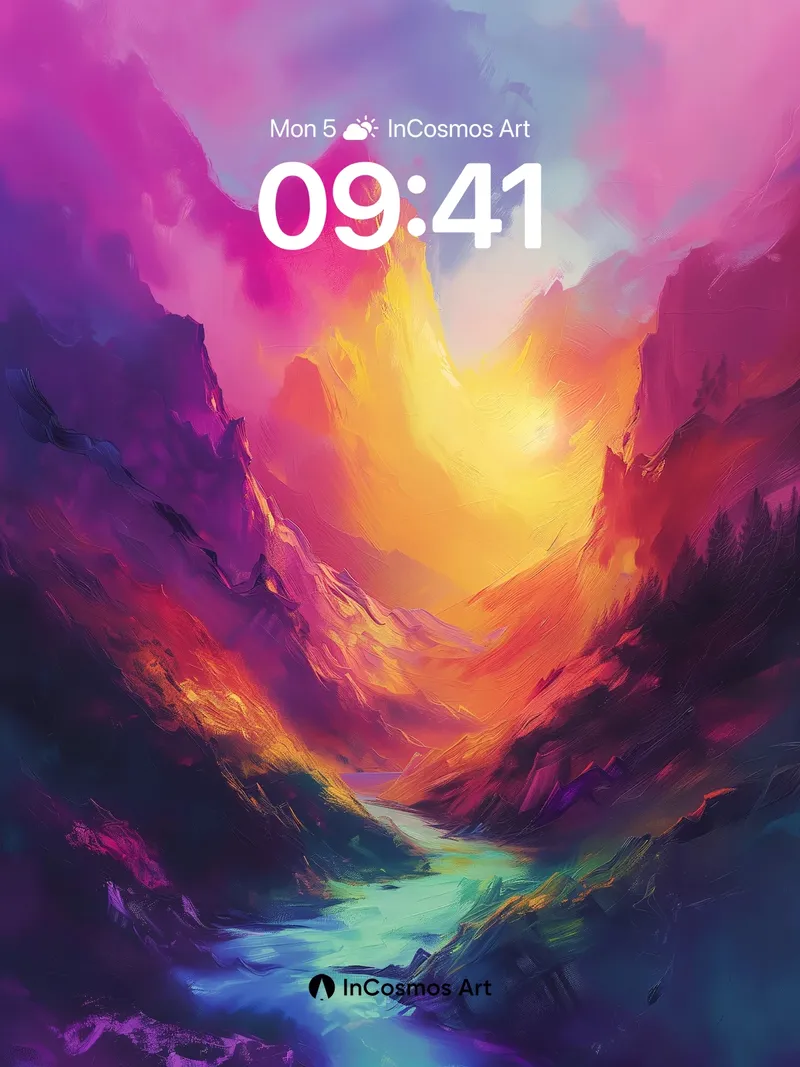
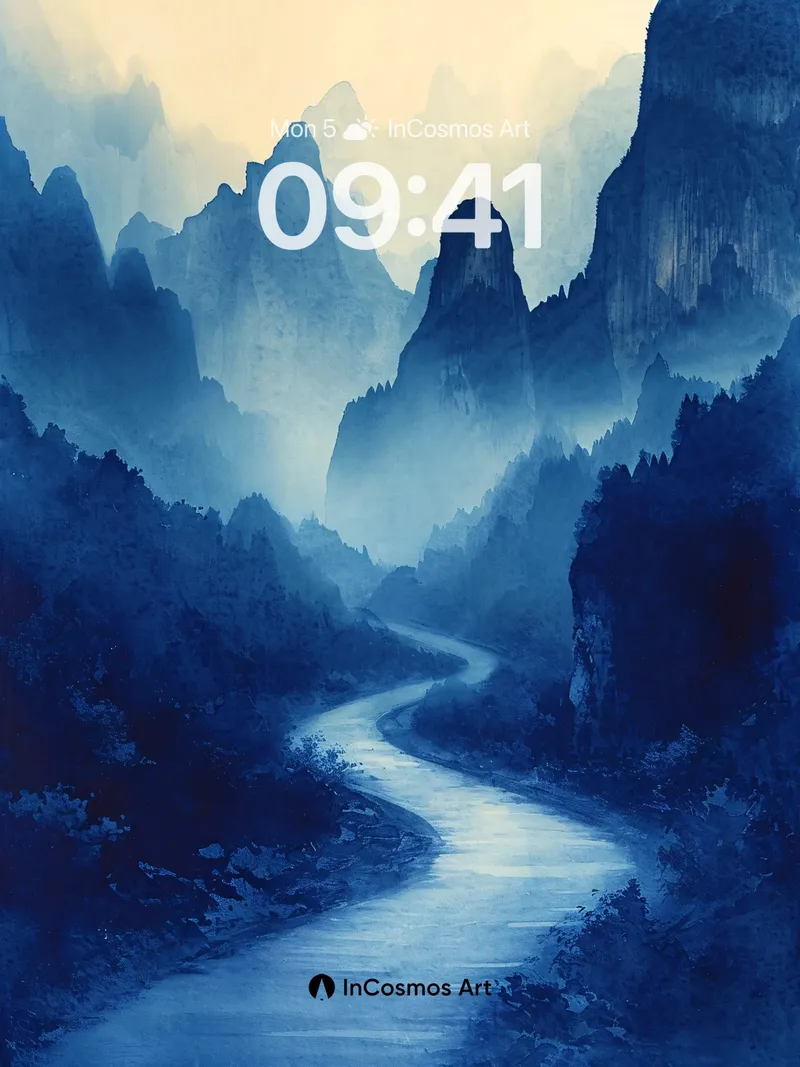
Mountains are not always silent. When color intervenes, rock and vegetation reveal an almost emotional state. Red and blue, orange and purple—combinations not typically found in nature—find their place within the contours of the peaks. This use of color transforms the mountains from mere geographical entities into projections of psychological space.
The Clash of Warm and Cold
The mountains are divided into two thermal worlds. Crimson and orange dominate the heights, as if magma flows within the rocks; cyan and deep purple settle in the valleys, like shadows of the night. This contrast between warm and cold is not meant to create conflict but to emphasize the temperature differences in vertical space. The heat of the heights and the coldness of the depths create a tension, giving the mountains a dynamic balance.
The Role of Mist
Mist plays a crucial role among these mountains. It is not merely an obstruction but a harmonizer of colors. White and pale purple mist soften the edges of the mountains, blurring the once-sharp contours of the rocks. This blurring does not weaken the power of the mountains but makes them appear more profound. Mist becomes the medium connecting different color blocks, giving the entire composition a sense of fluidity.
The Accent of Vegetation
Trees are not the main characters in these mountains but accents. They appear in dark green or ink-black forms, contrasting with the vibrant colors of the mountains. The presence of these plants reminds us of the vitality of nature; even in such intense expressions of color, life stubbornly takes root between the rocks. The distribution of vegetation also hints at changes in altitude, with sparse growth at the heights and dense coverage in the lowlands, creating layers.
The Projection of Emotion
The choice of colors for these mountains is not arbitrary. Red is often associated with passion, danger, or energy, while blue points to calmness, depth, or mystery. When these two emotions meet on the mountains, a complex psychological feeling arises. The viewer may experience a sense of both longing and fear, and this contradiction is the source of the mountains' charm. Here, color becomes a language, speaking to the inner emotions of the mountains.