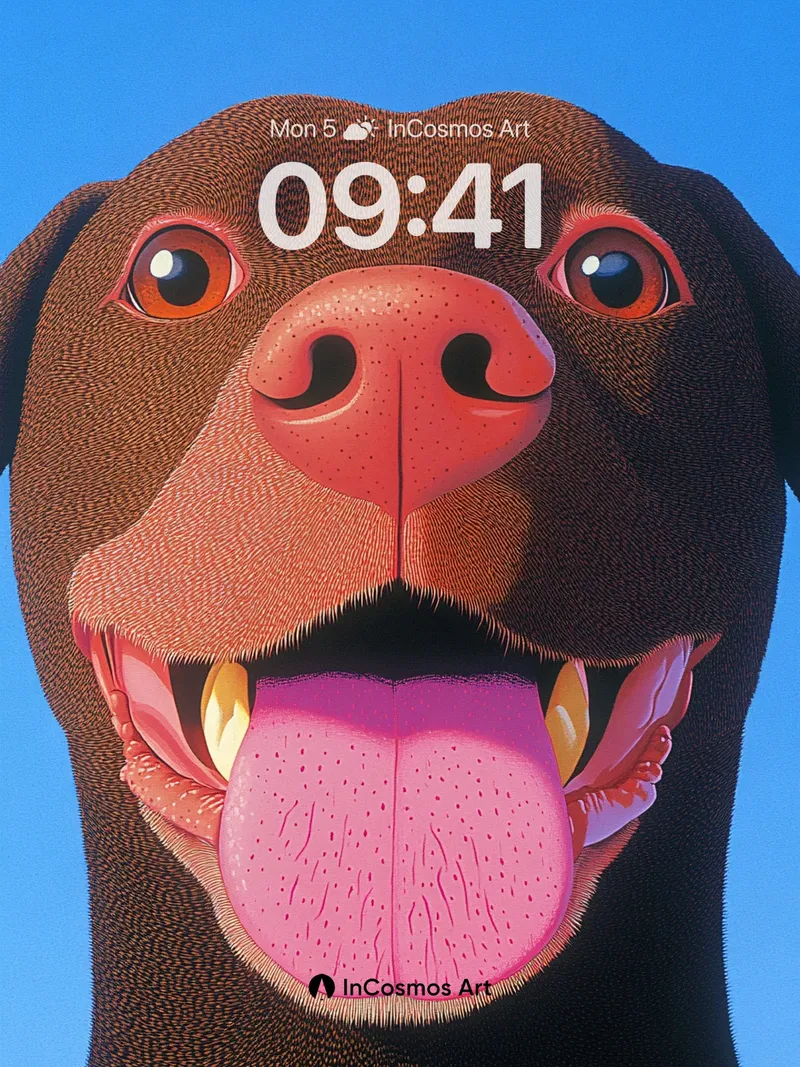
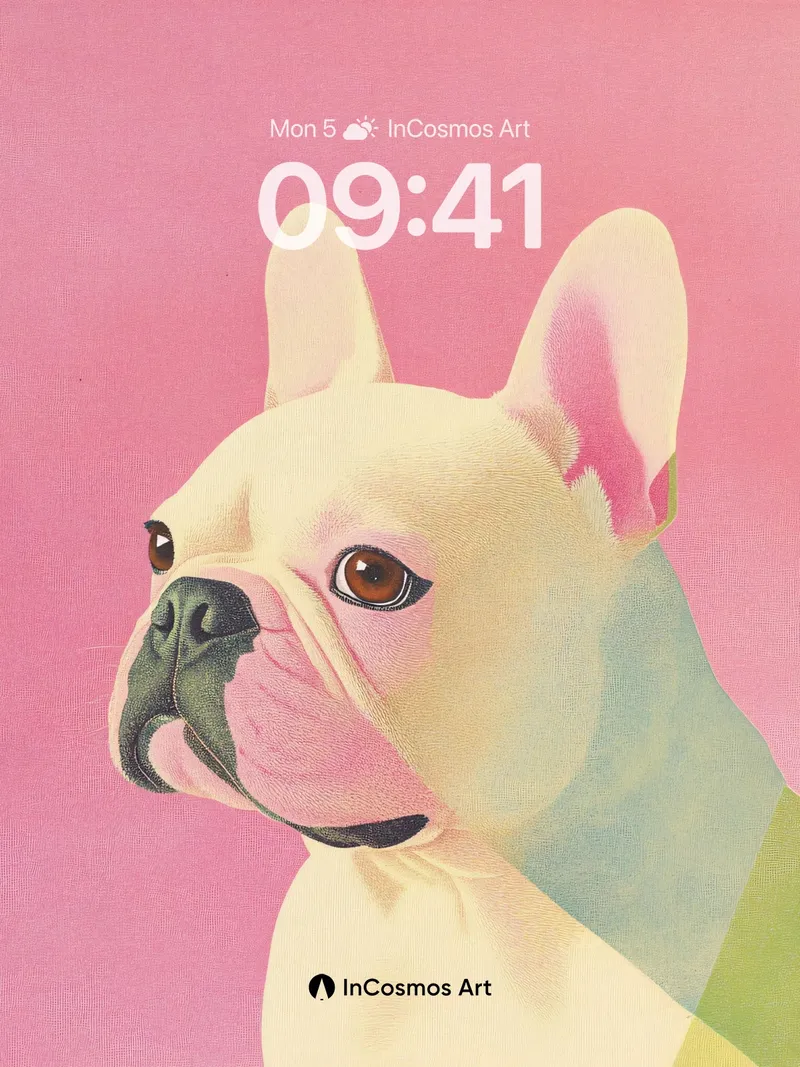
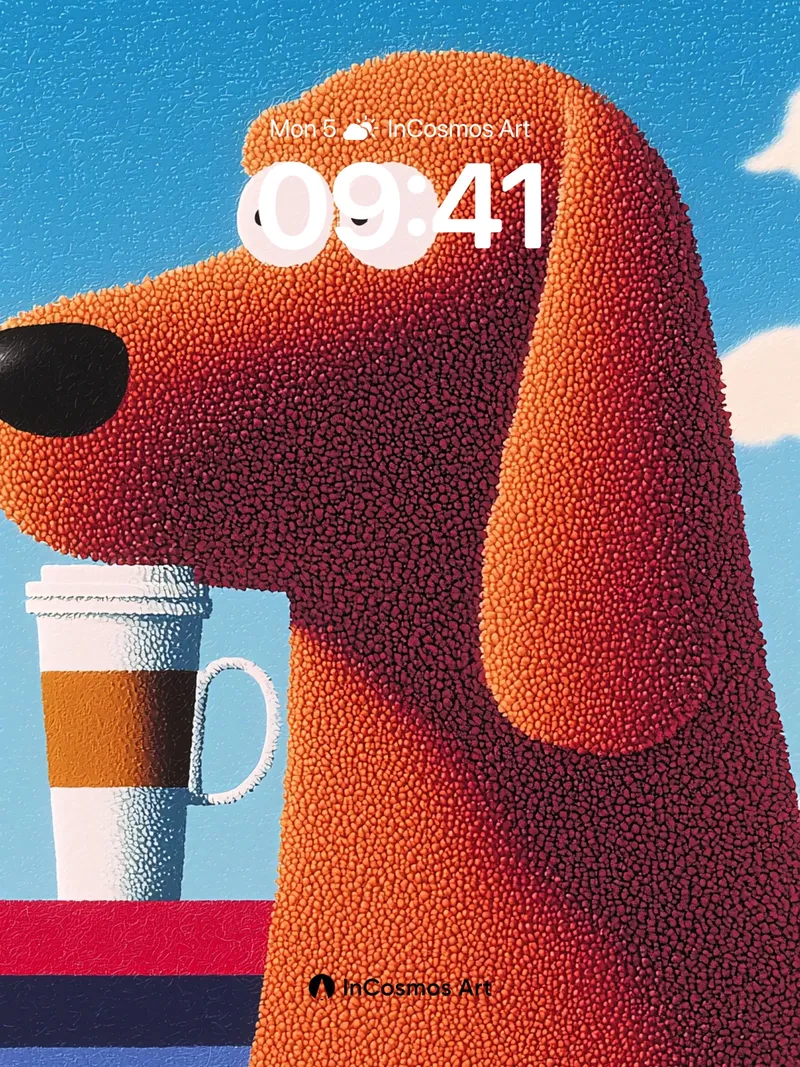
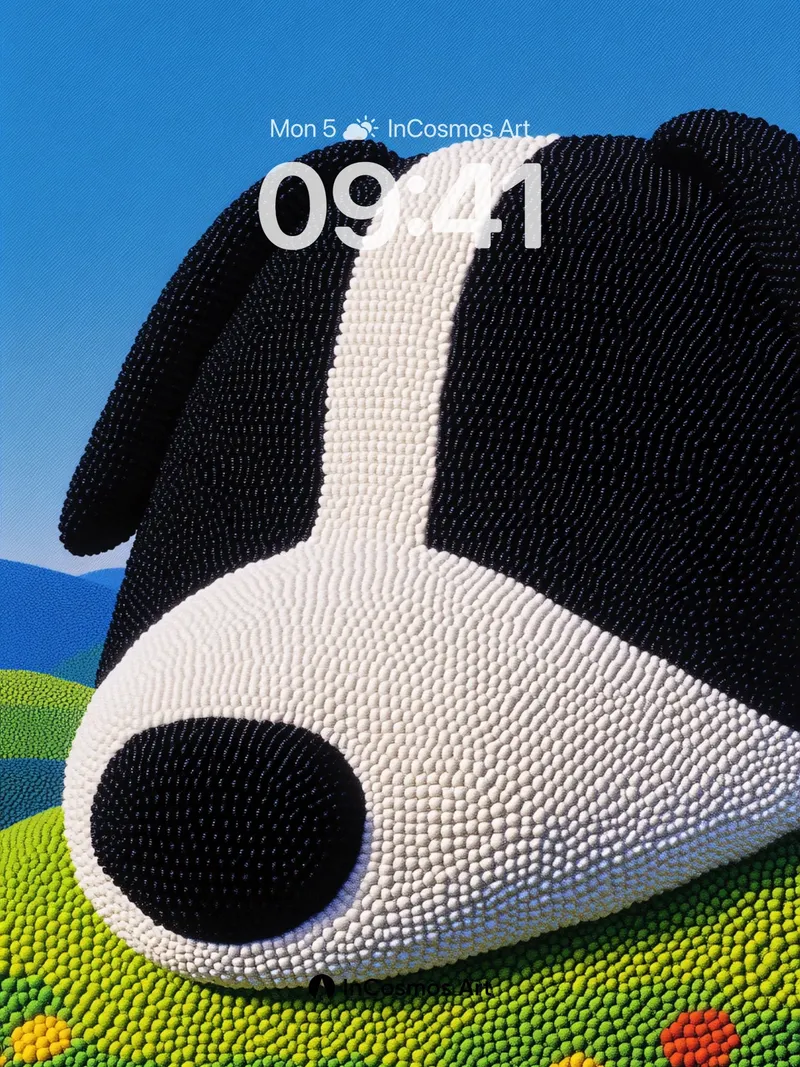
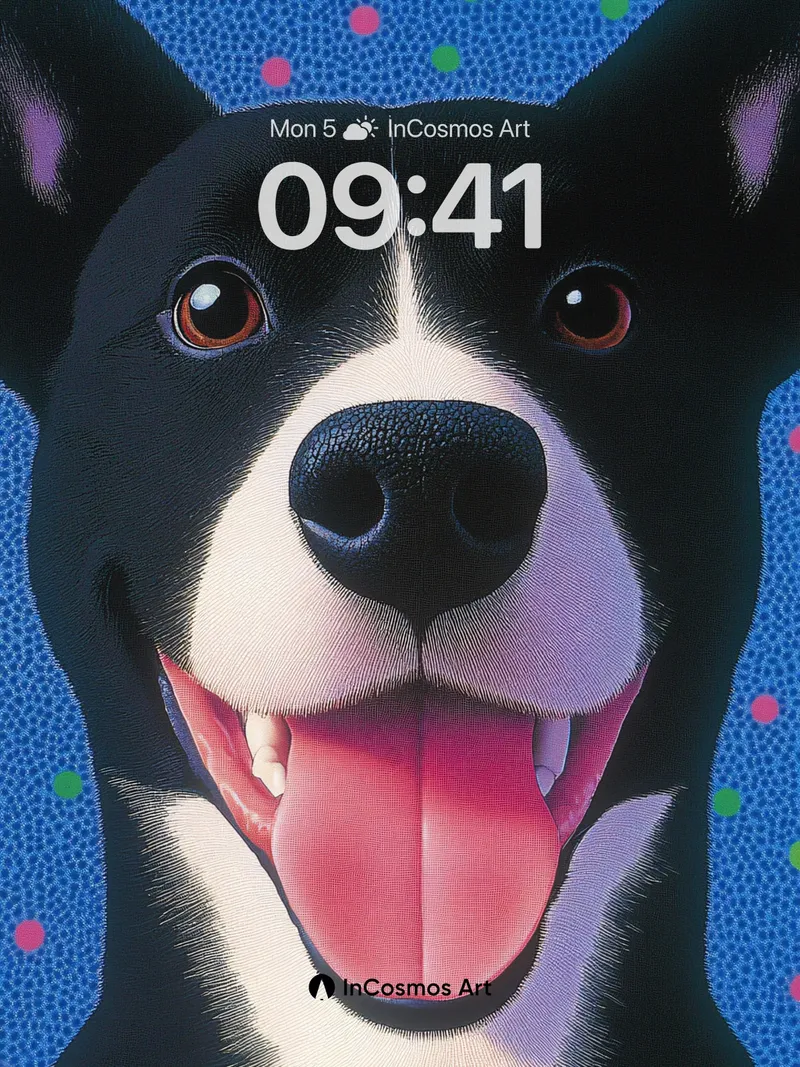
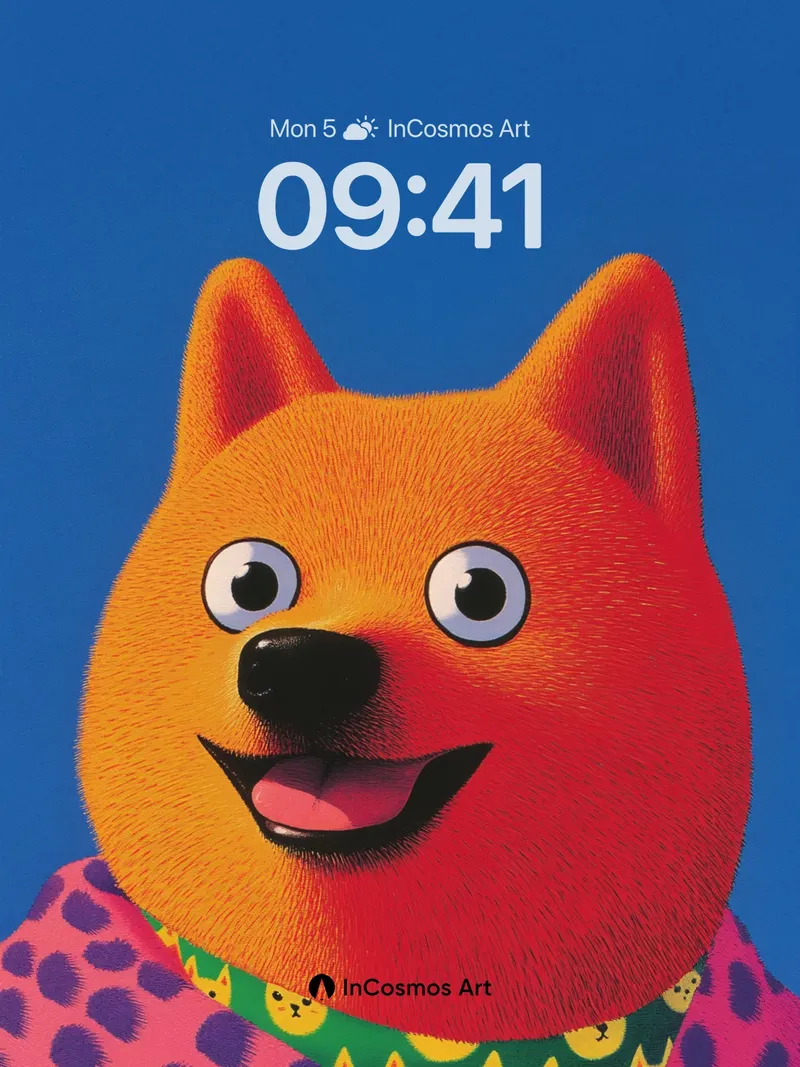
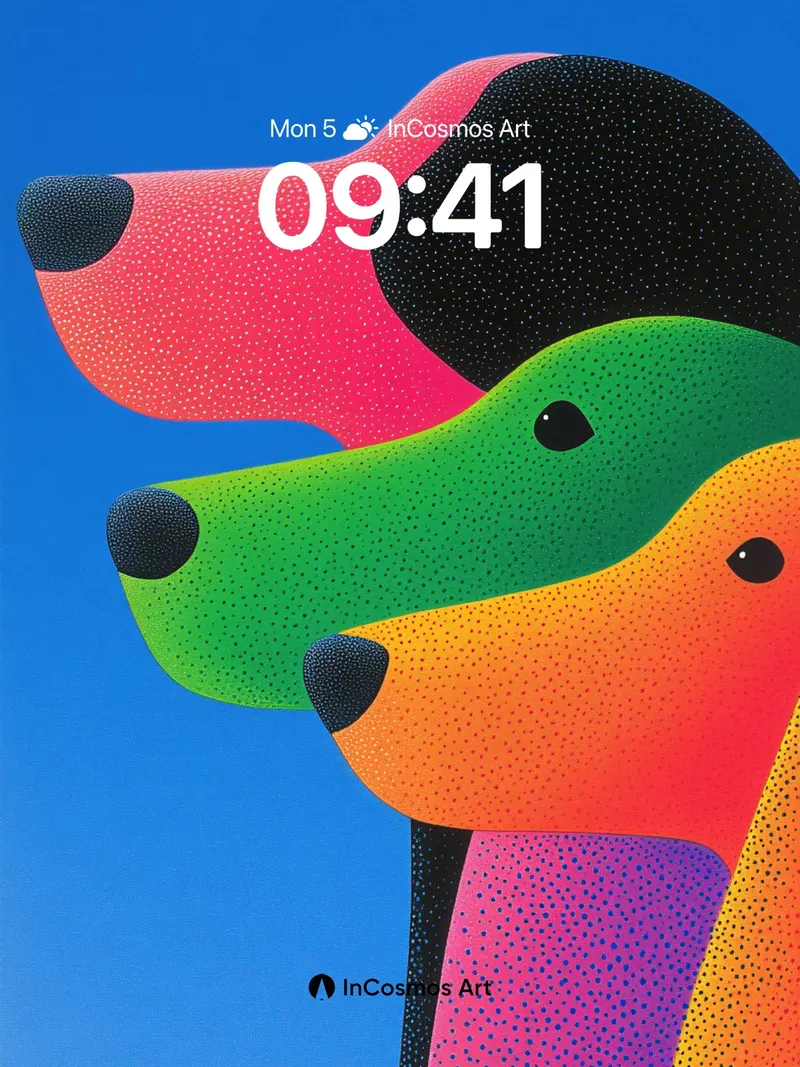
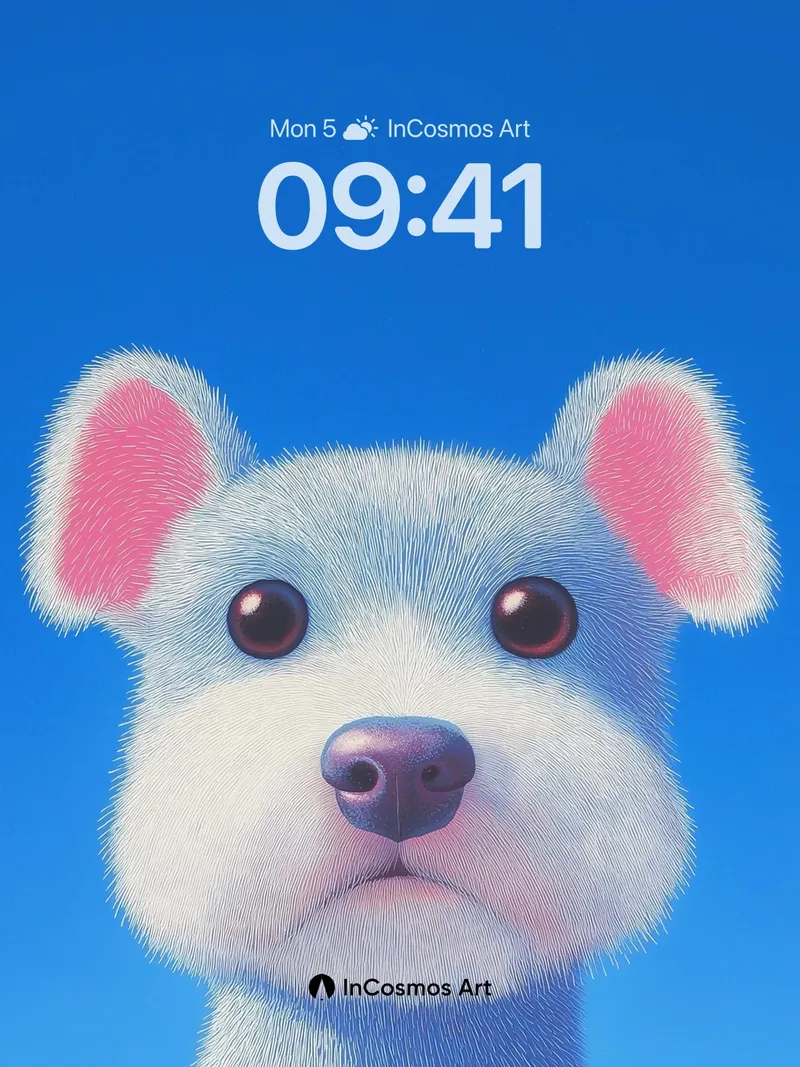
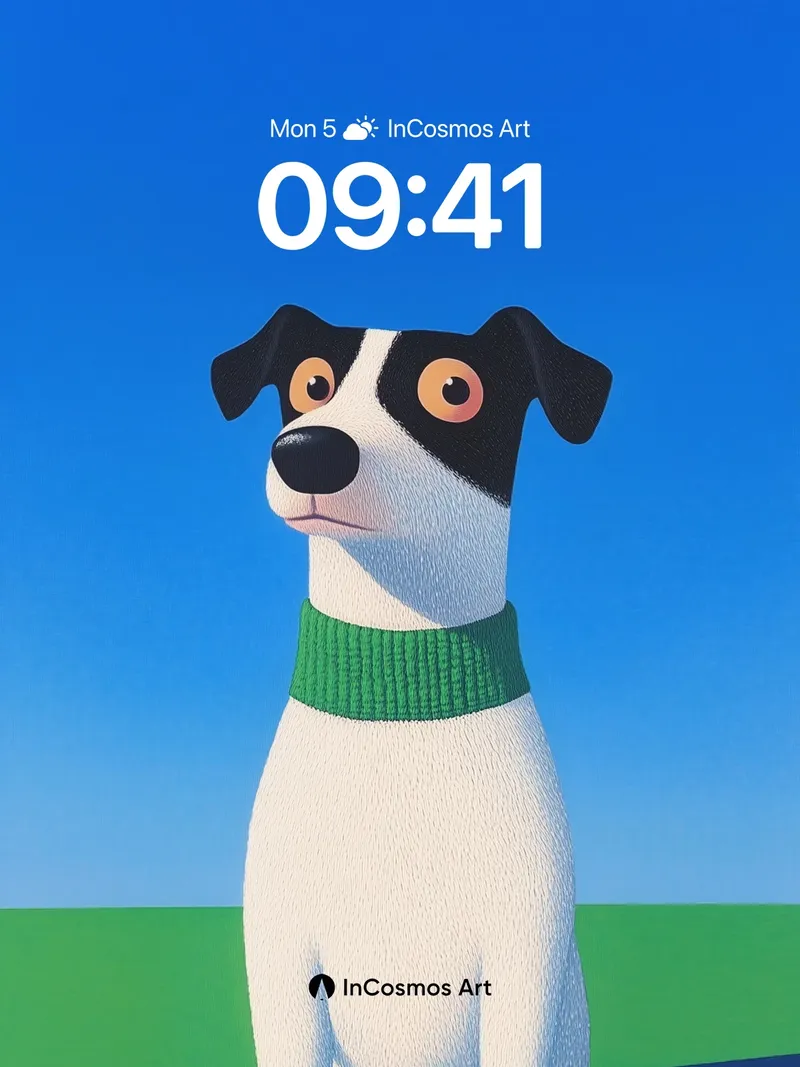
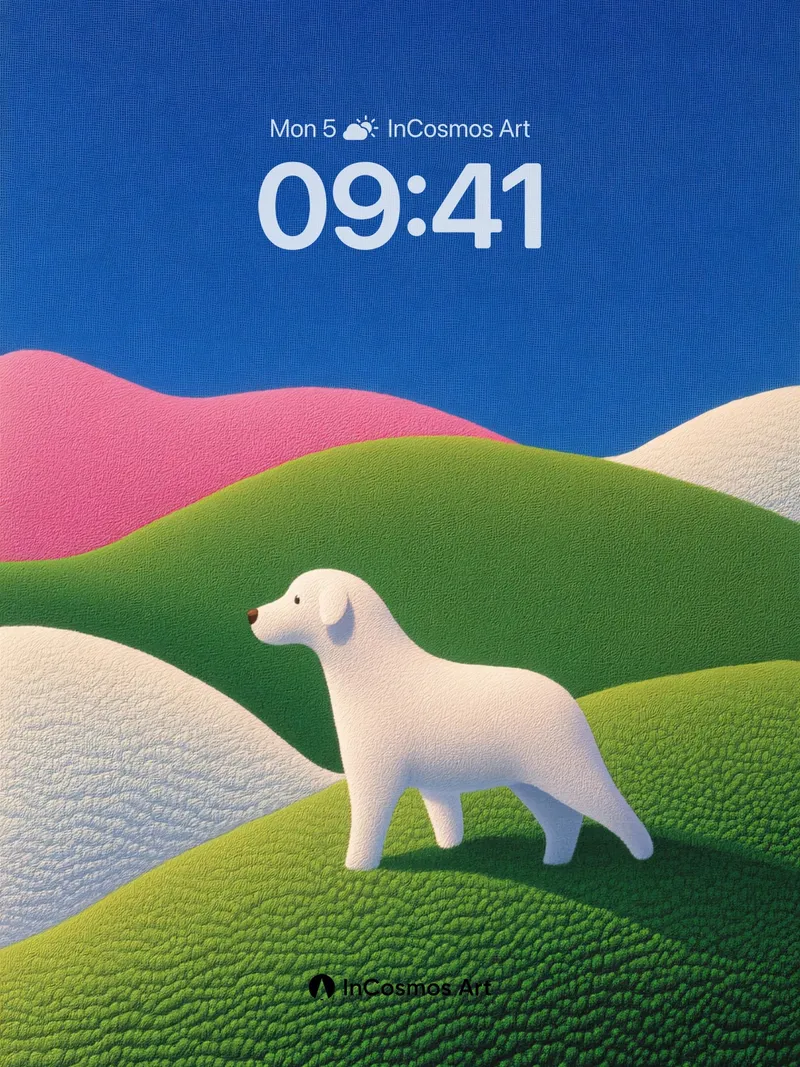
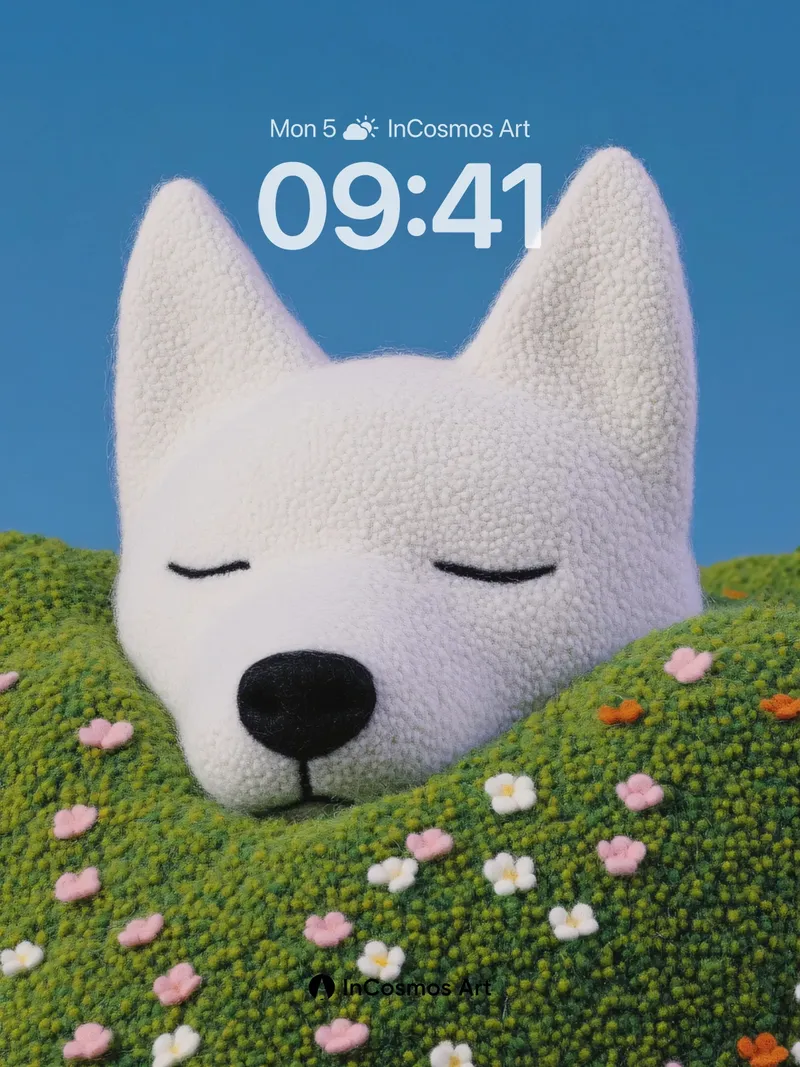
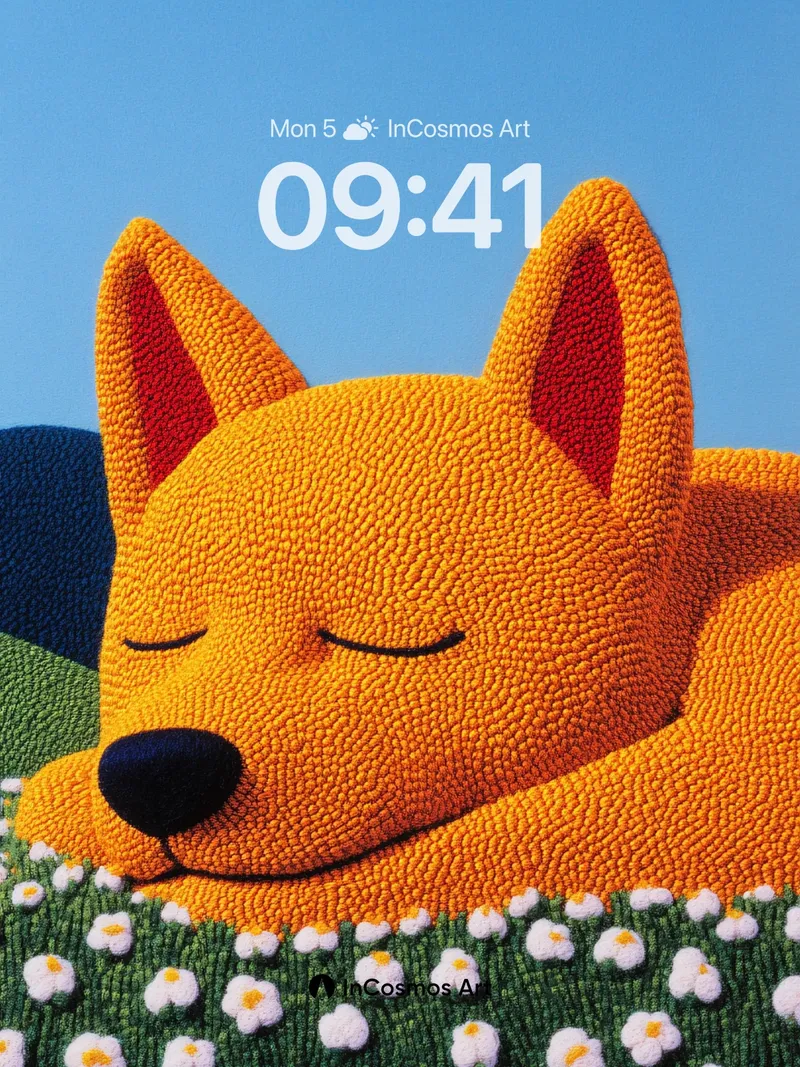
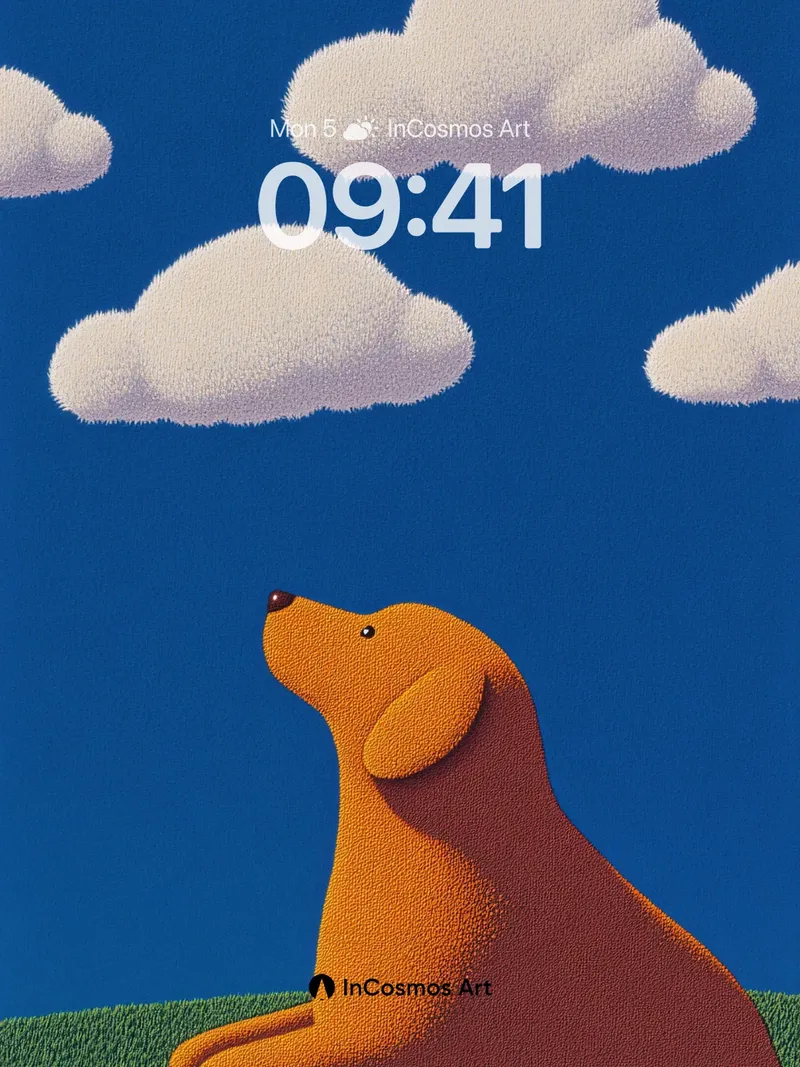
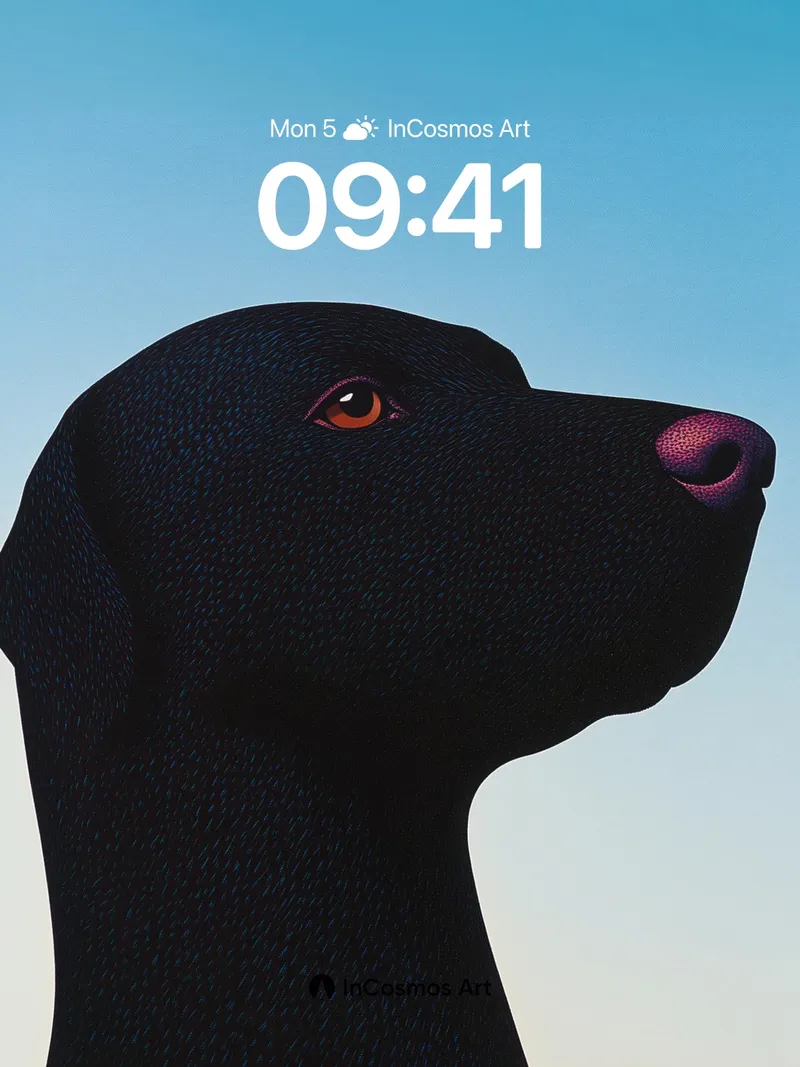
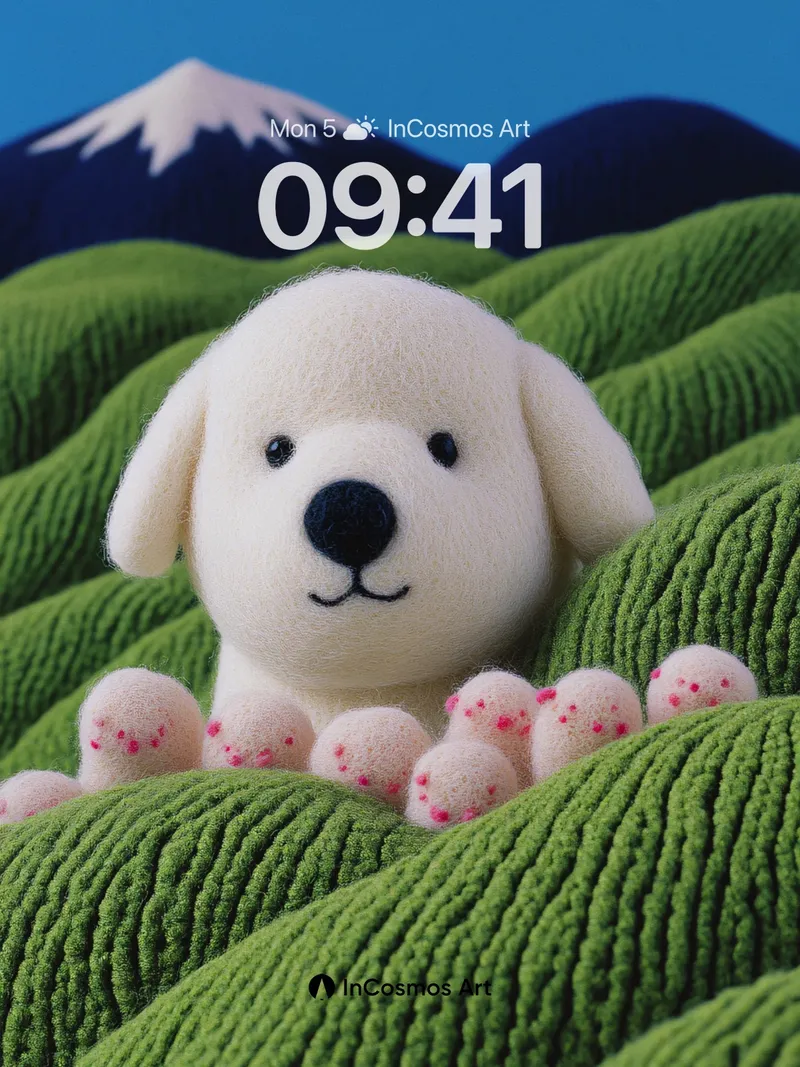
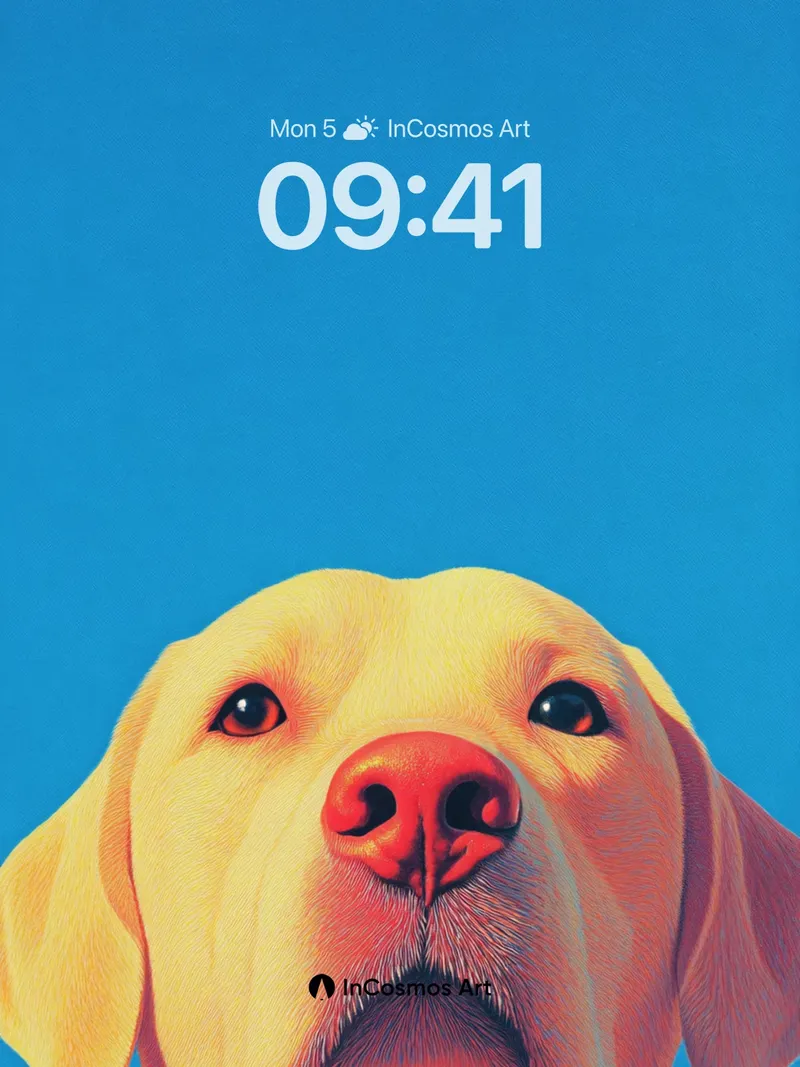
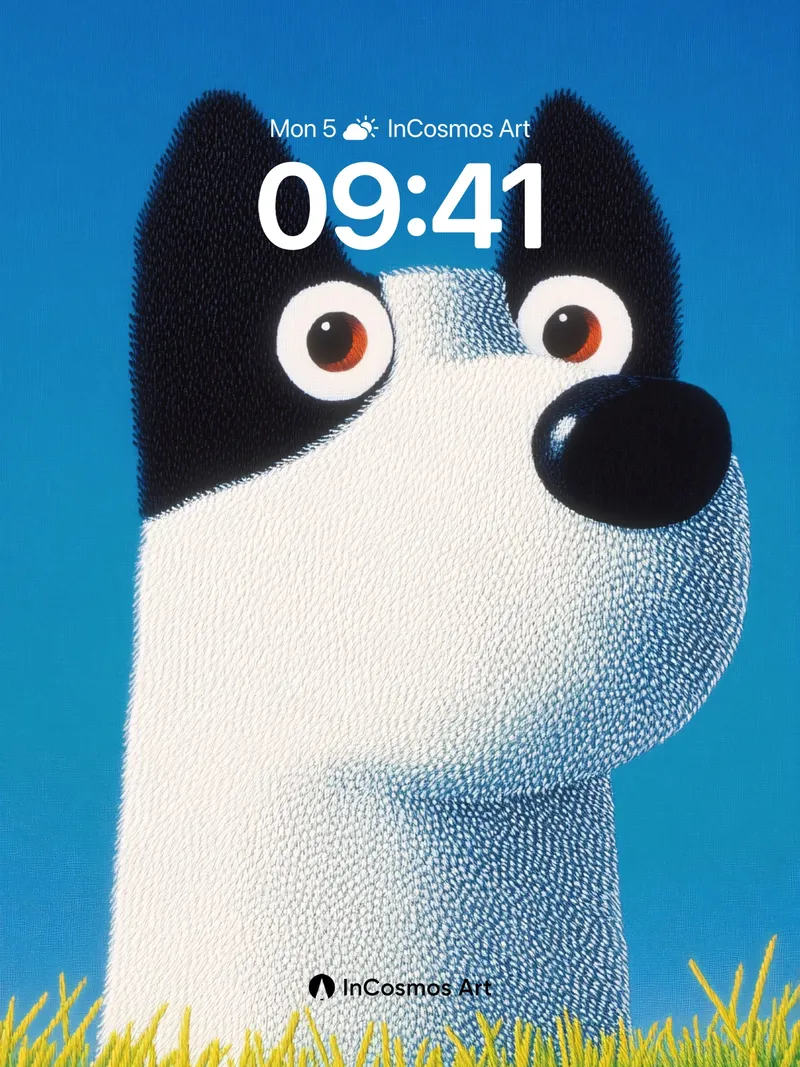
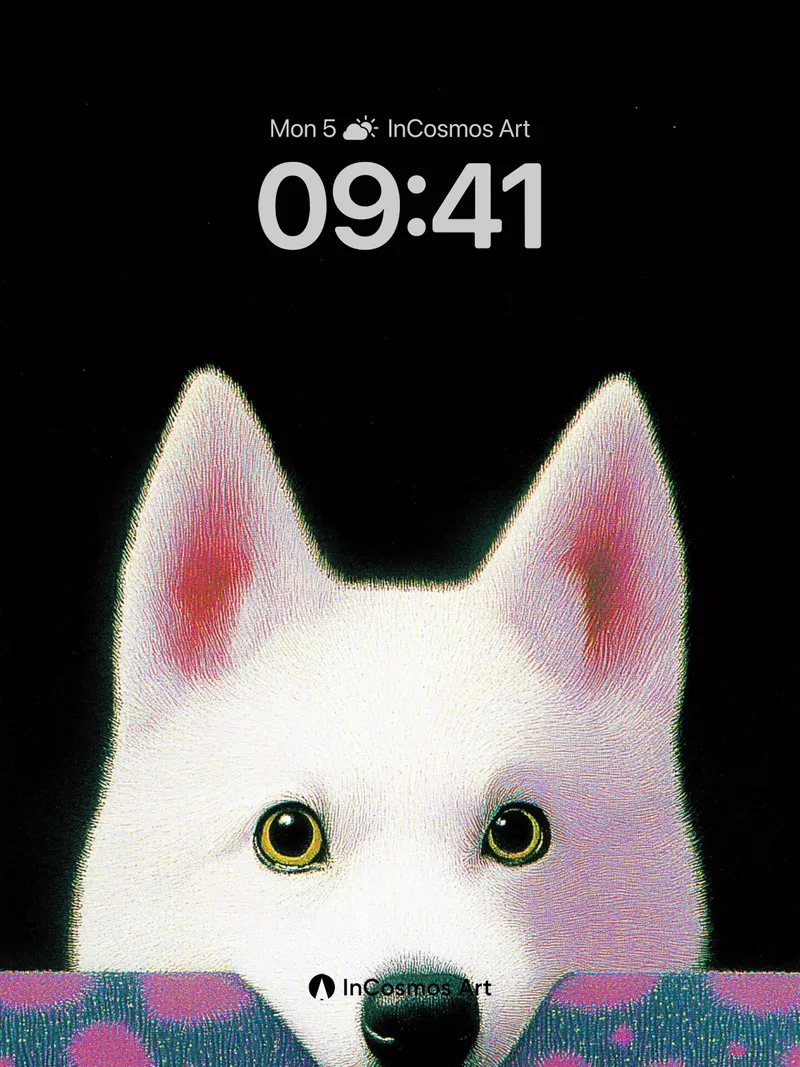
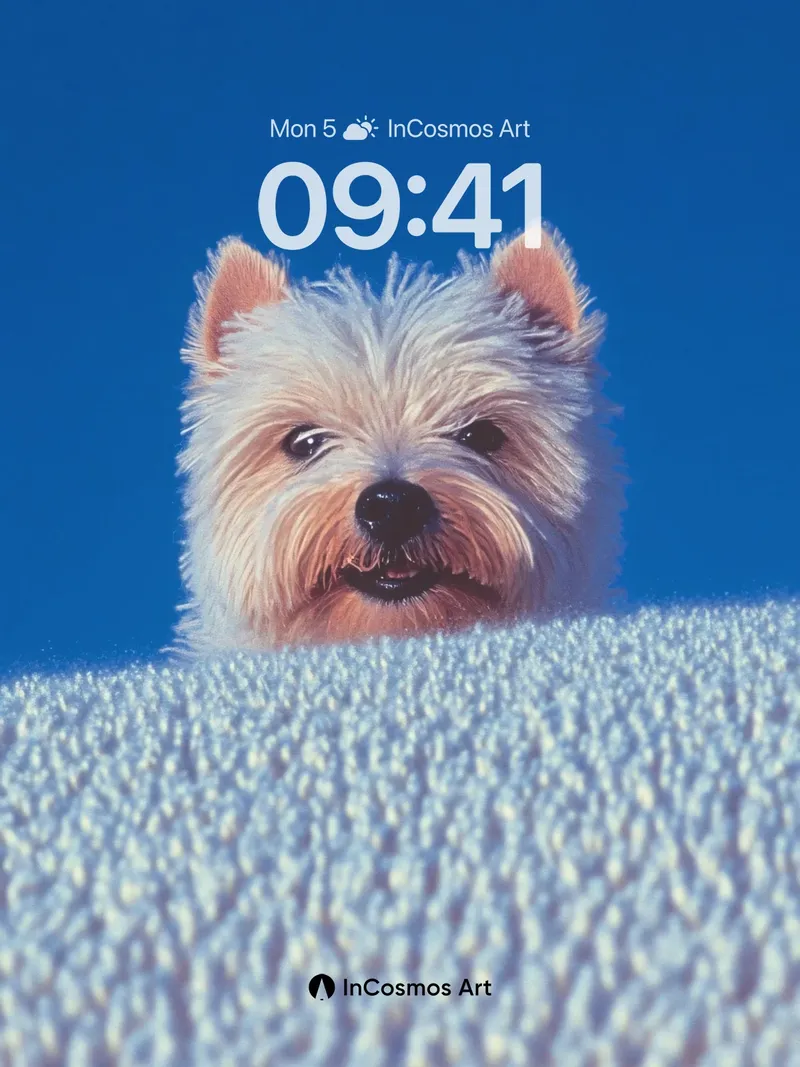
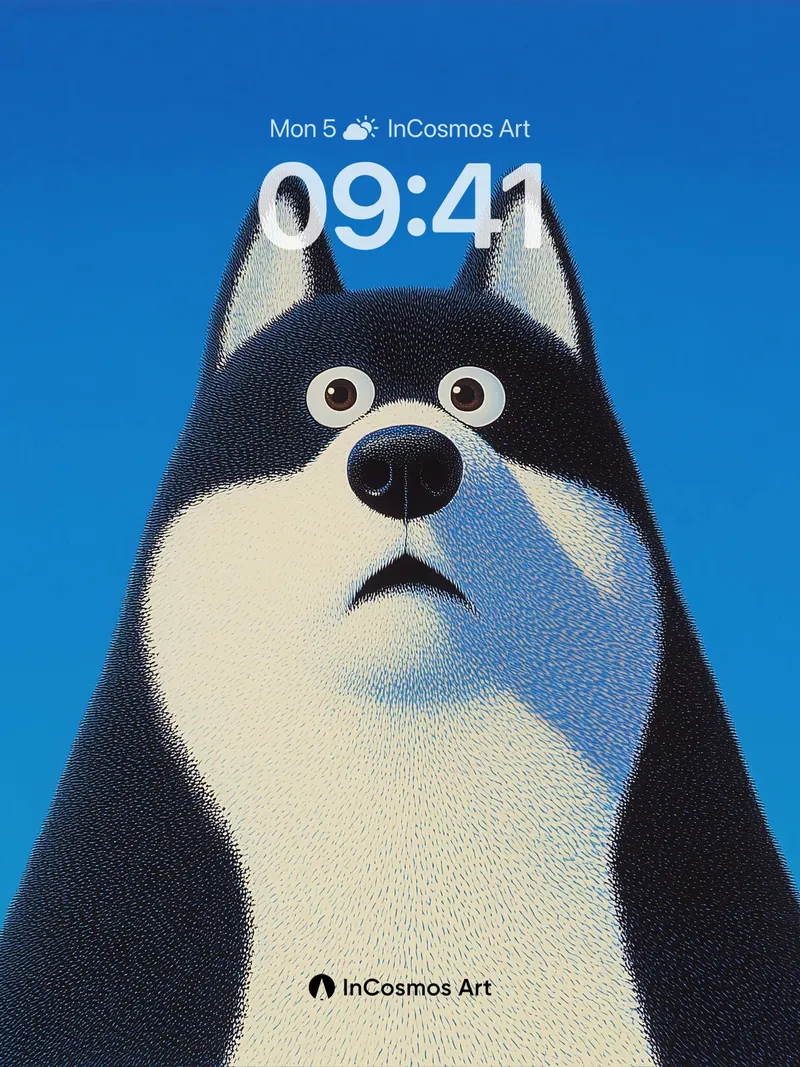
Under an endless blue sky, a group of fluffy dogs settles their bodies and minds in distinct ways. Their forms are imbued with a textile-like texture, as if woven from countless tiny spheres, each pattern carrying a gentle order. These creatures do not exist in reality yet evoke primal emotional resonance—yearning for companionship, stillness, and innocence. Their presence becomes symbolic, a metaphor for oases amid the inner deserts of modern life. When one black-and-white dog wears a green scarf, it is not merely dressed but adorned with a signifier of identity, hinting at self-expression within collectivity. Another orange dog gazes upward, clouds floating like cotton candy above. Its eyes hold no anxiety, only pure contemplation. This gaze is a refusal to be defined, a quiet acceptance of time’s passage. The white dog nestled in flowers, eyes closed, seems cradled by the world itself. Its breath syncs with the grass's tremor, forming an ecological harmony. Together, these figures construct an anti-consumerist utopia where value lies not in possession but in perception. They remind humanity that true joy may not stem from material accumulation but from subtle, enduring connections with nature, self, and others. As colors return to elemental forms—blue, green, white, orange—they cease being mere decoration and become vessels of emotion. This minimalist yet rich aesthetic mirrors how younger generations seek spiritual anchors amid information overload.
The Narrative Language of Color
The blue sky serves as backdrop and emotional projection. Non-aggressive yet overwhelmingly present. Green grass symbolizes vitality, yet here it is not wild growth but carefully structured order. The orange dog brings warmth, like a lantern illuminating corners. These hues echo each other, forming a closed visual system. Not randomly chosen, but arranged by emotional logic. Each tone tells a story: blue is the hue of solitude, green the sprout of hope, orange the call of comfort. When they meet, they transcend physicality, becoming psychological reflections.
The Poetic Construction of Fur
Fur here becomes a material language. Each strand composed of micro-spheres, creating unique textures. This is not realism but abstraction. Such treatment lifts animals beyond worldly weight, making them light, dreamlike. They resemble fairy-tale characters more than real beings. This 'unreal' quality paradoxically amplifies emotional power, freeing them from cycles of birth and death, eternally suspended in a moment. Viewers instinctively shed critical thought, entering near-meditative states upon encountering such forms.
Silence as Rebellion
These dogs neither speak nor act. They sit, lie, look, sleep. Yet this silence constitutes the most potent expression. In an era of extreme noise, stillness becomes a declaration. They refuse social media’s traffic wars, reject labeling, resist commodification. Their existence is a gentle resistance to dominant culture. Not fierce, but tender—like spring wind brushing grass. Through simplicity, they tell the world: slow down, feel your breath, that is the essence of living.