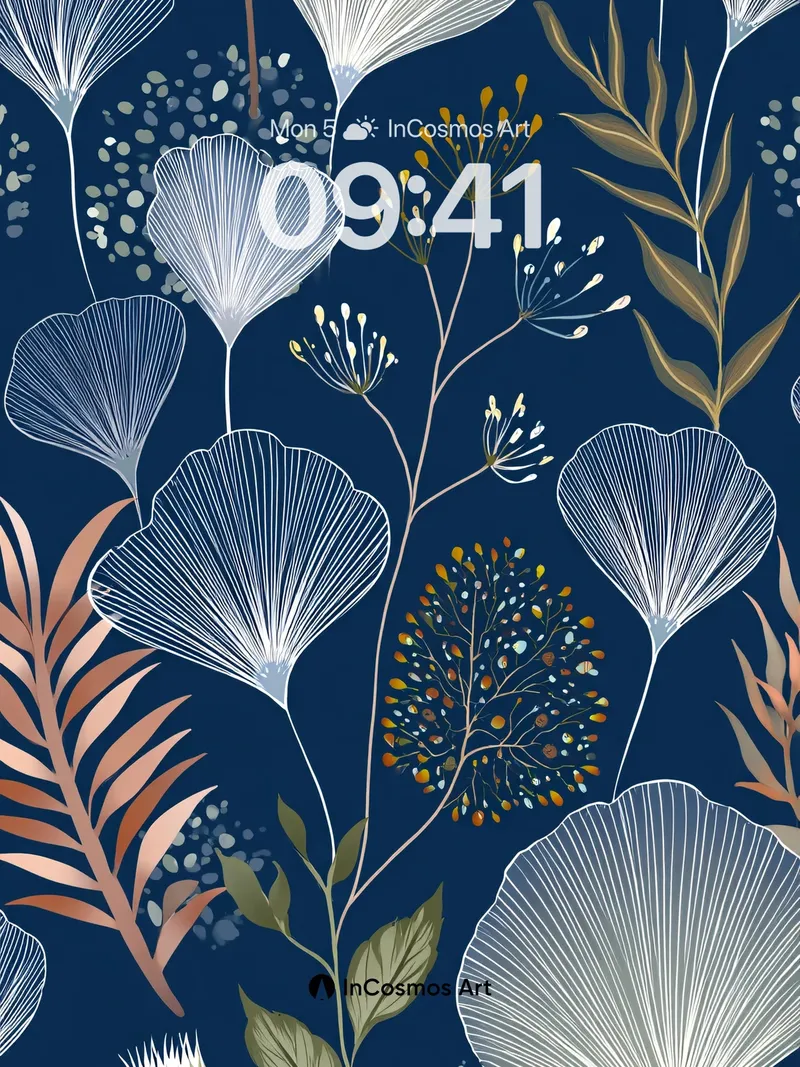
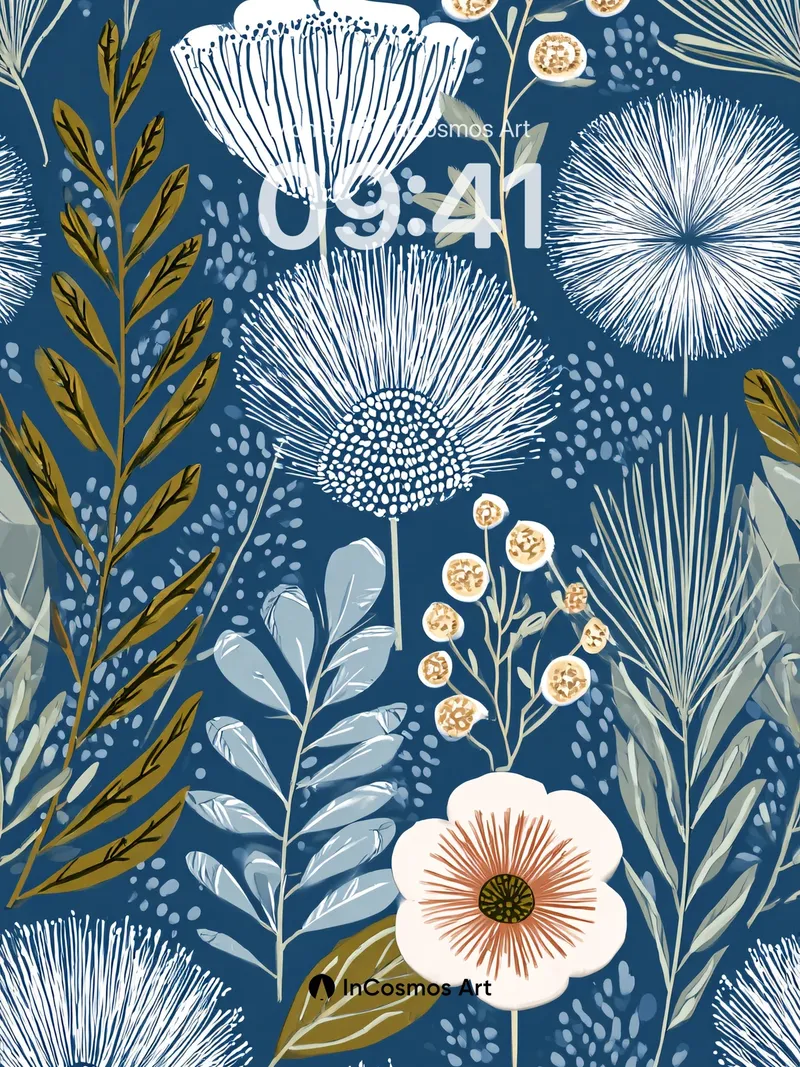
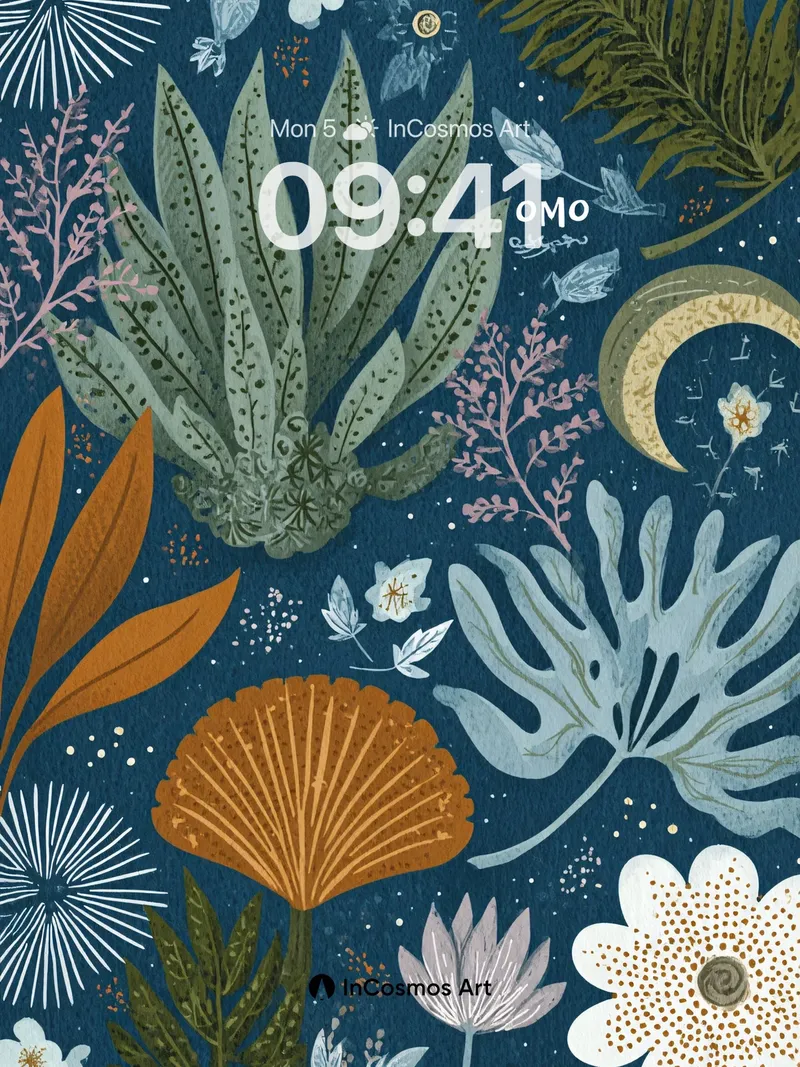
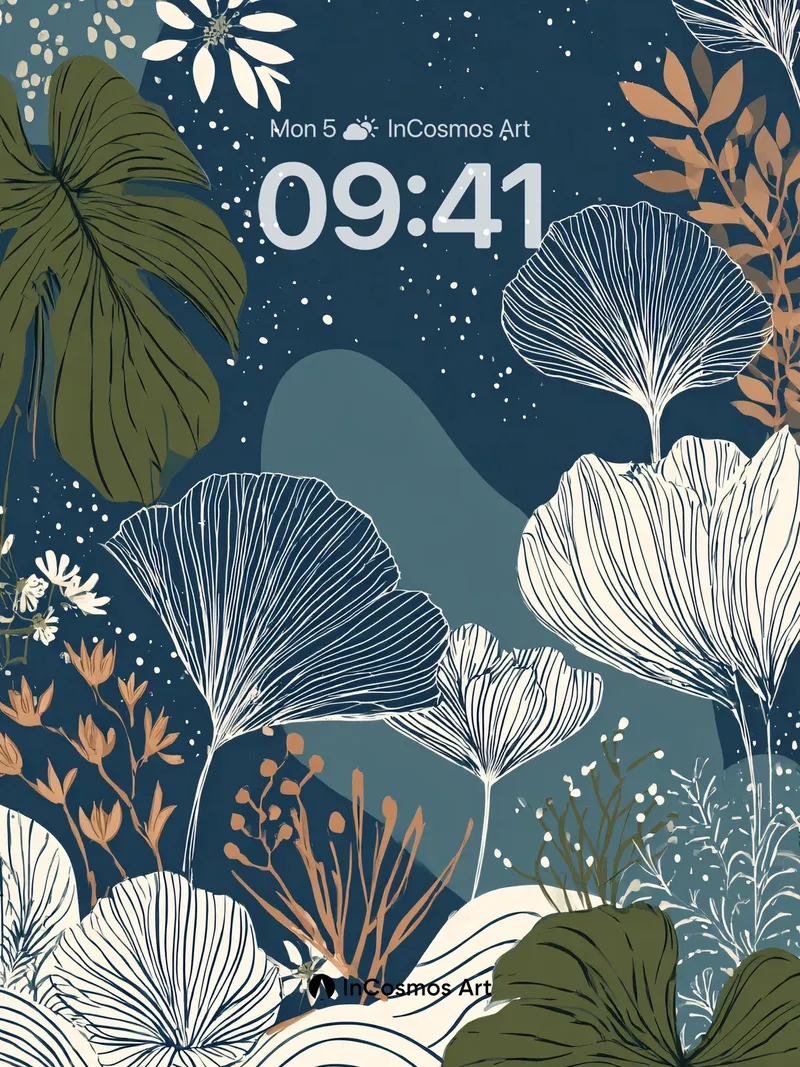
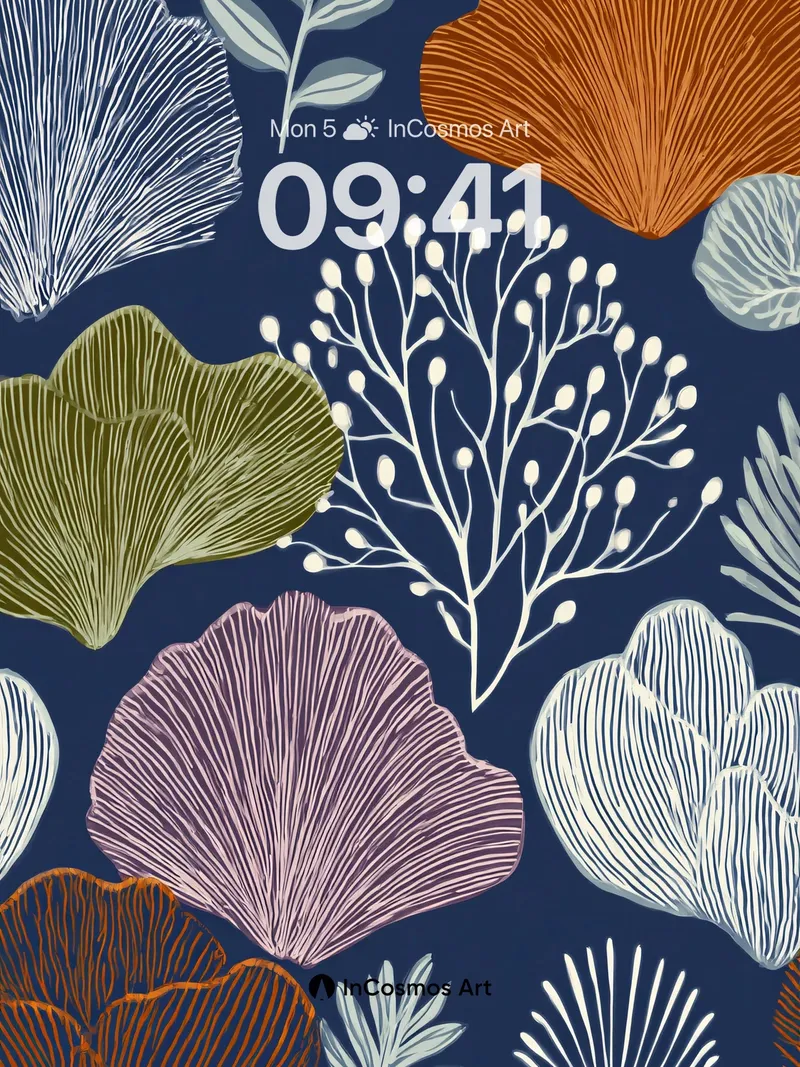
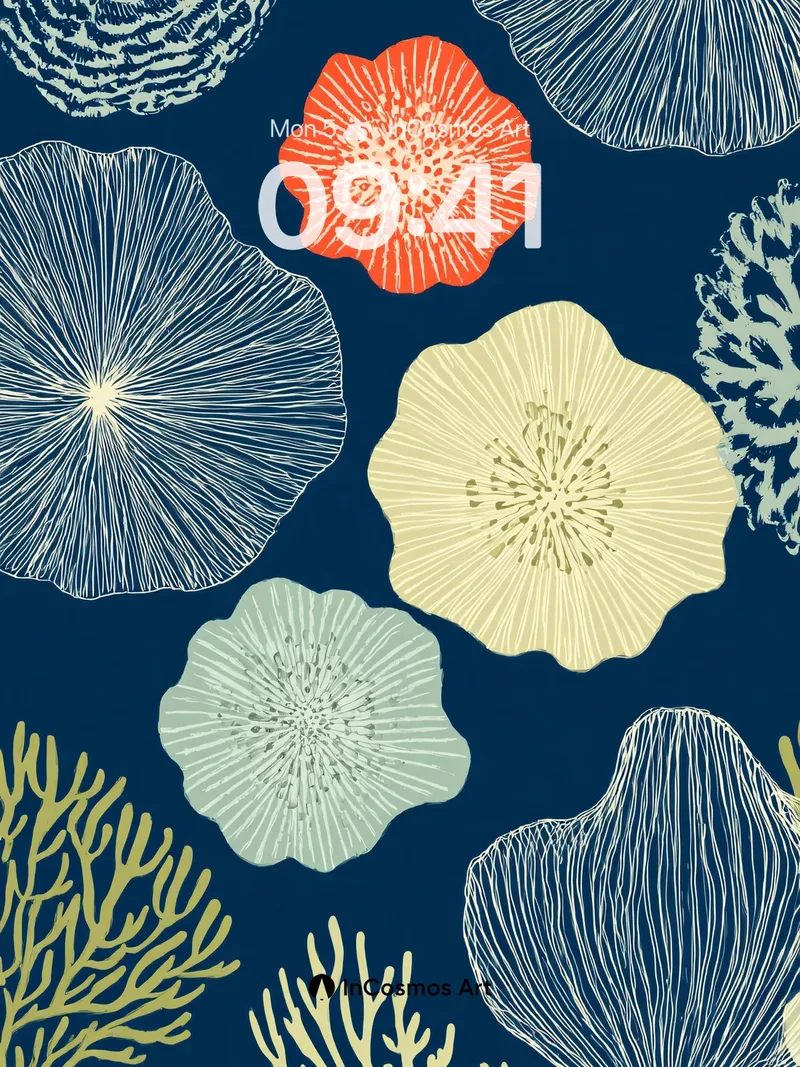
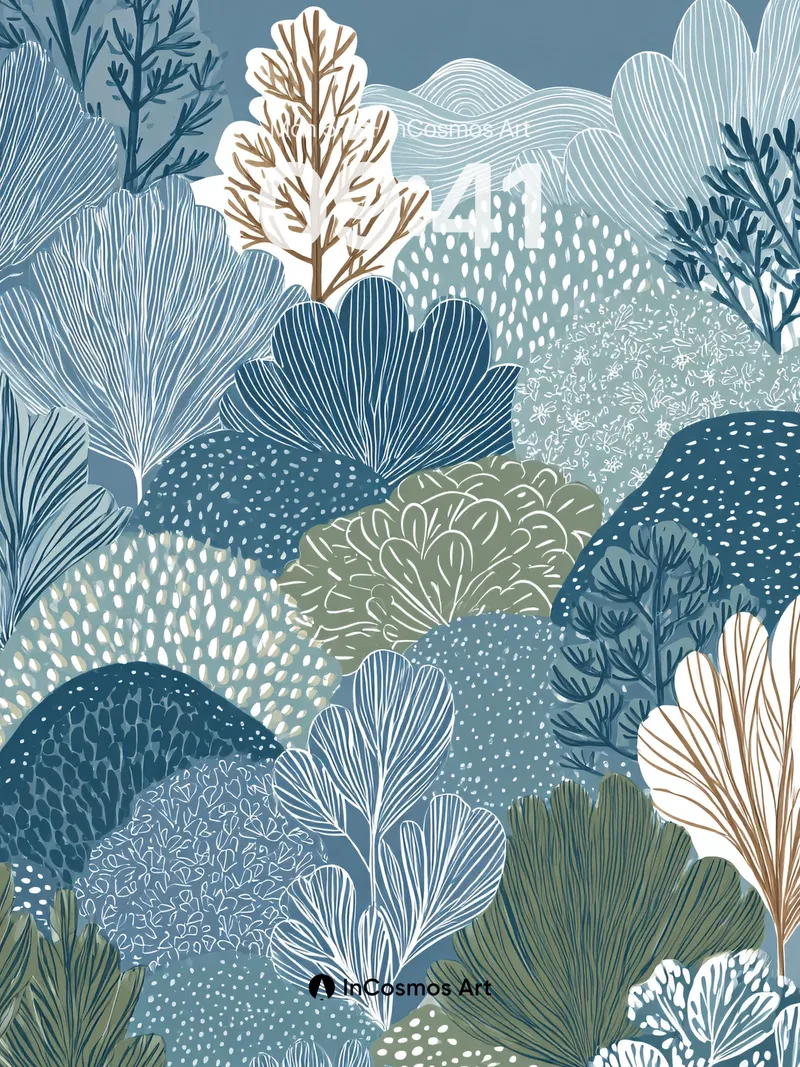
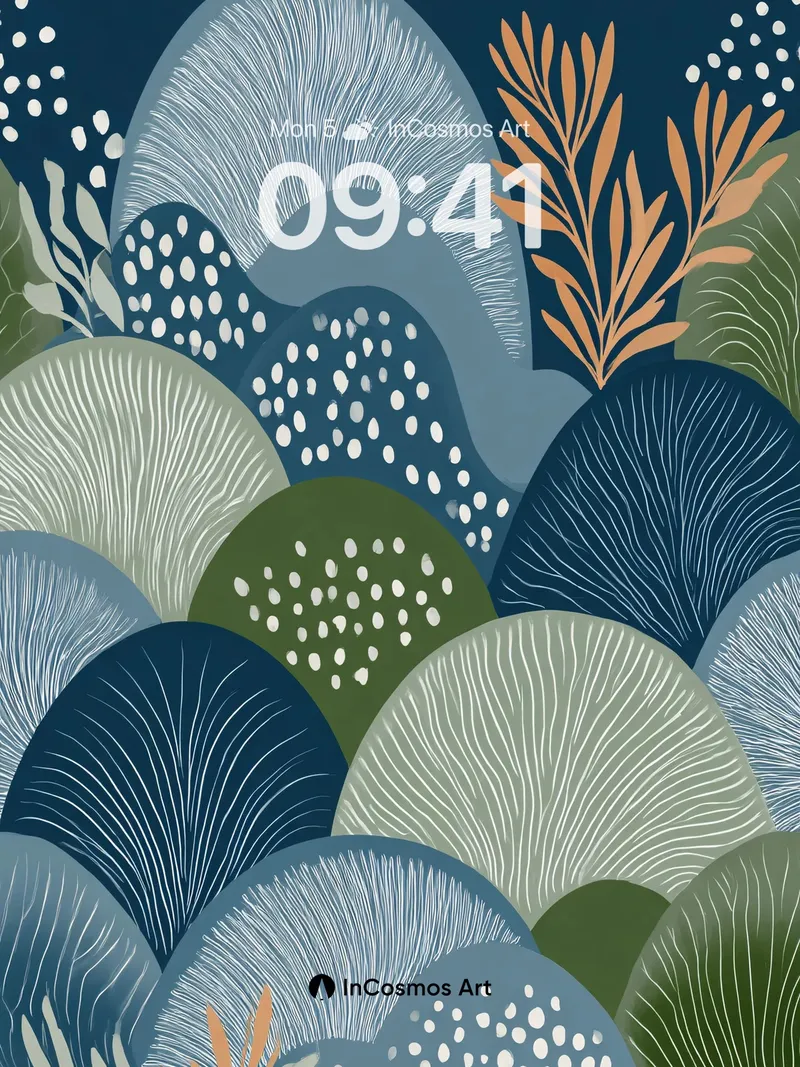
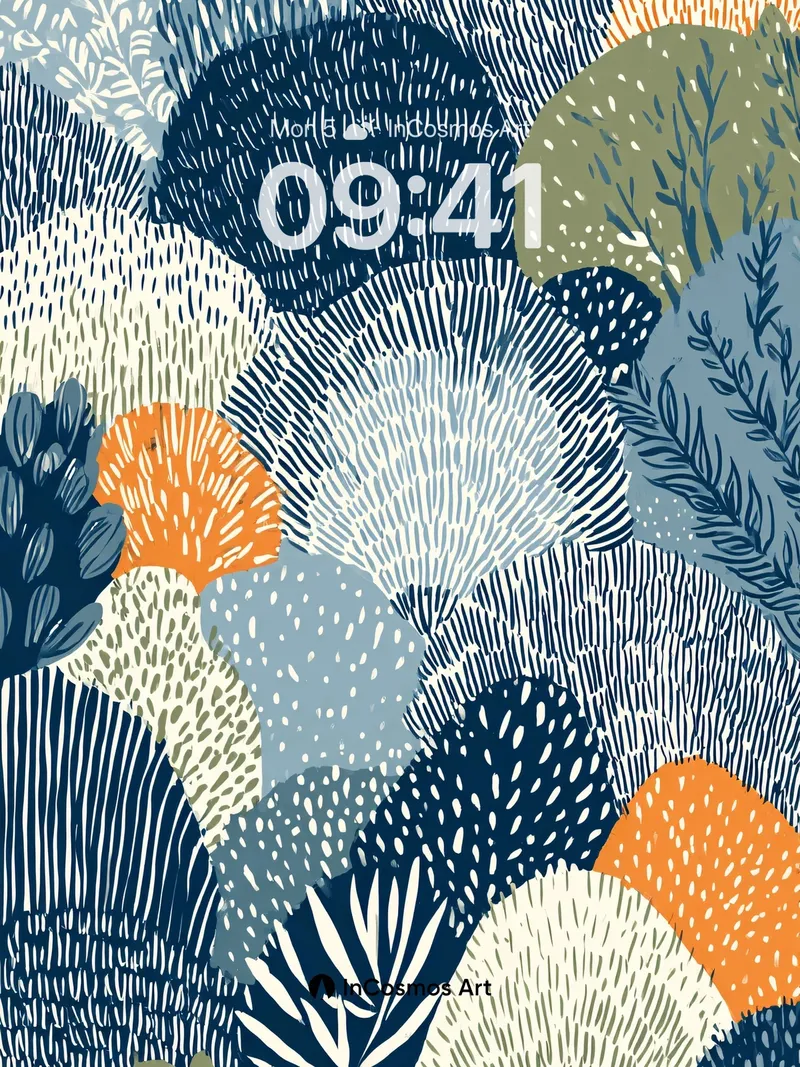
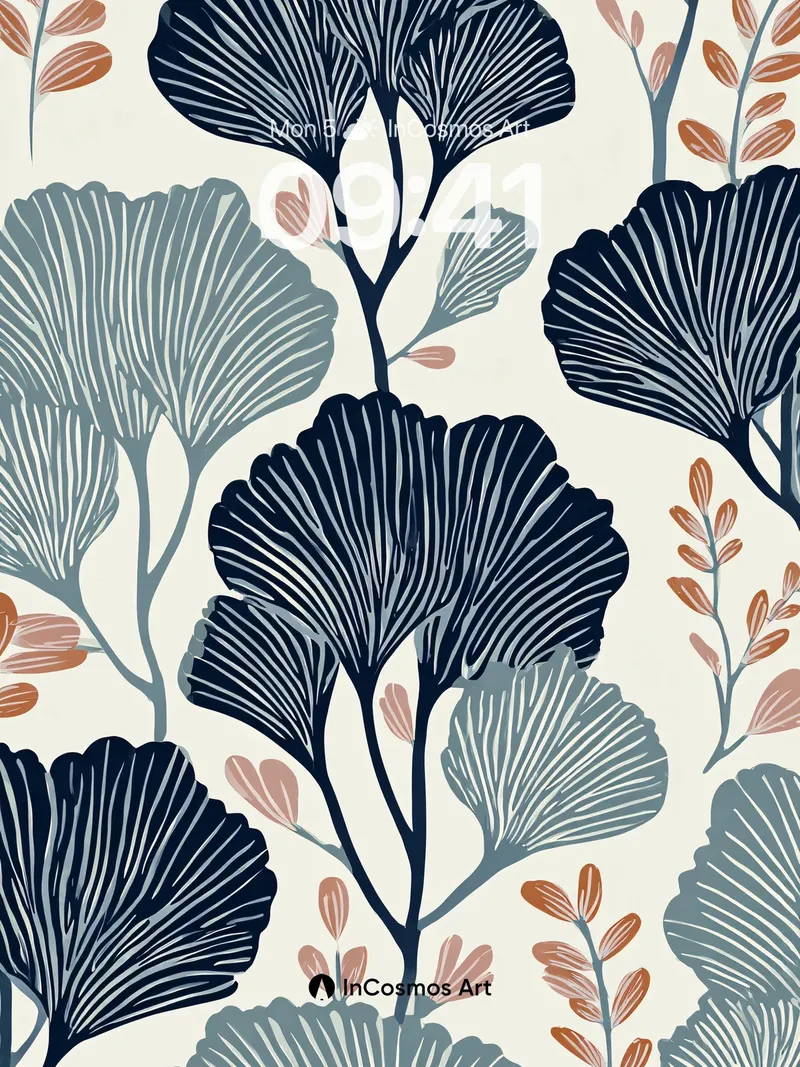
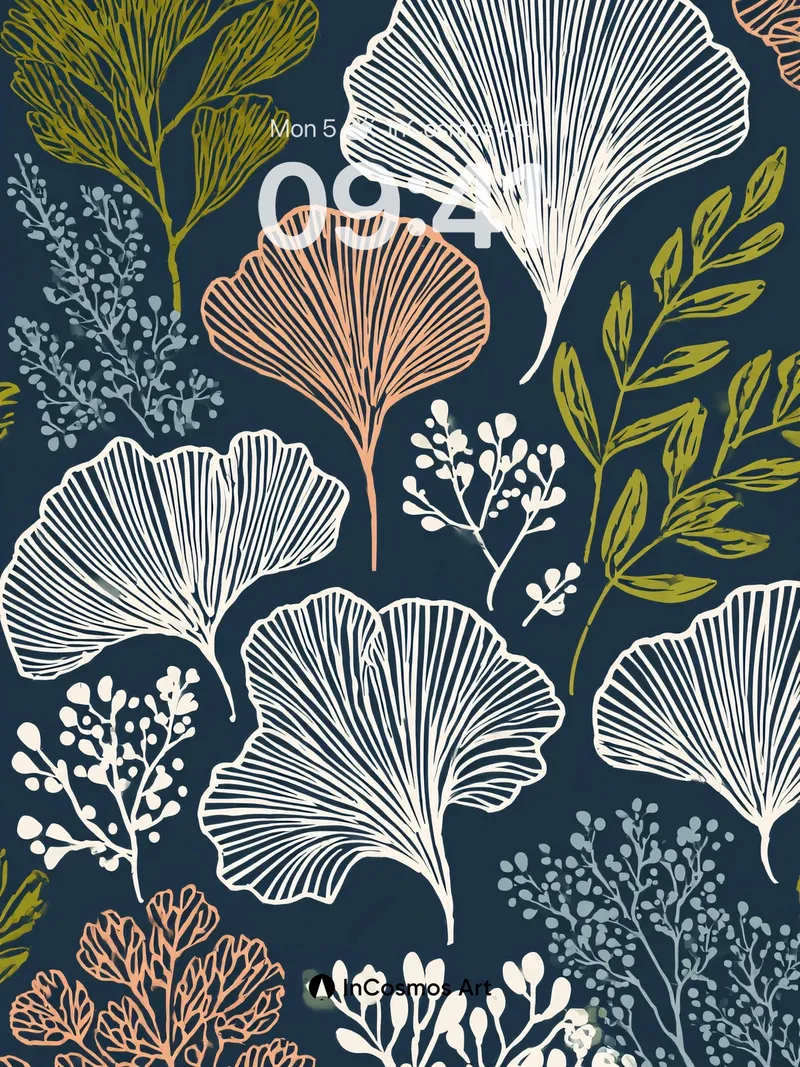
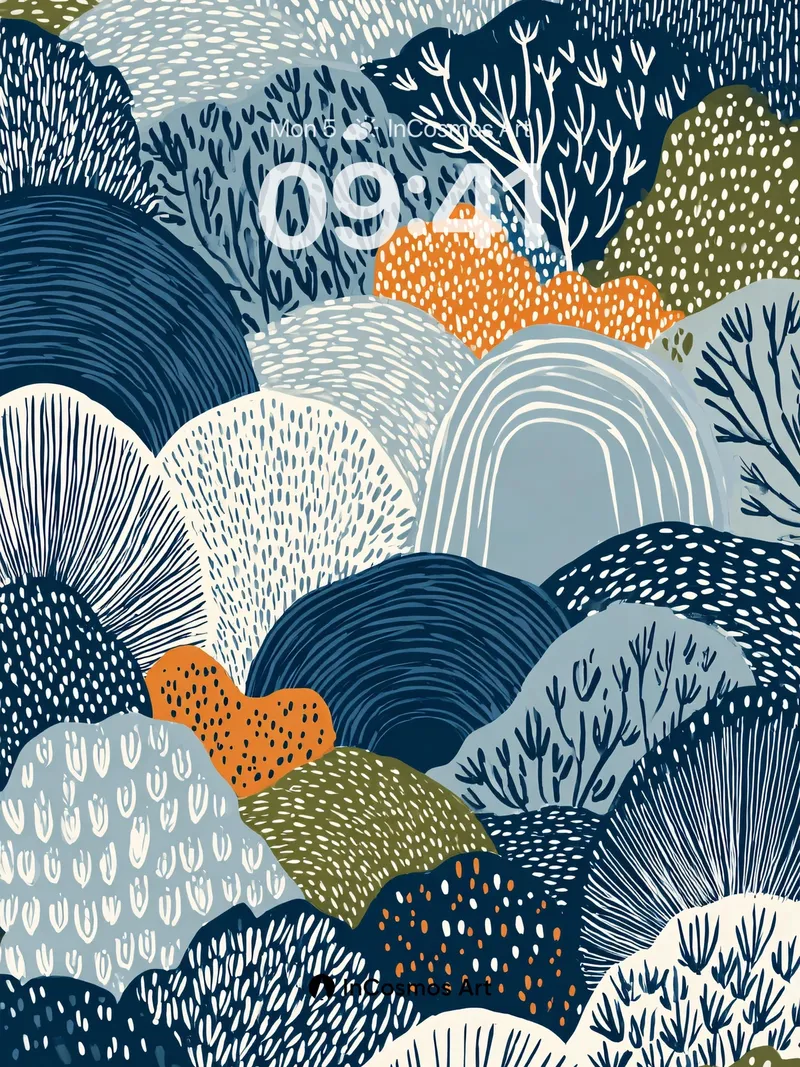
On a deep blue background, plant forms unfold through lines and colors, creating a tranquil yet rhythmic visual language. Each leaf, each flower carries the memory of growth, yet gains new meaning within deliberate composition. This is not mere replication of nature, but transformation through repetition and variation, turning chaotic vitality into readable order. The design honors nature's complexity while fulfilling human instinct for structure and beauty. Negative space in the patterns is not emptiness, but breathing room—allowing viewers to pause amid dense detail and enter a meditative state.
The Geometrization of Nature
Plant silhouettes are simplified into geometric shapes: veins become radial lines, petals arrange in fan-like or circular patterns. This abstraction does not diminish life’s essence; it enhances formal purity. Line density and direction suggest growth vectors—silent narratives of expansion and contraction. The deep blue base evokes oceanic depth and nocturnal calm, providing a stable stage for these distilled natural elements.
Emotional Coding Through Color
Orange, beige, pale green, and gray-white interweave against the dark blue, forming gentle contrasts. Orange signifies warmth and energy, often placed at centers or tips as focal points; beige offers soft luminosity, like morning light; pale green and gray-white convey freshness and stillness. Color placement follows an internal balance, ensuring harmony without monotony. This palette reflects modern reinterpretation of natural hues—retaining raw texture while embracing contemporary sensibility.
Symbolism in Repetition
Repeating patterns serve as cultural symbols, suggesting cycles and eternity—like seasonal shifts and life’s recurrence. In urban life, fragmented information overwhelms; such motifs offer visual stability, carving out a mental oasis amid noise. They remind us that even in hyper-artificial environments, natural order can be sensed and recreated.
Temporality in Design
These patterns resist fixed eras yet carry distinct vintage charm. Hand-drawn lines and slightly rough textures evoke 19th-century botanical illustrations or traditional Eastern textiles. Yet their color schemes and compositional logic feel modern, creating cross-temporal dialogue. This temporal ambiguity allows them to evoke nostalgia while meeting current aesthetic demands.