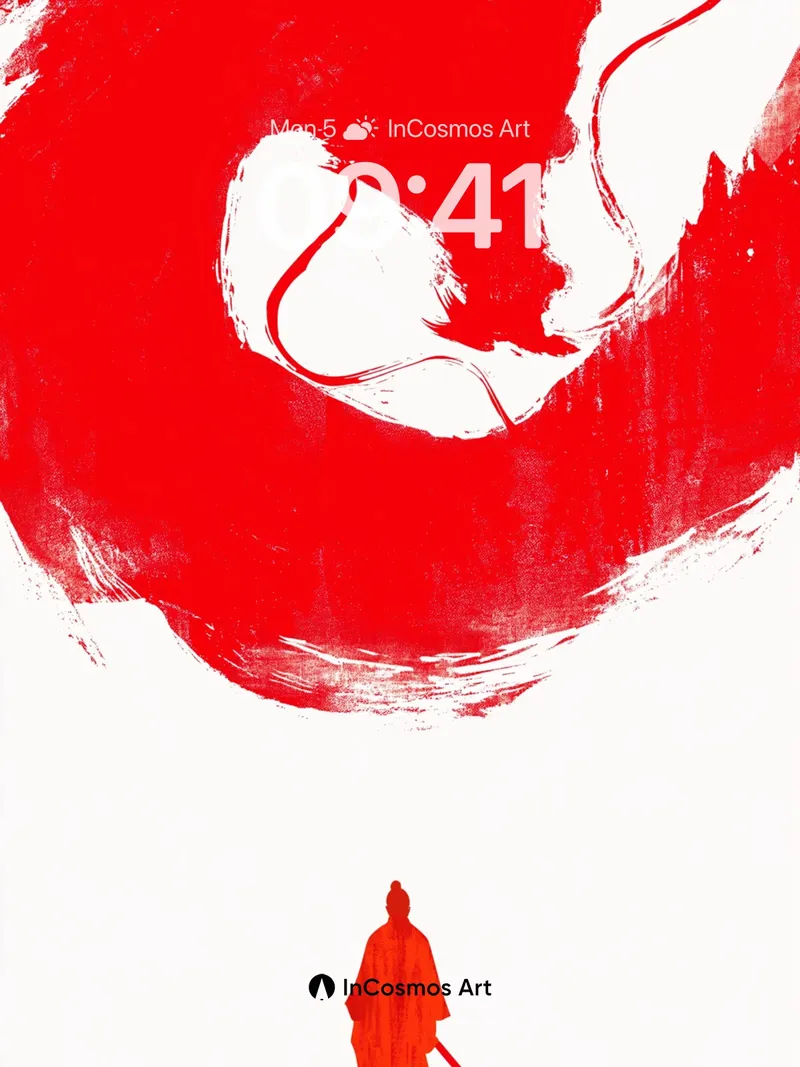
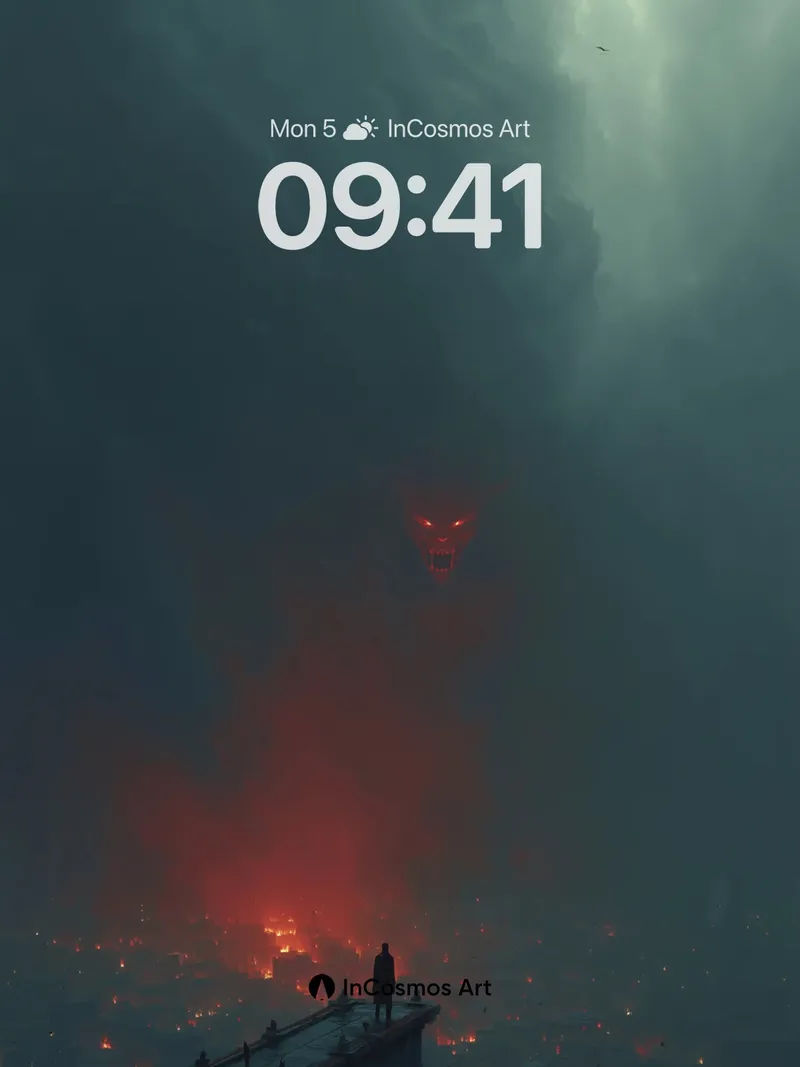
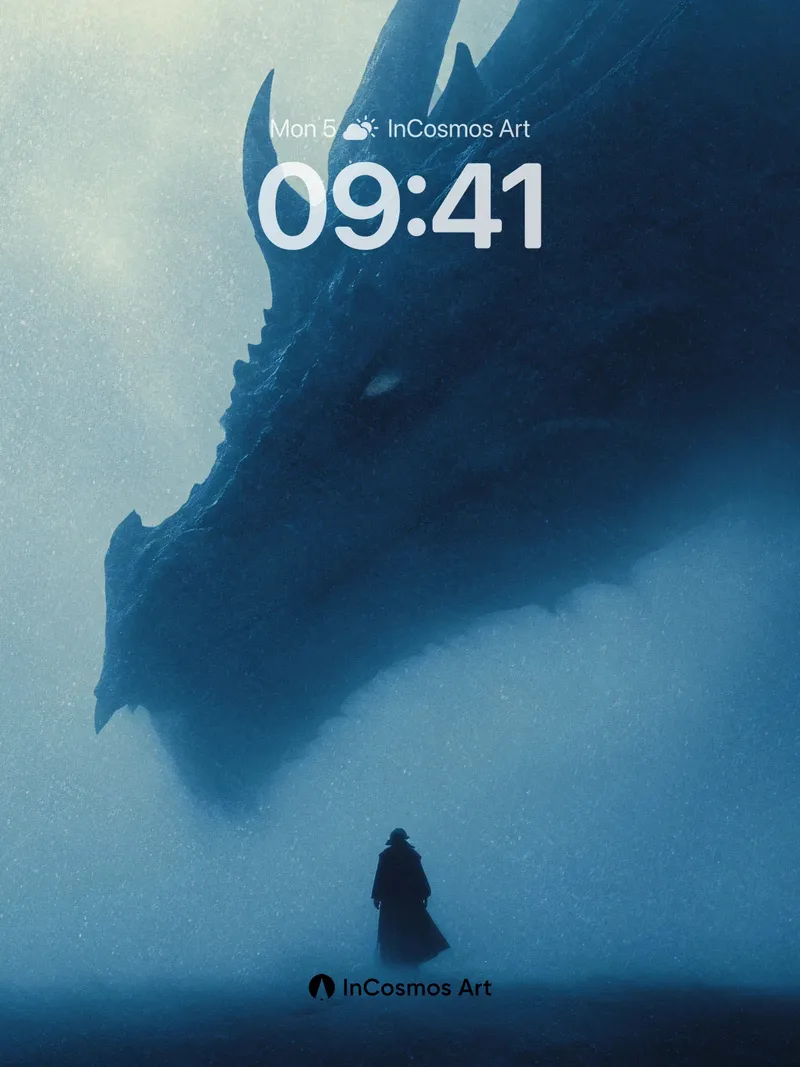
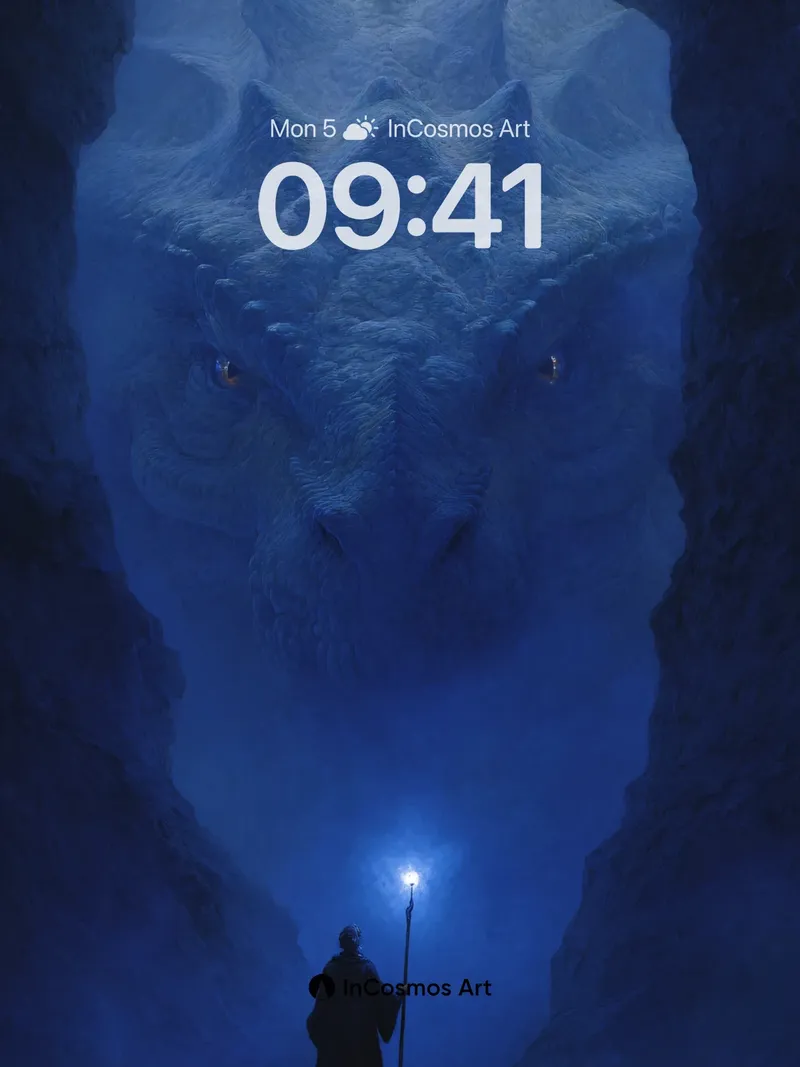
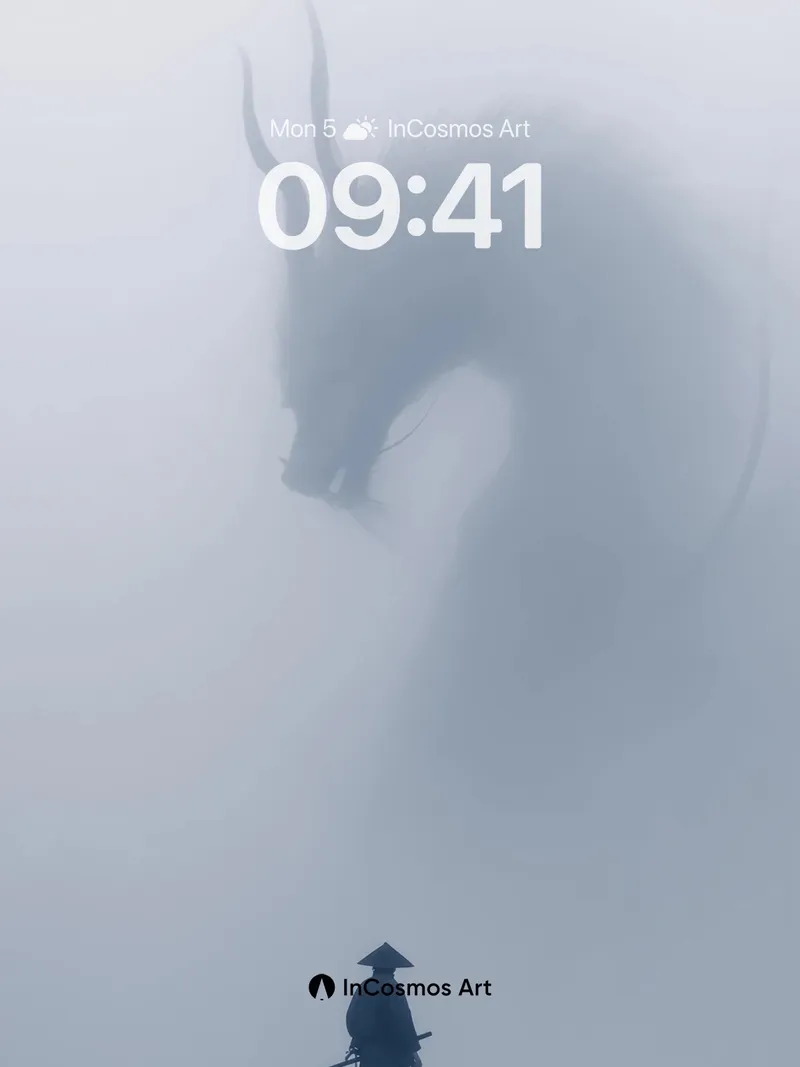
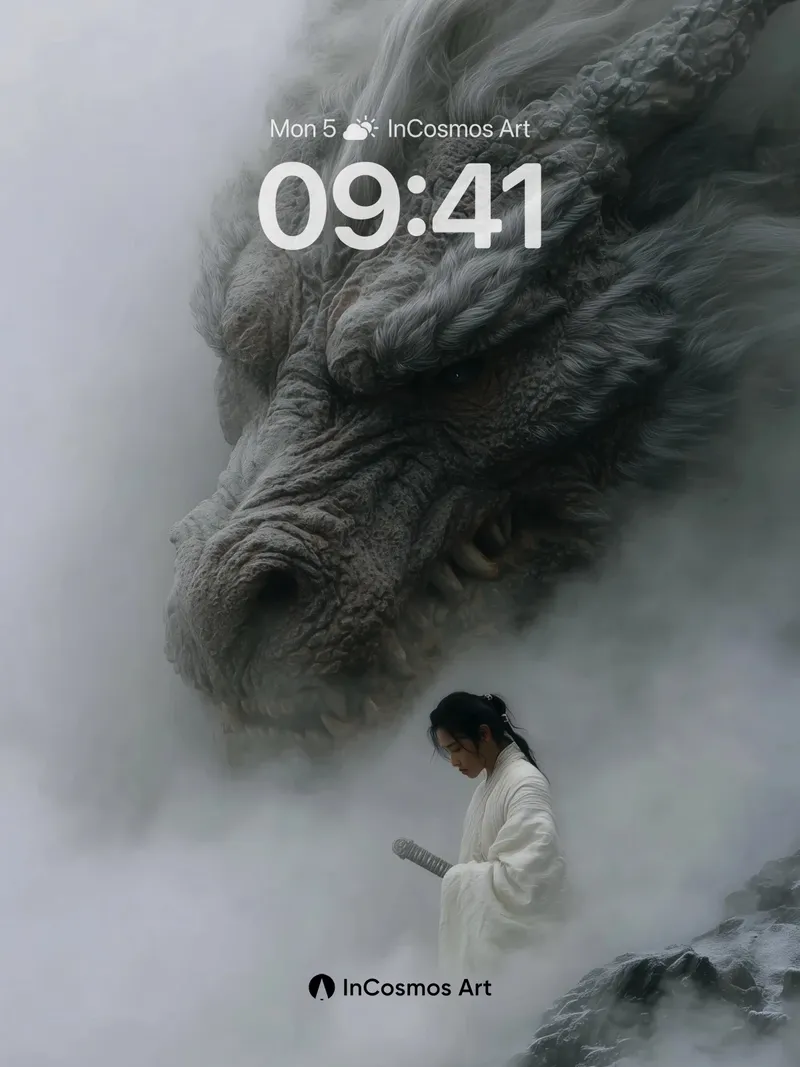
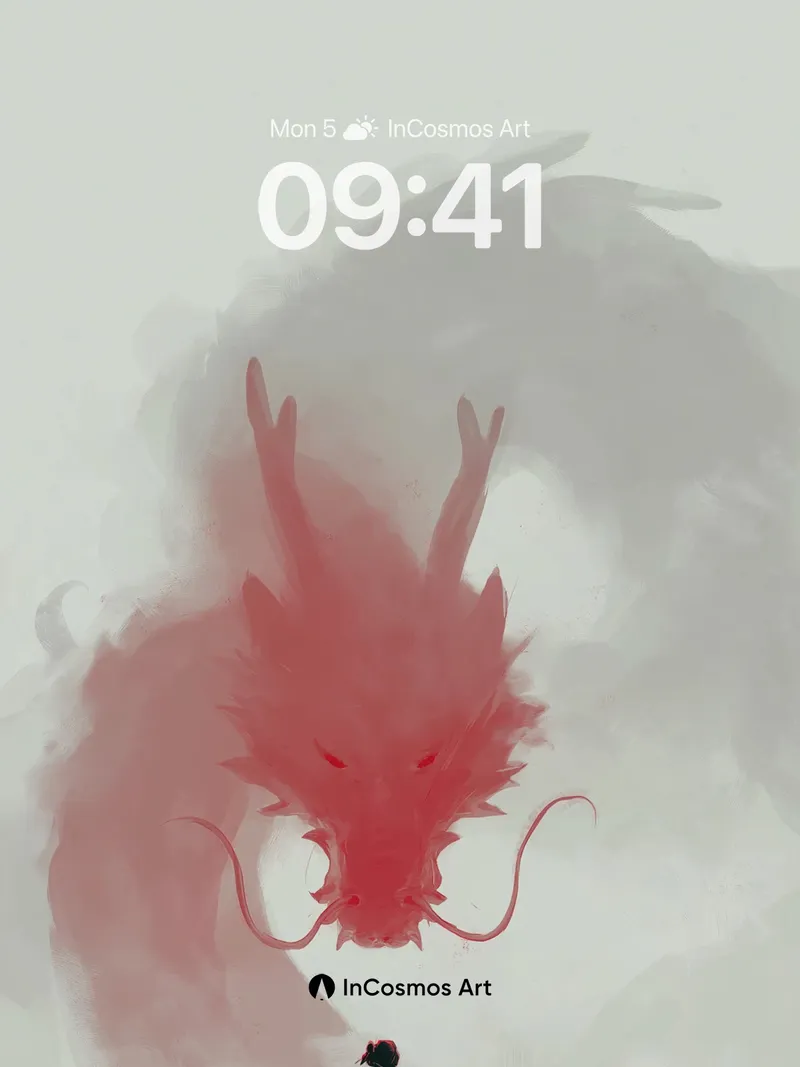
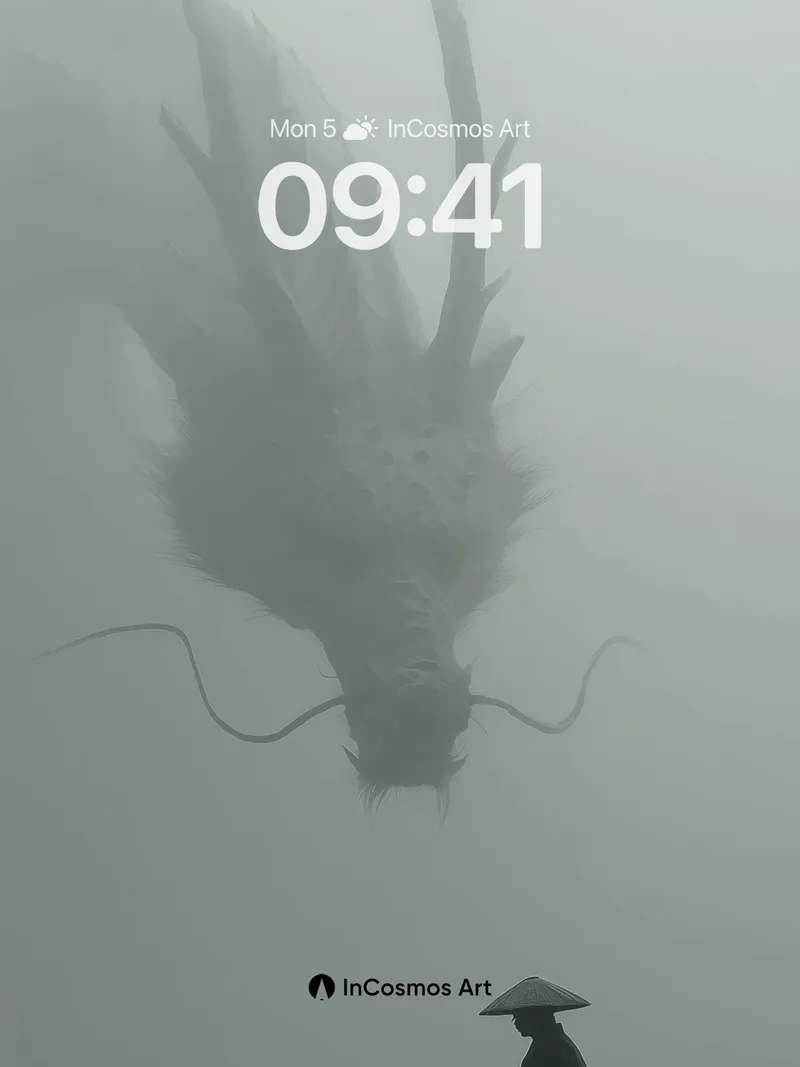
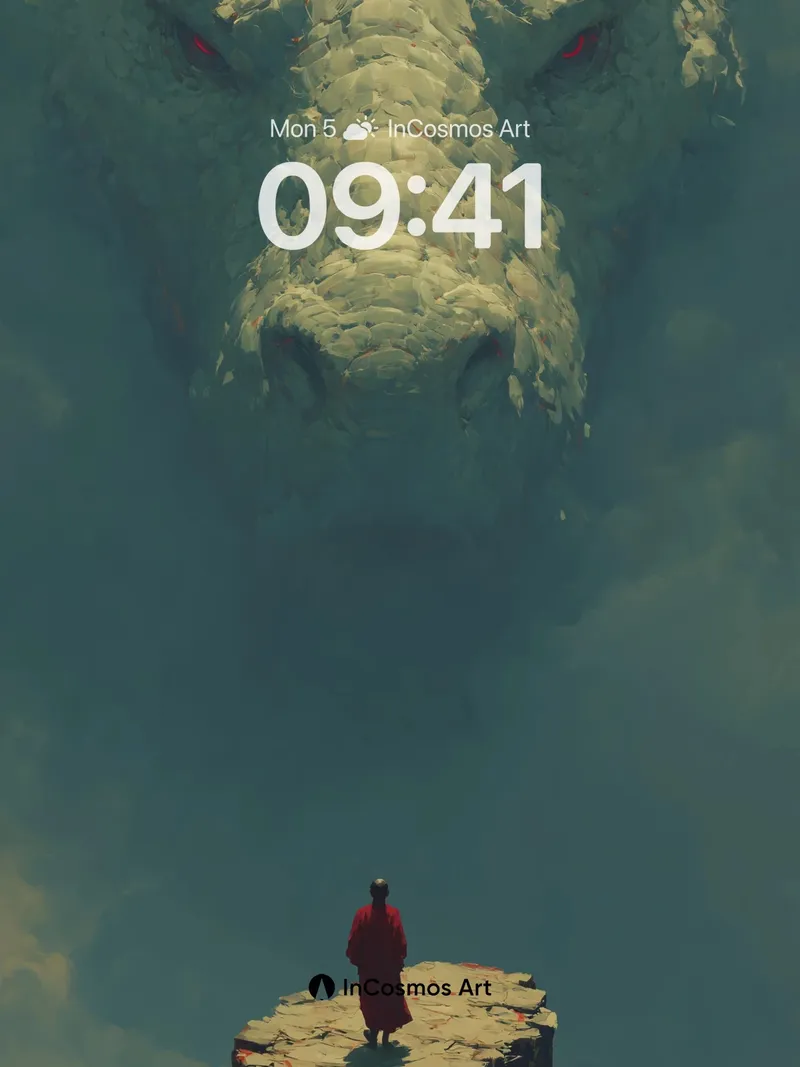
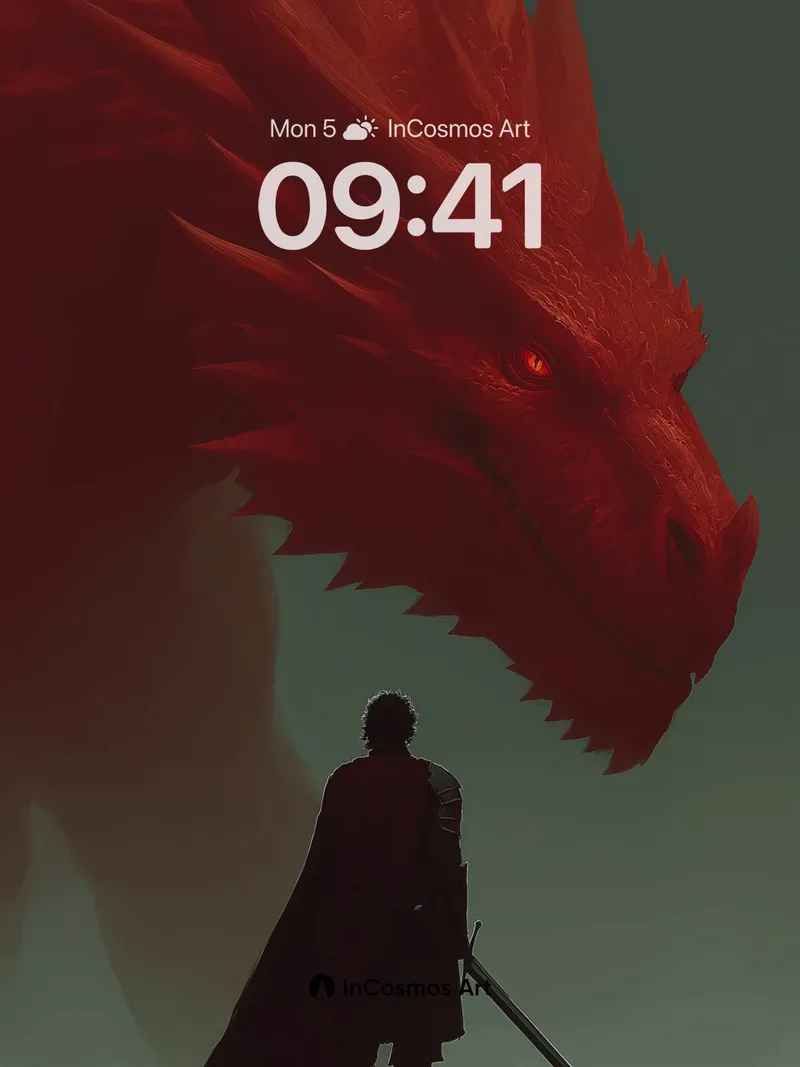
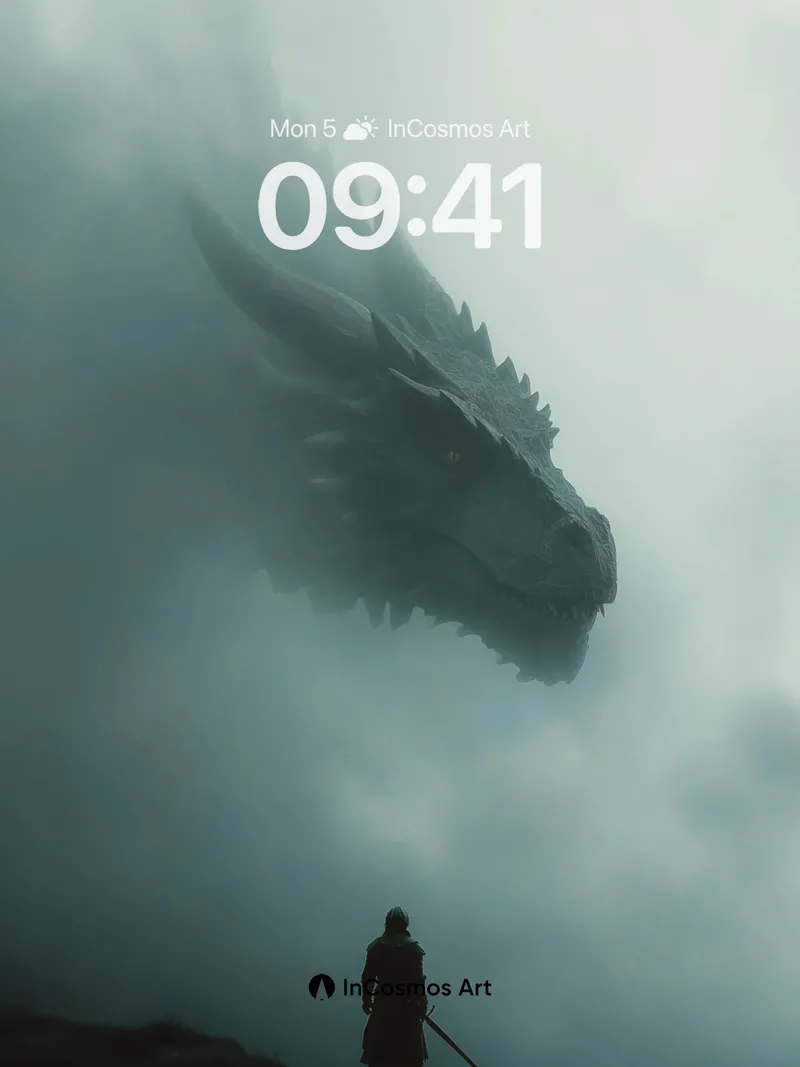
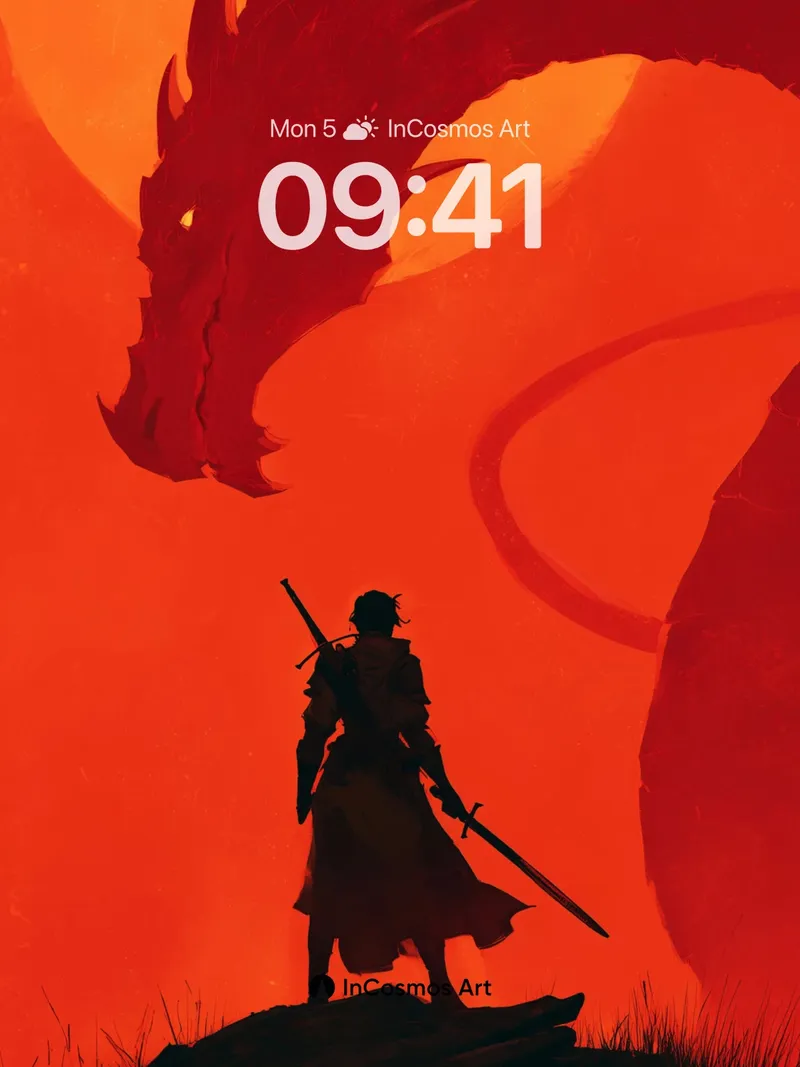
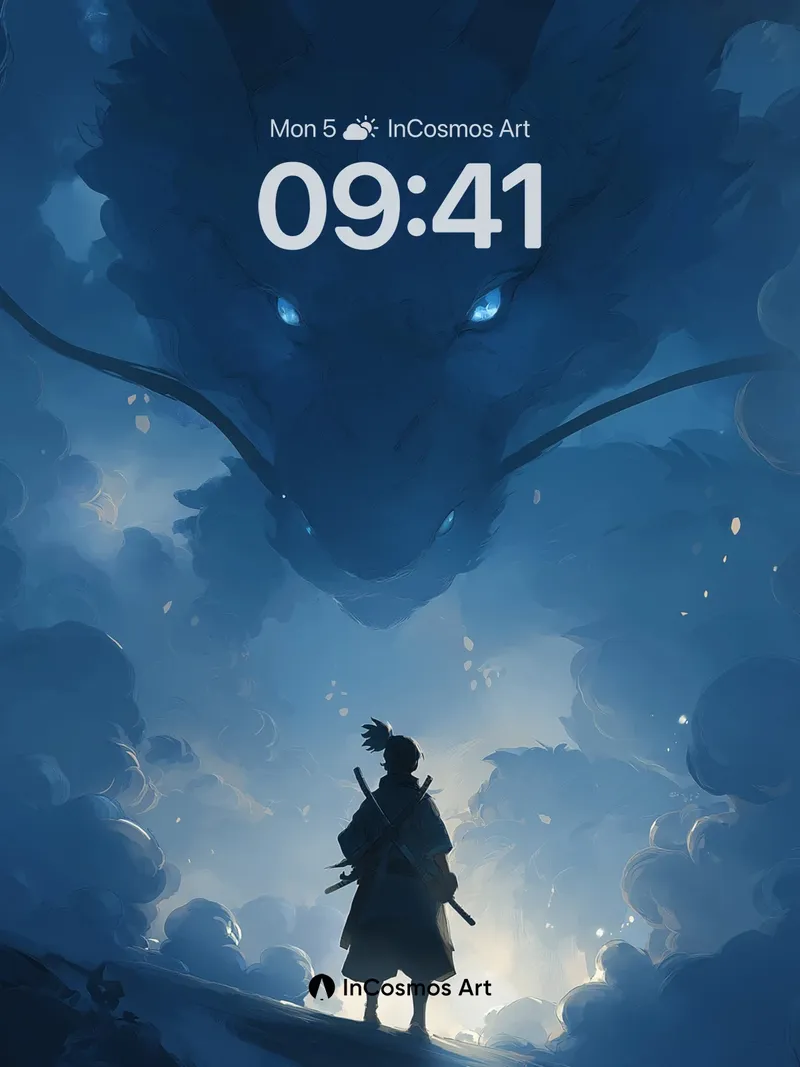
Against a crimson sky, a lone figure bearing a long blade stands atop a cliff, facing the gaze of a colossal dragon. This is not the beginning of battle, but a confrontation of fate. Dual imagery of fire and ice interweaves across different scenes—flame-born dragons spiraling through blood-red skies, white-scaled beasts drifting through cloud seas, gray-headed serpents emerging from mist like ancient deities whispering. Humanity consistently stands on precipices, armed with swords, eyes fixed. This is not a declaration of conquest, but an affirmation of existence. The dragon embodies natural force, symbolizes cosmic order, and projects deep-seated human fears and reverence. When humans face it, they do not merely resist—they converse. Each silhouette narrates a cultural memory: in Eastern mythology, the relationship between man and beast is never simple opposition, but a philosophy of coexistence and balance.
Dragon Forms: Fusion of Nature and Divinity
The dragon transcends biological form, becoming a personification of elemental forces. The red dragon coils like blazing fire, symbolizing destruction and rebirth; the white-scaled giant glides over mountain peaks, representing purity and eternity; the gray-headed creature hidden in fog implies chaos and the unknown. These colors are not mere visual symbols, but tangible expressions of cosmic energy. They move through skies, clouds, and abysses, forming a narrative structure beyond time and space. The dragon’s presence itself constitutes a law—its breath can summon storms, its gaze can shift destinies. Humans standing before it are neither insects nor masters, but observers within an ordered universe.
Human Posture: Solitude and Dignity Coexisting
All figures appear in silhouette, silently standing at elevated positions. They carry weapons, yet none are drawn. Movements are still, emotions contained. This posture conveys a distinct Eastern spiritual character: restraint, introspection, stillness as power. Their attire varies—a warrior in flowing cloak, a sage in white robes, a youth in simple tunic—but all share the trait of isolation from noise, facing the infinite alone. This solitude is not despair, but conscious clarity. In mythic narratives, true courage does not rely on strength, but on inner composure and understanding of fate.
Essence of Confrontation: Cultural Path to Reconciliation
The meeting between man and dragon is fundamentally a spiritual dialogue. No bloody combat occurs—only mutual gaze. This reflects Eastern culture's unique view of conflict: beyond opposition lies the possibility of harmony. The dragon, though immense, does not attack; the human, though small, does not retreat. The space between them becomes a realm for philosophical contemplation. This contrasts sharply with Western myths where 'heroes slay dragons.' Here, the dragon is not an evil to be destroyed, but a natural being to be understood. This worldview roots in Daoist thought—coexistence of all things, following nature's flow. Human significance lies not in domination, but in integration.