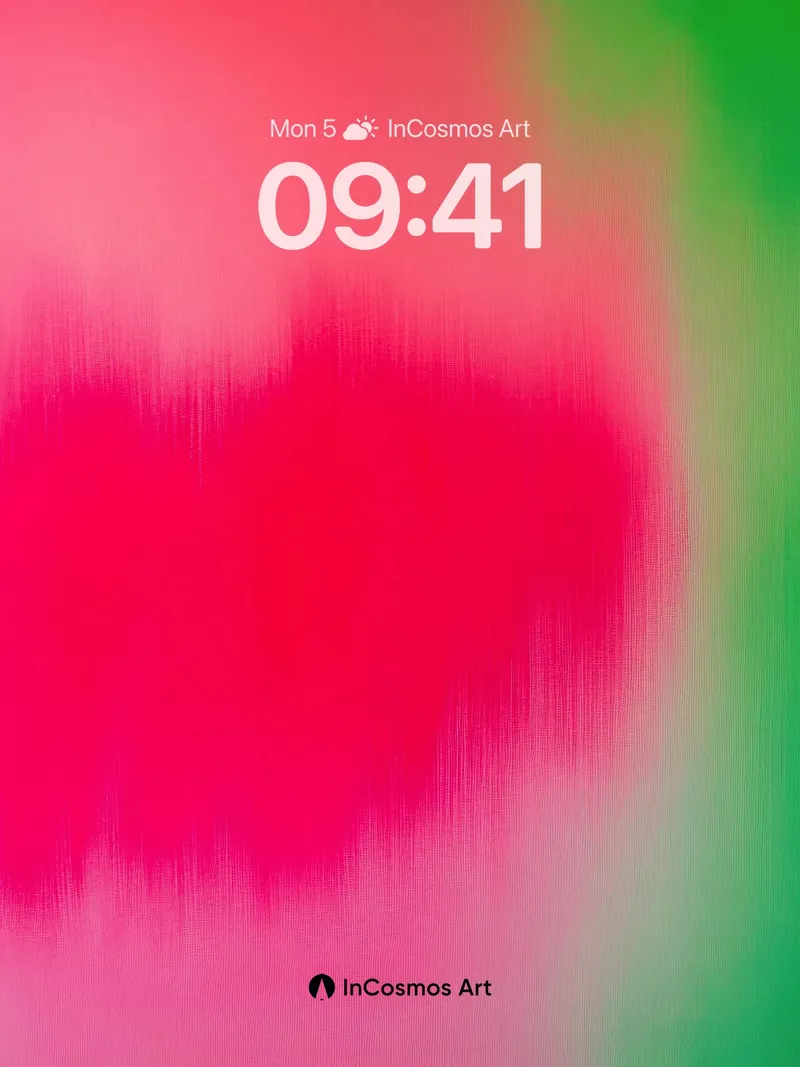
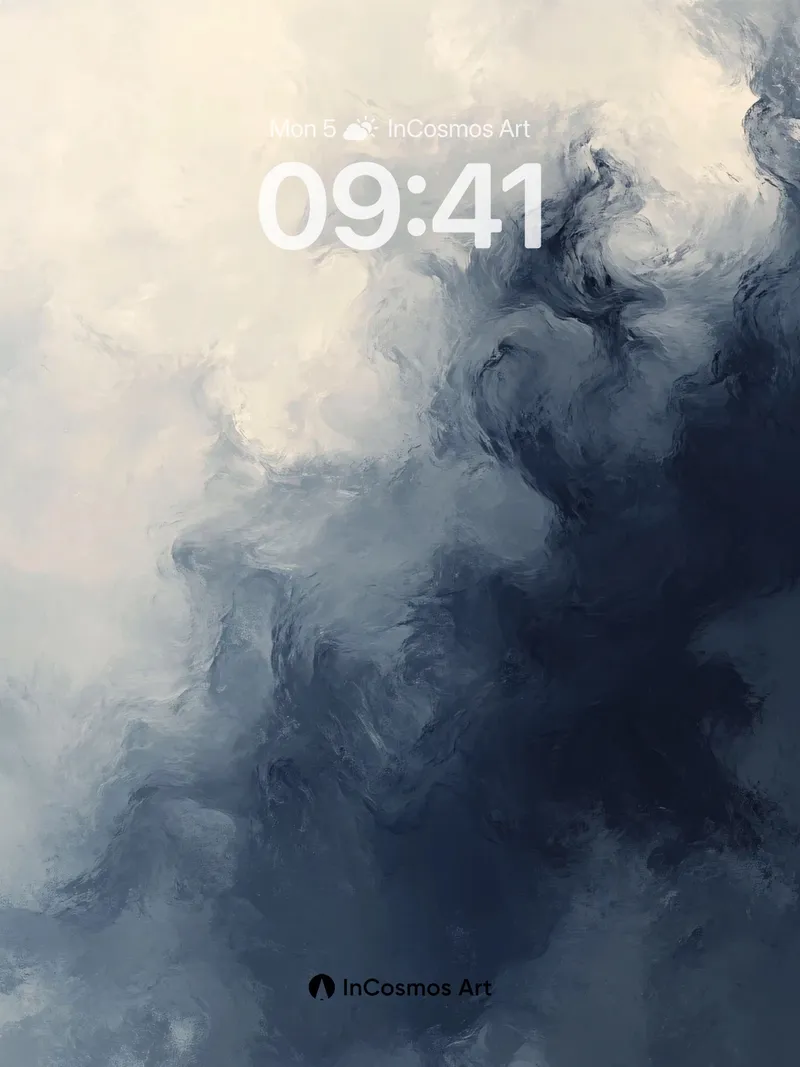
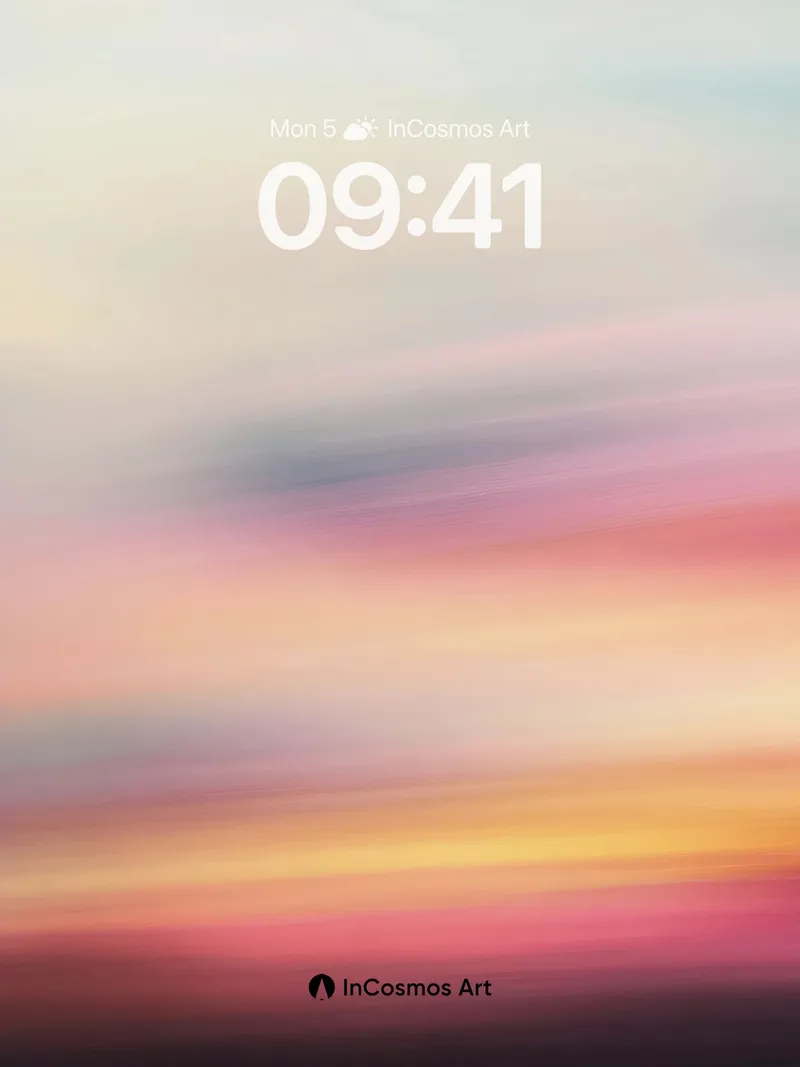
Color moves through space like unnamed emotions whispering at the edge of consciousness. They do not form images nor point to tangible things, yet within visual gaps they evoke a universal inner resonance. These forms are not replicas of nature but extensions of perception, responses of the mind to light, temperature, and rhythm. Where red meets green at boundaries, blue intertwines with pink in voids, contradictions and reconciliations within human experience become subtly embodied. This non-representational presence is neither decoration nor information, but an emotional topology—allowing viewers to locate themselves within undefined territories.
The Geometry of Emotion
The distribution and transition of hues reveal an underlying order, despite apparent chaos. Each color's expansion and contraction follows internal logic, akin to respiratory rhythms. This dynamic balance mirrors mechanisms of emotional fluctuation: joy does not exist in isolation, sorrow is not eternal. They permeate each other, forming complex fields. At the boundary between pink and green, a soft tension emerges, as if memory meets reality in the present. This structure is not designed but generated by perception itself.
The Ethics of Abstraction
When form frees itself from representational constraints, it gains new moral dimensions. Abstraction ceases to serve narrative or symbolism, becoming instead a vessel for pure experience. In this state, viewing shifts from passive reception to active participation. The observer must relinquish attachment to meaning and instead feel relationships between colors. These relationships constitute meaning—not externally imposed, but internally produced. It challenges traditional aesthetics' notion that 'beauty equals harmony,' proposing another possibility: beauty can be uncertain, even conflicted.
The Philosophy of Color
The opposition of red and blue, the juxtaposition of pink and green, form a visual dialectic. There is no victor among them, only ongoing dialogue. This dialogue transcends language, reaching toward the essence of existence. Here, color is not tool but subject. It expresses in its own way, requiring no translation, no explanation. Its mere presence poses questions: What is real? What is perception? What is self?
Seeing Is Creating
Each gaze is a reconstruction. These color combinations are not fixed; they flow with changes in light, angle, and mood. Thus, the act of viewing becomes part of creation. The observer is not a bystander but a participant. Attention, emotion, and memory collectively shape the form of experience. This reveals a profound truth: the world we see is always a reflection of our inner world.