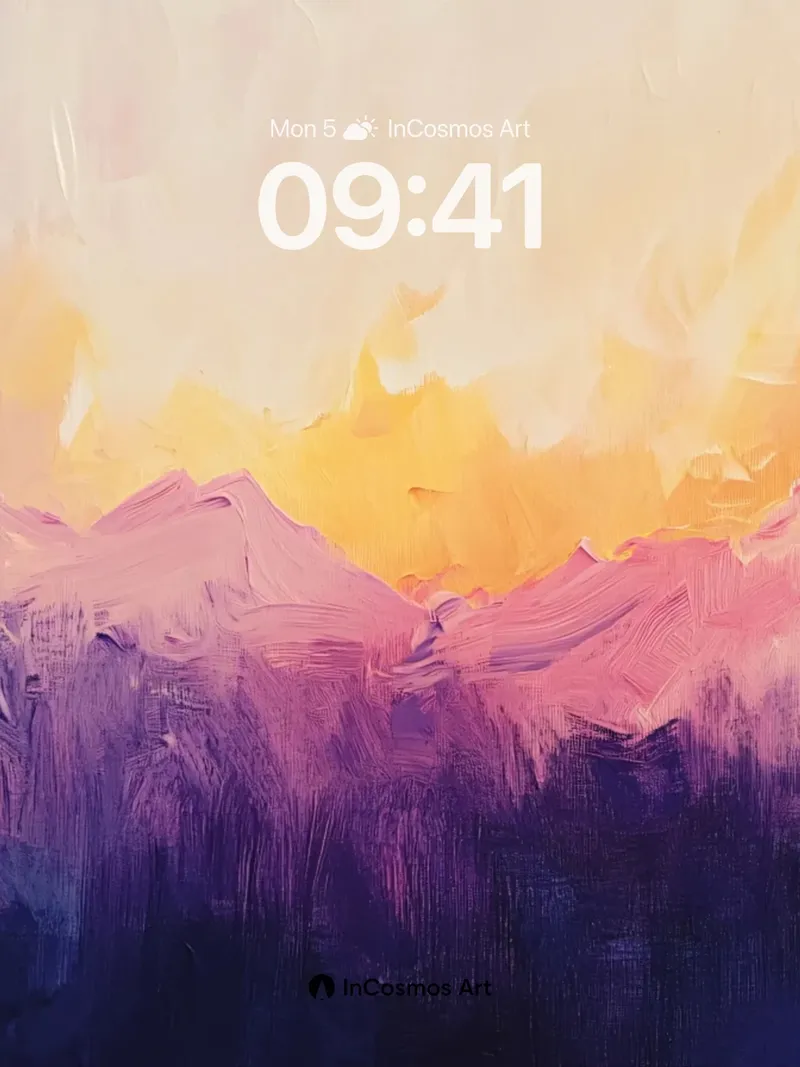
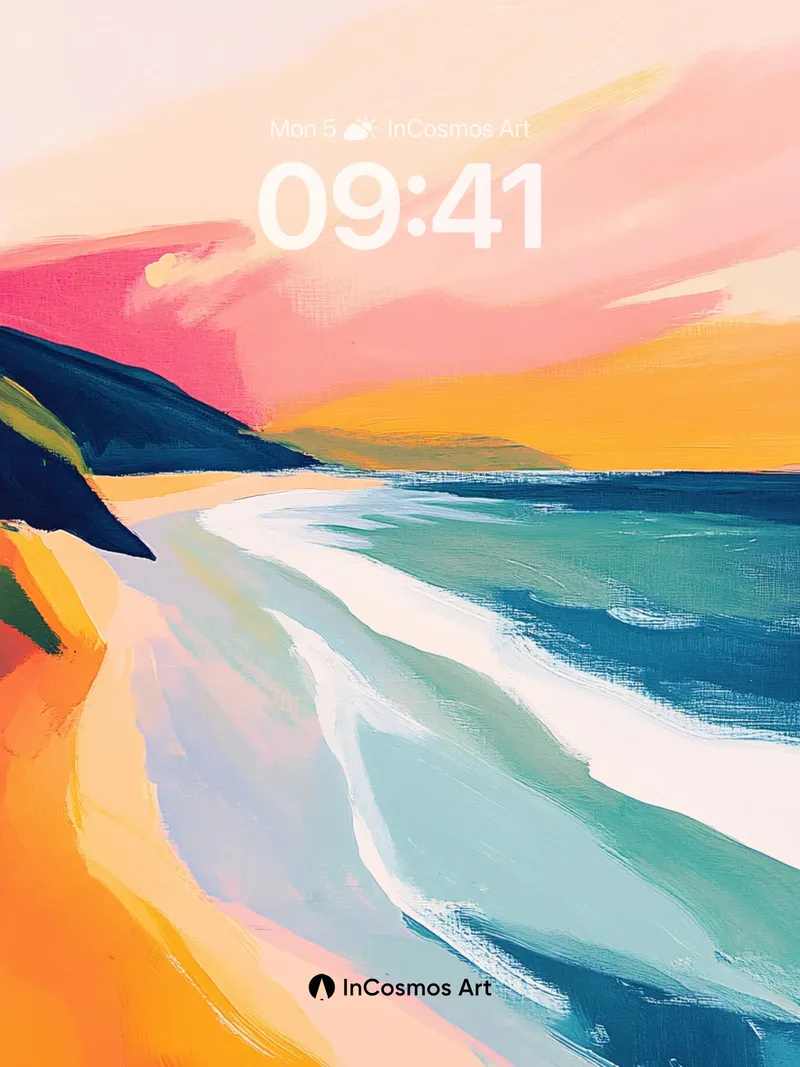
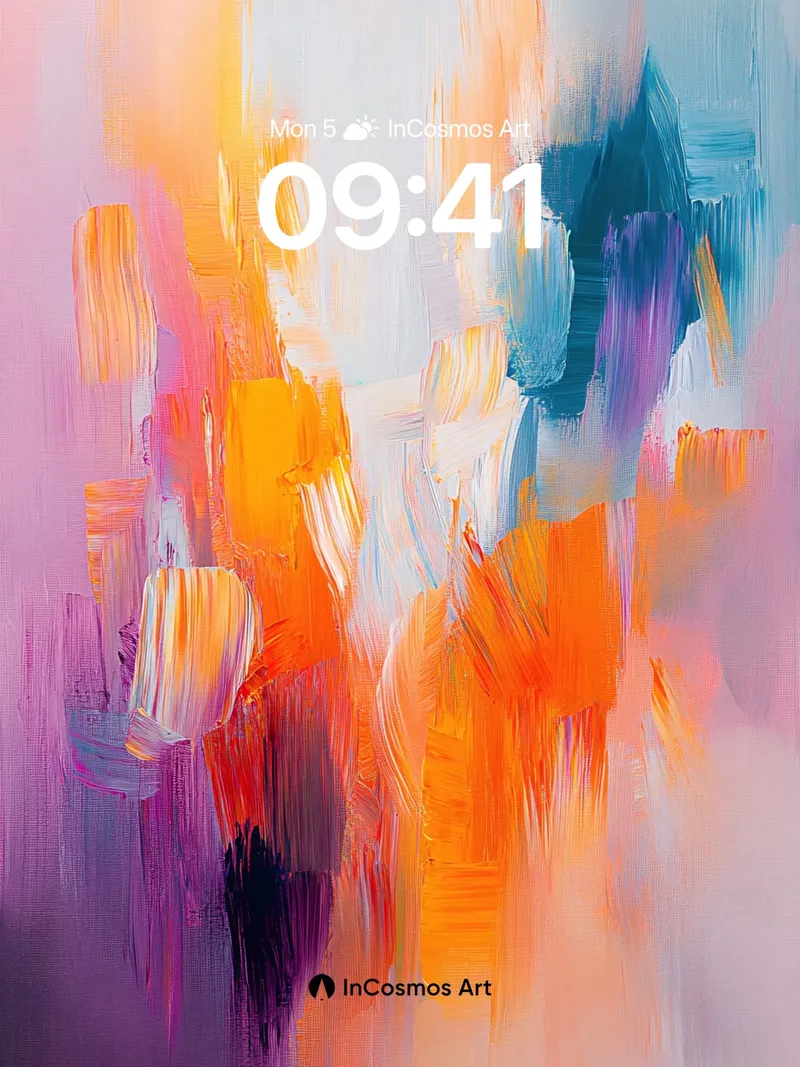
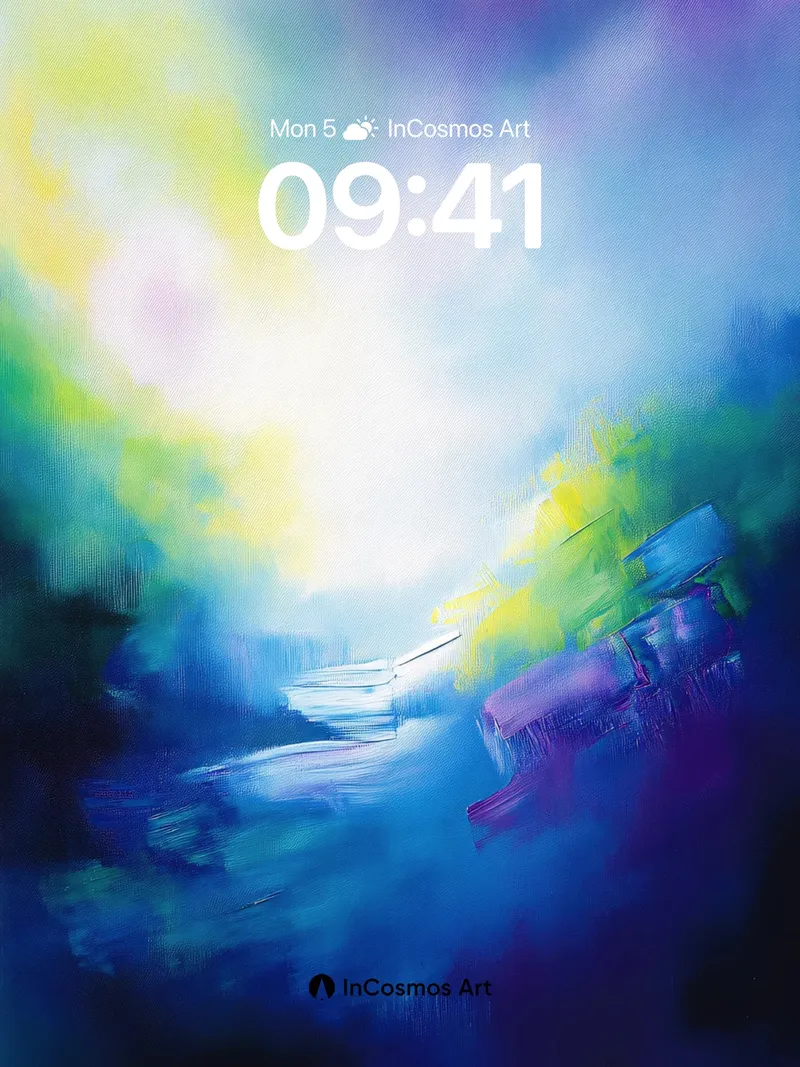
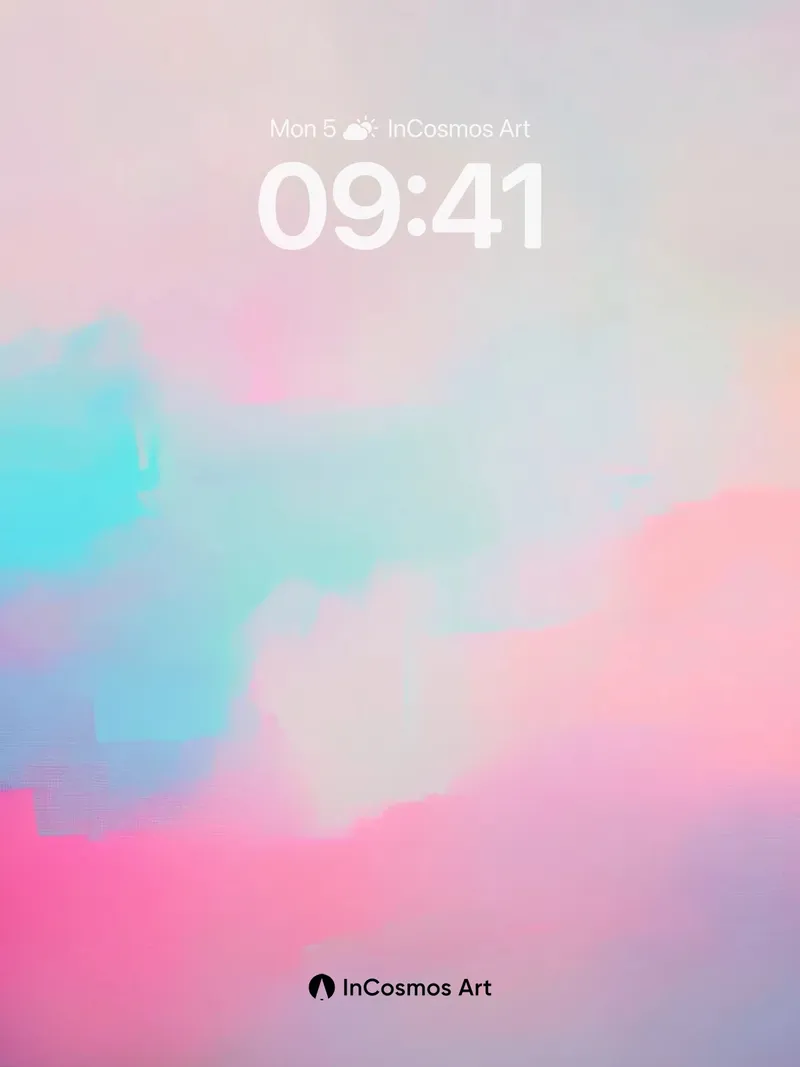
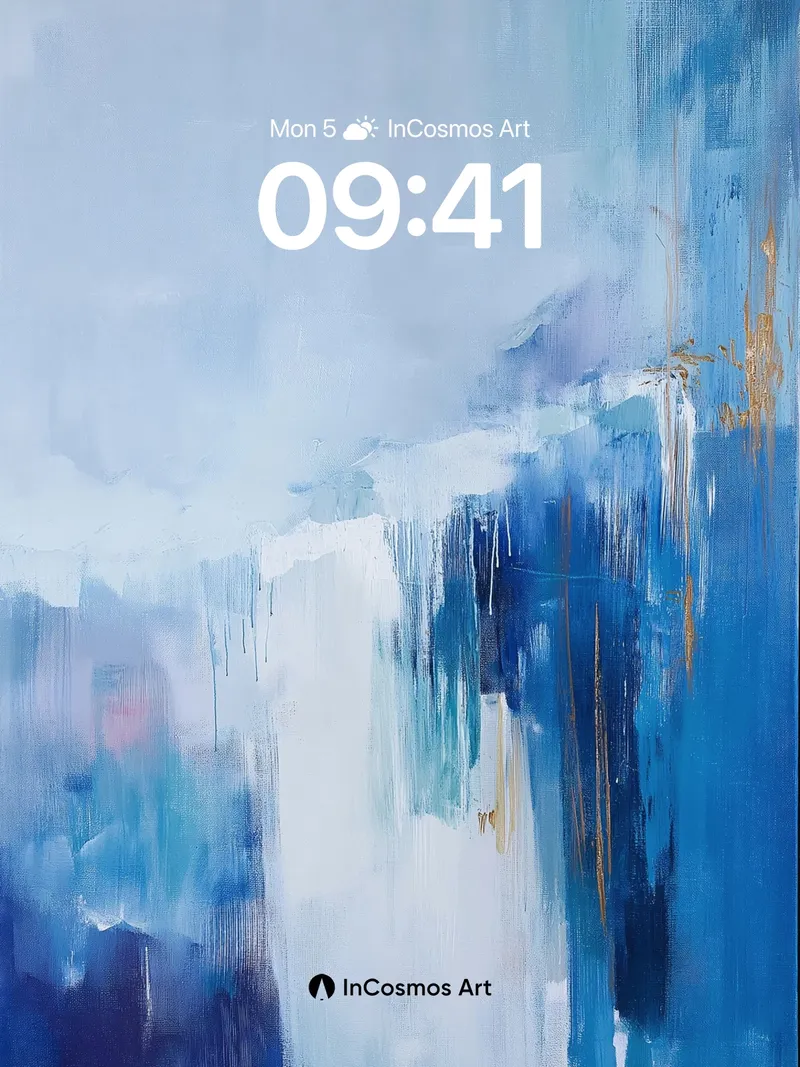
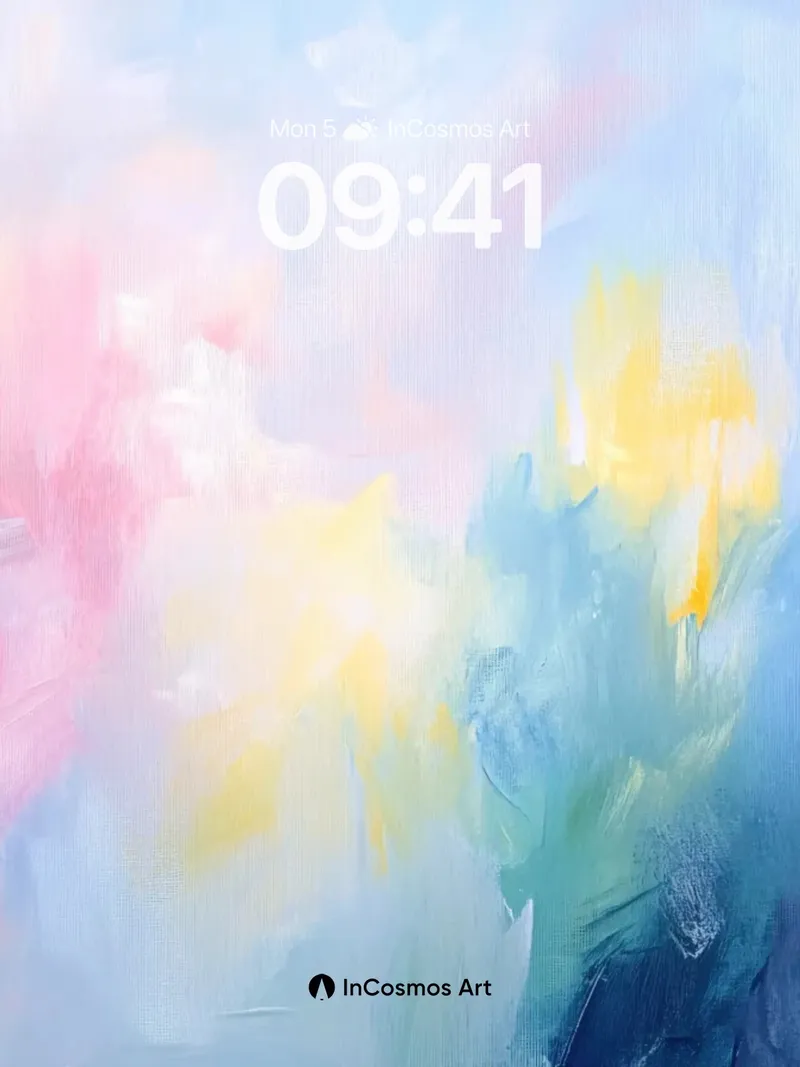
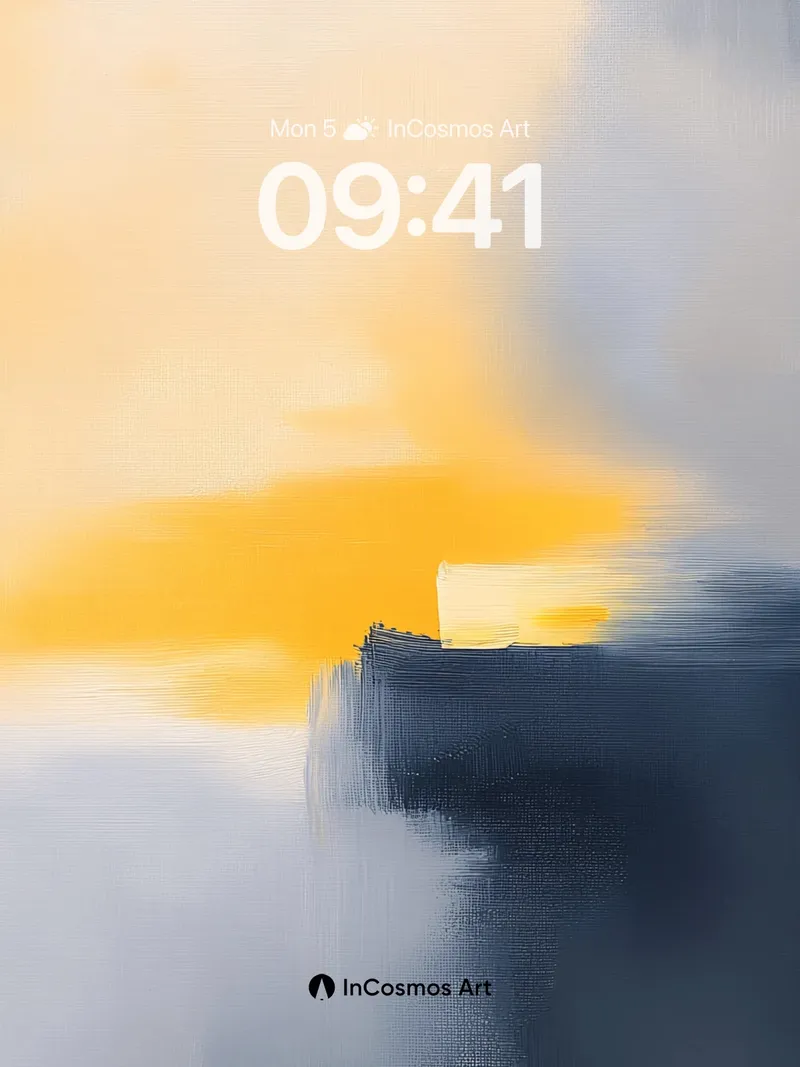
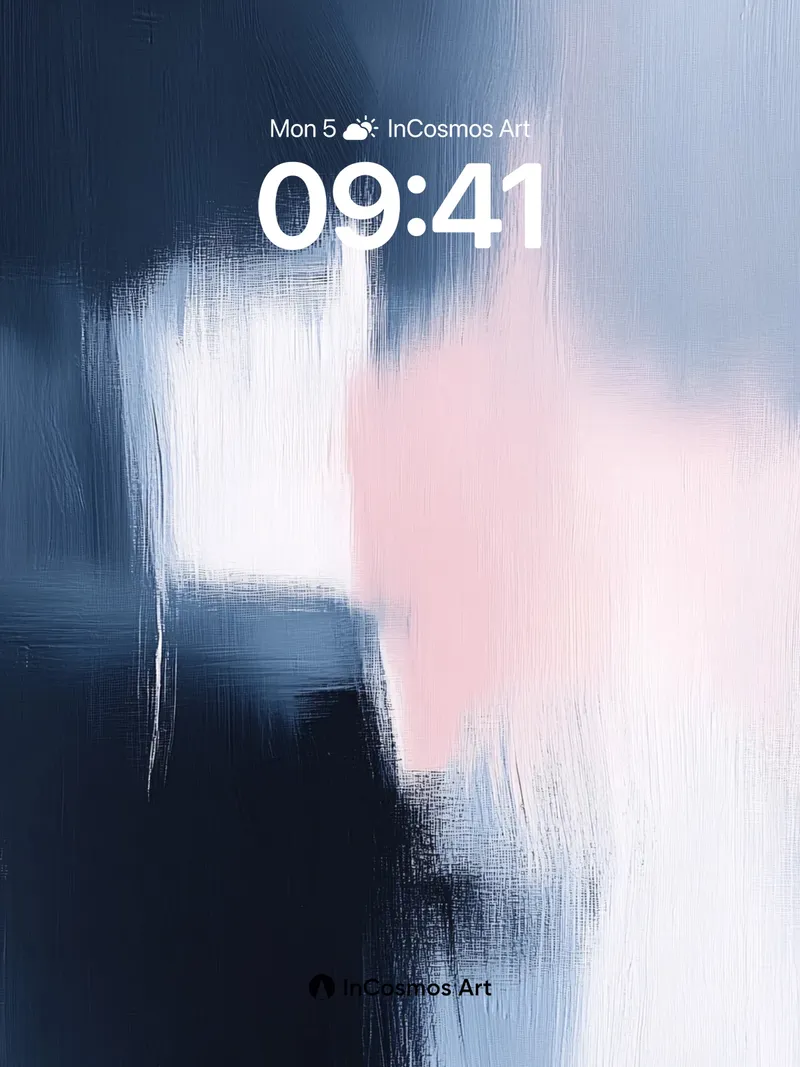
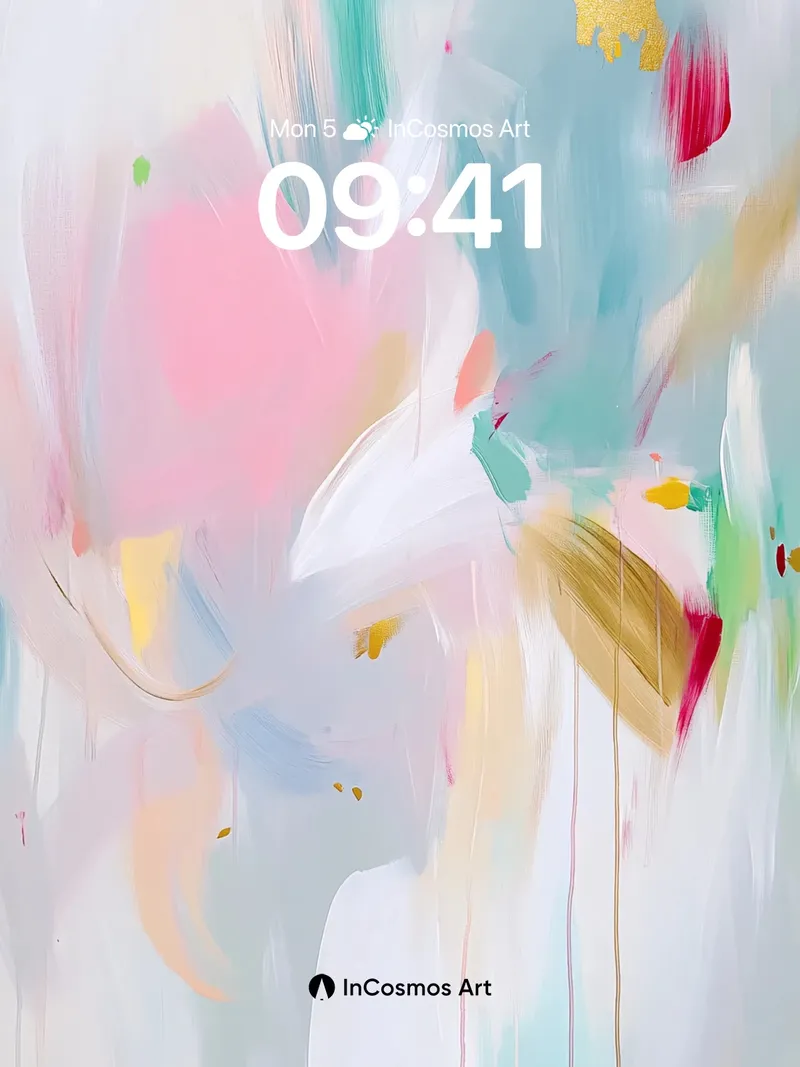
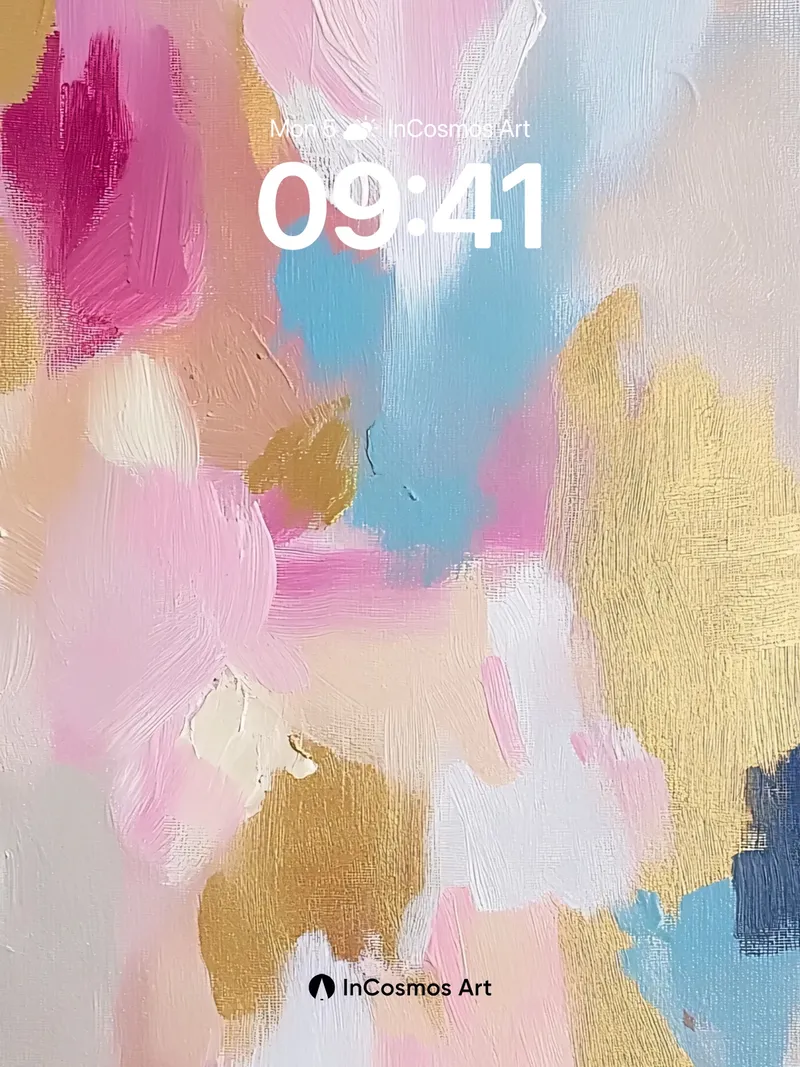
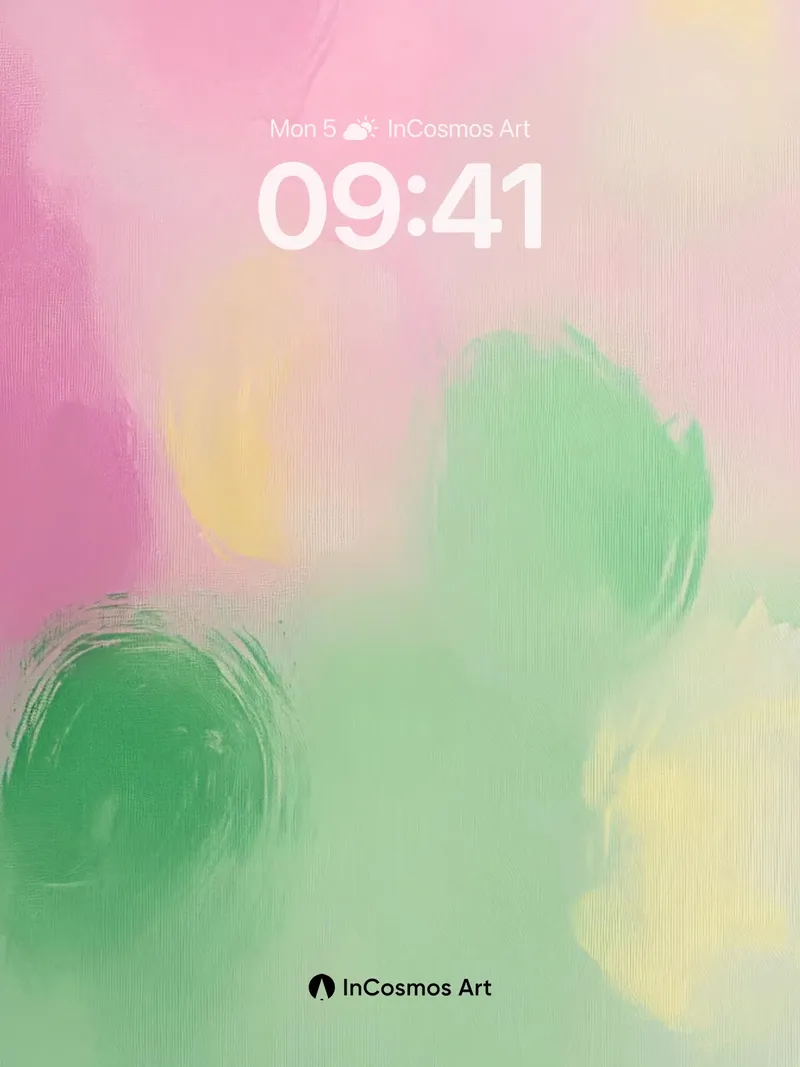
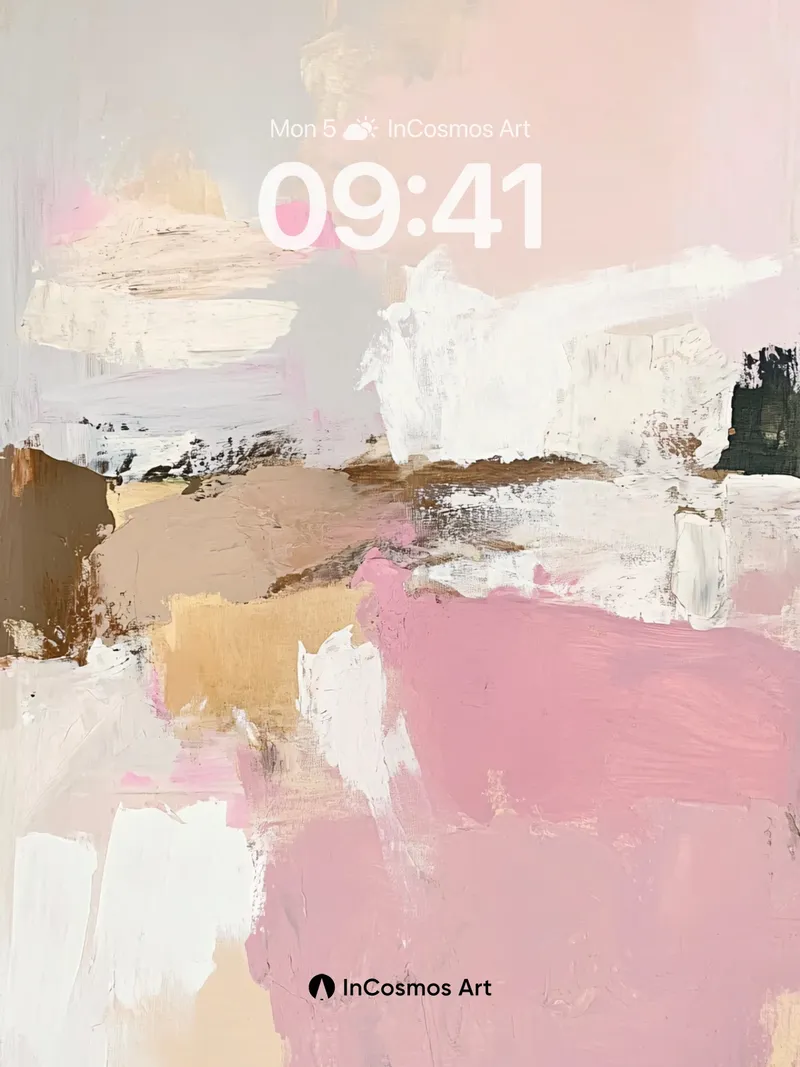
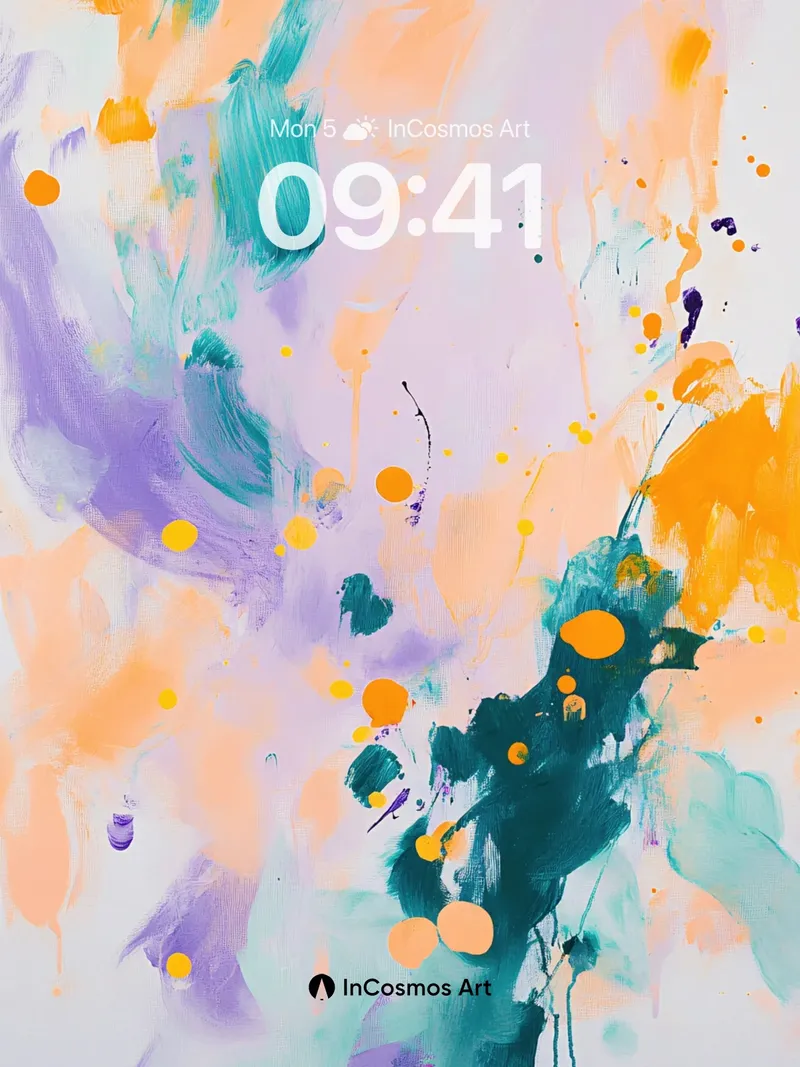
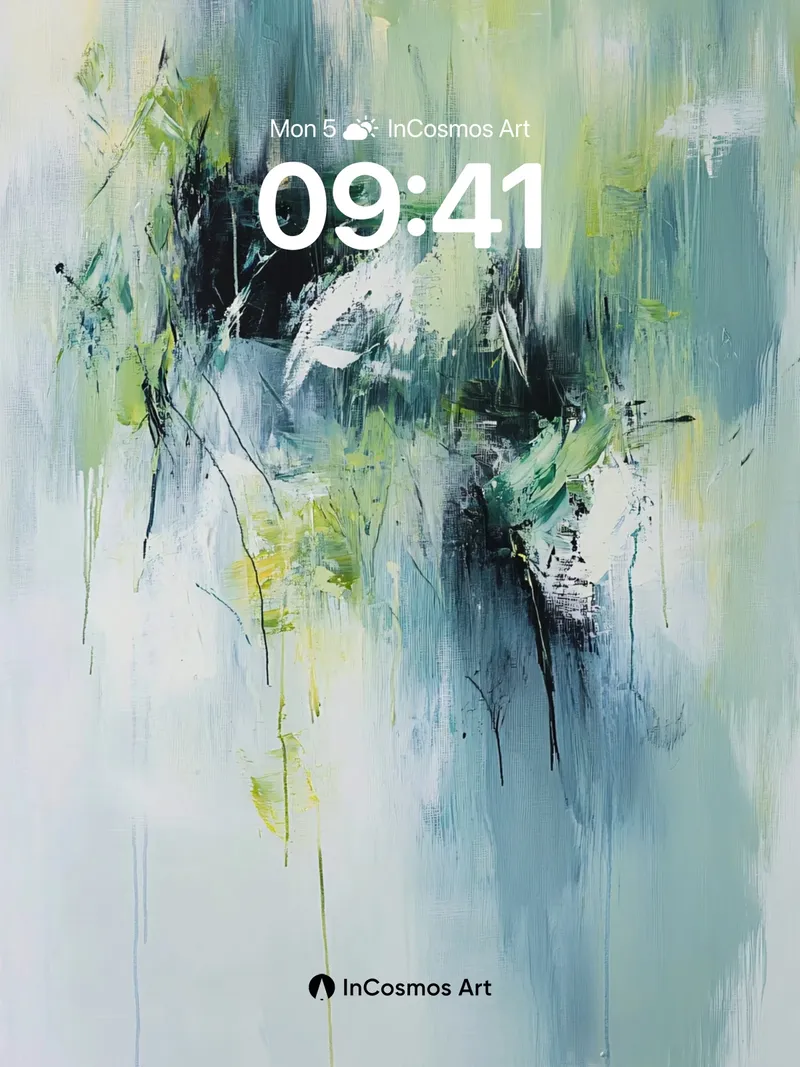
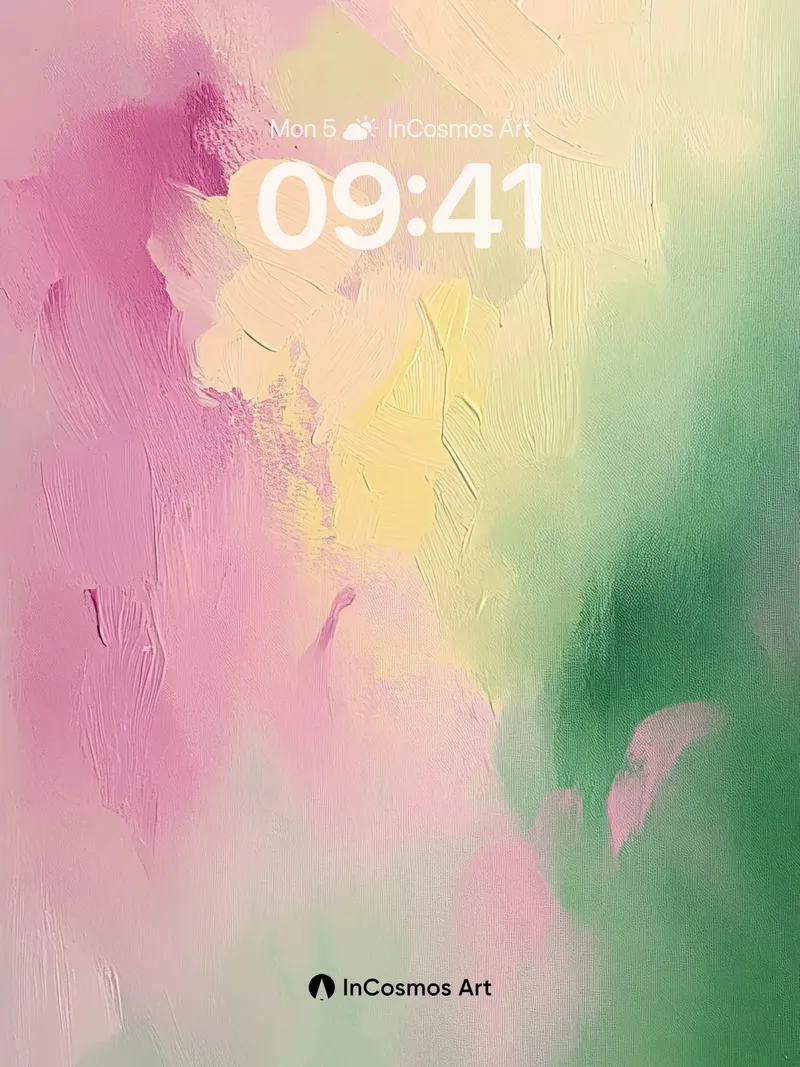
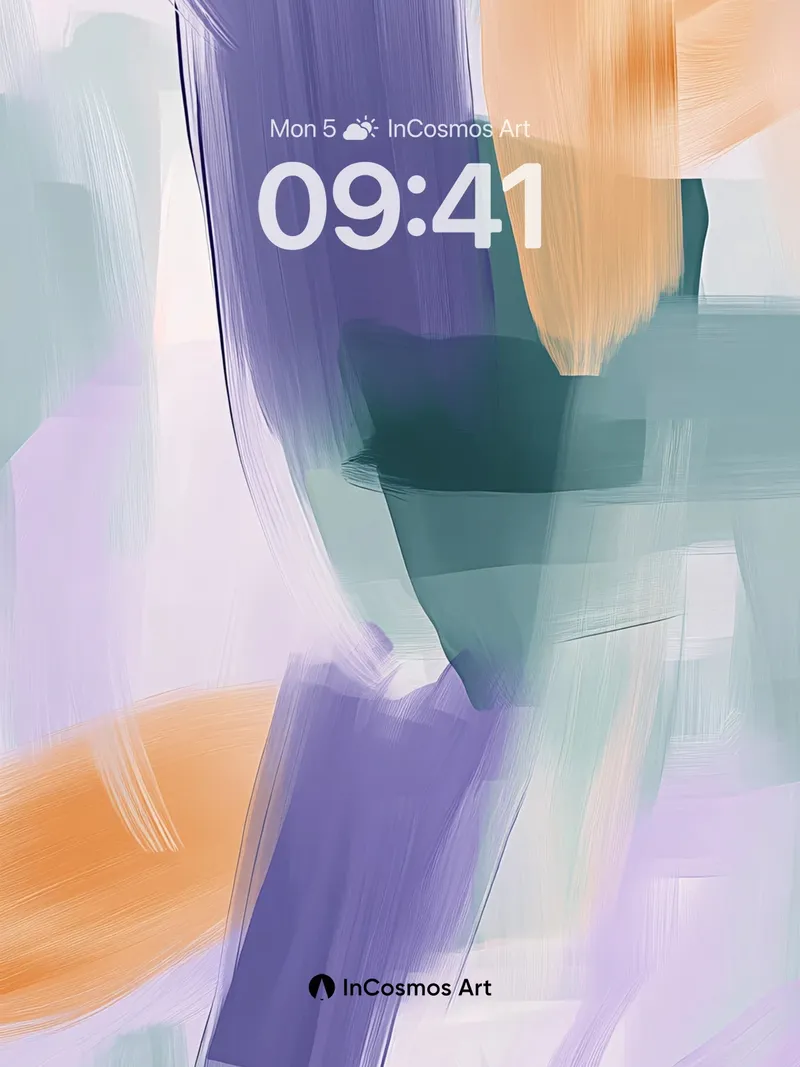
Color breathes across the surface, like unnamed emotions floating in air. Each stroke is a heartbeat, every layer a sediment of memory. These seemingly chaotic overlays are not random but manifestations of inner rhythm—a response to the gap between order and chaos. They do not depict landscapes, yet evoke a deeper perception—one belonging to silent moments, where consciousness seeks form in emptiness.
Topology of Emotion
Here, color is not decoration but a spatial language. Pinks, golds, pale blues weave into invisible terrains, guiding the eye through realms of presence and absence. Contrasts between deep blue and gray-white create illusions of depth, as if an unseen weight operates beneath the surface. This visual tension does not point to tangible objects, yet activates internal associative networks, transforming everyday experience into poetic metaphor.
The Social Nature of Color
Though devoid of figures, the work carries emotional warmth. Soft pinks recall tender moments in intimate relationships; gold hints at cherished instances. When these hues distribute asymmetrically, they mimic the imbalance and flow in human interactions. Abstraction does not escape reality—it reencodes emotional exchange through alternative grammar.
Traces of Time
The thickness of brushwork records temporal passage. Some areas are heavily layered, like imprints in memory; others are thin and translucent, resembling fading thoughts. This material variation forms a narrative rhythm, giving stillness dynamic vitality. In this process, the viewer ceases to be passive recipient and becomes a co-conspirator in time's reversal.
Reconstruction of Space
Through density and directionality of color, the work constructs a psychological space. It defies physical laws but aligns with human cognitive instincts. The gaze moves within it as if exploring unknown regions on a mental map. This space is not geographical but an internal territory shaped by emotion, memory, and anticipation.