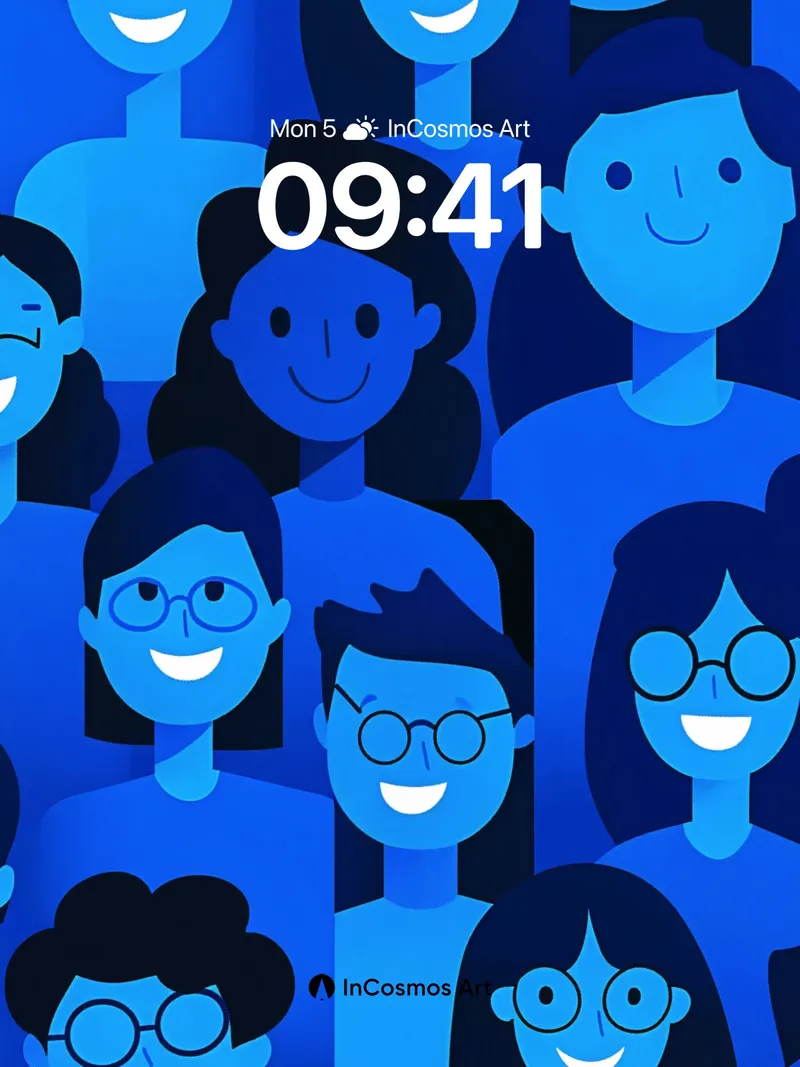
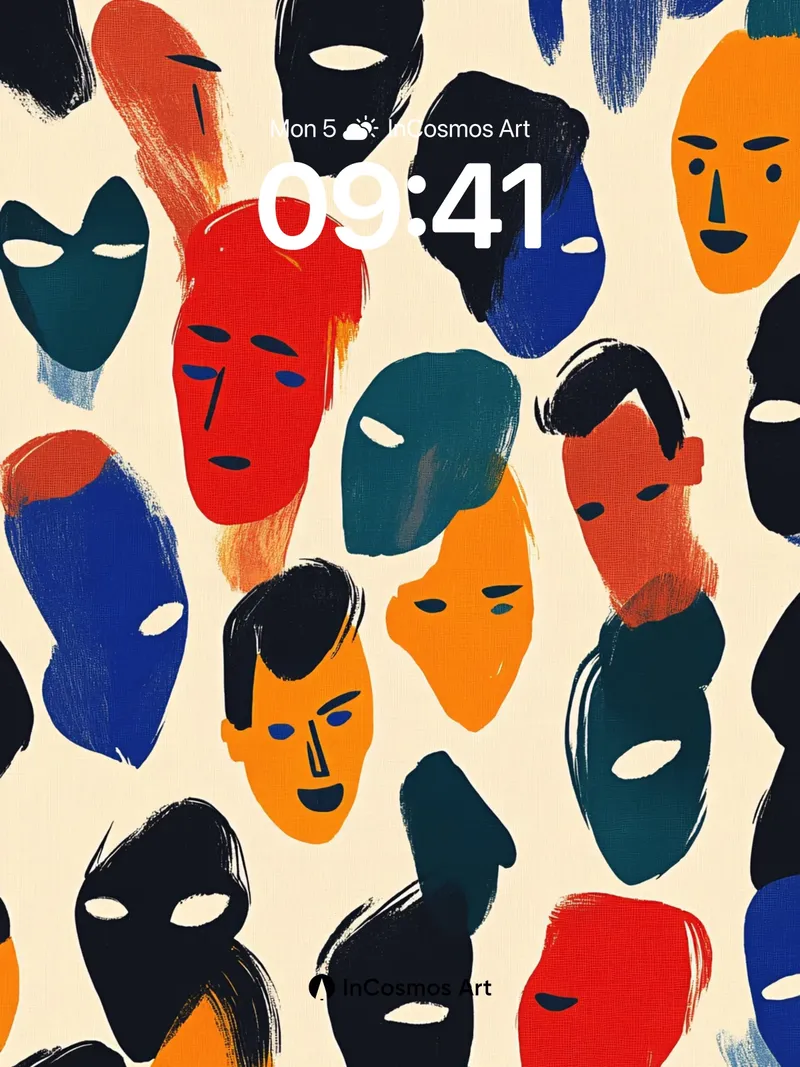
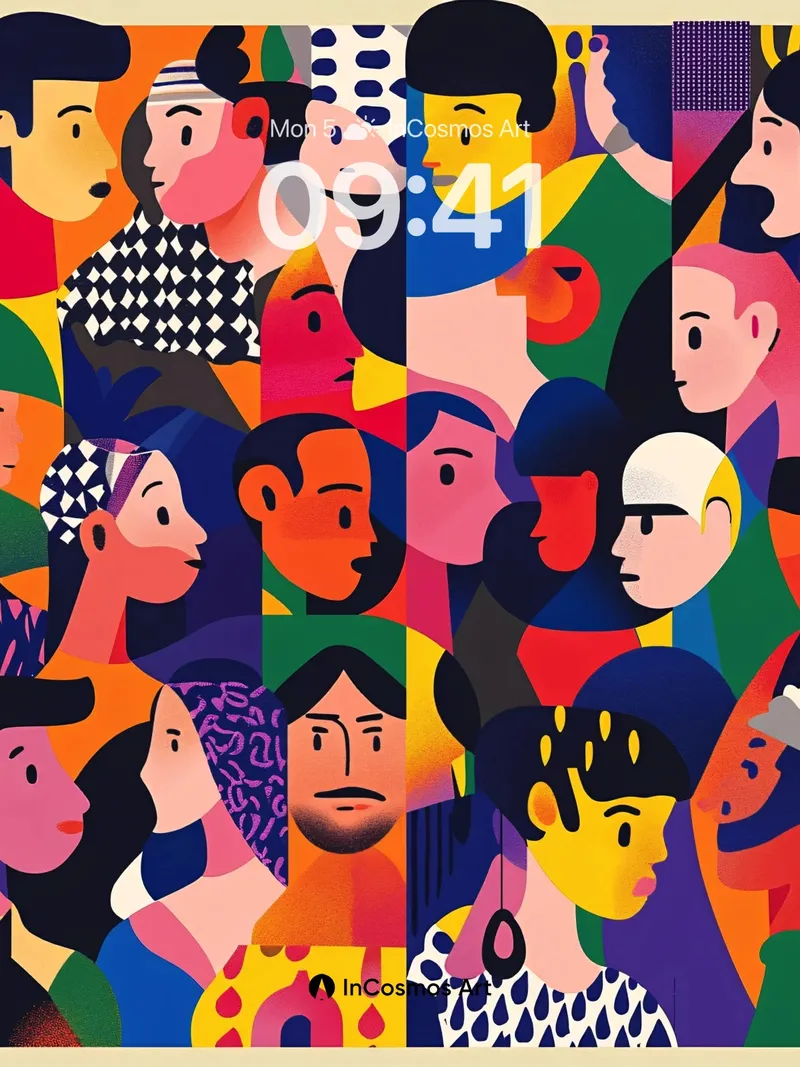
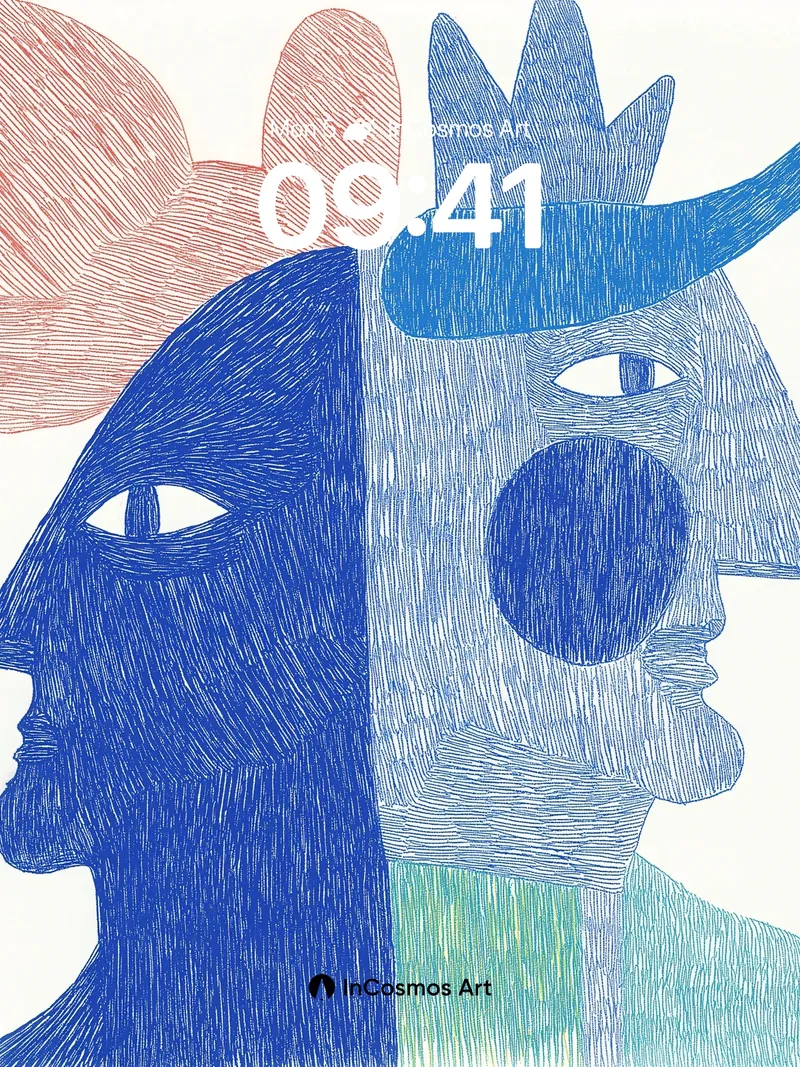
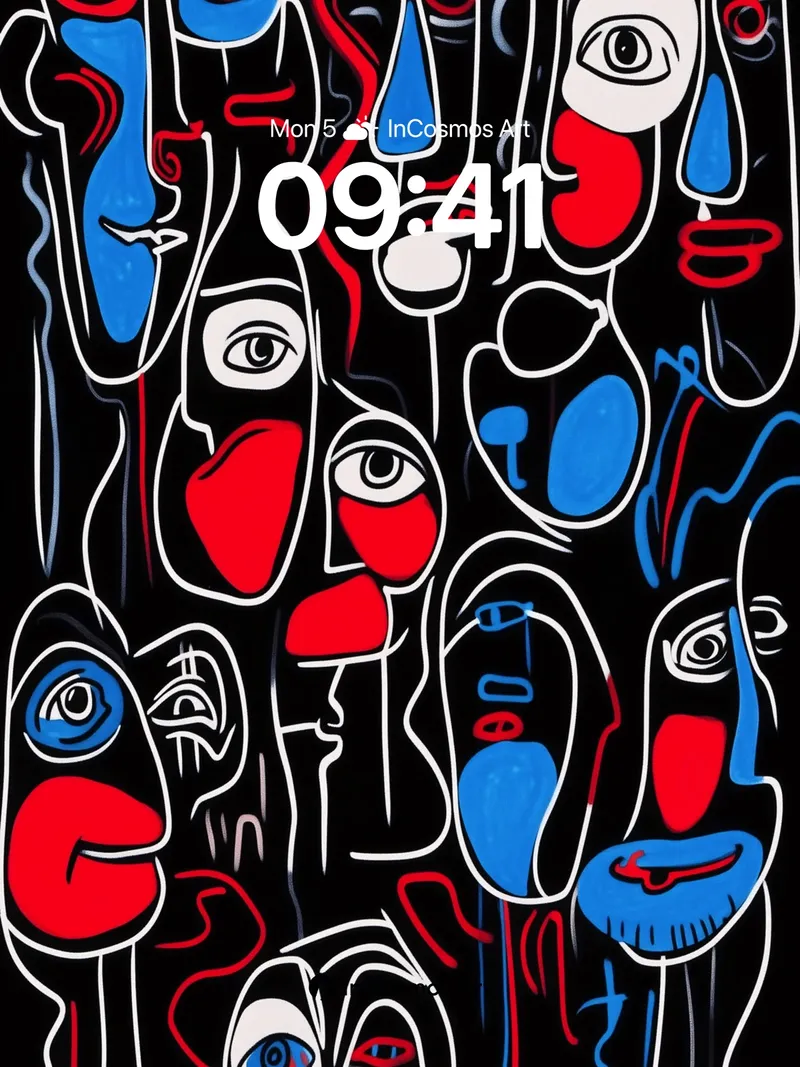
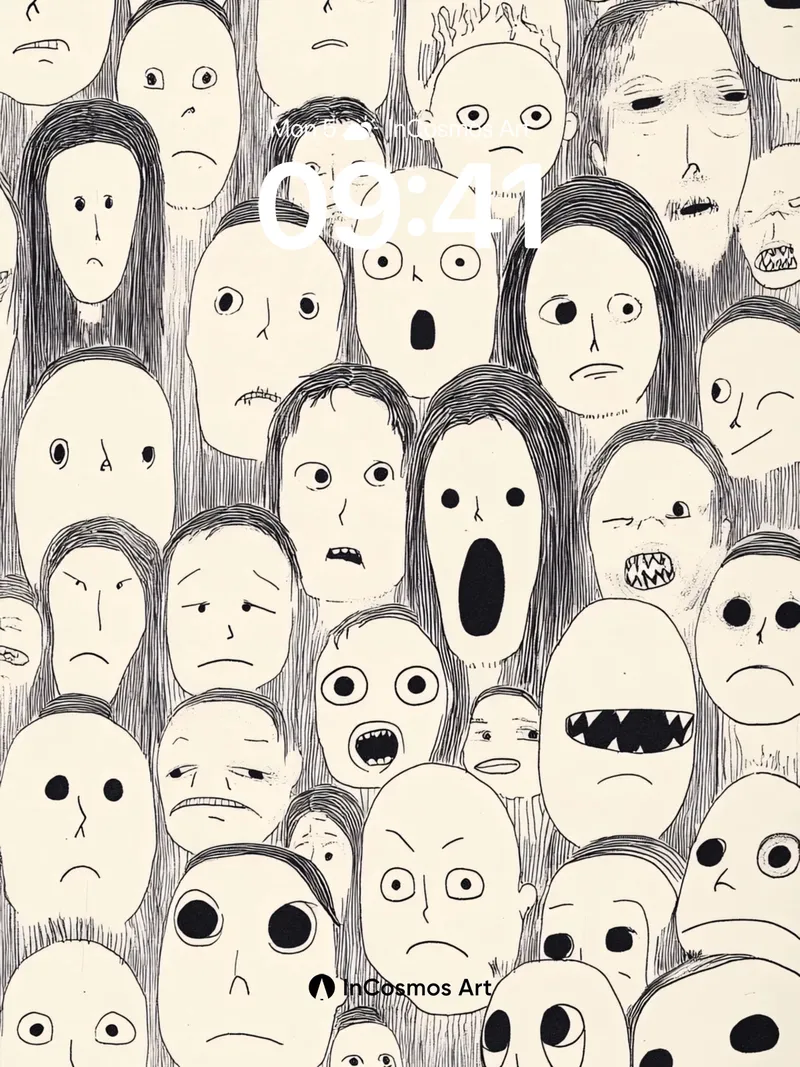
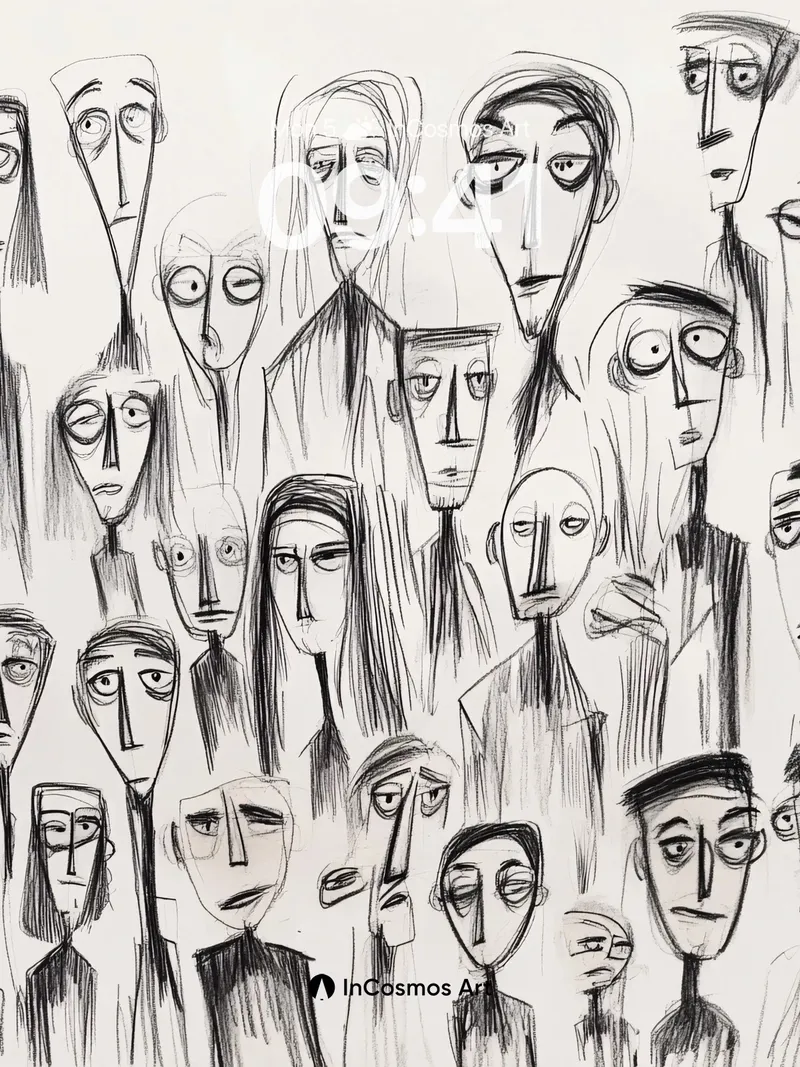
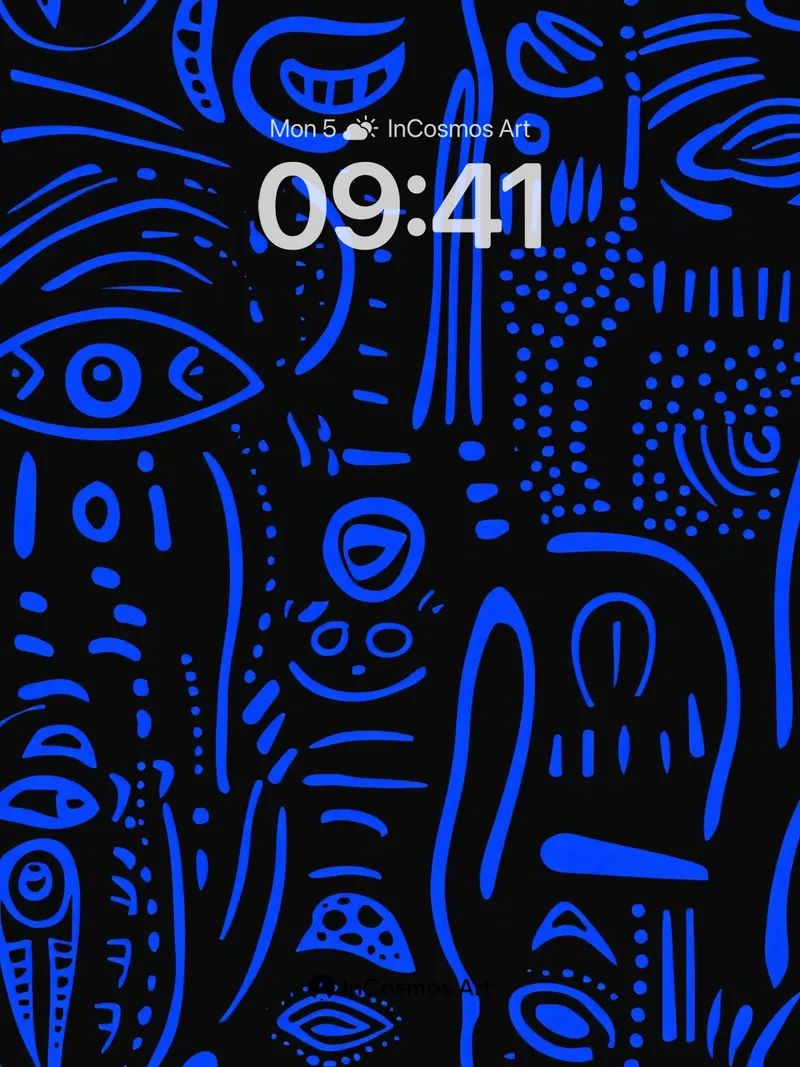
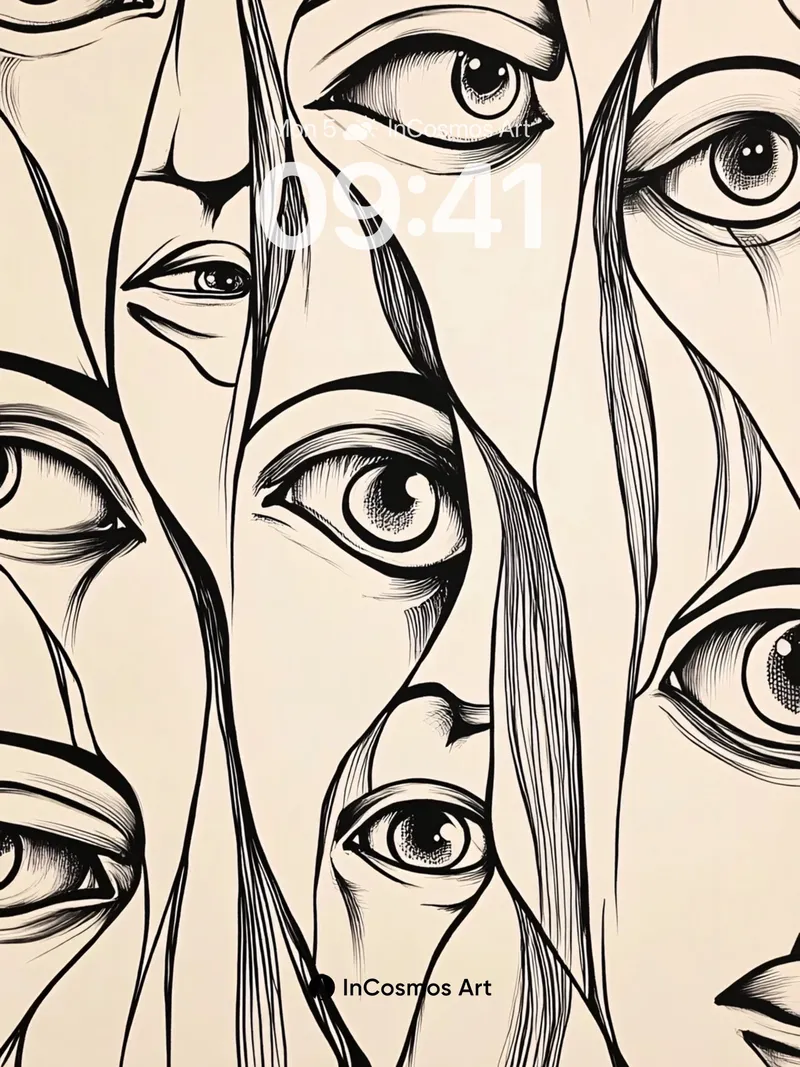
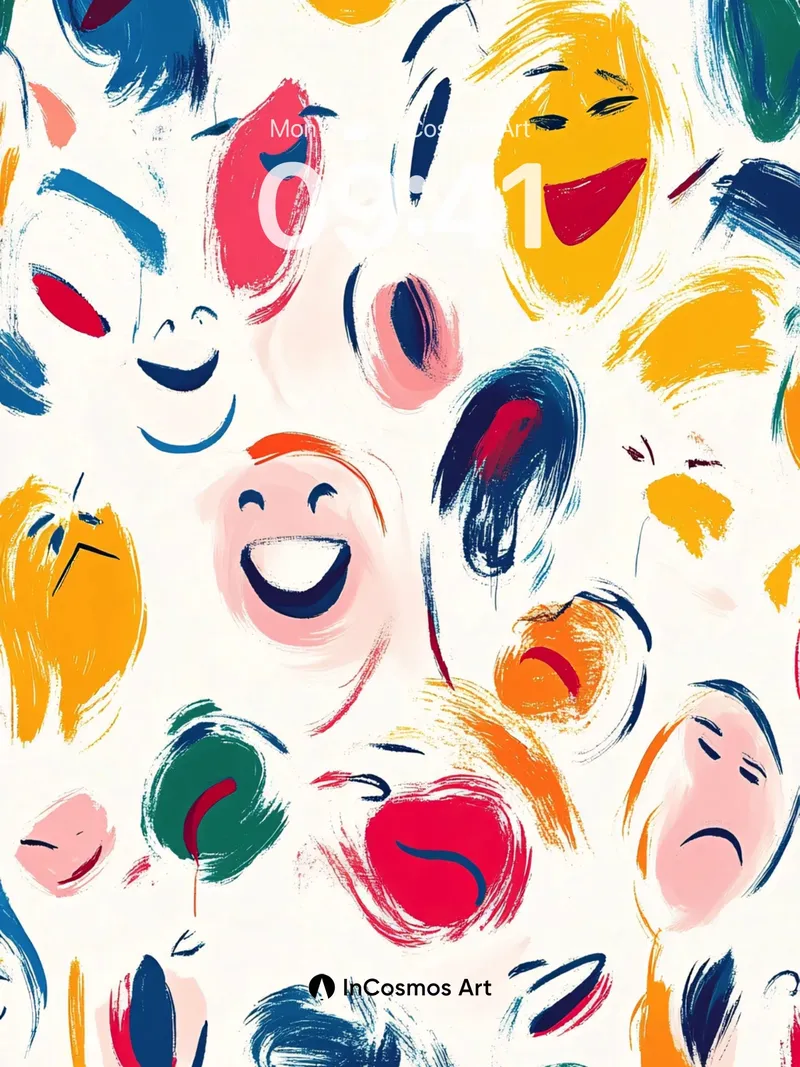
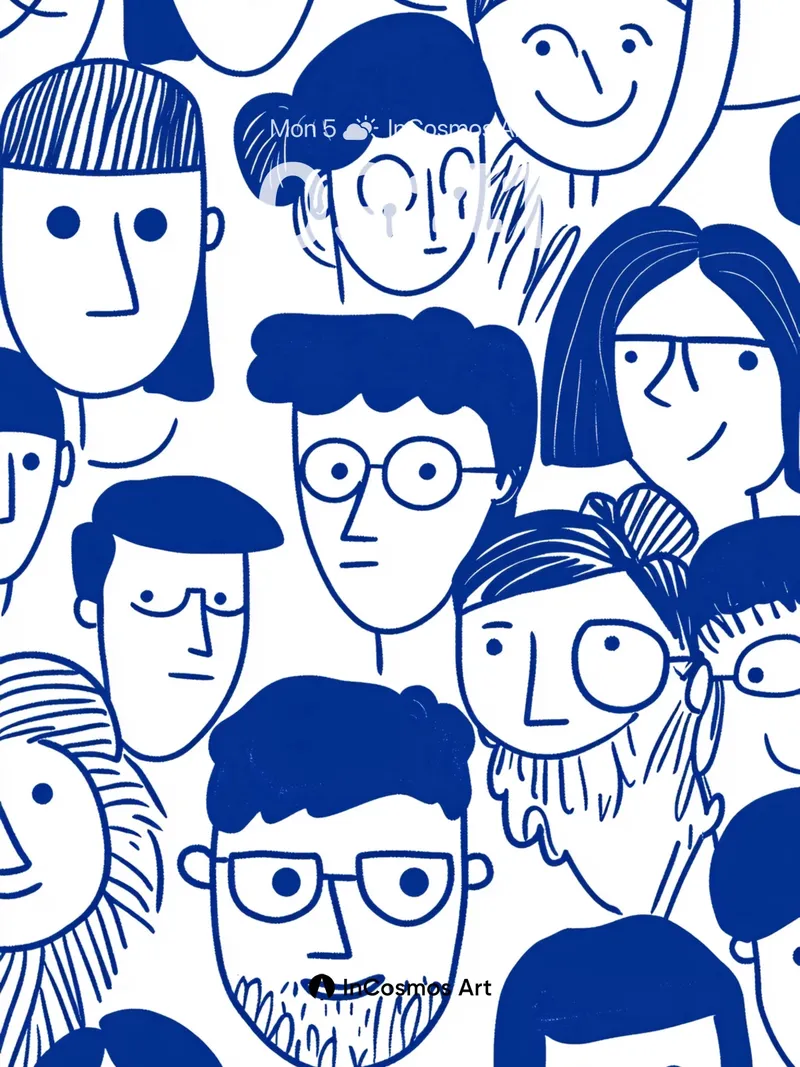
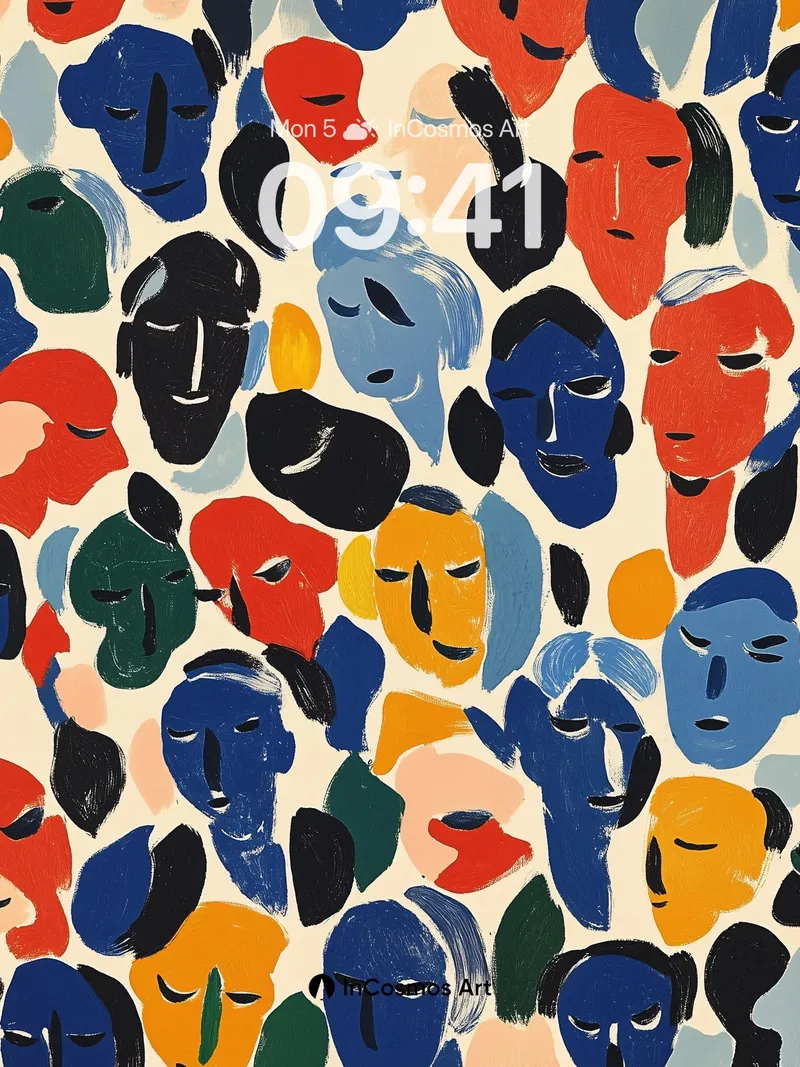
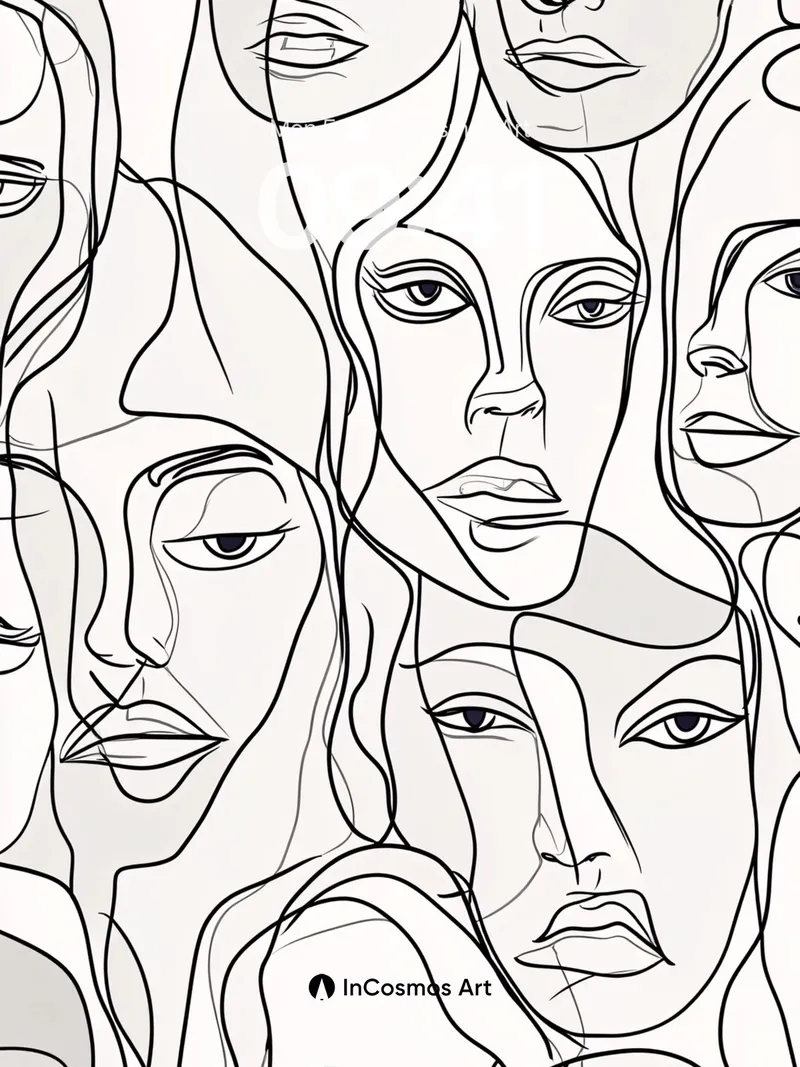
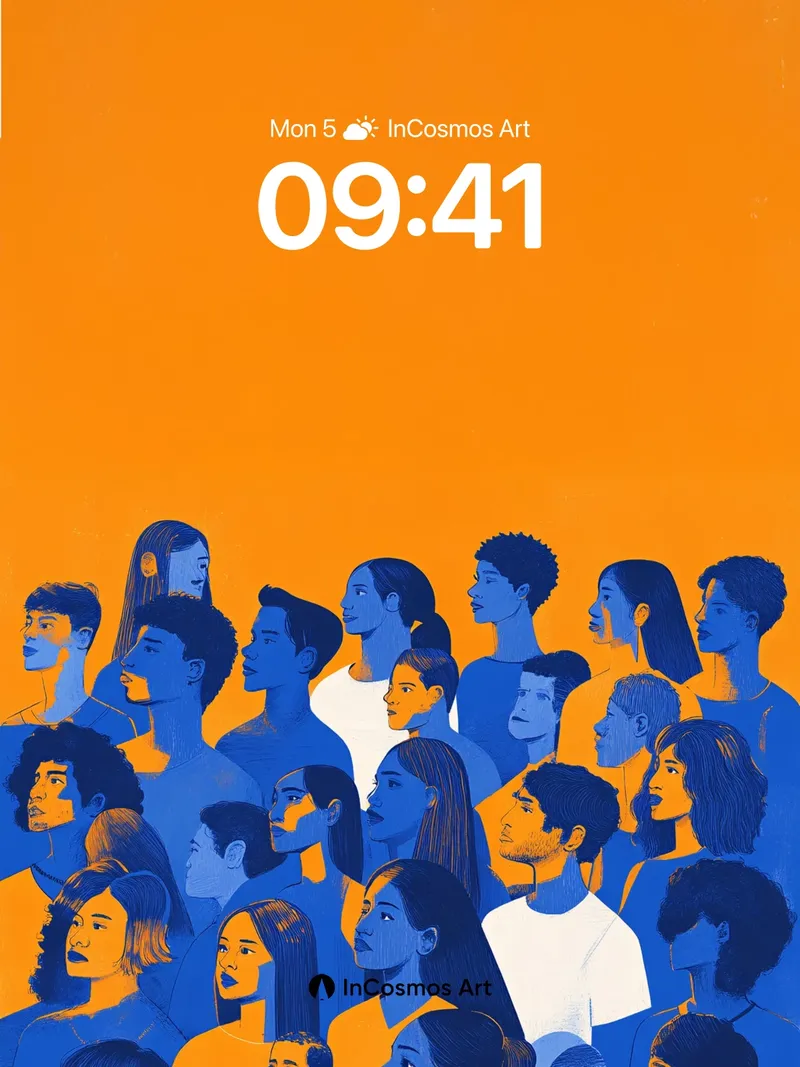
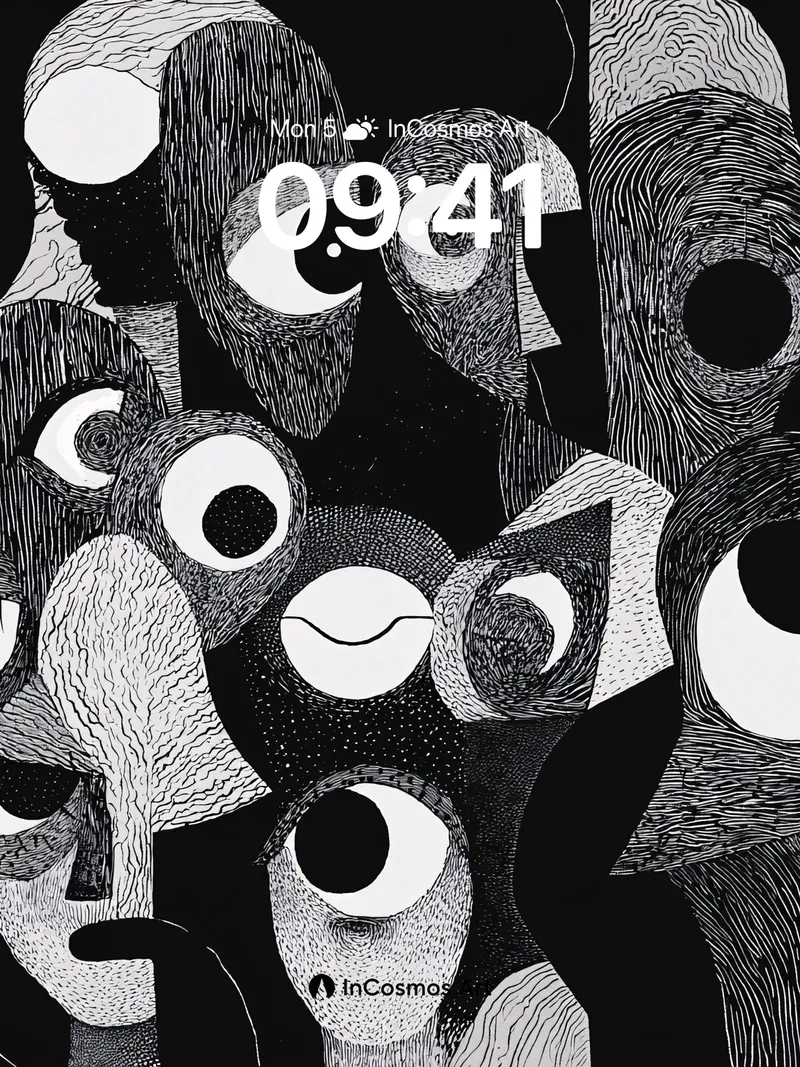
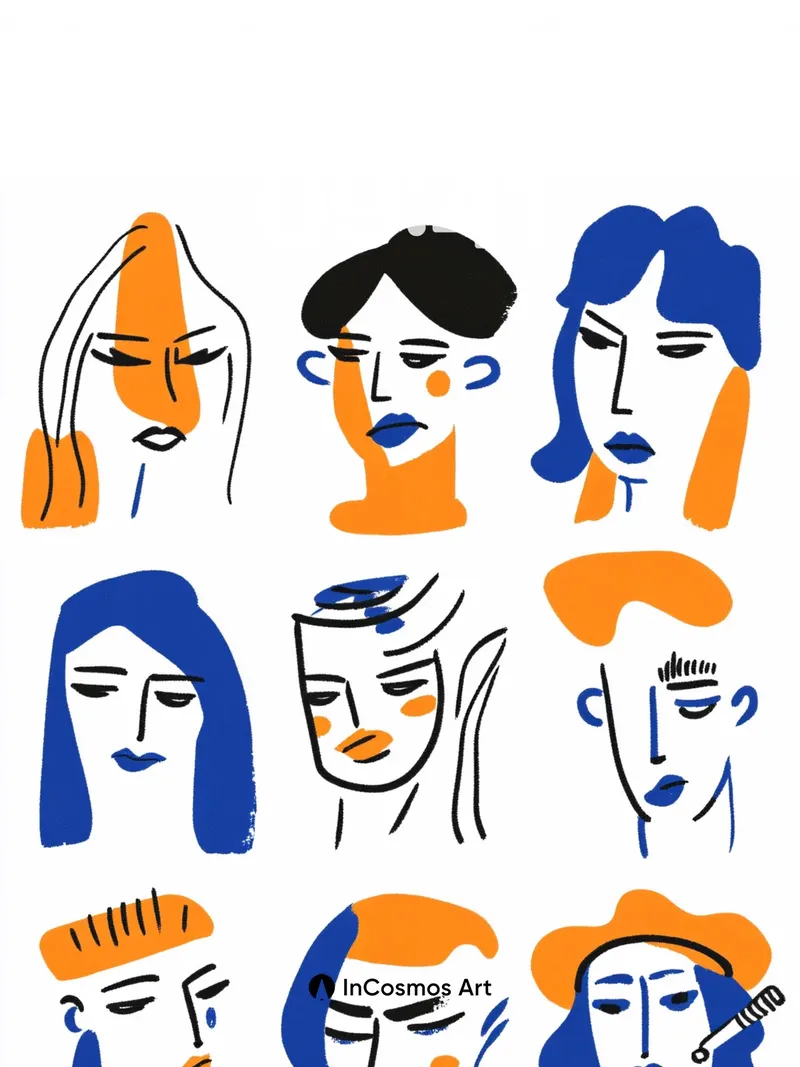
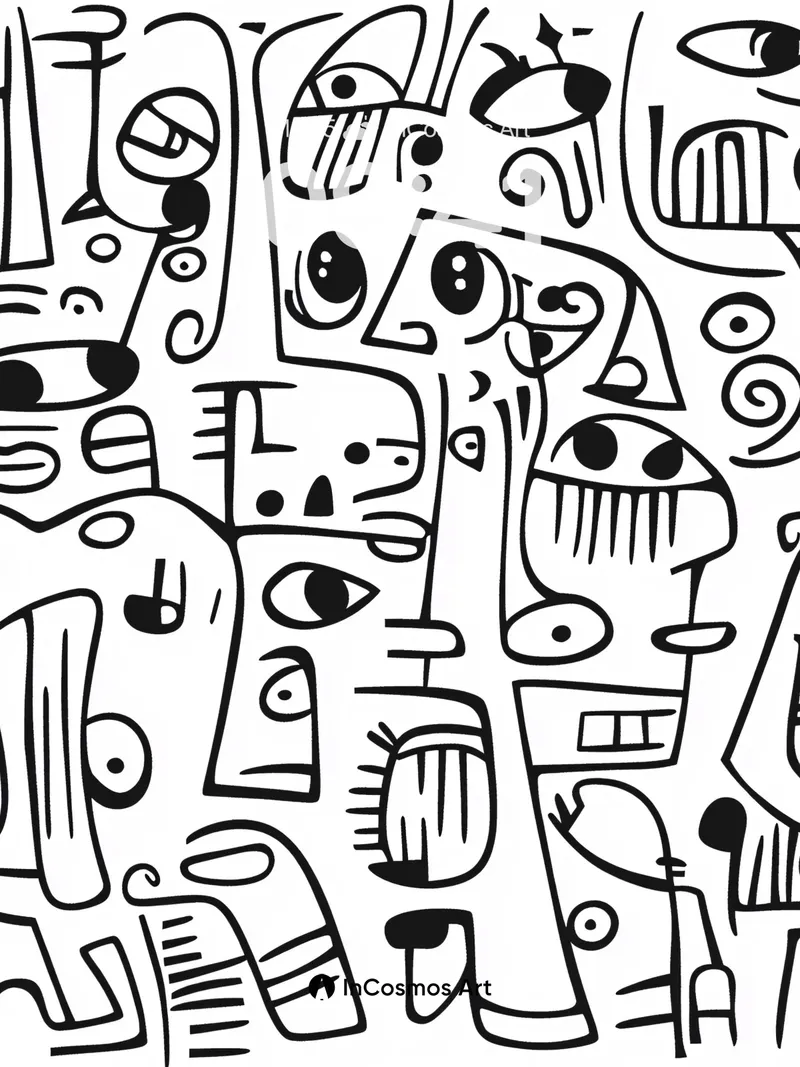
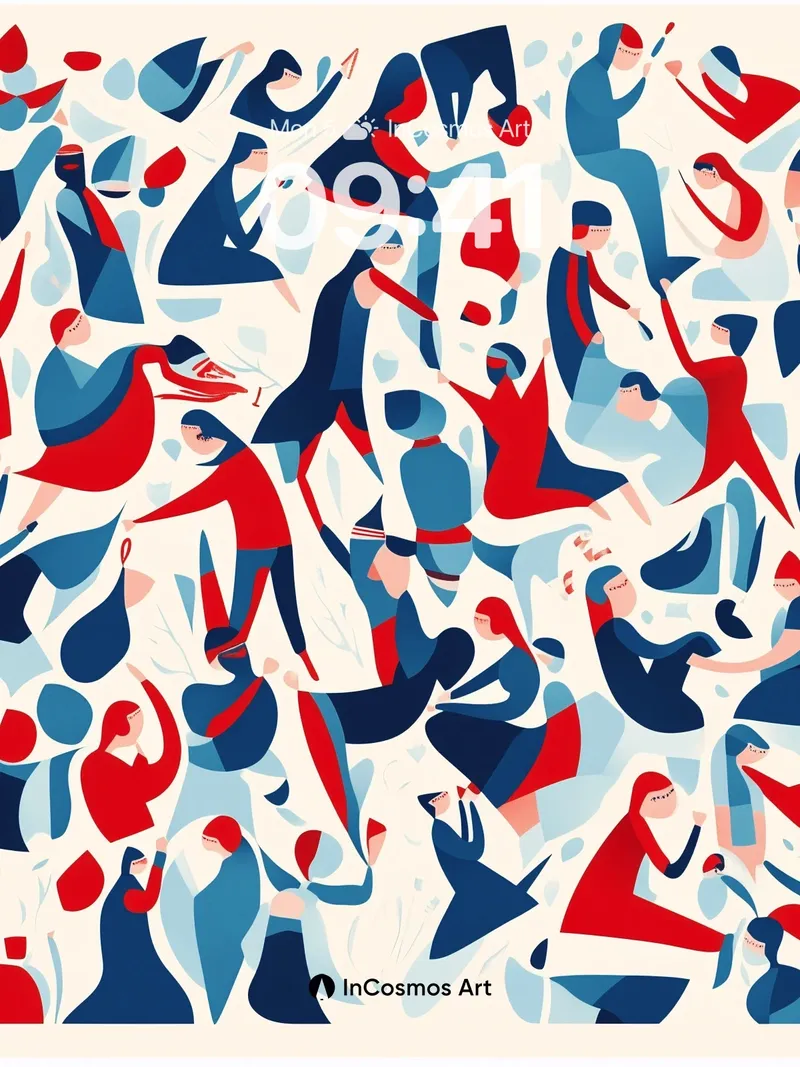
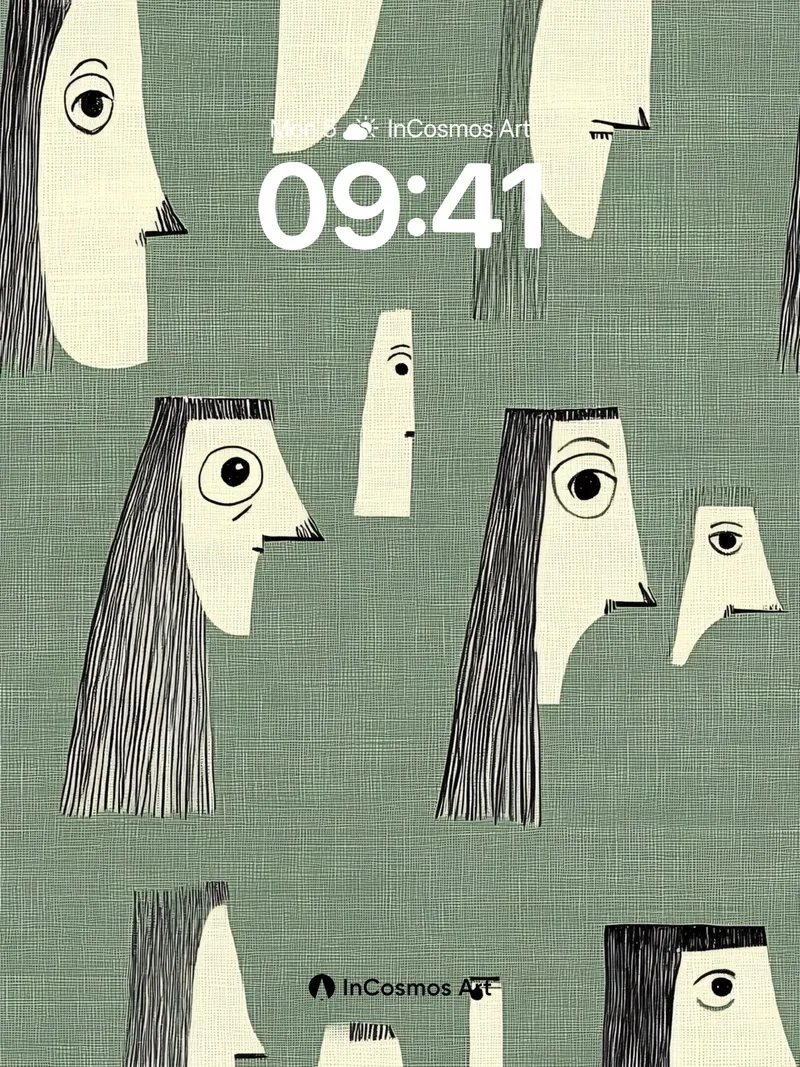
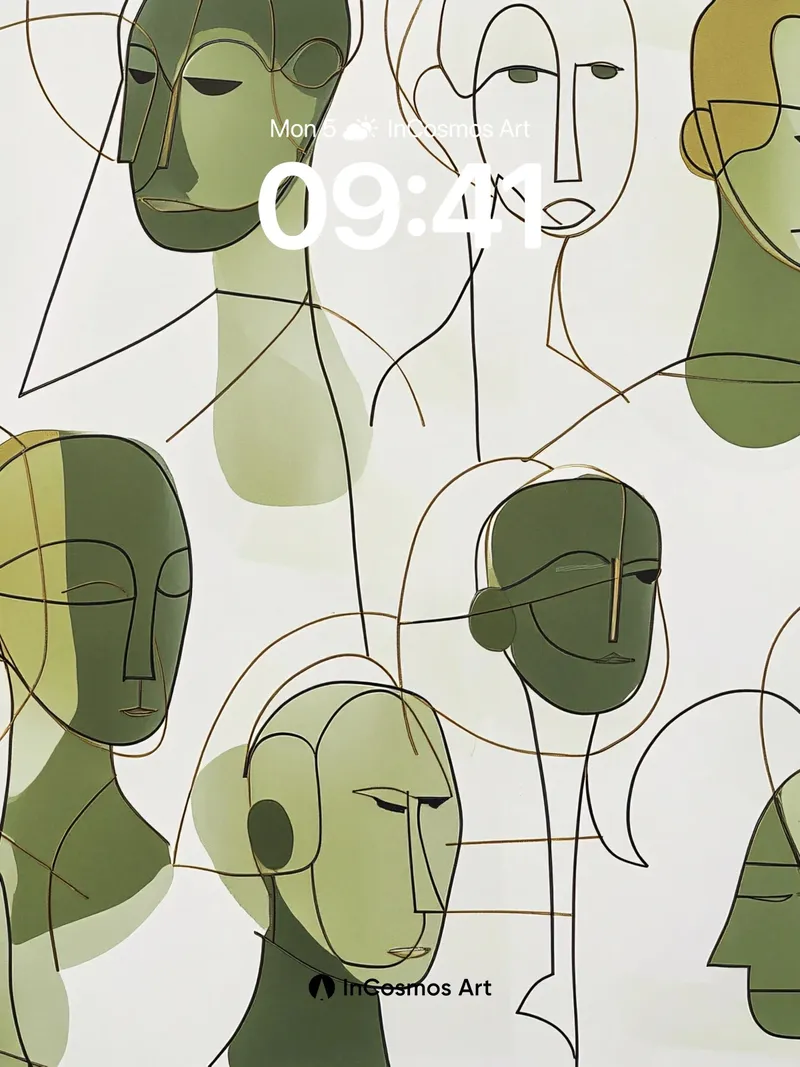
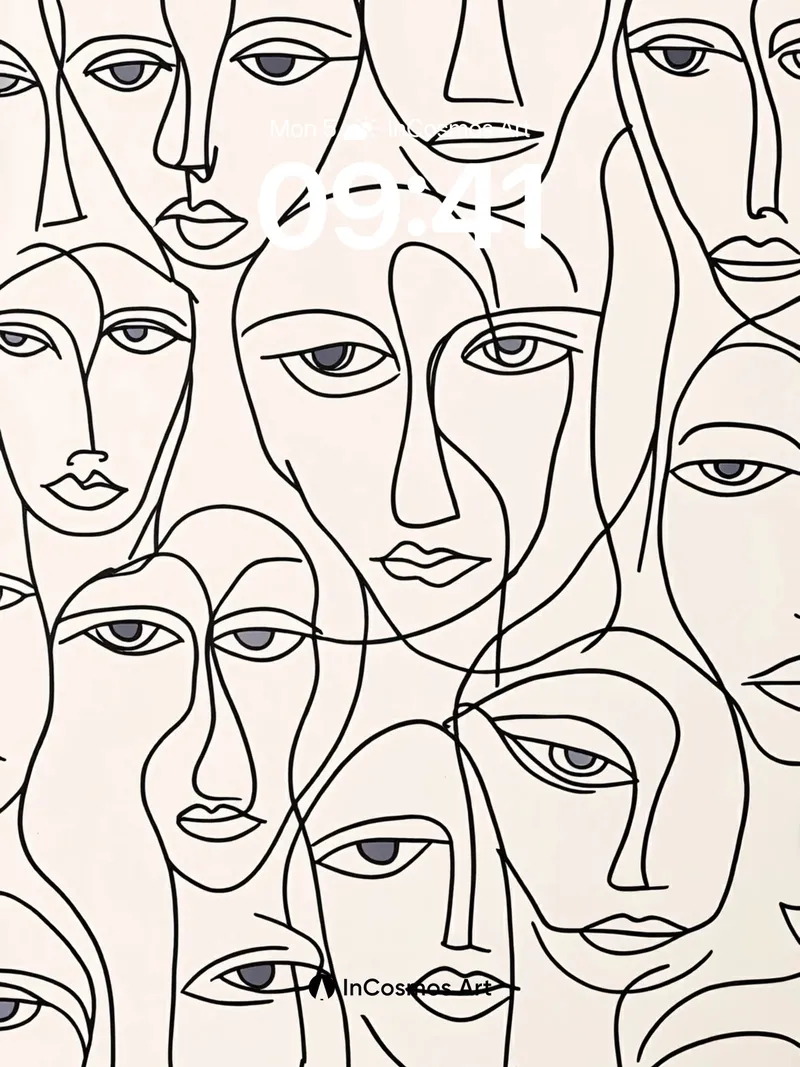
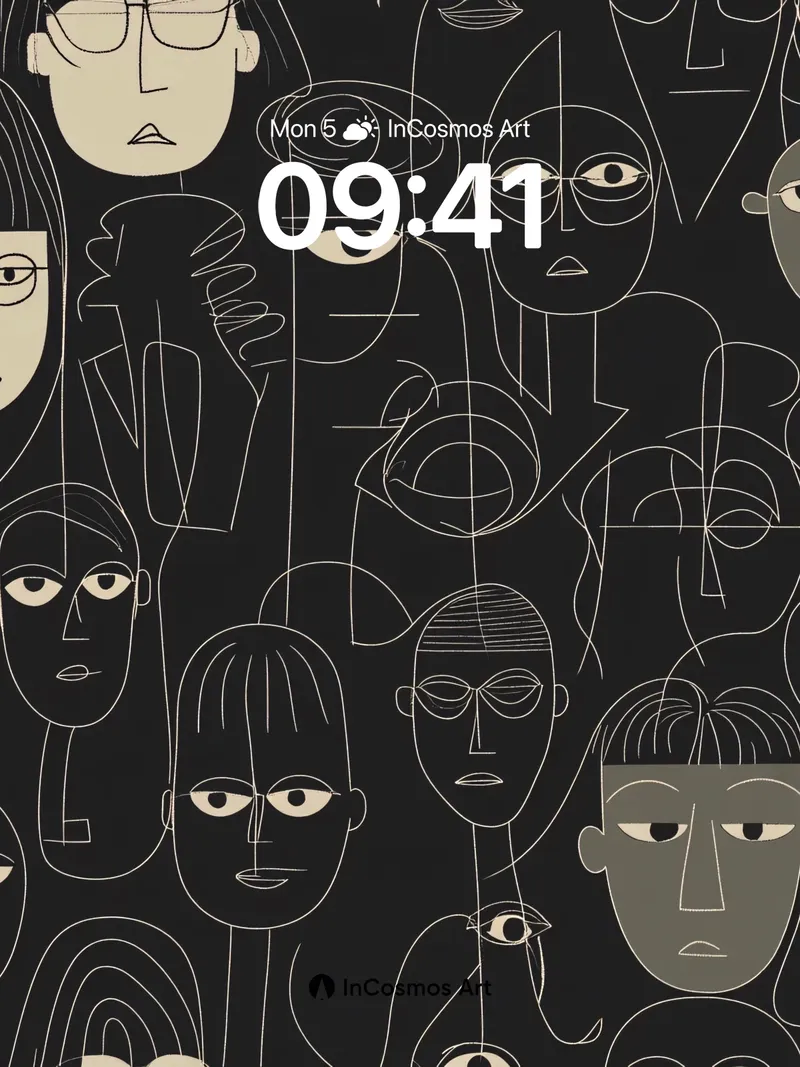
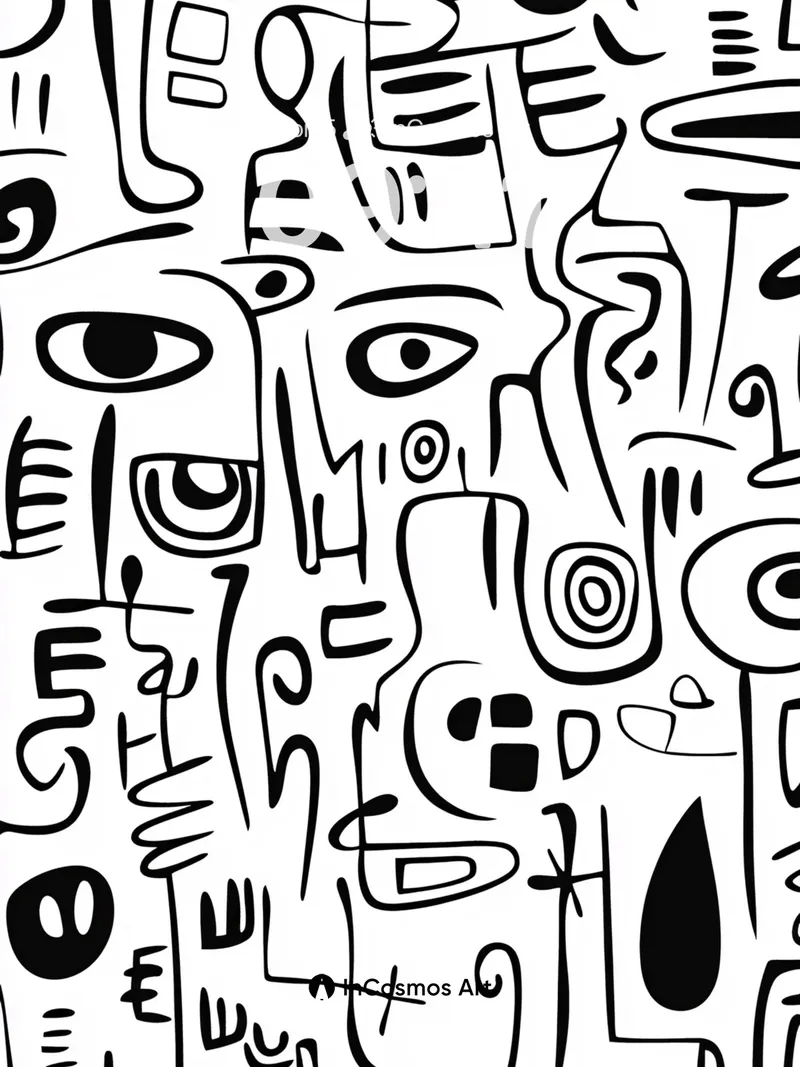
The repetition and transformation of human faces form a silent social language. In these patterns, expressions cease to be private containers of emotion and instead are extracted, amplified, and reassembled into visual symbols of collective psychology. The saturation of color and thickness of lines together construct emotional intensity—red signifies agitation or anger, blue represents calm or detachment, black implies suppression and silence. When faces cluster densely, individual traits dissolve into the whole, forming an anonymized collective consciousness. This visual structure mirrors the fluidity of identity and ambiguity of belonging in contemporary society. People constantly adjust their appearances, switching roles like masks, to meet varying expectations and rules.
The Geometry of Emotion
Each face is a geometric experiment in feeling. The size of eyes, curvature of lips, angle of the nose—all are reduced to quantifiable elements. This abstraction lightens the burden of authenticity while amplifying symbolic meaning. Laughter and tears no longer depend on physiological responses but become designed emotional signs. When scattered randomly across the surface, they create disorder within order, resembling real-time data streams of societal mood. This mode of expression reflects modern digital self-perception—emotions fragmented into modules, ready for deployment or concealment.
Visualization of Collective Unconscious
When numerous similar faces overlap and stack, individual differences fade, replaced by a unified atmosphere. Some compositions show all faces oriented in the same direction, suggesting conformity in group behavior; others display chaotic rotation, reflecting cognitive dissonance and value conflict. This compositional strategy reveals the tension between individuality and collectivity in modern life: a desire for belonging paired with fear of homogenization. Art here becomes a mirror, reflecting how individuals seek position within groups, yet risk losing themselves in the process.
Fluidity of Identity
Changes in color and distortion of contours signal the instability of identity. One person may present radically different visages across contexts: gentle, violent, sorrowful, joyful. This multiplicity is not pathological but characteristic of modern existence. The construction of 'personal branding' on social media is a direct extension of this phenomenon. We carefully curate images before lenses, painting colors onto canvases, attempting to define the inner self through outward performance. Yet when all personas are displayed side by side, truth becomes indistinguishable.
The Boundary Between Abstraction and Representation
Some works retain clear facial features, others completely deconstruct, leaving only fragments of eyes, mouths, and noses. This transition illustrates the cognitive path from representation to abstraction. Viewers oscillate between recognition and misinterpretation, compelled to reconsider the essence of the concept 'face.' Is it biological trait or cultural construct? Memory vessel or instrument of power? These questions remain unanswered, but each gaze becomes a questioning of self-awareness.