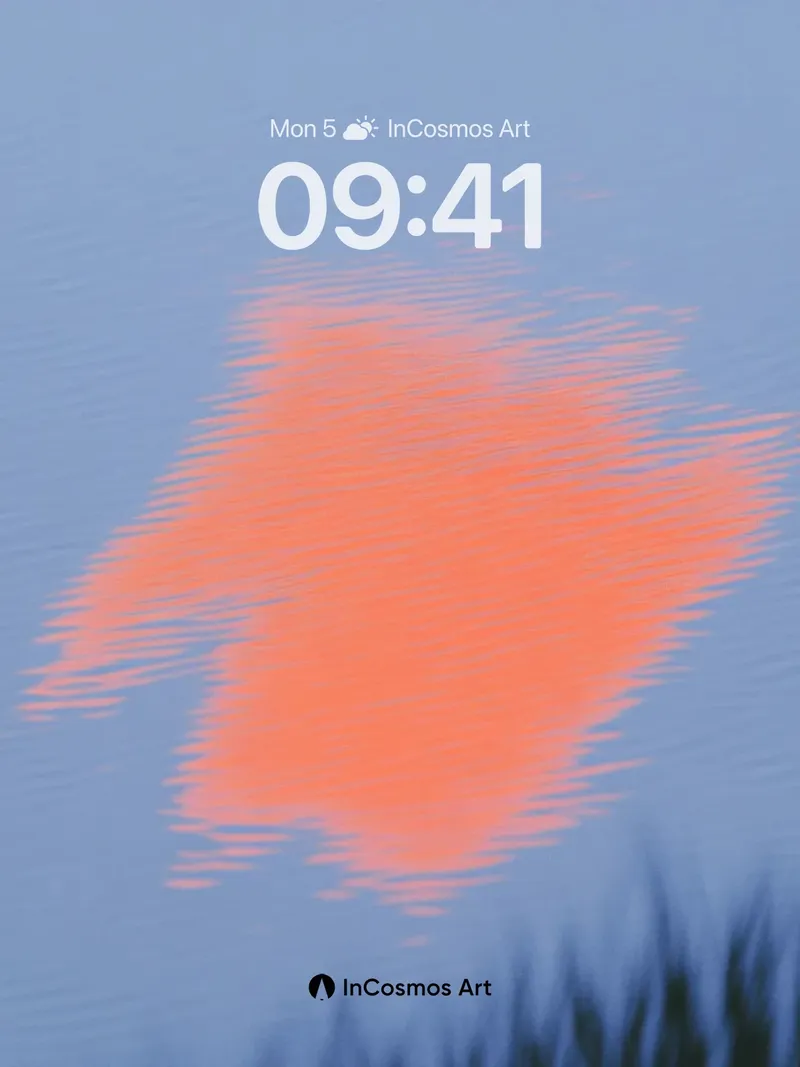
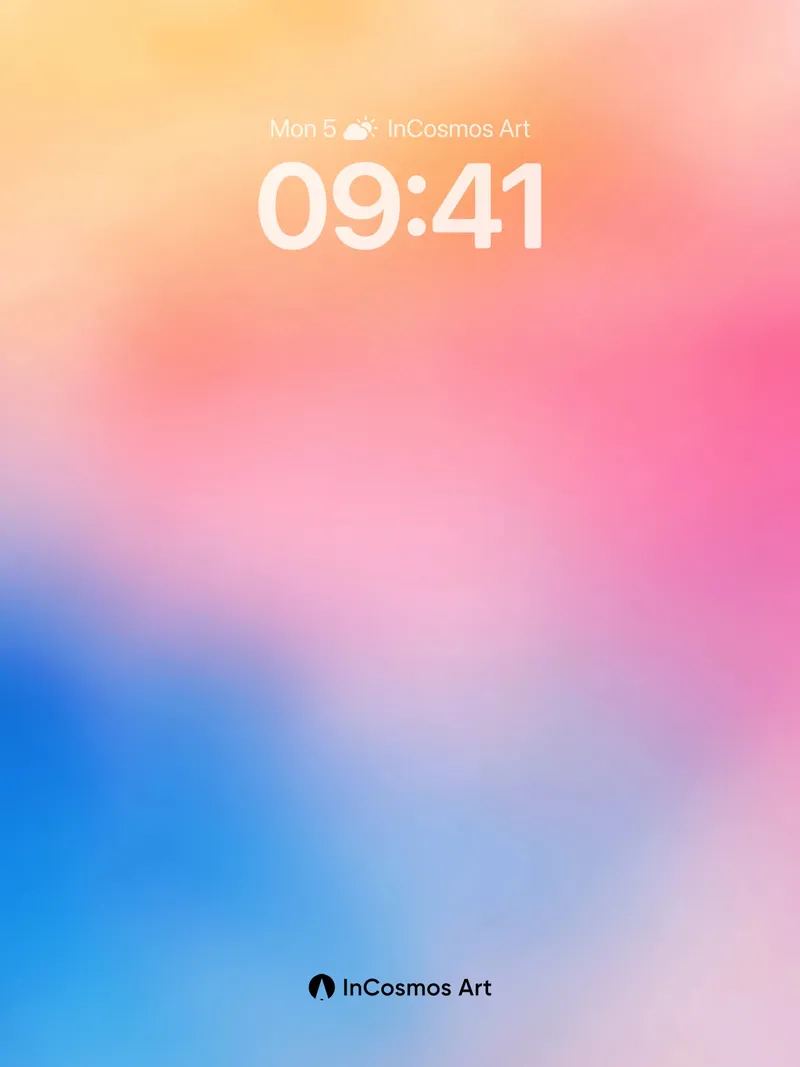
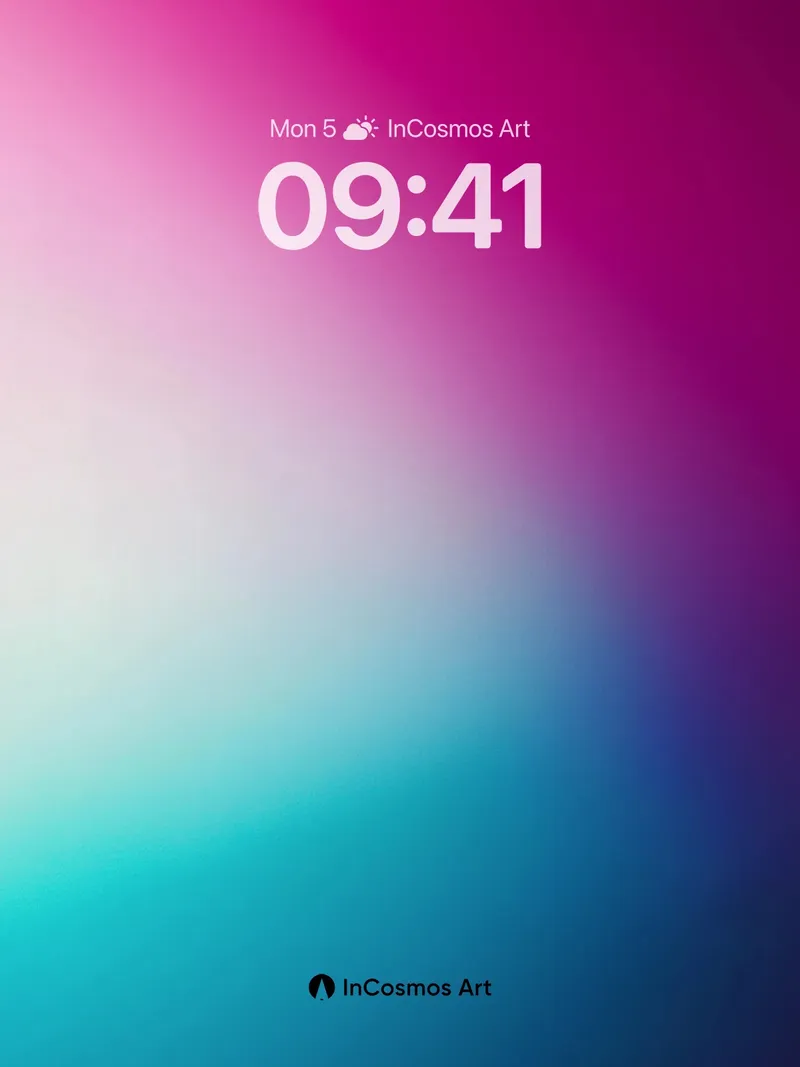
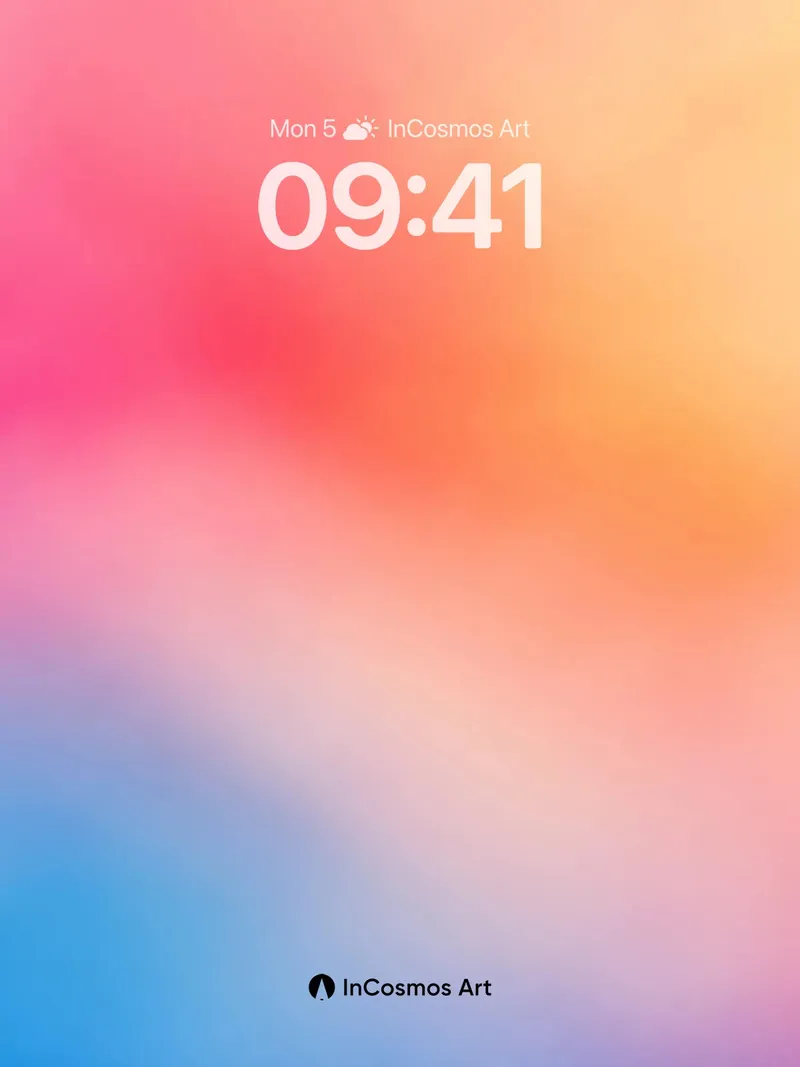
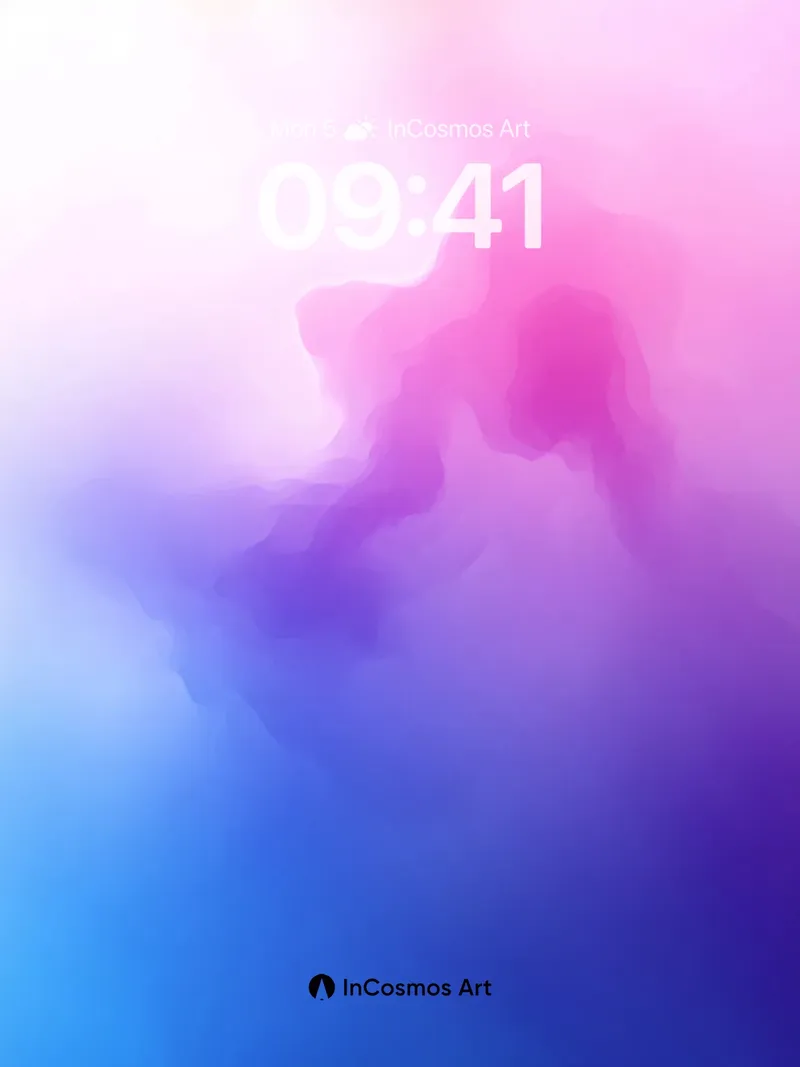
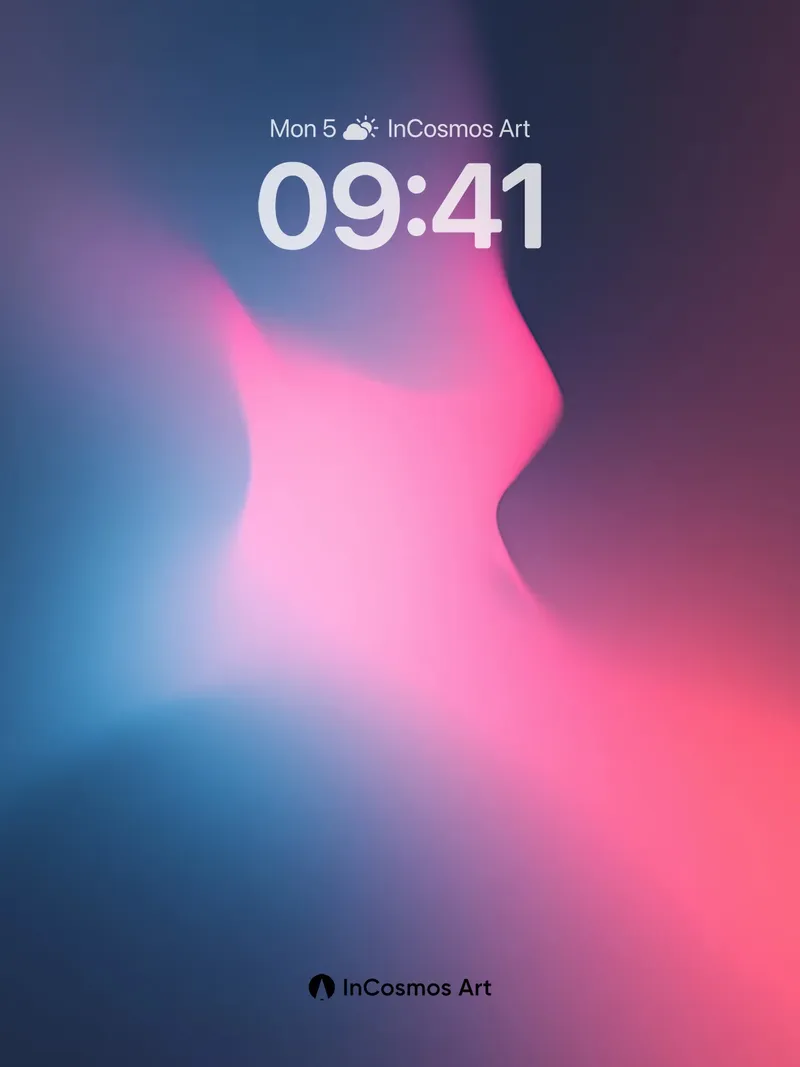
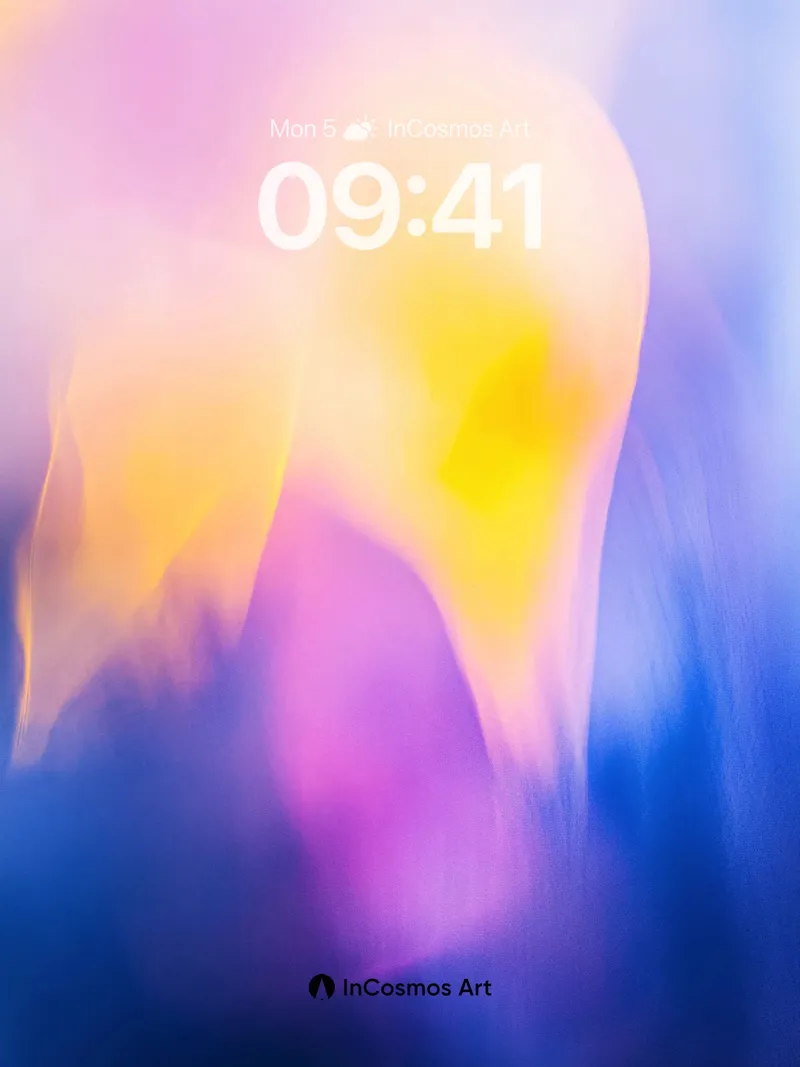
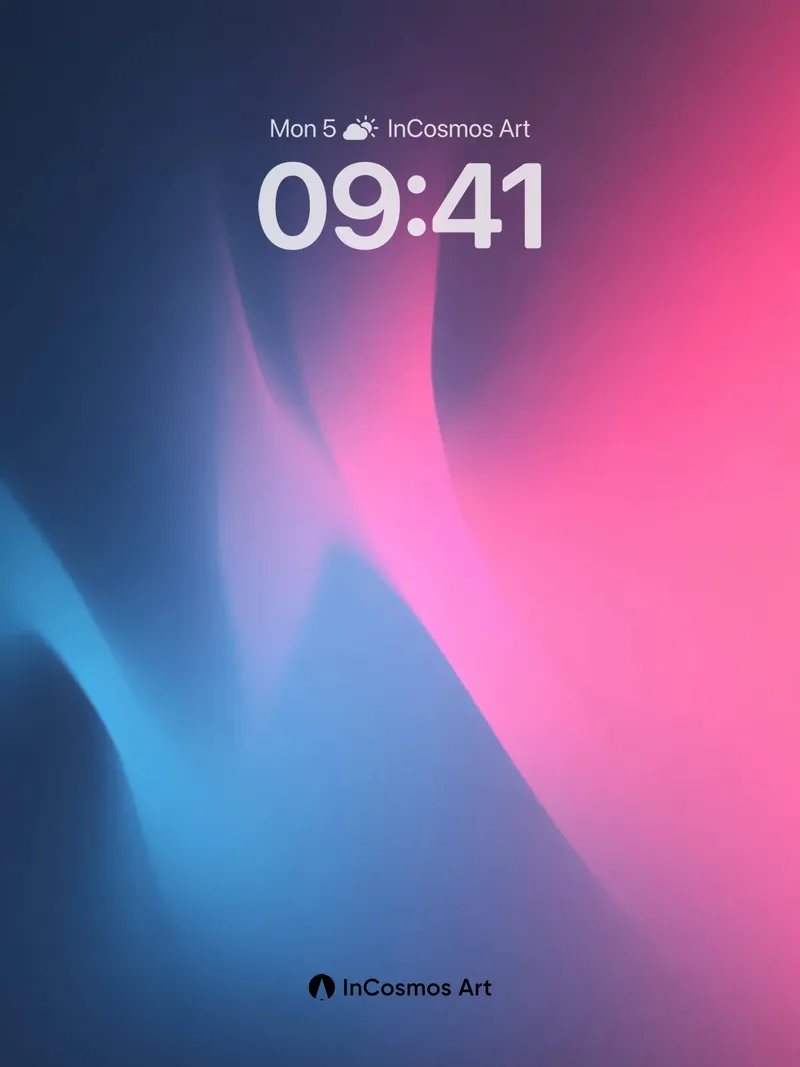
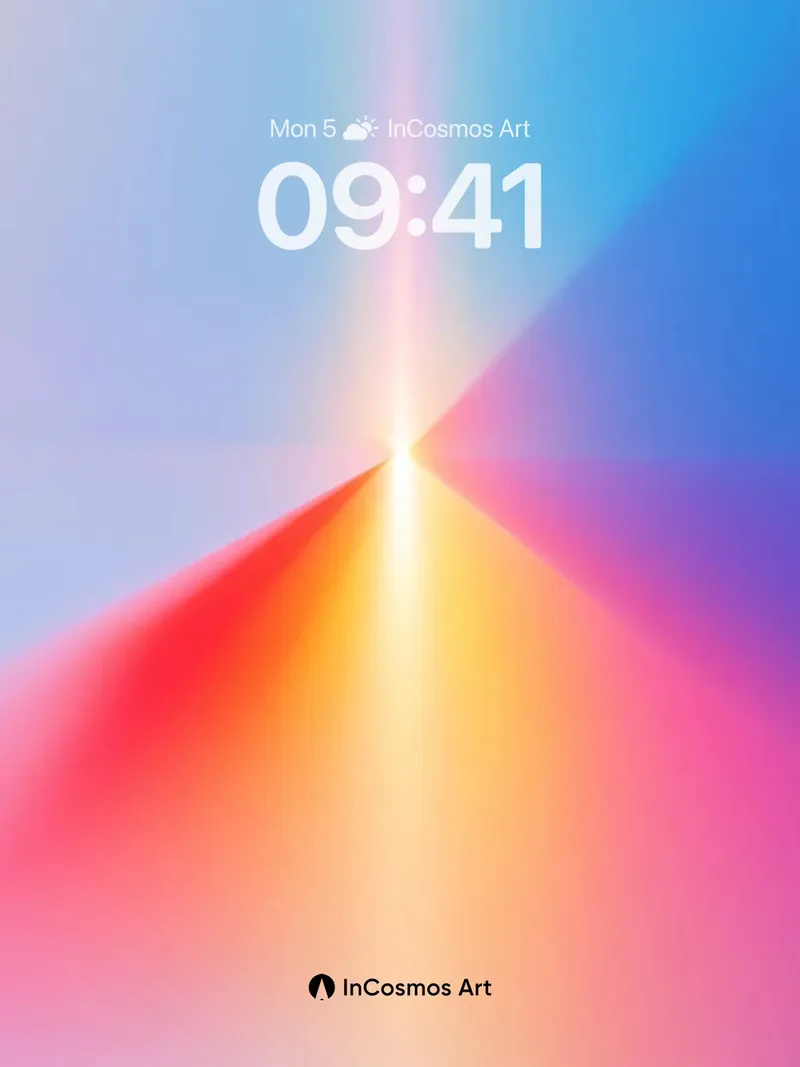
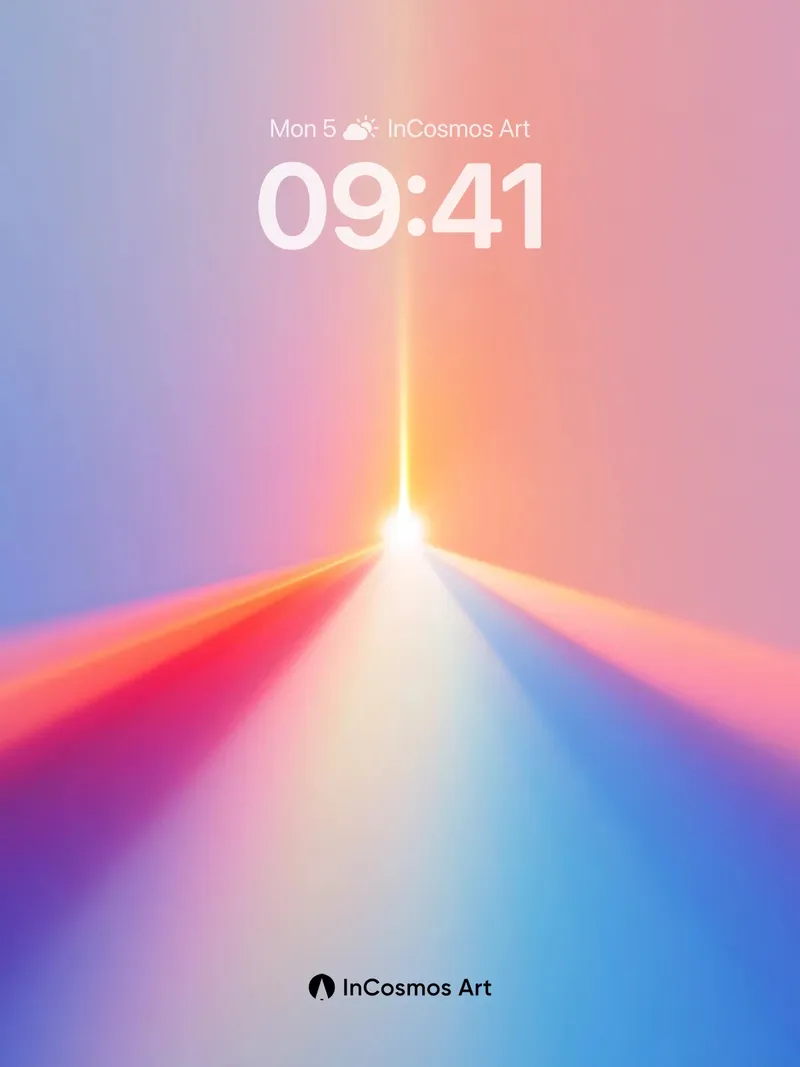
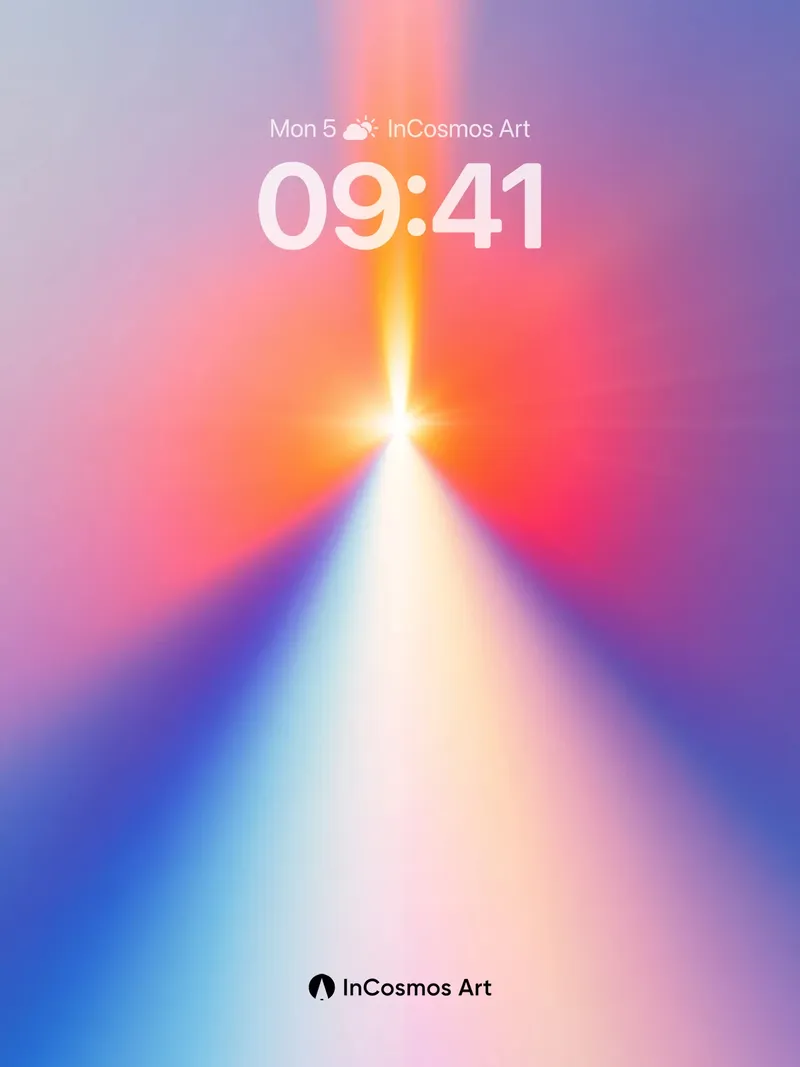
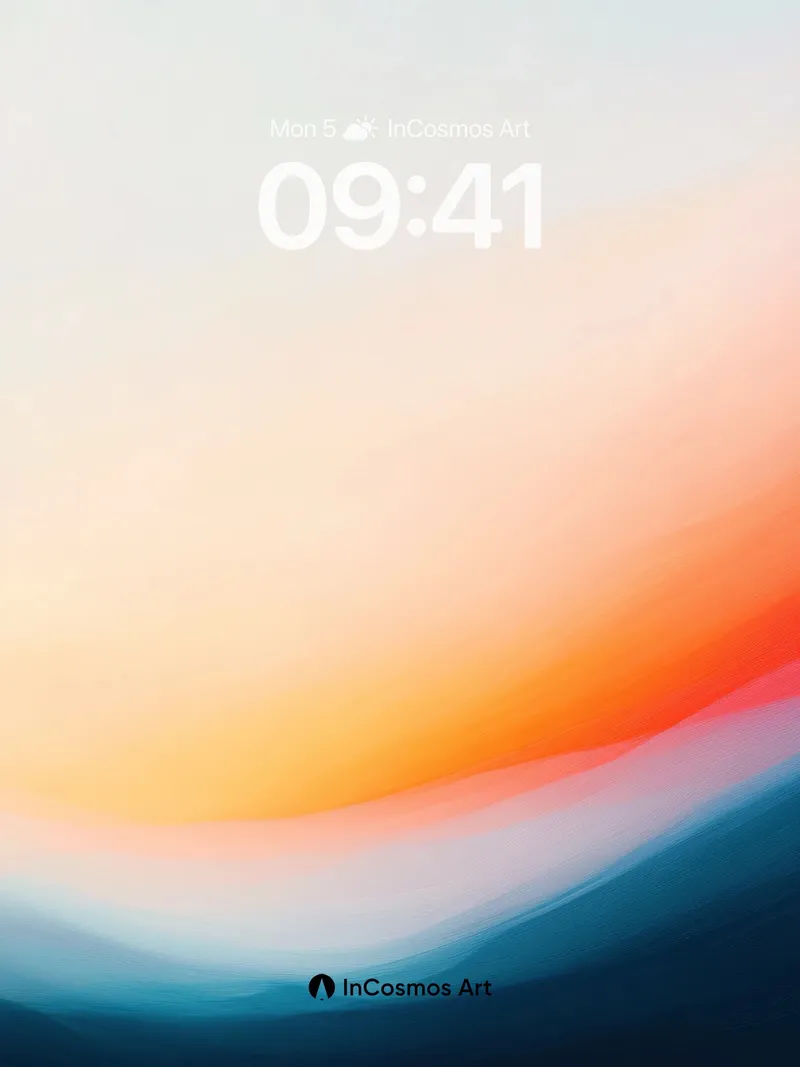
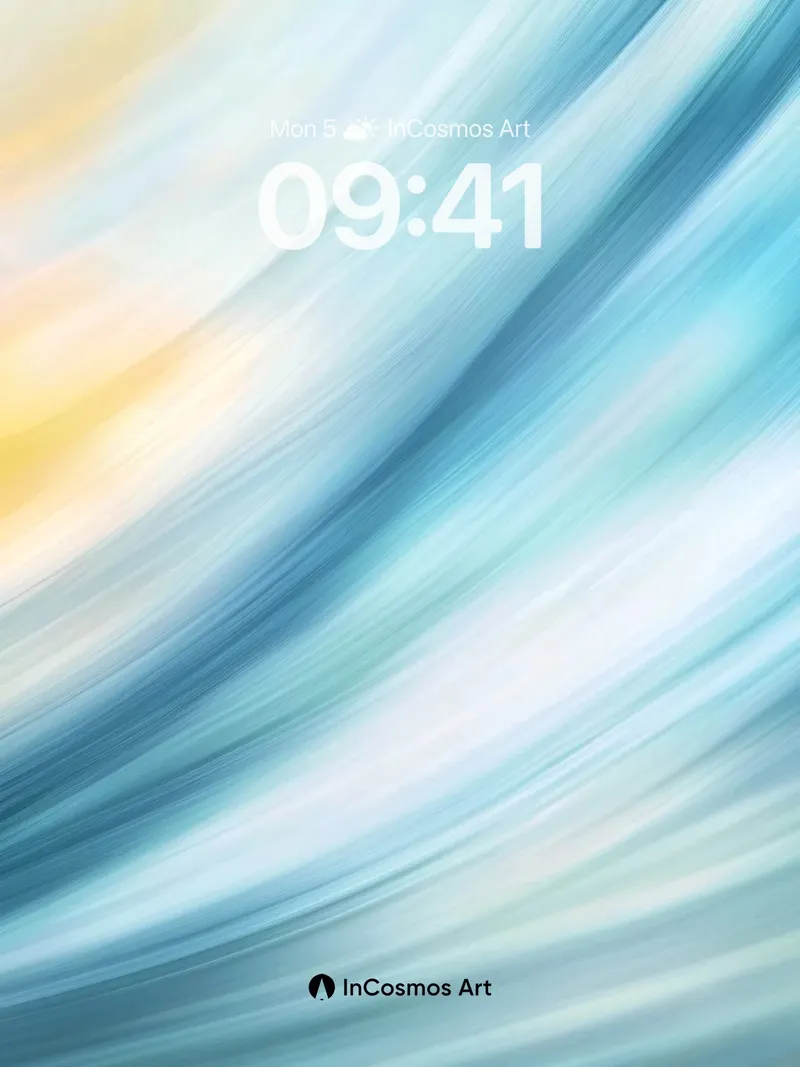
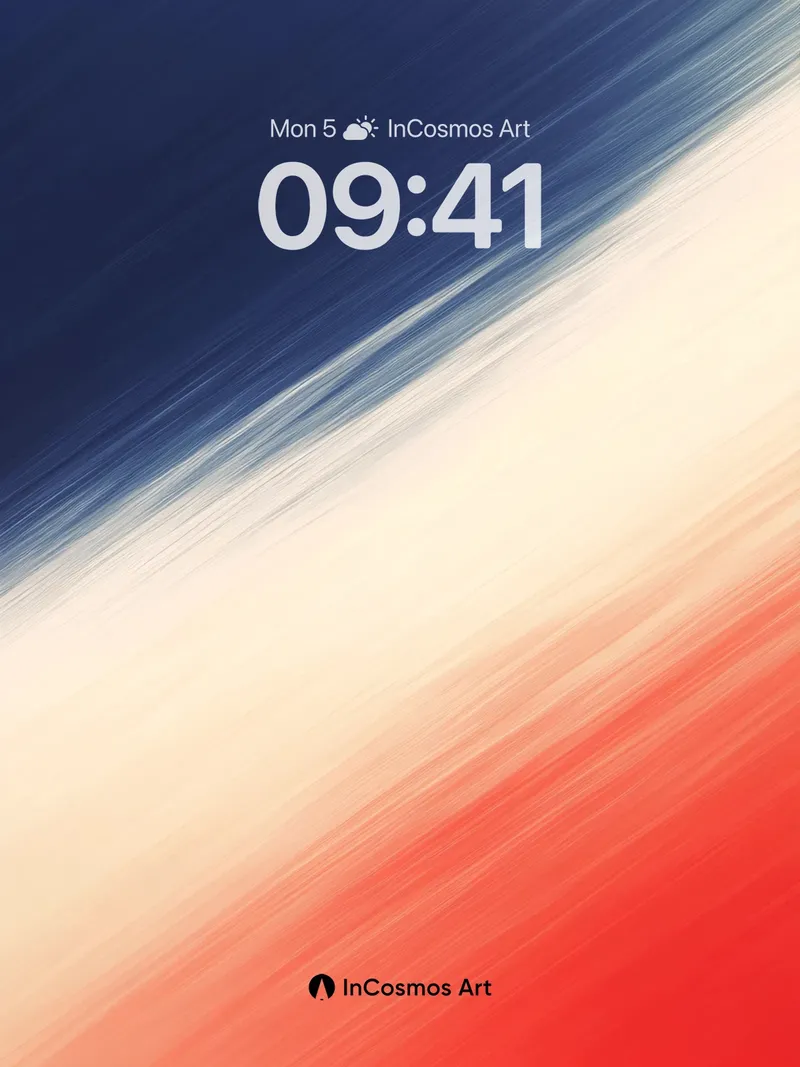
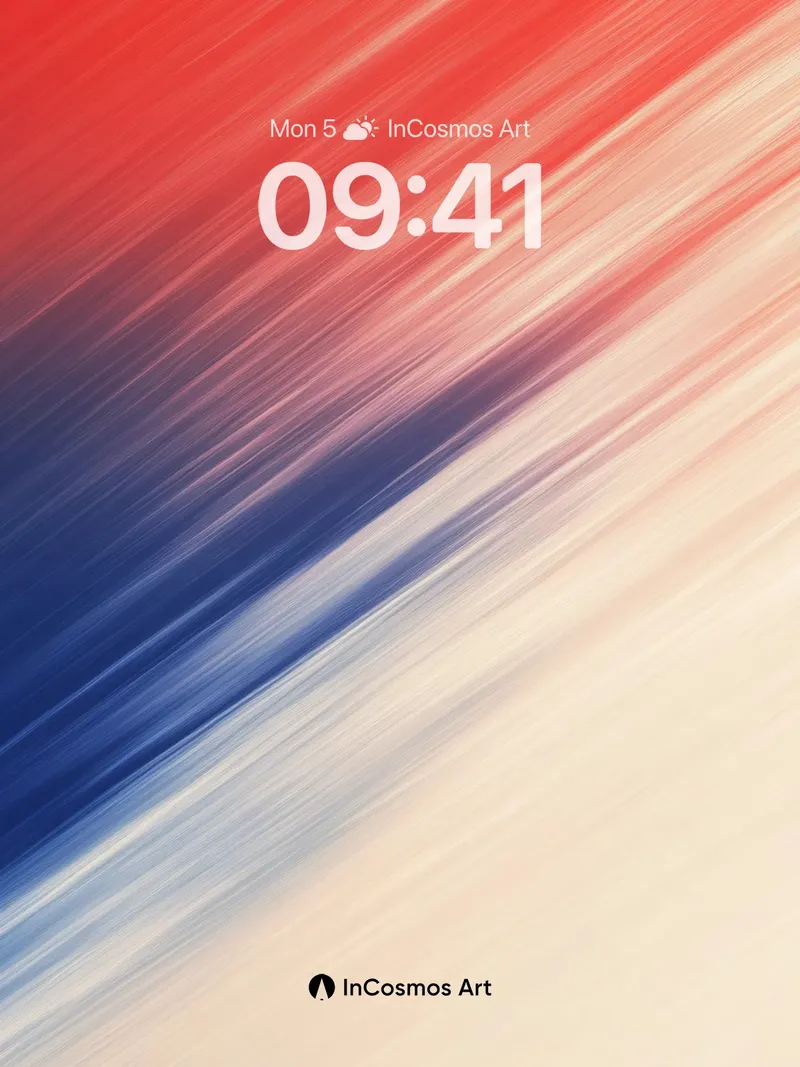
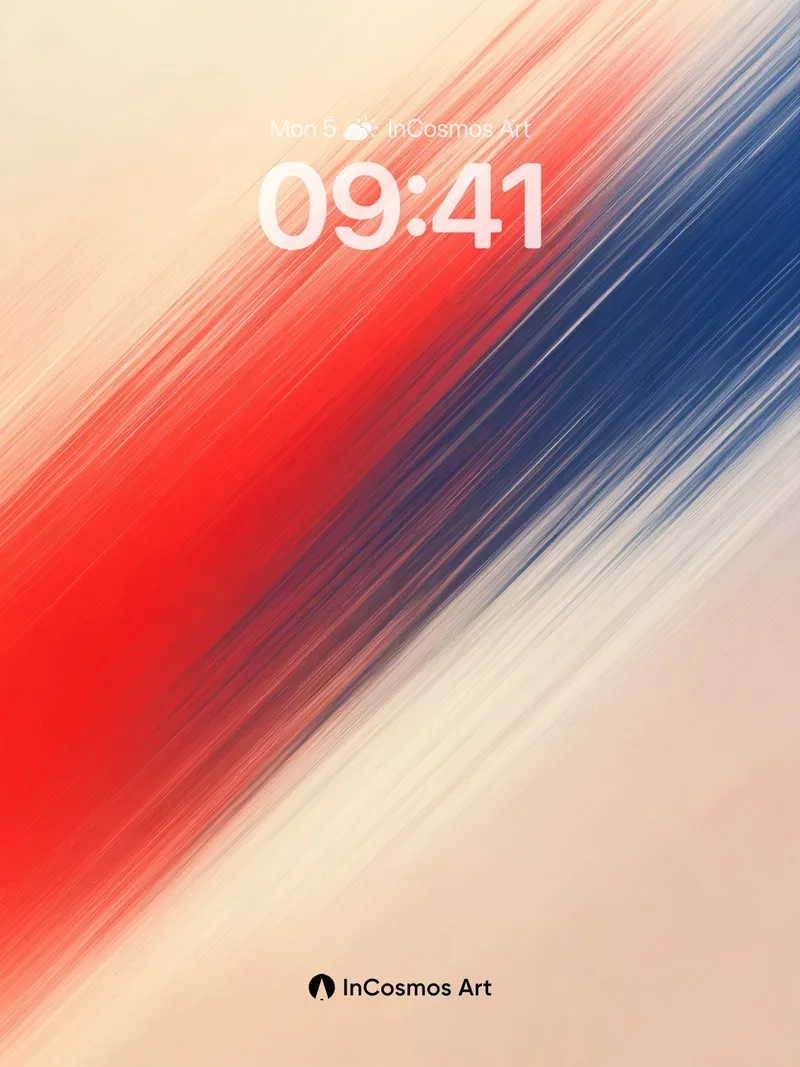
Light moves through space, leaving traces. These traces are not paths but emotional deposits. Color here is no longer a visual symbol but a direct projection of psychological states. Where blue meets red, the boundary between calm and passion emerges; an orange patch floats above water, as if memory dissolves into time. Abstract forms do not rely on concrete objects yet approach truth more closely than representation. Through gradients, radiance, and diffusion, they construct a non-verbal expression system. This system resists naming but allows perception—much like how humans unconsciously capture atmosphere.
Color as Emotional Carrier
Color is not decoration but structure. The transition from cool blue to warm red creates internal tension. This tension arises from the coexistence of opposing elements: reason and impulse, stillness and motion, forgetting and remembering. When light bursts from a center, forming radial gradients, it mimics the expansion of consciousness. Each extension of color represents a cognitive reach. Viewers experience resonance during observation—subtle shifts in breath, a quiet alignment with order and harmony, an unconscious response to balance.
The Reality of Abstraction
Abstract forms are often mistaken for detachment from reality. Yet in these images, abstraction becomes another mode of presenting reality. The orange patch on water might originate from sunset or artificial light, but its meaning transcends source. It becomes an independent entity carrying emotions such as solitude, anticipation, or loss. This transformation reveals a truth: much of human experience cannot be conveyed through language and must instead be communicated through non-representational forms.
The Philosophy of Light
Light itself has no direction, but its trajectory can be perceived. When rays converge at a point and disperse outward, they symbolize mental focus and release. This pattern recurs in meditation, ritual, and artistic creation. It represents energy flow and attention shift. In the digital age, people habitually switch information sources, yet these images offer a reversal: stillness, immersion, emptiness. They invite viewers to pause thought and enter a state akin to mindfulness.
Non-Verbal Emotional Expression
Human emotions often resist articulation. Anger, sorrow, joy—these complex states defy precise vocabulary. Abstract color compositions offer an alternative. They do not narrate stories or depict figures, yet evoke deep resonance. This resonance stems from shared perception of rhythm, equilibrium, and temperature. When blue and red achieve dynamic visual balance, the mind finds temporary peace.