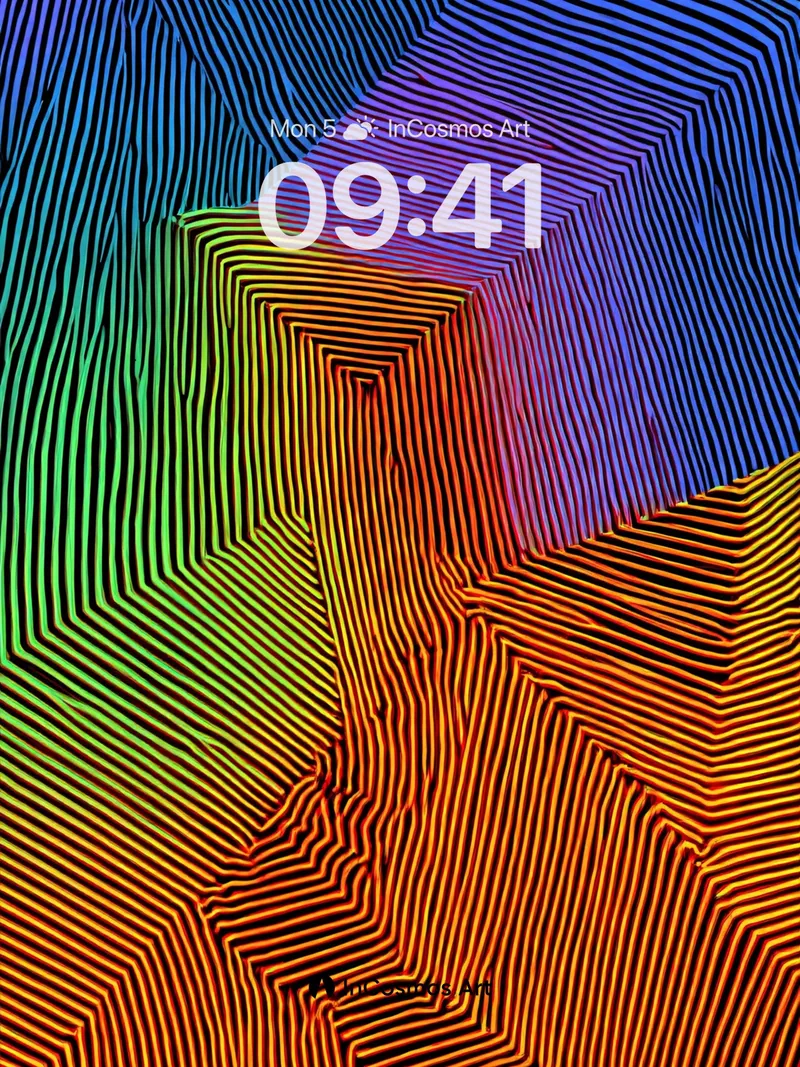
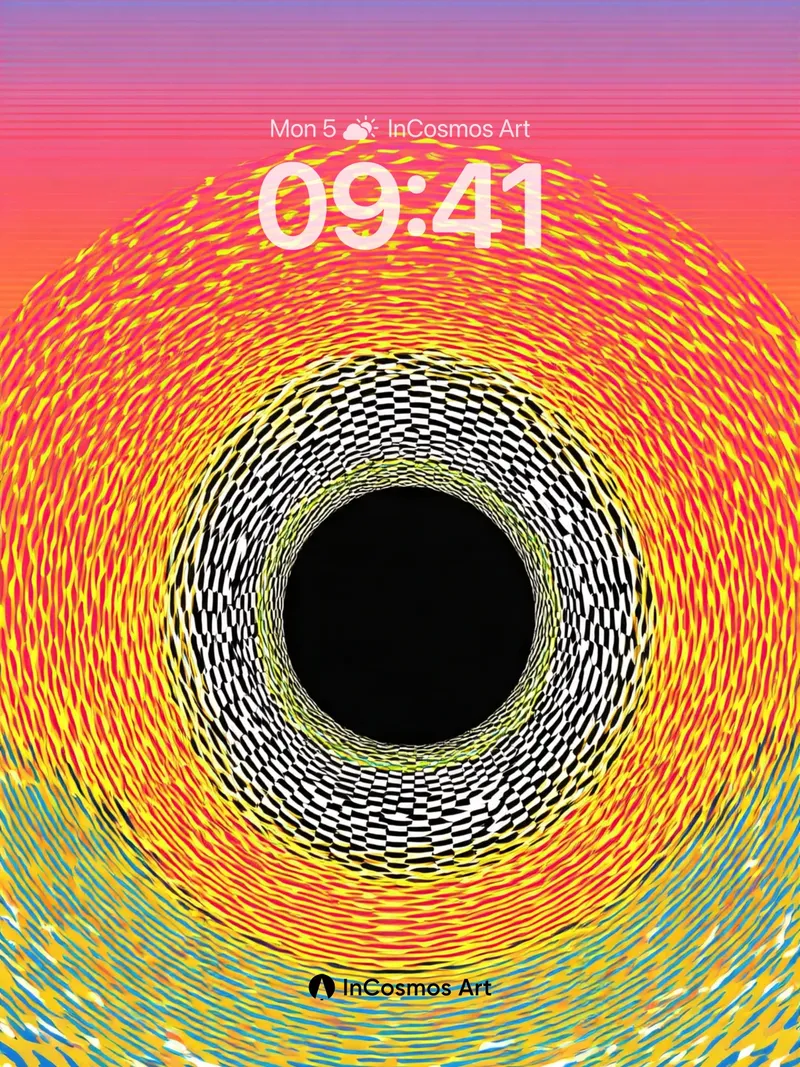
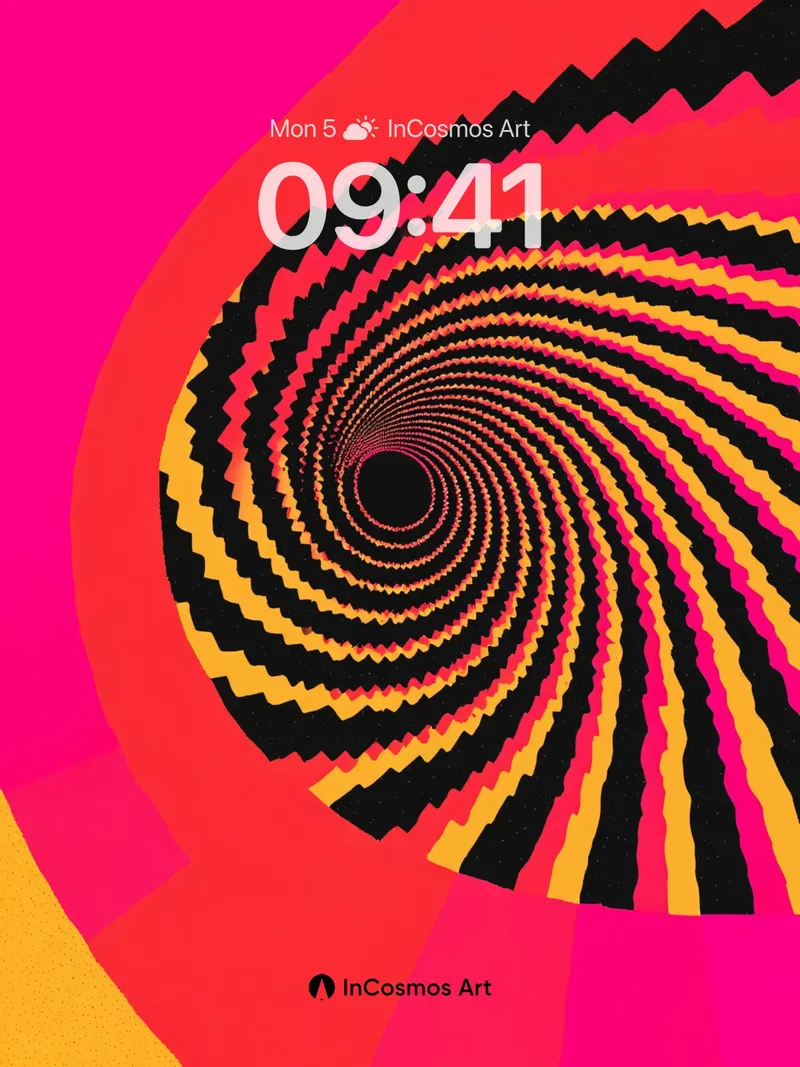
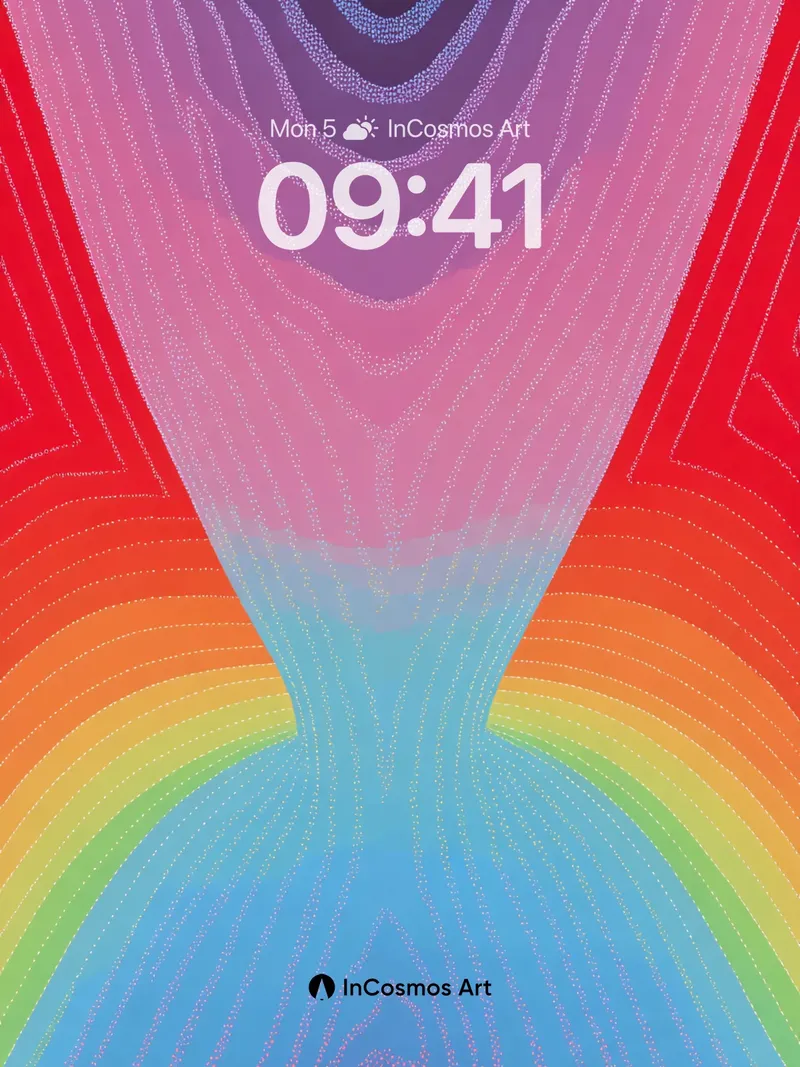
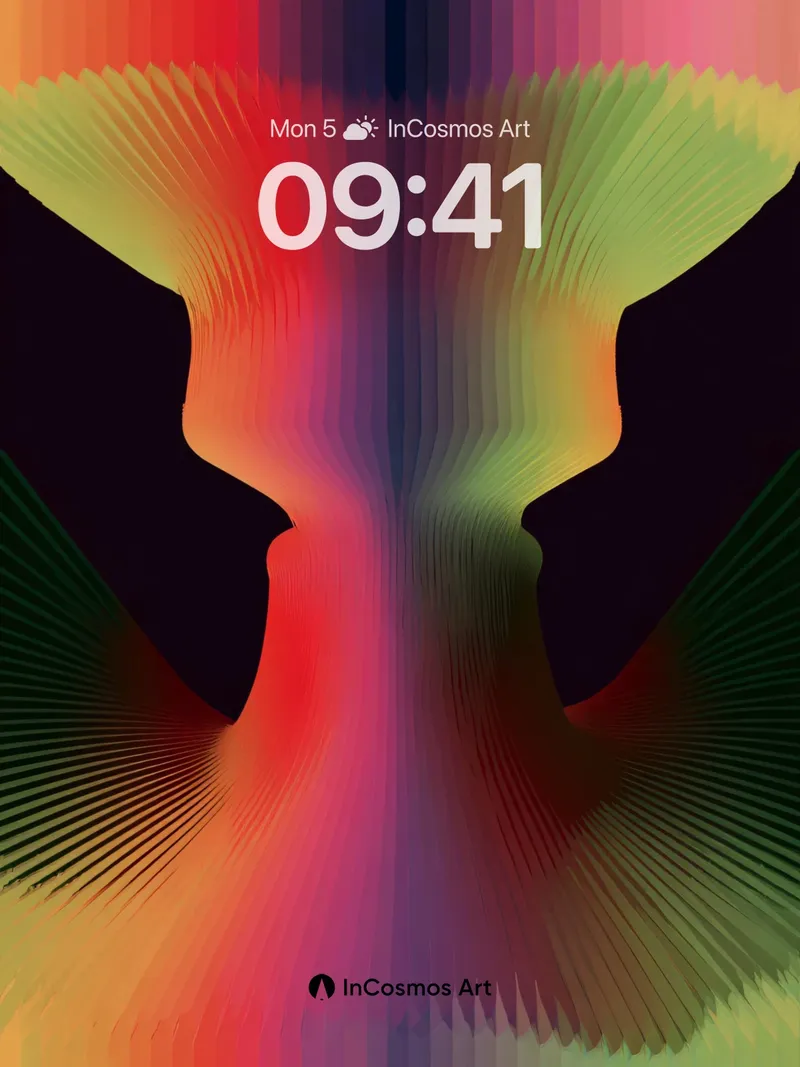
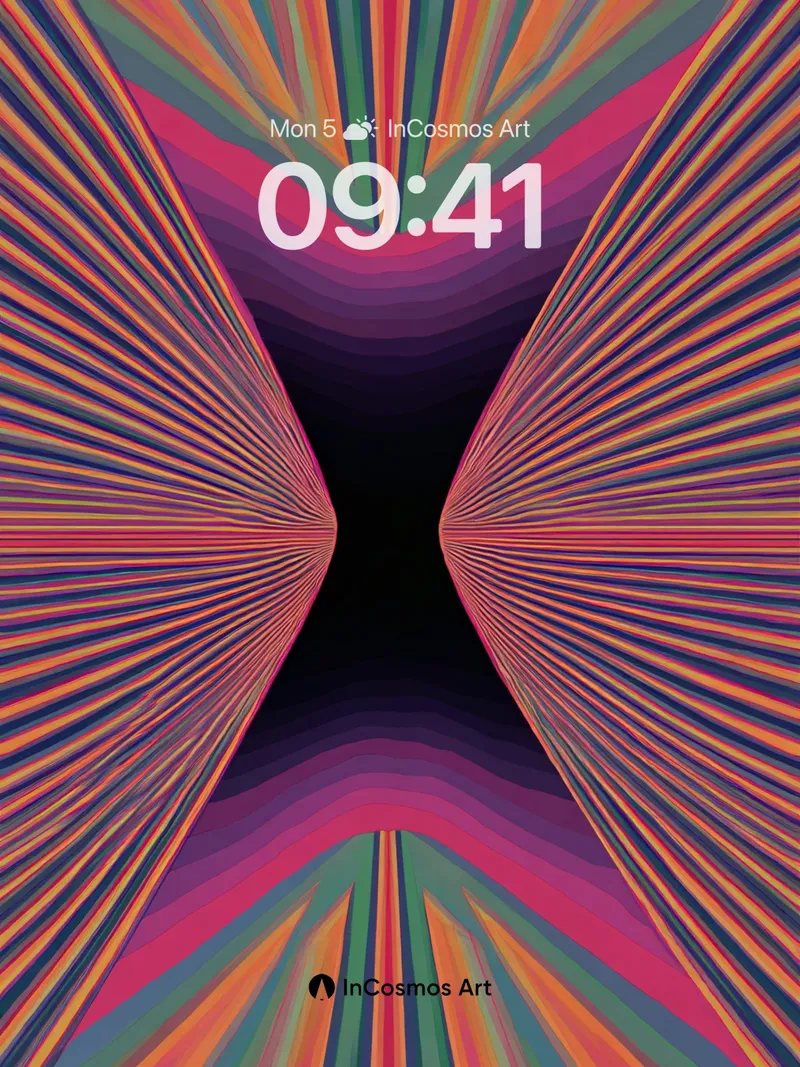
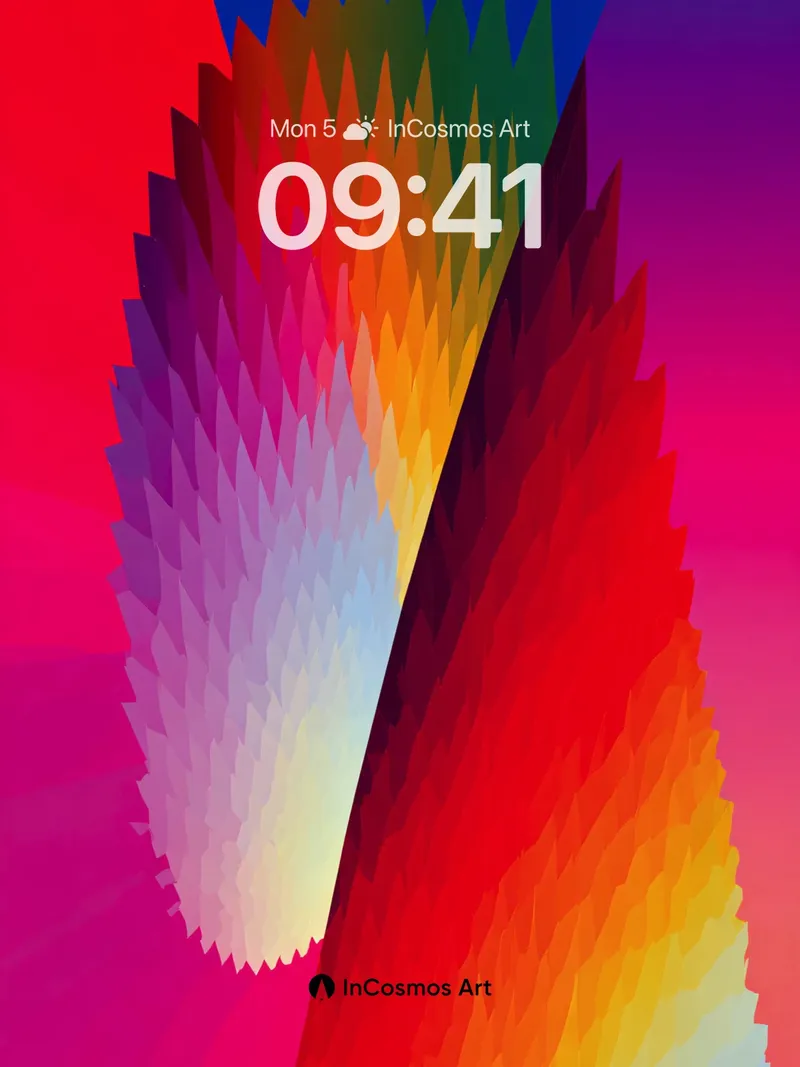
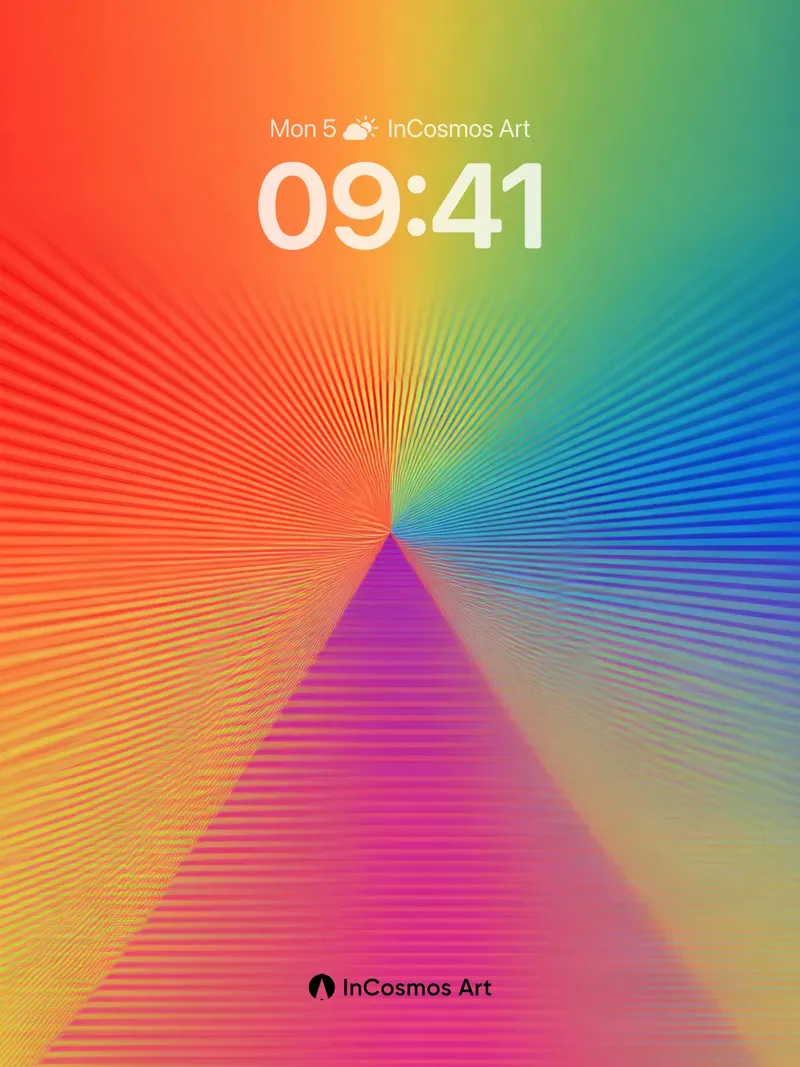
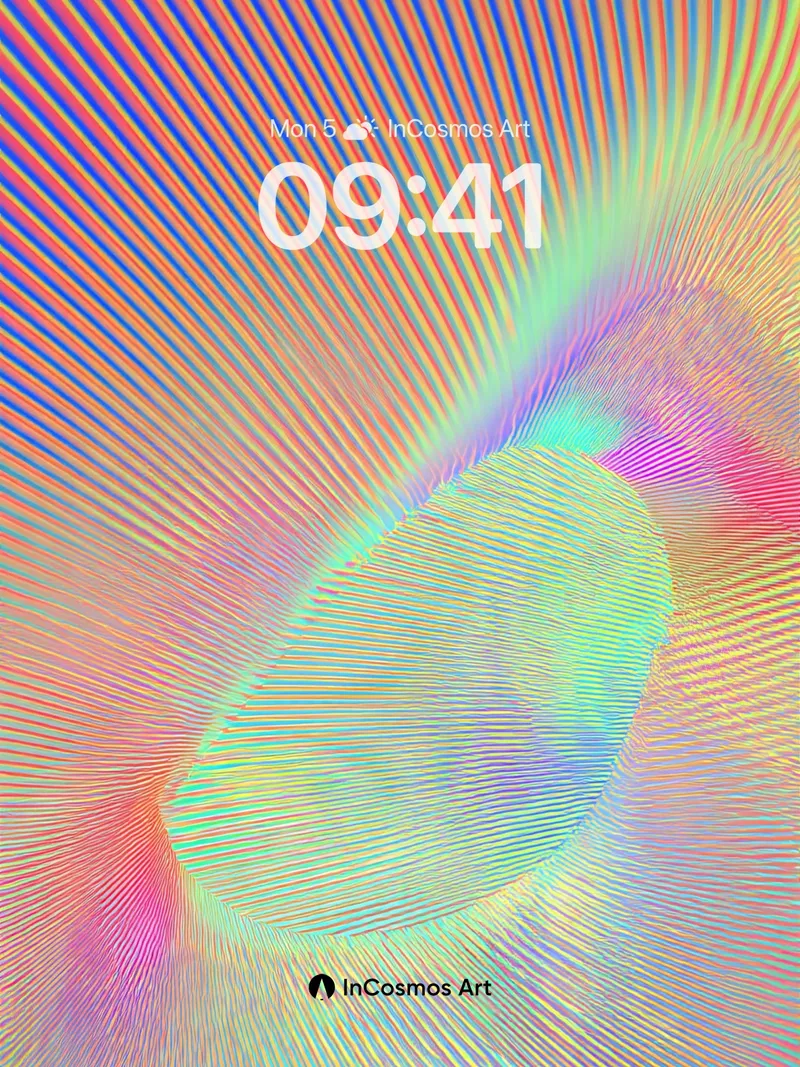
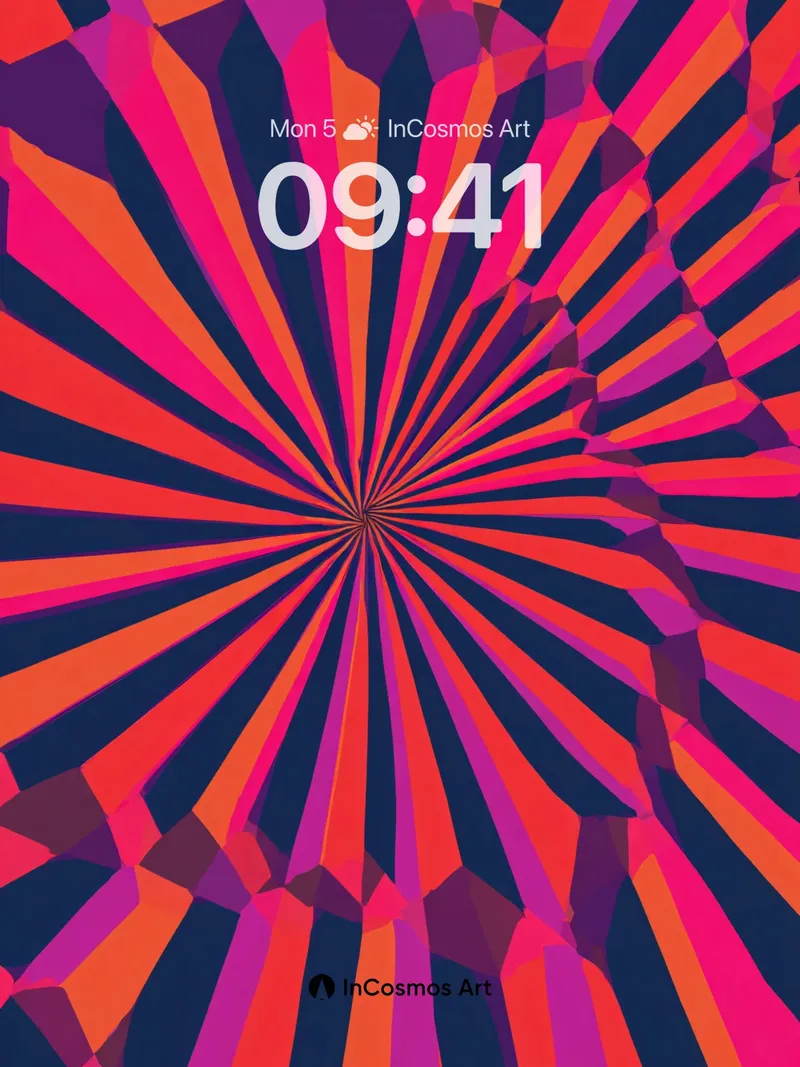
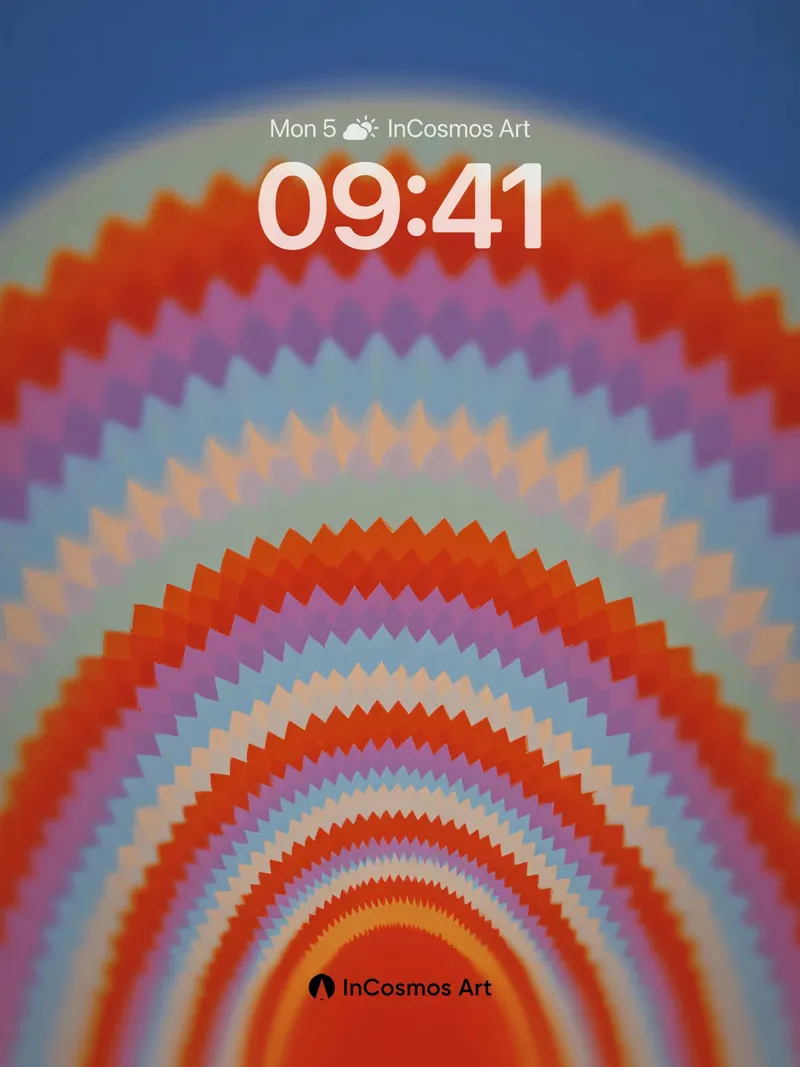
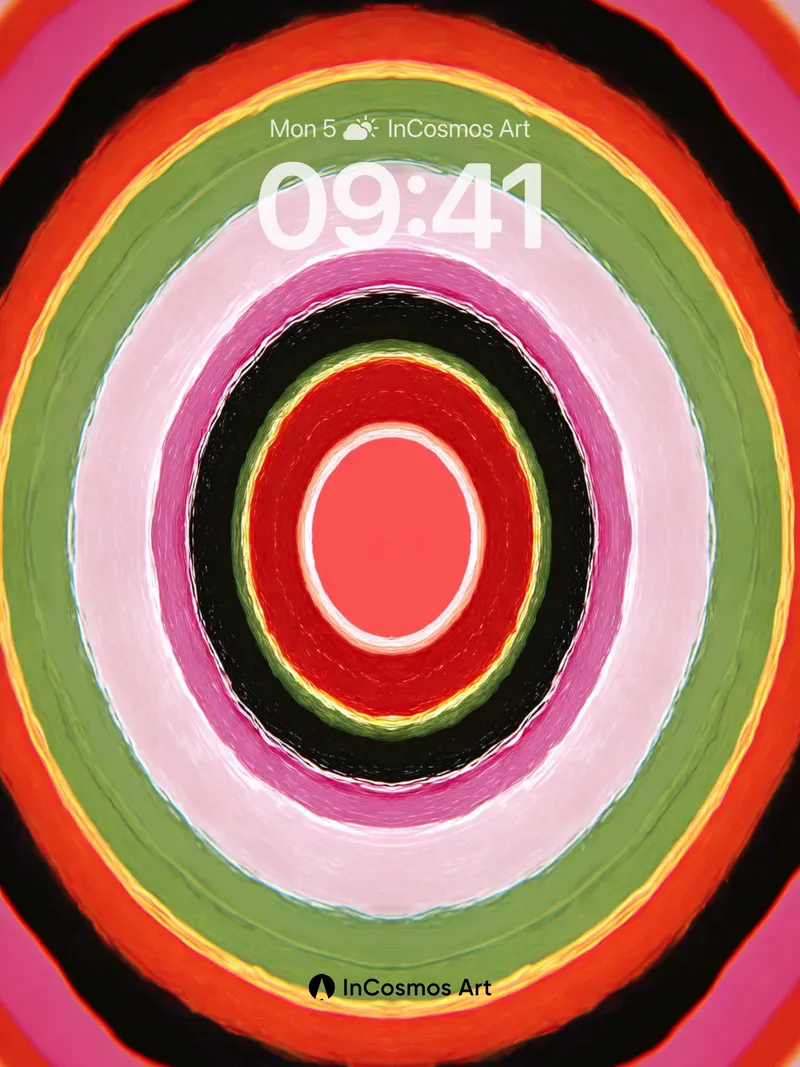
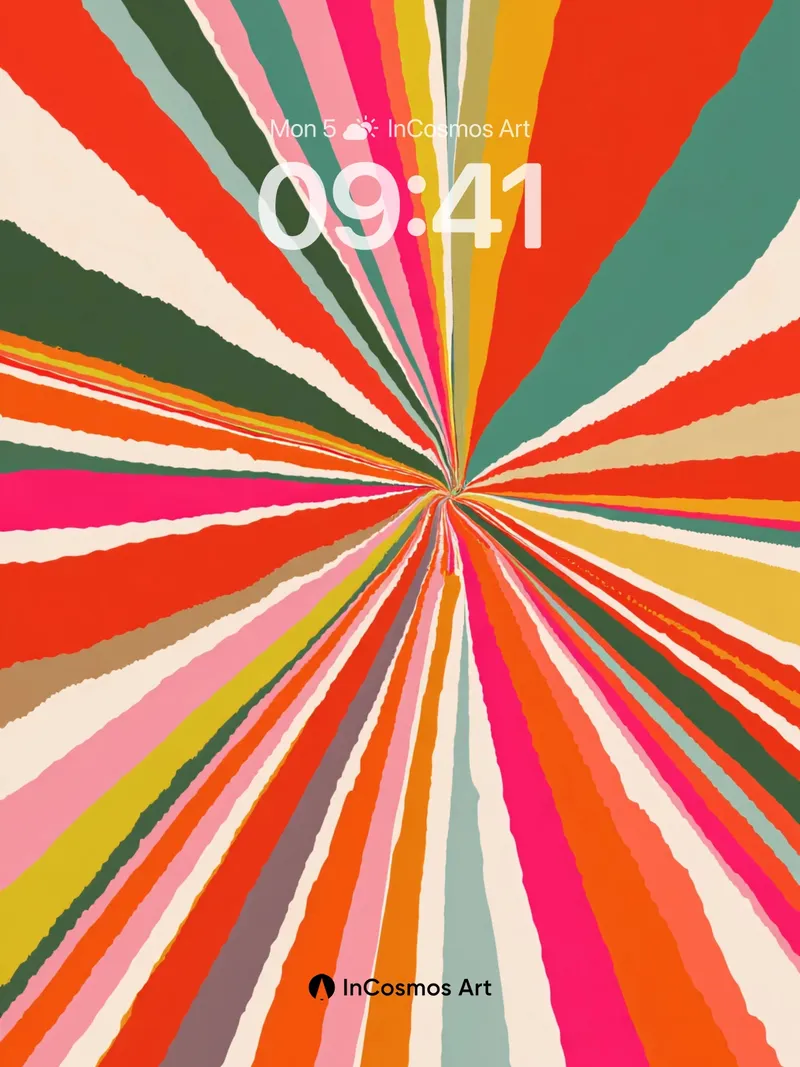
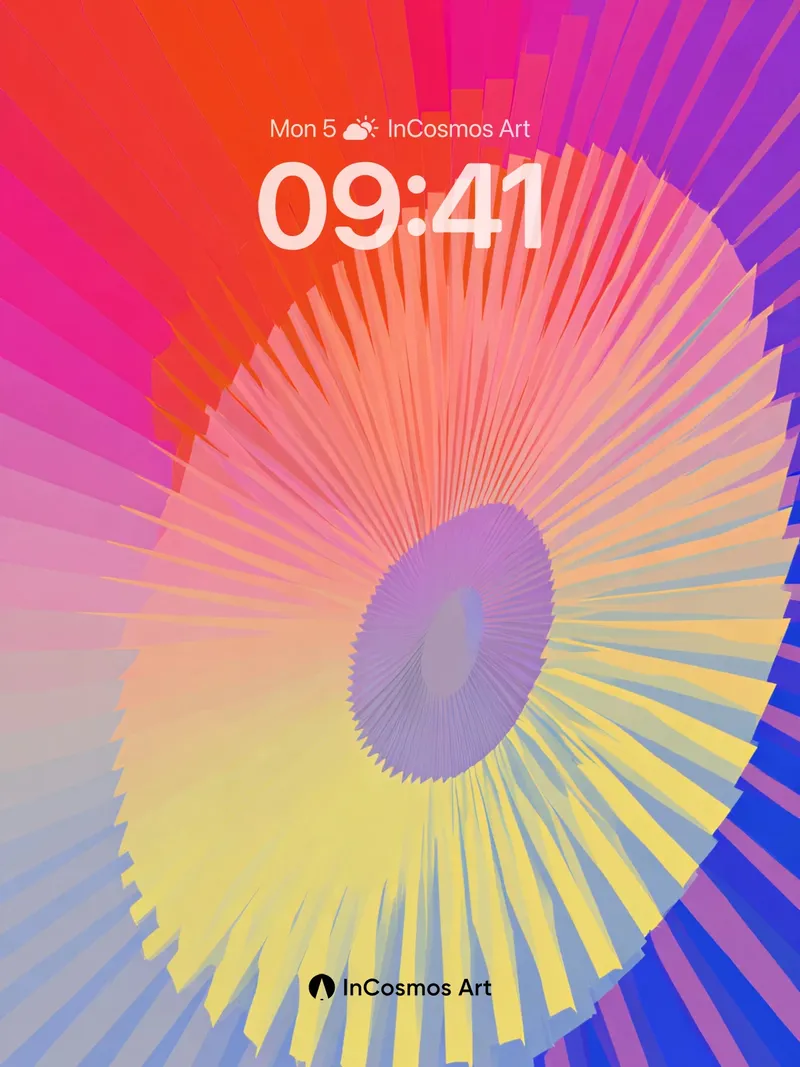
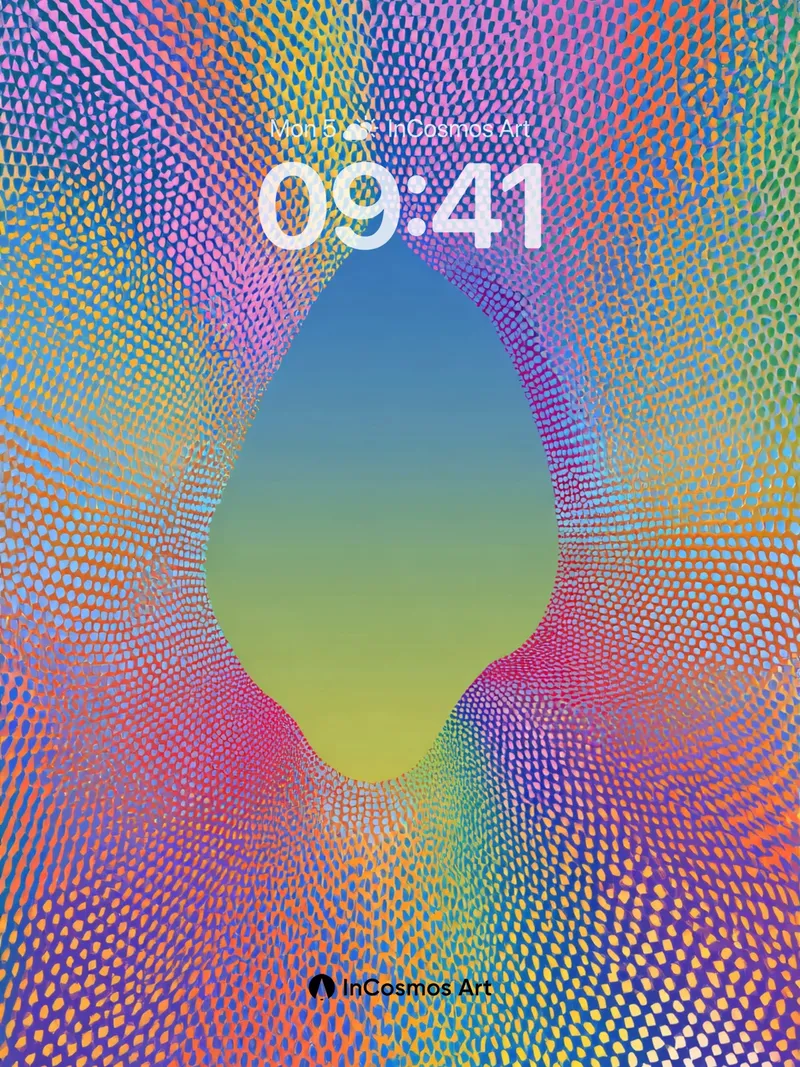
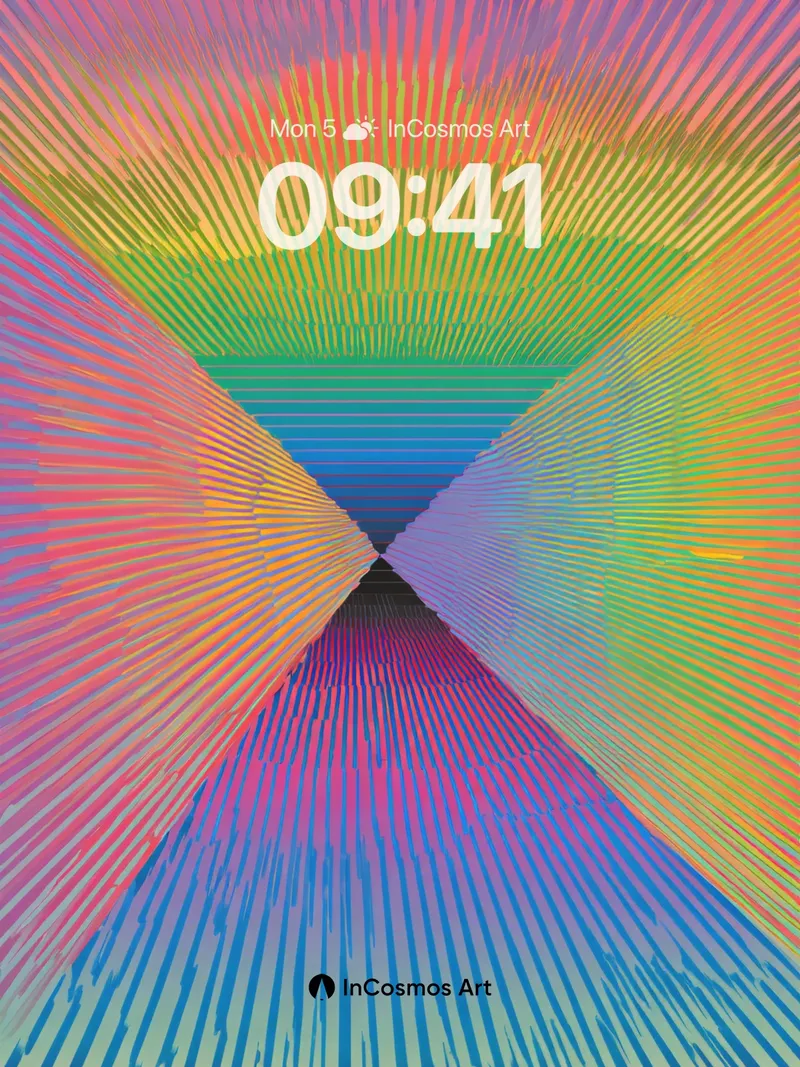
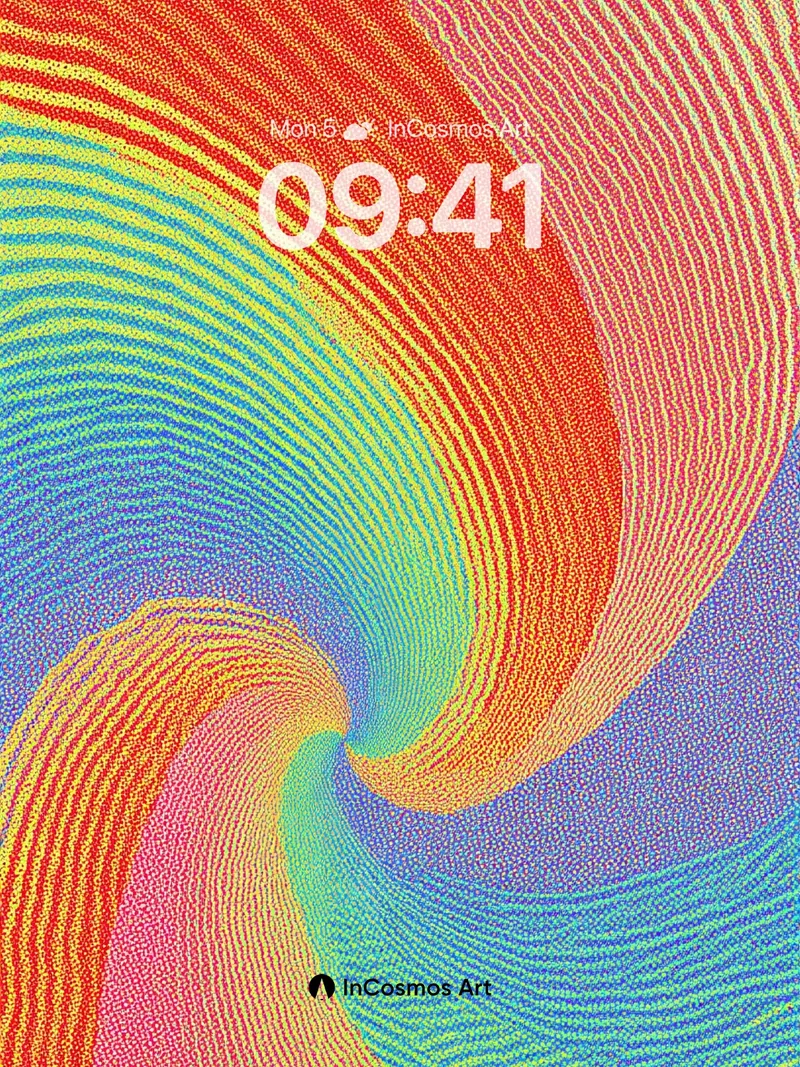
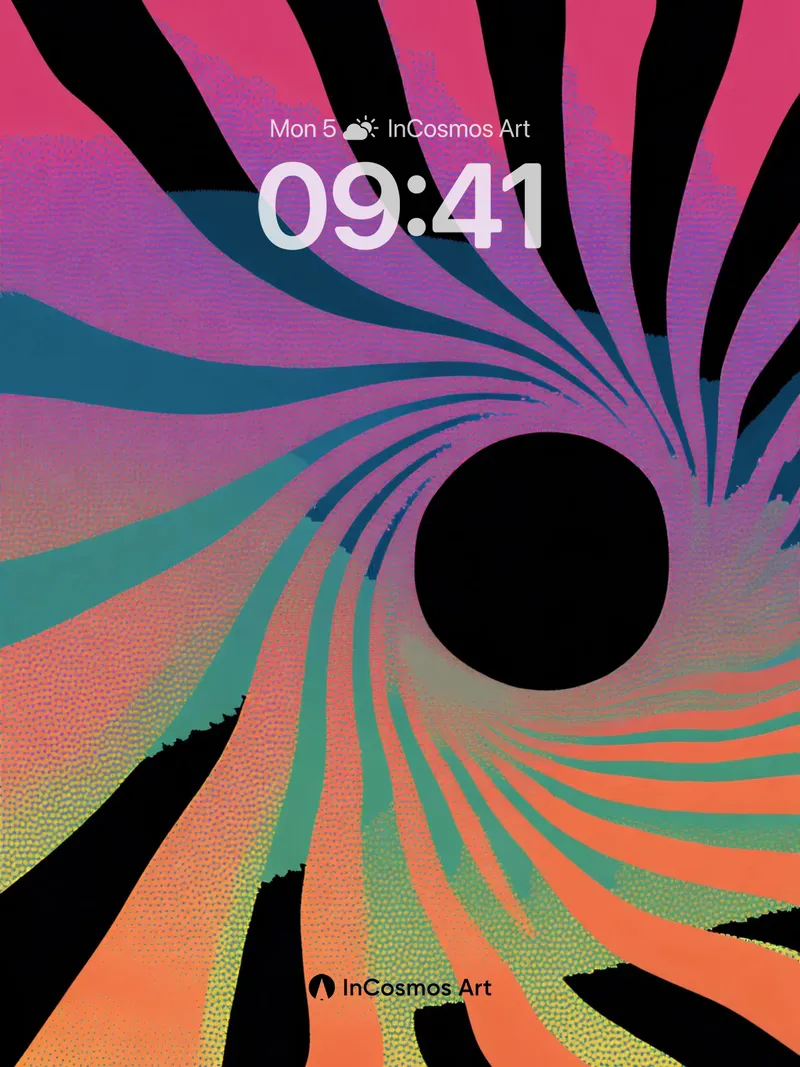
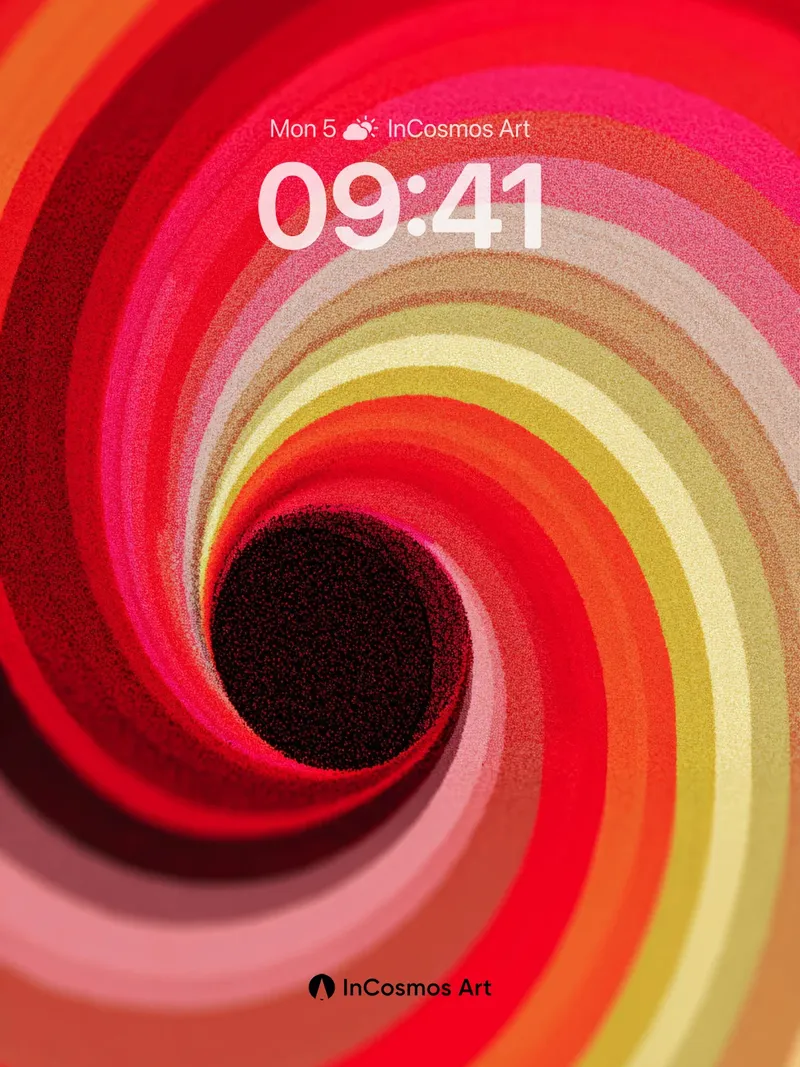
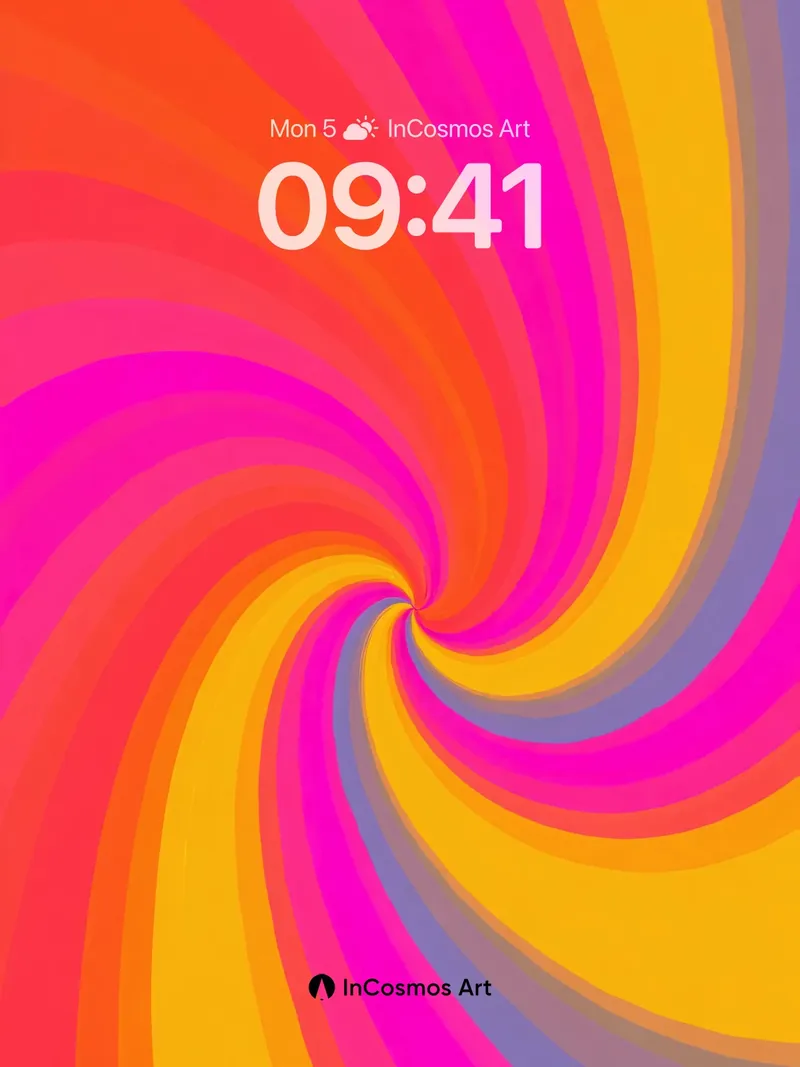
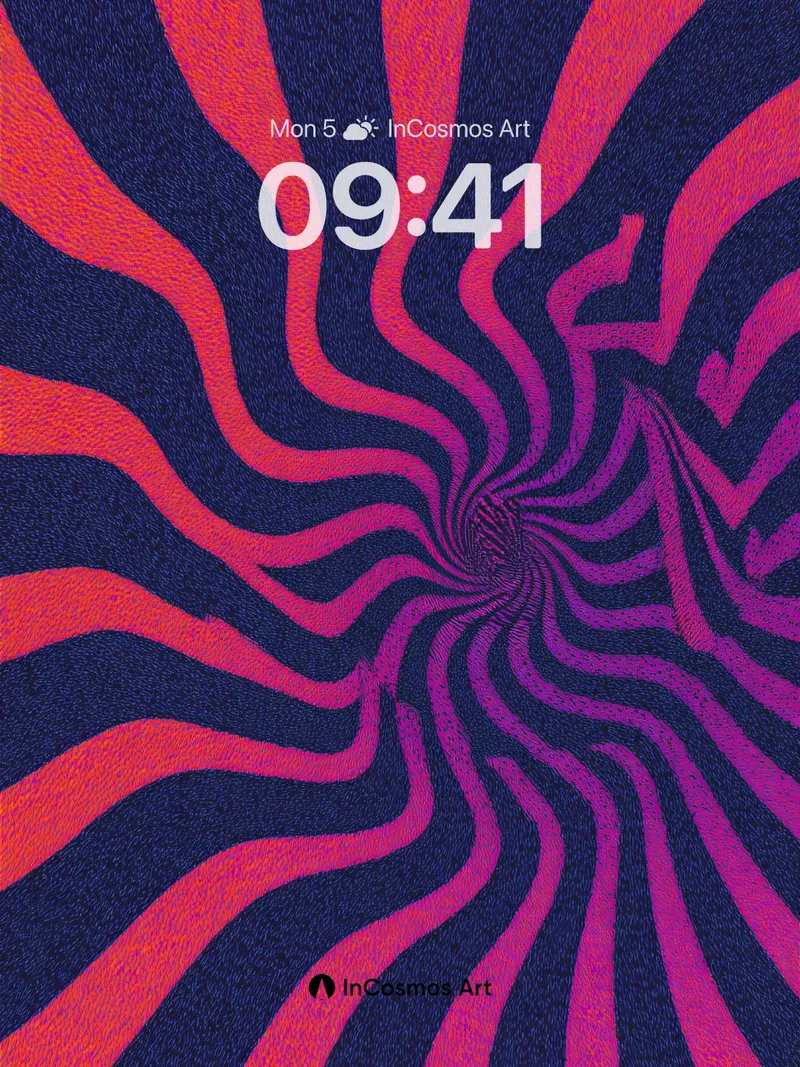
Color extends through space, forming dynamic structures that transcend physical boundaries. They are not static but continuously undulate, spiral, and converge, as if responding to an internal rhythm. This visual language does not rely on representational forms yet evokes strong emotional resonance. Each curve, every vortex carries traces of the subconscious, guiding the observer into a psychological realm both familiar and alien. Variations in color density suggest emotional fluctuations, while distortions in geometric order reflect uncertainties within human cognition. When red and purple spiral across a deep blue background, temporal perception compresses, and individual consciousness appears to enter a recursive meditative state. This formal tension is not accidental; it roots in modern society's ongoing exploration of self and external relations.
Rhythmic Color and Psychological Resonance
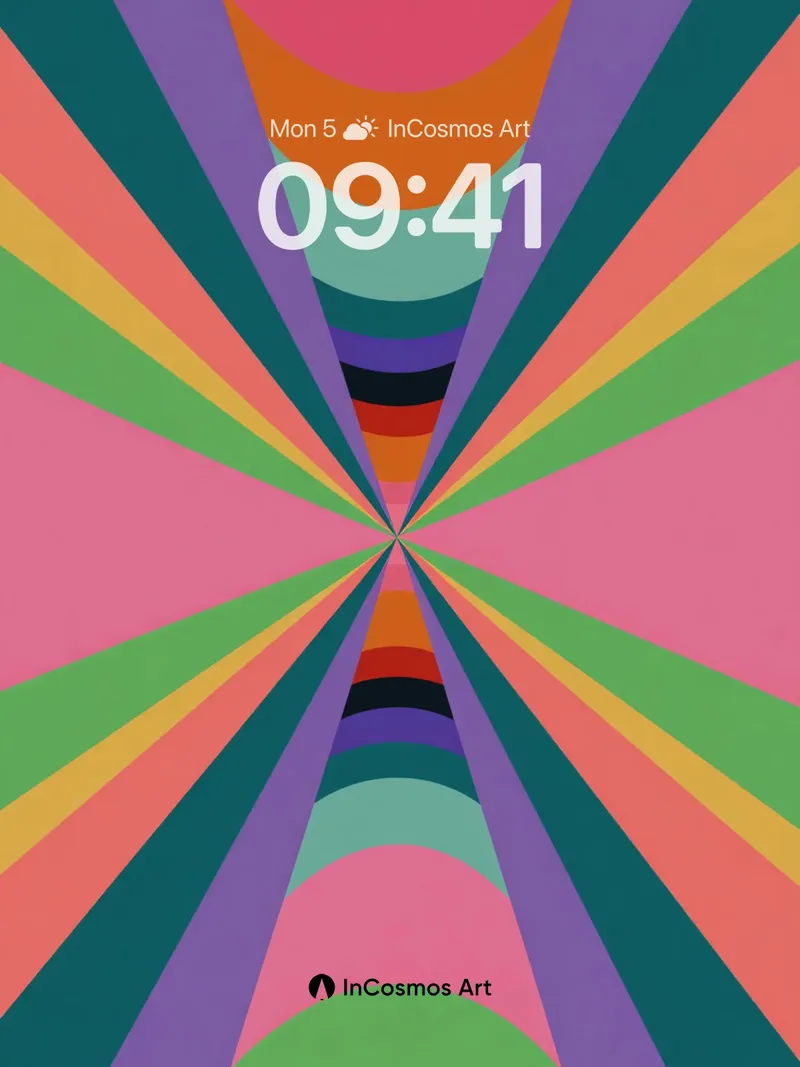
The arrangement of colors determines depth of perception. Radiating stripes from a central point resemble neural signals spreading across the cerebral cortex. High-saturation red-yellow contrasts stimulate the visual system, demanding intense focus. In soft pink-purple transitions, the viewer experiences calm and introspection. This contrast reveals how color functions as an emotional medium, shaping individual mental landscapes. As lines begin to bend, stable order collapses, forcing the brain to recalibrate spatial understanding. This disorientation lies at the heart of psychedelic aesthetics—it challenges conventional logic and invites new ways of interpreting reality.
Cultural Metaphors in Abstract Forms
These patterns are not meaningless ornamentation; they echo mid-20th-century Op Art experiments. Artists like Victor Vasarely used precise geometry to create optical illusions, probing the boundary between perception and reality. Contemporary digital works continue this tradition, leveraging algorithms to generate more complex dynamic structures. Such pieces frequently appear in tech exhibitions, music festivals, or fashion branding, serving as symbols of avant-garde expression. They embody a rebellion against rationalism while embracing technological potential. In the social media era, these images spread rapidly, becoming a visual language for youth identity.
Limits of Perception and Existential Reflection
When gaze sinks into endless spirals, mild dizziness emerges. This is not merely physiological—it questions the concept of 'self.' If vision can be so easily manipulated, are sensory experiences truly reliable? This doubt fosters philosophical inquiry: What is real? Does an absolute objective world exist? Within these abstract constructions, no definitive answers emerge—only persistent questioning. They act as mirrors, reflecting humanity’s cognitive struggles in a complex information environment. Each moment of observation becomes a re-examination of existential essence.