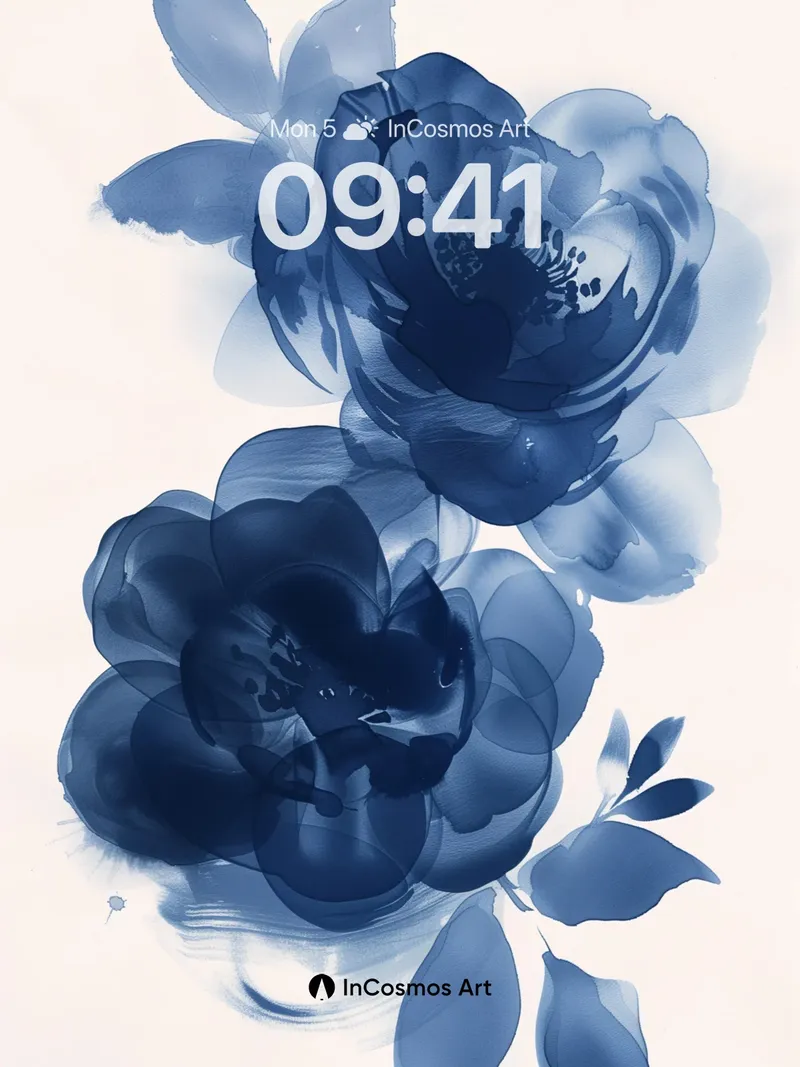
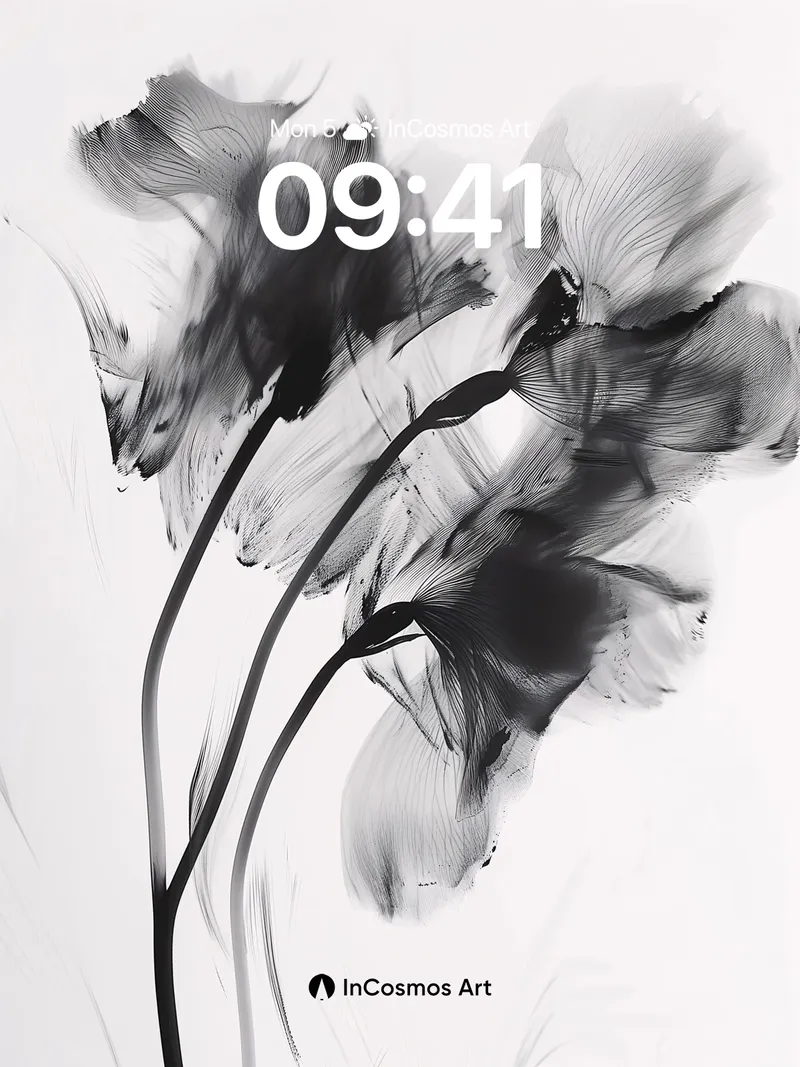
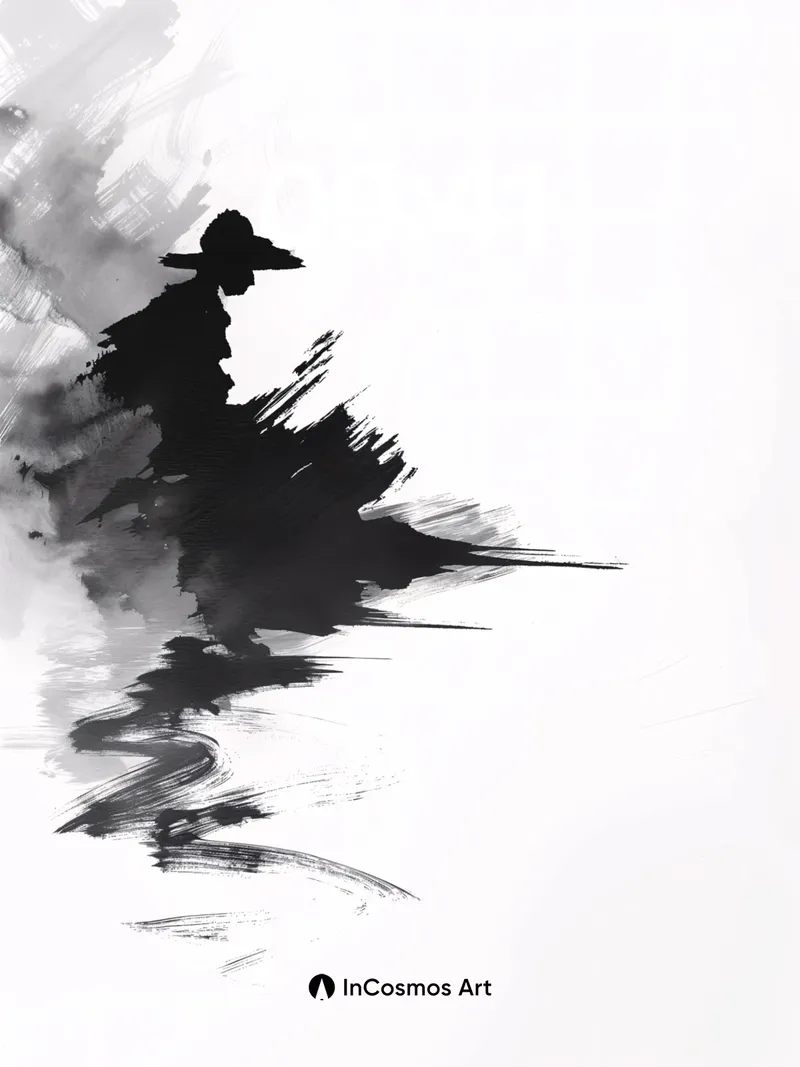
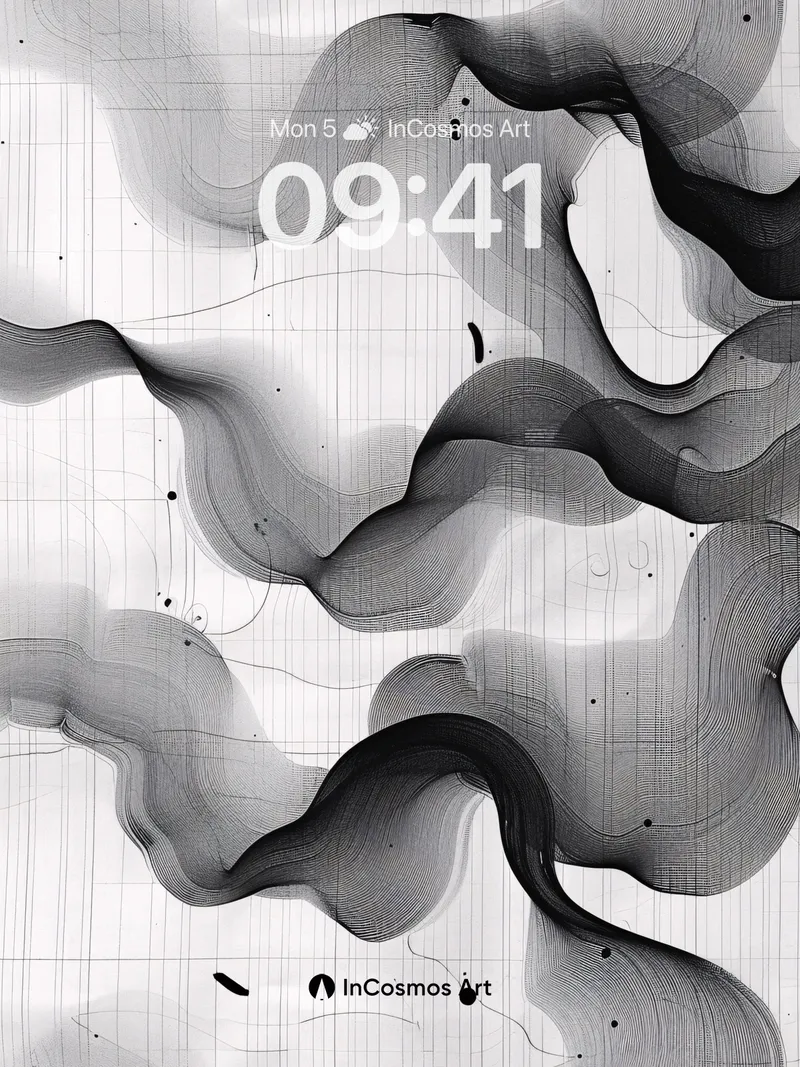
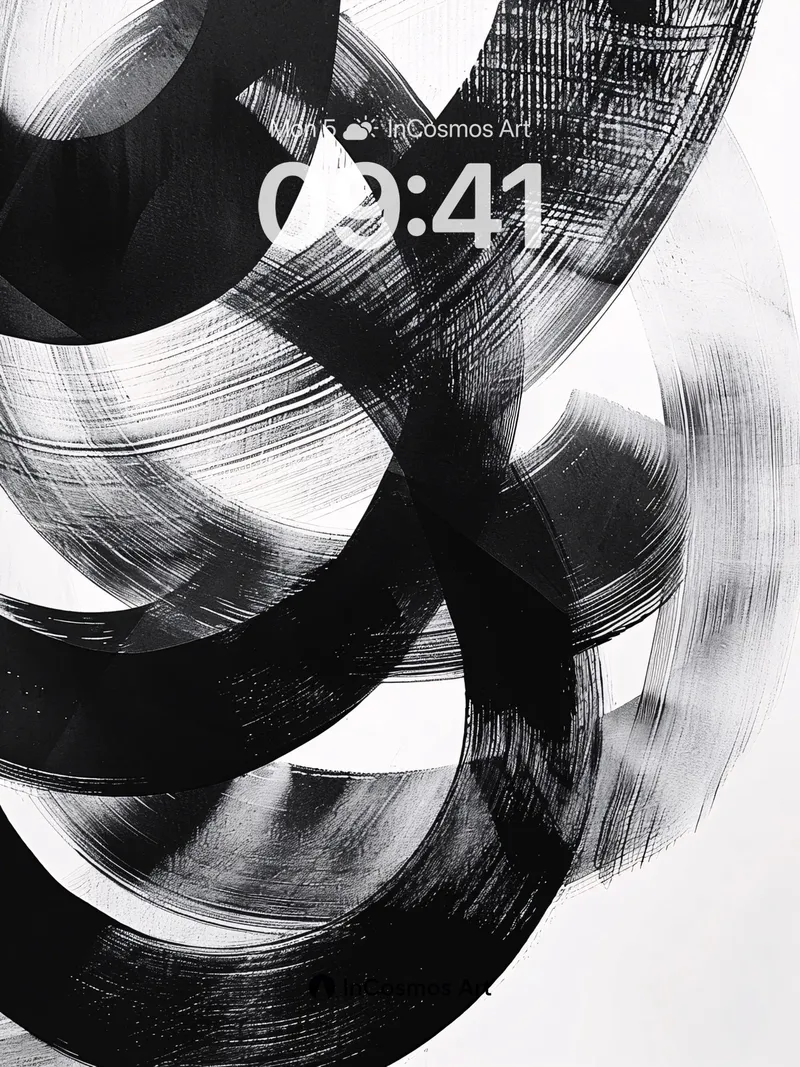
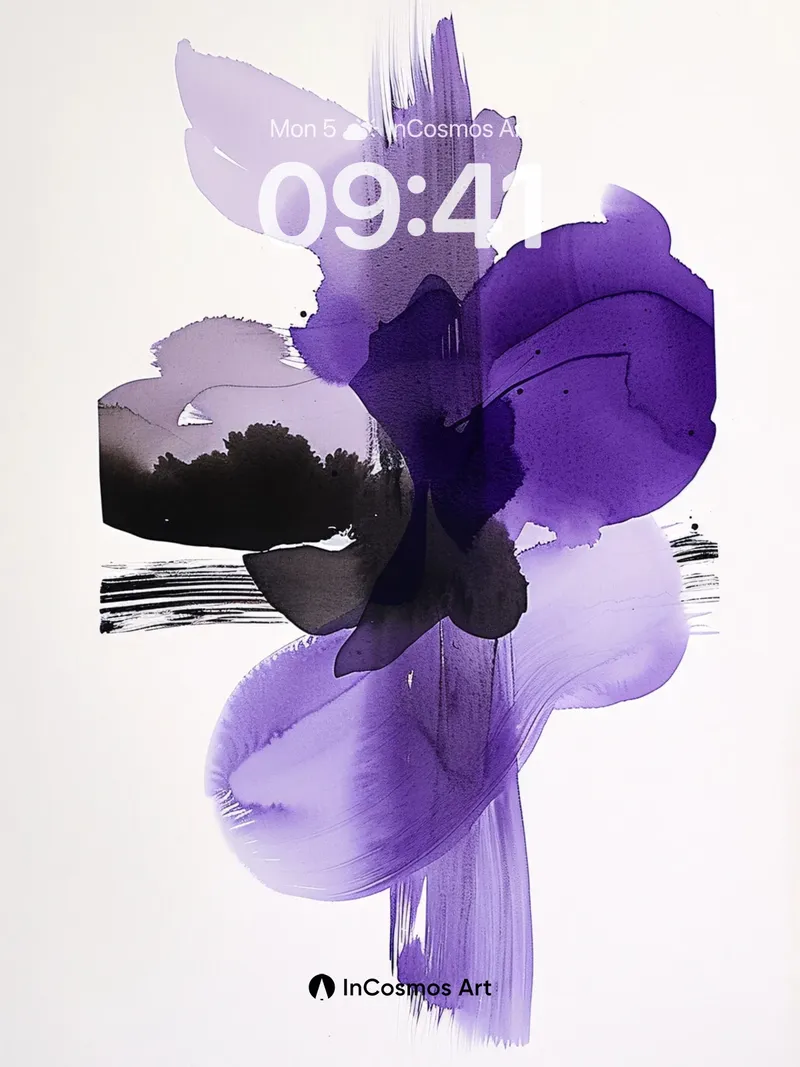
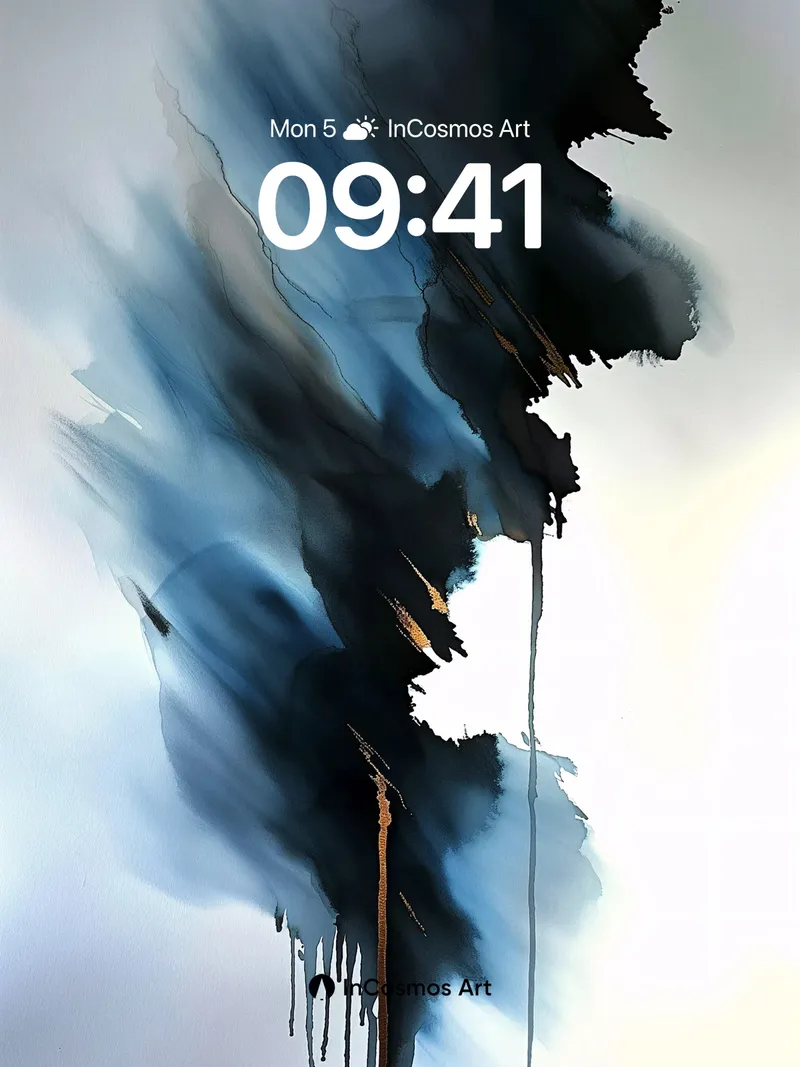
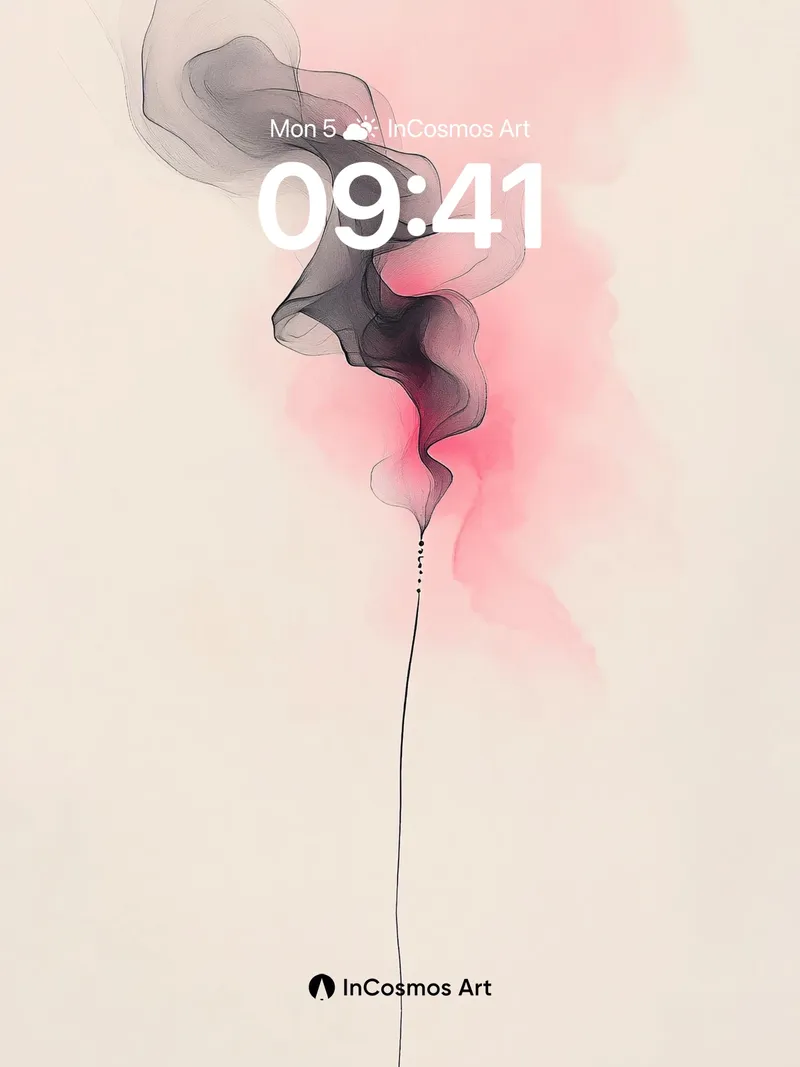
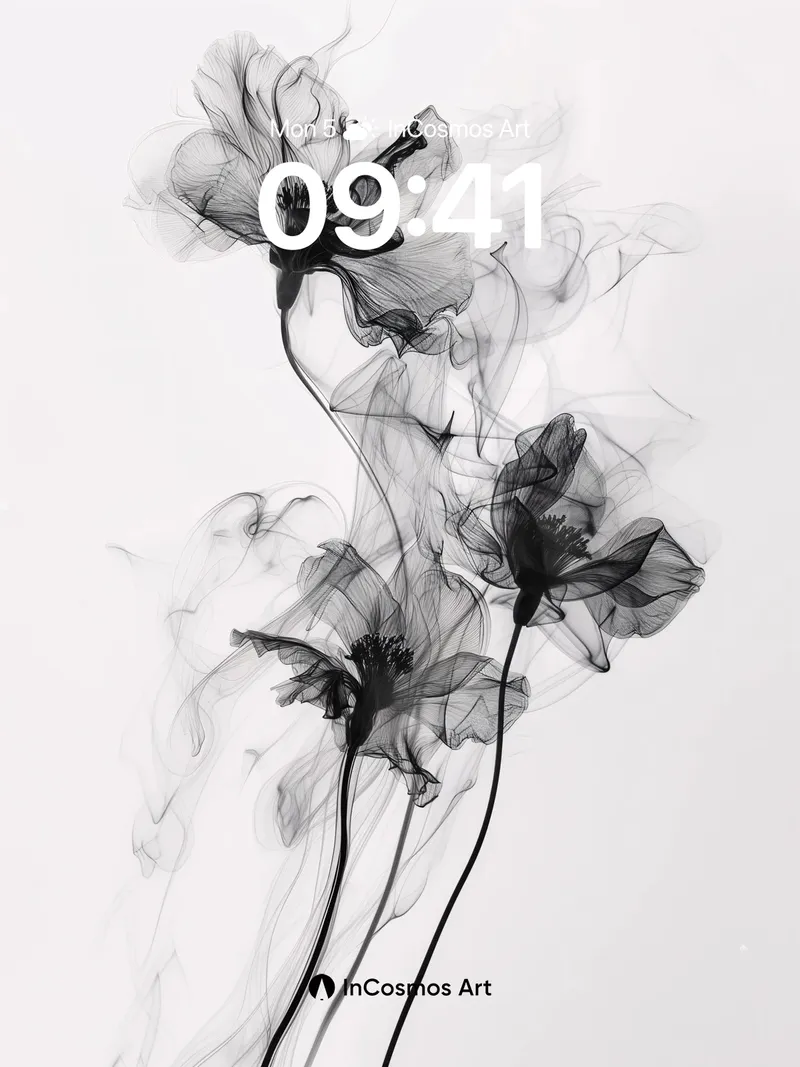
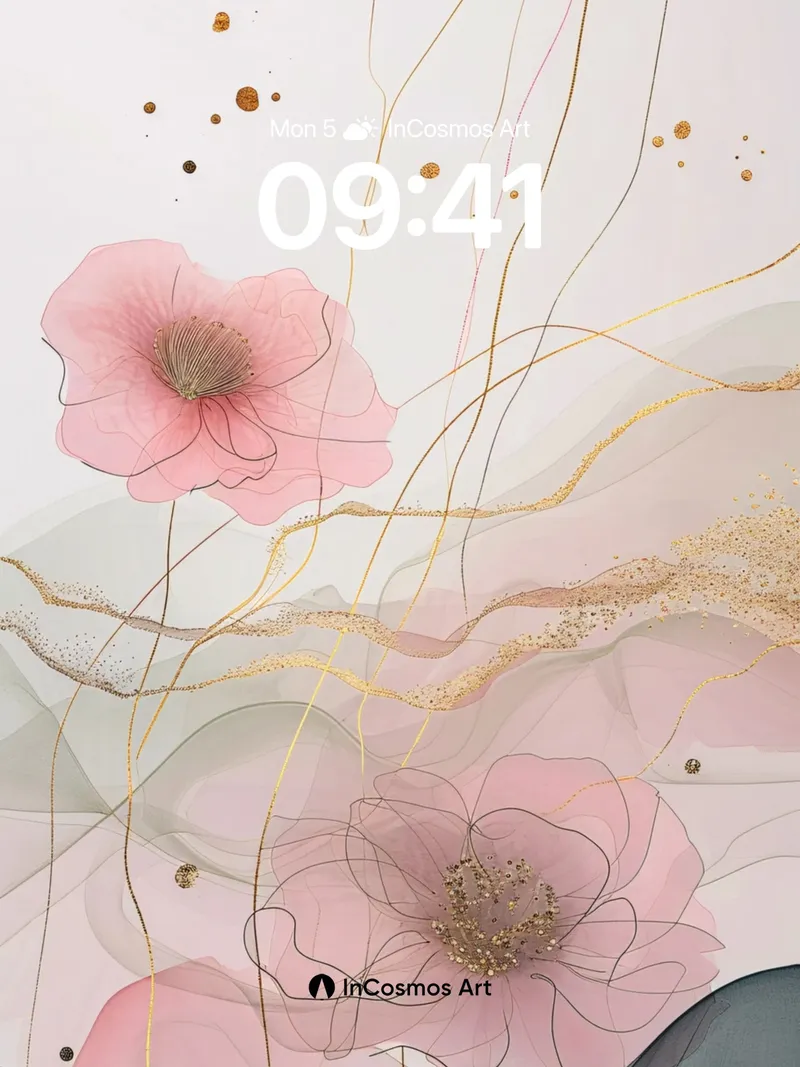
When ink meets water, it creates textures that cannot be replicated, a serendipity often regarded as the core of Eastern aesthetics. Flowers, as the subject of depiction, here detach from botanical definitions to become carriers of ink flow. From the ethereal forms of heavy washes to the contours outlined by minimalist lines, the evolution of this expressive technique reveals different dimensions of how observers understand natural forms. The fluidity of ink and water endows flowers with a vitality beyond their physical entity, while the refinement of lines preserves the skeleton of their spirit.
The Fluidity of Ink Rhyme
In representing the form of flowers, the spreading characteristic of ink and water creates a visual language hovering between the figurative and the abstract. As ink diffuses in water, the edges become blurred while the interior remains rich in layers. This uncertainty perfectly matches the fleeting state of a flower in bloom. The interweaving of deep purple and indigo, or the variation in density of pure black ink, is no longer about restoring the true color of the flower but about capturing the momentum of its growth. This technique abandons excessive carving of details in favor of pursuing the coherence of the overall atmosphere, presenting the flowers with a hazy beauty akin to smoke or mist.
Refinement of Lines and Bone Structure
Contrasting with the spreading of ink is the extreme use of lines. When color is stripped away, leaving only black lines, the structure of the flower is simplified to its most essential state. This expressive method resembles the "bone method" in calligraphy, emphasizing the strength and trajectory of the brushstroke. Slender stems and spreading petals are outlined with just a few strokes, making the white space a crucial component of the composition. This minimalist approach is not a lack of content but a high degree of generalization. It requires the observer to complete the full image of the flower through limited lines, thereby creating an interactive tension visually.
Spatial Sense of Void and Solidity
Whether through ink rendering or line outlining, both rely heavily on "leaving blank" to construct a sense of space. The white space in the composition is not empty nothingness but is regarded as air currents, light, or unspoken artistic conception. In areas of heavy ink, the white space highlights the physical presence of the flower; in areas of sparse lines, the white space extends the imaginative space of the picture. This treatment of interplay between void and solidity breaks the limitations of the two-dimensional plane, making the flowers appear to breathe in the air. When facing these forms, the observer feels not just the flower itself but a symbiotic relationship between the flower and the surrounding space, a quiet and profound state of existence.