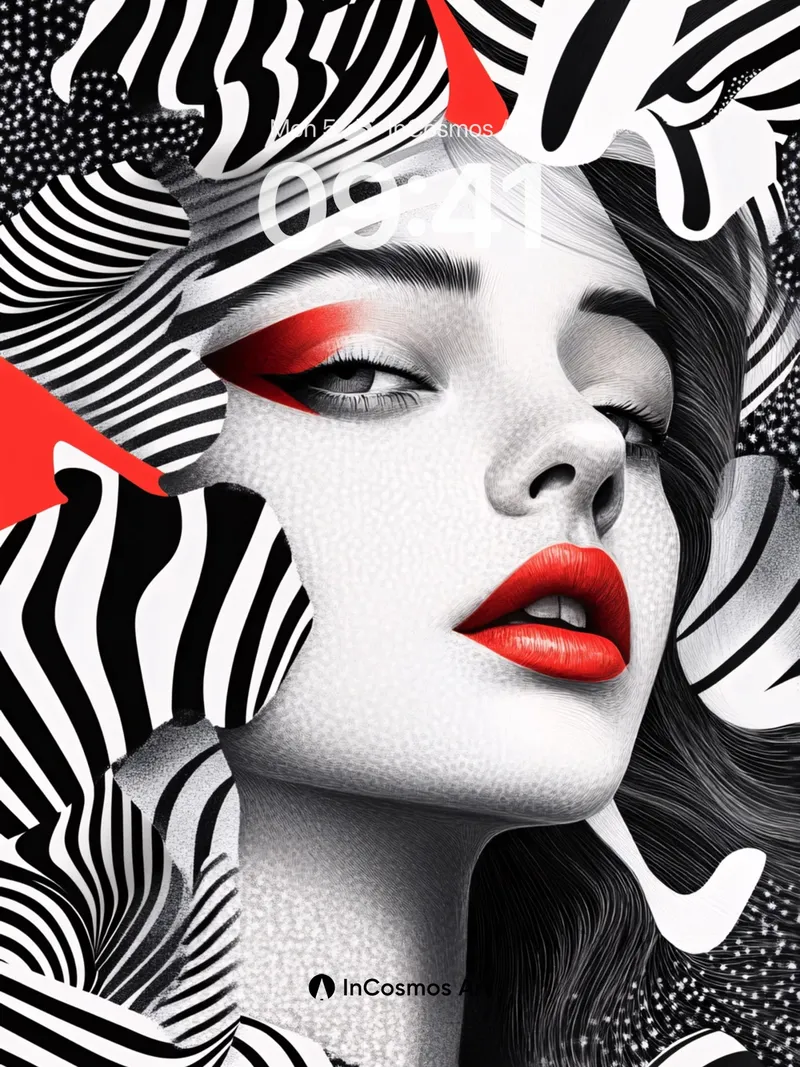
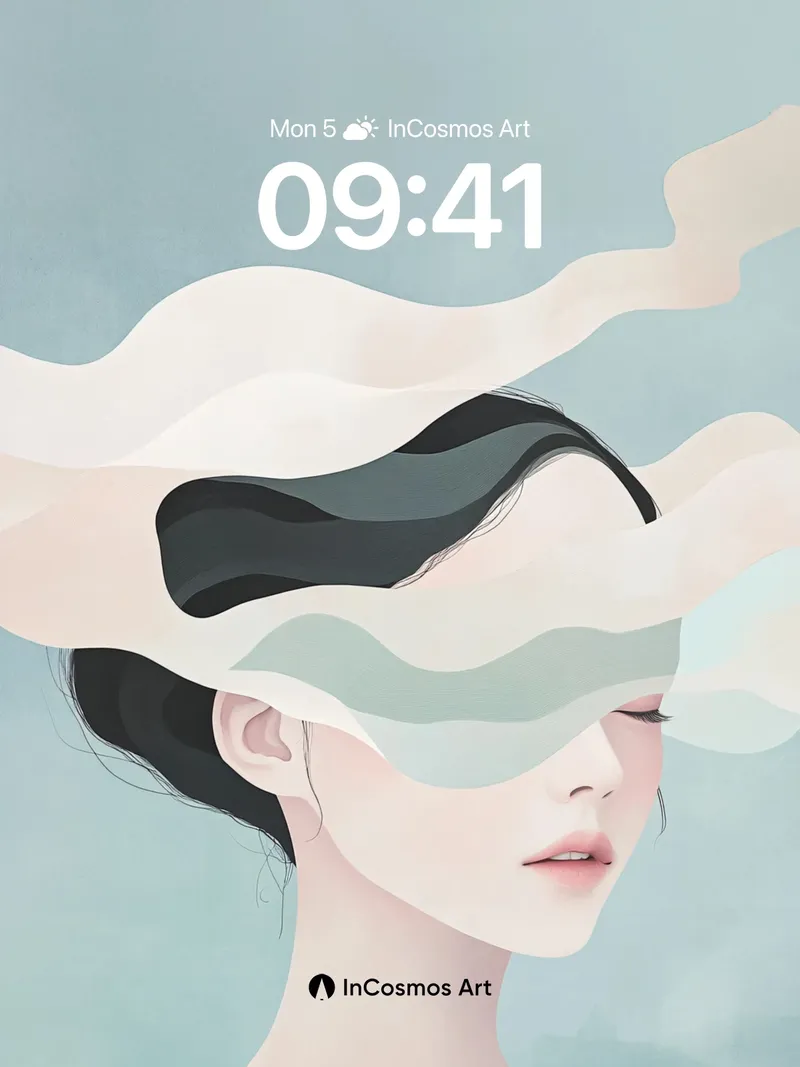
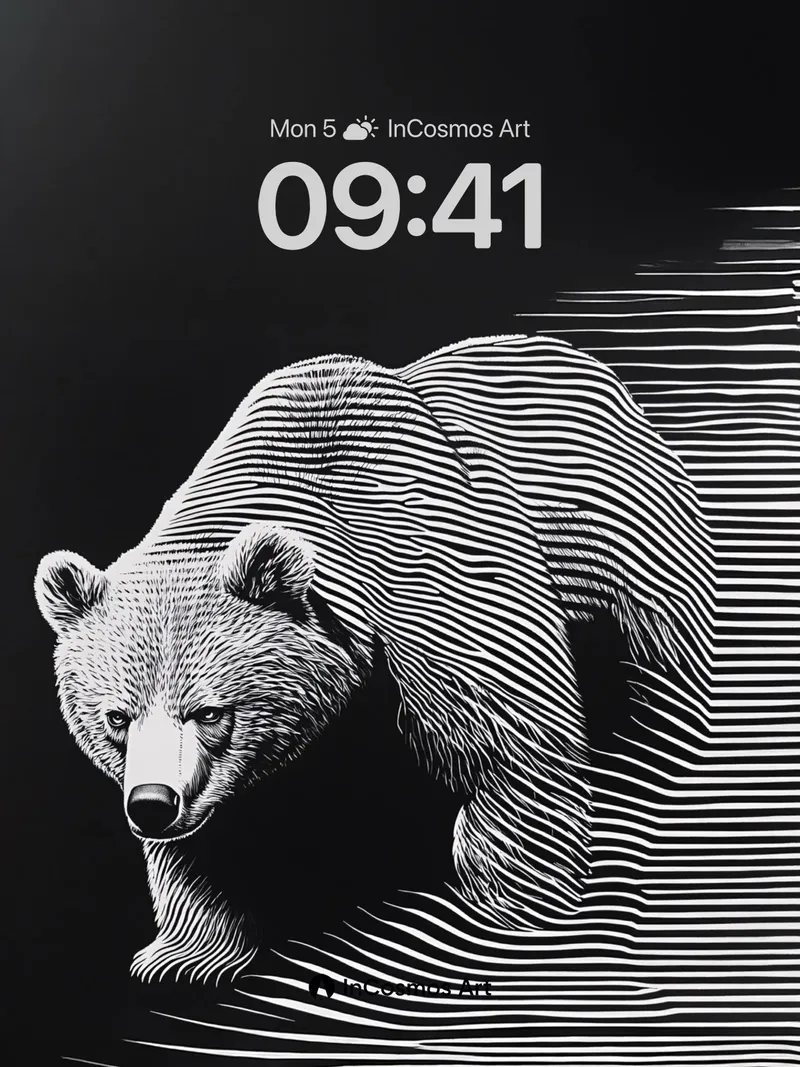
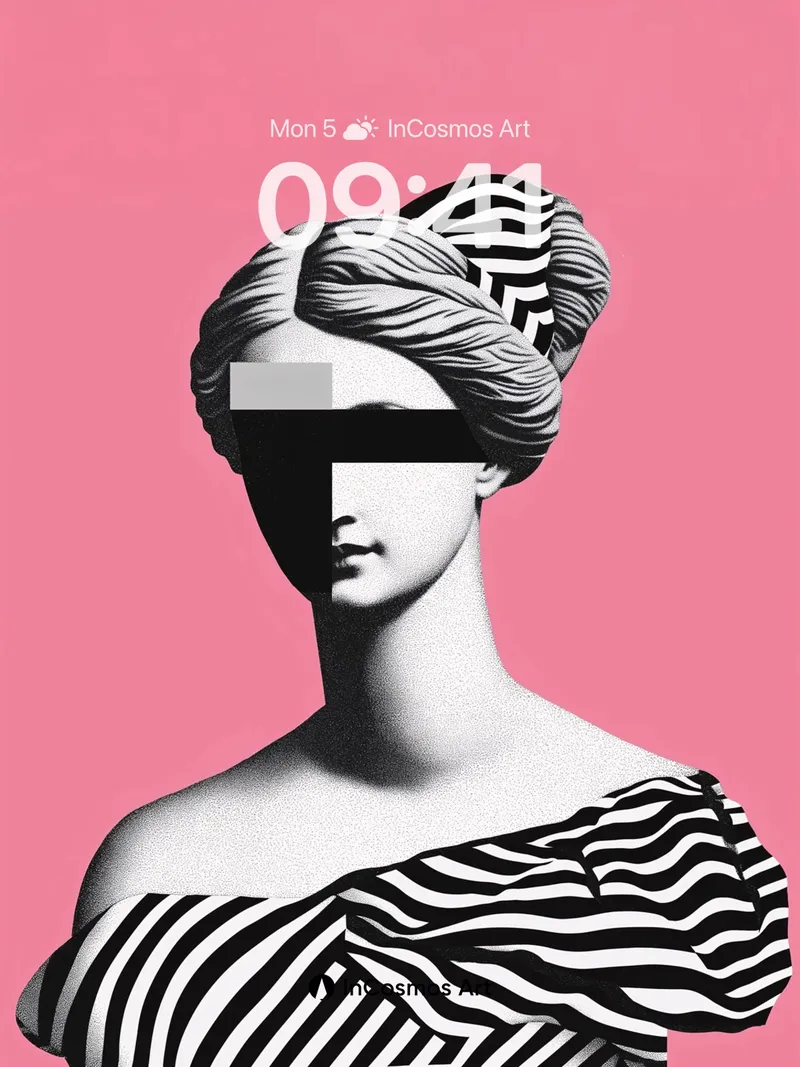
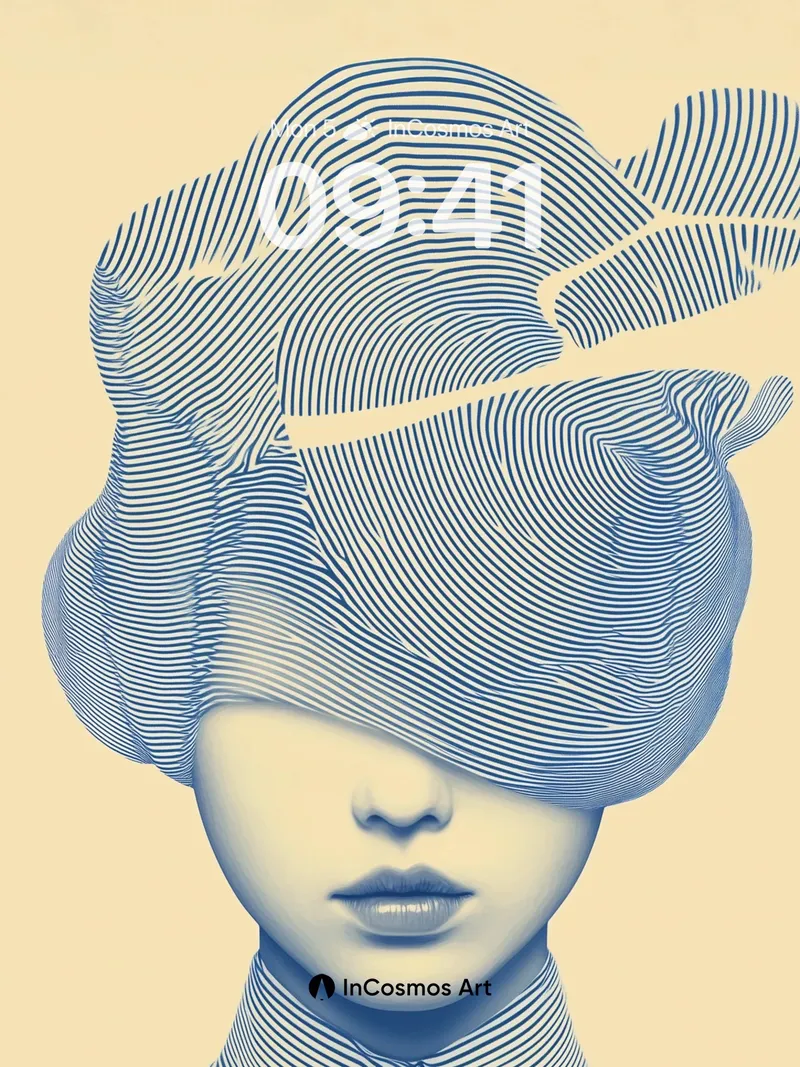
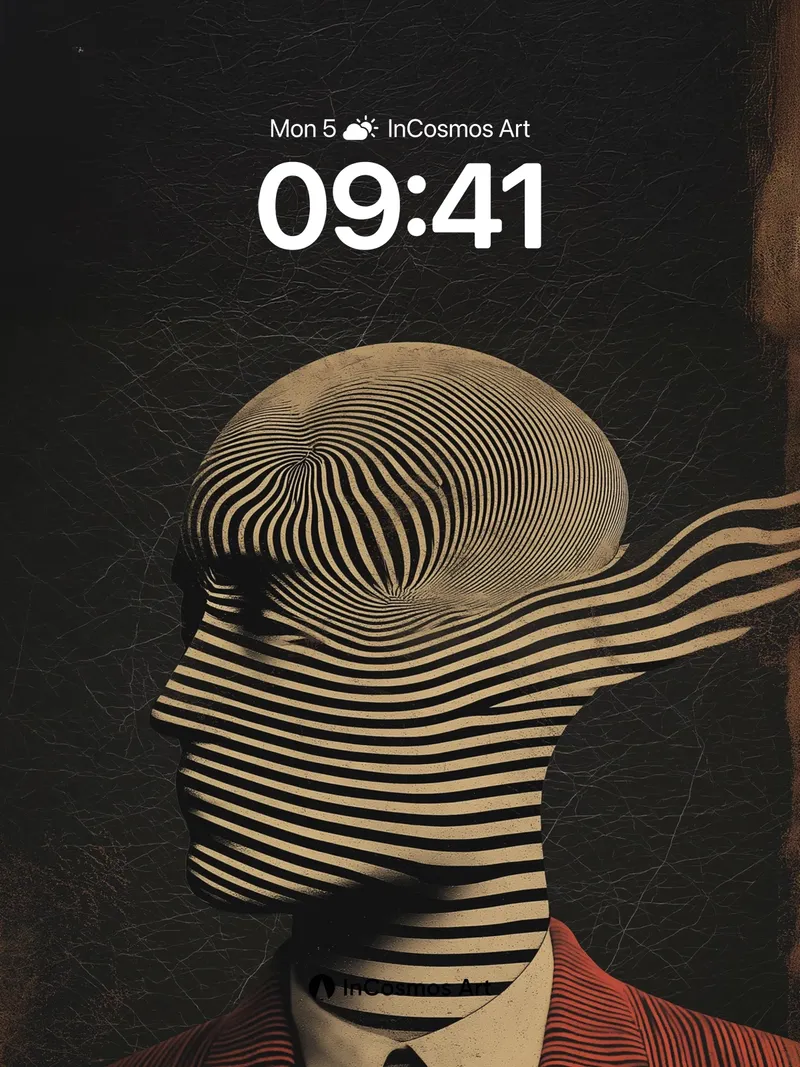
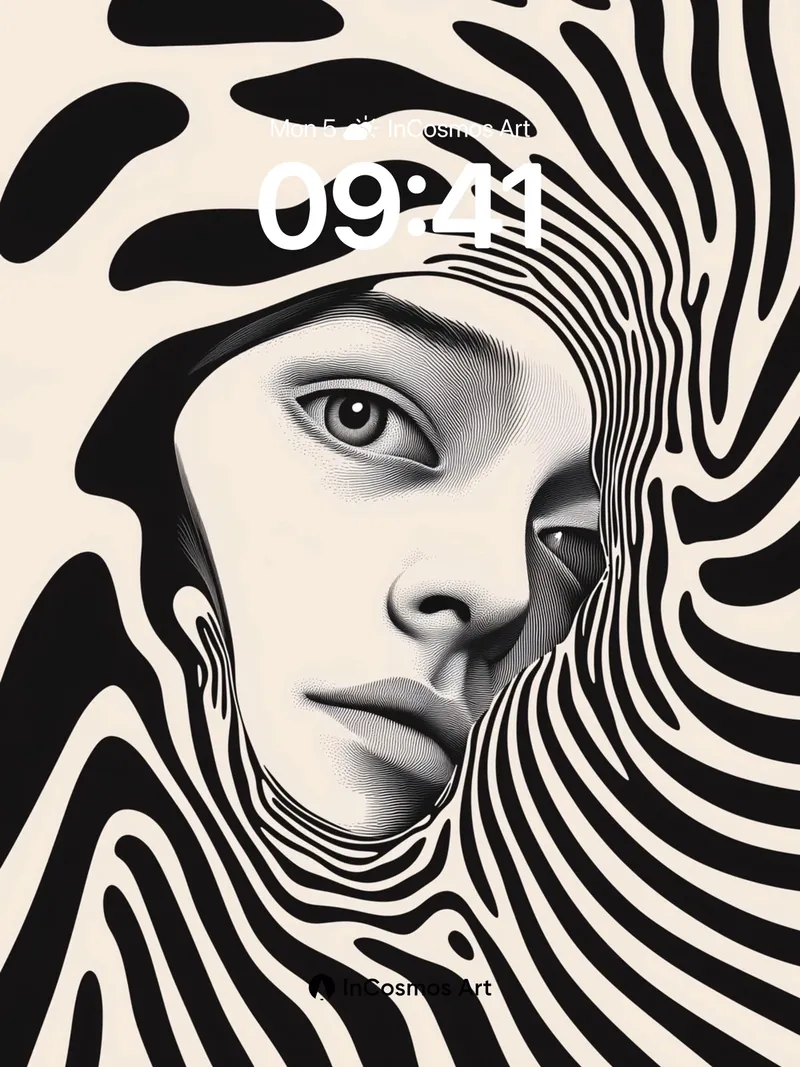
Lines extend across skin like thoughts traversing consciousness. They are not ornamentation but language, the topography of emotion. Each curve, each fracture, narrates a metaphor about inner worlds. These depictions do not present complete faces yet reveal deeper truths—the boundaries of human perception are being restructured by form. Visual symbols no longer serve only beauty but become reflections of psychological states. When lines wrap around eyelids, when ripples cover brows, the viewer senses not absence but a transcendent presence. This presence is neither substance nor void, but a fluid domain between both.
The Geometrization of Emotion
Line density determines emotional intensity. Dense curves create pressure; sparse gaps offer breathing space. Black-and-white contrast generates tension; red lips disrupt balance, symbolizing the struggle between desire and restraint. This visual grammar originates from modernist design traditions but gains new life in digital contexts. It transcends flat composition, becoming a deconstruction of mental states. Every turn resembles a heartbeat, every break echoes silence.
Visual Concealment and Revelation
The face is obscured, not hidden, but emphasized. When eyes are replaced by color or texture, attention shifts to other sensory channels. This concealment is an active choice, a rejection of totality. It implies multiplicity of subjectivity—one can be observer and observed, speaker and silent. Within this contradiction, identity becomes fluid, unfixed by singular narratives.
Art as Psychological Mirror
These works transform abstract forms into psychological landscapes. Wave-like clouds resemble dream fragments; distorted stripes mimic neural signals. Color intrusion is not arbitrary but corresponds to specific emotional frequencies. Yellow denotes alertness, blue suggests contemplation, red awakens instinct. Here, art does not imitate reality but creates new dimensions of experience, recalibrating perception through viewing.
Form as Content
Lines themselves carry meaning. They need not refer to external worlds; their trajectories contain all information. This minimalist expression challenges traditional narrative logic. No story, only atmosphere; no plot, only rhythm. The viewer must abandon the urge to understand and enter meditative engagement. In this immersion, time stretches, awareness expands, and self emerges within the gaps of form.