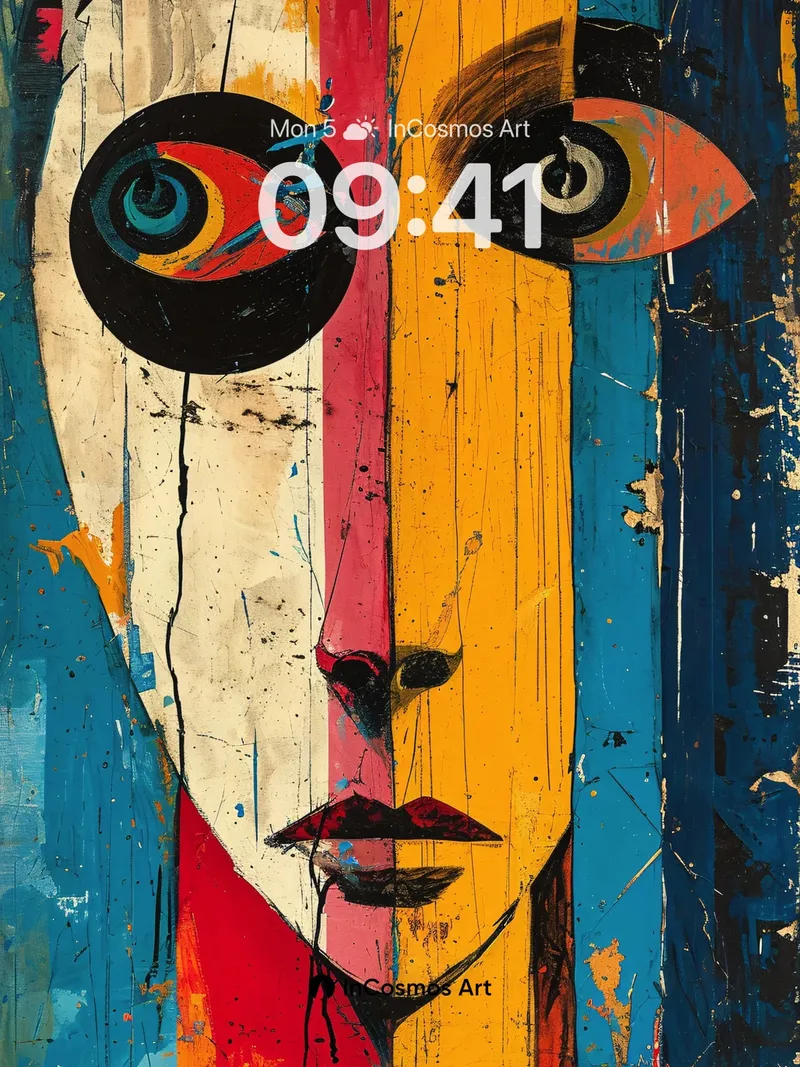
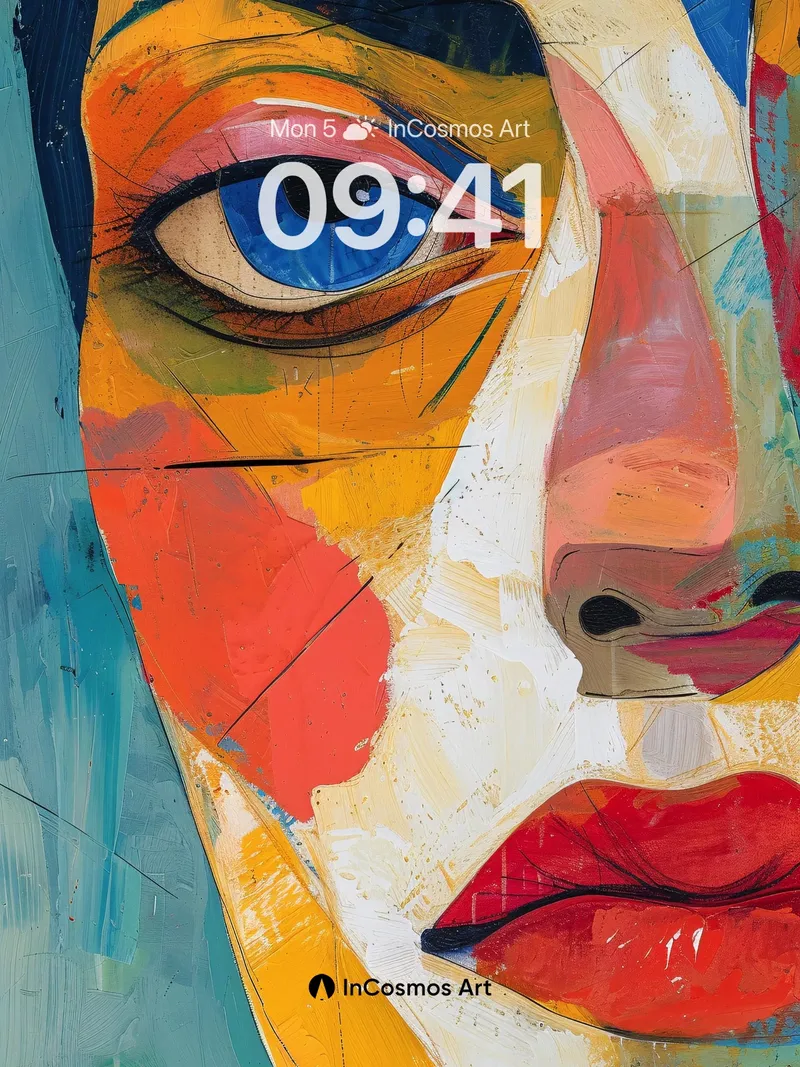
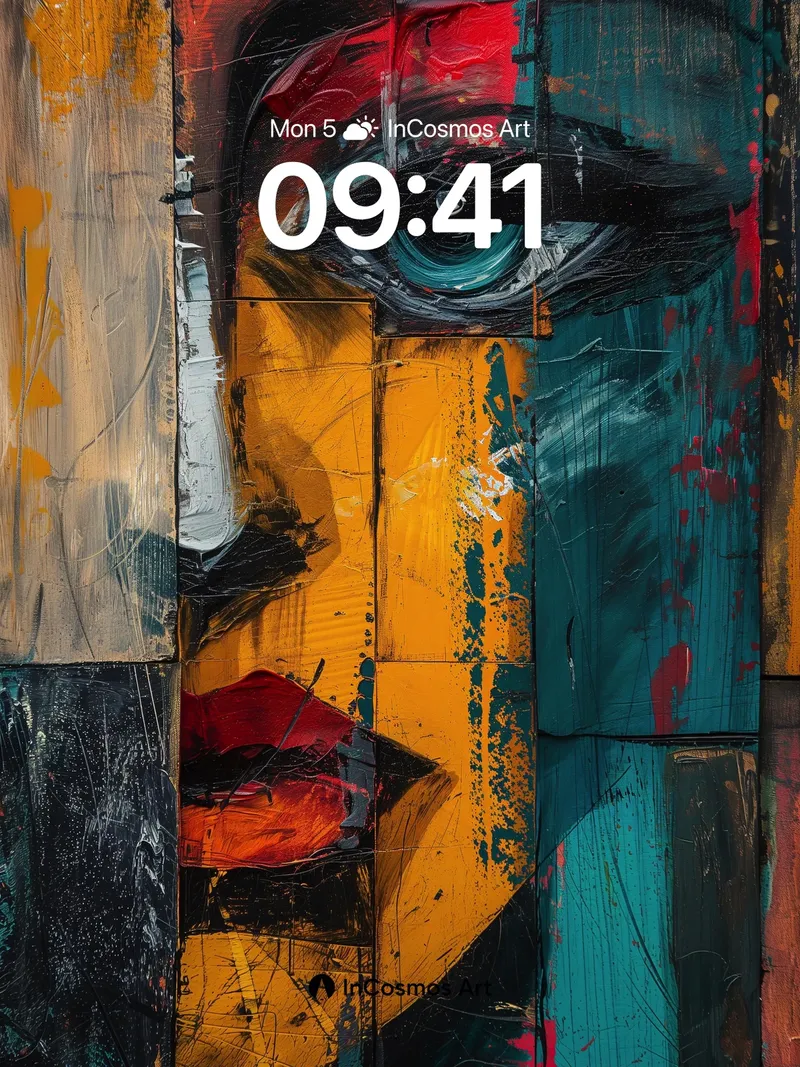
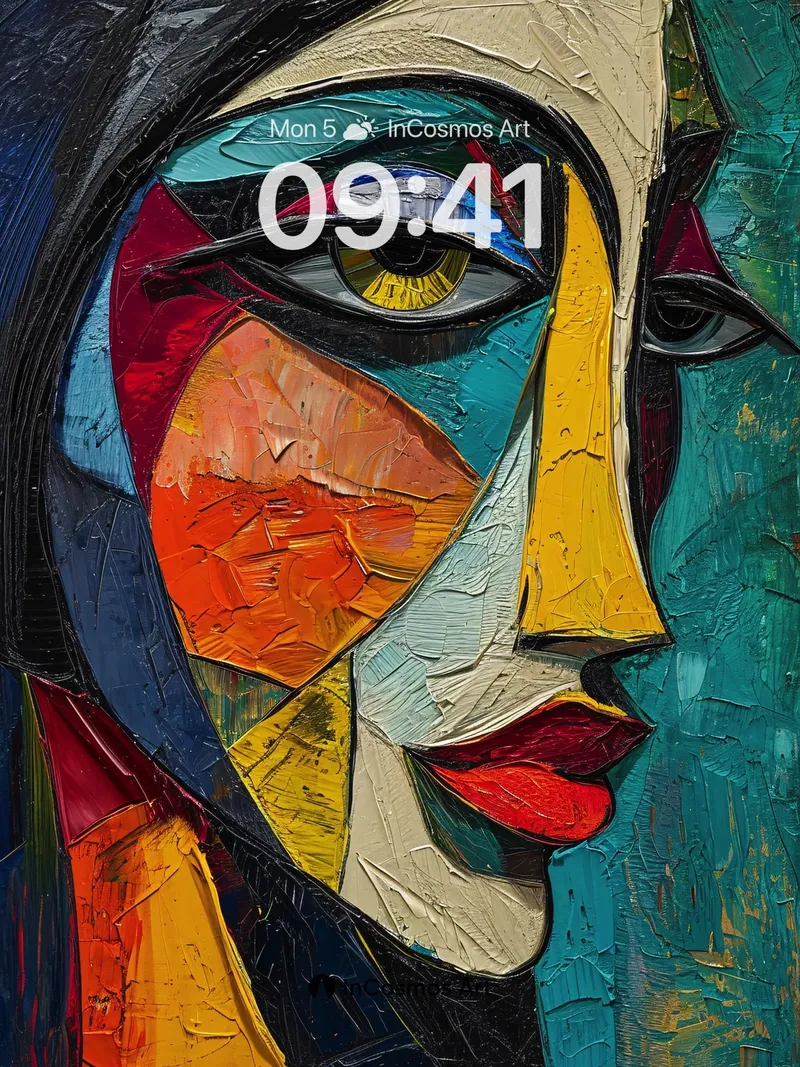
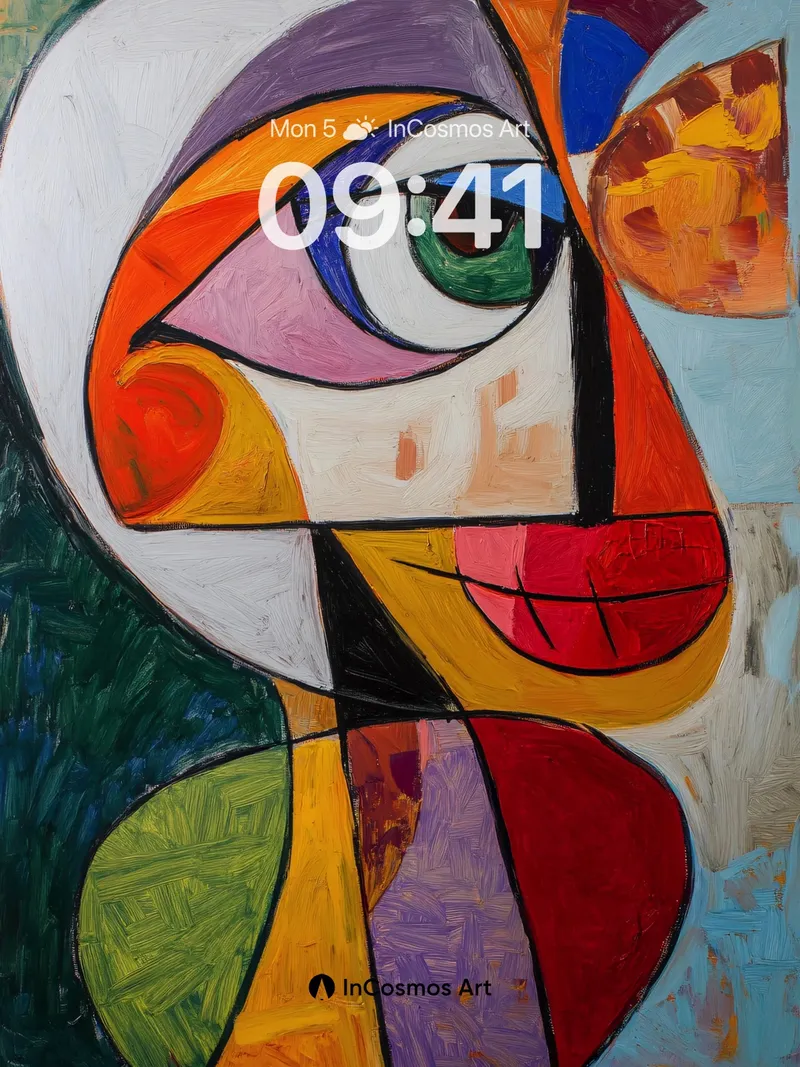
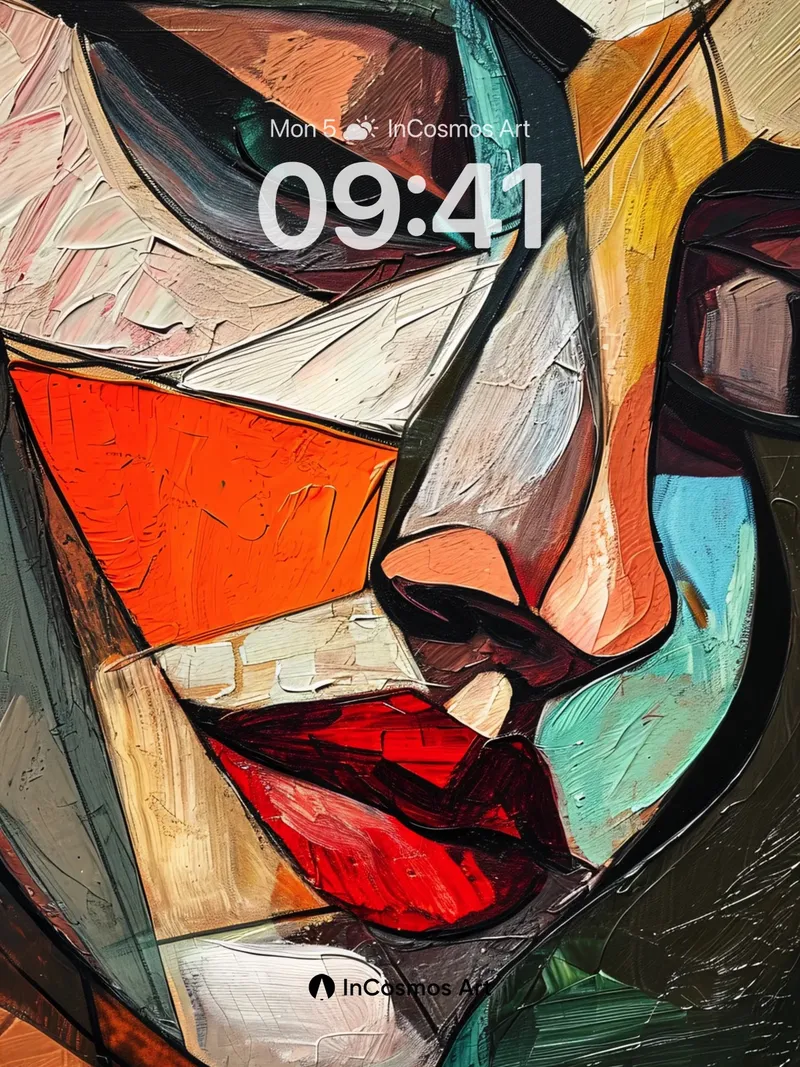
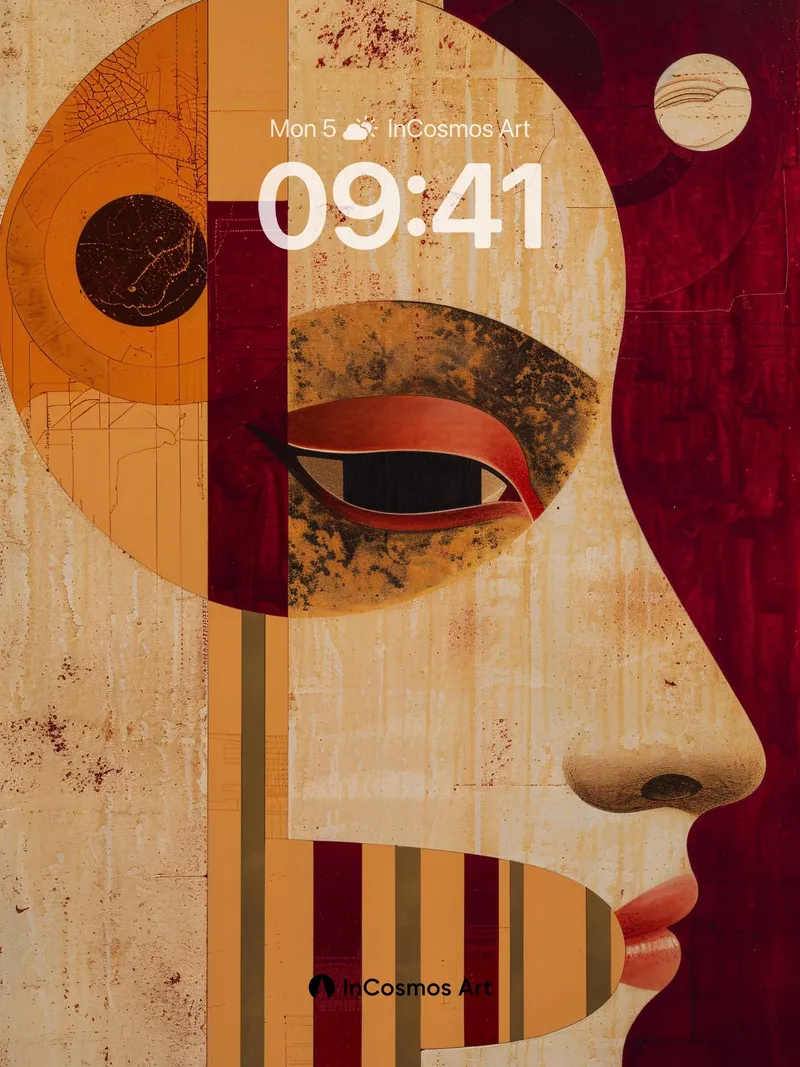
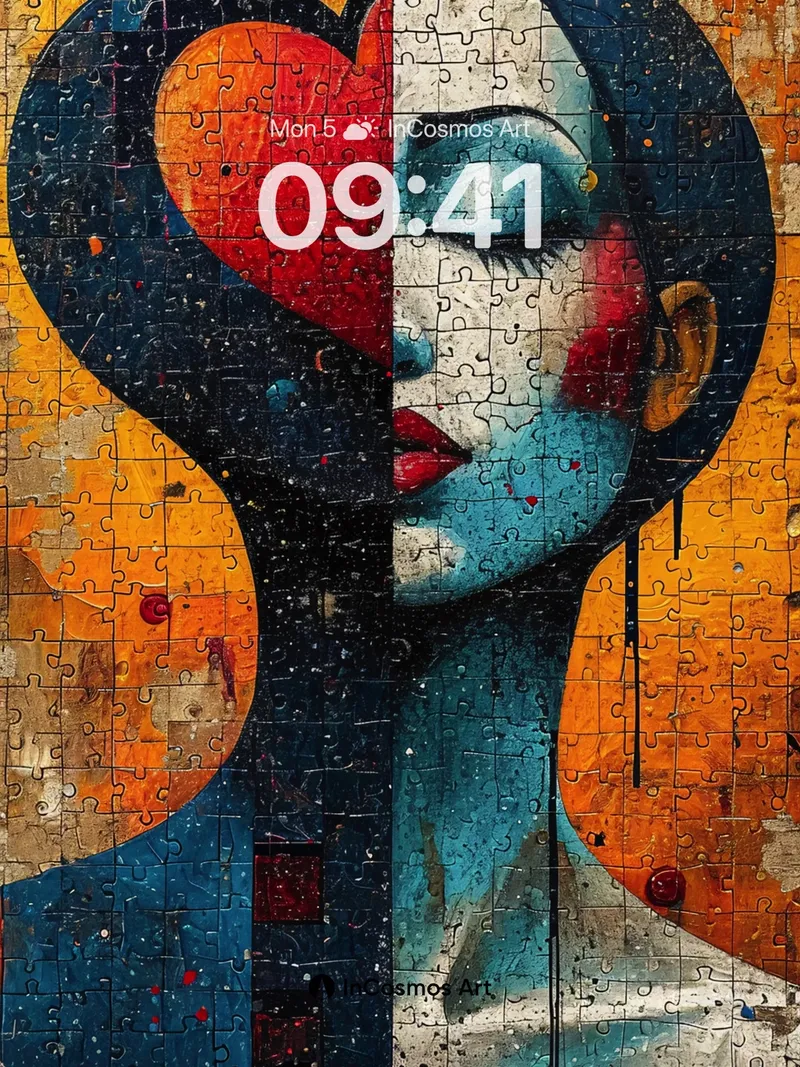
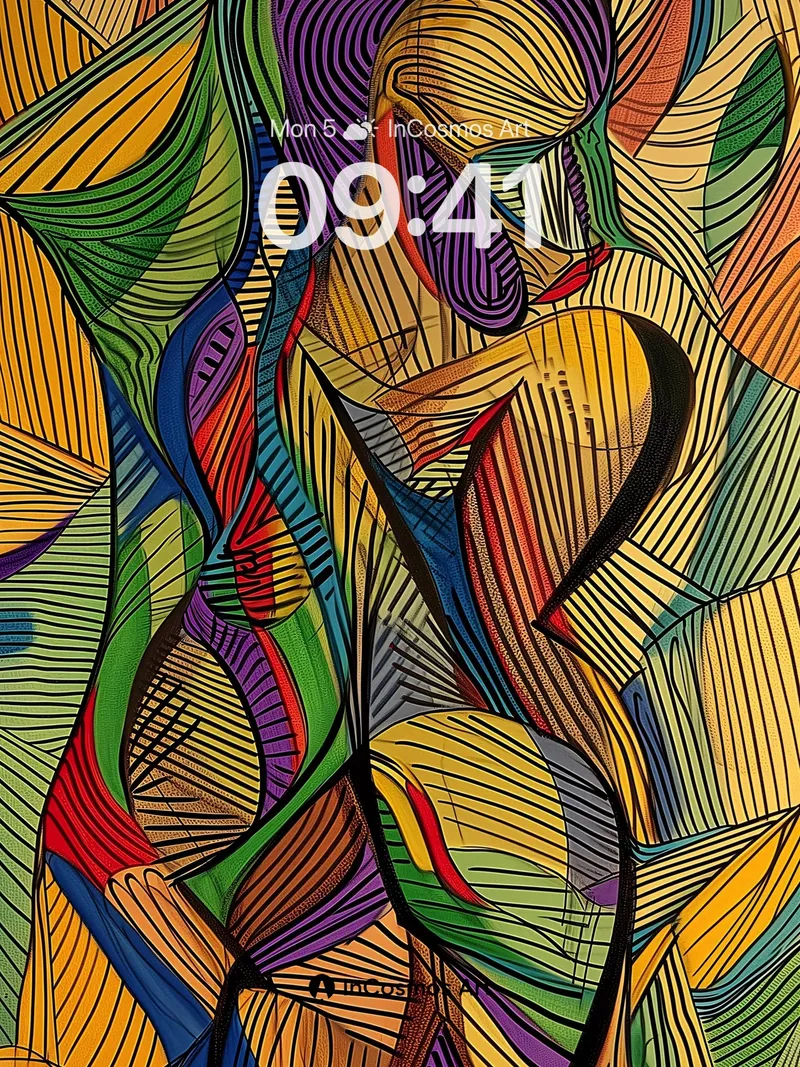
Faces no longer follow natural curves but are cut into geometric fragments. Color here is not merely decorative; it becomes a direct carrier of emotion. Red is anger or love, blue is melancholy or calm, and yellow is a kind of anxious vitality. This mode of expression refuses vague middle grounds, forcing the viewer to confront a truth that has been dismantled.
Broken Wholeness
When features are rearranged, the gaze cannot easily slide over the surface. Eyes may deviate from the center, lips may occupy a disproportionate space. This dislocation is not intended to create grotesquerie but to emphasize an intensity often ignored by daily vision. In this perspective, wholeness is no longer the goal; fragmentation itself constitutes a new order. Each color block bears a specific emotional weight, pressing against one another to create tension.
The Breath of Brushstrokes
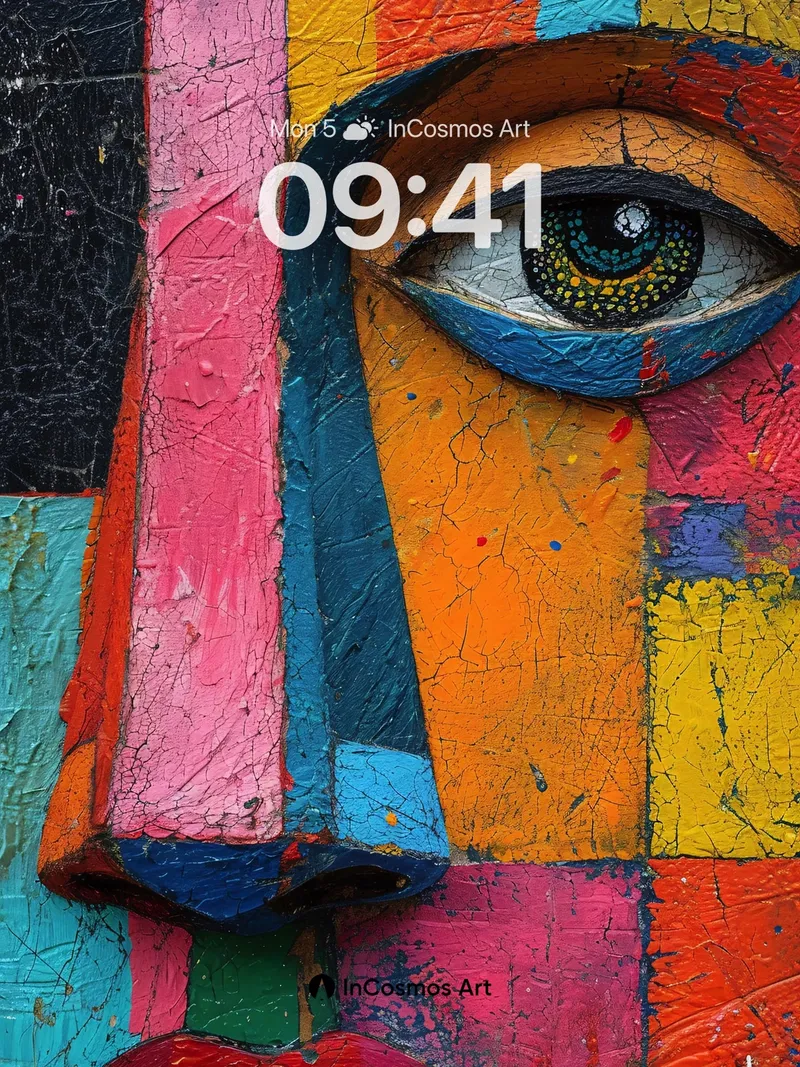
Traces left by paint on the surface record the movements of creation. Thick stacking or thin flowing are not just technical choices but externalizations of emotional rhythm. Rough textures give color a tactile quality, as if one could touch that urgency or hesitation. This materiality makes emotion concrete, no longer floating in concepts but settling into specific textures.
The Confrontation of Gaze
Reconstructed faces often carry a strong sense of staring. This gaze is not an invitation but a confrontation. It demands that the viewer stop their hurried steps to decipher the meaning behind unnatural lines. In this face-to-face encounter, daily disguises are stripped away, leaving only pure emotional color. This art form offers no comfortable answers; it provides only a mirror reflecting the unorganized chaos within.