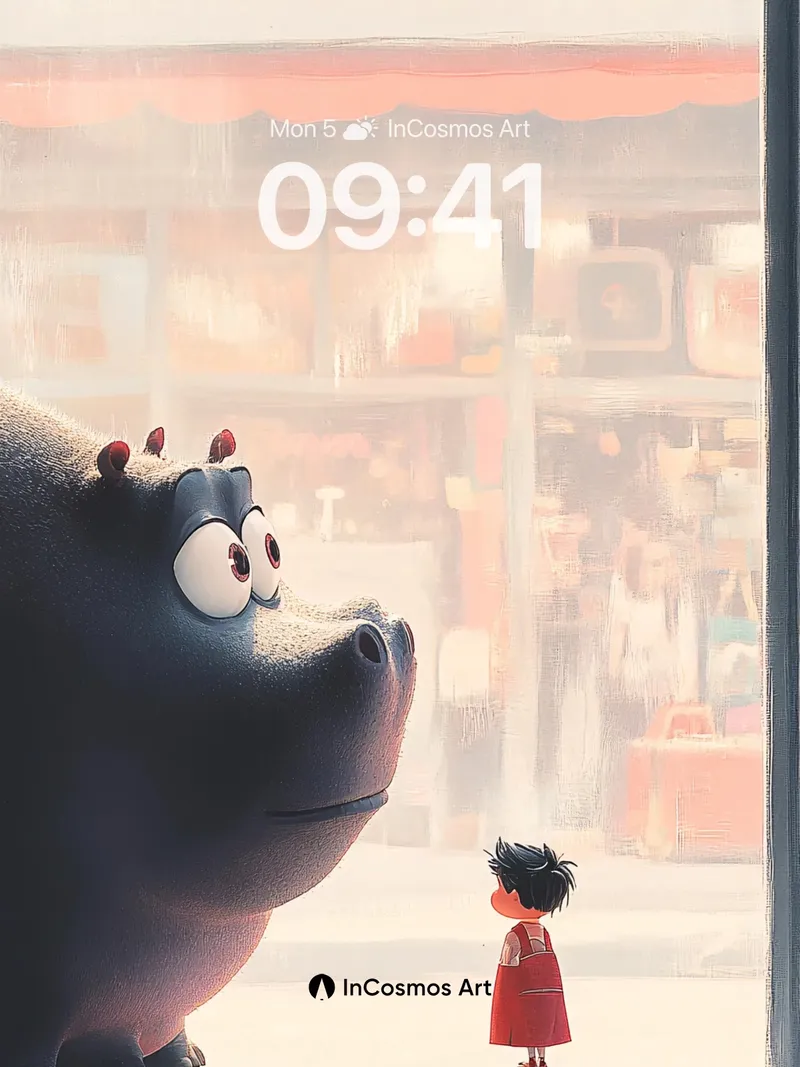
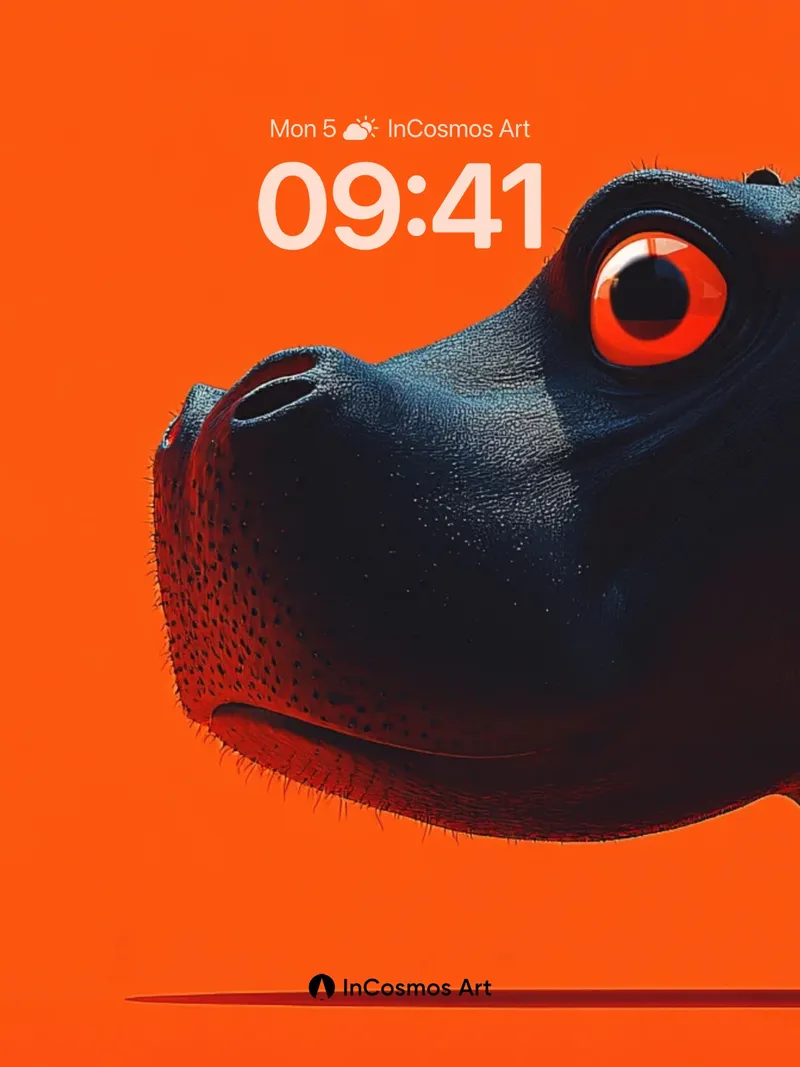
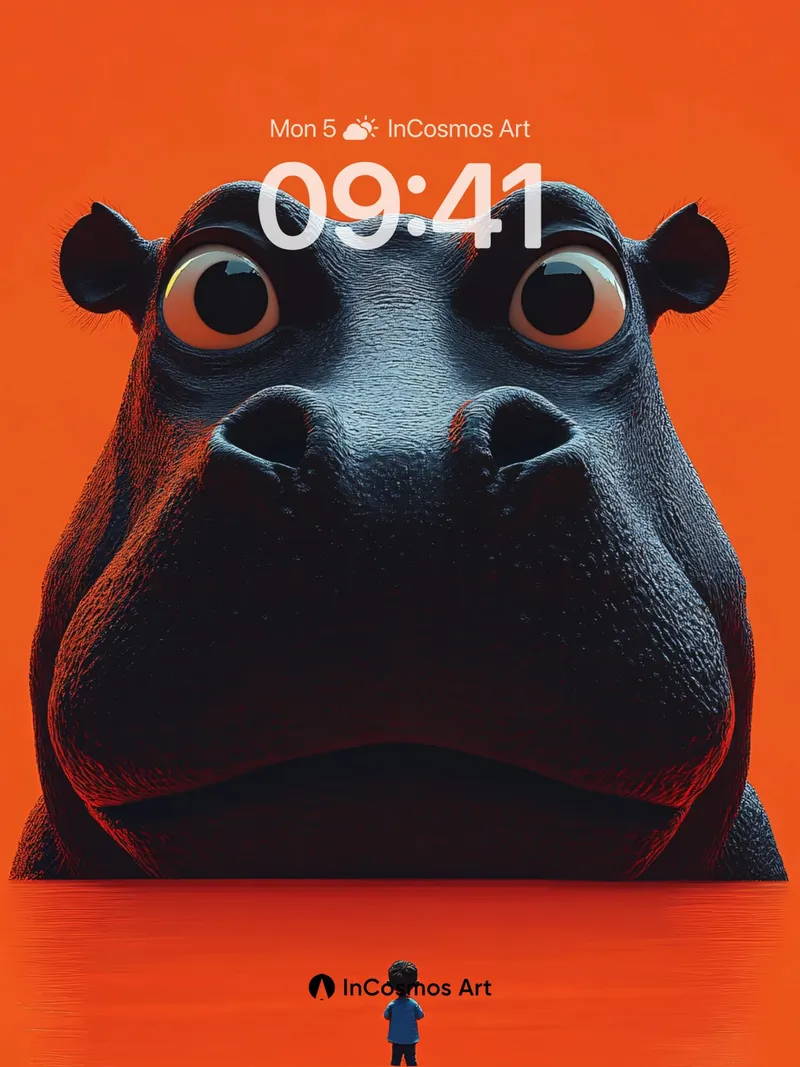
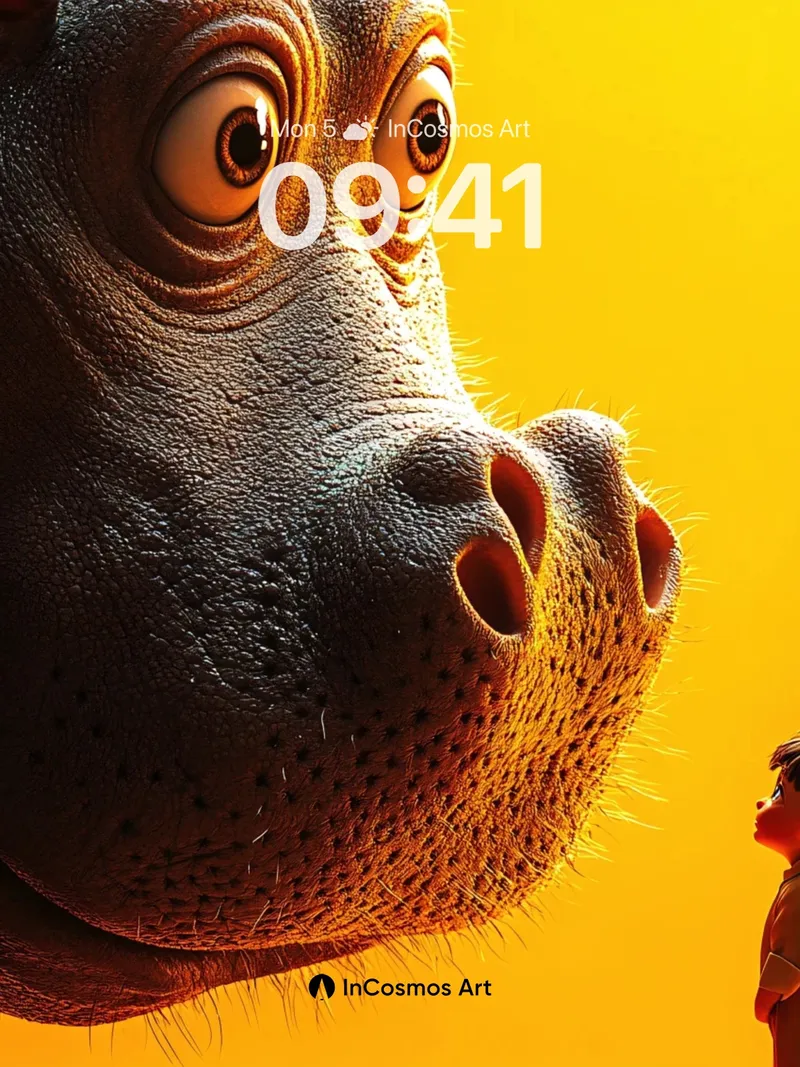
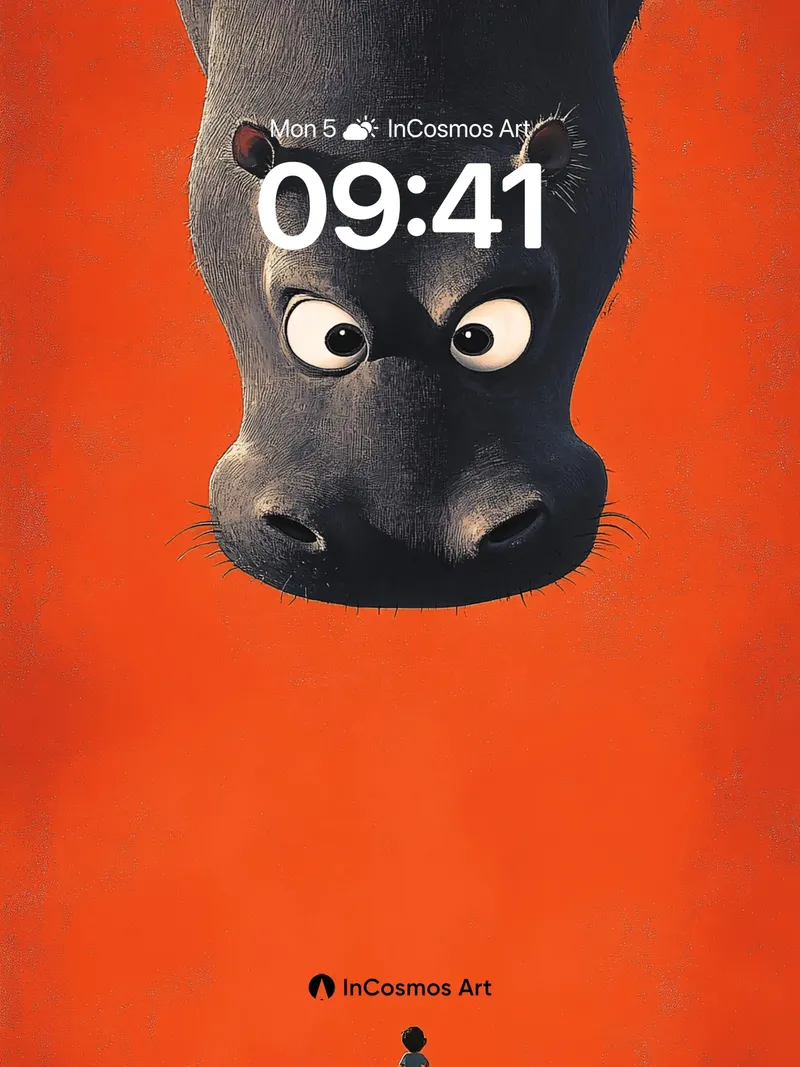
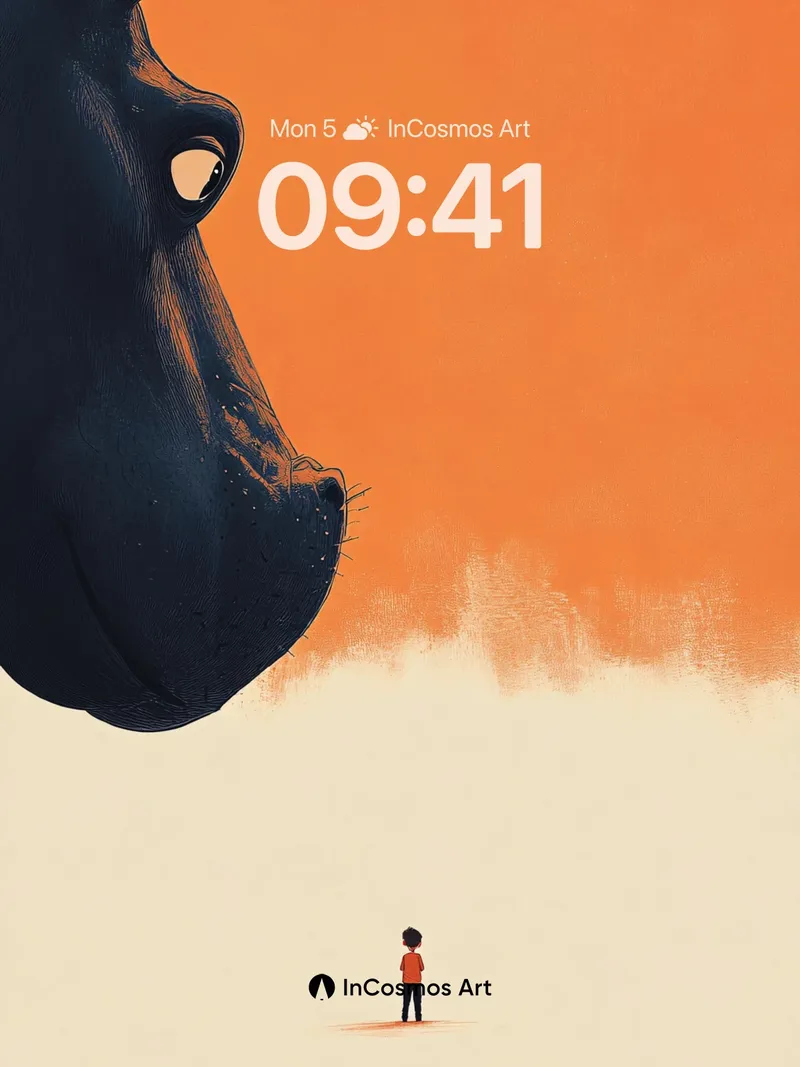
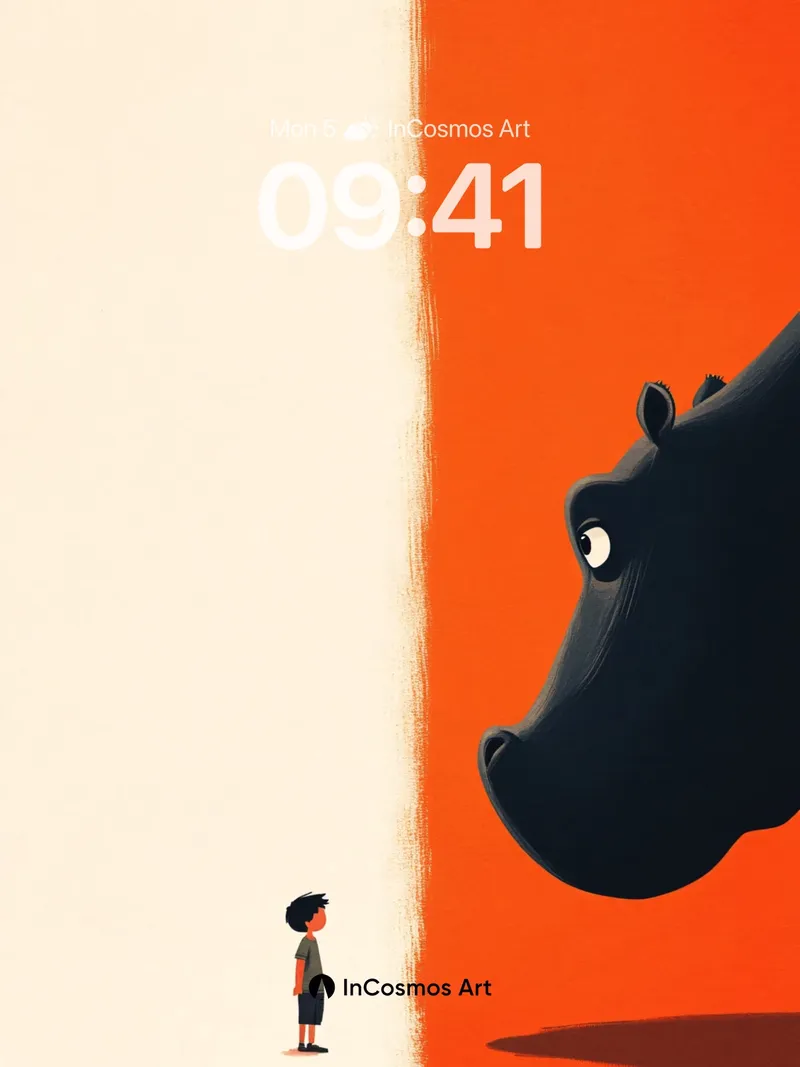
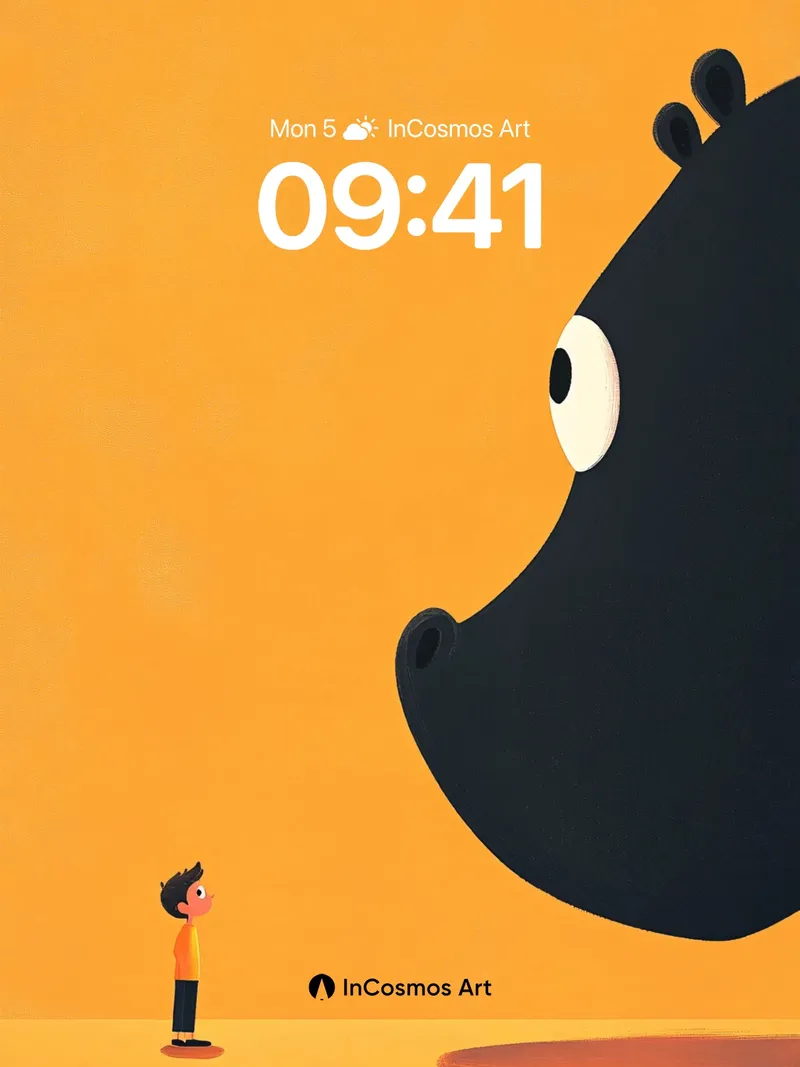
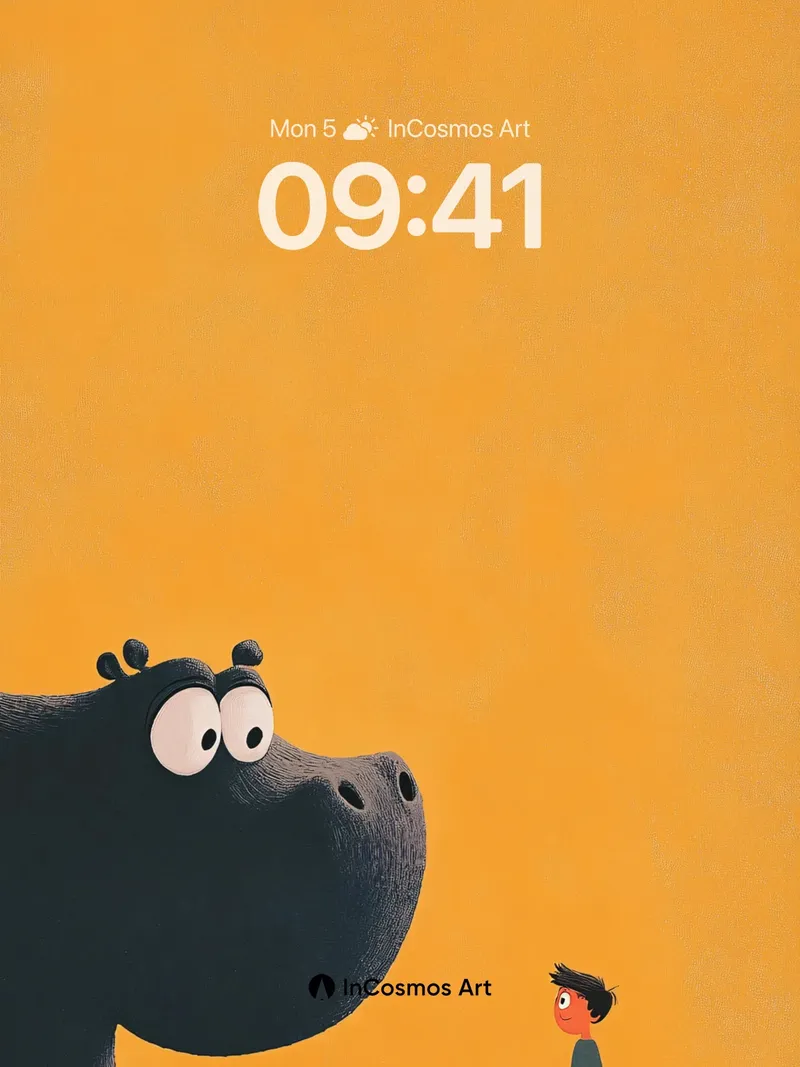
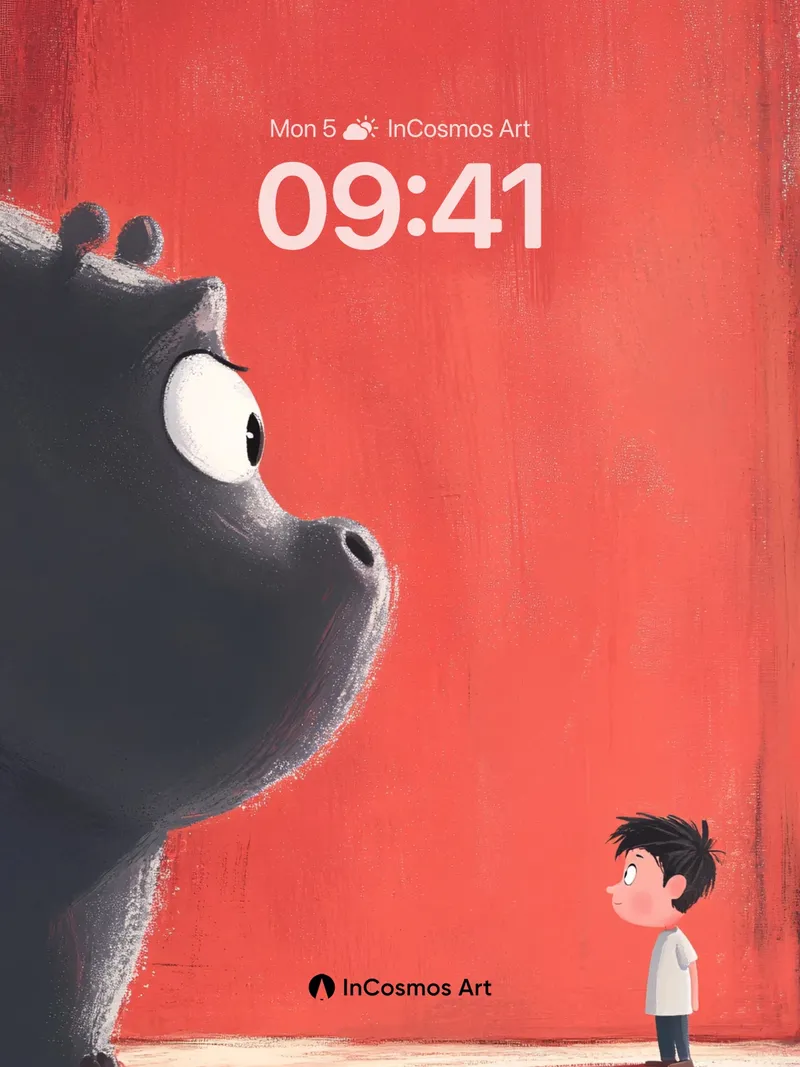
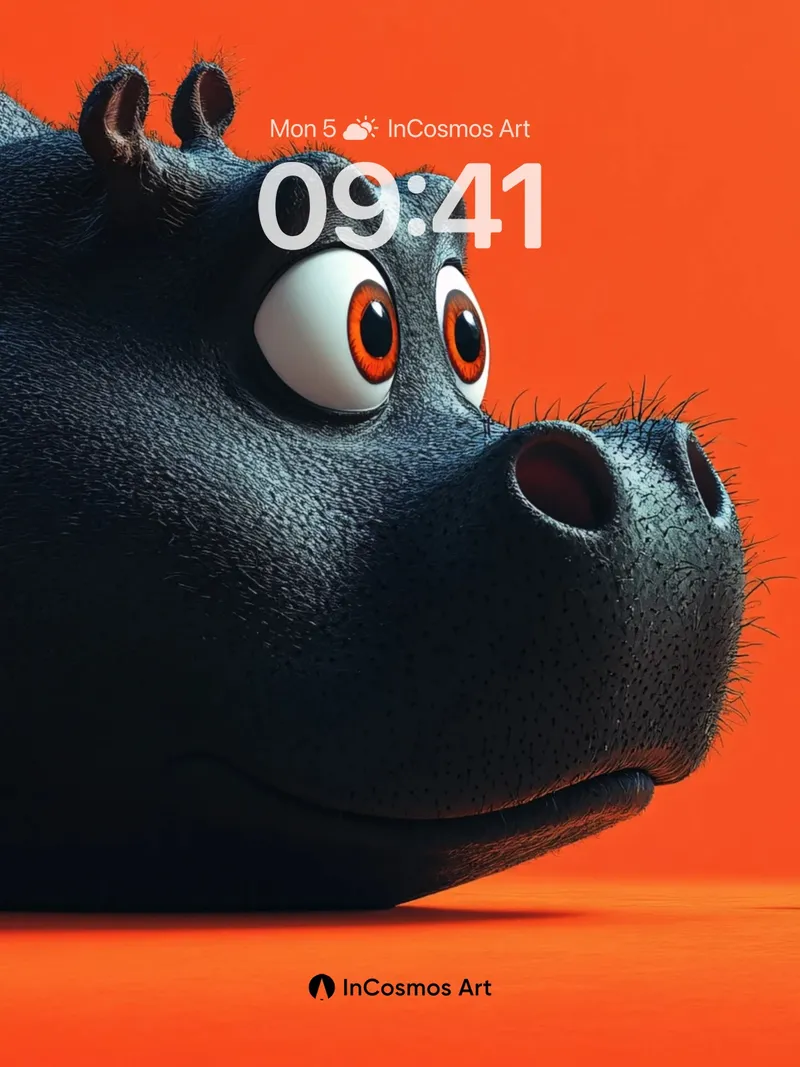
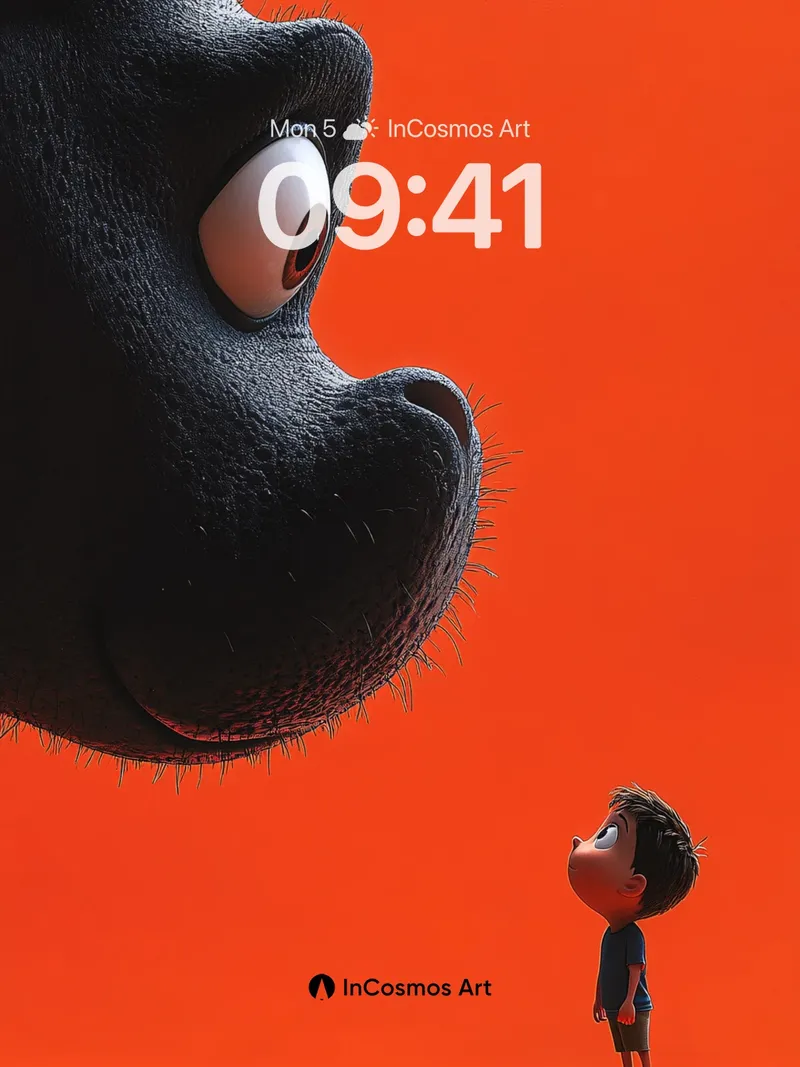
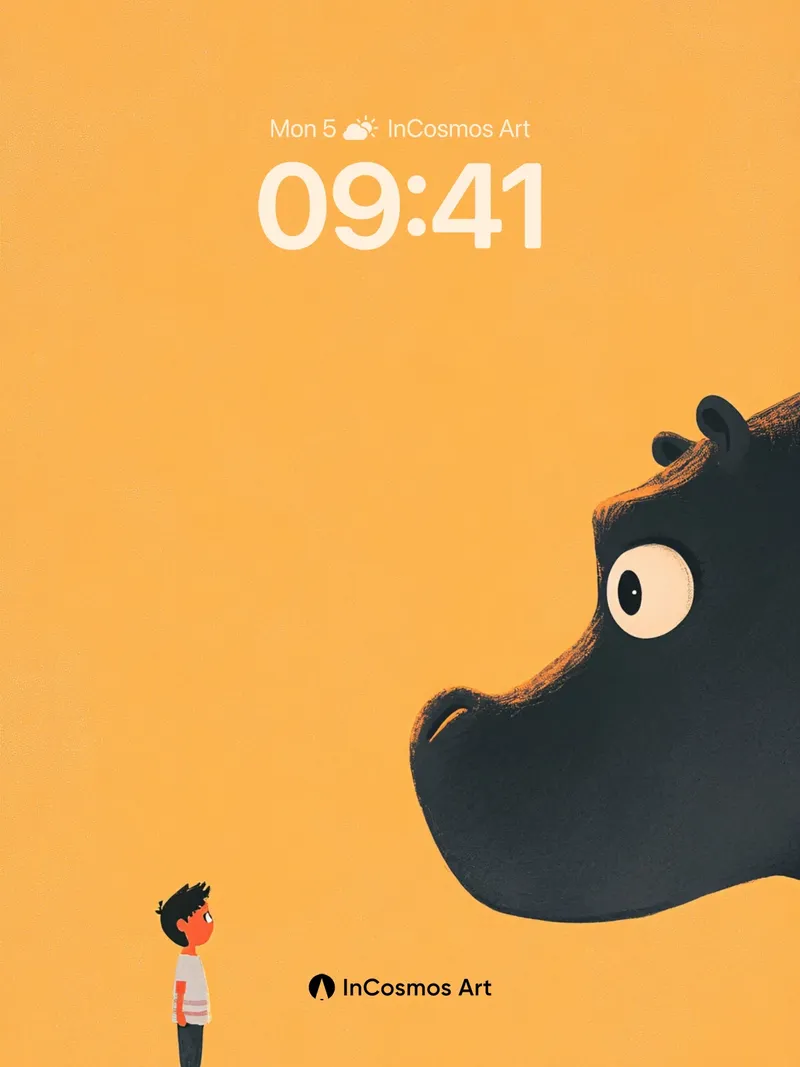
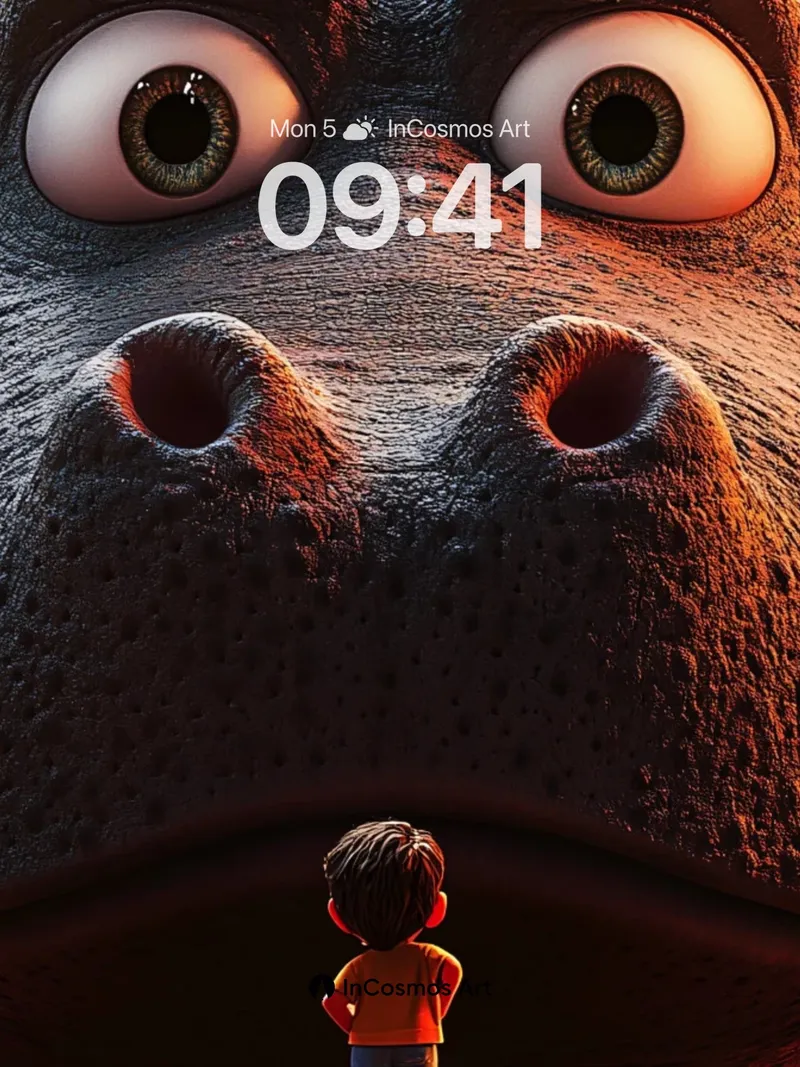
In an endless expanse of orange-red, a tiny figure faces a colossal creature. This is not conquest, nor fear, but a silent dialogue transcending scale. Color becomes a vessel for emotion, space compressed into psychological distance. Each gaze exchange is a tentative encounter between isolated beings and the unknown. The black beast, resembling a hippopotamus, bears no tusks, no anger, only wide eyes reflecting curiosity and tenderness. The child stands on the horizon, simply dressed, posture calm, as if accustomed to this surreal meeting. The monochromatic backgrounds are not empty—they focus attention on the relationship itself: an asymmetrical balance, a wordless companionship. This composition repeats, shifting angles, light, and environment, yet the core remains unchanged: two lifeforms seeking resonance amid absolute difference.
Color as Emotional Language
Orange and red dominate the context, not as decoration but as emotional carriers. Warm hues evoke intimacy, yet their high saturation creates pressure. As the background shifts from bright yellow-orange to deep red, the atmosphere evolves from curiosity to tension. The child’s clothing subtly changes—yellow to gray to red—indicating inner transformation. The beast’s skin texture grows more defined, fur details emerging, lending it lifelike presence. Color contrast ceases to be mere visual impact; it becomes a rhythm of psychological states.
Equality in Scale Disparity
Despite vast size differences, no dominance emerges. The beast lowers its head, the child looks up—their gazes meet in midair, forming an invisible field of communication. This perspective erodes power imbalance, emphasizing perceptual equality. No words, only eyes. Eyes are humanity’s most primal emotional channel, also a potential bridge across species. In these scenes, gaze becomes the sole authentic language, piercing physical boundaries.
Surreal Normalcy
The setting transitions from abstract space to urban streetscape—a blurred grocery store behind glass, warm lights, orderly shelves. This small anchor of reality makes the fantastical credible. Beast and child stand before the window, as if awaiting ritual entry. City noise is excluded, leaving only silence between them. This 'surreal normalcy' mode appears frequently in modern animation and art, challenging perceptions of normal and abnormal, inviting reevaluation of human-nonhuman relations.
Geometry of Empathy
Each scene functions like a calculated compositional experiment. The beast’s head occupies the upper half, the child anchored in the lower corner, creating strong visual contrast. Yet through lighting and perspective control, psychological equilibrium is achieved. When the beast hangs inverted, the child gazes upward—spatial logic is disrupted, but emotional logic holds. This geometric structure is not merely aesthetic; it metaphorizes empathy—how humans attempt connection even with incomprehensible entities.