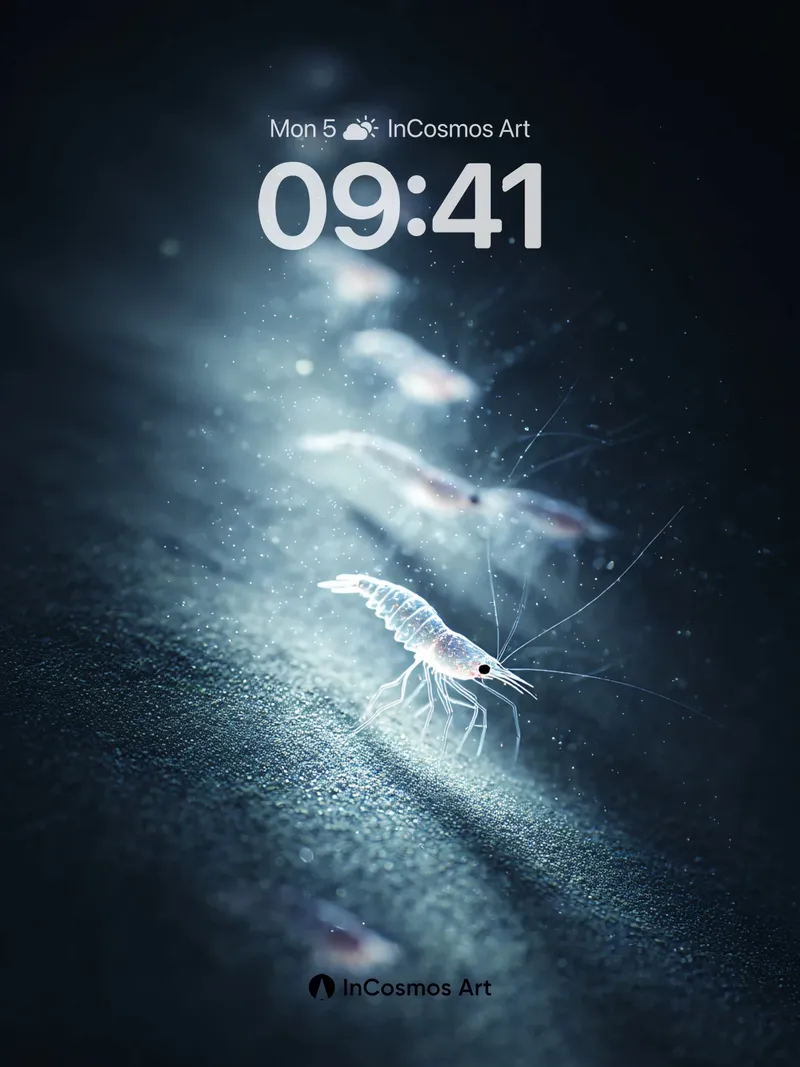
In the deep sea where sunlight cannot reach, life has learned another way to survive. There are no colorful coral reefs or schools of fish here, only endless darkness and occasional glimmers of light. In these silent waters, some tiny creatures use bioluminescence to find food, attract mates, and even confuse predators. Their survival strategies are both simple and complex, fragile yet resilient.
Survival Rules in the Dark
The deep sea is an extreme environment, characterized by high pressure, low temperatures, and the absence of light. These conditions deter most life forms. However, it is precisely in such an environment that some tiny creatures have evolved unique survival skills. Bioluminescence has become one of their most important tools. Through this ability, these creatures can navigate, communicate, and hunt in the dark. This capability not only helps them survive in harsh conditions but also makes them an integral part of the deep-sea ecosystem.
The Science Behind the Glow
Bioluminescence is a chemical reaction that typically involves a substance called luciferin and an enzyme called luciferase. When these two substances combine, they produce light. Different organisms use different chemicals to produce light of various colors, ranging from blue to green, and even red. This light production does not generate heat, hence the term "cold light." Scientists are very interested in this mechanism because it has wide-ranging applications in medicine, environmental monitoring, and biotechnology.
The Resilience of Life
Despite the extreme conditions of the deep sea, the creatures here exhibit remarkable adaptability. They can survive under high pressure, remain active in low temperatures, and sustain life through bioluminescence in the absence of light. This resilience is not only physiological but also behavioral. For example, some deep-sea fish use bioluminescence to attract prey, while others use it to confuse predators. These behaviors showcase the wisdom and creativity of life in the face of extreme environments.
The Courage to Explore the Unknown
Human understanding of the deep sea remains limited, but each exploration brings new discoveries. Advances in deep-sea exploration technology allow us to delve deeper into this mysterious world. Each dive may reveal new species, new ecological phenomena, and even new scientific principles. This exploration not only satisfies human curiosity but also provides valuable data and samples for scientific research. The unknowns of the deep sea inspire the spirit of exploration and remind us that there are still many unsolved mysteries in nature waiting to be discovered.