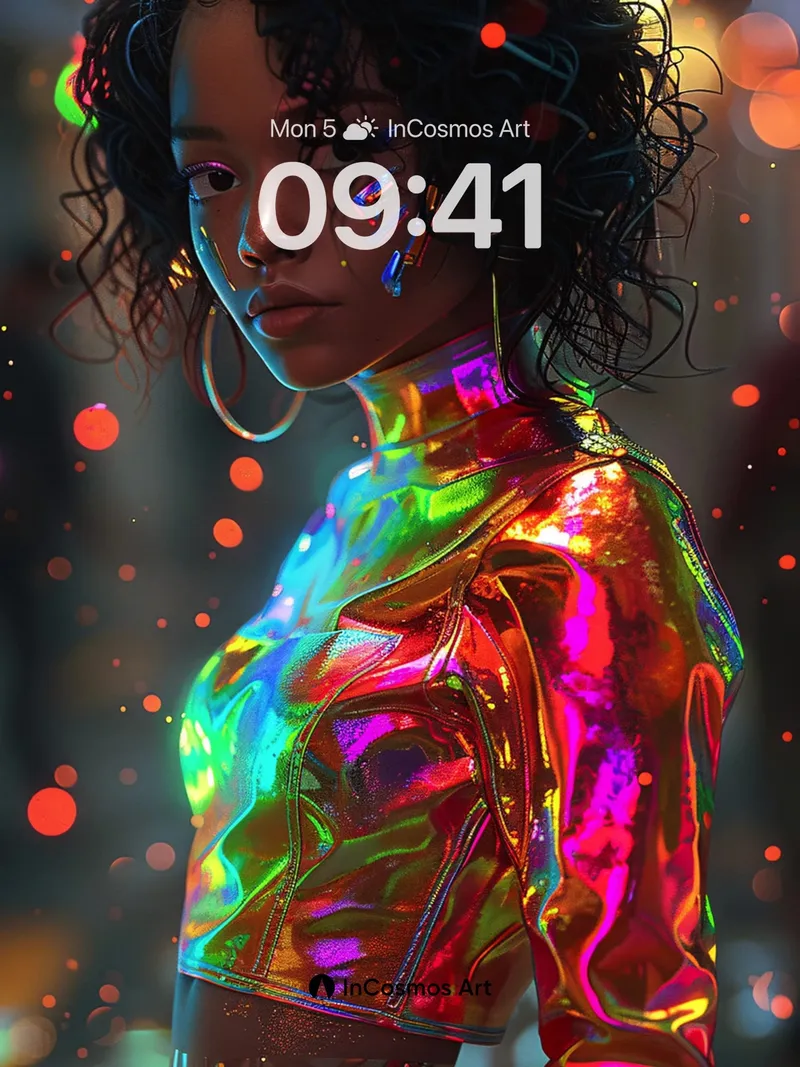
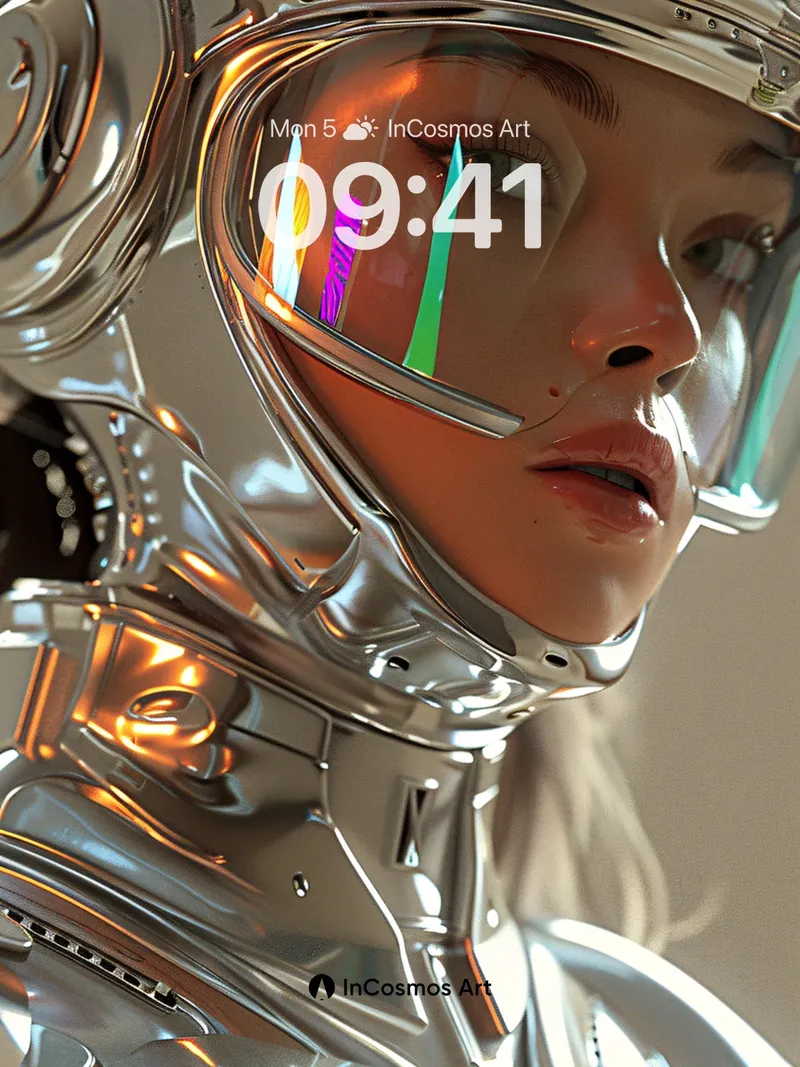
Metallic gloss flows across surfaces, shifting colors with every angle. This texture no longer belongs to industrial materials but becomes part of the body. Headphones, visors, jackets—all objects are covered in a reflective film, like a new layer of skin. Light is no longer just illumination; it directly participates in constructing emotion. This visual experience does not pursue realism but emphasizes a tactile sense of being wrapped in digital signals.
Alienation of Material
Traditional clothing seeks comfort or tailoring, while holographic materials seek the capture of light. Fabric is no longer for warmth or coverage but for reflecting neon and screen light from the environment. This material turns the wearer into a walking light source. Body contours blur under intense light, leaving only the flow of color. This design logic dissolves the sense of physical实体, making the person appear more like a node for data transmission.
Visualization of Sound
Headphones and visors become the core accessories of this style. Sound is no longer just auditory but is seen through glowing ear cups. Music is materialized into halos. The wearer immerses in a private soundscape yet displays glowing signals to the outside world. This design blurs the boundaries of senses. Auditory experience is forcibly converted into a visual landscape, as if only sound that can be seen is real.
Survival Rules of the Cyber City
This style is born in high-density urban spaces. Surrounded by neon lights and electronic screens, ordinary clothing appears dim. Holographic material is an adaptation to, or even a counterattack against, urban light pollution. Wearers use highly reflective materials to establish presence within a chaotic background. This is not about blending in but maintaining a cool detachment amidst the bizarre surroundings.
Boundary Between Virtual and Real
When visors cover the eyes, facial expressions become irrelevant. Faces are covered by smooth surfaces, and emotion is replaced by color. This attire suggests an avoidance of real-world social interaction, turning instead to digital connection. In this state, individuals no longer communicate through eye contact but interact with the environment through the gloss on their bodies. This is a defense mechanism and a new form of expression, using reflection instead of confession.