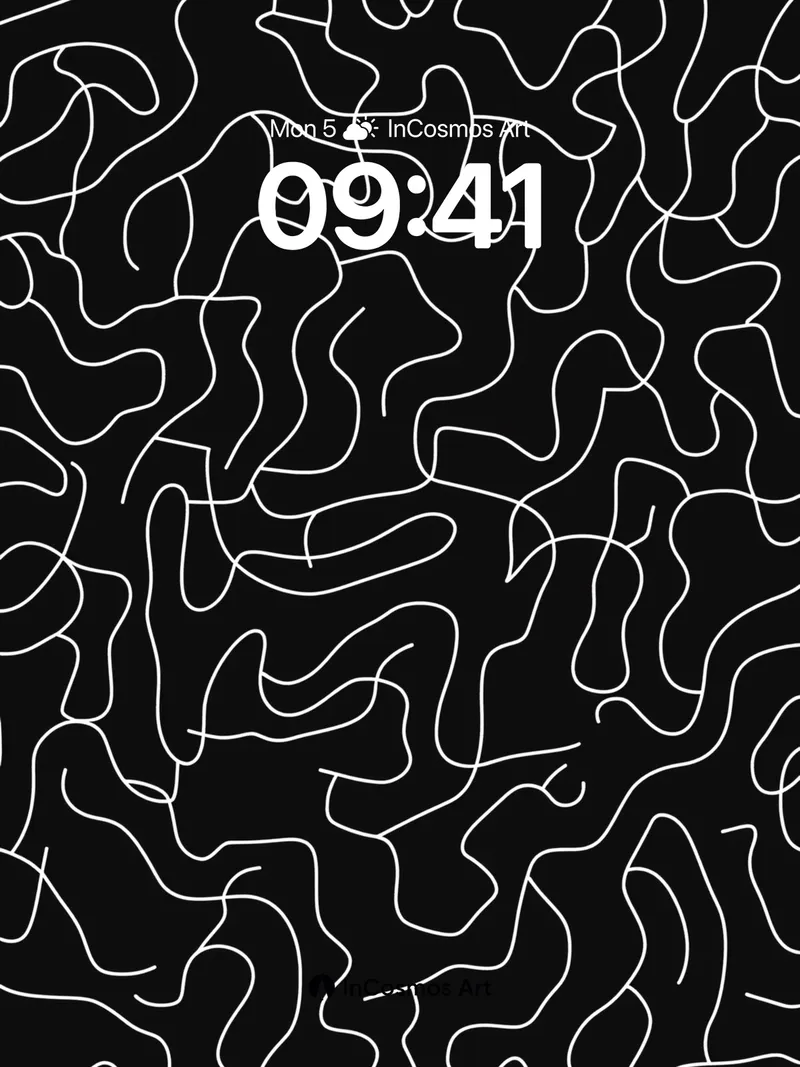
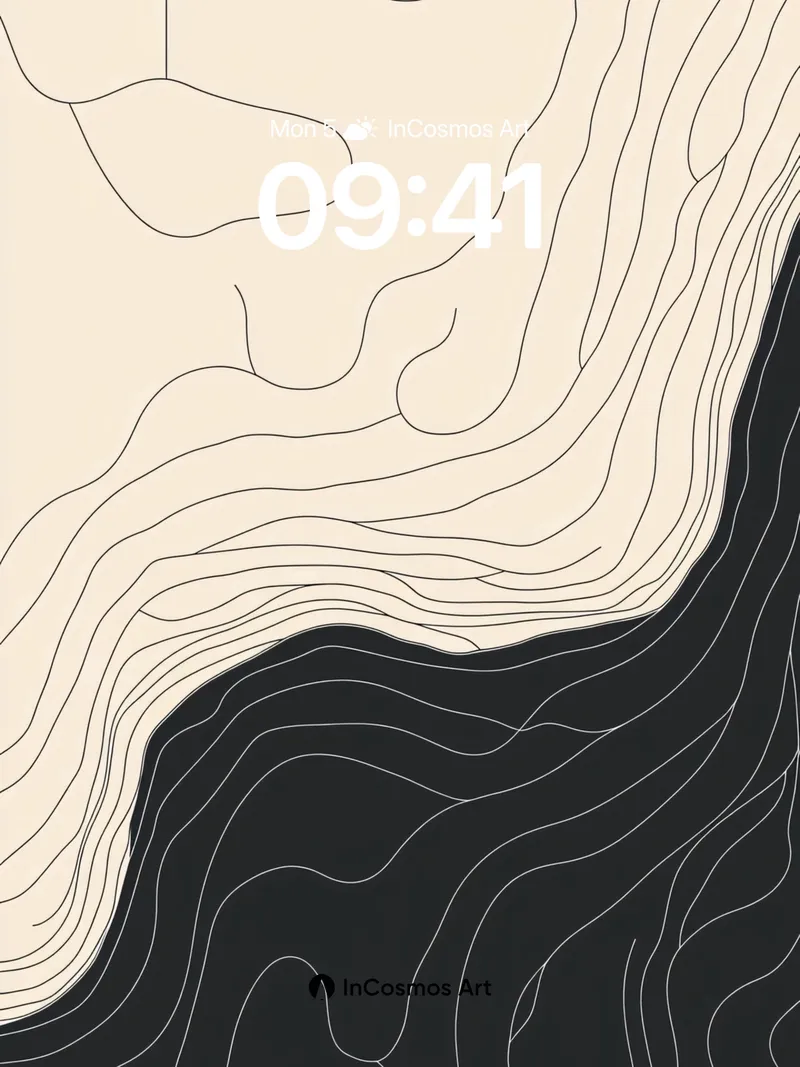
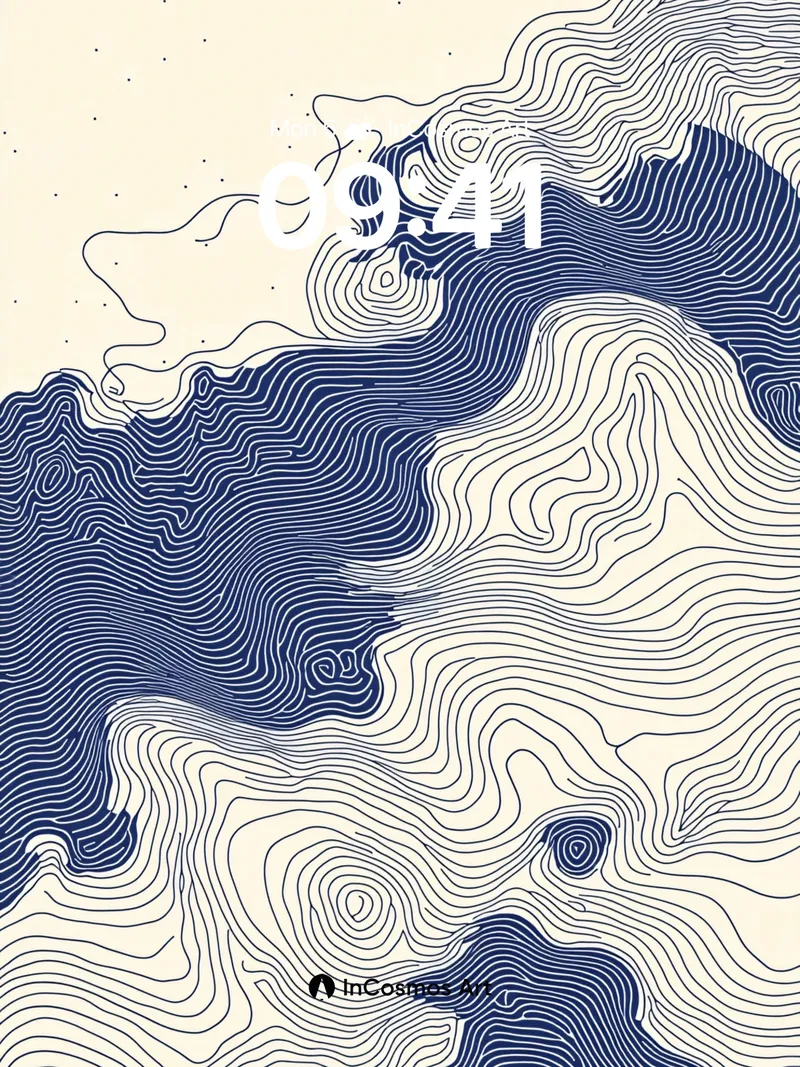
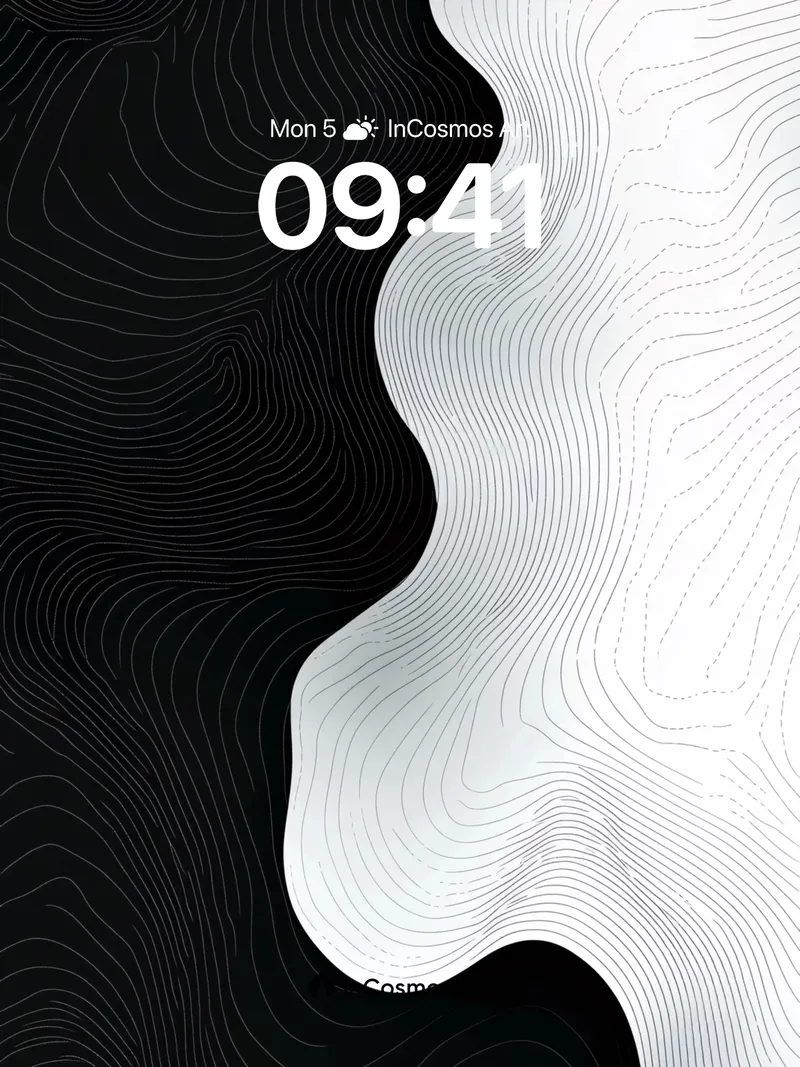
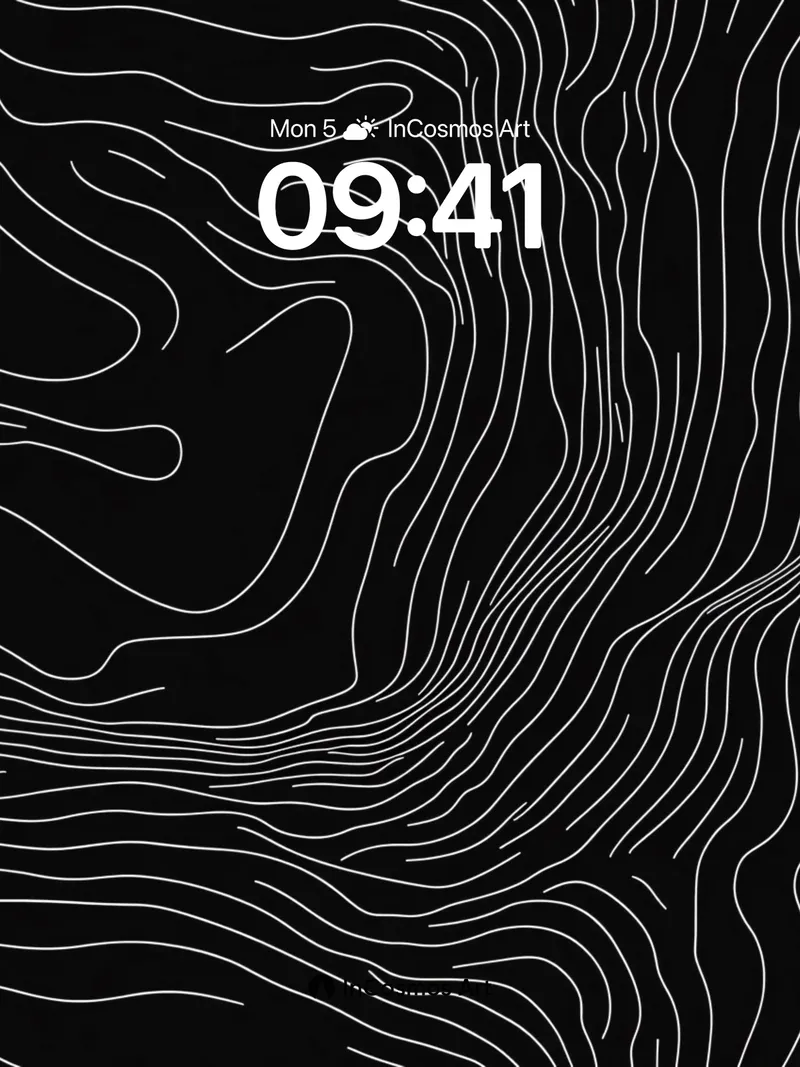
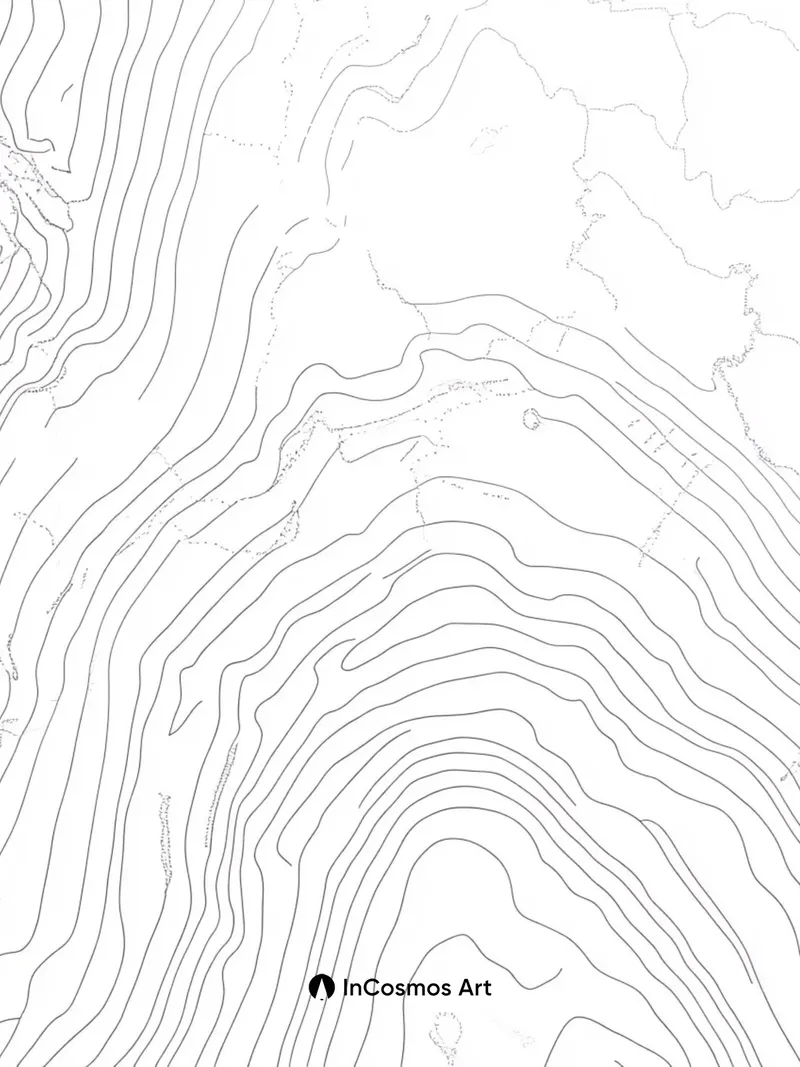
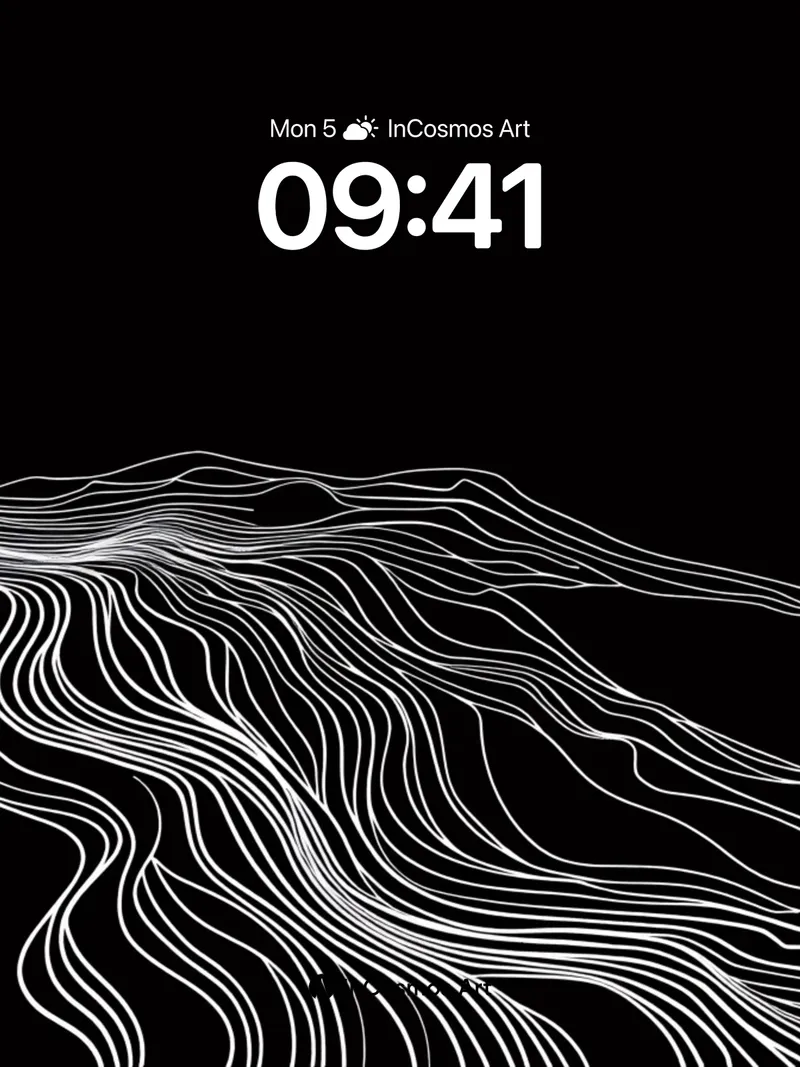
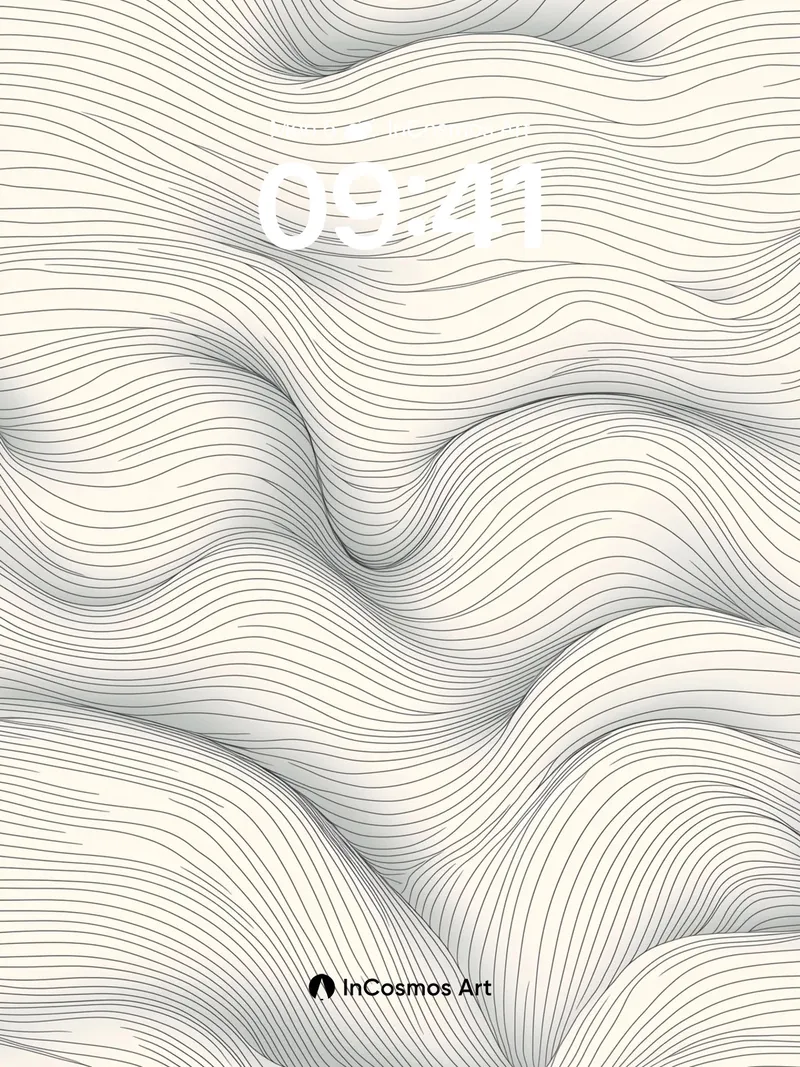
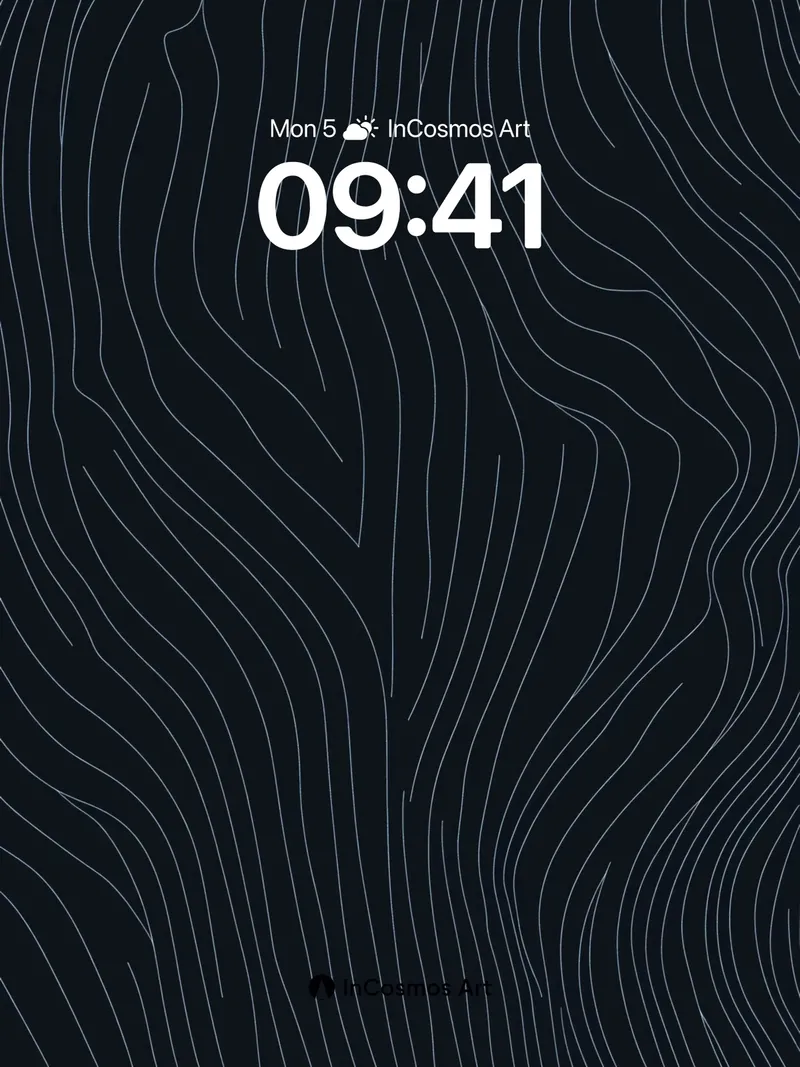
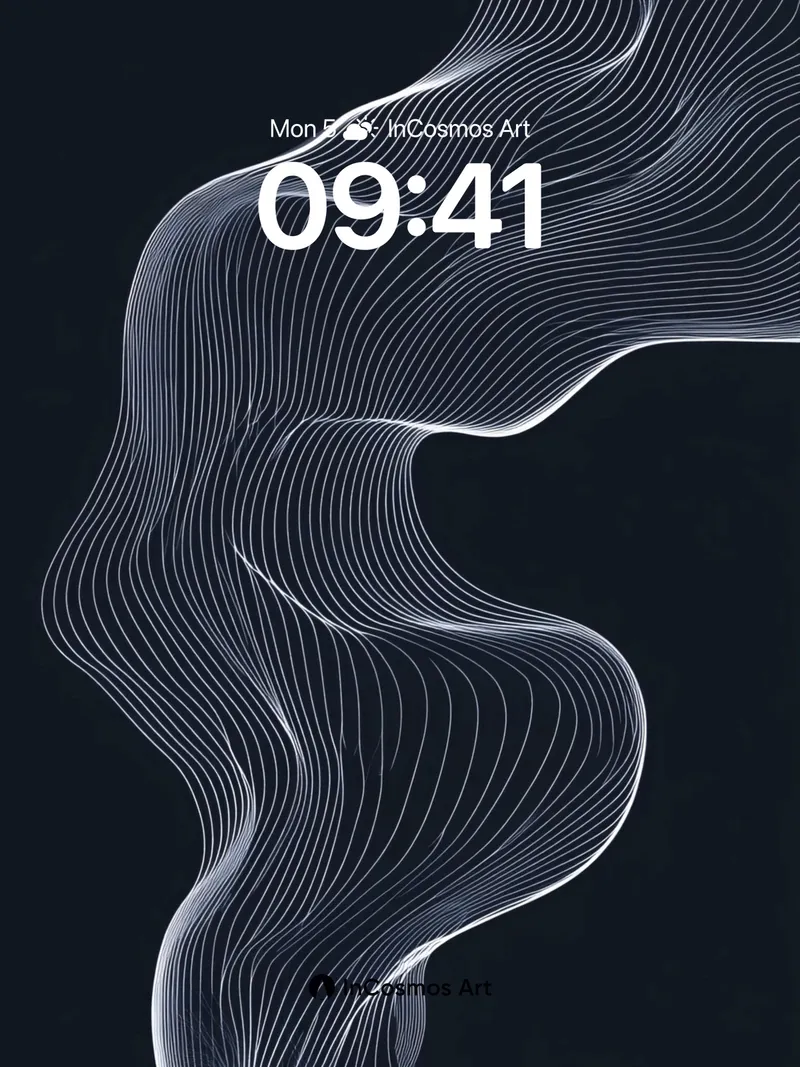
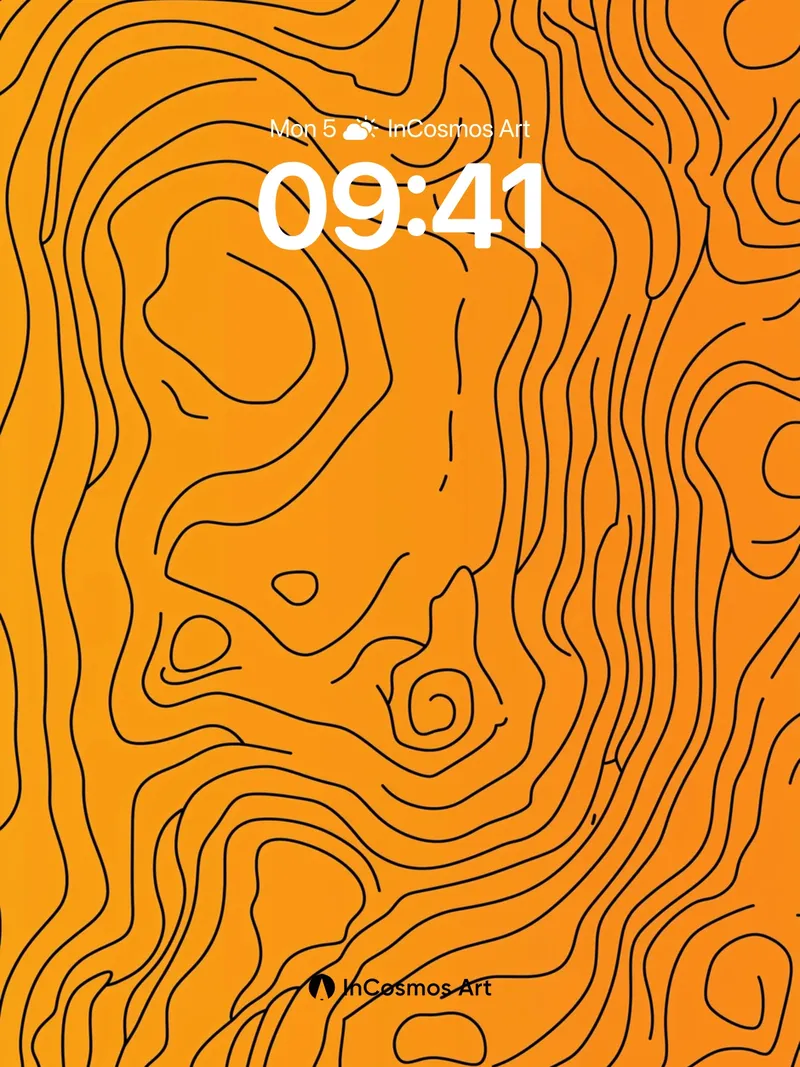
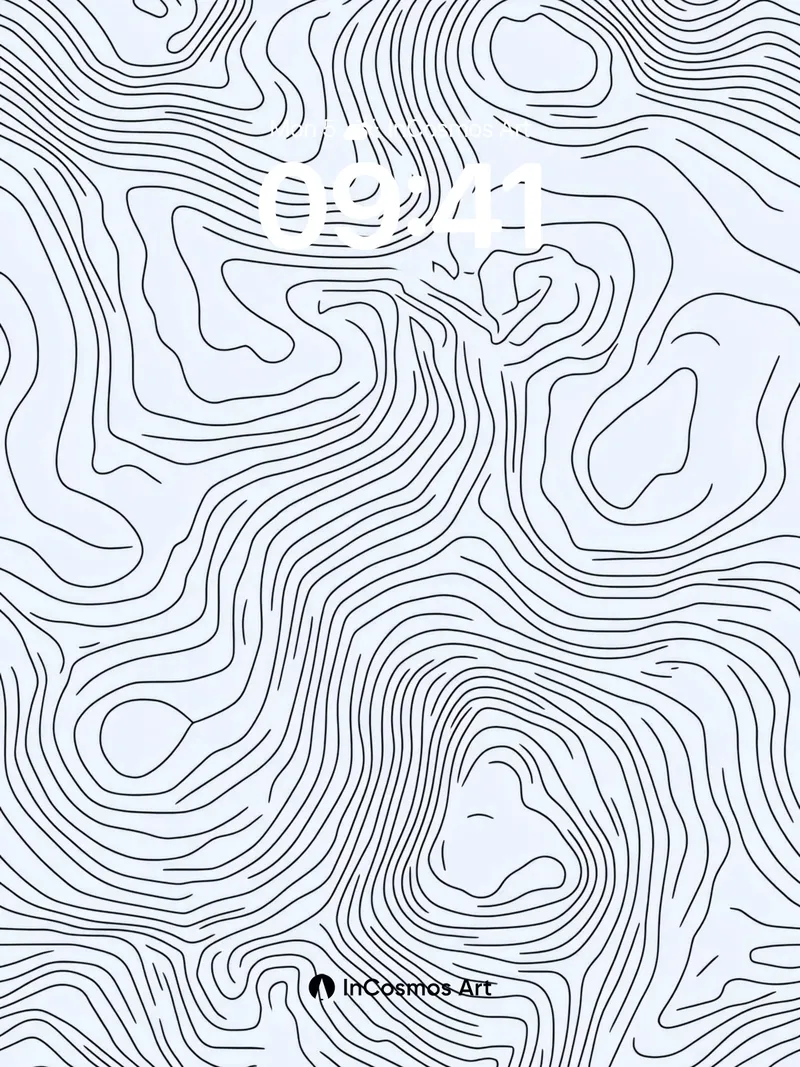
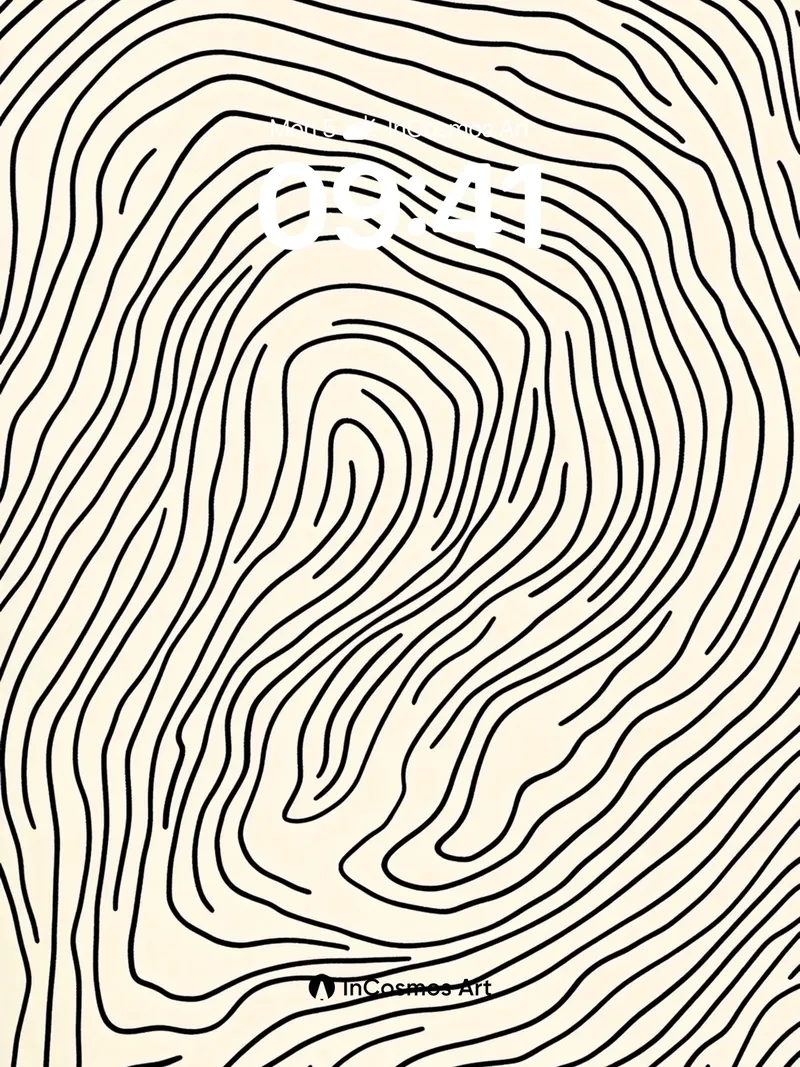
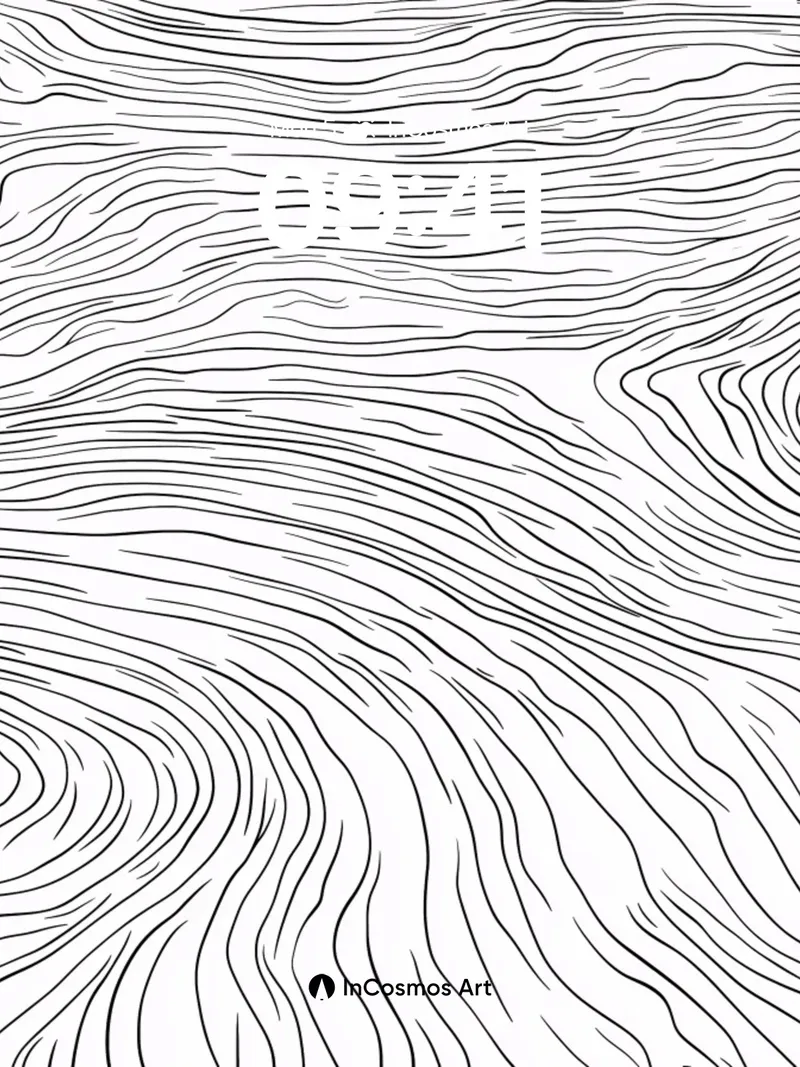
Lines wander through boundless space, resembling the breath of earth. They do not carry substance but define the boundaries of form. When vision is reduced to pure traces, space ceases to be a physical container and becomes a field for conscious flow. These continuous curves are metaphors for terrain and topologies of emotion. They record invisible forces—tectonic shifts, wind paths, erosive time. Each line is a frozen moment; each turn suggests unnamed depth.
Lines as Language
In a world without words, lines are the oldest form of expression. They require no translation, acting directly on sensory perception. Ancient cave markings and modern contour maps share the same essence: humanity's longing for order. These curves are not decoration but cognitive tools, transforming chaos into readable structure. They teach the eye how to read space and train the mind to understand existence.
The Folding of Perception
When lines cluster, spatial sensation compresses; when sparse, openness and stillness emerge. This variation in density creates a nonverbal rhythm, guiding the gaze between void and presence. Viewers unknowingly participate in constructing space; each glance becomes a reconstruction. The gaps between lines are not emptiness but extensions of meaning, places where imagination resides.
Symbolism Beyond Geography
Though rooted in topographic surveying, these patterns have transcended geography. They serve as abstract carriers of emotion—mapping anxiety’s folds, hope’s ascent, solitude’s arcs. In the digital age, they are re-coded into interface language yet retain their primal poetry. Beneath technology’s cold shell lies an echo of natural rhythm.
Silent Dialogue
Lines do not speak, yet they communicate in silence. They resonate with one another, forming rhythms like mountain pulses or tidal breaths. This silent dialogue reveals the universe’s most fundamental connection—through form rather than content, through structure rather than narrative. It reminds that beyond noise, order can be seen, beauty can be heard.