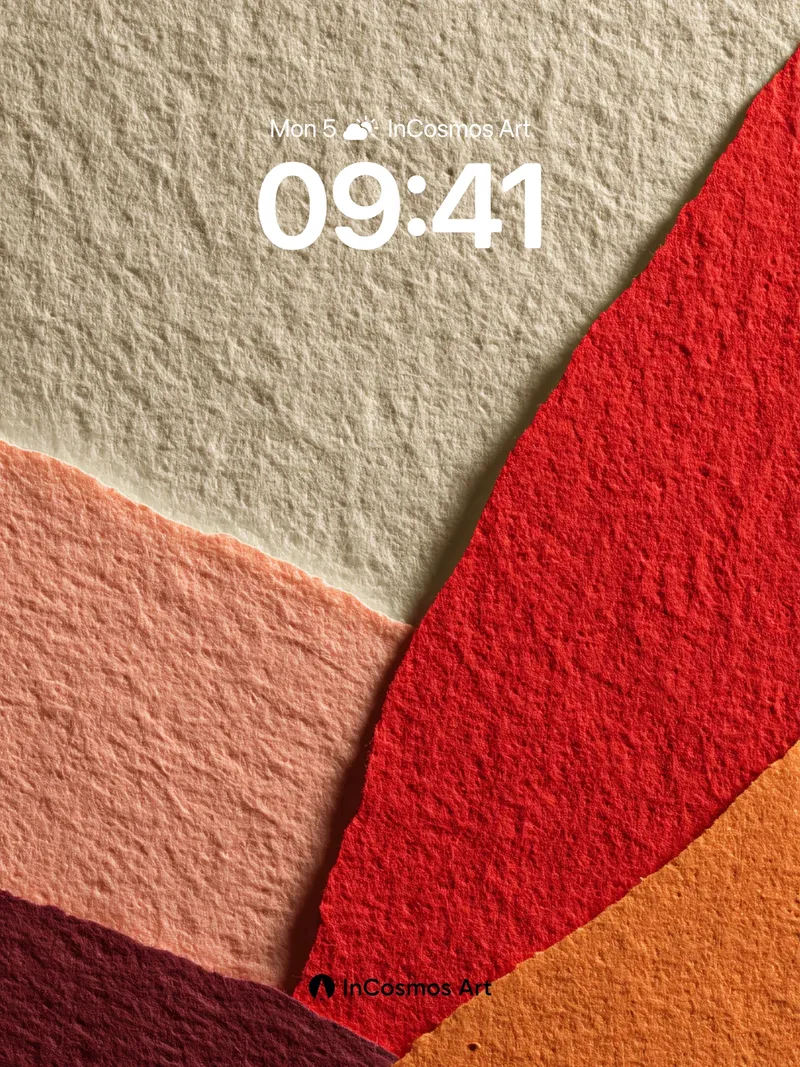
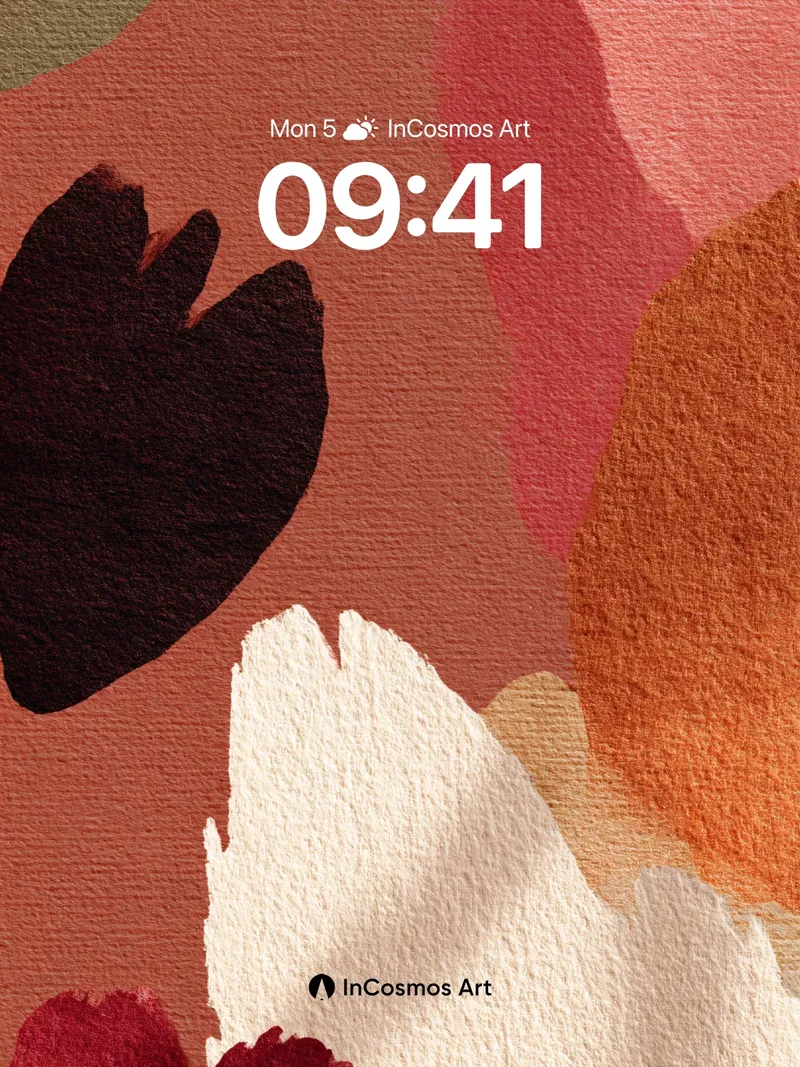
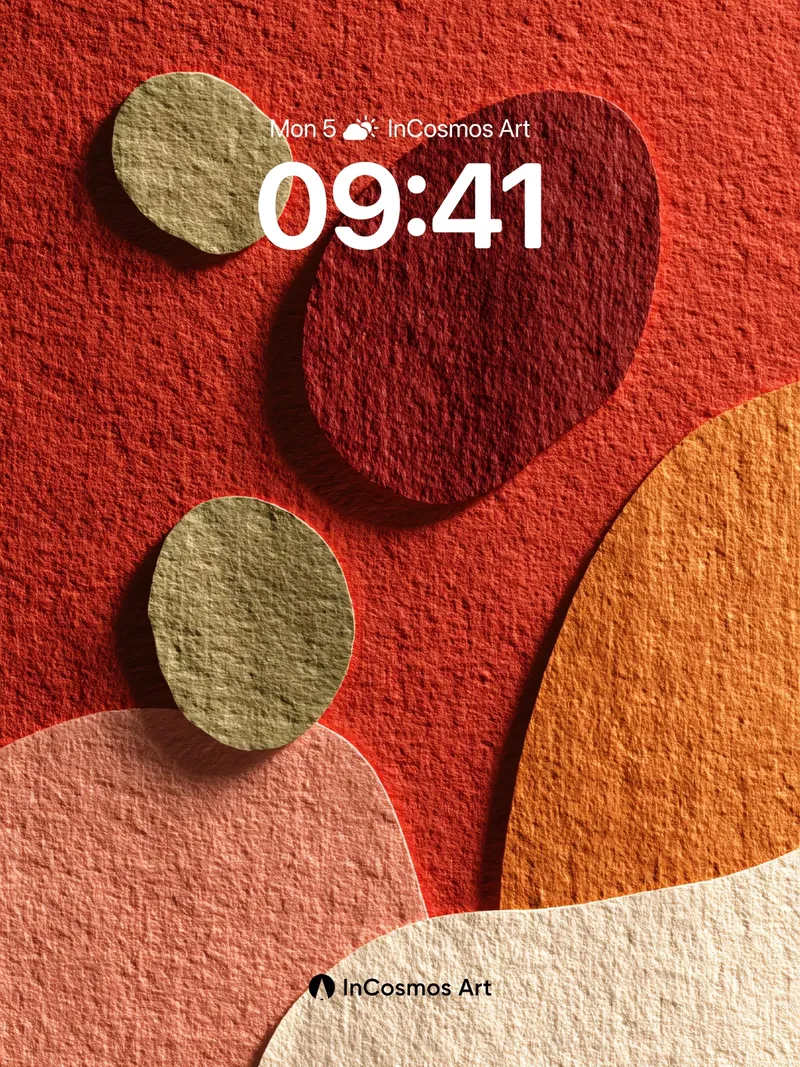
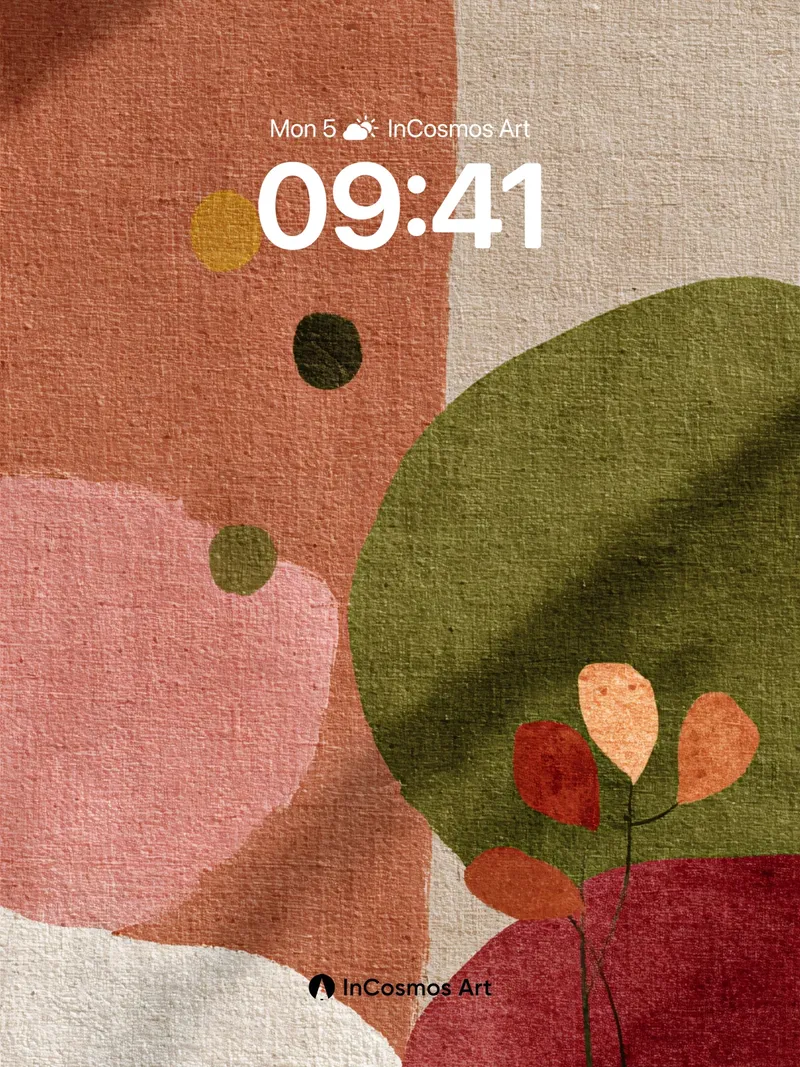
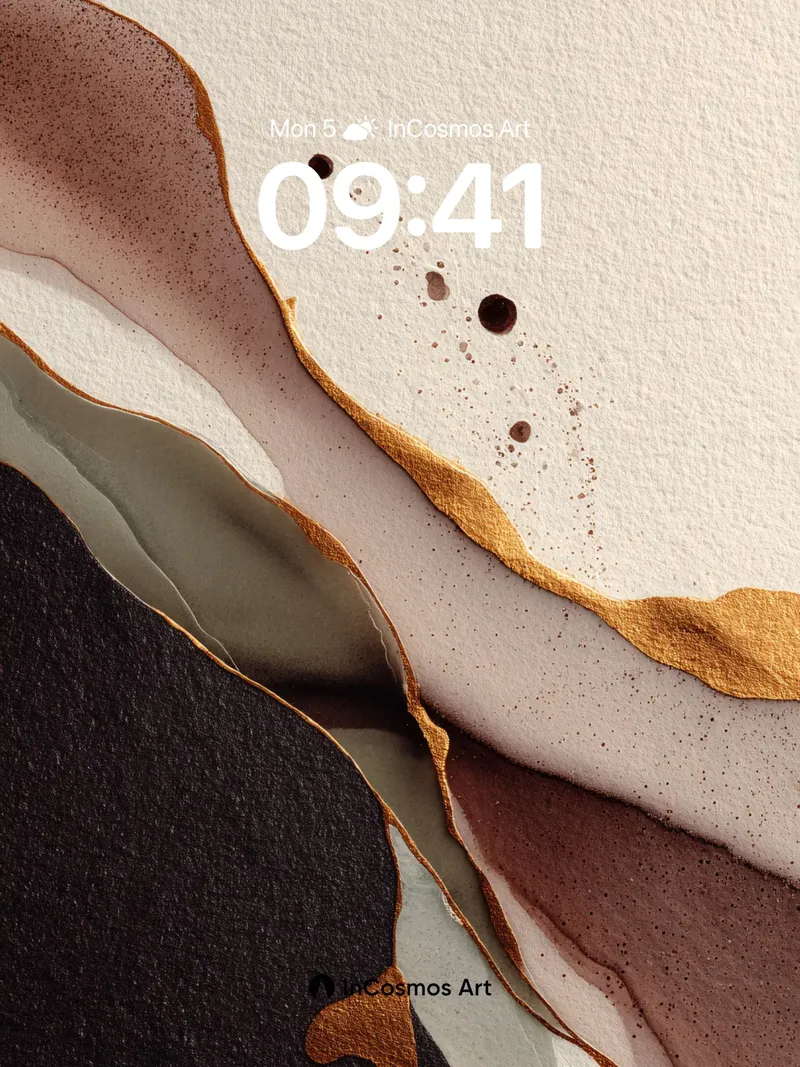
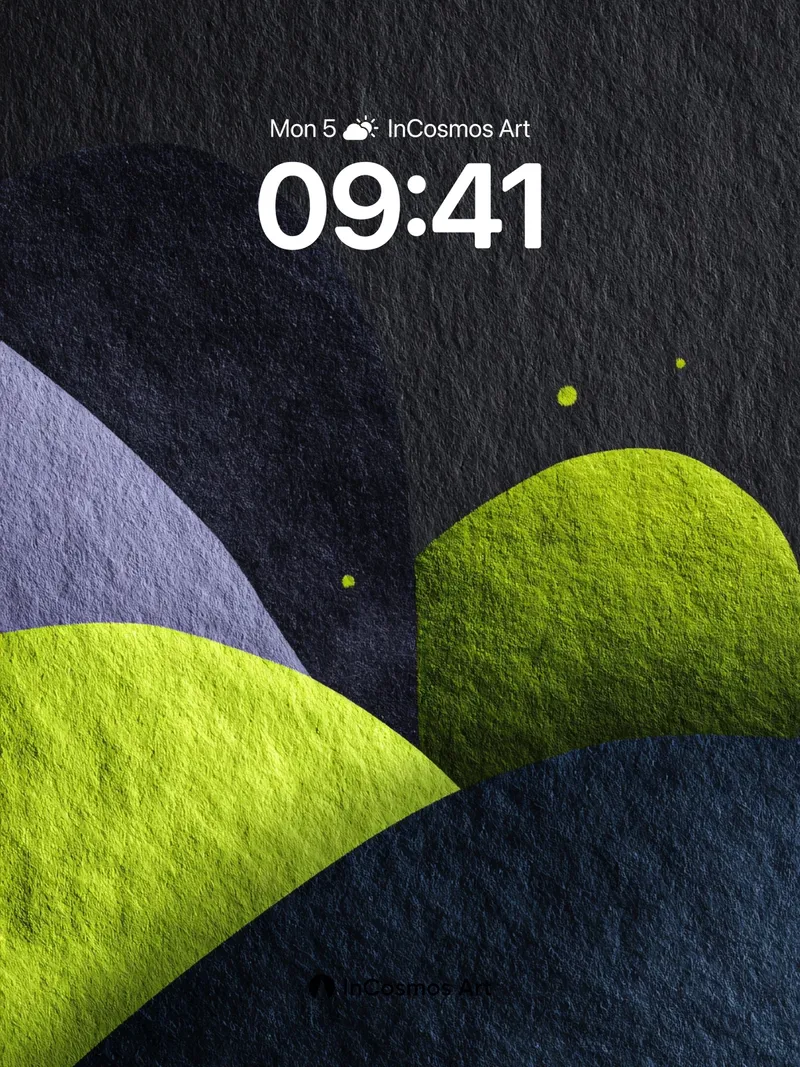
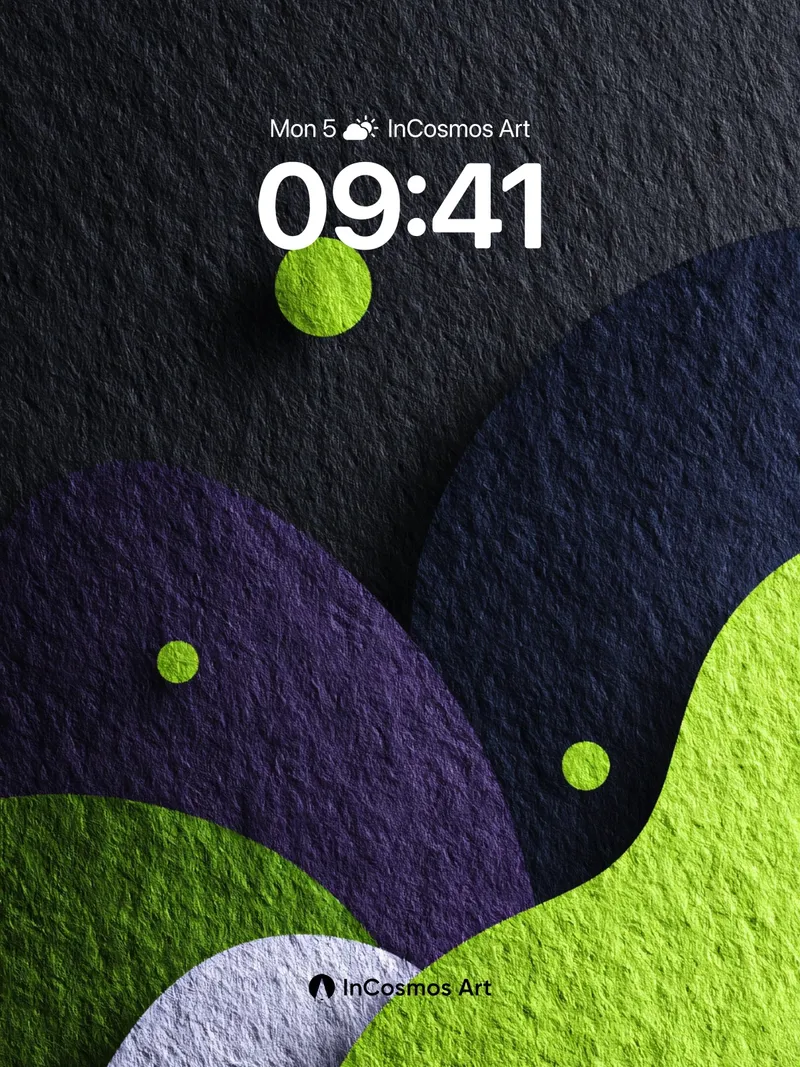
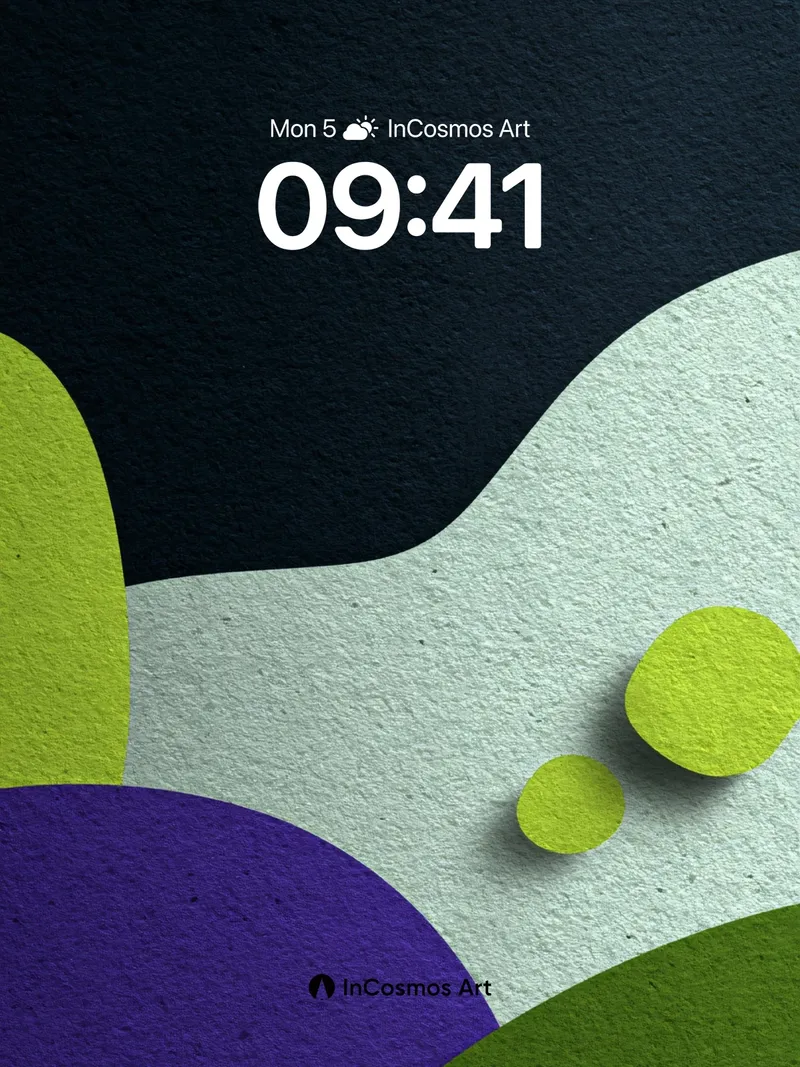
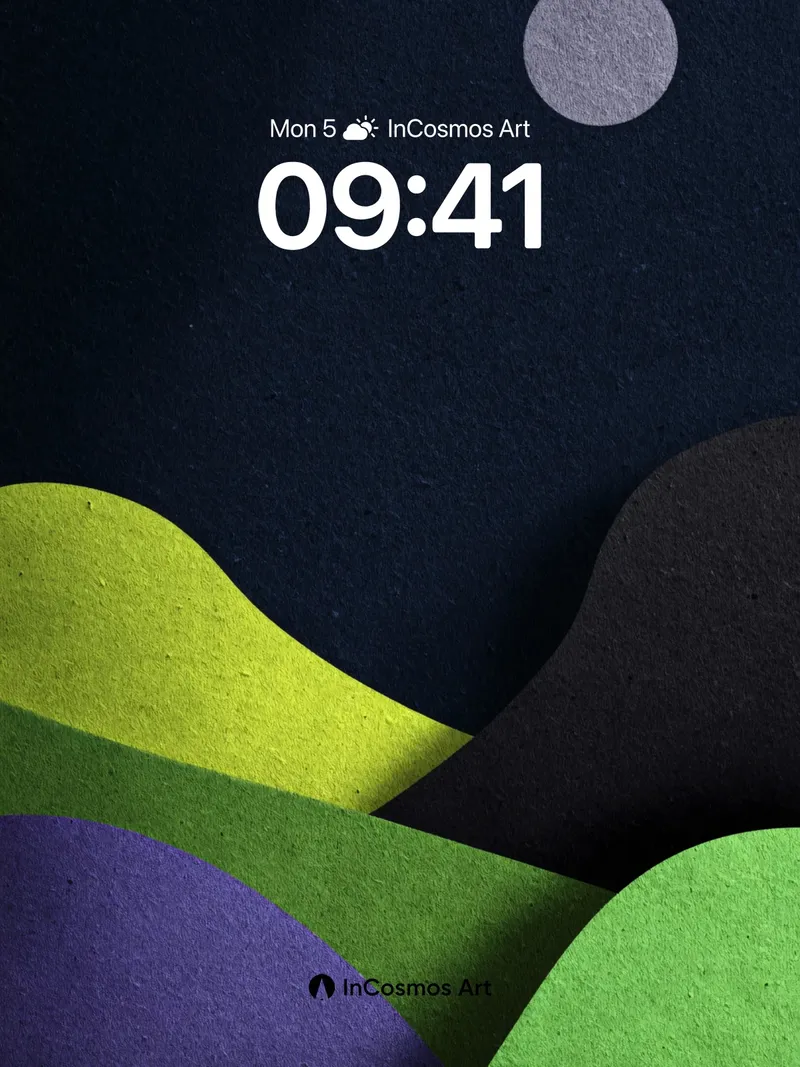
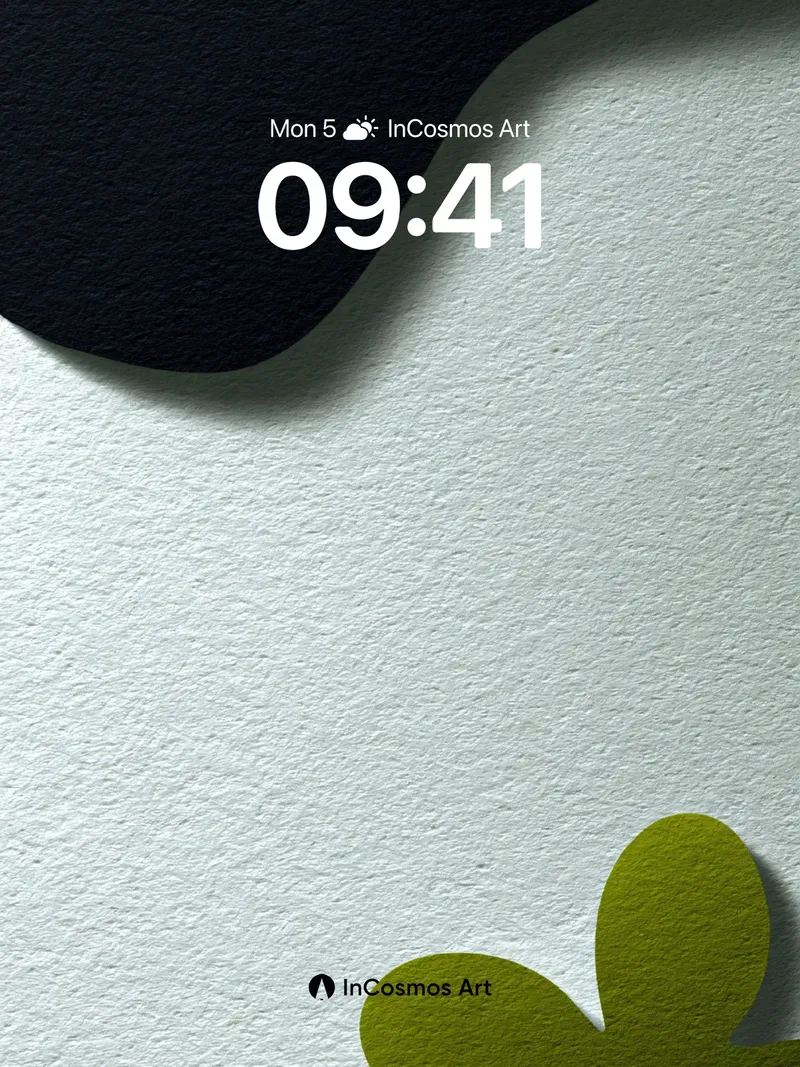
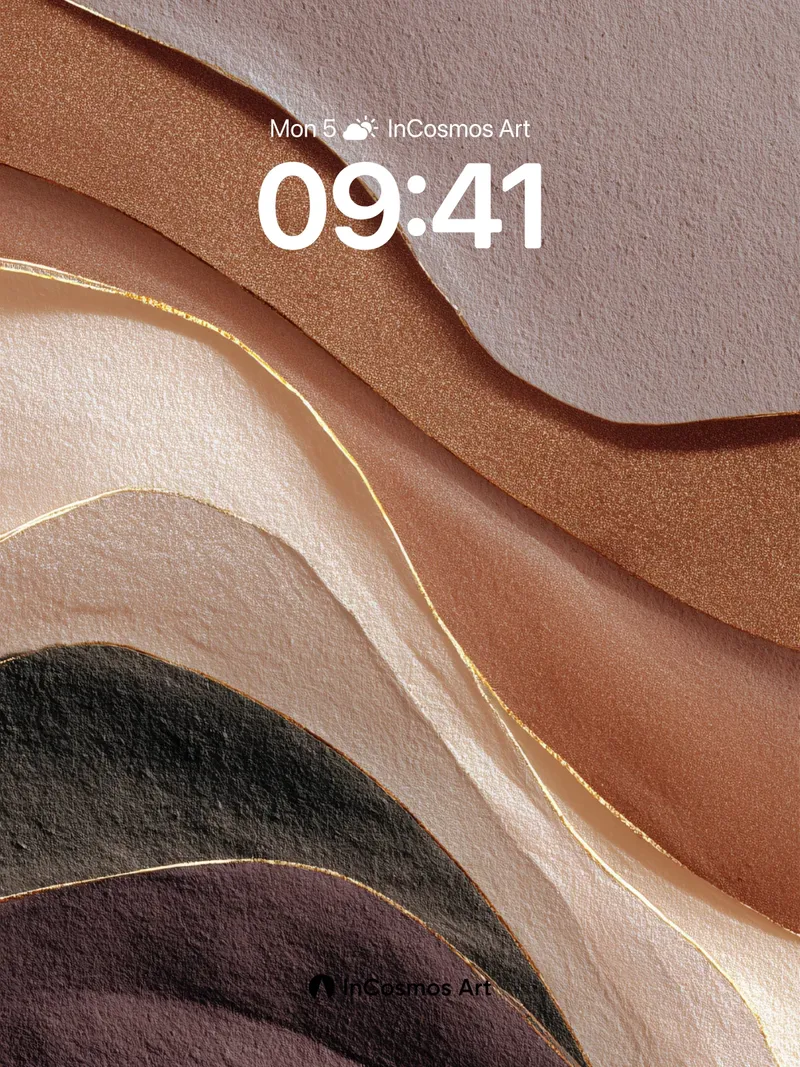
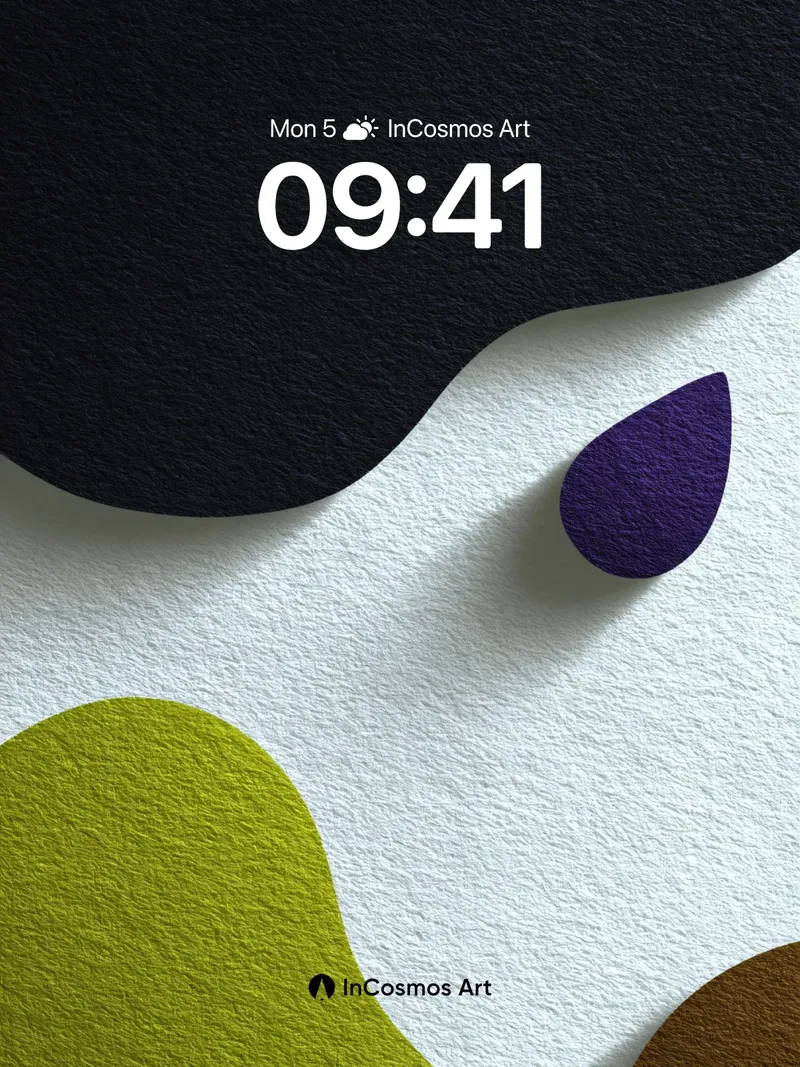
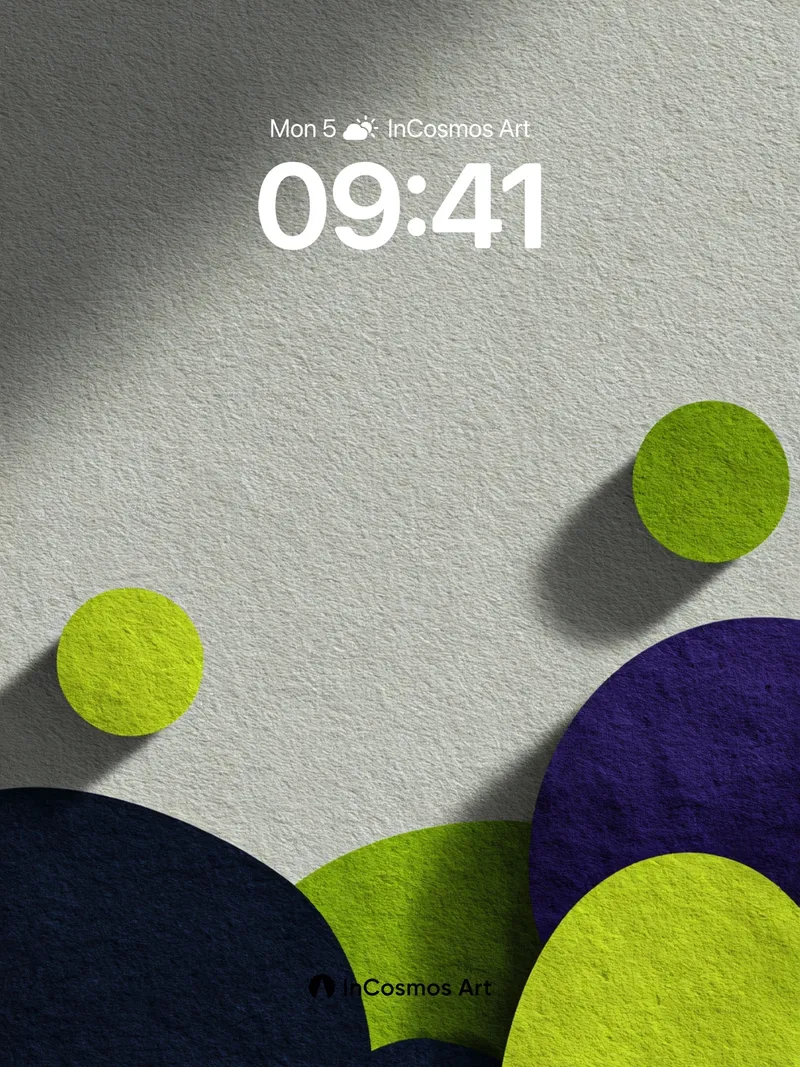
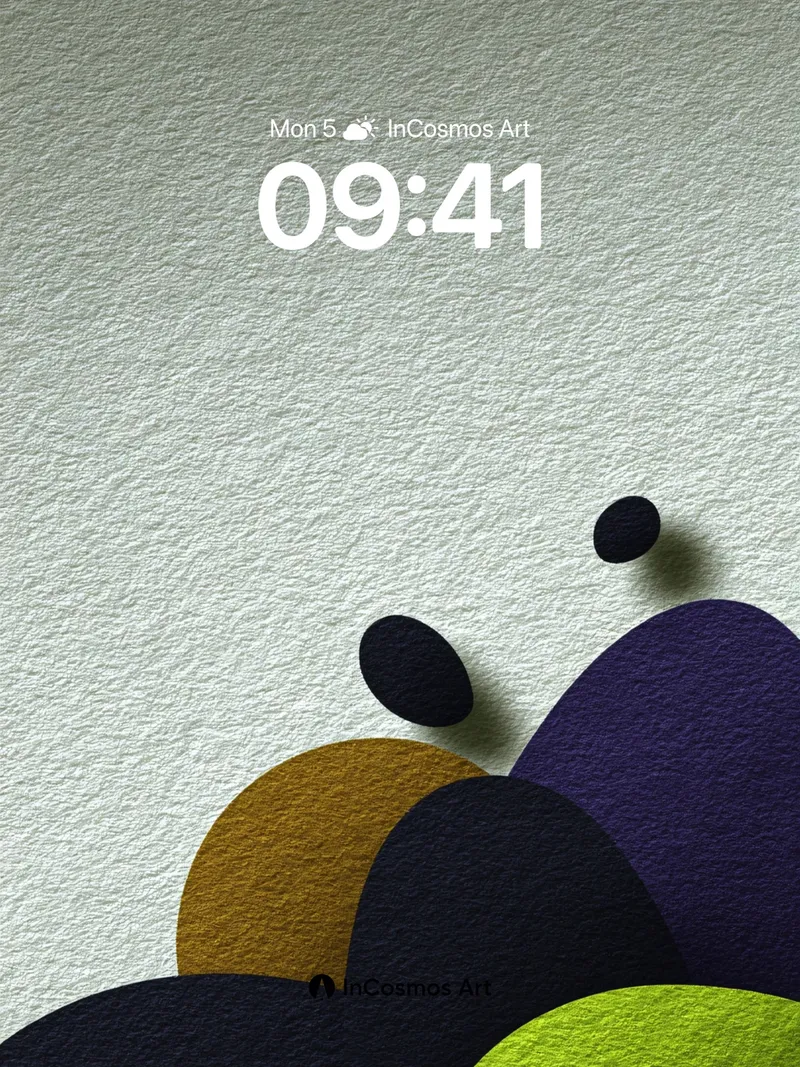
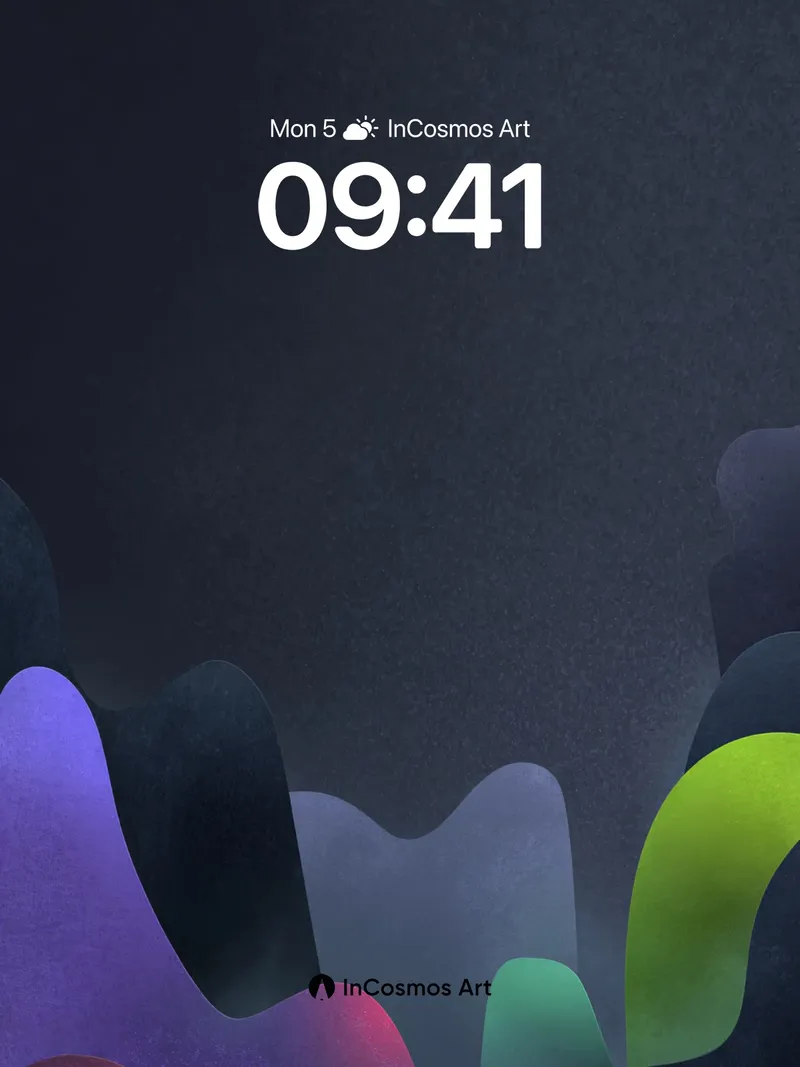
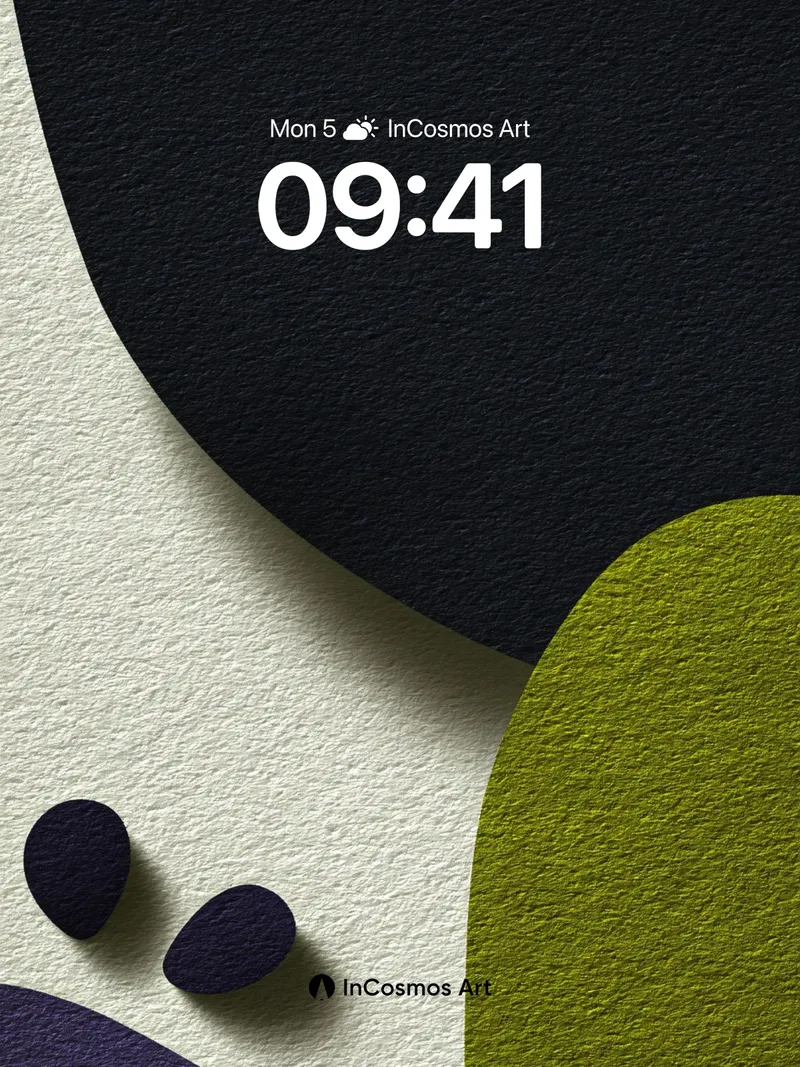
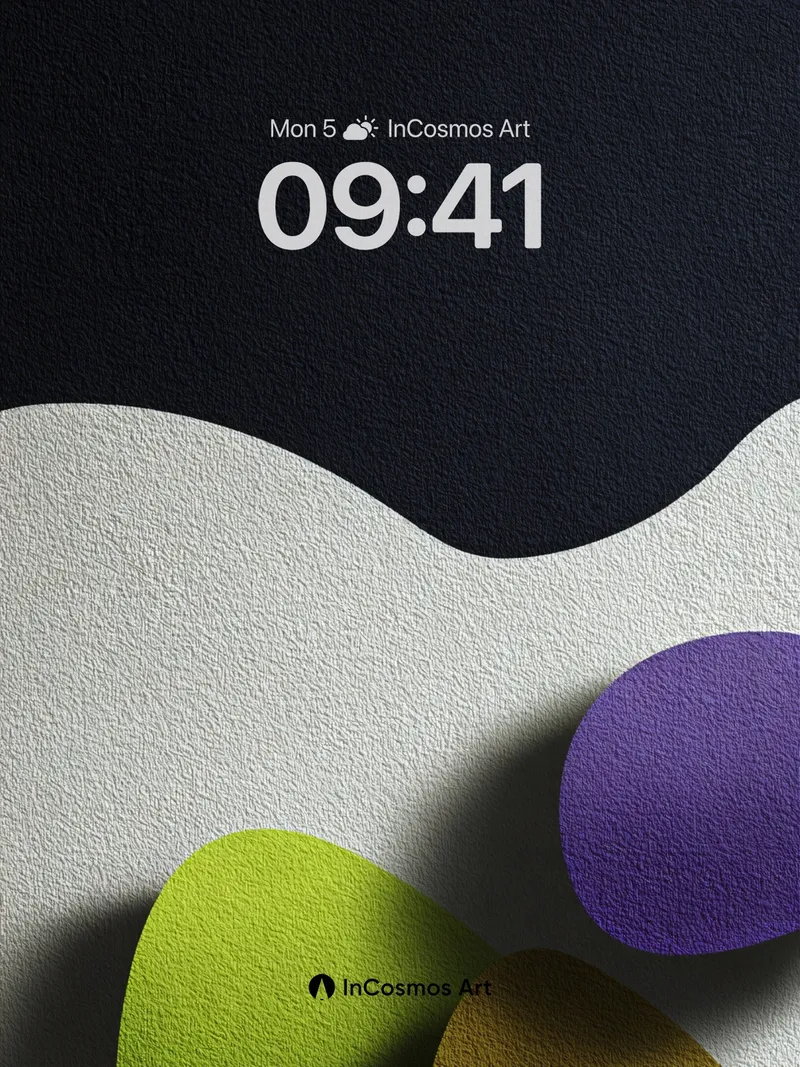
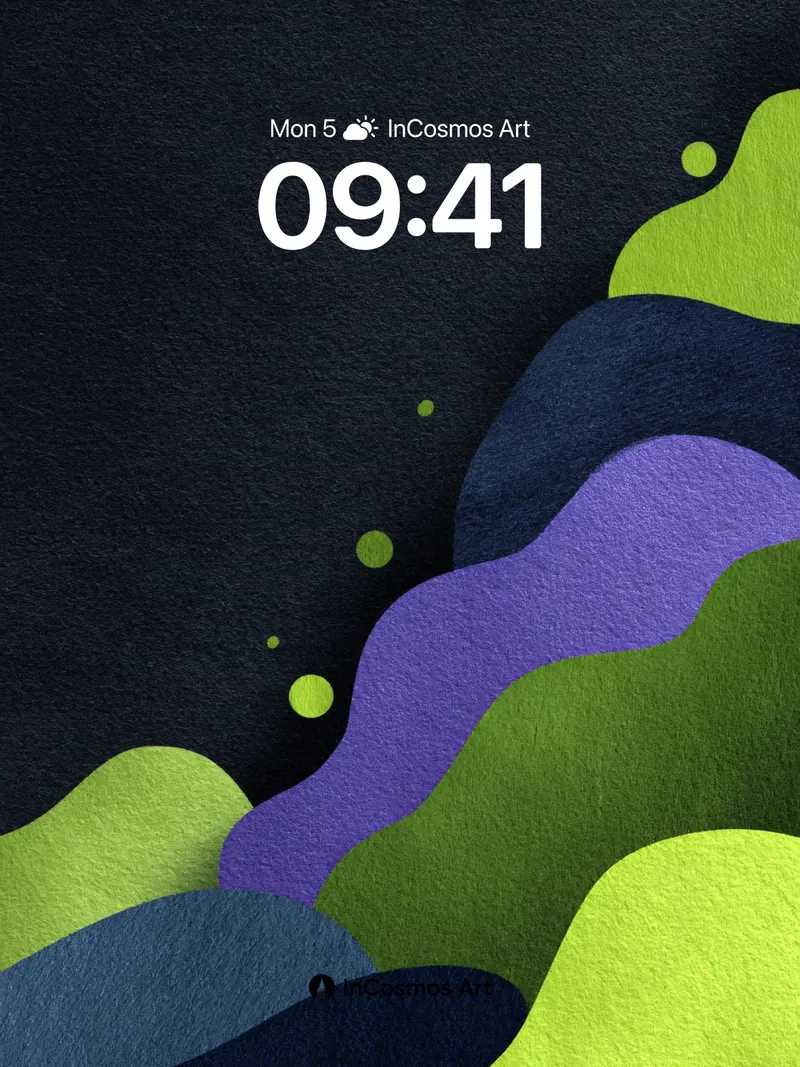
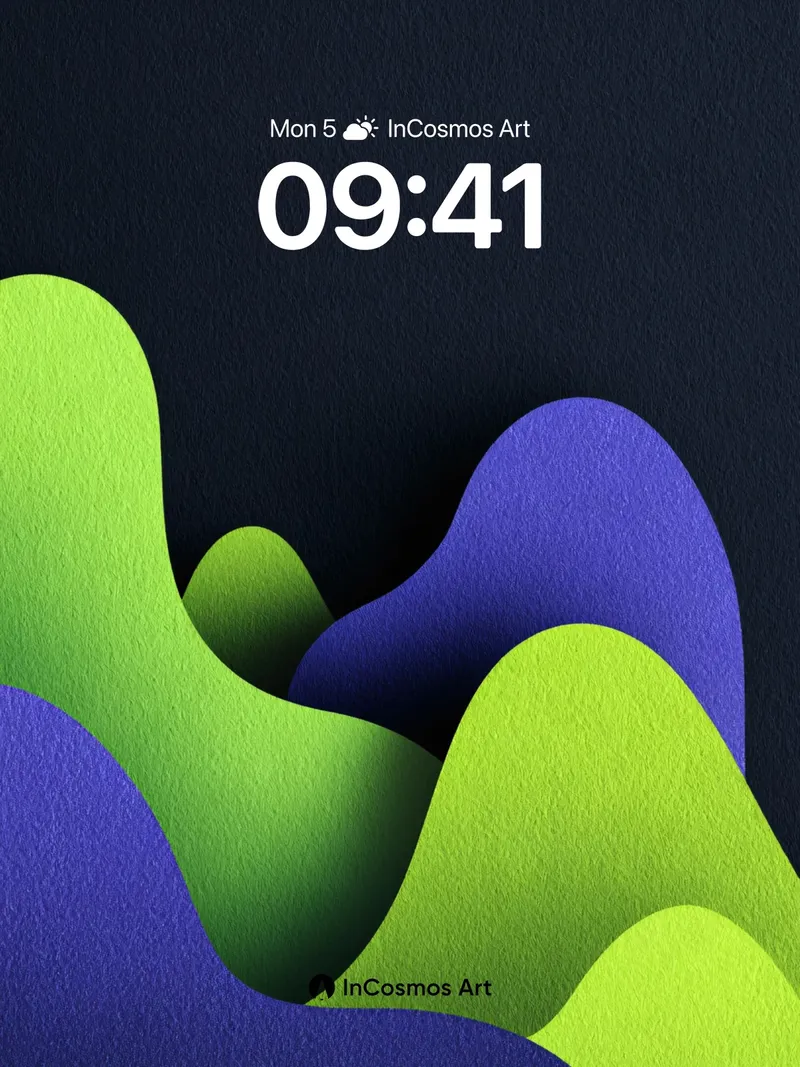
Color breathes within space, form stretches at the edge. Each mark is not accidental but a sediment of emotion and a gaze into time. These seemingly still compositions carry internal rhythms and unspoken narratives. They do not tell stories, yet evoke memory; they do not depict landscapes, yet reflect inner states. Beneath textures lies material honesty; between shadows, light whispers. This is not decoration, but an extension of perception. When vision no longer serves recognition, it begins to participate in soulful dialogue.
The Weight of Color
The overlap of deep blue and olive green resembles quiet conversation between earth and night sky. A purple droplet hovers over emptiness, like an unfinished thought. Layers of warm orange and rust red echo the embers of dusk. These hues are not merely present—they pull toward one another, forming silent tension. Each tone carries temperature, shifting from cold severity to gentle warmth, from melancholy to lightness, creating an emotional spectrum. They are not chosen, but needed—emerging naturally in moments, in moods.
The Silence of Form
Stacked curves and arcs mimic nature’s slow evolution. No sharp lines, only humble flow. Gaps between shapes are not voids, but spaces for breathing. They do not compete for focus, yet together build unity. This reserved composition mirrors contemporary retreat from information overload. Beyond noise, a livable order is sought. The softness of form becomes metaphor against rigid reality.
Honesty of Material
Paper texture, pigment grain, shadow gradients—all are traces of real existence. These details are not concealed but become part of expression. They remind viewers: beauty does not reside in perfection, but in truth. While digital realms pursue flawlessness, these imperfect surfaces gain vitality. Touch may be unreachable, but sight conveys texture fully. This is a gentle resistance to industrial aesthetics, a modern echo of handcrafted spirit.
Whispers of Light and Shadow
Light leaves distinct imprints on different materials. Some areas glow, others sink into darkness. Shadows are not flaws, but sources of depth. They give flatness dimension, creating illusion of motion. Changes in lighting suggest time—the softness of morning, sharpness of noon, tenderness of evening. This is more than visual play—it is subtle capture of daily passage.