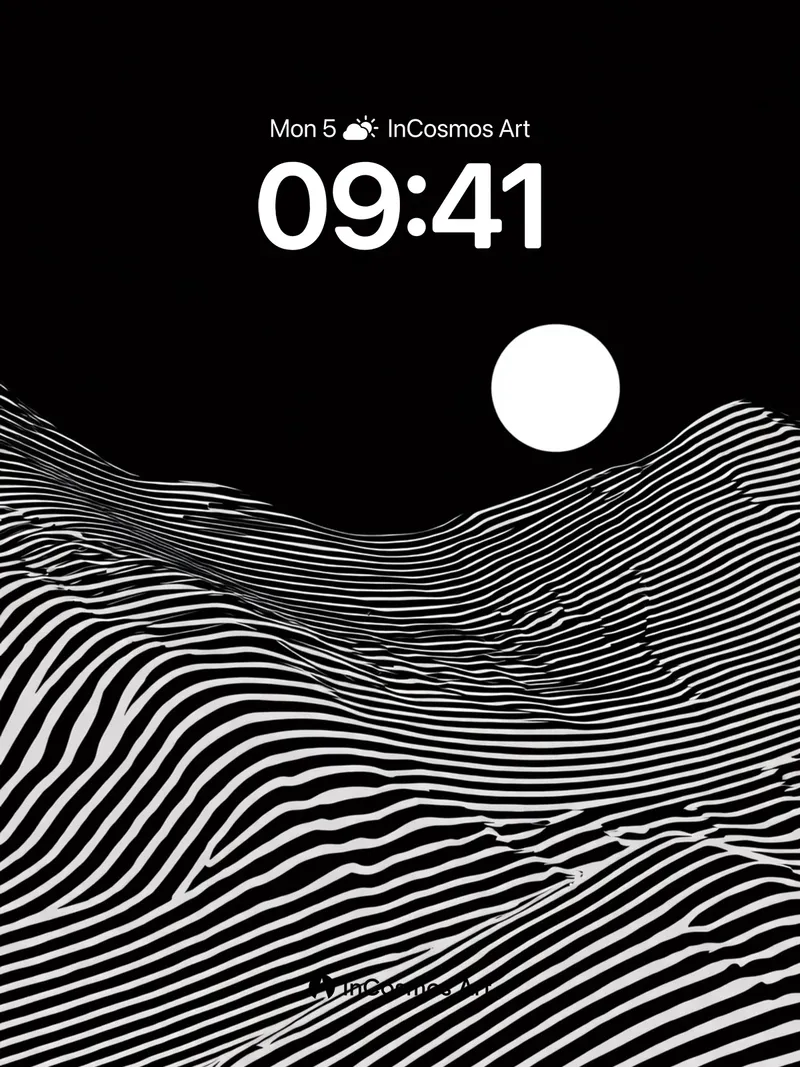
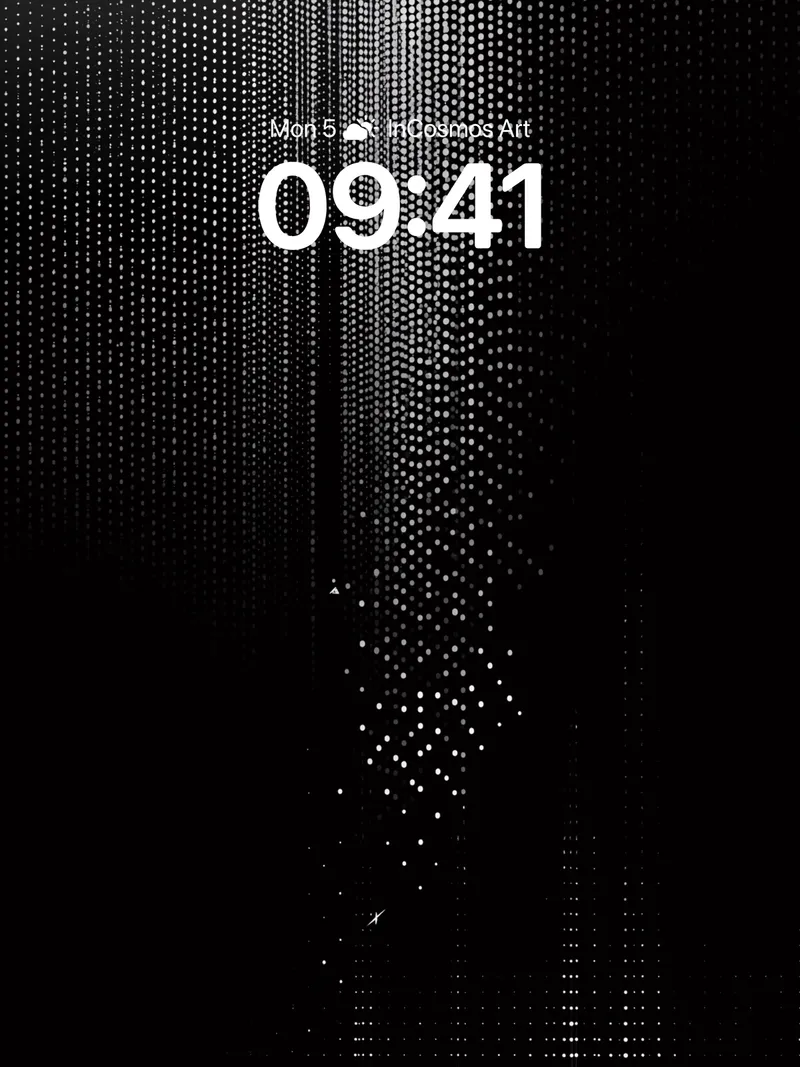
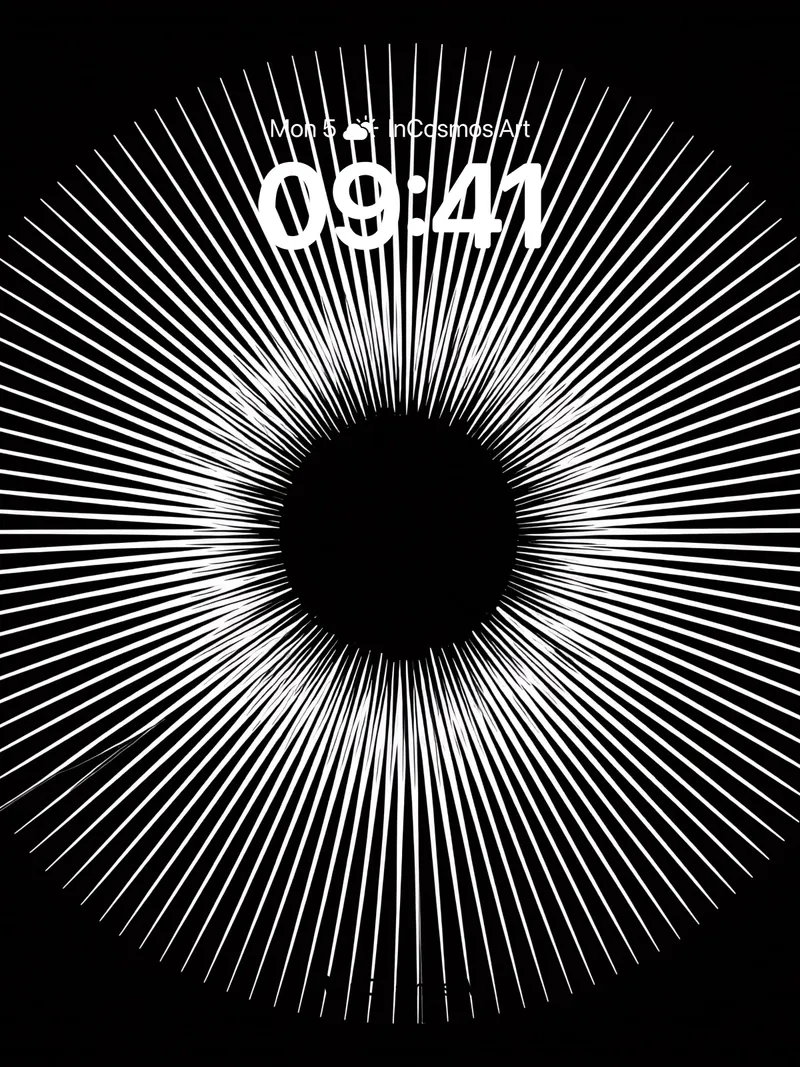
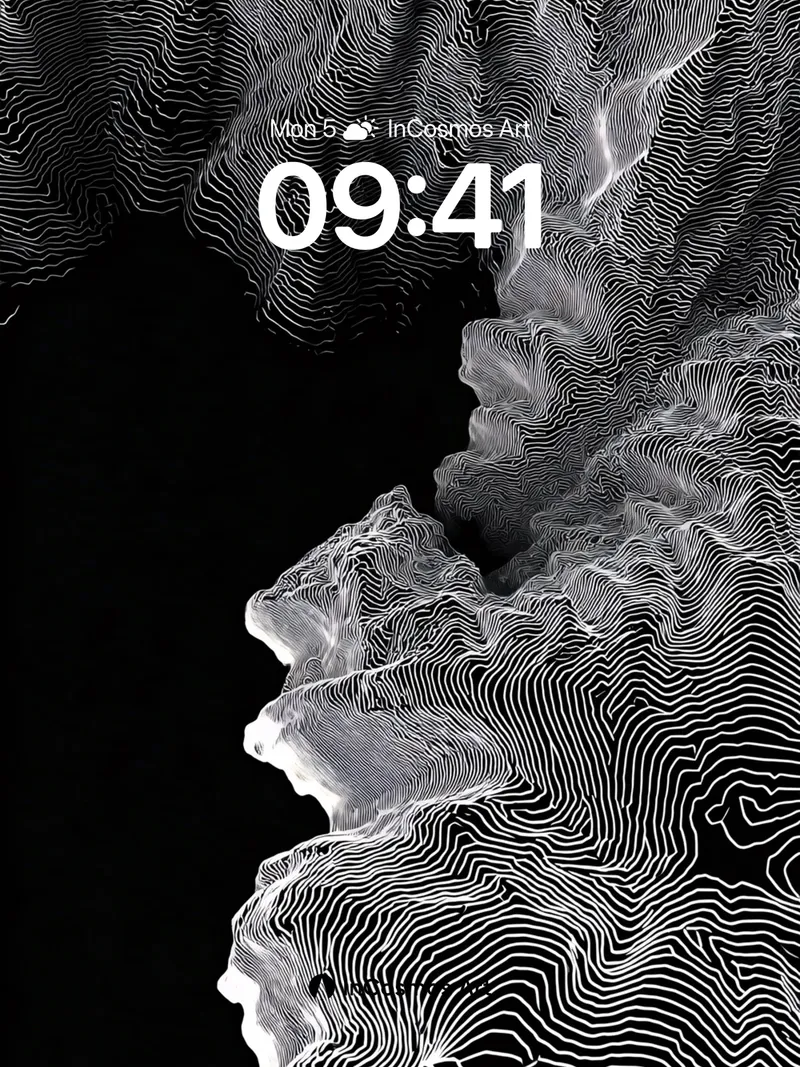
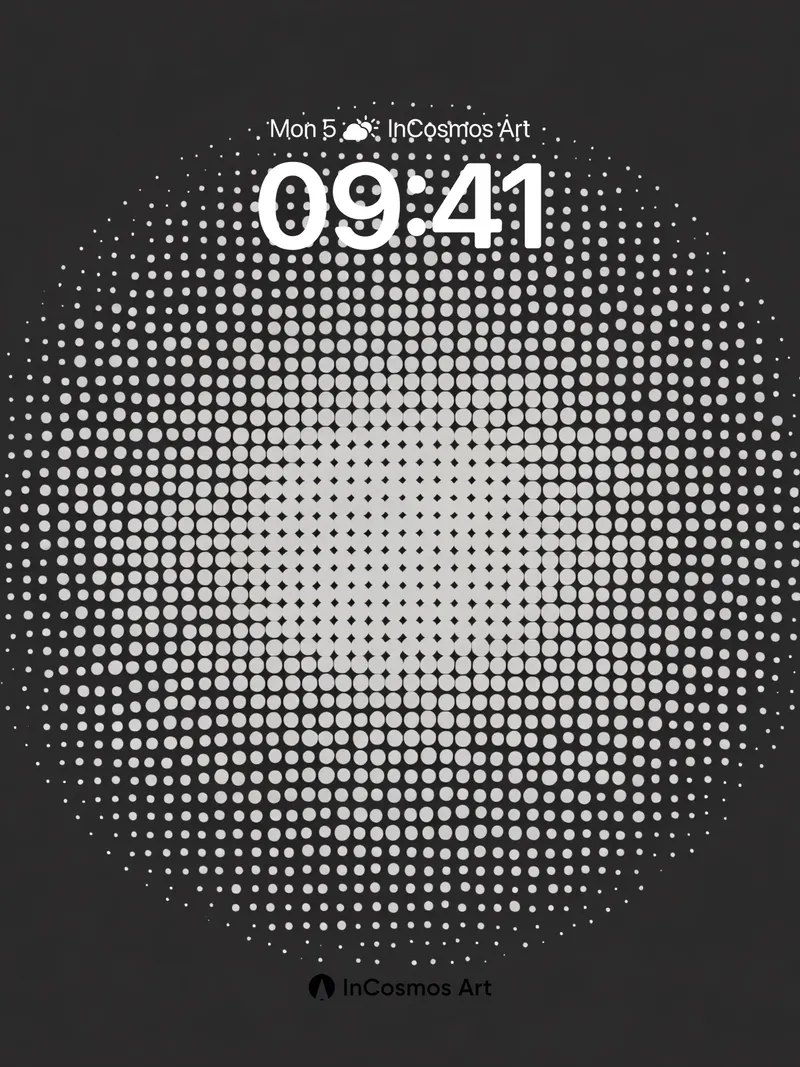
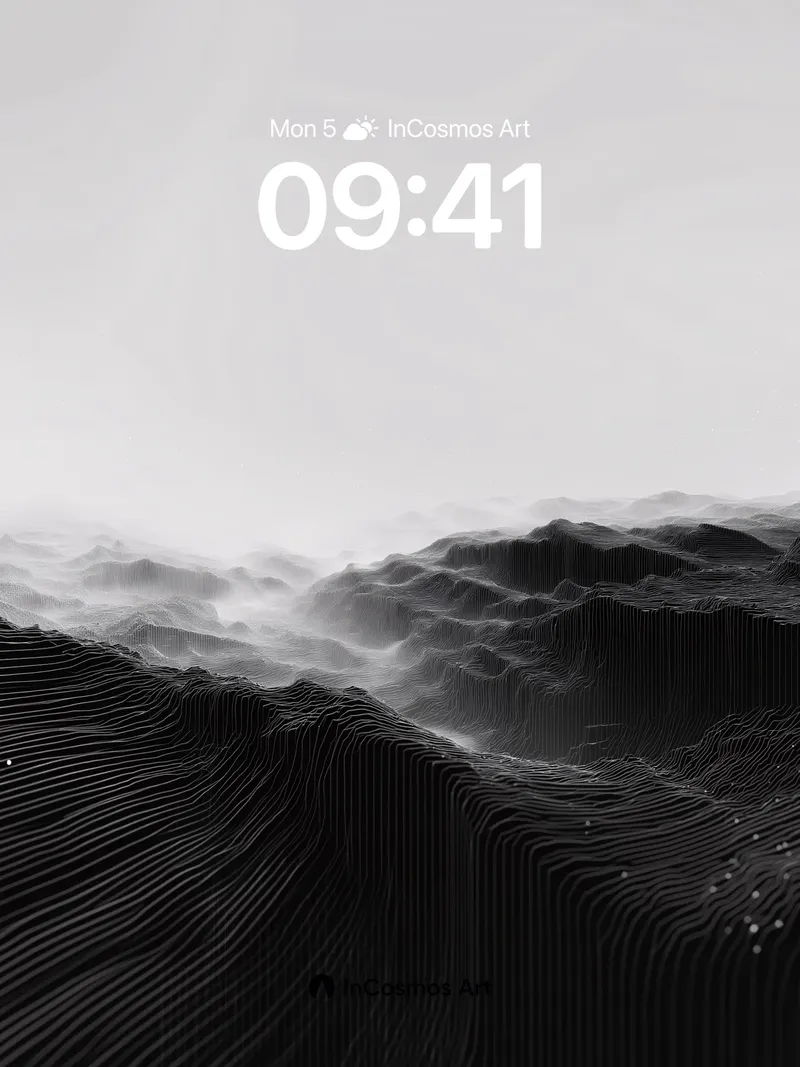
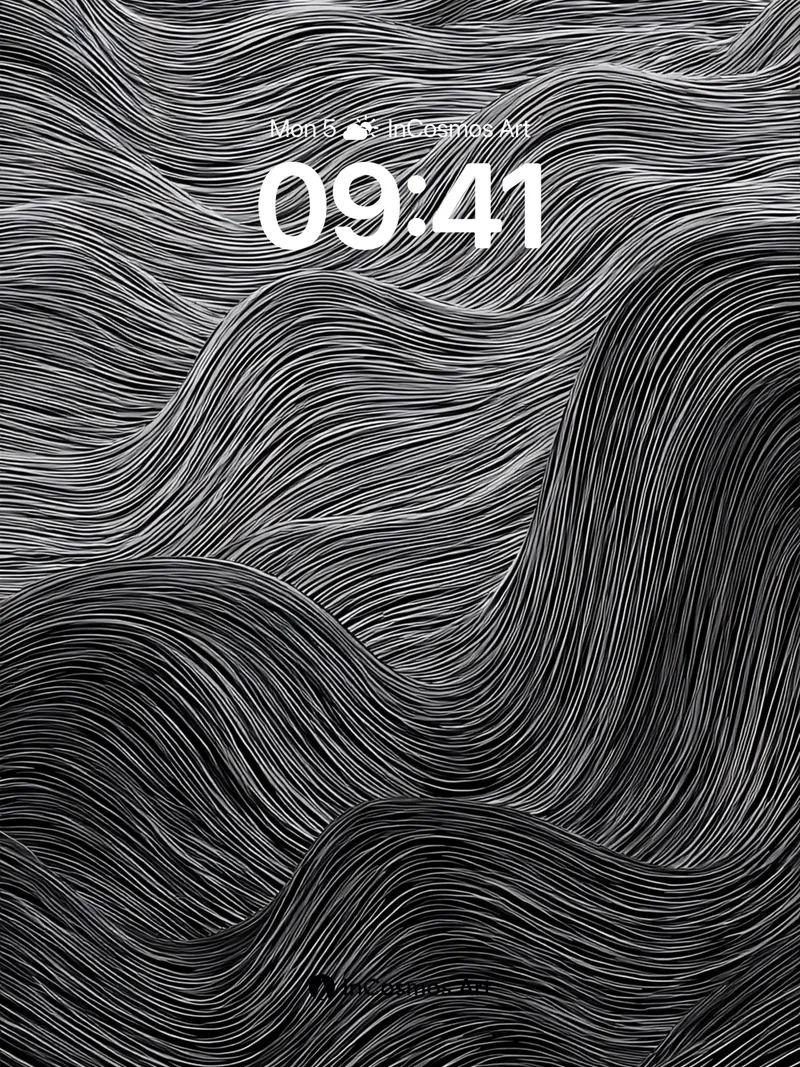
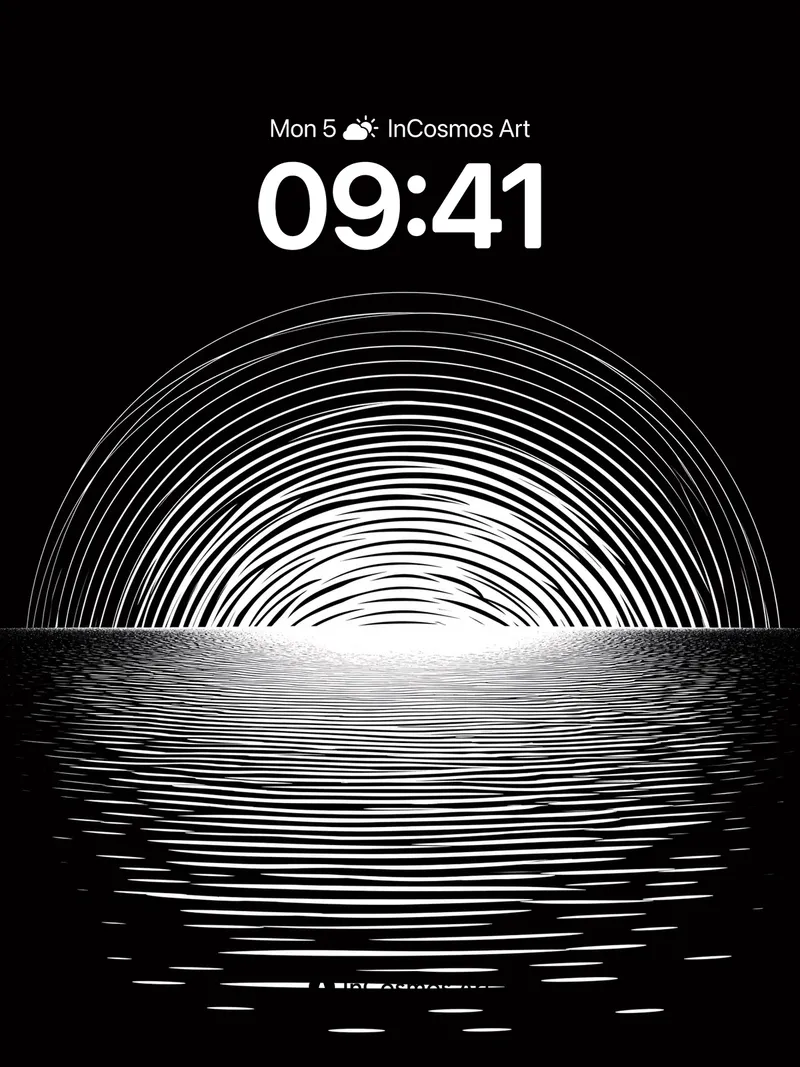
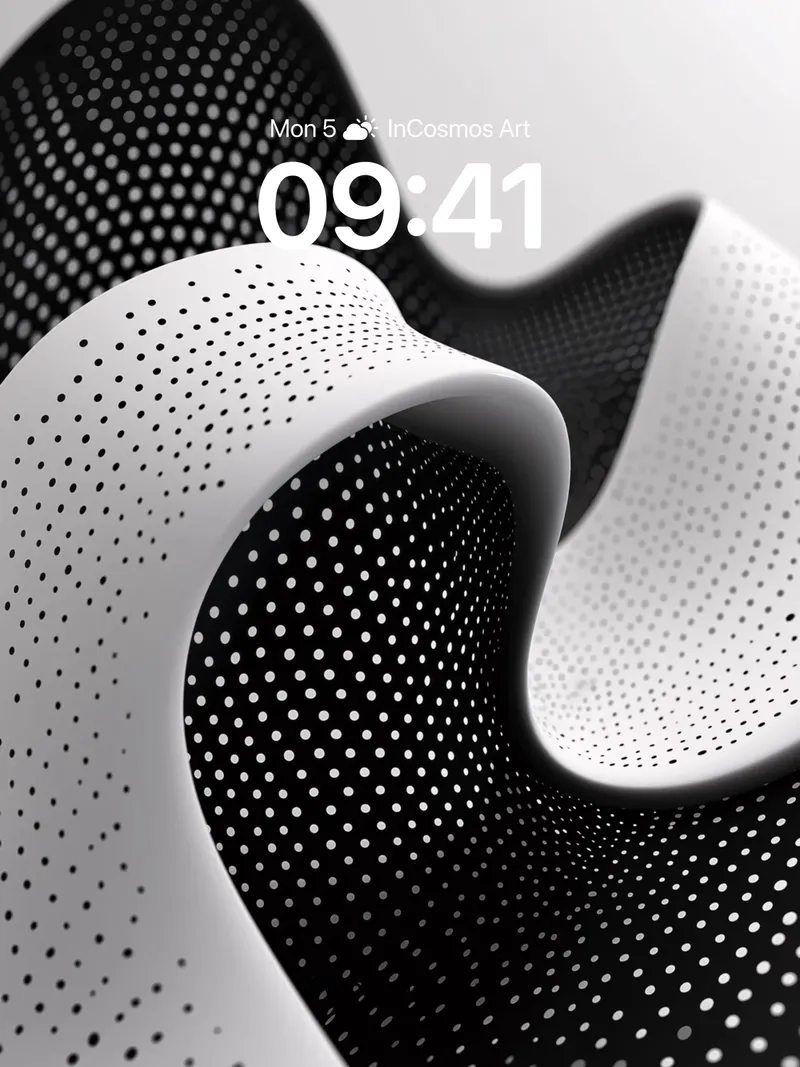
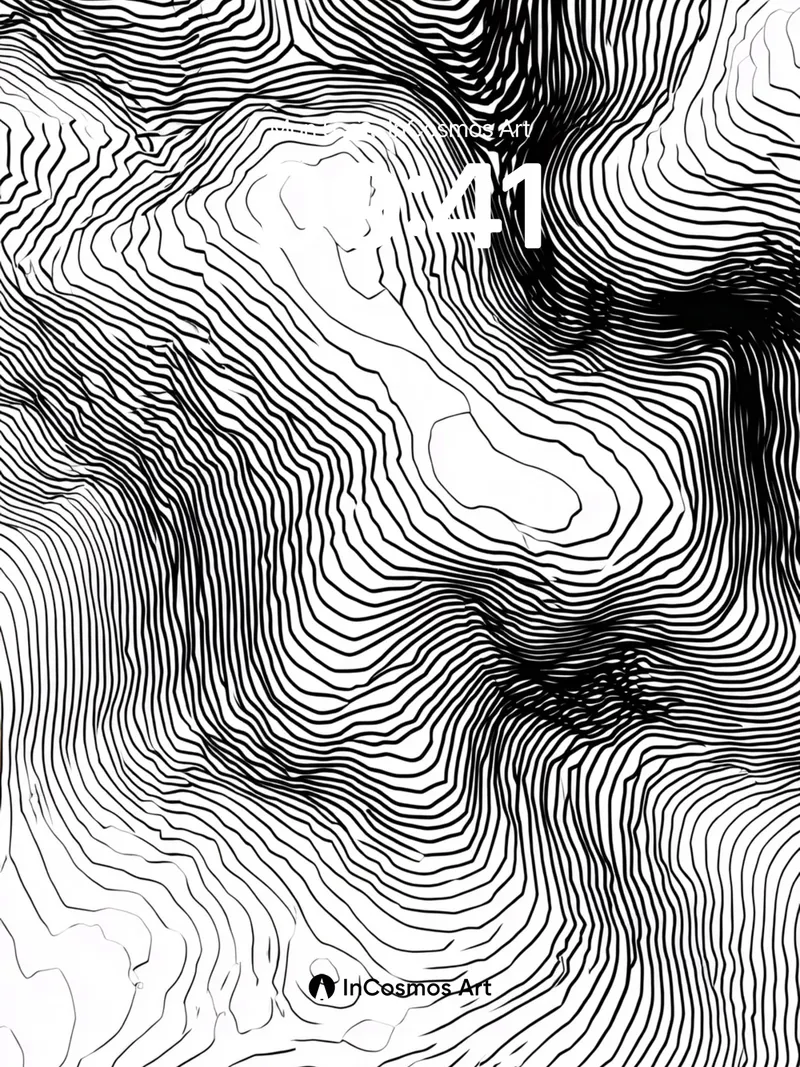
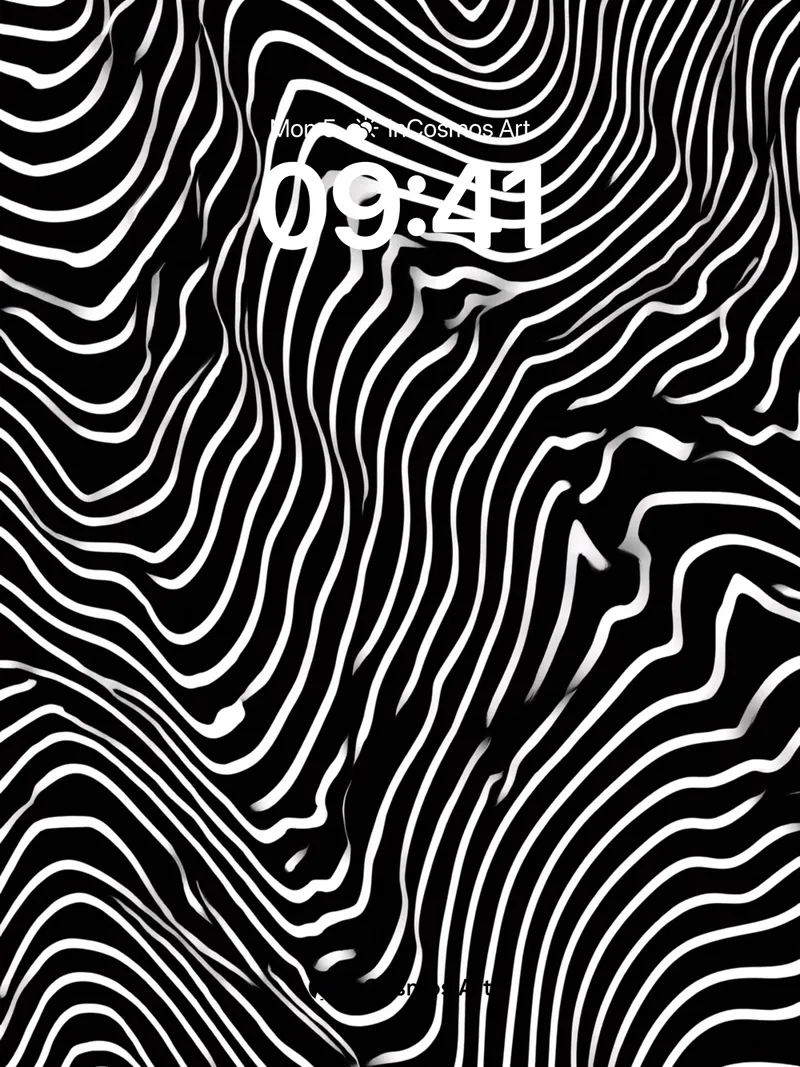
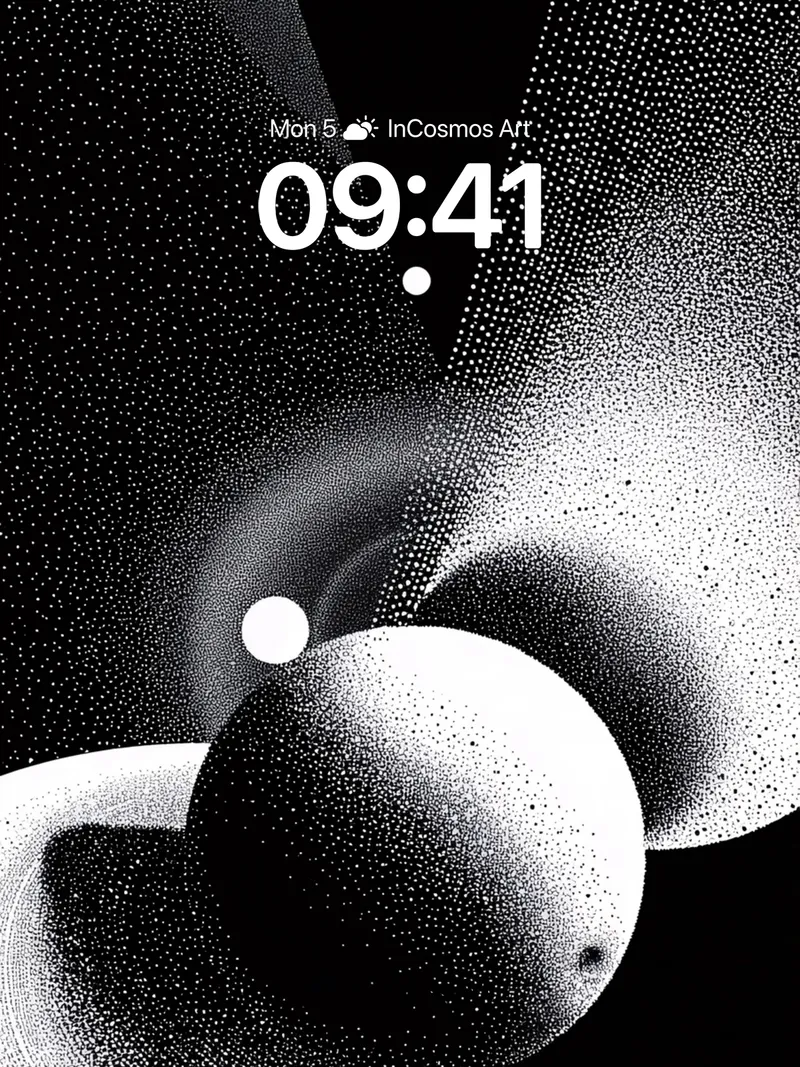
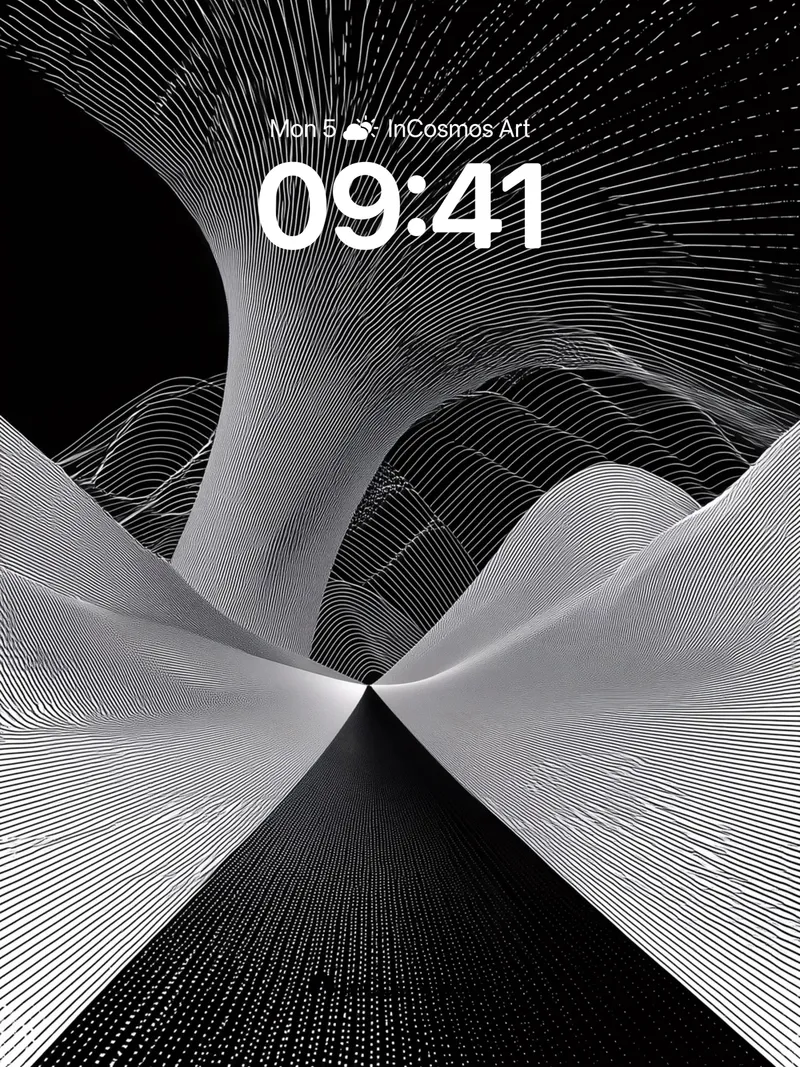
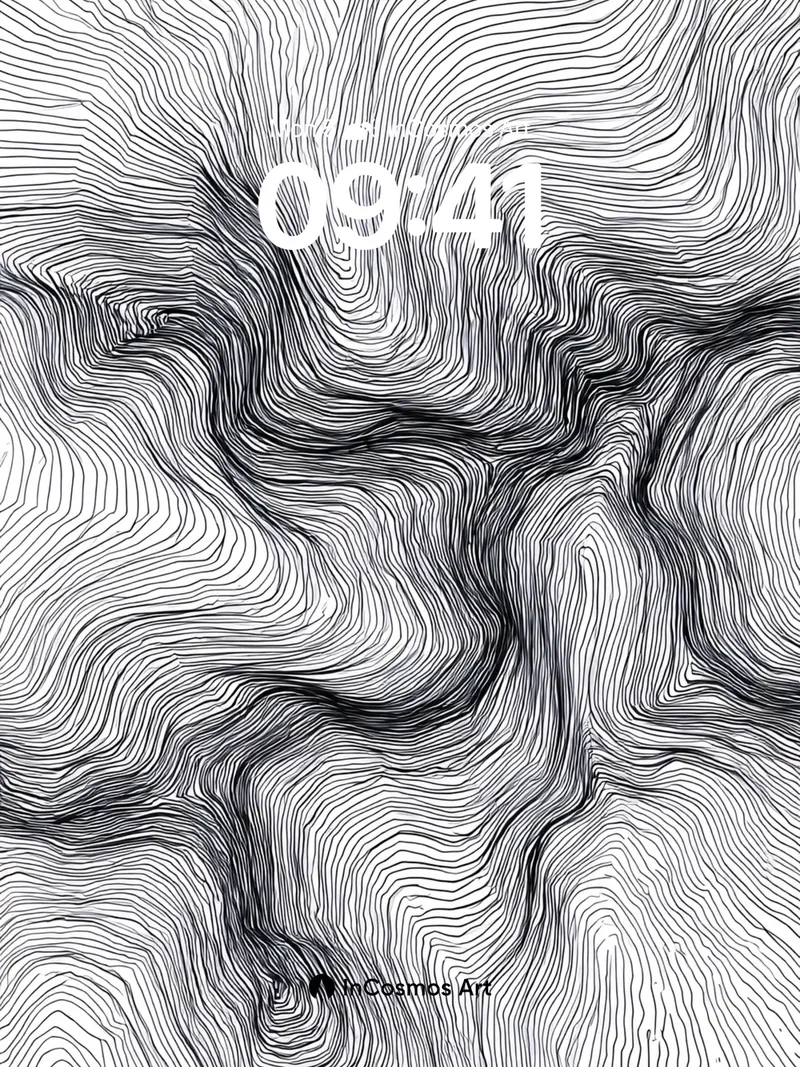
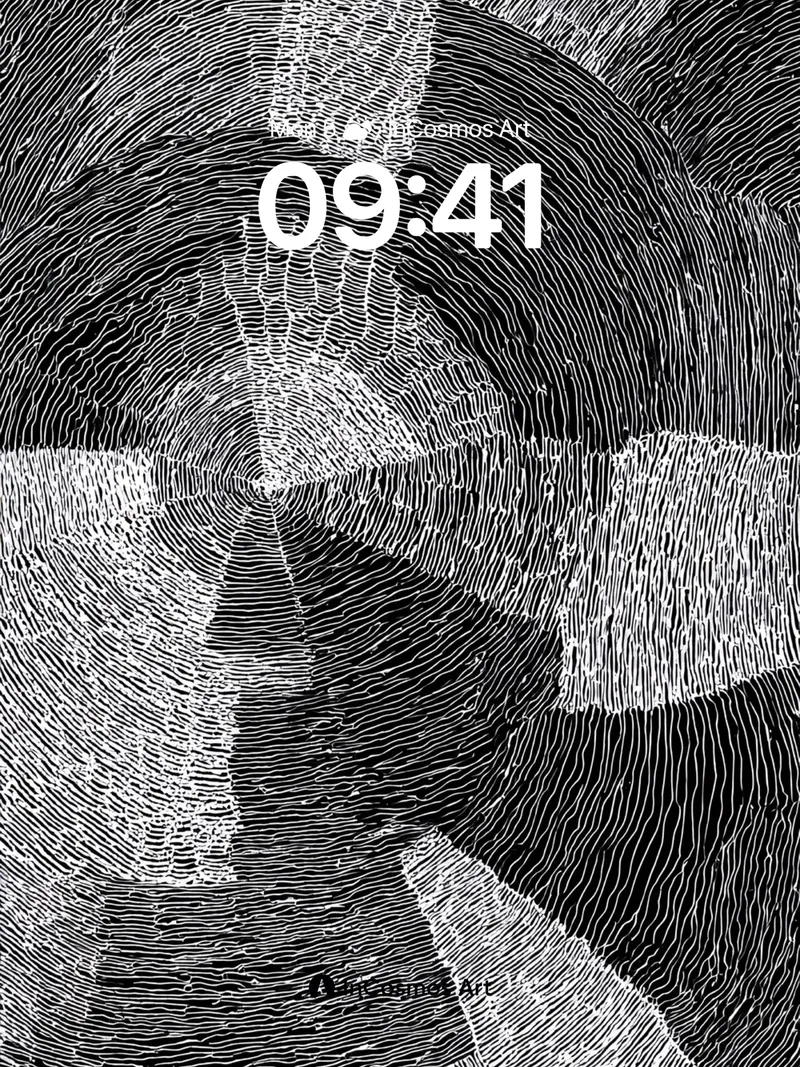
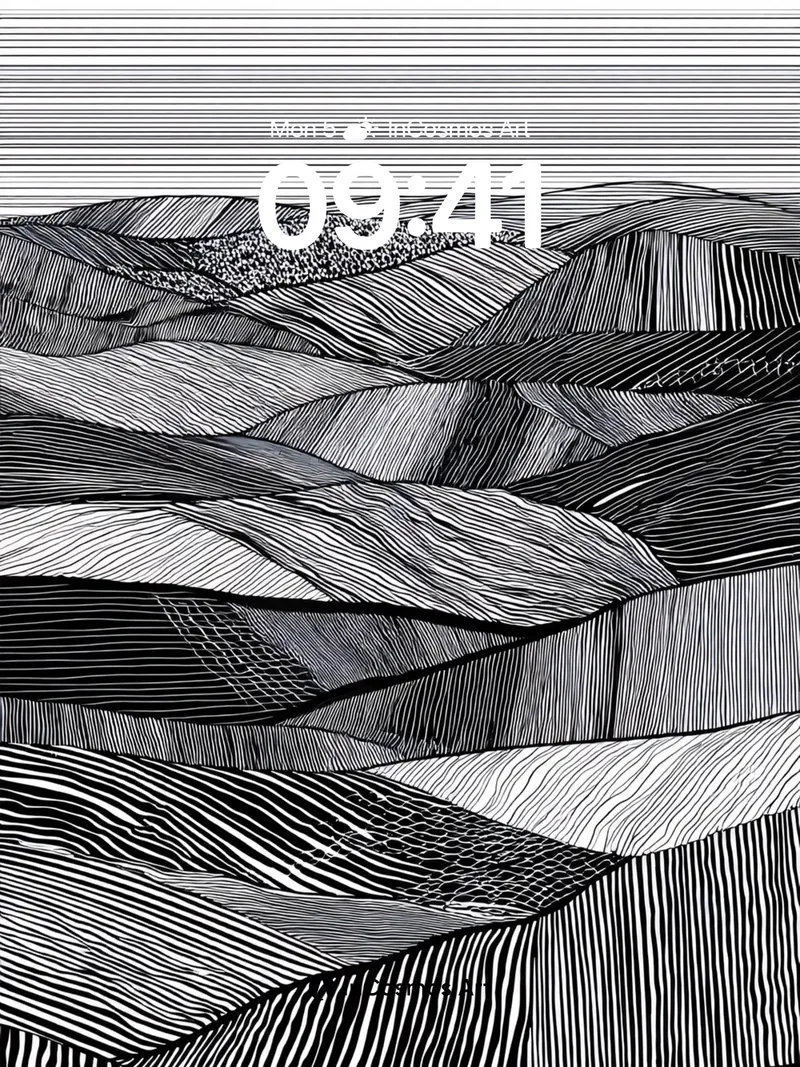
Between pure black and white, the order formed by lines and dots begins to breathe. These are not static decorations but dynamic structures, slices of time, extensions of space. Repeating circles, wavy curves, gradient dot patterns resemble natural pulses and also trace human thought. Each ring records a rhythm of growth, every ripple reflects emotional fluctuation, each variation in dot density speaks of perception of distance and depth. This visual language transcends representation, entering a more fundamental expression—about existence, flow, and connection.
The Philosophy of Lines
Here, lines cease to be mere outlines; they become carriers of meaning. Concentric circles layer upon layer symbolize accumulation and resonance of memory; undulating waves mimic the surface of the sea or fluctuations of consciousness. When lines grow sparse, spatial sensation expands; when densely interwoven, pressure subtly emerges. This control of density is a silent narrative, telling of humanity's eternal tension between order and chaos.
Dimensions of Dot Arrays
The arrangement of dots forms a new geometric logic. From uniform distribution to gradual clustering, dot arrays create illusions of light and shadow, simulating three-dimensional surfaces. They are not random but follow mathematical patterns, resembling constellations or neural networks. This micro-structure’s order echoes macro-world regularities, hinting at a unified law governing all things.
Borders of Perception
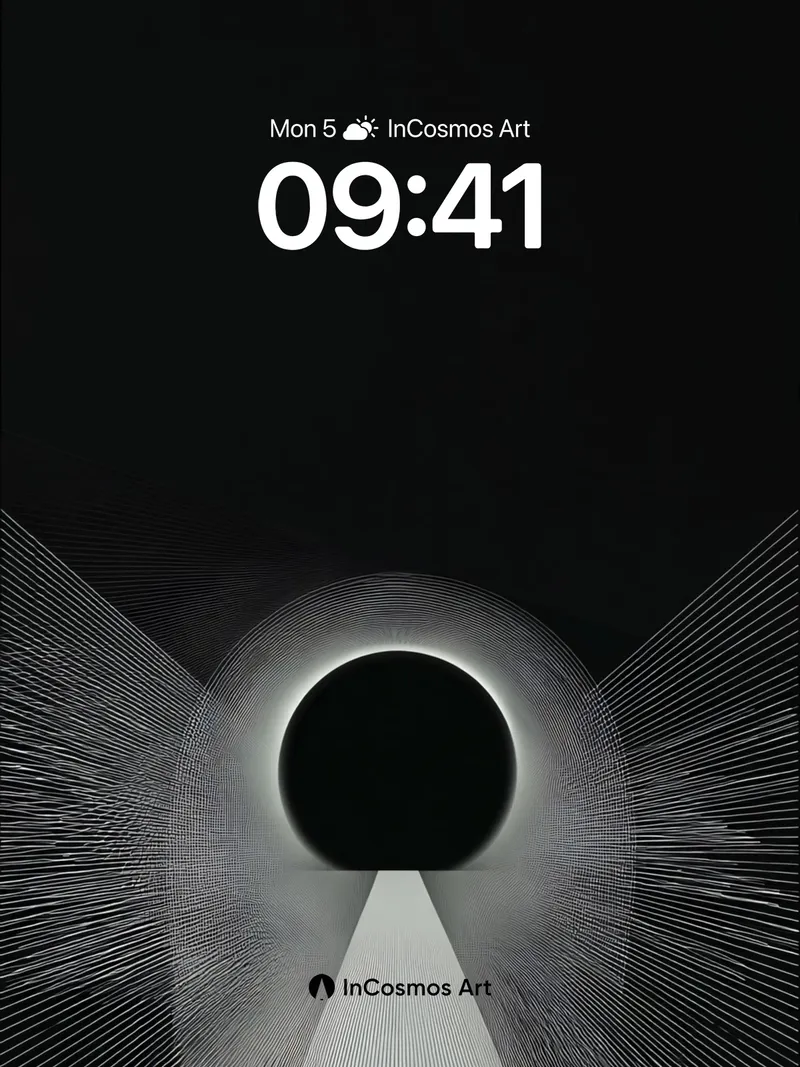
As the gaze is drawn into the depths of the composition, a circular aperture like a black hole appears, leading to the unknown. This is a metaphor for cognitive limits—the visible is only surface; true reality lies beyond unseen dimensions. Lines converge toward a point, as if all paths lead to an end, or time collapses. Such structure provokes thoughts on infinity, void, and existence, pulling the viewer into meditation on the relationship between self and universe.
Dialogue Between Nature and Artificiality
These patterns resemble tree rings and geological strata; they echo digital waveforms and EEG traces. They blur the boundary between nature and artificiality, revealing astonishing morphological similarities between systems. This suggests that whether organic life or digital civilization, their underlying logic may share the same language.