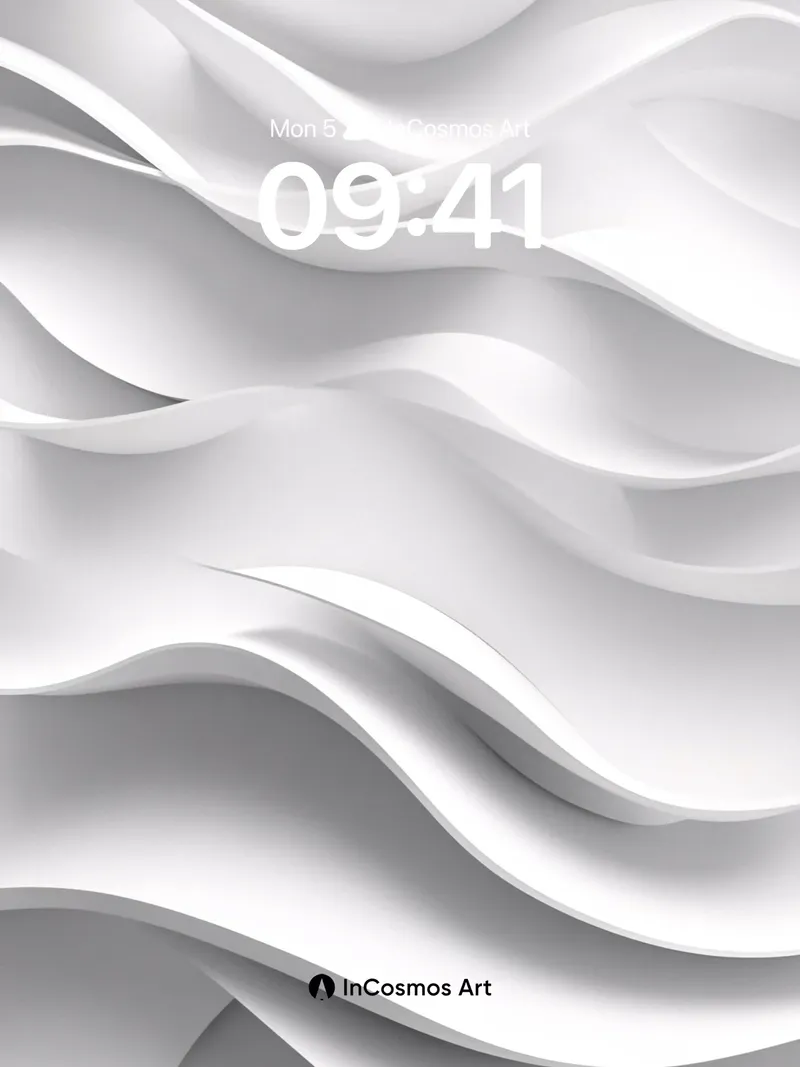
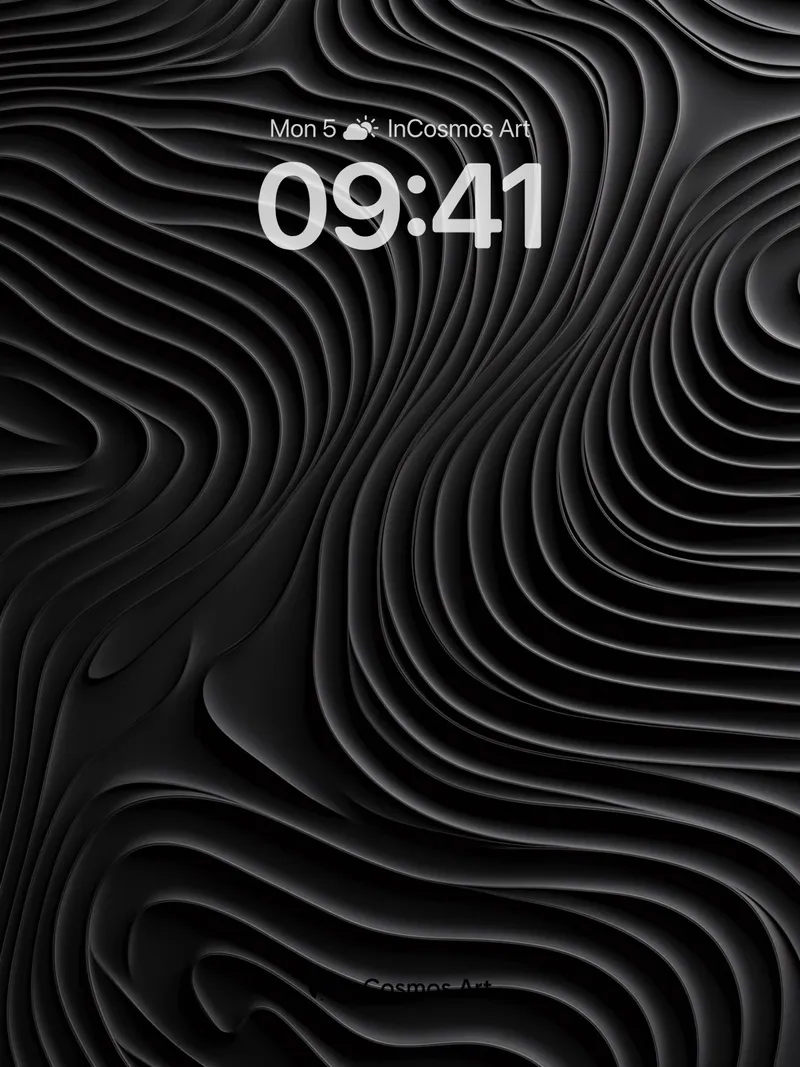
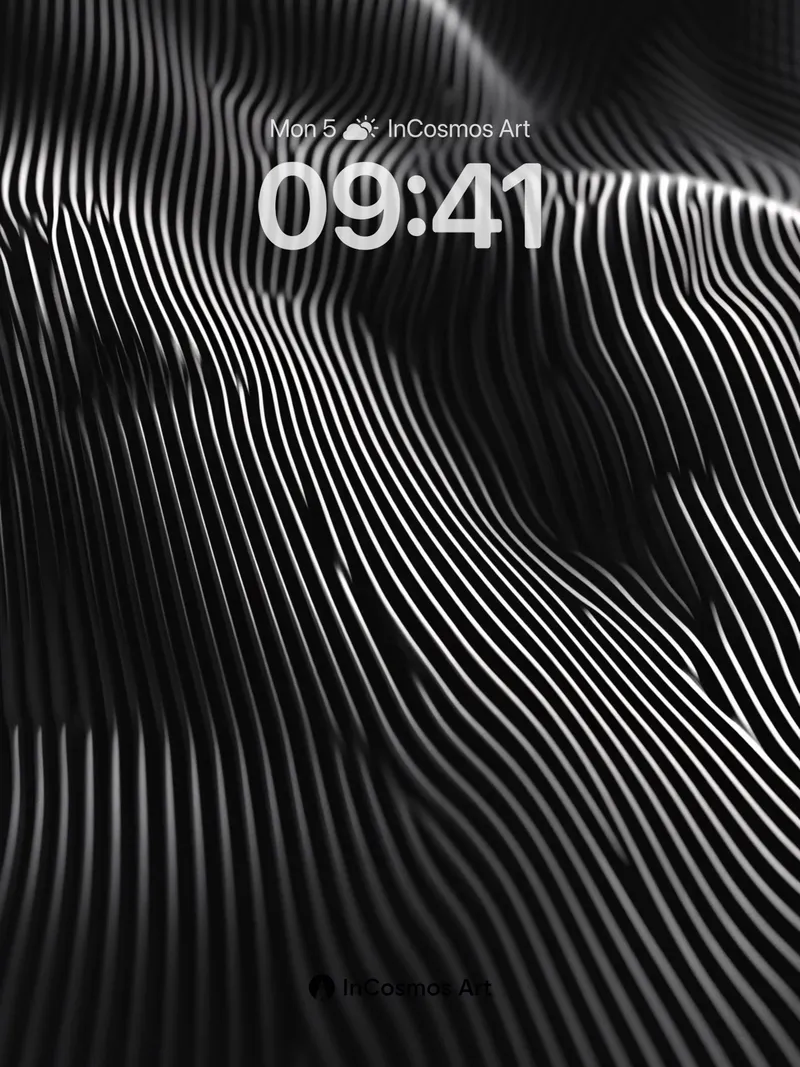
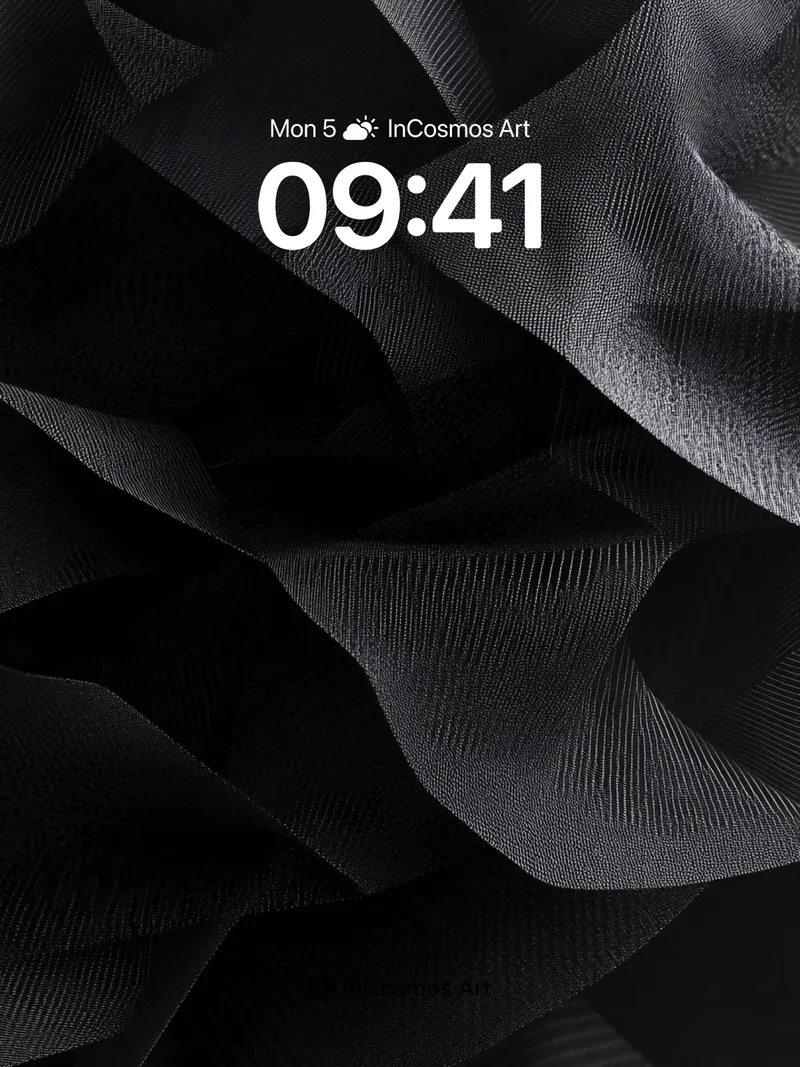
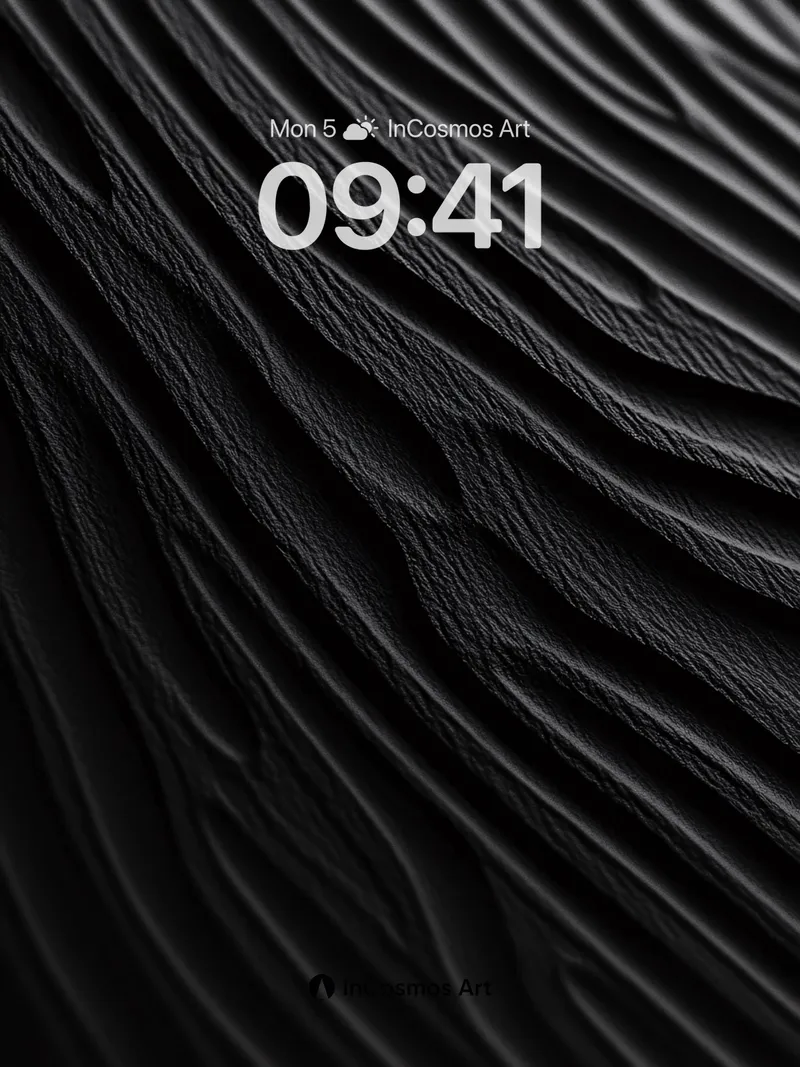
Between infinite black and white, lines become language. They do not tell stories but reveal the fragility of order and the possibility of freedom through undulation. Each arc is a breath, each turn a test of balance. Space folds, time stretches, and perception recalibrates within minimal constructs. This is not decoration but a mode of being. When vision recedes, consciousness wanders through structural gaps. Curves are not mimicry of nature but topology of will—they resist definition, leaving only traces of motion. This flow is not accidental aesthetic choice but a response to contemporary rhythms: individuals navigating paths between rules and chaos, like ripples spreading across sand, both governed by gravity and striving to escape it. Abstract forms carry heavier weight here, becoming silent interlocutors.
Lines as Medium
Lines here are no longer contours but vectors of energy. Appearing as contour lines, they simulate terrain yet transcend geography. Every curve suggests an invisible force field, guiding the gaze along a path. This guidance is not coercive but inviting. The viewer occupies the role of observer yet cannot fully control the direction of sight. This mirrors modernity's dilemma: unprecedented informational freedom coexists with disorientation in choice. The continuity of lines symbolizes coherence, but points of rupture remind of inevitable breaks. Design thus becomes philosophical experiment, exploring how form shapes perception.
Dialectic of Shadow and Light
Darkness is not absence but another form of presence. It opposes white yet generates new meaning at their boundary. The depth of shadow determines volumetric sensation and emotional layering. In some compositions, black resembles abyss, white crack, and their transitional zone brims with tension. This tension stems from human instinct toward the unknown—yearning to approach while fearing to fall. Light seeps through fissures, not illuminating all but revealing fragments. This reserved illumination echoes contemporary strategies in confronting complexity: not seeking omniscience but accepting partial truths.
Emotional Resonance in Abstraction
Despite lacking representational elements, these compositions evoke strong emotional responses. Repetitive waveforms generate meditative rhythm, compressing time into cycles. Fine dot patterns resemble stars, lending cosmic scale. Viewers experience solitude, stillness, and infinity entwined. These emotions arise not from narrative but from metaphors embedded in form itself. Curve resilience implies adaptability, while absence of straight lines emphasizes non-binary thinking. Abstract art reveals its unique value here: it does not provide answers but creates space for questions.
Topology of Being
These works construct a world without fixed coordinate systems. Direction blurs, centers dissolve. All elements define each other dynamically. This reflects fluidity of contemporary identity: no singular self, but superposition of multiple states. Continuous curves represent ongoing transformation, layered structures suggest accumulation of memory. Each angle may mark a turning point, every extension a possibility unfolding. Within this topological relation, stability and instability coexist, forming core metaphor for understanding modern life.