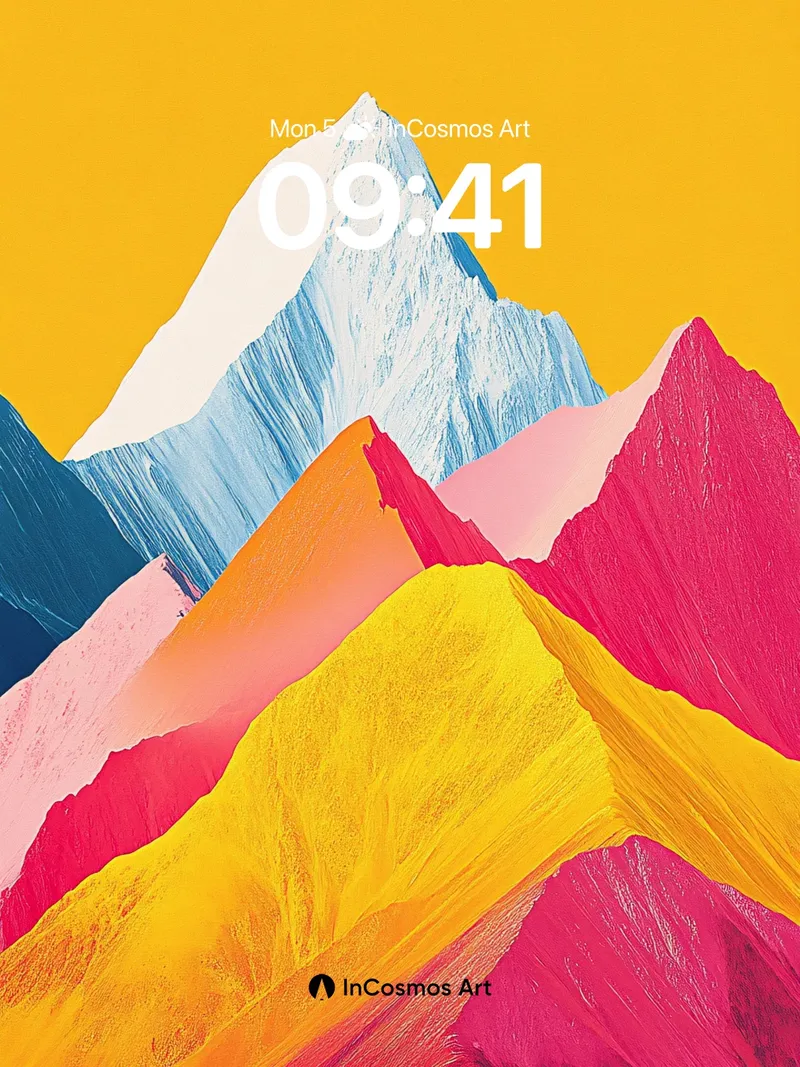
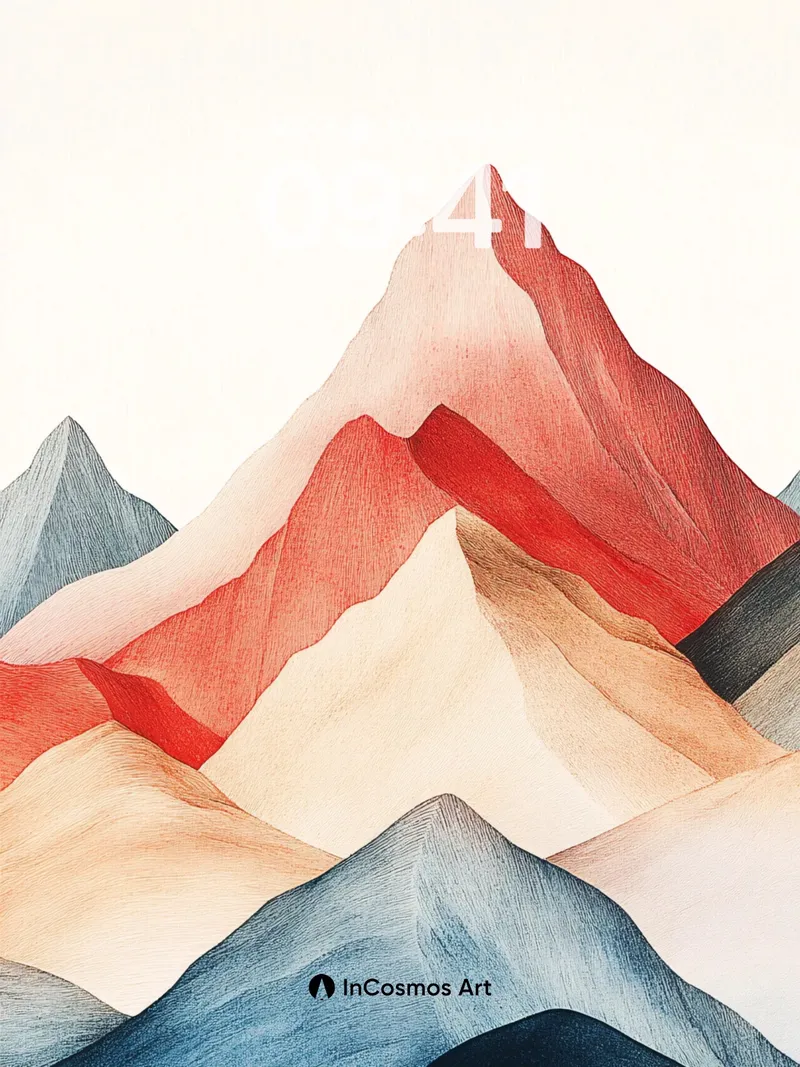
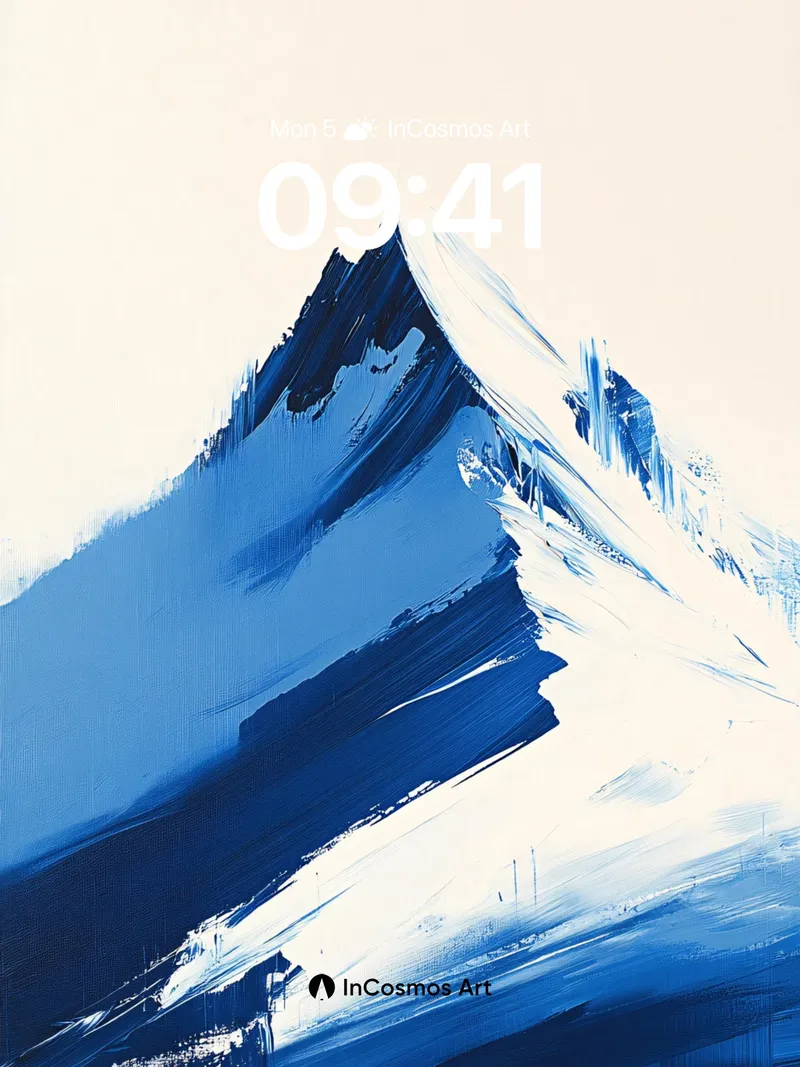
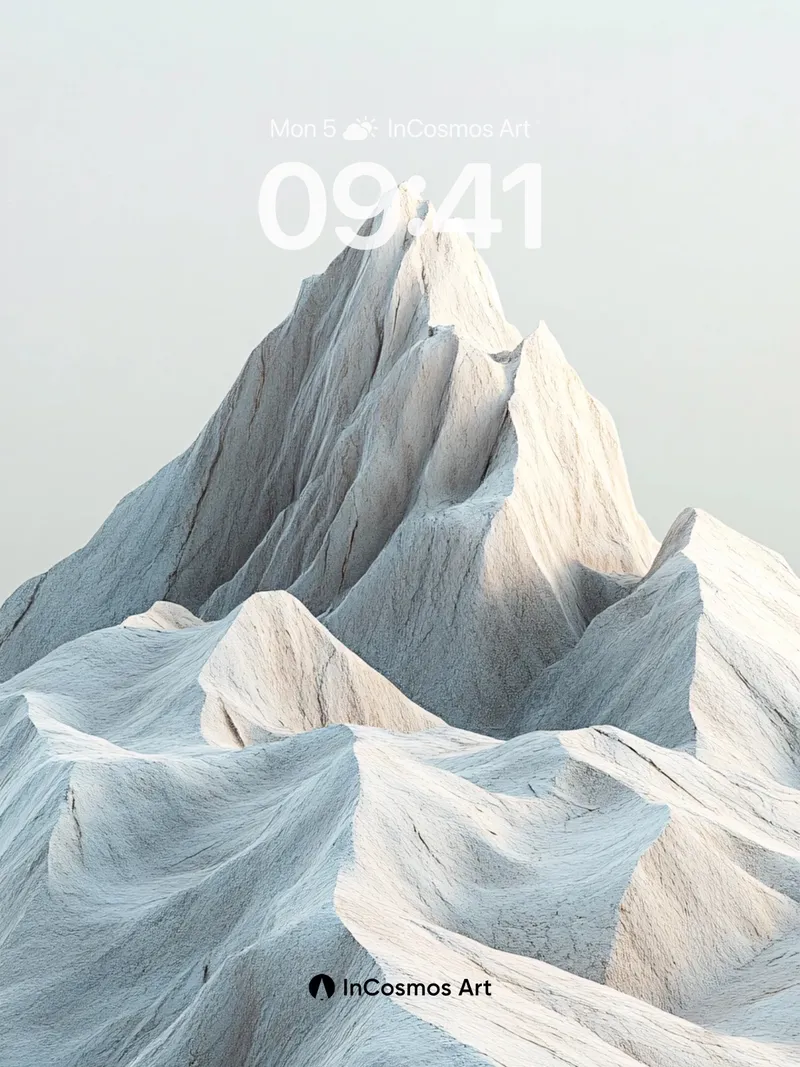
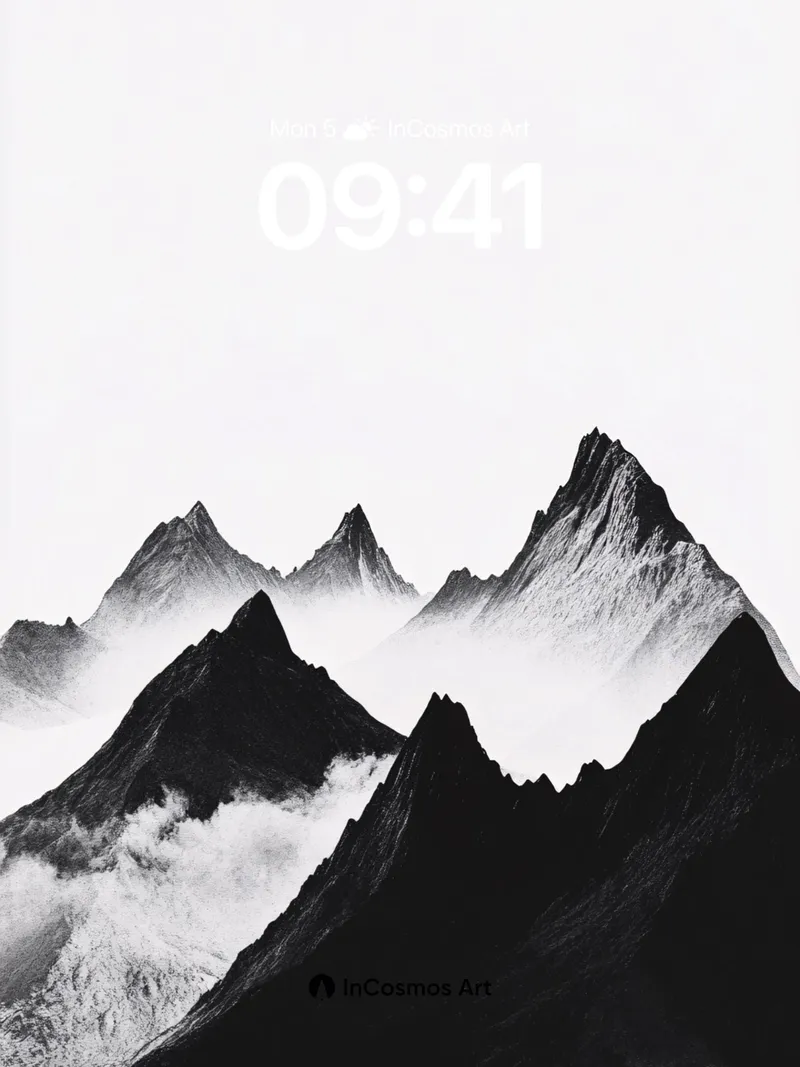
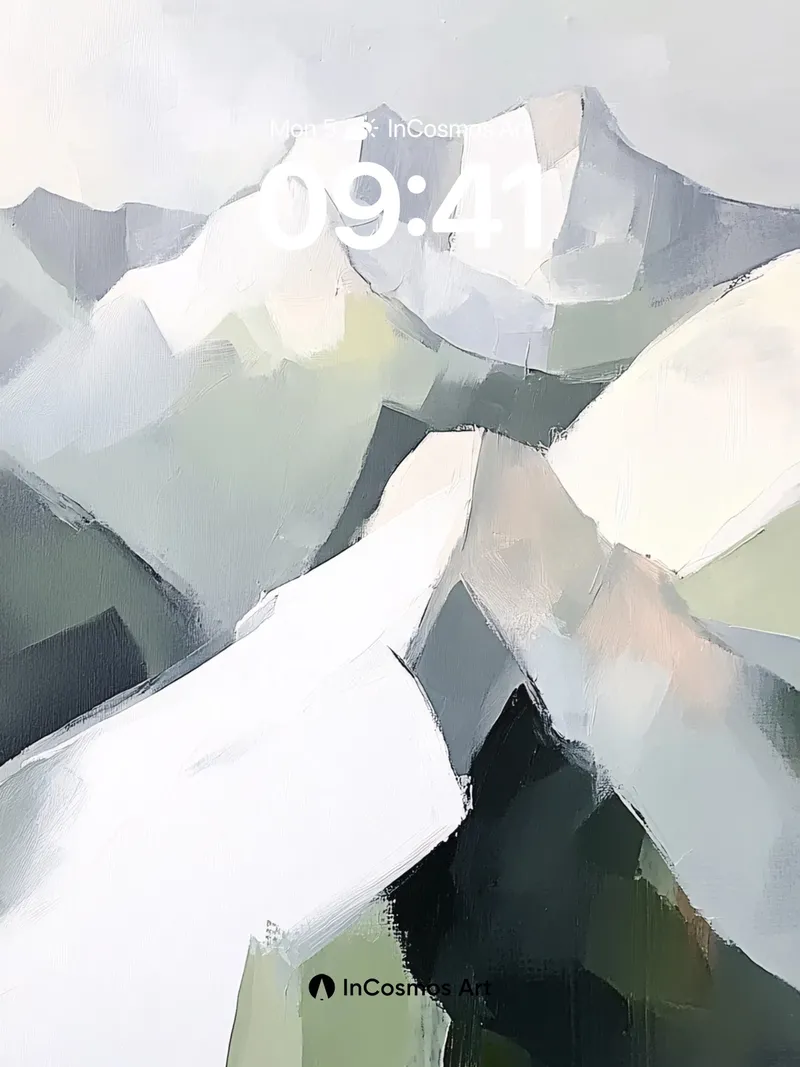
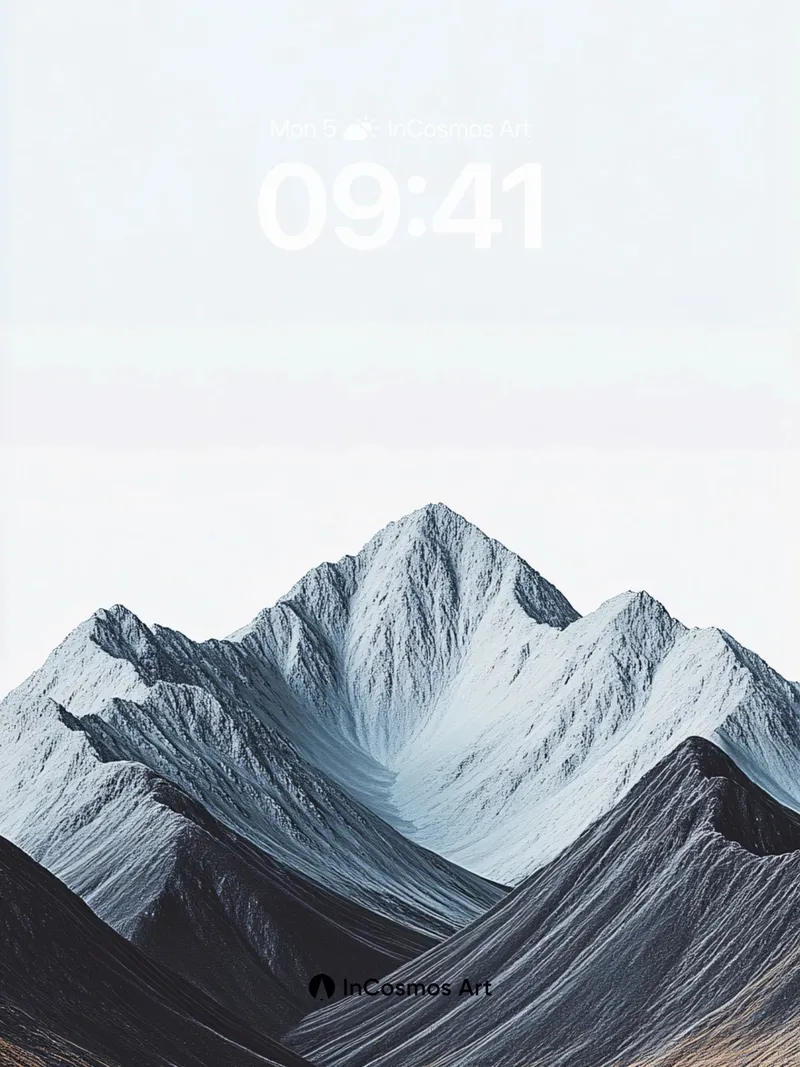
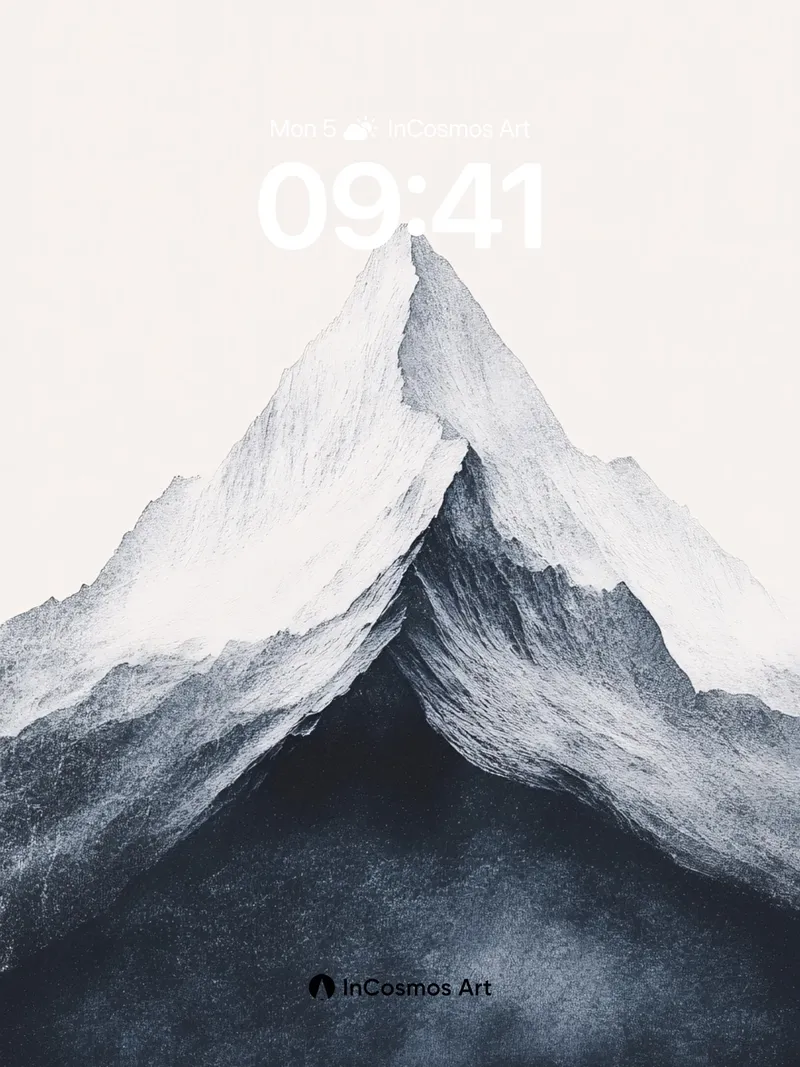
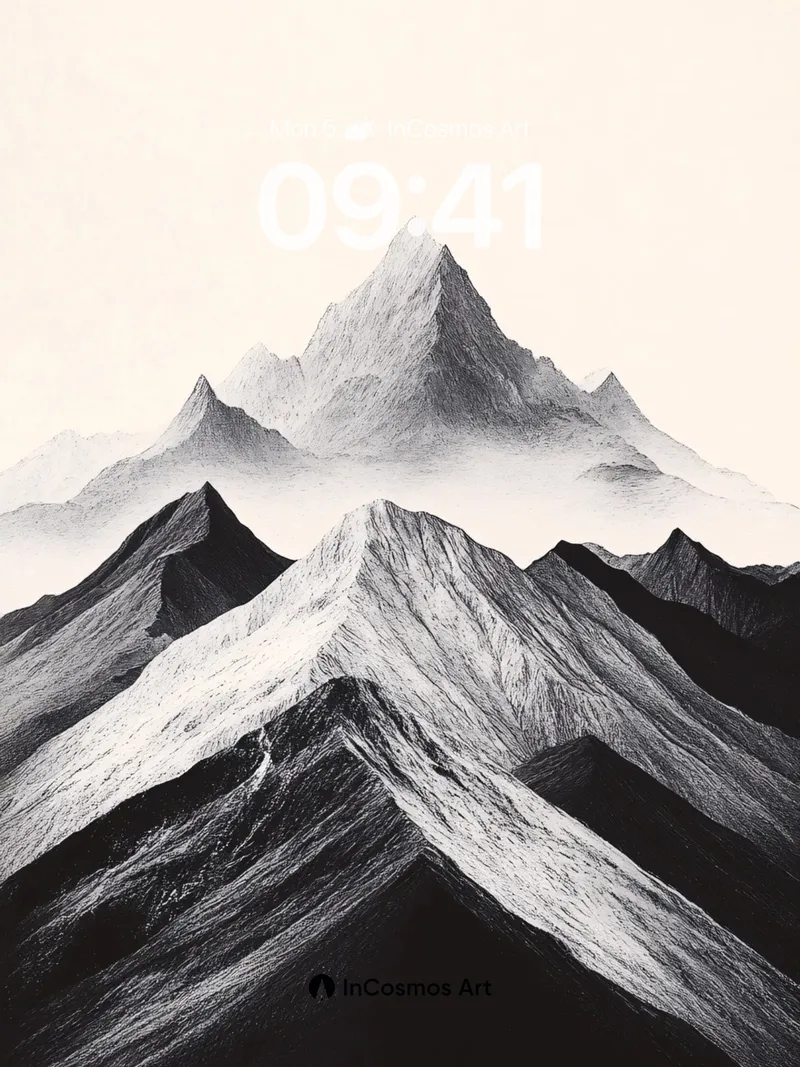
Peaks rise through mist, their edges sharp as blades yet softened by time's erosion. They are not merely geological formations but vessels of emotion and memory. Each summit carries a weight of silence, a loneliness beyond words. As sight moves across layered ridges, it enters a realm beyond language—a space without names, only presence. This silence is not emptiness but a profound dialogue, the most primal exchange between human and nature. In today’s noisy world, these mountains serve as spiritual anchors, reminding individuals to return to inner order. Their existence does not depend on conquest or ascent, but on contemplation and coexistence, awakening a renewed awareness of life’s origins.
The Form of Mountains: Nature’s Abstract Syntax
Mountain shapes embody natural laws while forming a non-verbal language. Their undulations, shadow layers, snow patterns create a system of expression without words. These structures convey mood and meaning without naming. Modern design often draws from them, translating natural rhythms into architectural cadence or interface breath. The geometry of mountains is not just terrain—it mirrors psychological space: sharp ridges signify challenge, gentle slopes suggest acceptance, and cloud-wrapped valleys resemble the ambiguous zones of consciousness.
The Philosophy of Silence: Lessons from the Uninhabited
The mountain’s silence is powerful. It speaks without sound, influencing the observer through sheer being. In an age of information overload, attention has become scarce. The mountain’s unchanging presence offers counterbalance—its stillness resists the flow of time, its permanence serving as a mirror to human transience. Facing the peak, the individual ceases to rush to speak and learns to listen—to wind, falling snow, heartbeat, and inner echoes. This listening is a vital spiritual practice for contemporary life.
The Metaphor of Color: Warmth in Cool Tones
Though most mountain scenes feature cool hues, blue, white, and gray do not imply coldness. Instead, they hold a quiet tenderness. Blue signifies depth and mystery, white purity and possibility, gray the transition between, suggesting balance. In artistic representation, these colors are not decoration but direct emotional projection. They guide viewers into introspection, prompting a reexamination of self and world.