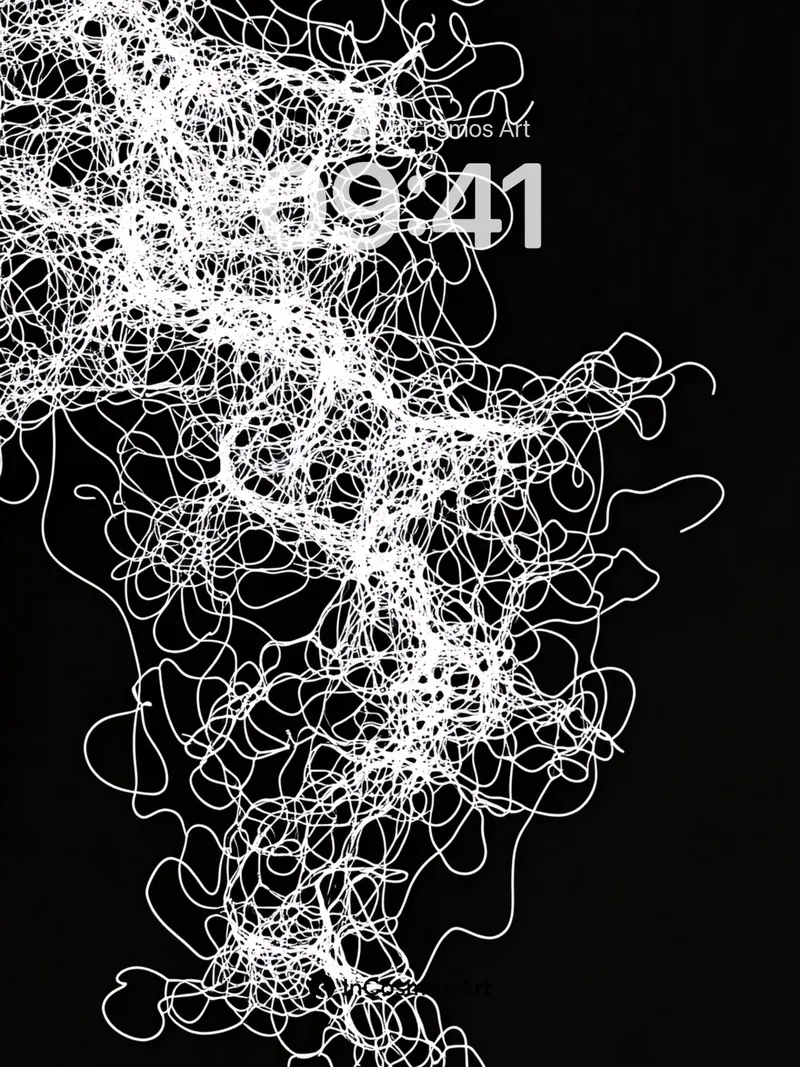
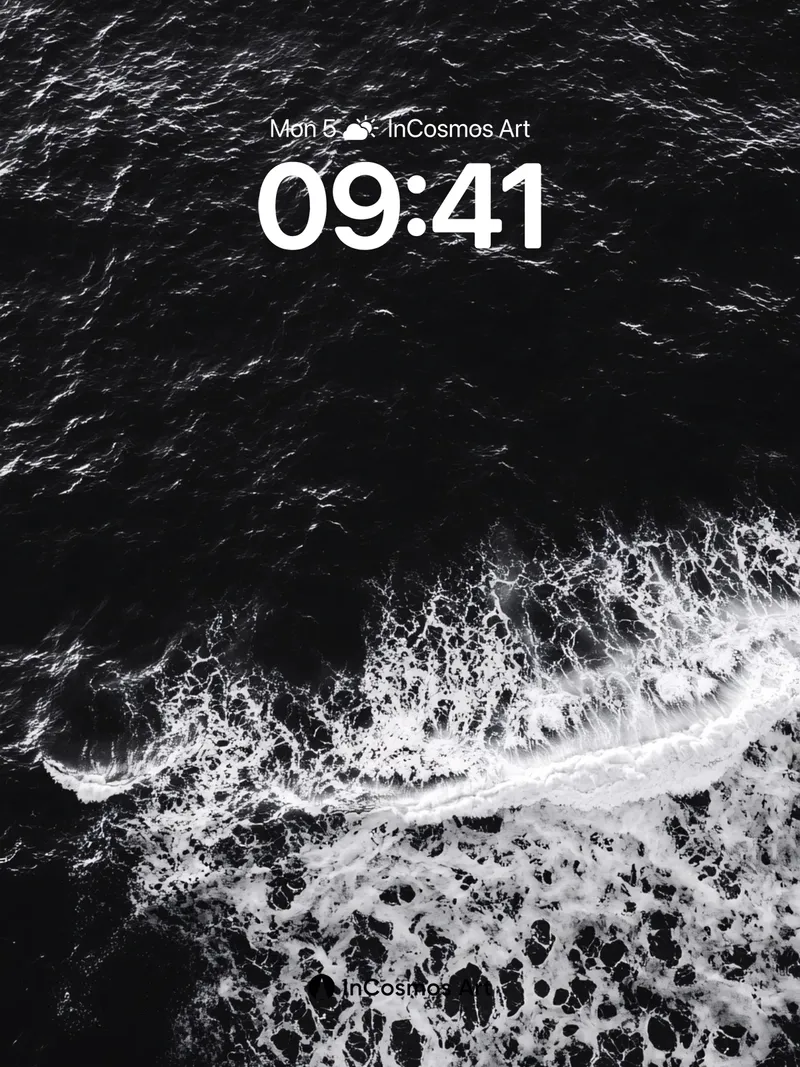
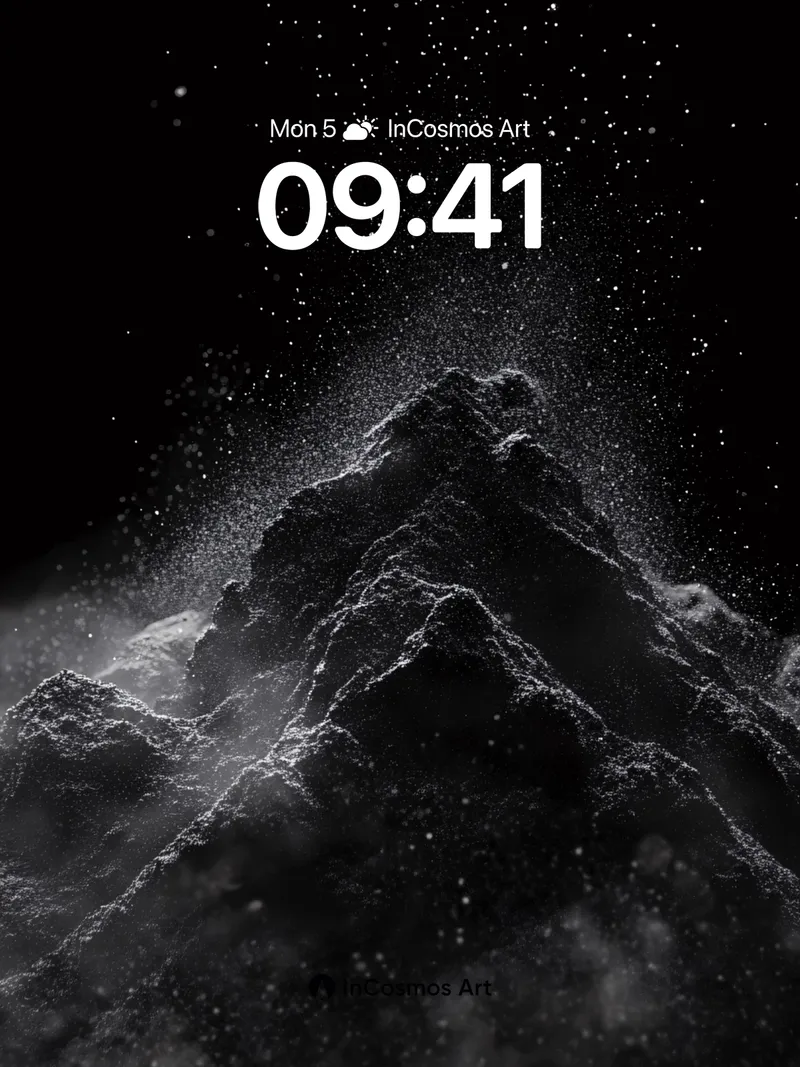
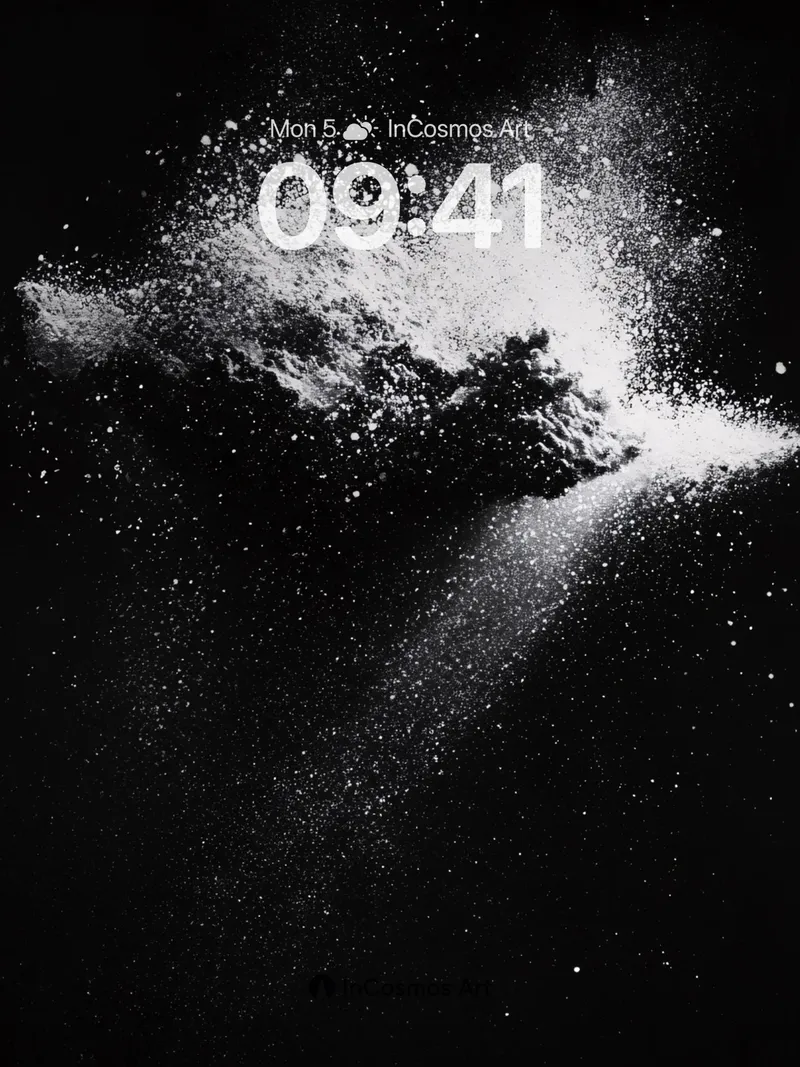
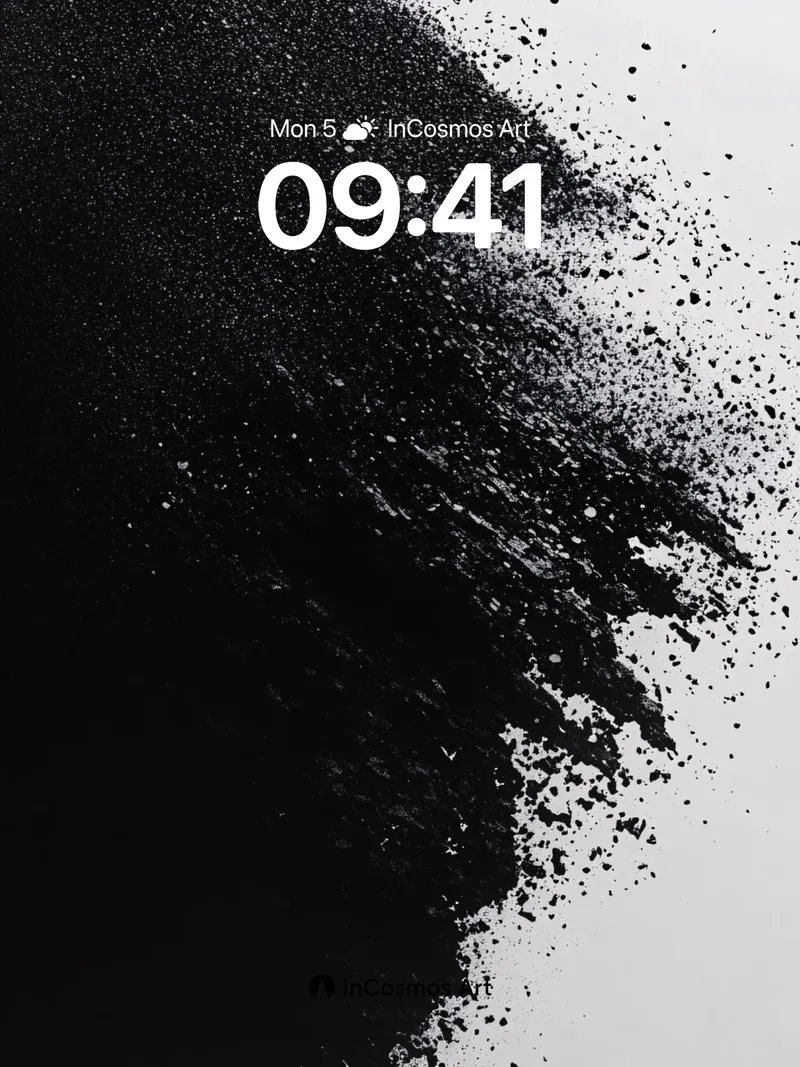
Darkness is not emptiness, but a vessel holding all that lies beneath. When light tears foam across water, when stardust draws arcs in void, when lines carve invisible terrain, an order beyond vision emerges. These forms are not static images, but echoes of time, flows of energy, breaths of being itself. They speak in black and white, narrating rhythms unnamed in the depths of cosmos.
Topology of Nature
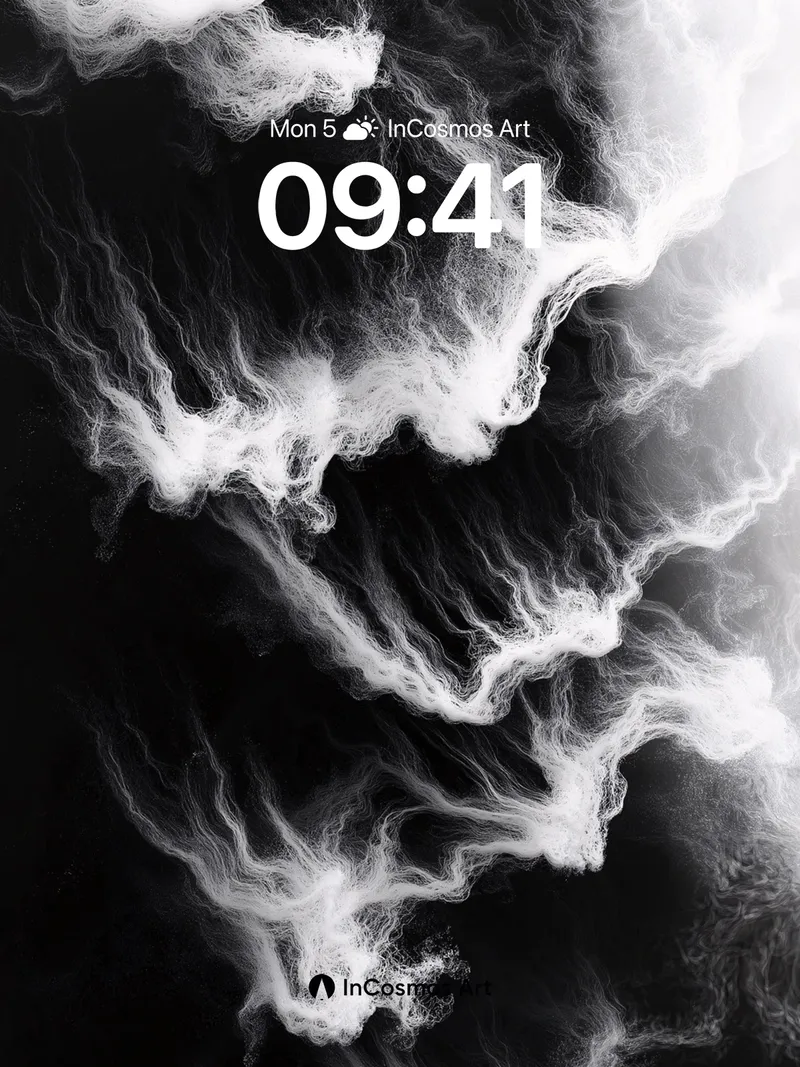
Ocean edges curl against deep shadows, foam spreading like shattered silver into dynamic fractal patterns. This is not mere depiction of water, but a topological transformation—liquid boundaries abstracted into geometric fractures, ripples rendered as data-like textures. Human perception of nature shifts from representation to deconstruction, from recognition to analysis. The sea's turbulence transcends meteorology; it becomes a readable system of symbols, akin to contour maps encoding unseen force fields.
Brushstrokes of the Cosmos
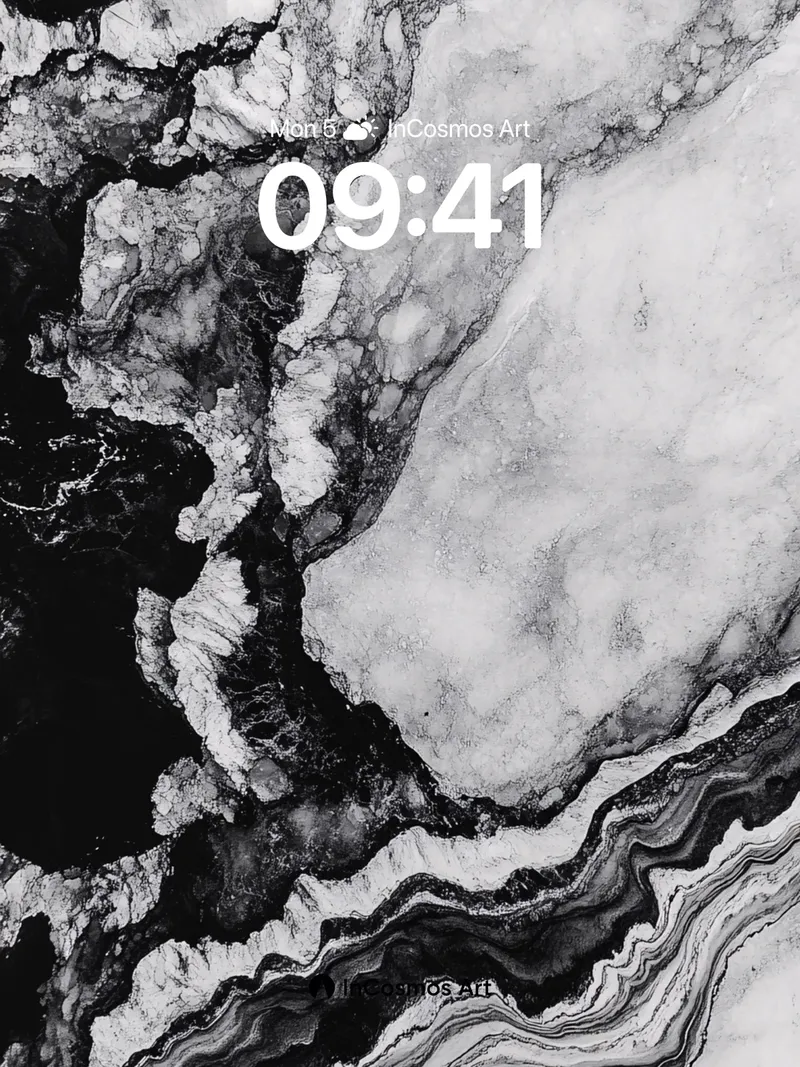
Nebulae stretch through darkness, their outlines formed by faint luminescence as if the universe itself writes. These glowing filaments are not accumulations of matter, but trails of stellar birth and death. Their distribution evokes non-Euclidean space, challenging human notions of distance and form. In this vastness, every point of light marks a story’s origin, each wisp carrying the weight of time. When humans gaze at stars, they read an epic written in light.
Philosophy of Abstraction
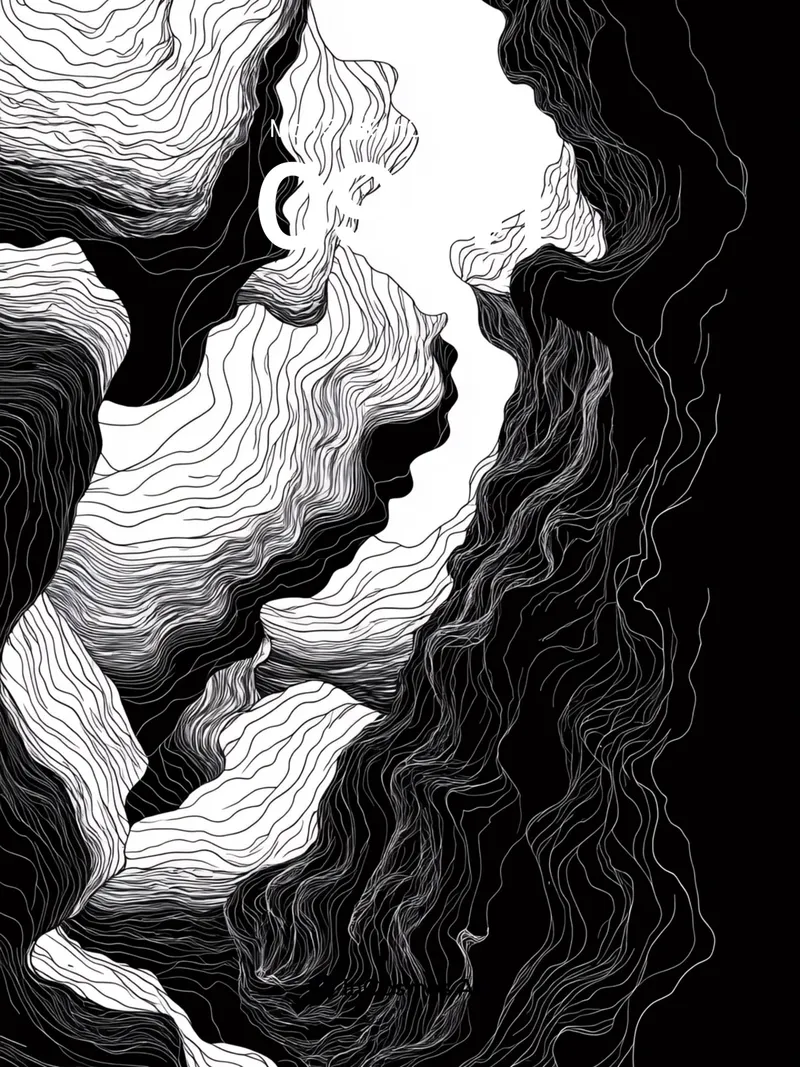
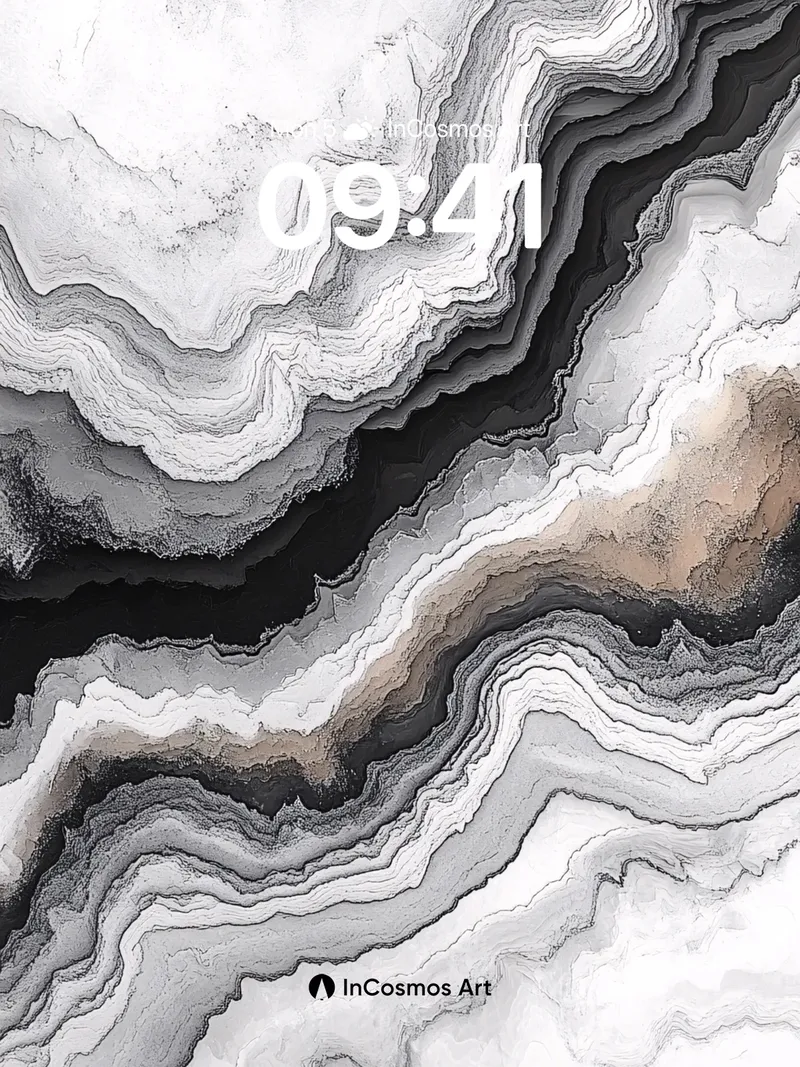
Layered lines construct imagined mountain ranges, alternating black and white compressing and expanding space. This rendering departs from geographic truth yet approaches the essence of perception. When reality reduces to outlines, viewers are compelled to reevaluate the definition of 'existence'. Abstraction is not evasion, but another path toward complexity. It strips away appearances, revealing structure, making the intangible tangible. In pure monochrome, meaning ceases to be fixed labels—it becomes an open invitation.
Motion in Silence
Smoke rises through darkness, shifting constantly yet maintaining internal balance. Its movement lacks purpose but carries rhythm. This state resembles Zen’s ‘non-attachment’—no fixation on form, yet completeness within flow. Facing such imagery, thought naturally slows, entering near-meditative stillness. Movement holds stillness; change preserves order. This is the deepest expression of natural law.