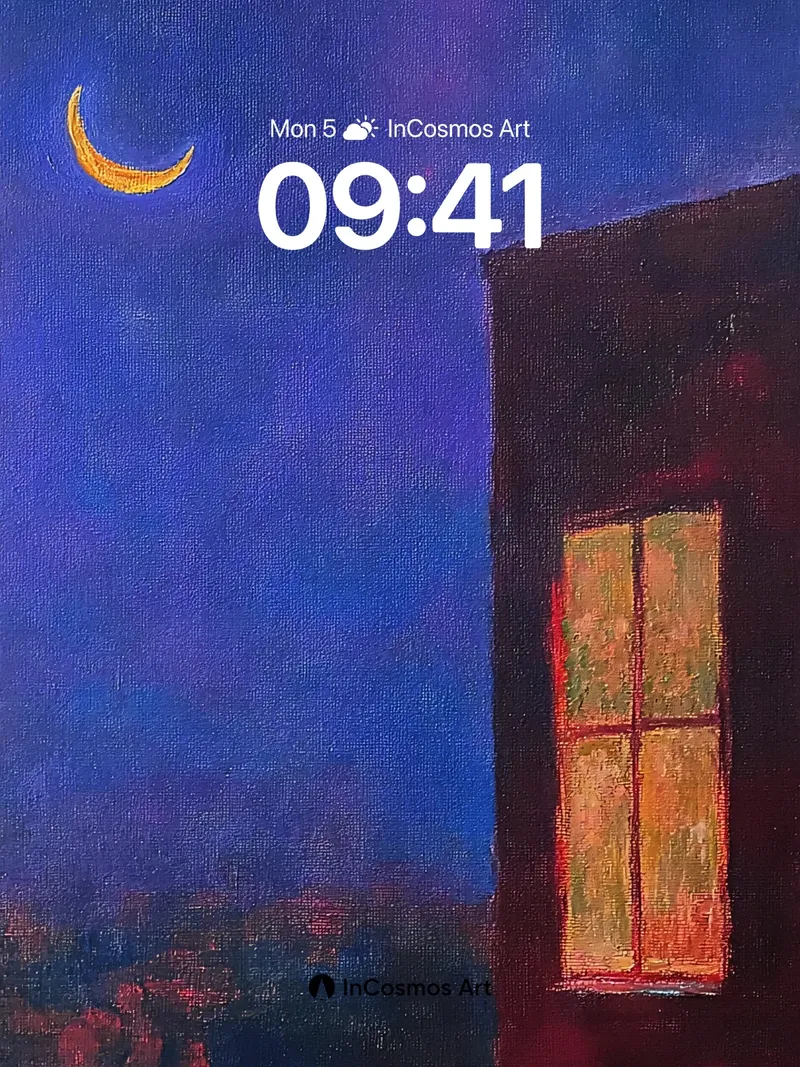
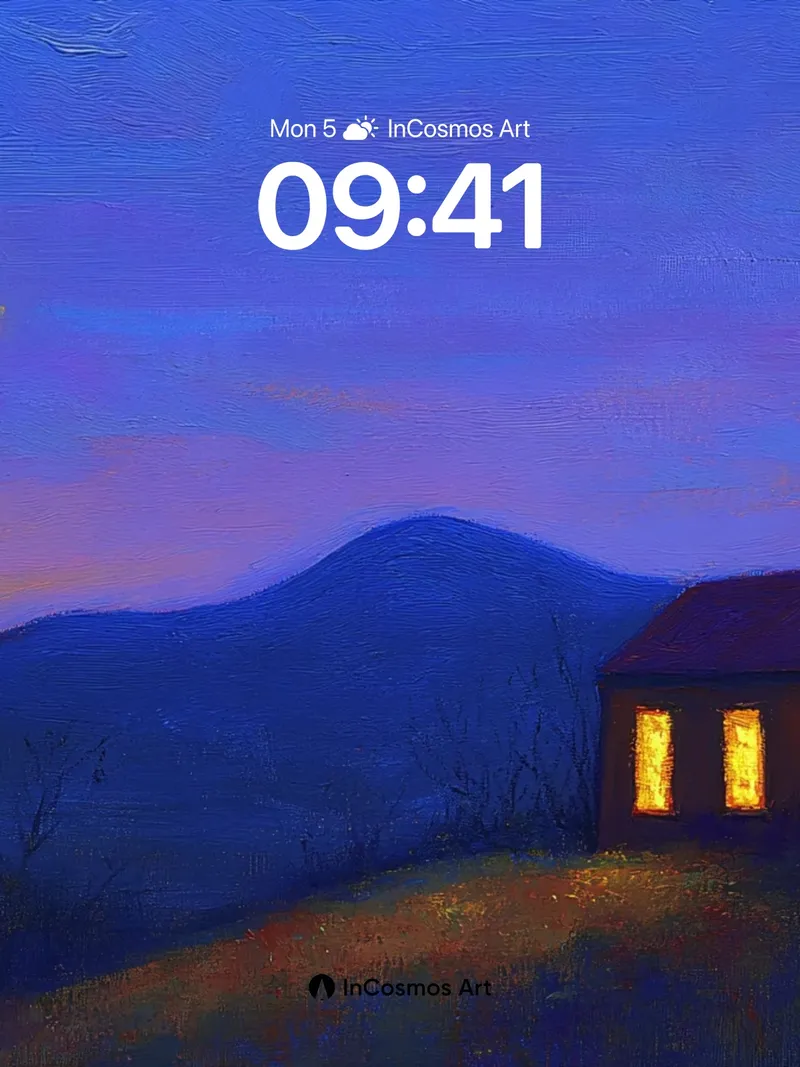
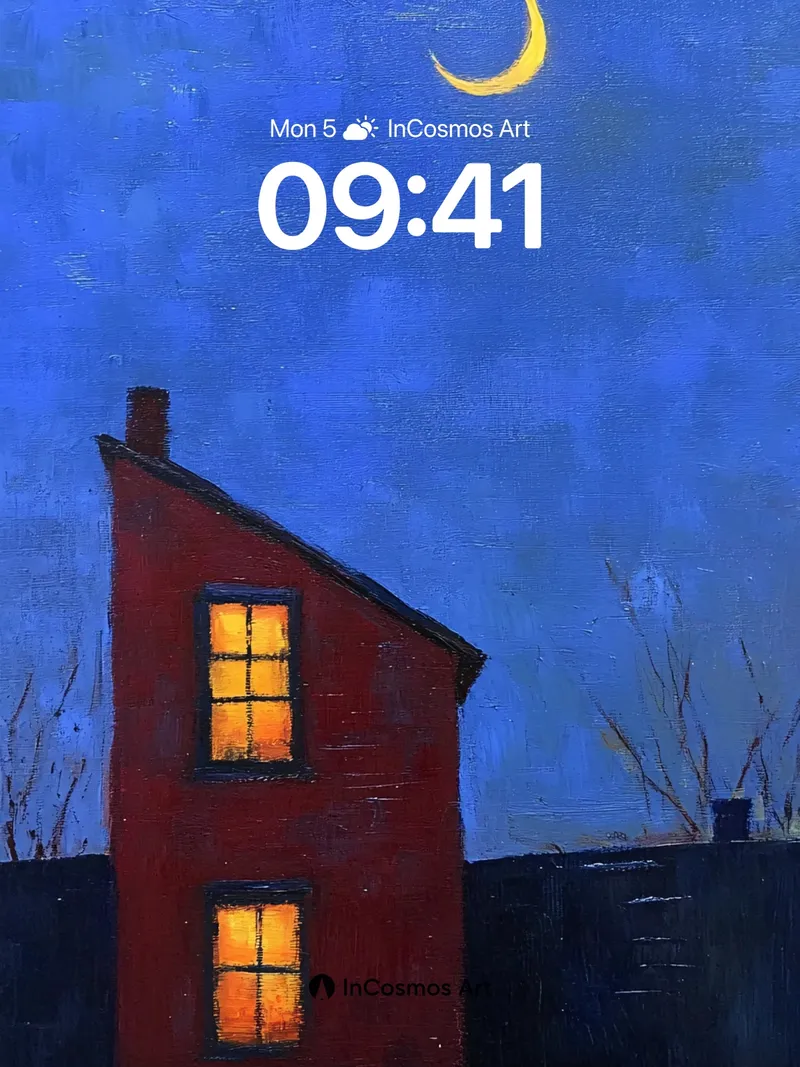
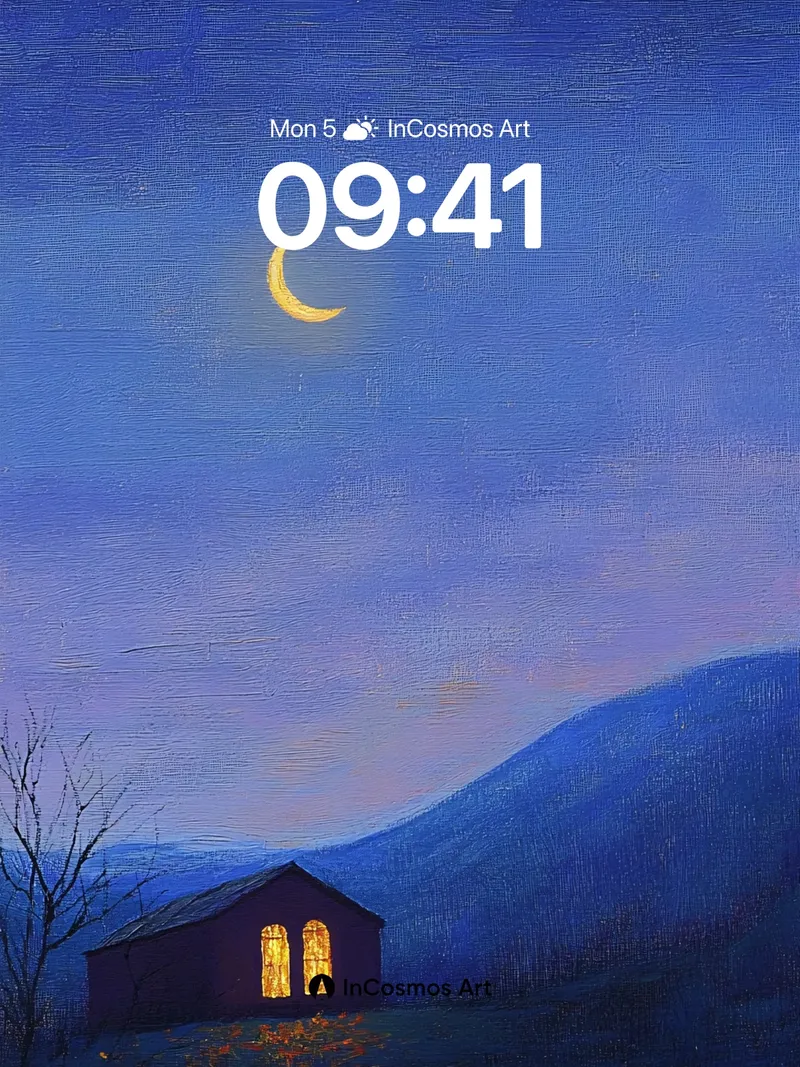
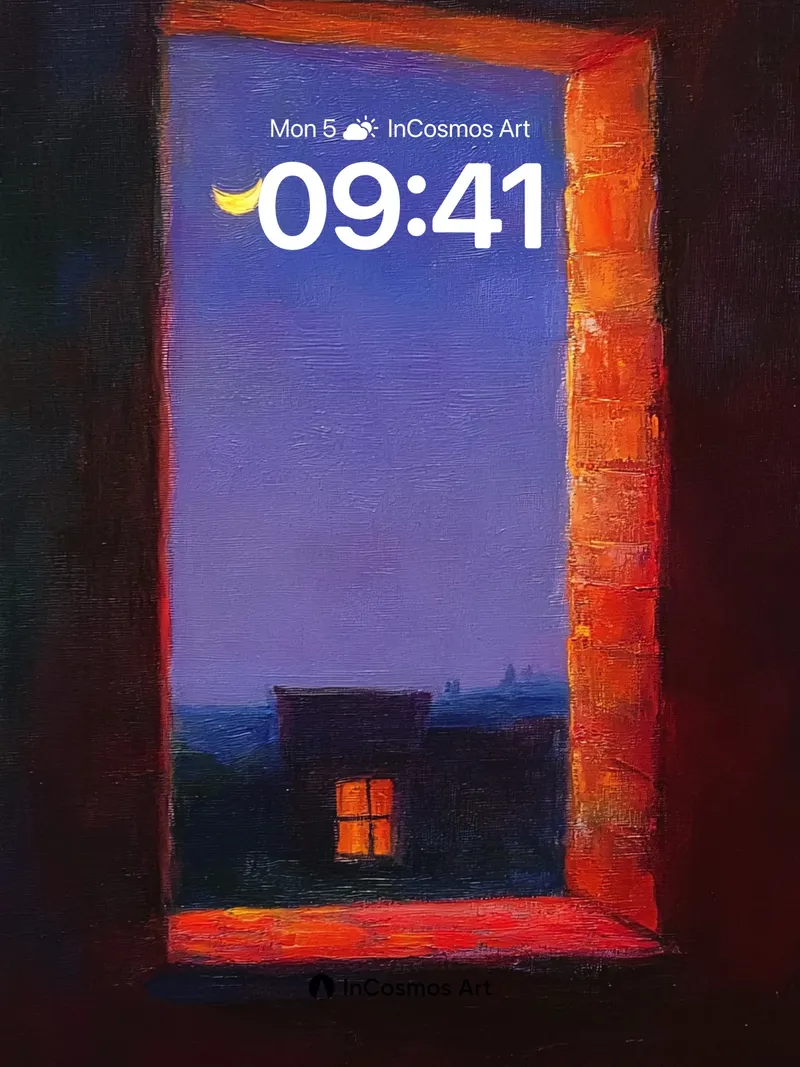
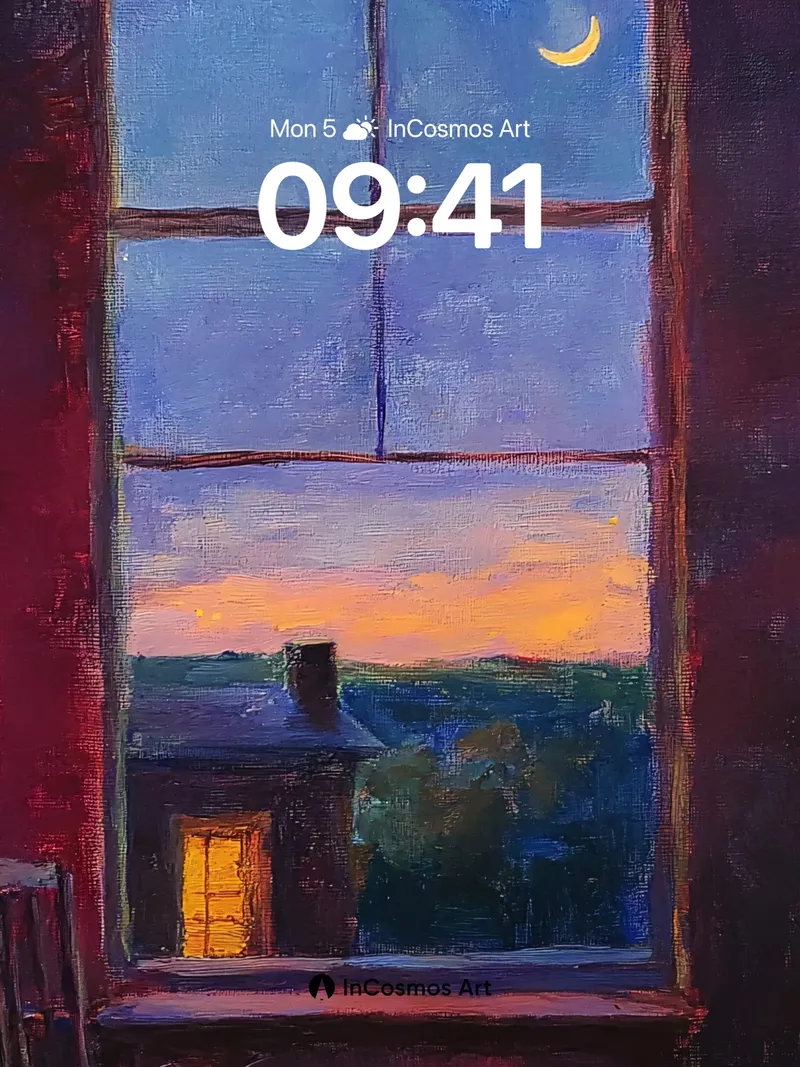
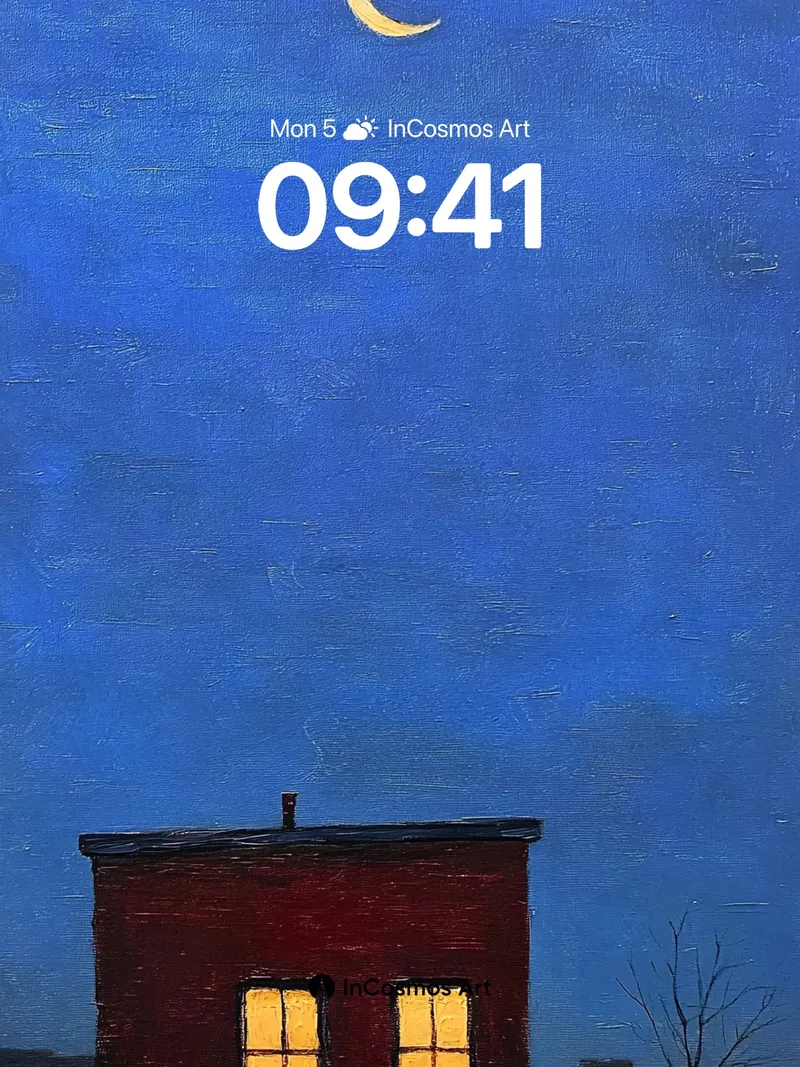
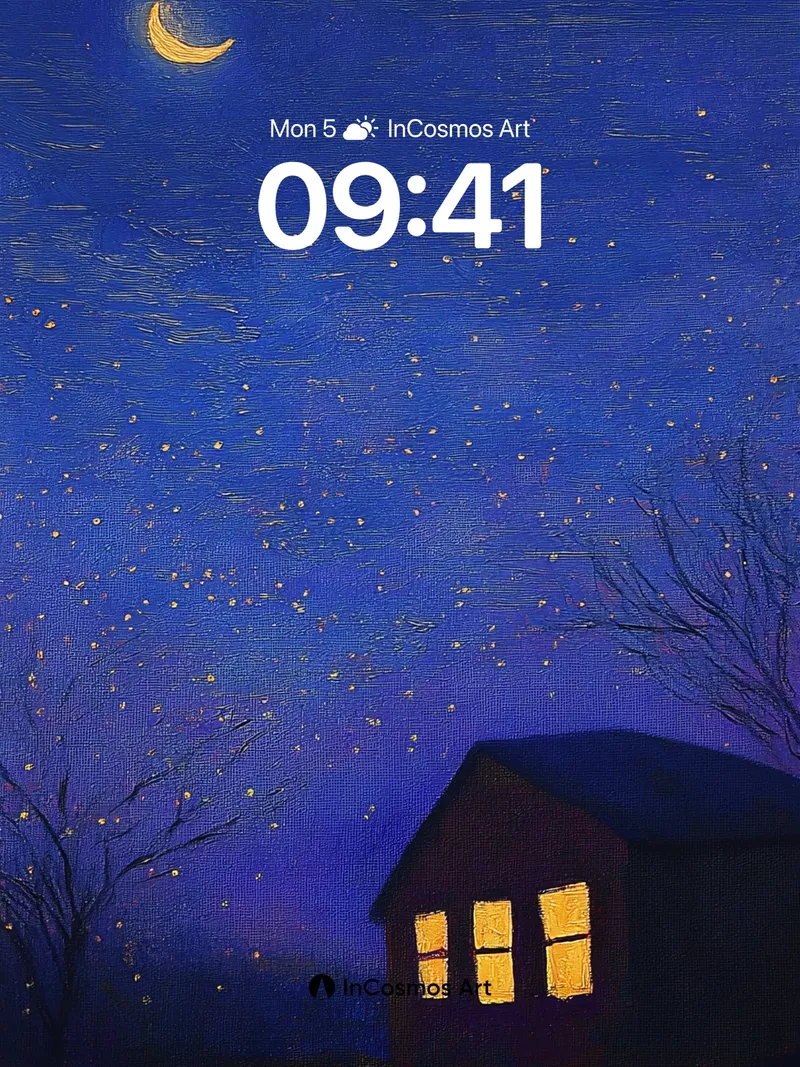
The night sky hangs low, a crescent moon curved above deep blue. Windows glow with warm yellow light, as if lighting humanity's most basic longing—belonging and settlement. These lights are not decoration but life itself breathing through time’s gaps. Each window is a boundary separating private interior from boundless exterior. Yet light quietly crosses, projecting indoor warmth into the cold night, forming a gentle resistance. Building outlines blur in darkness, only the glow remains clear, like a soul’s imprint. This is not urban spectacle but individual solitude affirming existence against cosmic scale.
Windows as Proof of Presence
Window frames are spatial cuts and entry points to perception. They serve as physical barriers and emotional conduits. When moonlight falls, indoor light converses with distant stars. This mutual gaze reveals subtle balance between human and nature. The house becomes more than shelter—it is a vessel for spirit. Its purpose is not to defy environment but to anchor a coordinate in vastness. Light spilling outward means inner world is not sealed, but extending, offering silent invitation.
Symbol of Warmth in Darkness
Yellow glow stands out against blue backdrop—not just visual contrast but psychological comfort. Cold night pierced by warmth; loneliness soothed by light. This warmth depends not on size or luxury but on daily details—a lamp, a window, a small house. It reminds that true refuge comes not from grand structures but from micro-lights. Whether in wilderness or city, where one light burns, someone holds meaning.
Architecture’s Dialogue with Cosmos
Rooflines are simple, walls steady, tracing human traces in night sky. Yet moon and stars dominate narrative space. Buildings appear small, yet gain dignity through light. This scale contrast prompts reflection: how does an individual find place in infinity? Answer may lie in that beam—faint yet enough to illuminate territory. When humans look out through windows at cosmos, cosmos returns gaze through starlight.