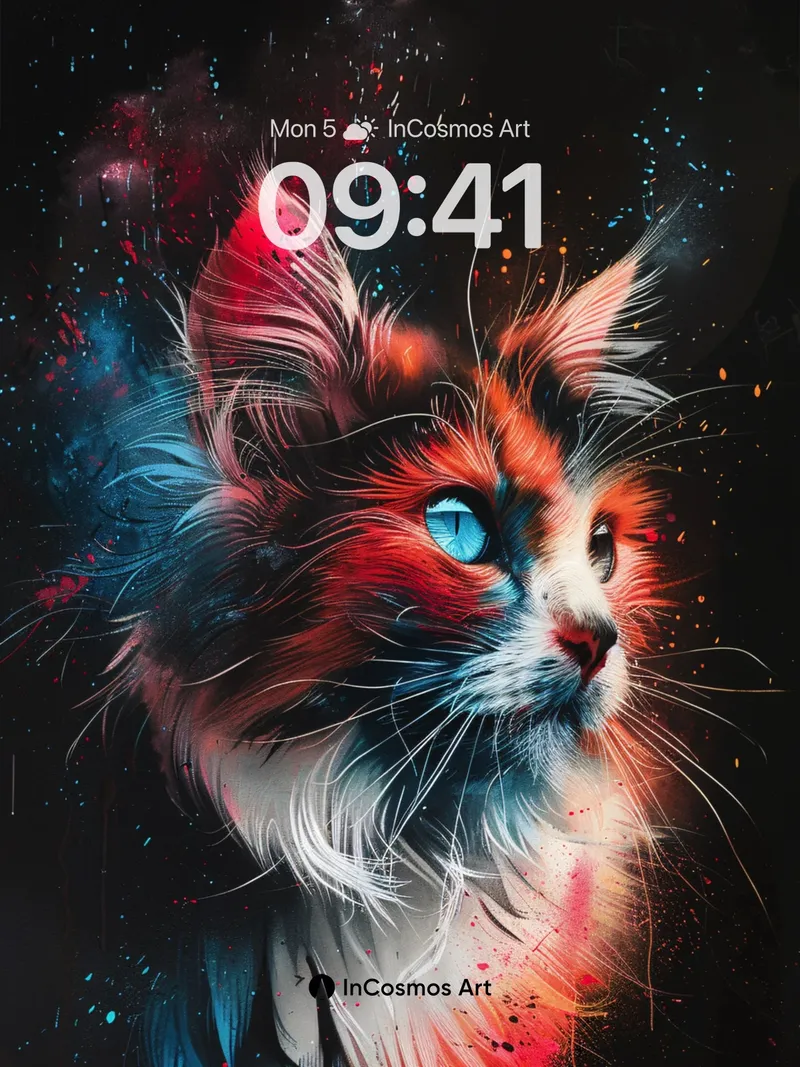
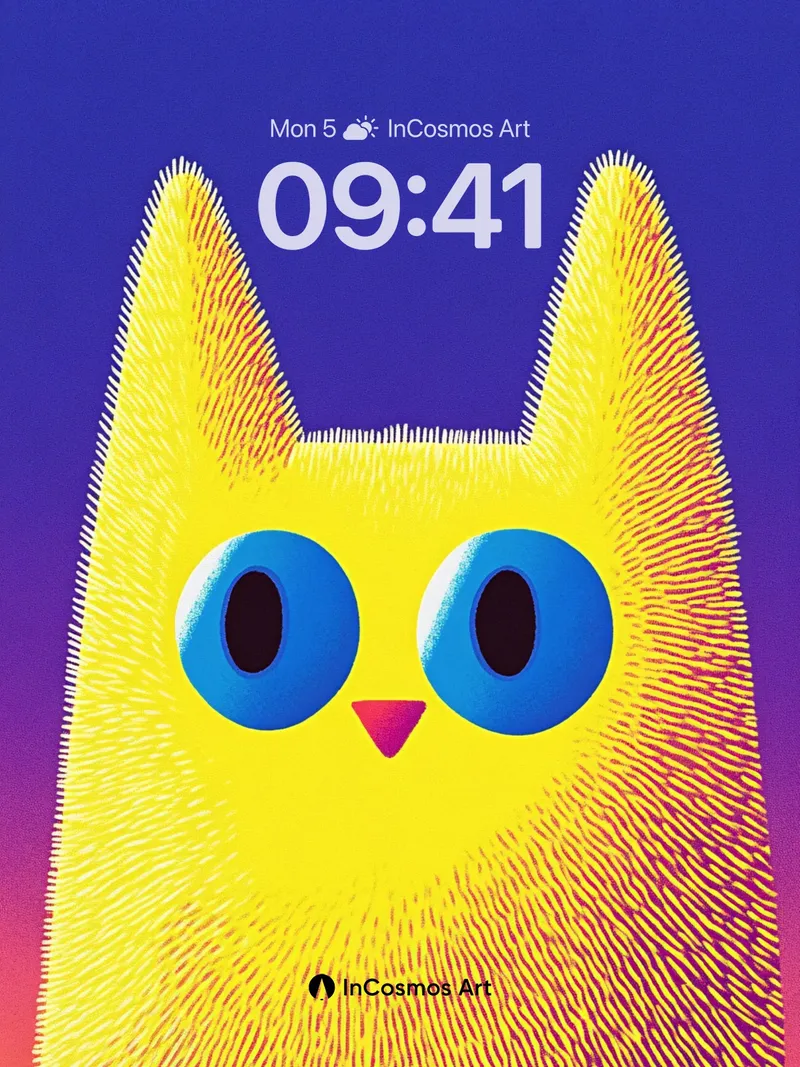
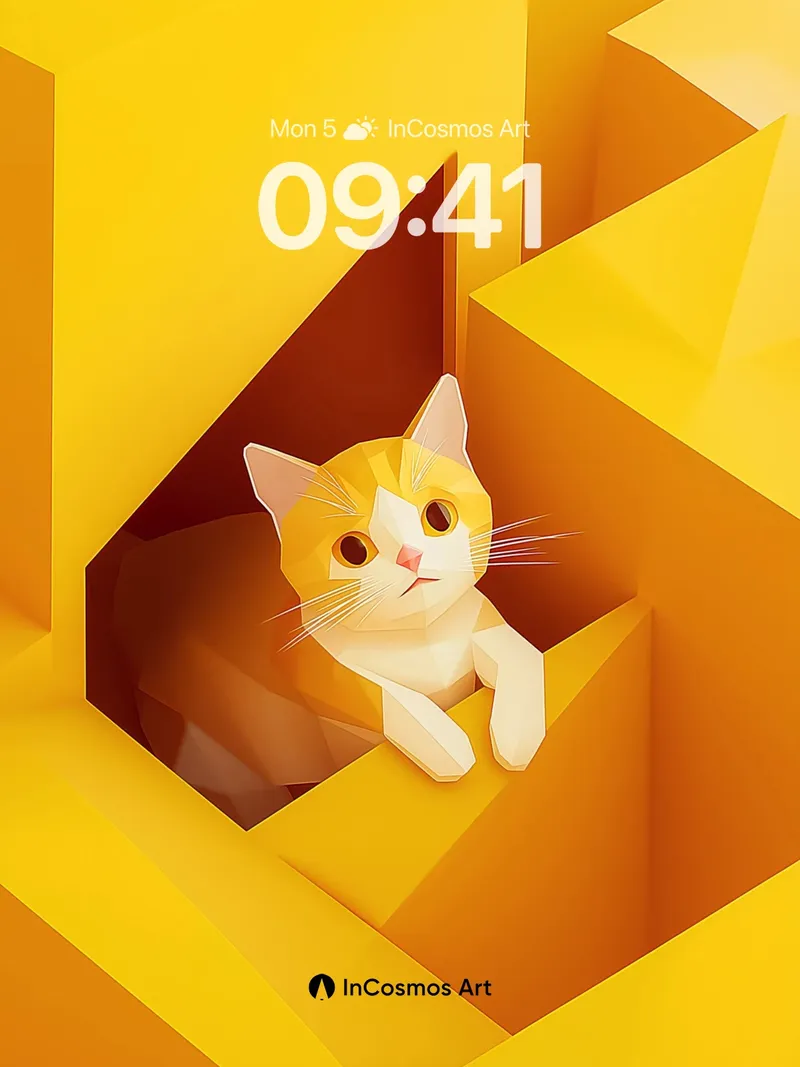
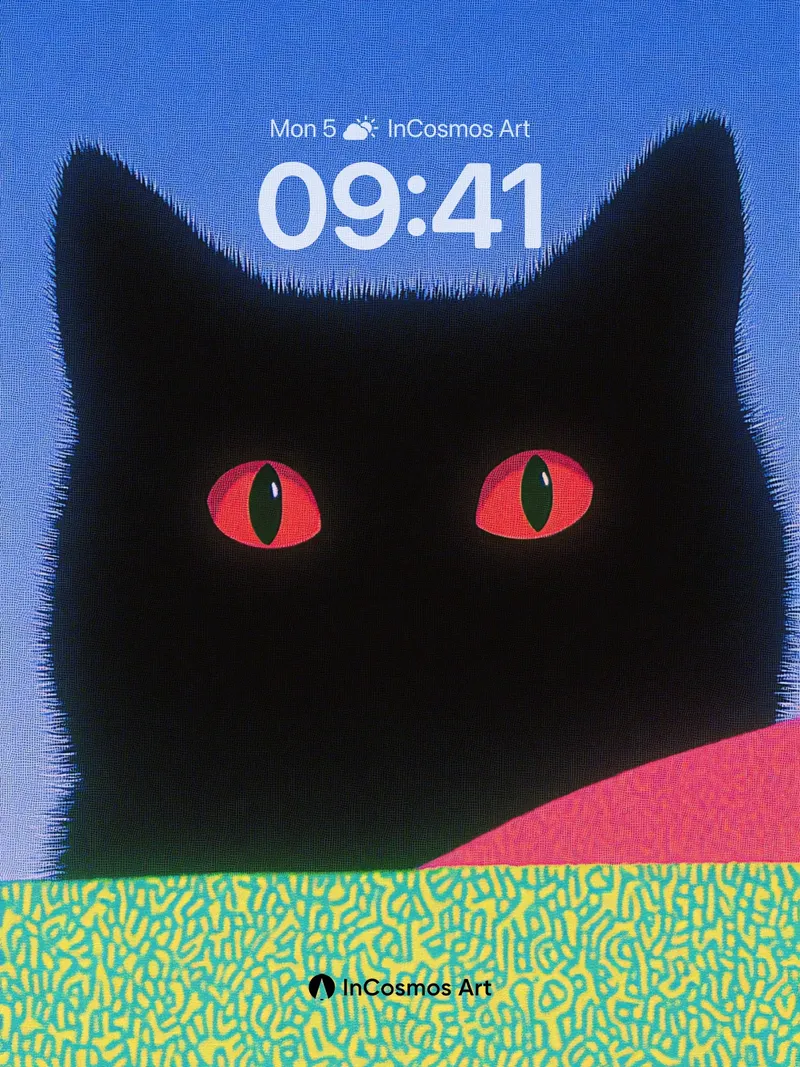
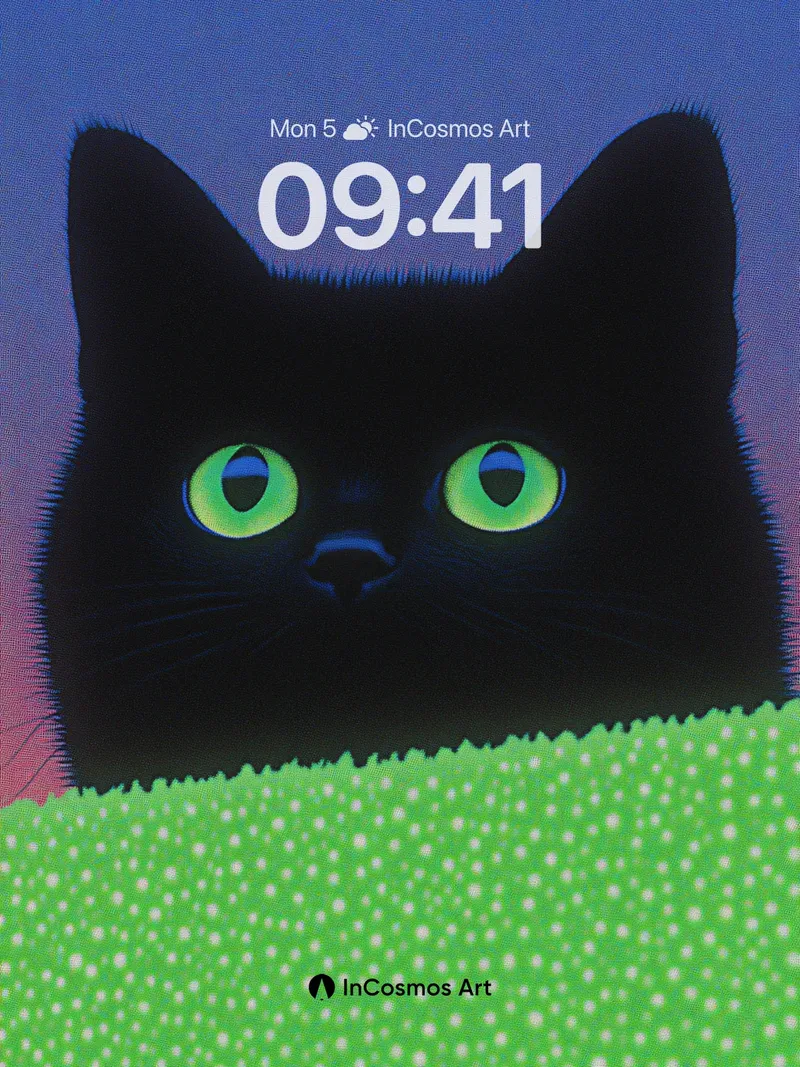
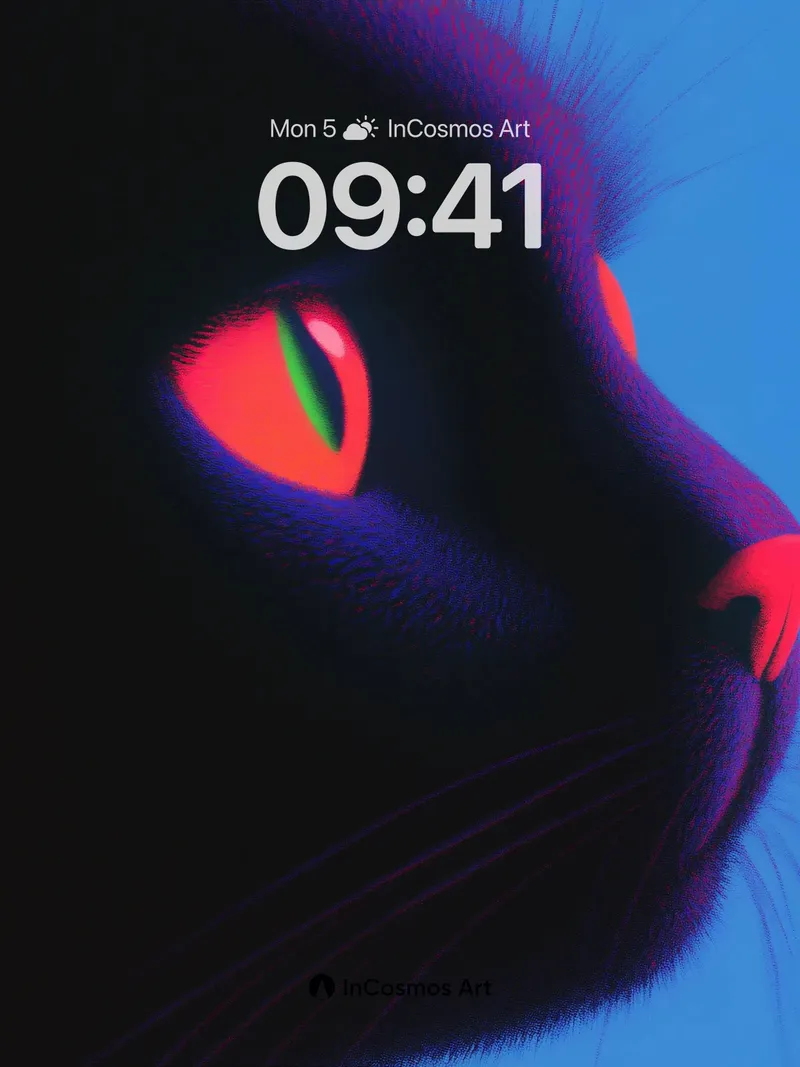
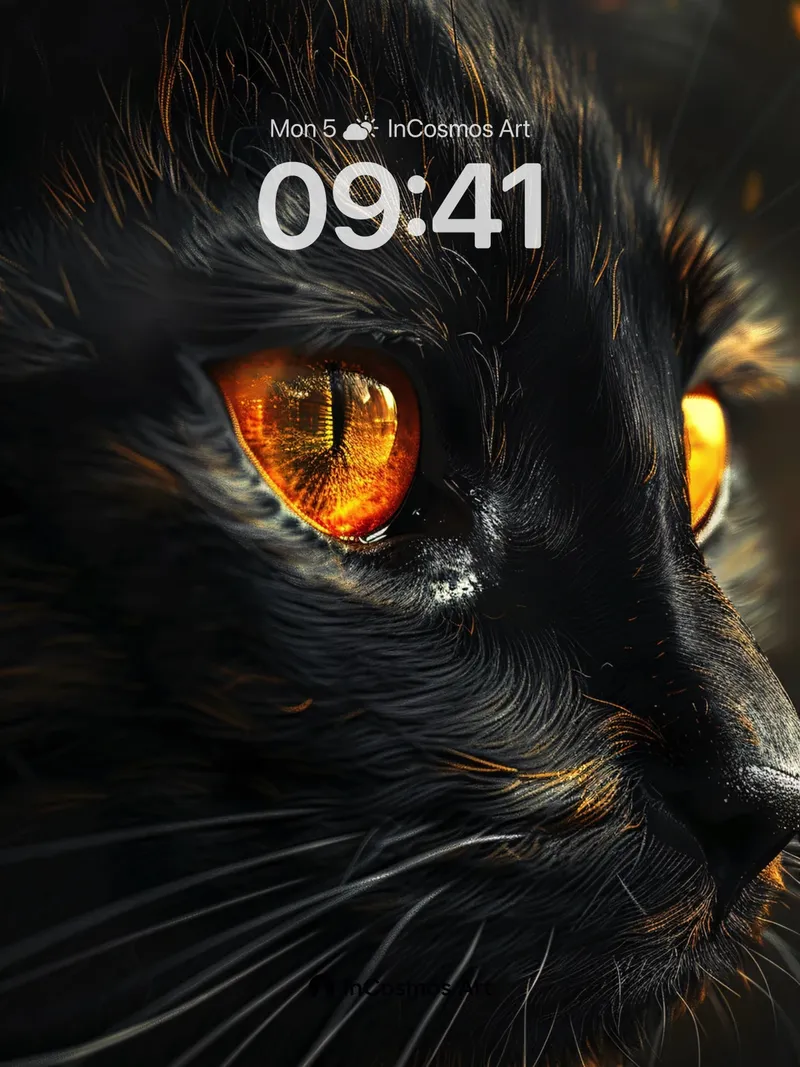
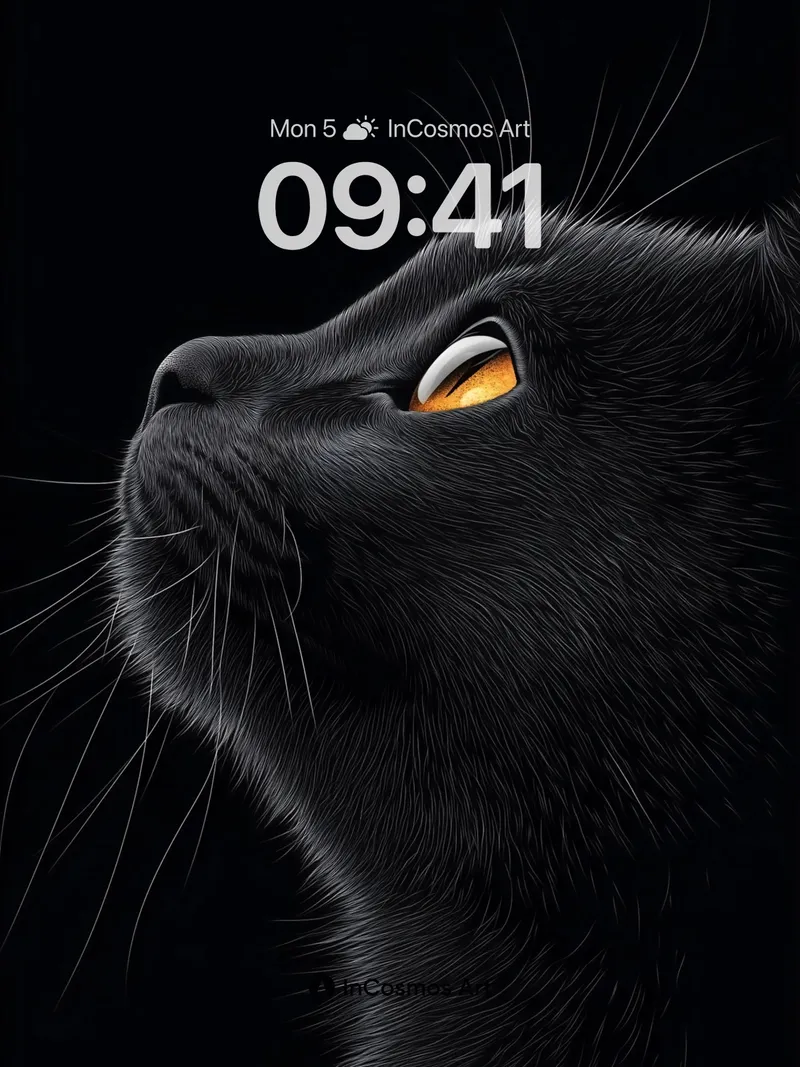
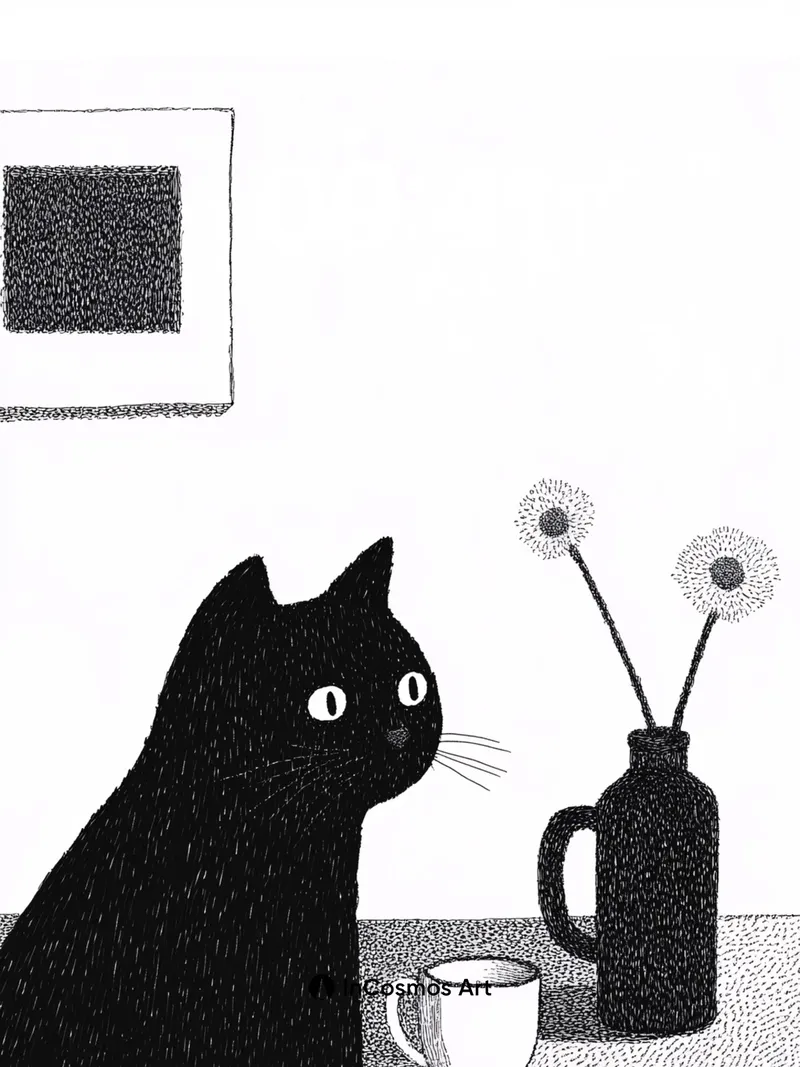
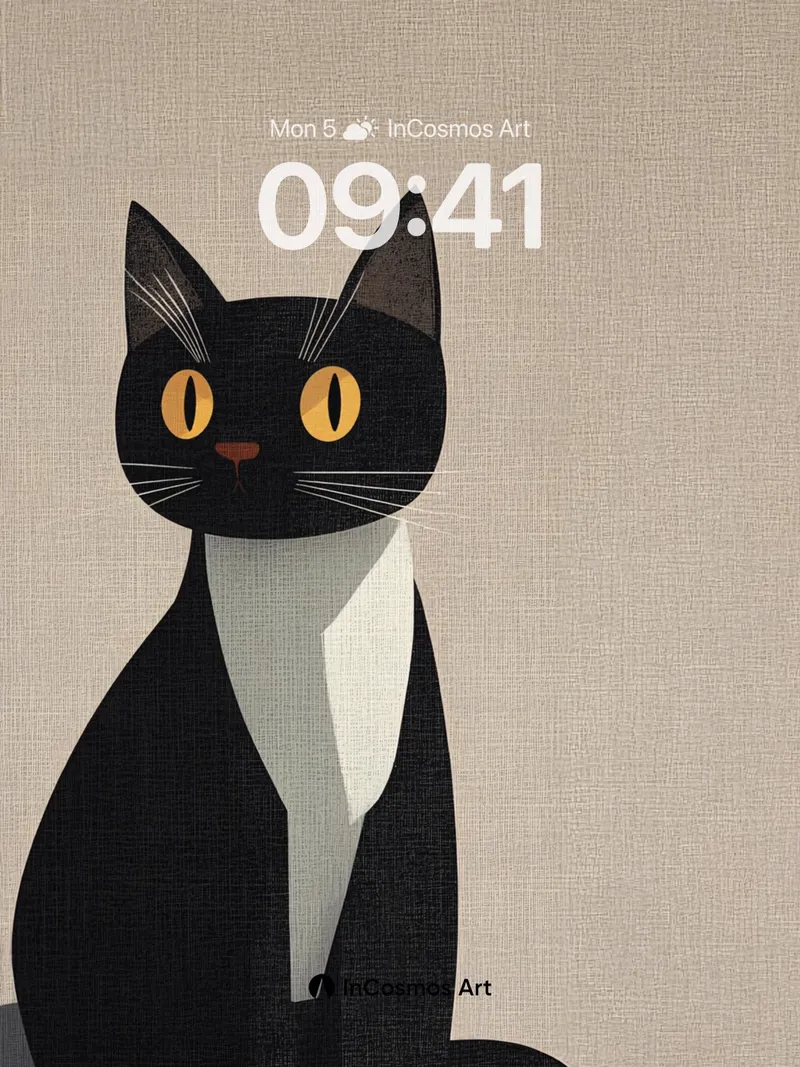
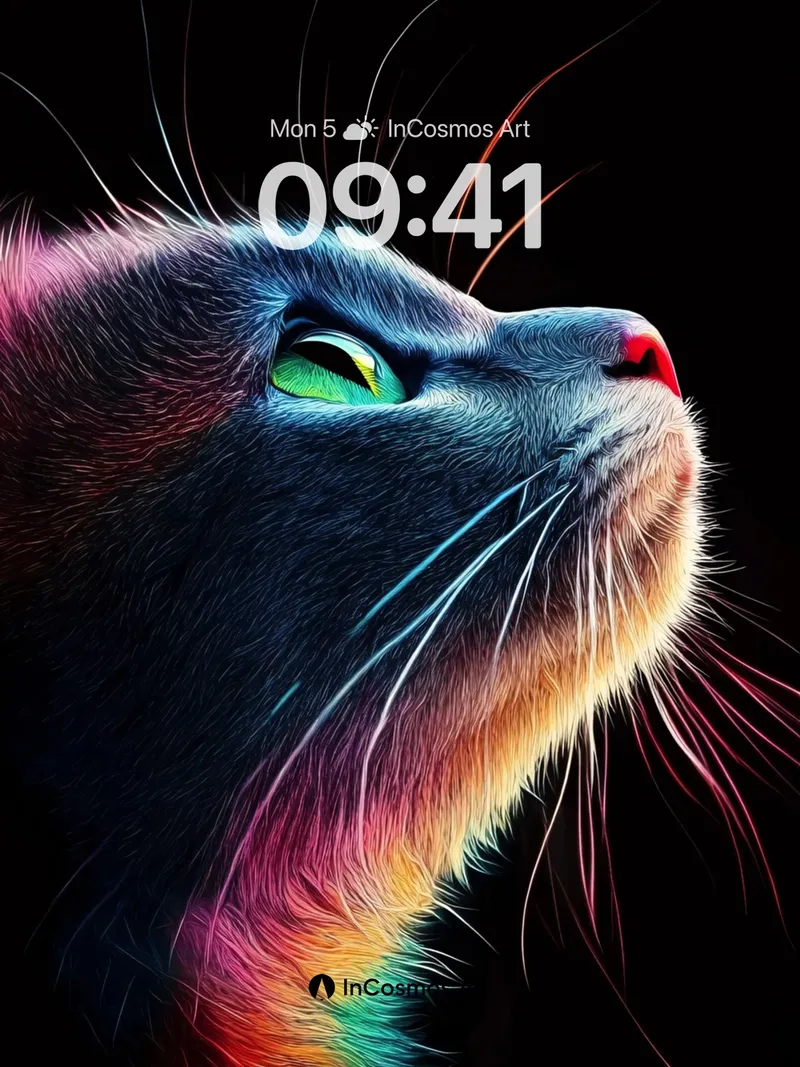
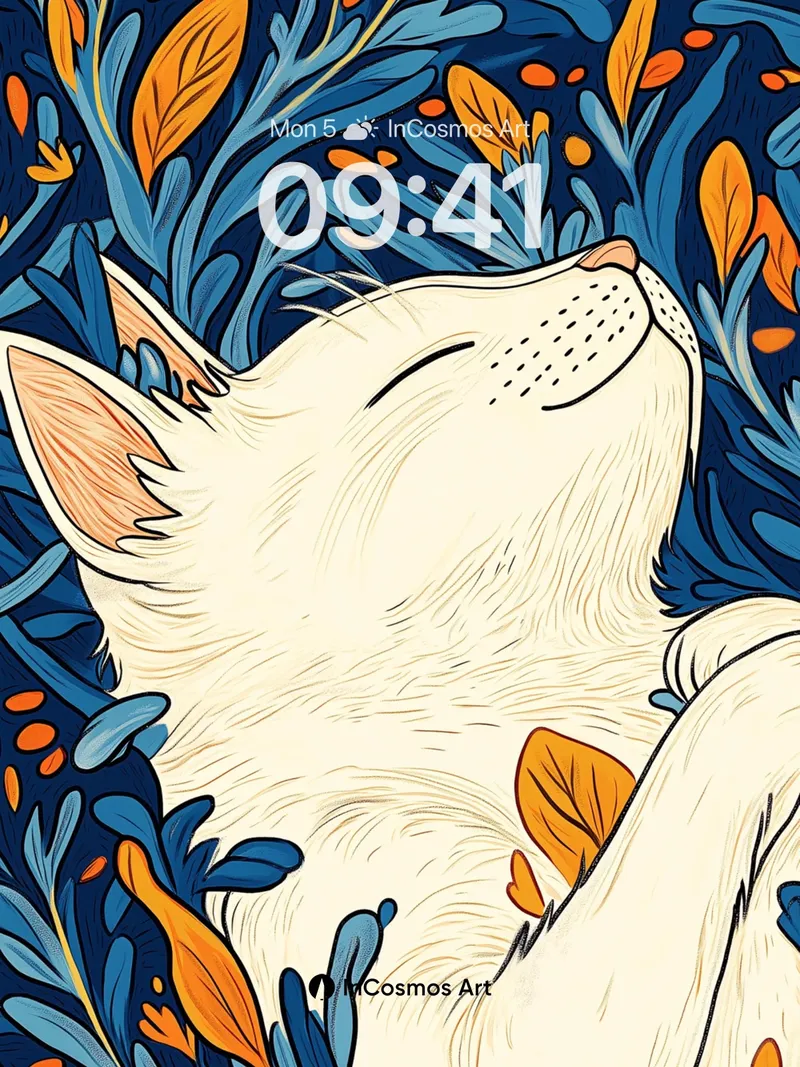
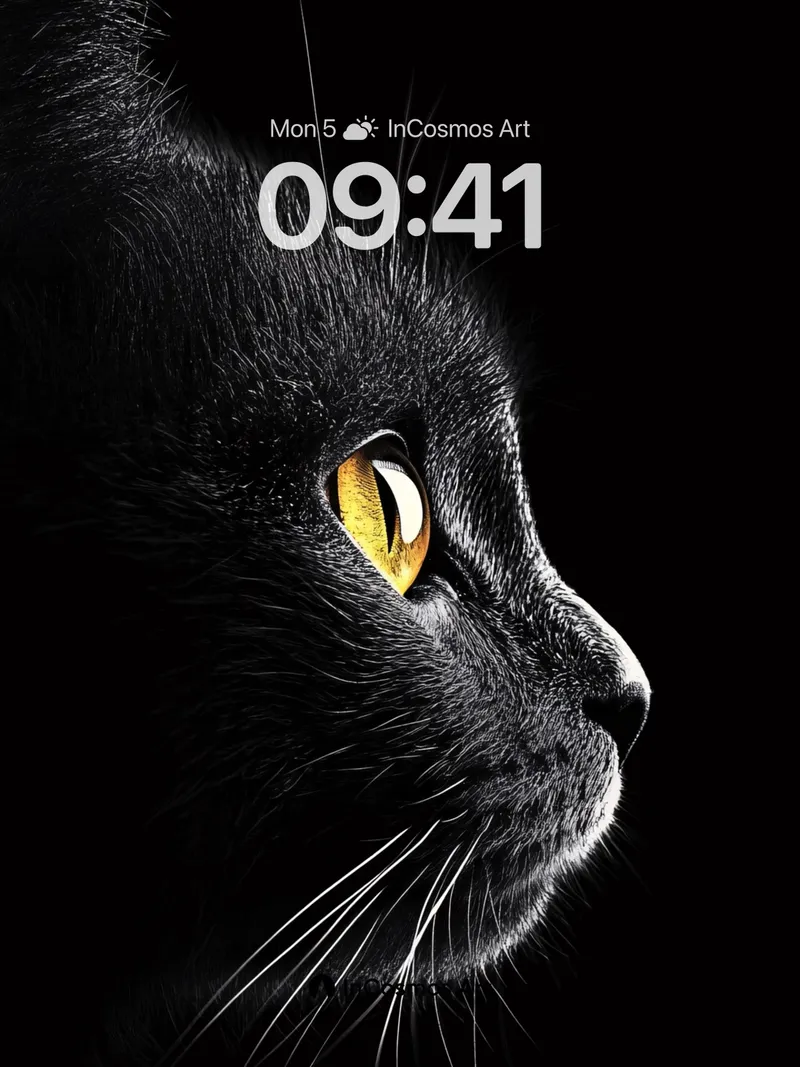
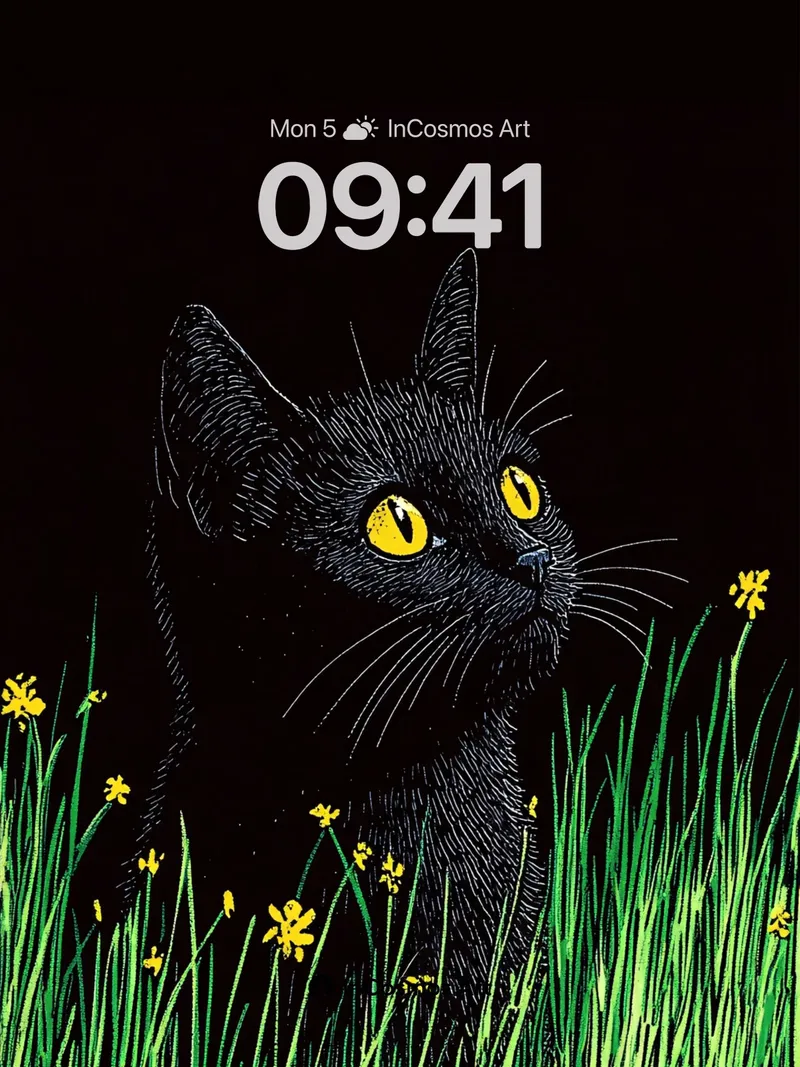
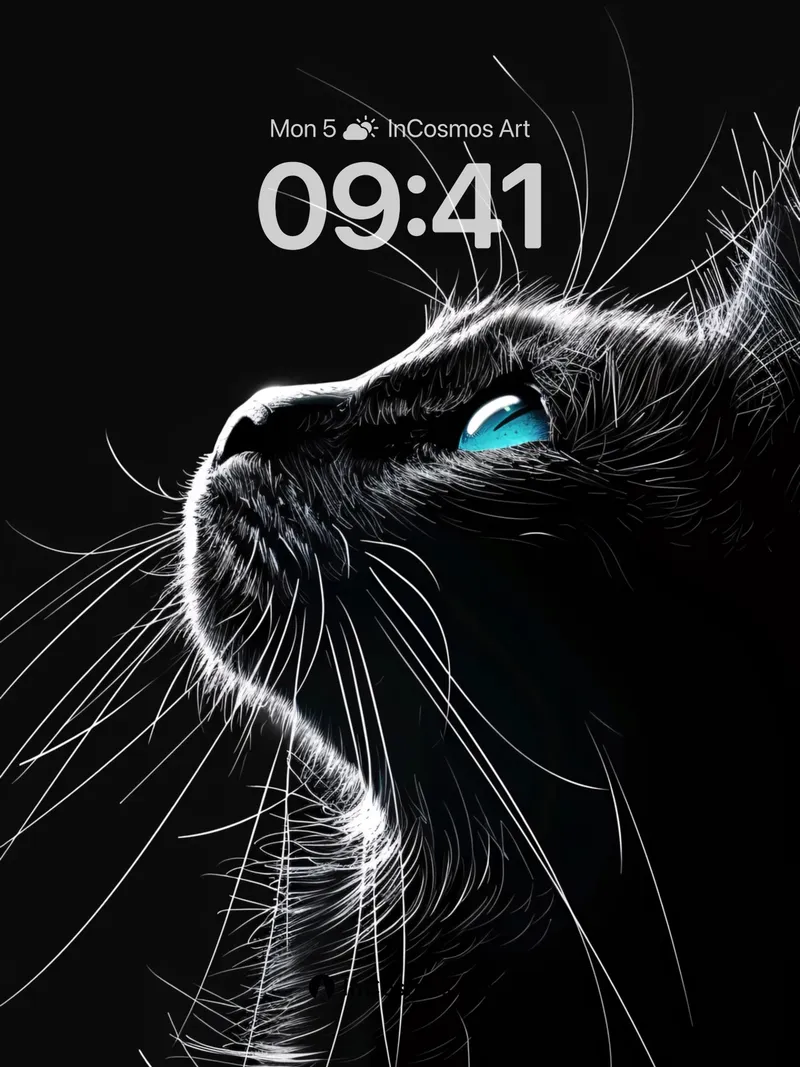
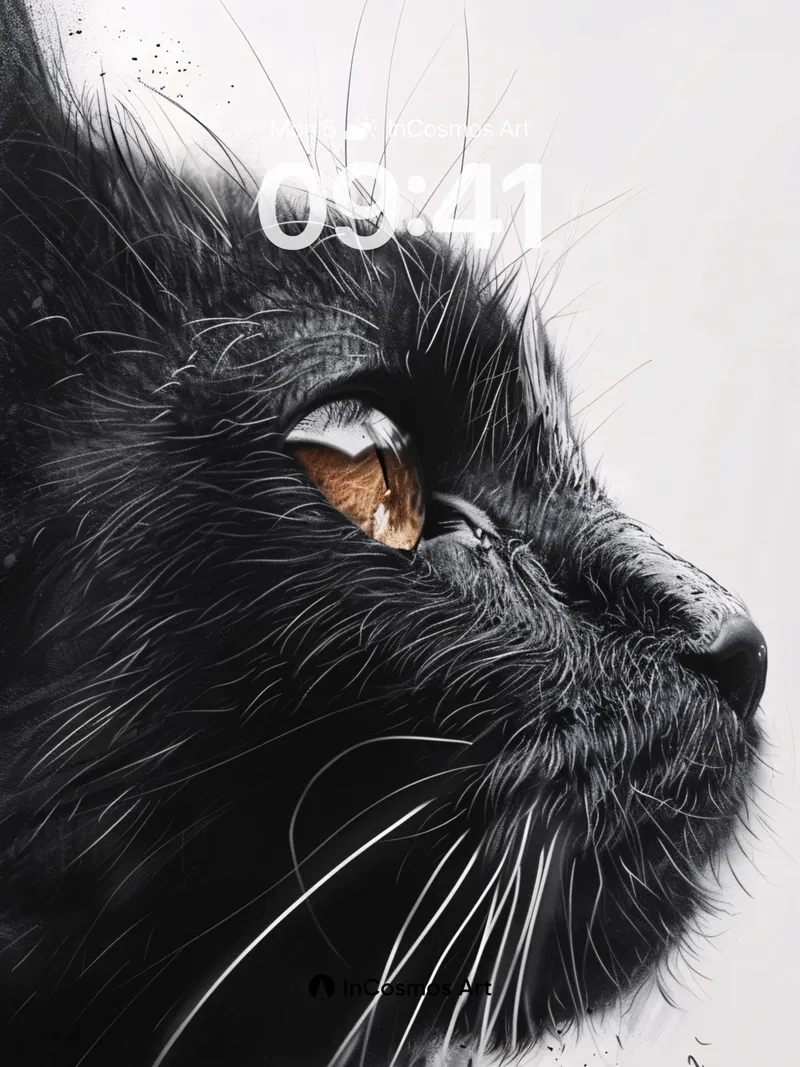
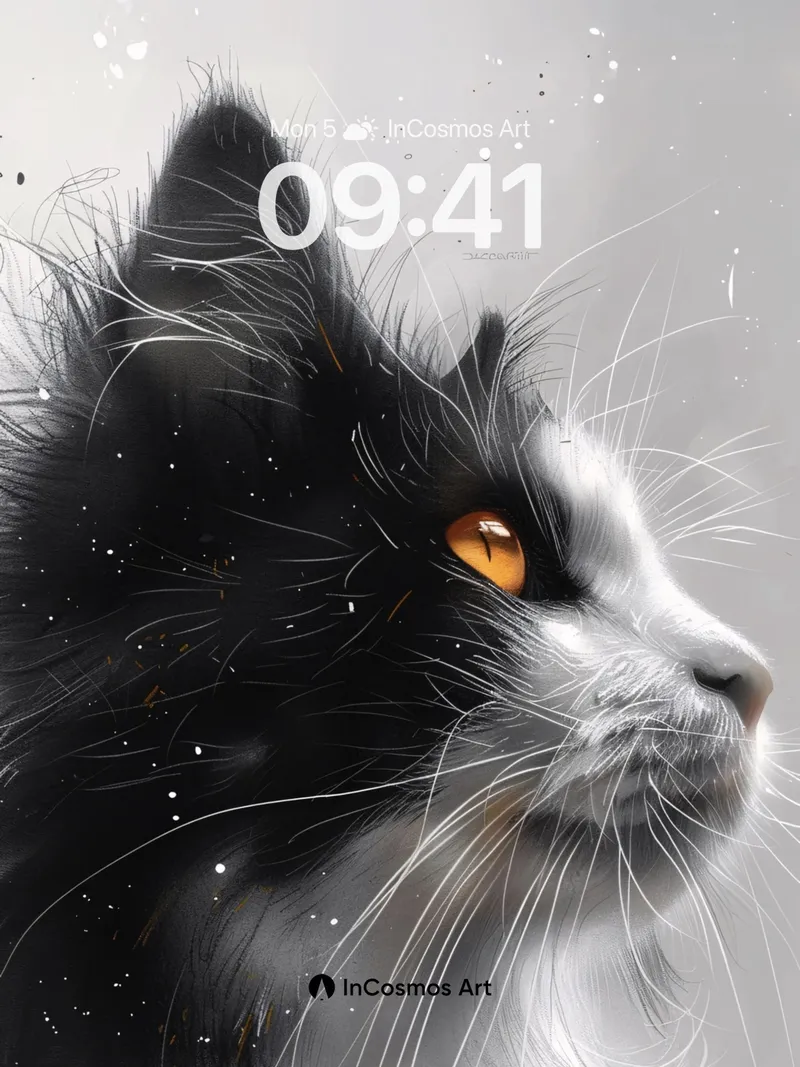
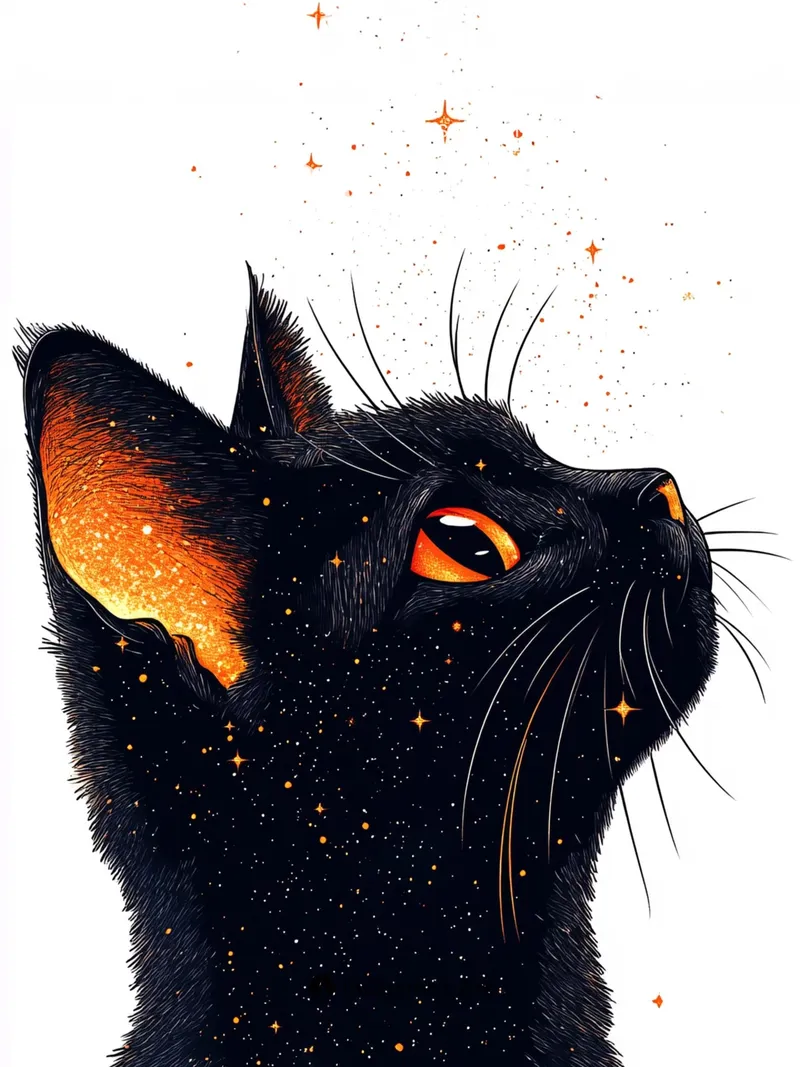
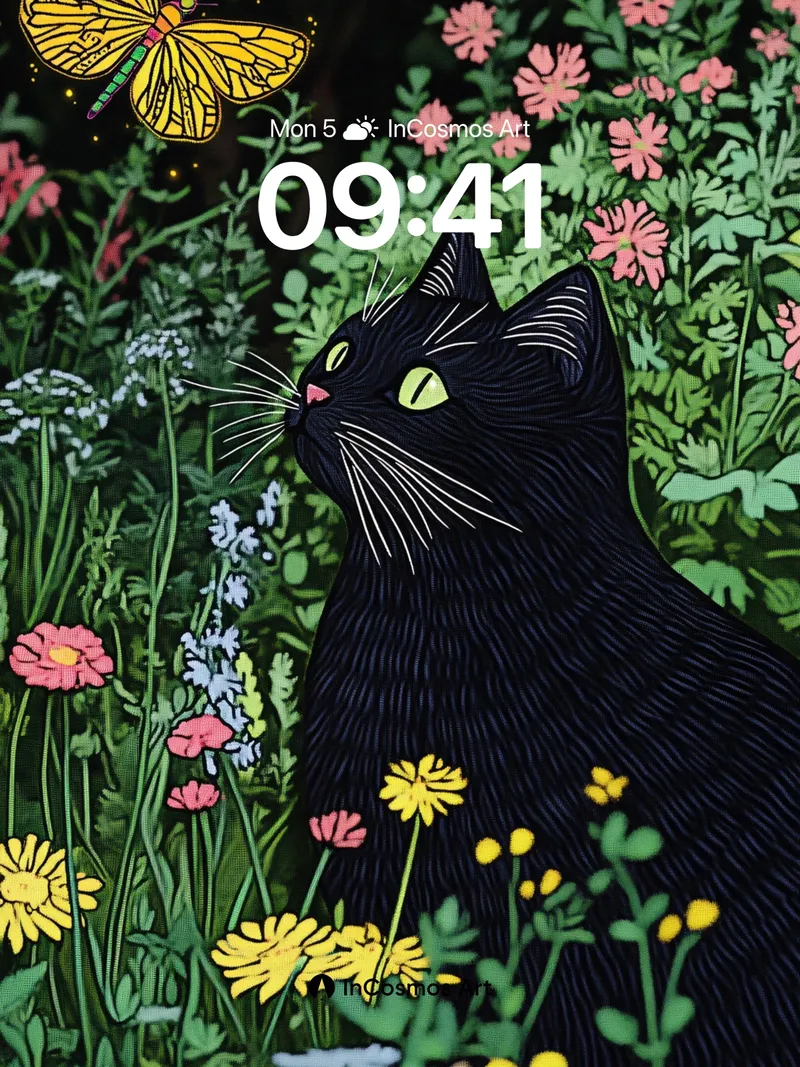
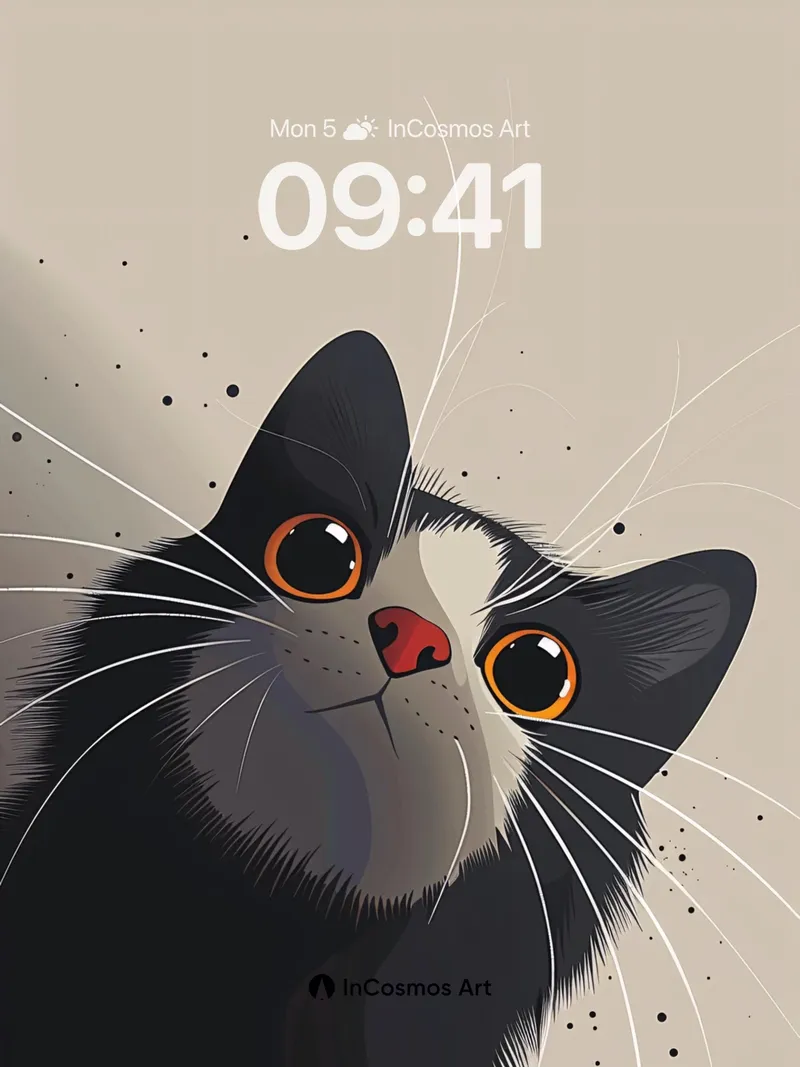
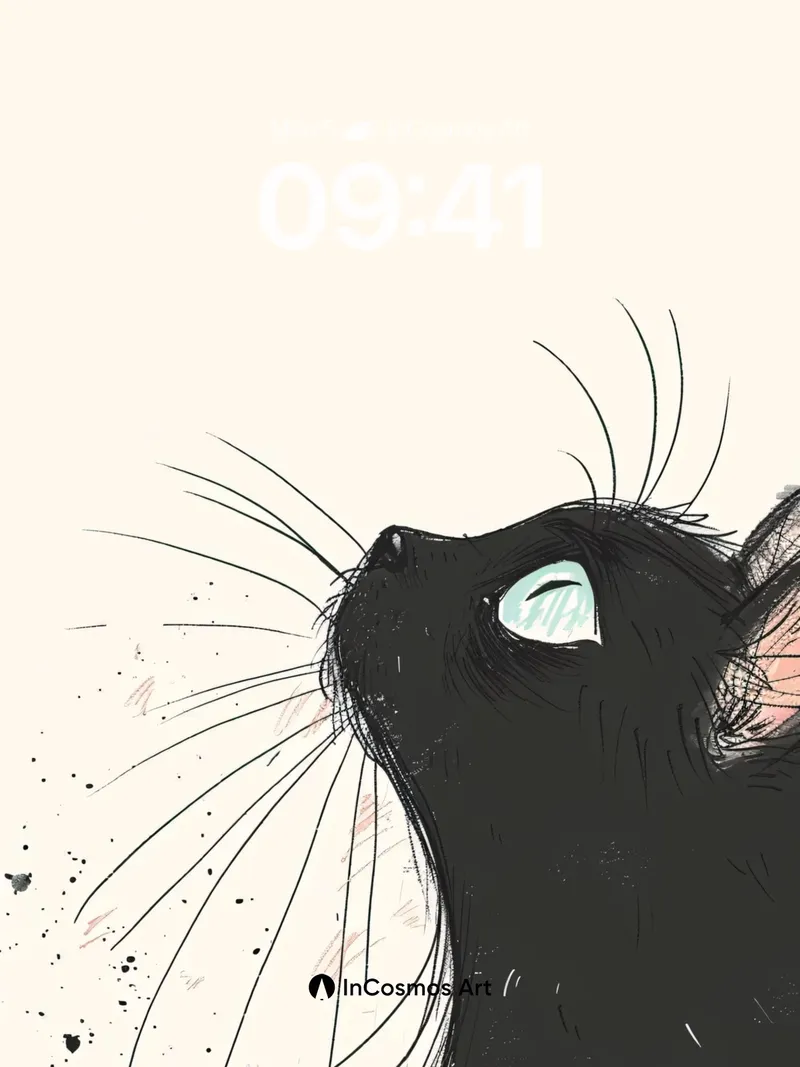
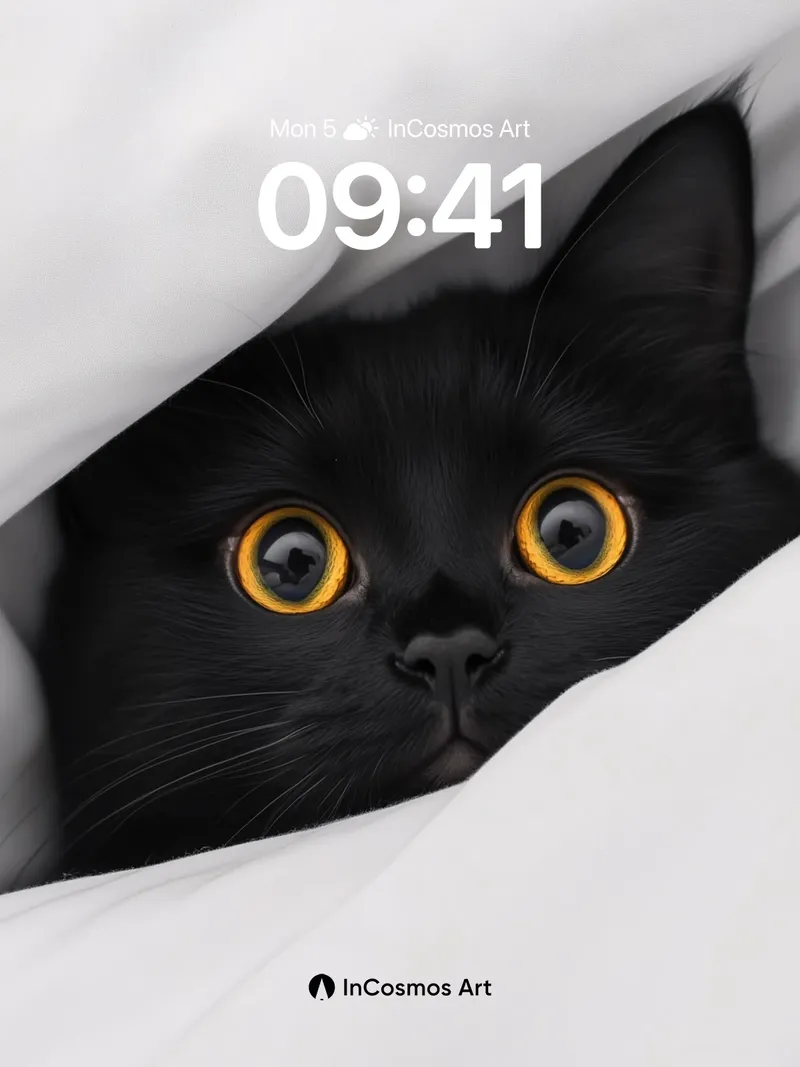
In human culture, cats have always existed beyond mere biological classification. They are shadows of the night, silent observers, symbols that wander between myth and reality. When gaze meets a cat’s eye, it feels like glimpsing an entrance to another universe—not a reflection of the world, but a mirror of inner depths. These digital depictions of cats transcend pet or animal status, becoming vessels of emotion, consciousness, and aesthetic meaning. Their eyes are imbued with chromatic magic—icy blue, fiery red, luminous green, golden yellow—each hue suggesting a distinct emotional dimension: solitude, alertness, curiosity, contemplation. This visual language transcends natural form, elevating the feline image into symbolic existence.
Eyes as Mediums
The cat’s eye is central in these works. It functions not only as a sensory organ but also as an emotional portal and cultural mirror. Blue irises convey calm detachment; red radiates mystery and danger; green suggests life and the unknown; gold embodies wisdom and ancient memory. Artists amplify expressiveness through exaggeration and abstraction, turning eyes into bridges between viewer and image. Set against dark backgrounds, these eyes glow like stars, prompting philosophical reflections on presence and perception.
Chromatic Psychological Narratives
Color here is not decoration but a tool of psychological storytelling. The interplay of orange-red and deep blue fur resembles concrete star clouds; stark contrast between black silhouettes and bright irises creates intense visual tension. These palettes defy natural laws yet precisely capture subconscious emotional resonance. For instance, a pitch-black body with glowing green eyes evokes childhood fears of the unknown while simultaneously stirring protective instincts and intimacy. This emotional contradiction mirrors modern humans’ typical mental state amid complexity.
Spiritual Symbols in the Digital Age
In a technology-dominated era, cats are reimagined as anti-technological spiritual symbols. They resist definition, operate without network dependence, yet transmit emotion through primal means. These cats exist both as inhabitants of virtual spaces and metaphors for real-world conditions. Their gaze penetrates screens, reaching deep into human psyche, reminding us to preserve sensitivity to authentic feeling amidst data torrents. This art form blends Eastern mysticism with Western surrealism, constructing a familiar yet alien aesthetic realm.
Viewing as Participation
Engaging with these works is itself participation. Viewers cannot avoid the cat’s stare, compelled to confront the emotional weight projected by those eyes. Each glance becomes dialogue, self-examination. As the ‘other,’ the cat forces humans to reflect on desires, fears, and fantasies. In this interaction, art ceases to be static display and transforms into dynamic spiritual exchange.