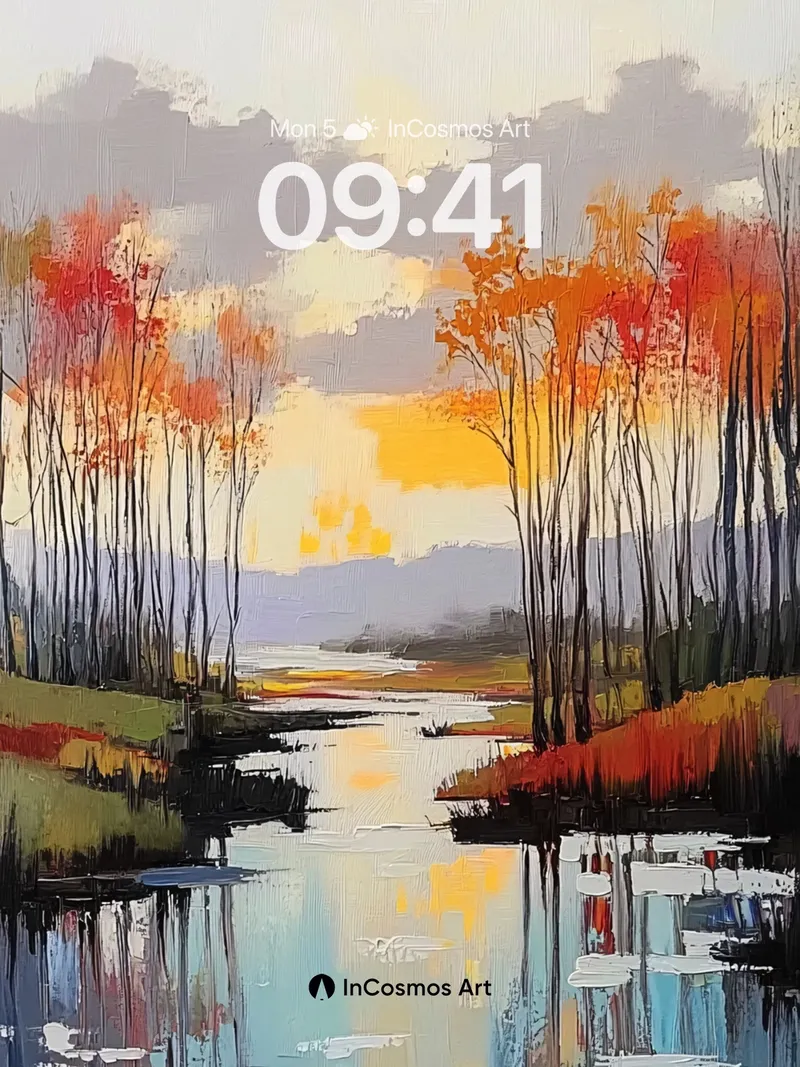
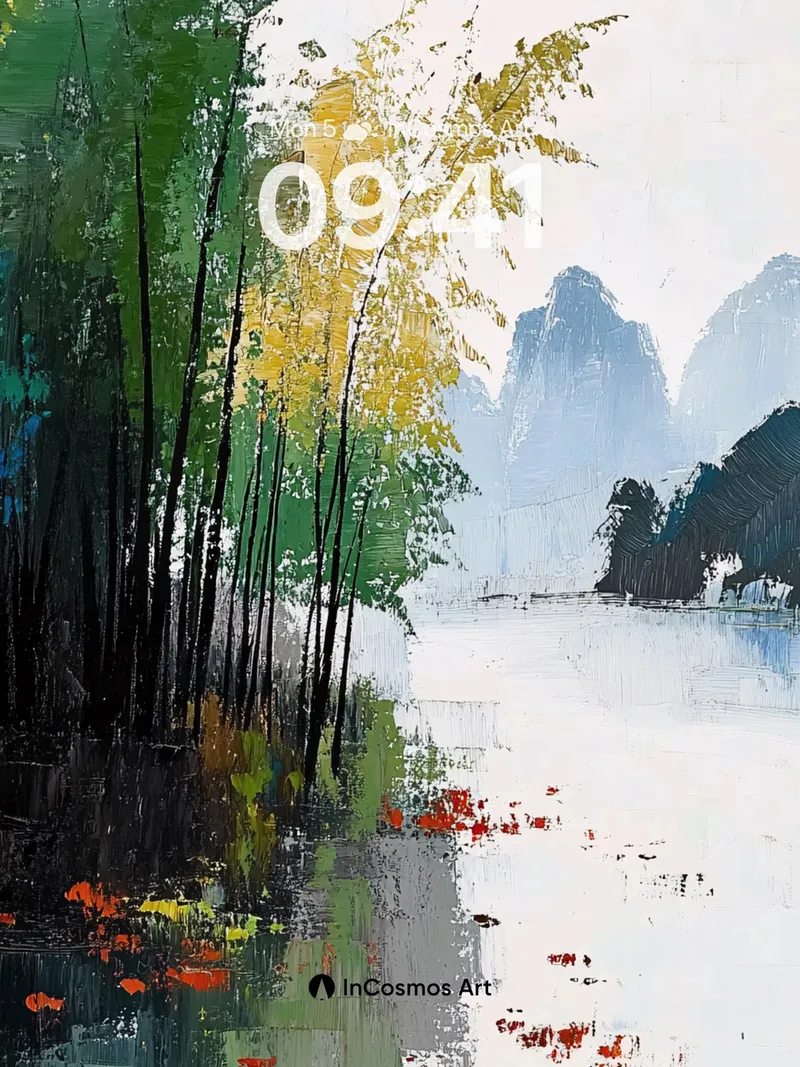
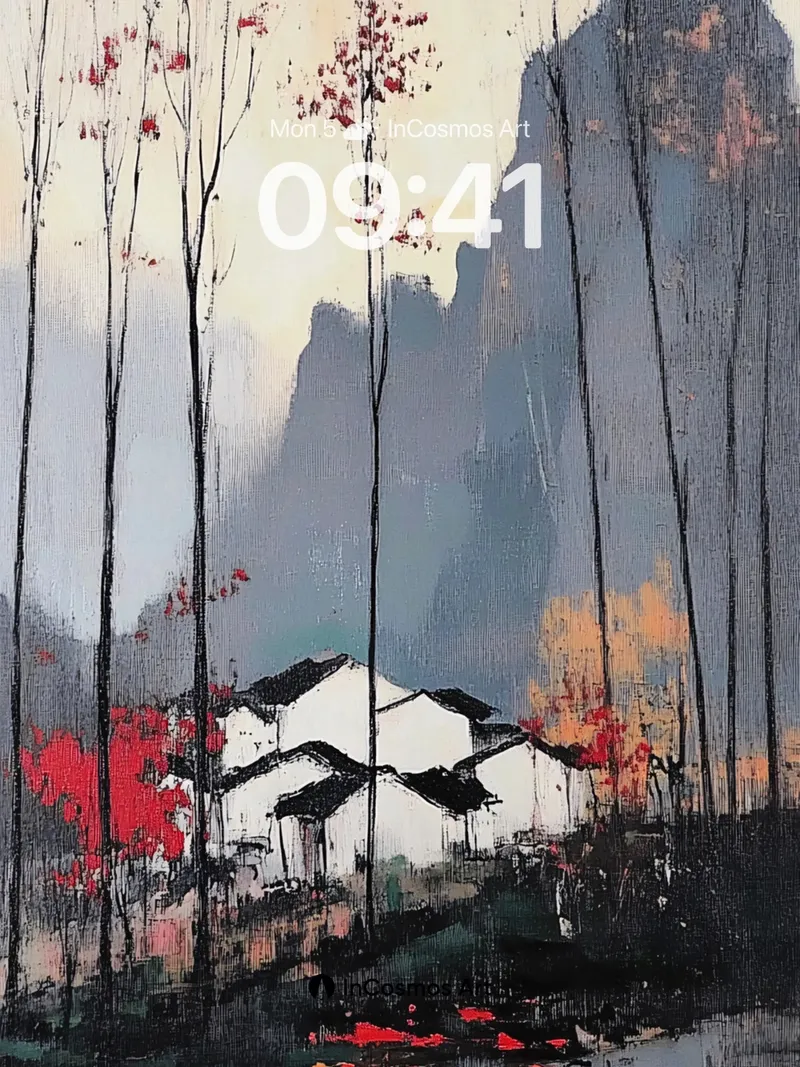
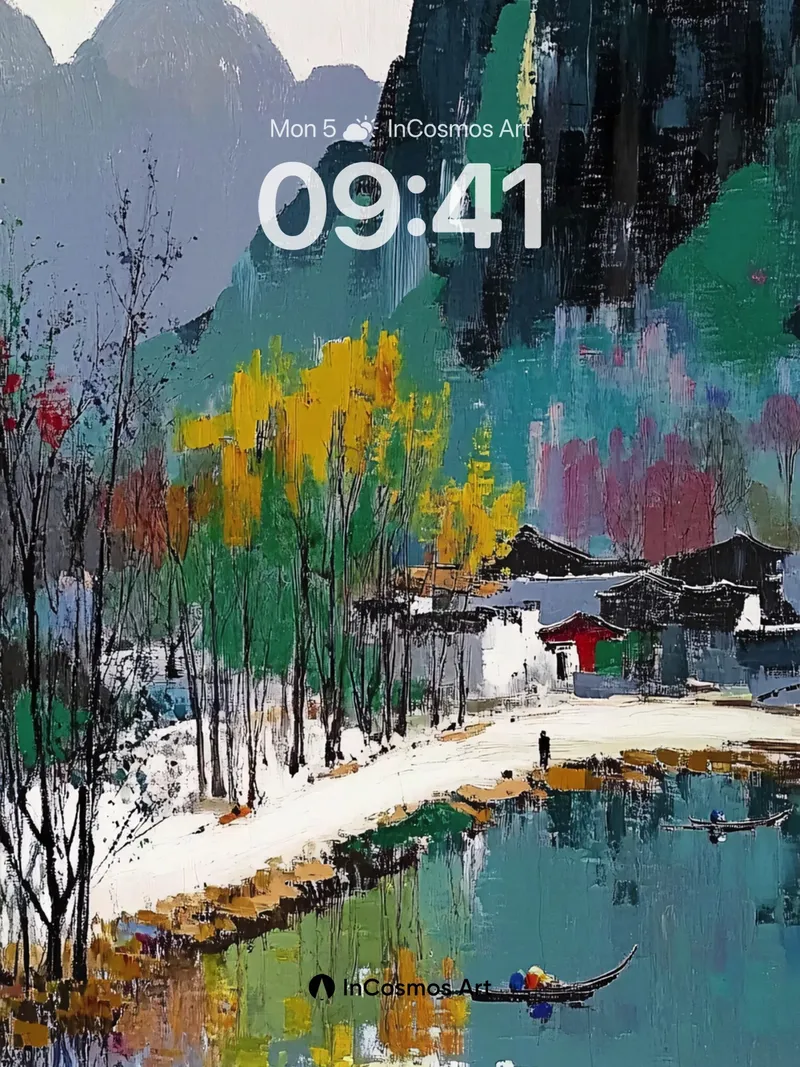
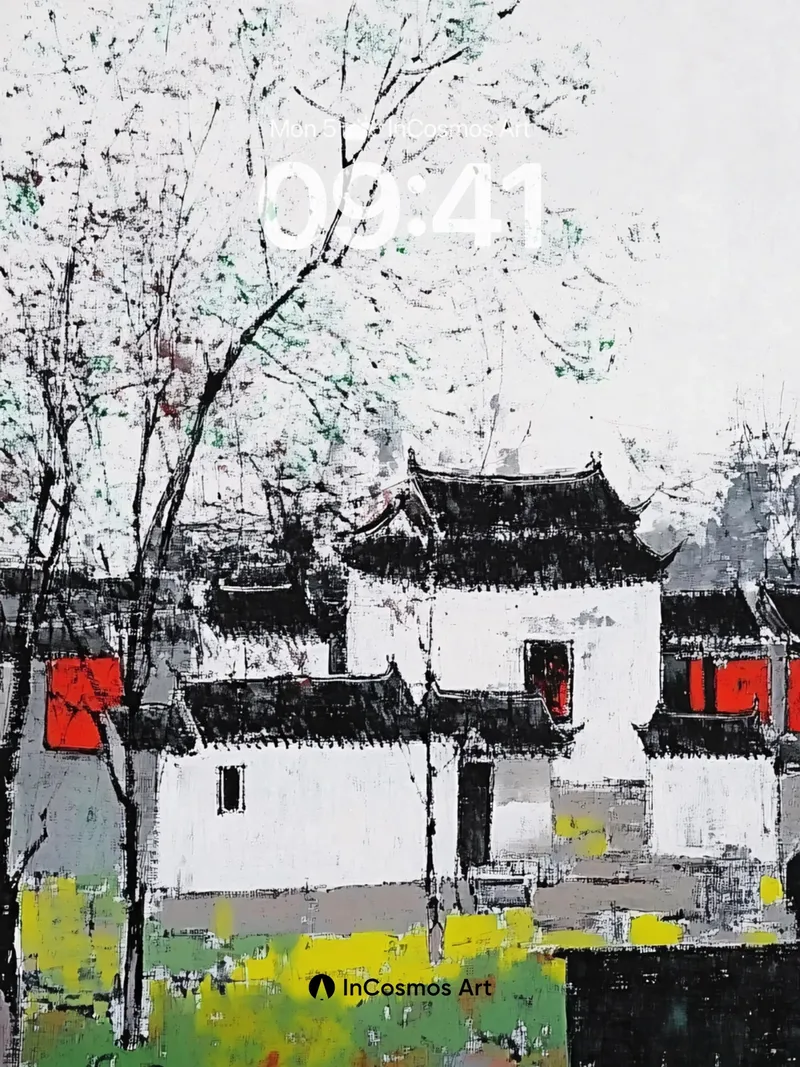
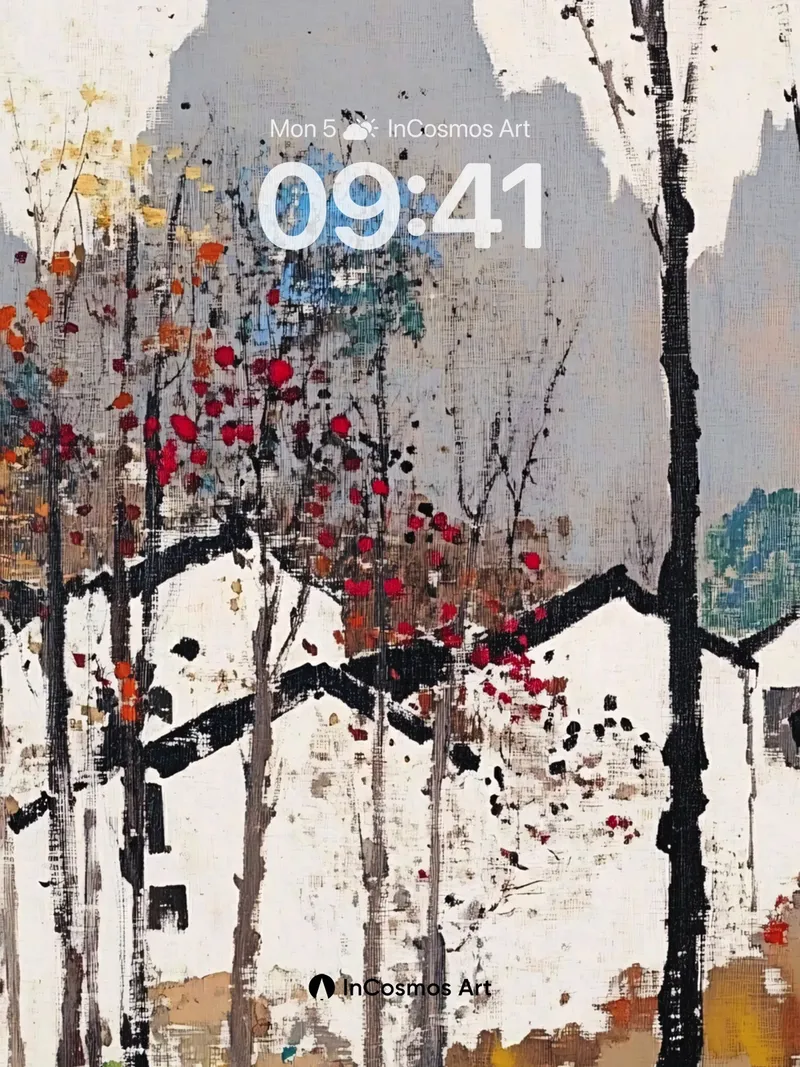
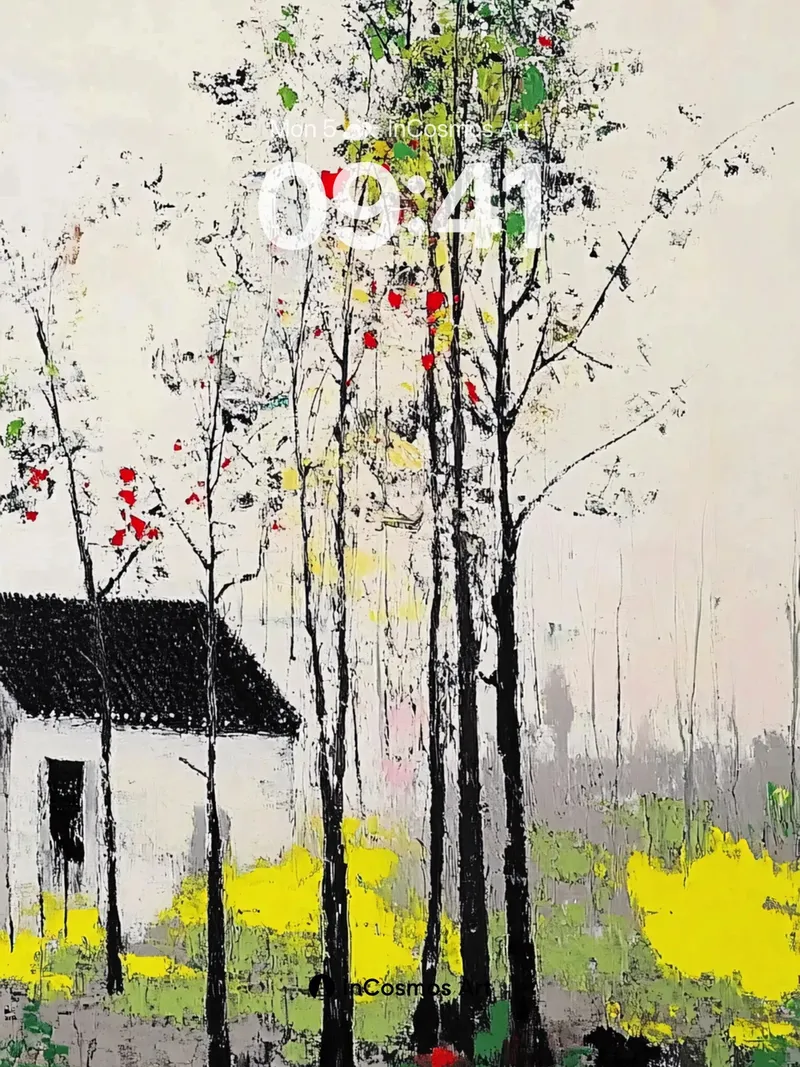
White walls and dark-tiled roofs drift in mist, mountain silhouettes bleeding into the horizon like ink stains. Tree trunks mark time’s passage; between spring blossoms and autumn leaves, human figures persistently row boats across still waters, leaving faint ripples. These scenes are not literal depictions but emotional condensations—deeply nostalgic reflections on traditional ways of living. The beauty of Jiangnan lies not in its scenery, but in how it is perceived and reimagined. Each falling leaf, each wisp of smoke, extends cultural texture, embodying a collective longing for seclusion, tranquility, and harmony with nature.
The Brushstrokes of Seasons
Seasons do not flow linearly here but layer as color fields. Spring blends pale pink plum blossoms with fresh yellow willow shoots; summer merges deep greens with rain-dampened eaves; autumn contrasts crimson maples with bare branches; winter renders emptiness through white space and gray tones. This chromatic superposition is not naturalistic representation but emotional logic. Color becomes a vessel for sentiment, not objective documentation.
The Philosophy of Water
Water is the lifeblood of Jiangnan. It reflects sky, structures, and trees, blurring boundaries between reality and illusion. Boats glide upon it, making human presence seem weightless, as if dissolving into surface ripples. Water’s movement implies time’s irreversibility, yet its stillness makes moments eternal. In this space, speed vanishes, rhythm returns to the pace of breath.
Rituals of Dwelling
Houses are low, roofs gently curved, blending seamlessly with surroundings. They do not aspire to height or grandeur but emphasize closeness to earth. Doors remain open, windows admit light—life here is not confined to private interiors but oriented toward nature. This mode of habitation reveals an Eastern wisdom: not domination over nature, but adaptation and coexistence.