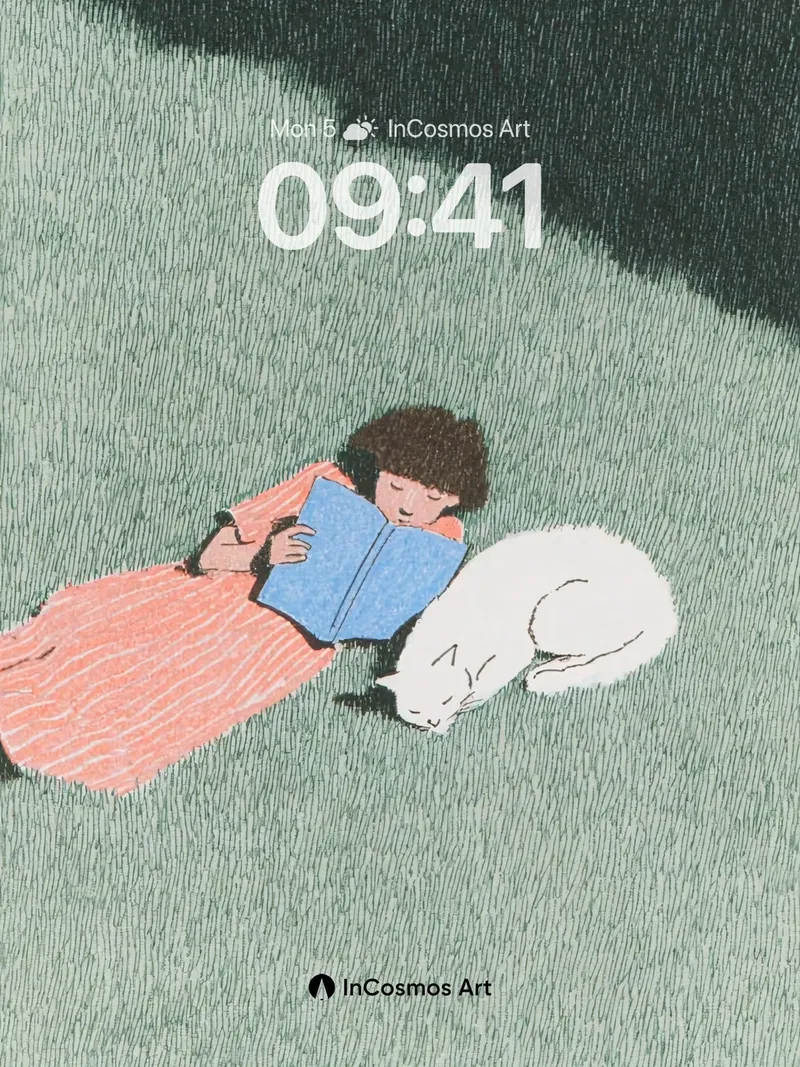
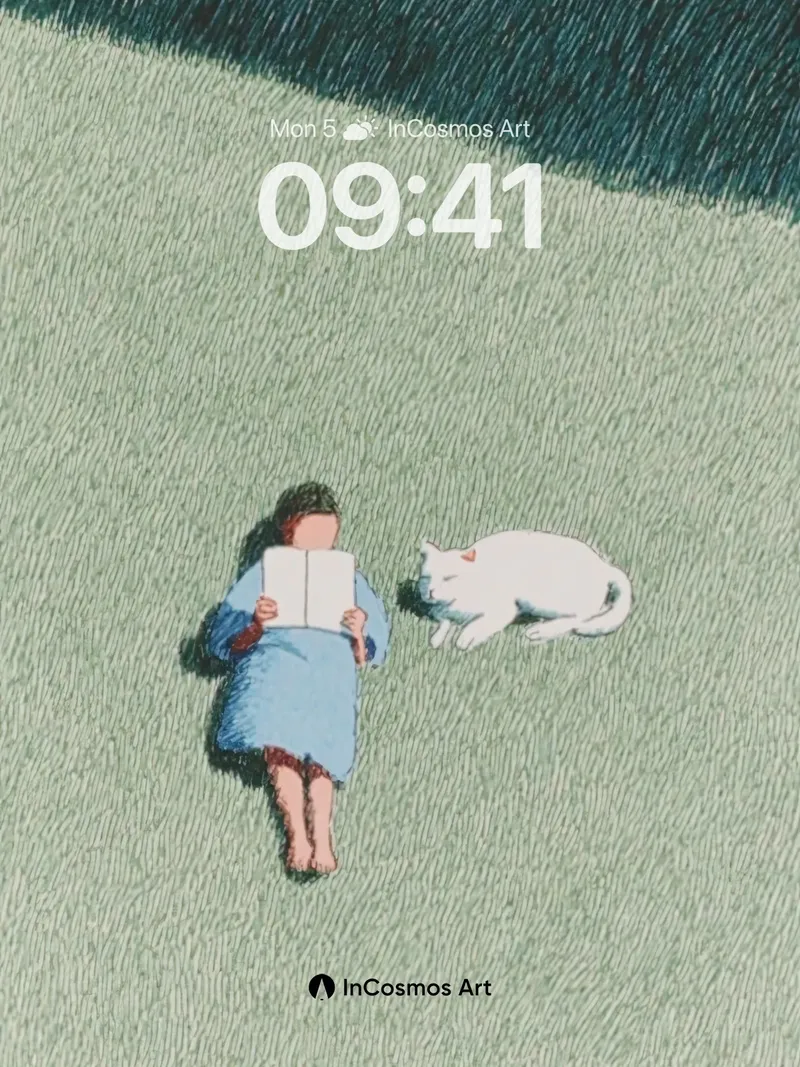
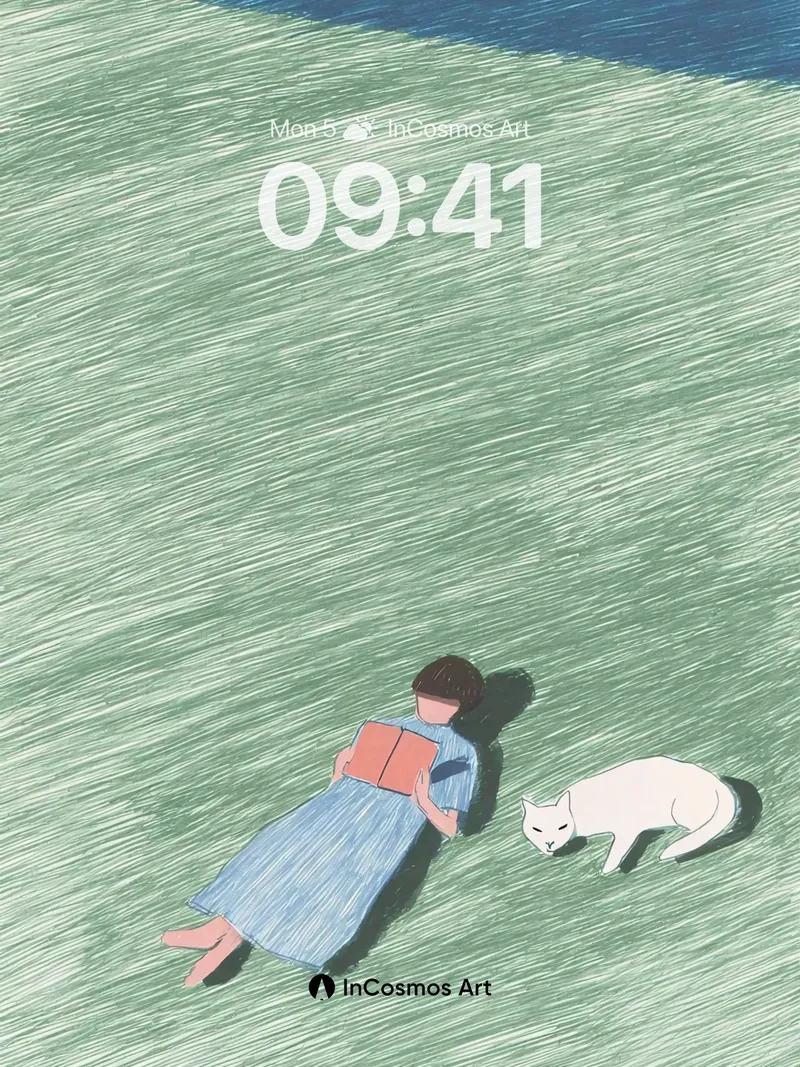
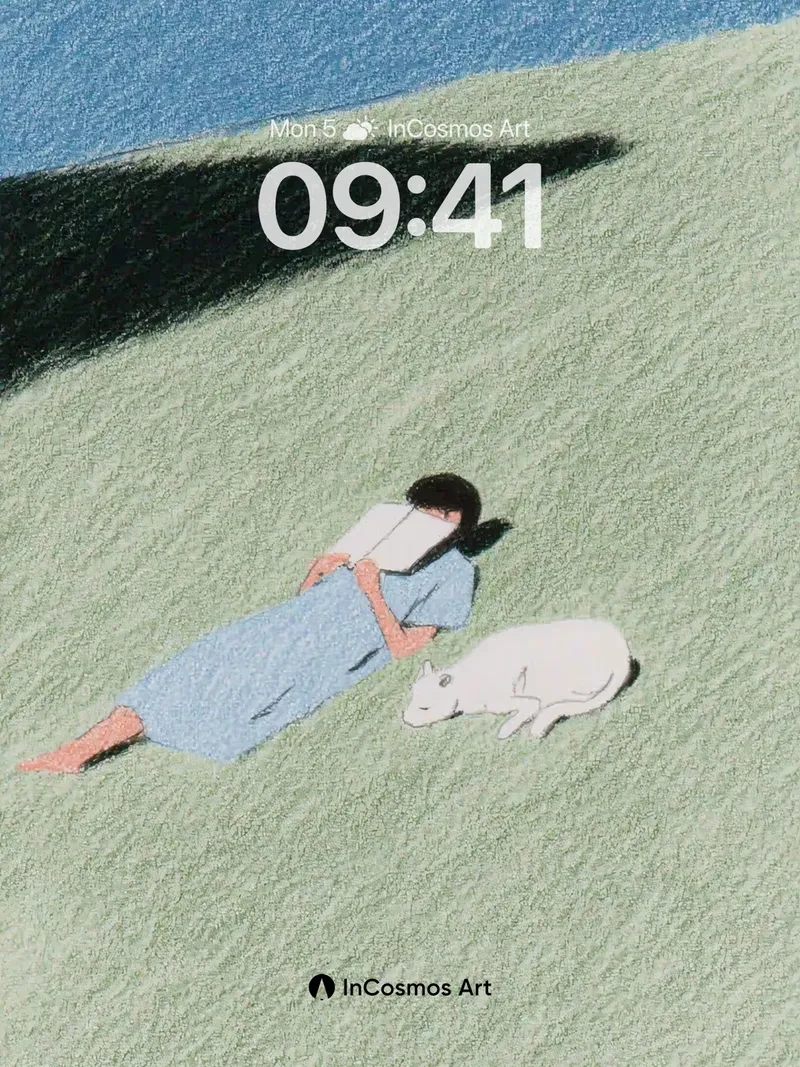
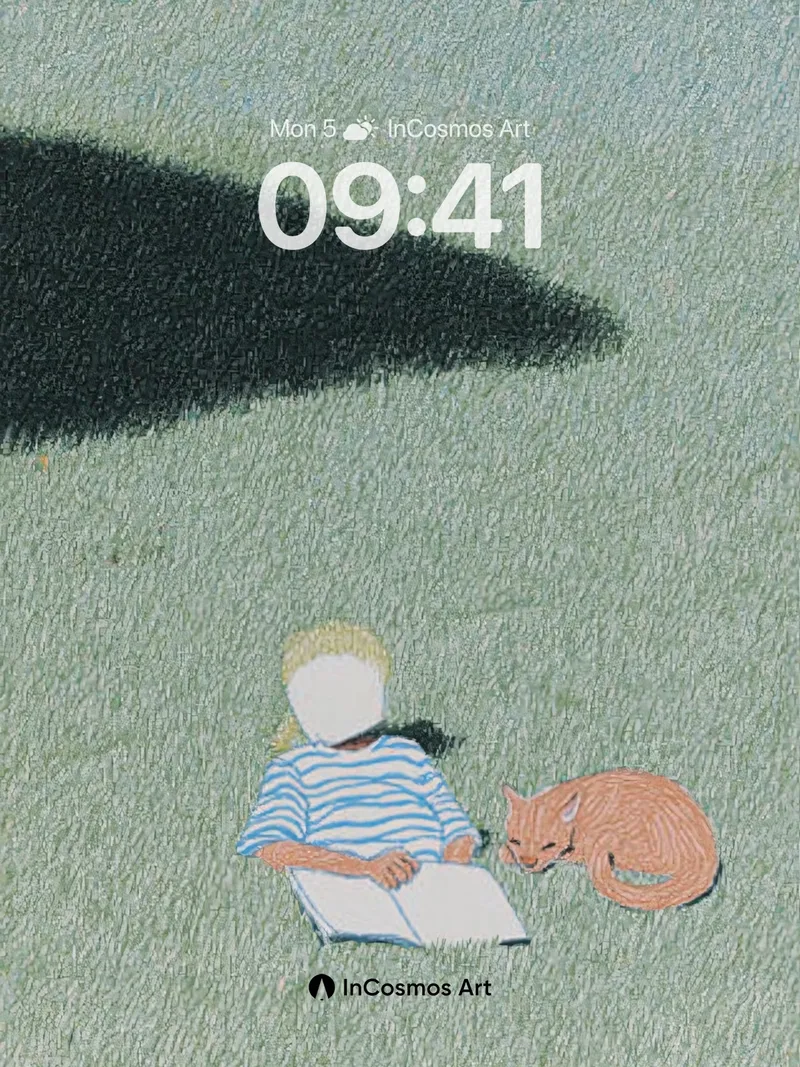
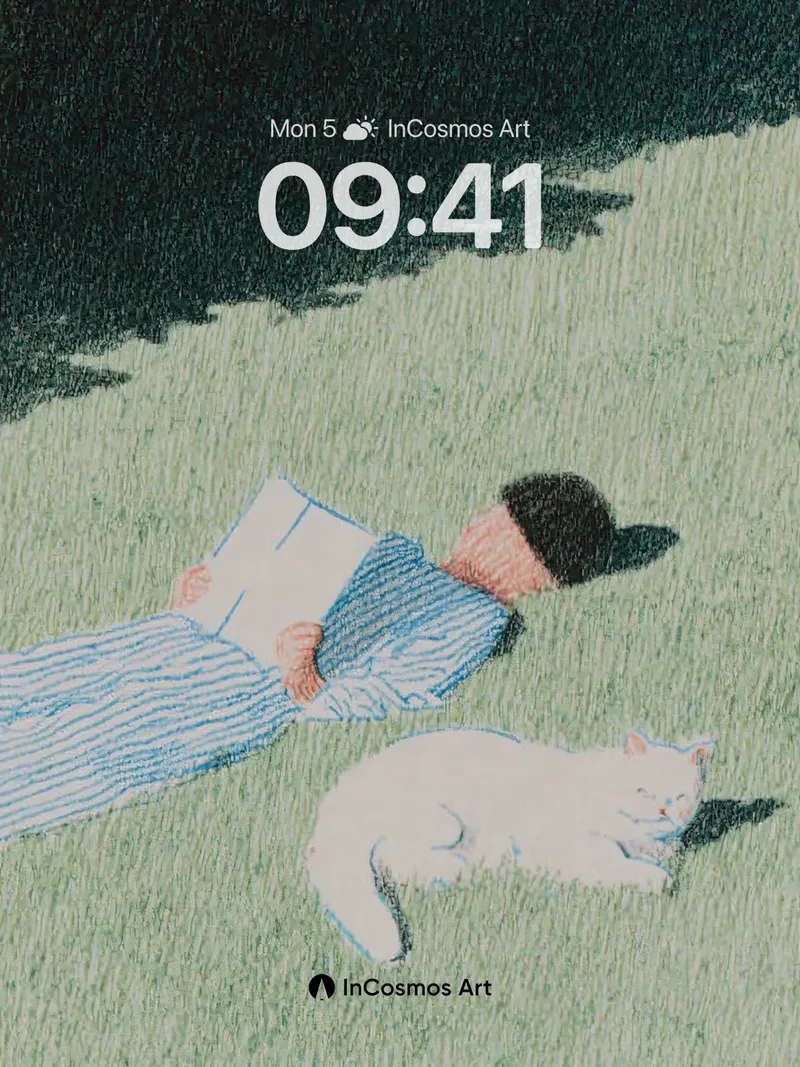
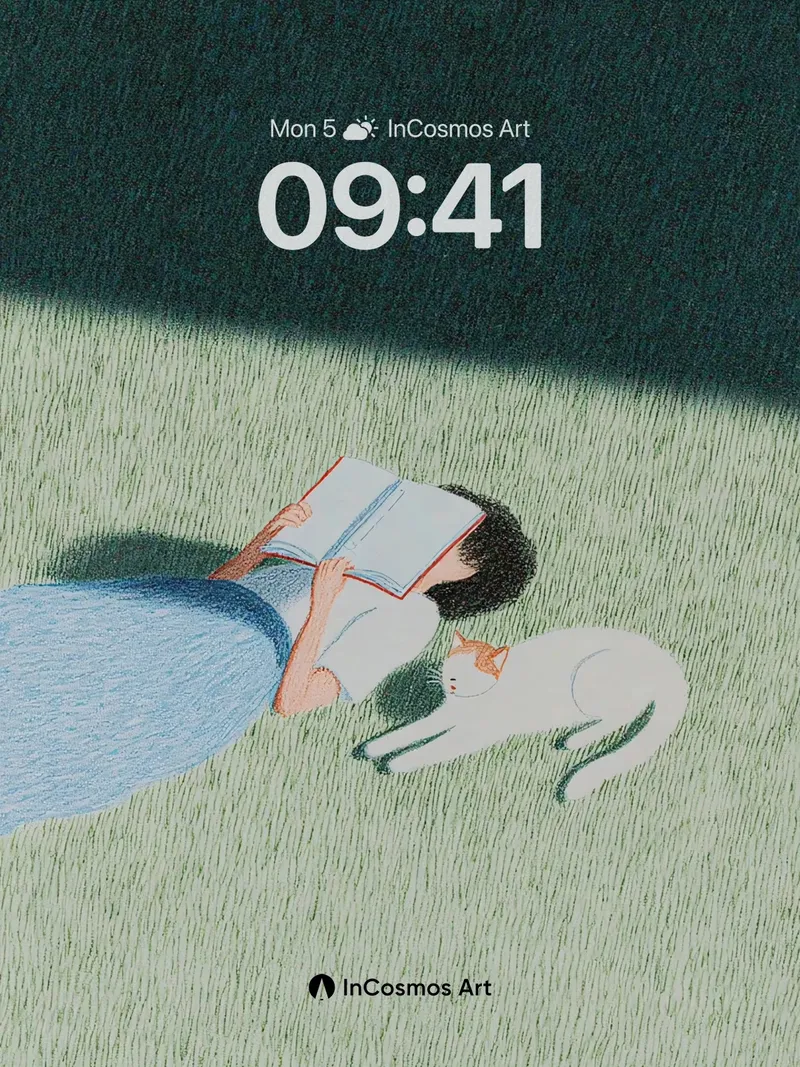
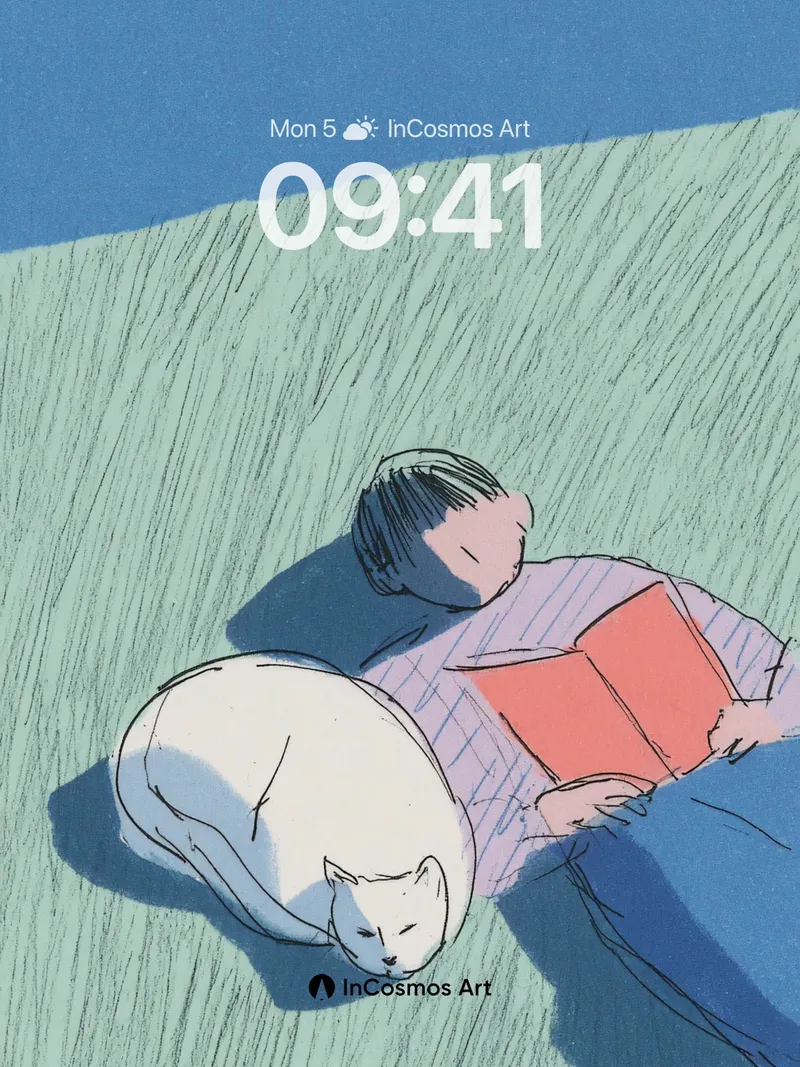
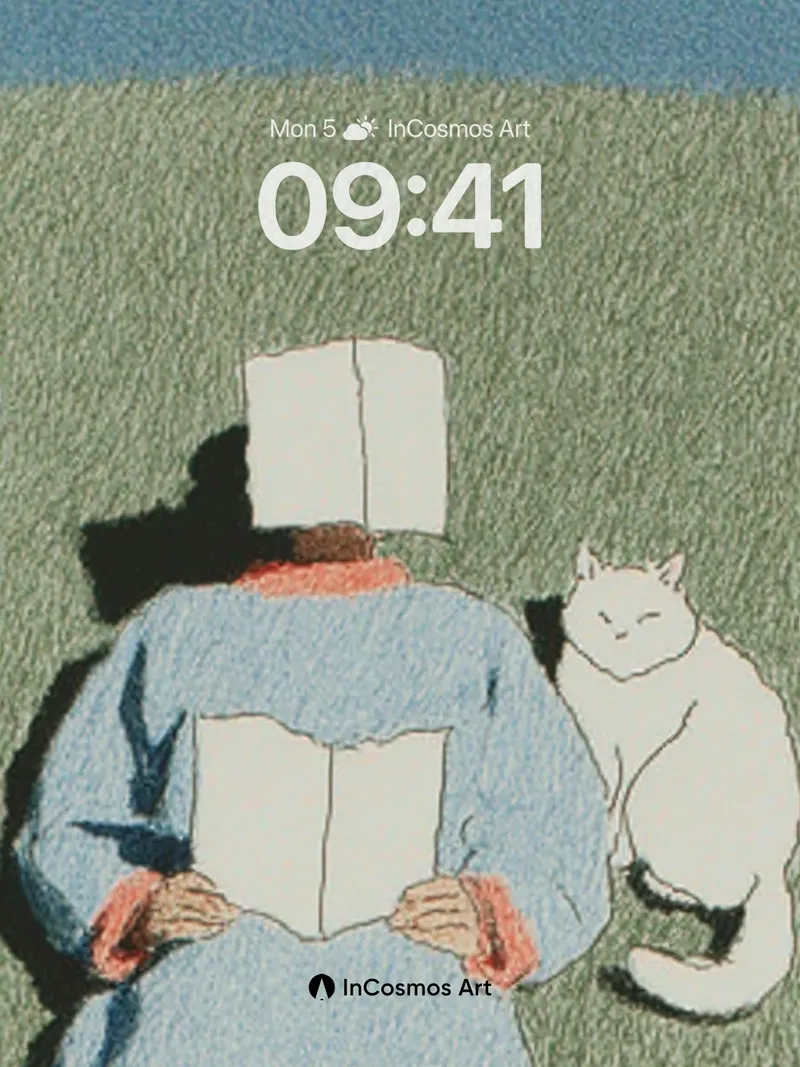
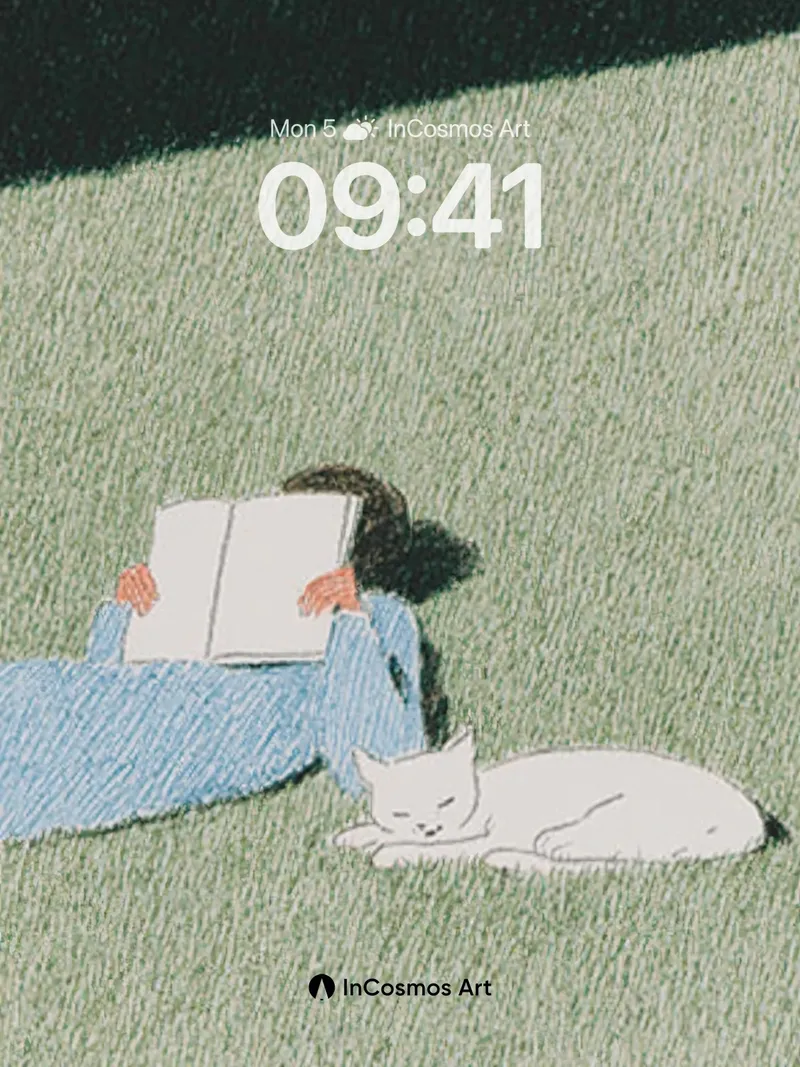
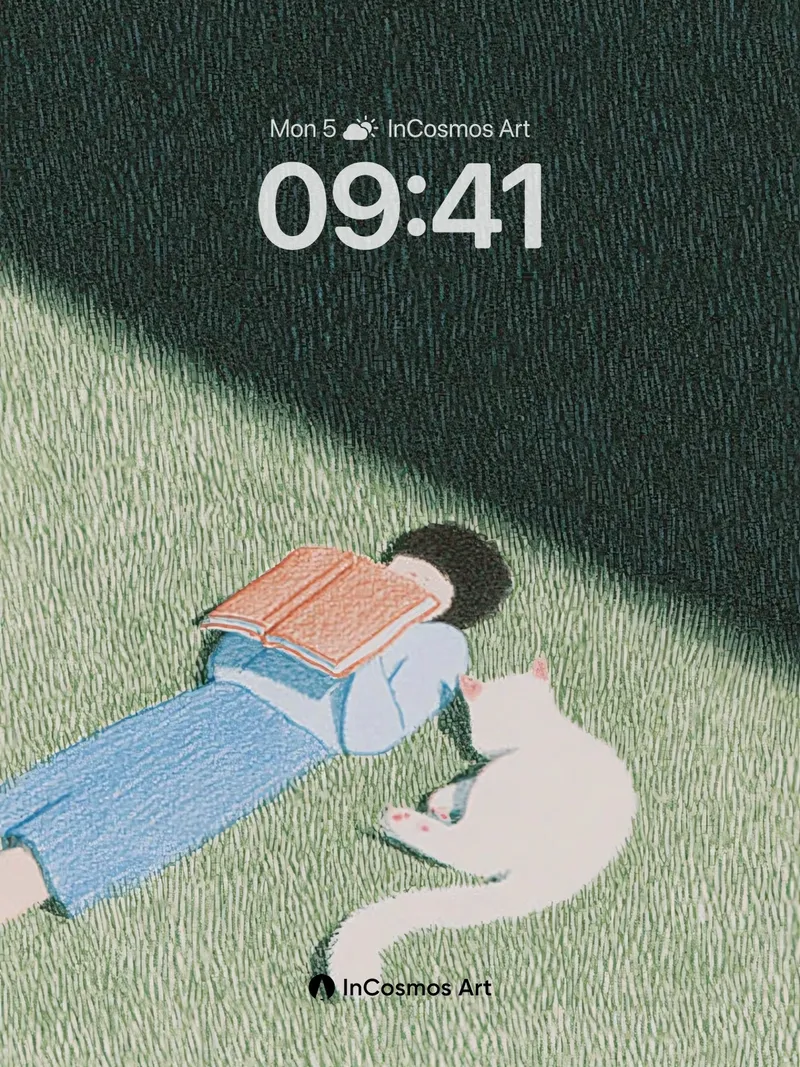
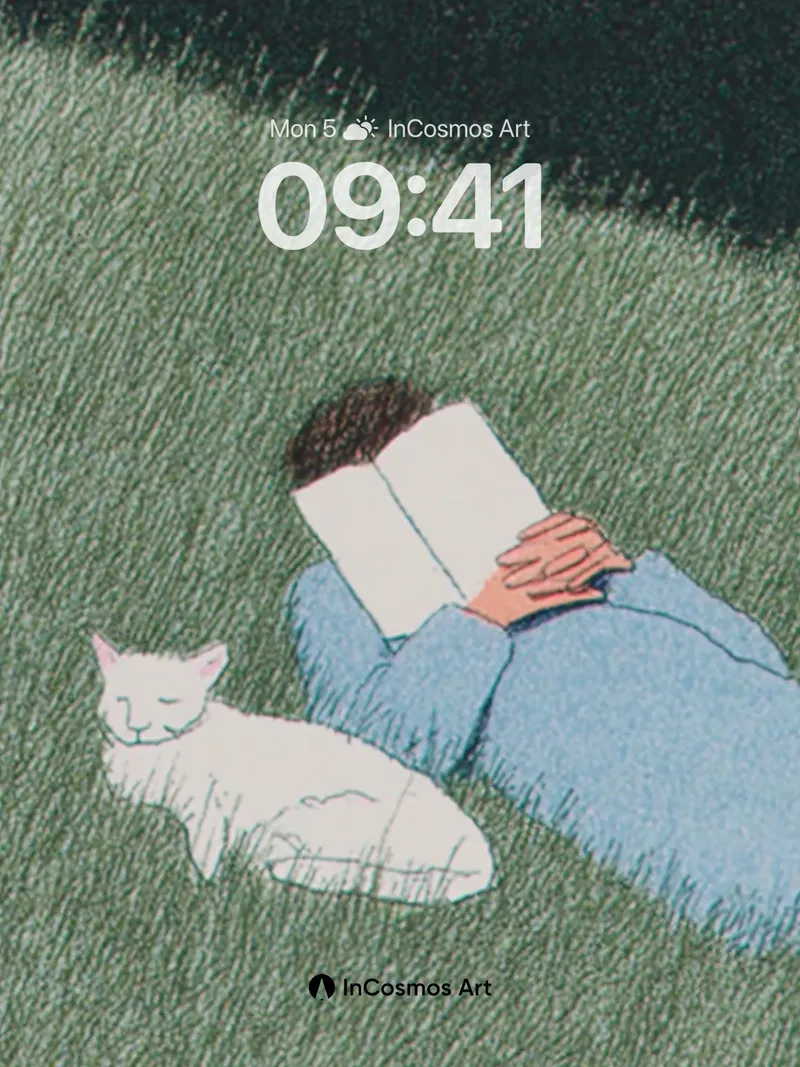
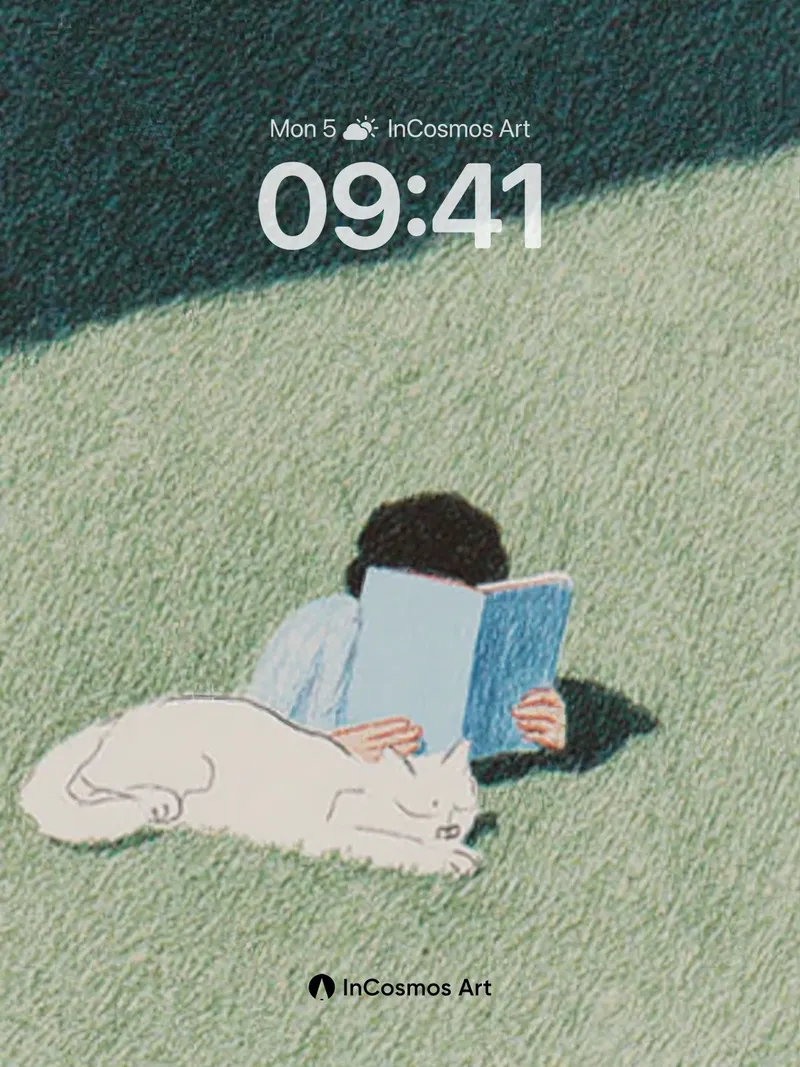
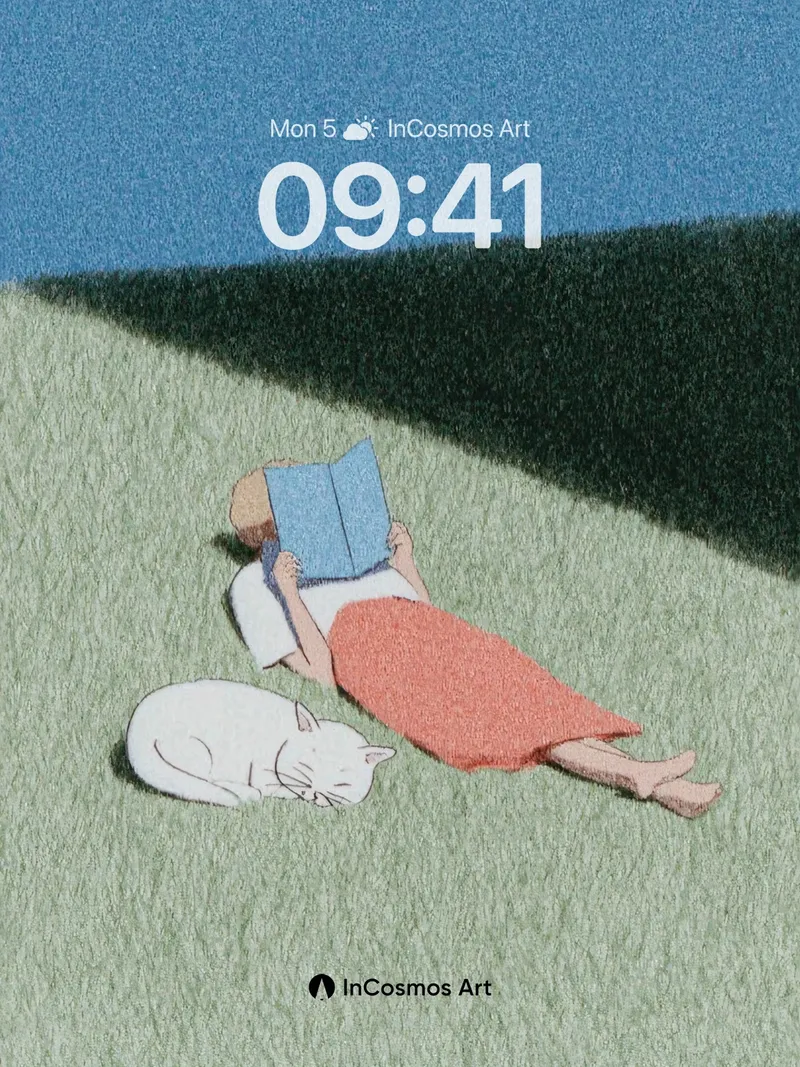
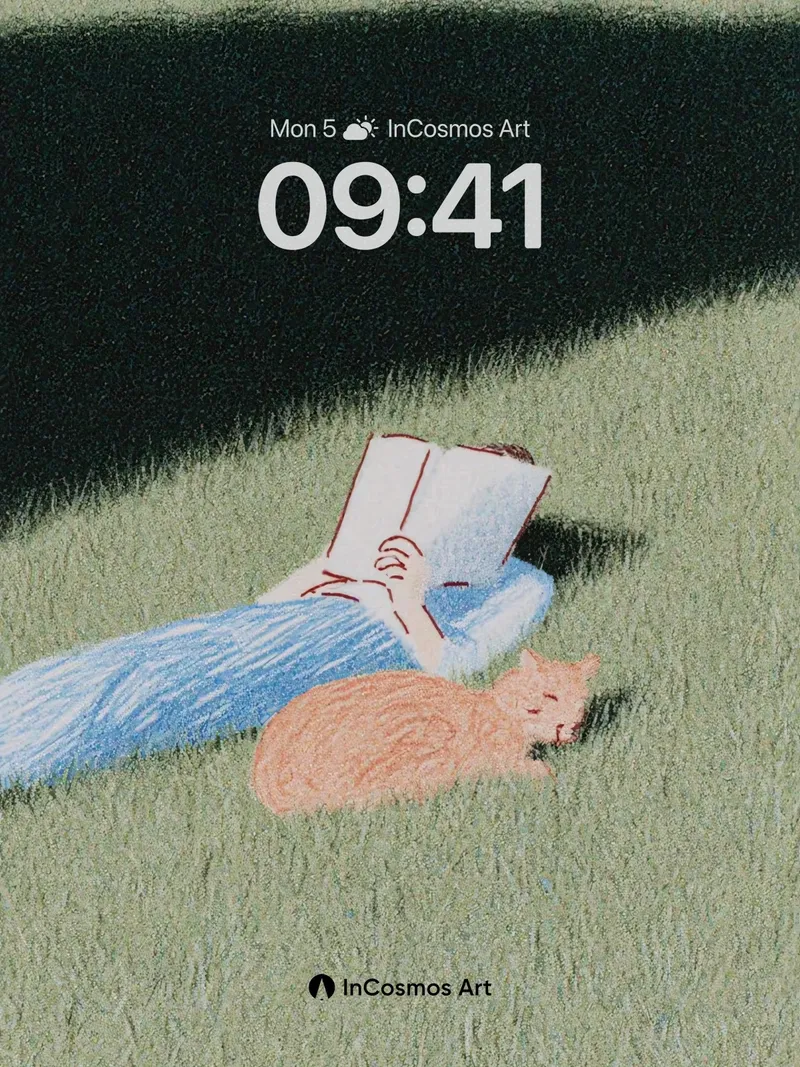
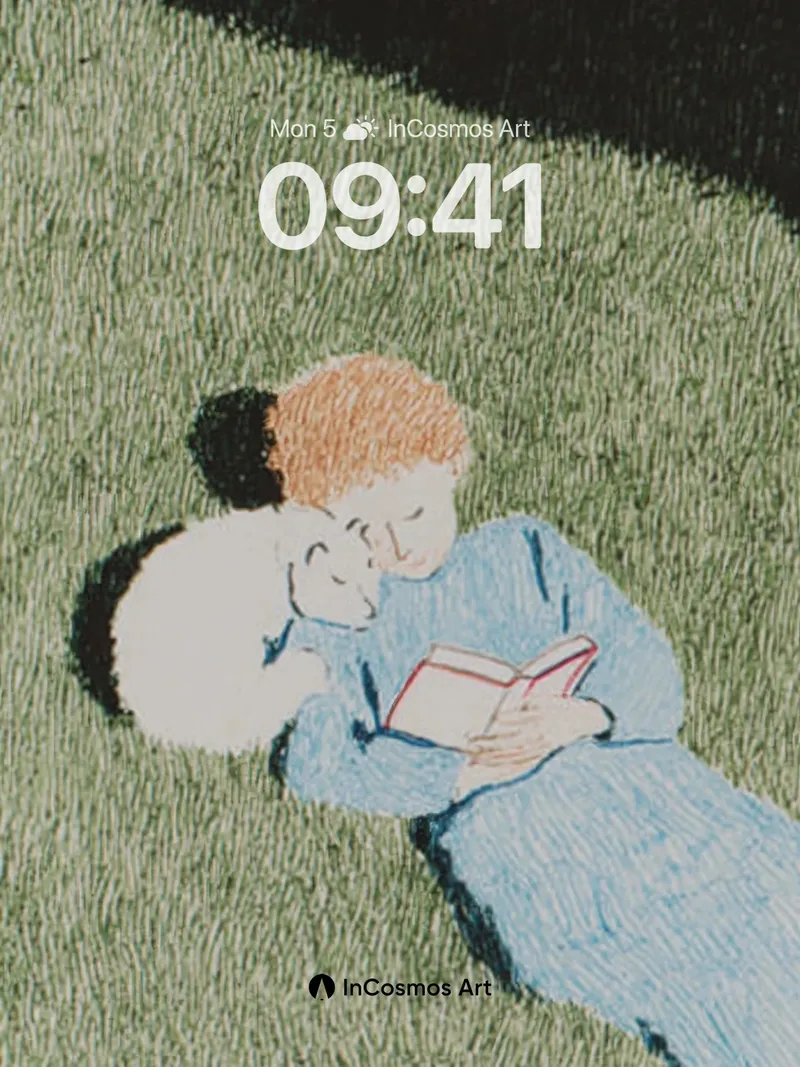
Sunlight slants across a field, spreading an almost frozen stillness. A person lies on their side within the green expanse, holding an open book, body slightly curled as if the world has receded into the background. A white cat rests beside them, eyes closed, fur glowing softly under the light. This is not an ordinary moment of rest but a state of existence diluted by time—reading and companionship becoming the deepest resonance between two beings. The book hides the face yet allows the mind to stretch; the cat's breath syncs with the sound of turning pages, forming a silent symphony. This coexistence is not dependency, but mutual fulfillment through quiet understanding.
Reading as a Ritual of Withdrawal
As urban rhythms accelerate, reading evolves from routine into a deliberate act of retreat. People no longer read solely for information but to construct a private mental space separate from reality. Text becomes a shield against noise, page-turning the only audible rhythm. In this context, books cease to be vessels of knowledge and transform into emotional containers, holding desires for order, silence, and introspection.
The Cat’s Presence: Silent Companionship
The cat’s value lies precisely in its silence. It does not need interaction or comprehension—its mere presence participates in human emotional architecture. Its breathing aligns subtly with the reader’s focus, as though saying: you do not have to be alone. This companionship transcends emotional projection, approaching philosophical co-presence—two lives sharing the same light and shadow without competing for attention.
The Narrative of Light and Shadow
Strong contrasts define the scene, shadows stretching like solid forms and demarcating spatial boundaries. Light does not fall evenly but selectively illuminates areas, suggesting an internal order. This composition intensifies the atmosphere of a private moment, allowing viewers to feel permitted entry into intimacy. The distribution of light and dark functions like temporal slices, marking the day’s gentlest hour.
Emotional Density in Minimalist Aesthetics
Though colors are limited and lines simple, each frame carries rich emotional depth. Blue and red garments, the outline of the white cat, the crease of book pages—all convey warmth within low saturation. This restraint amplifies emotion rather than diluting it. With no excess decoration, only essential elements—person, book, cat, grass, light—form a modern image of 'presence'.