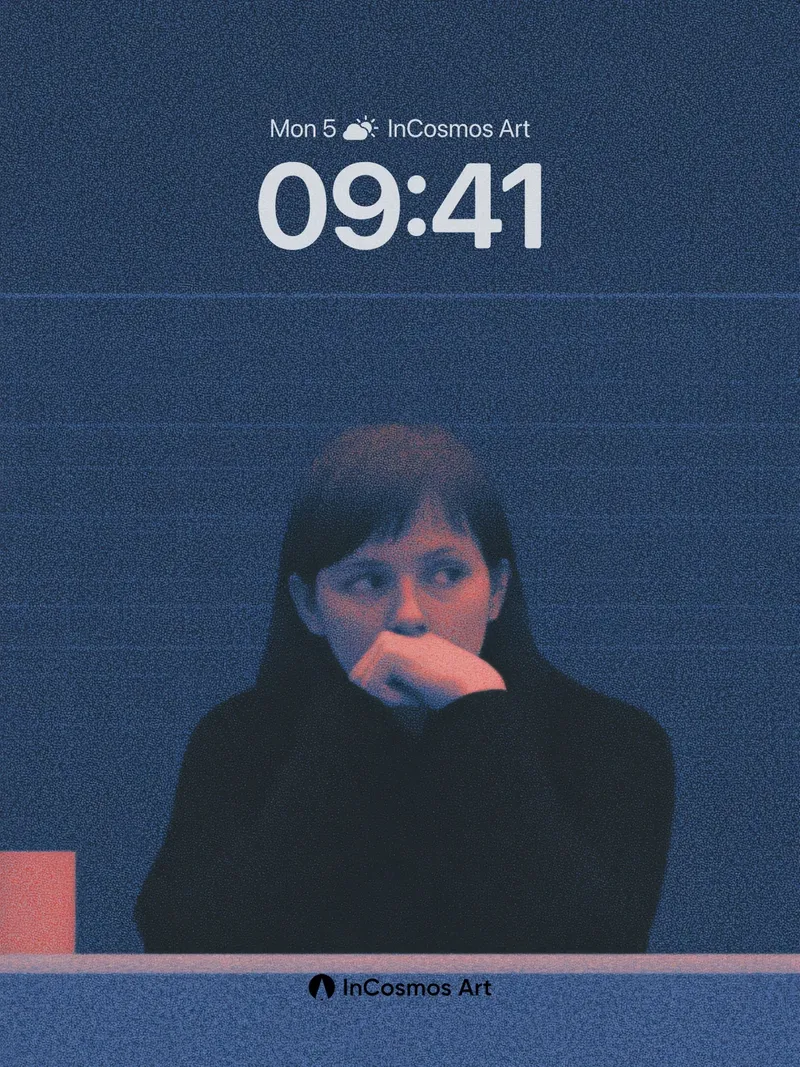
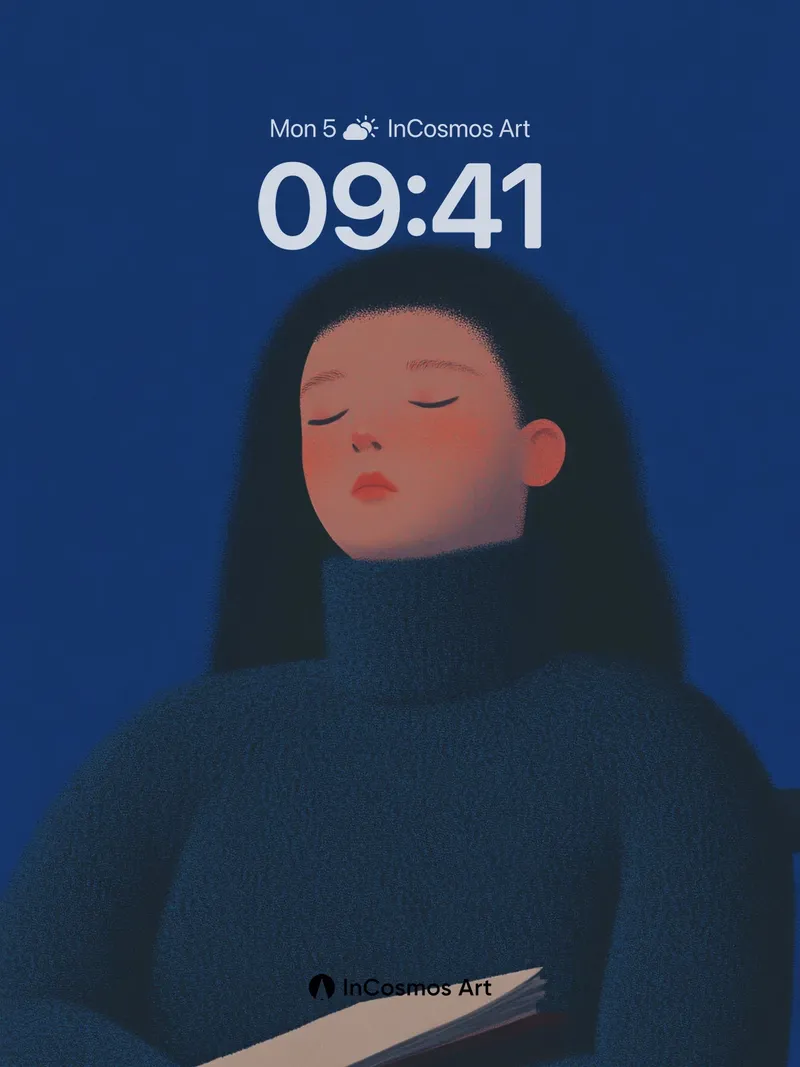
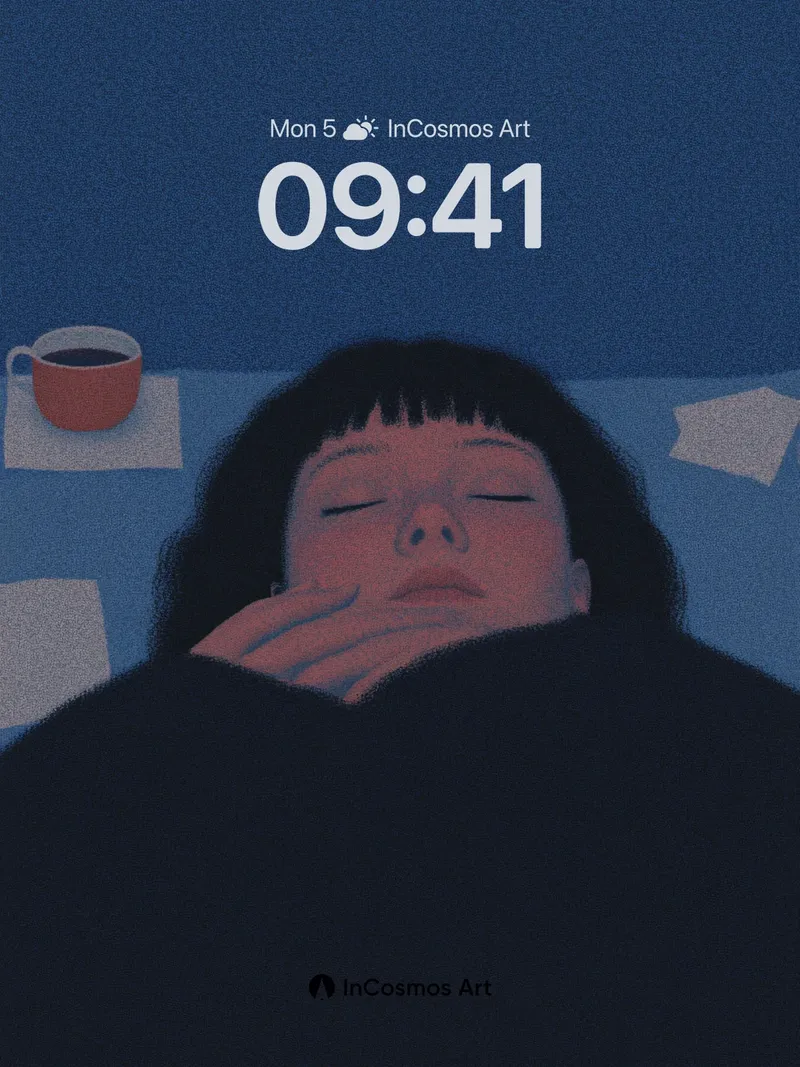
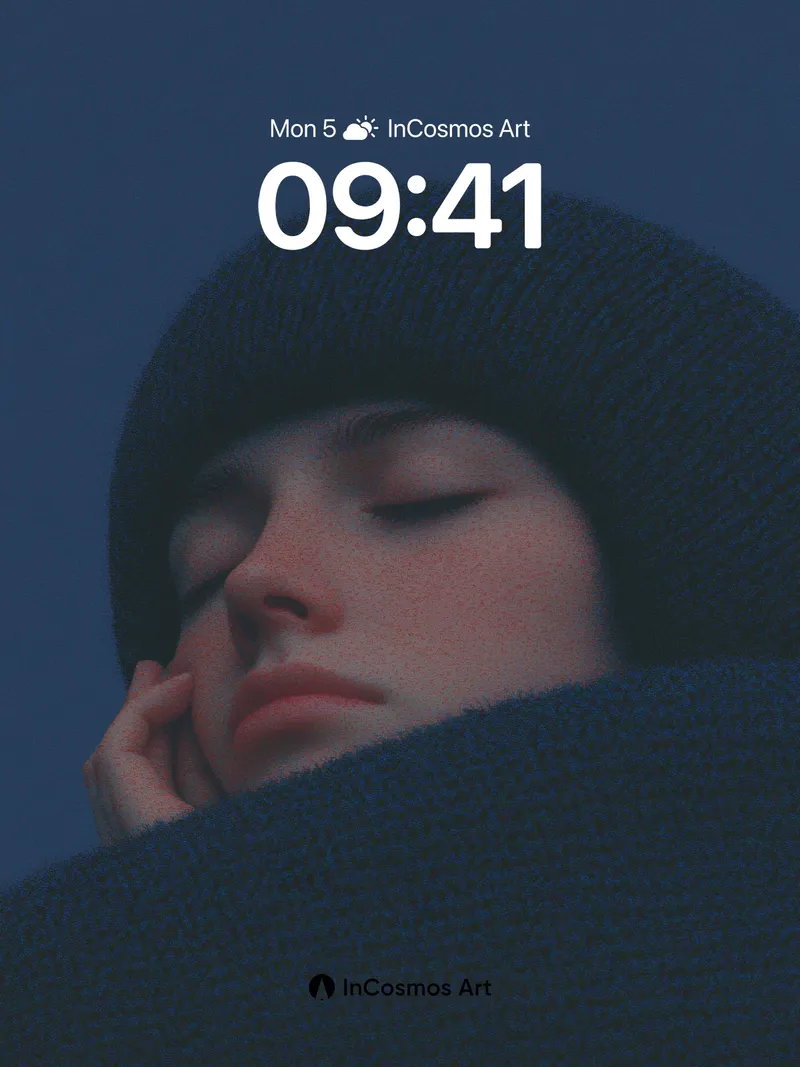
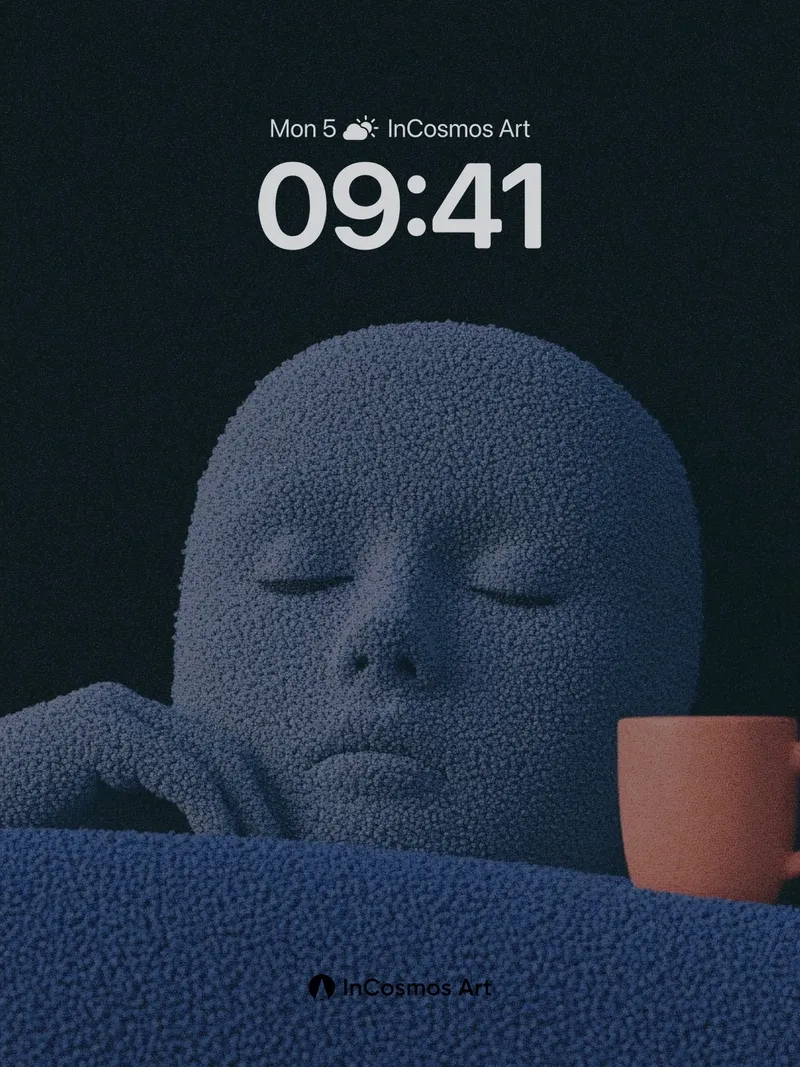
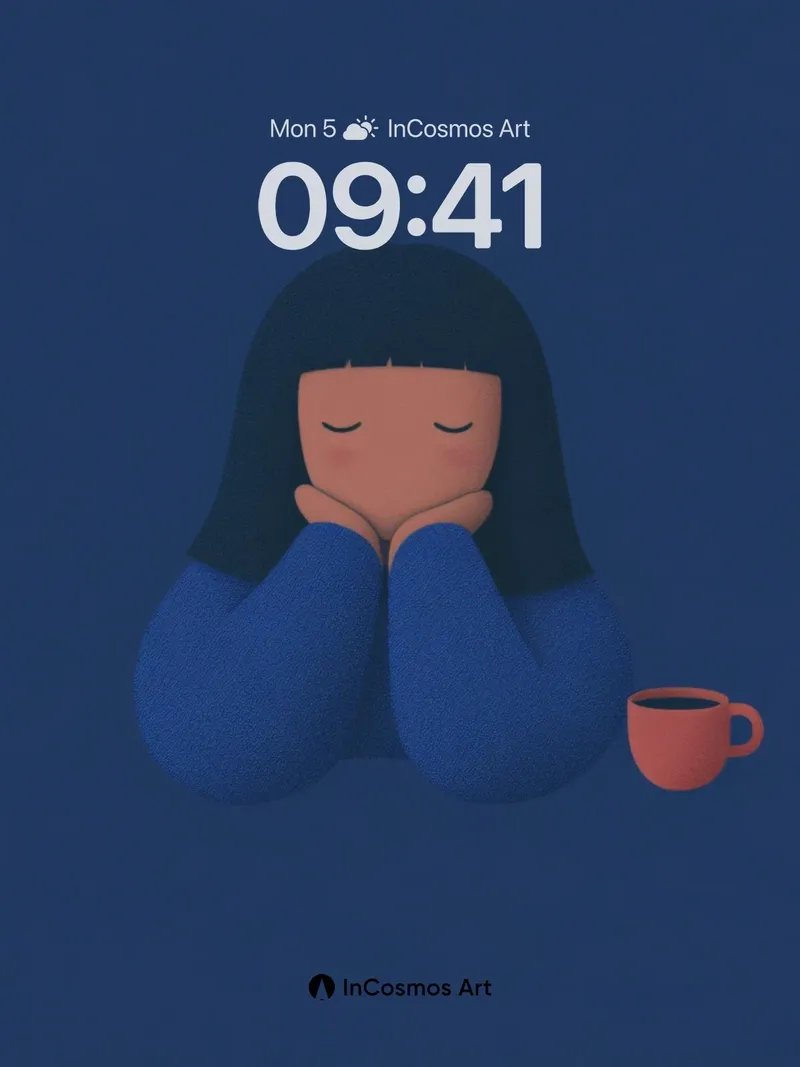
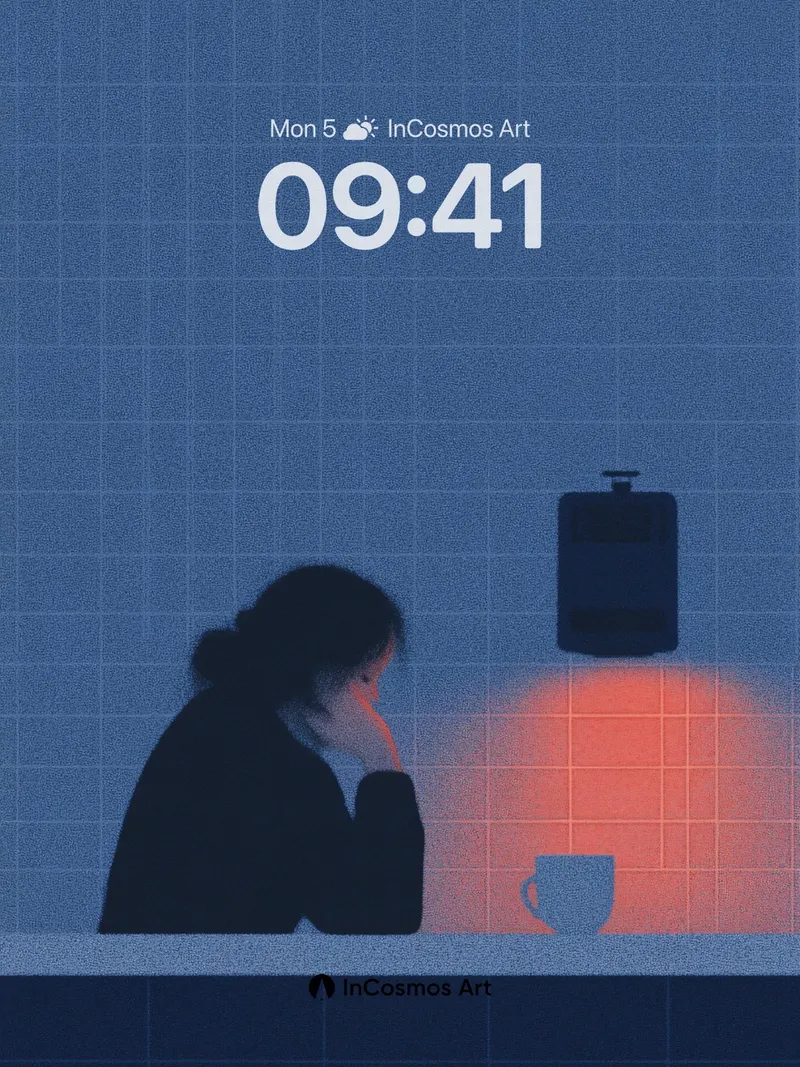
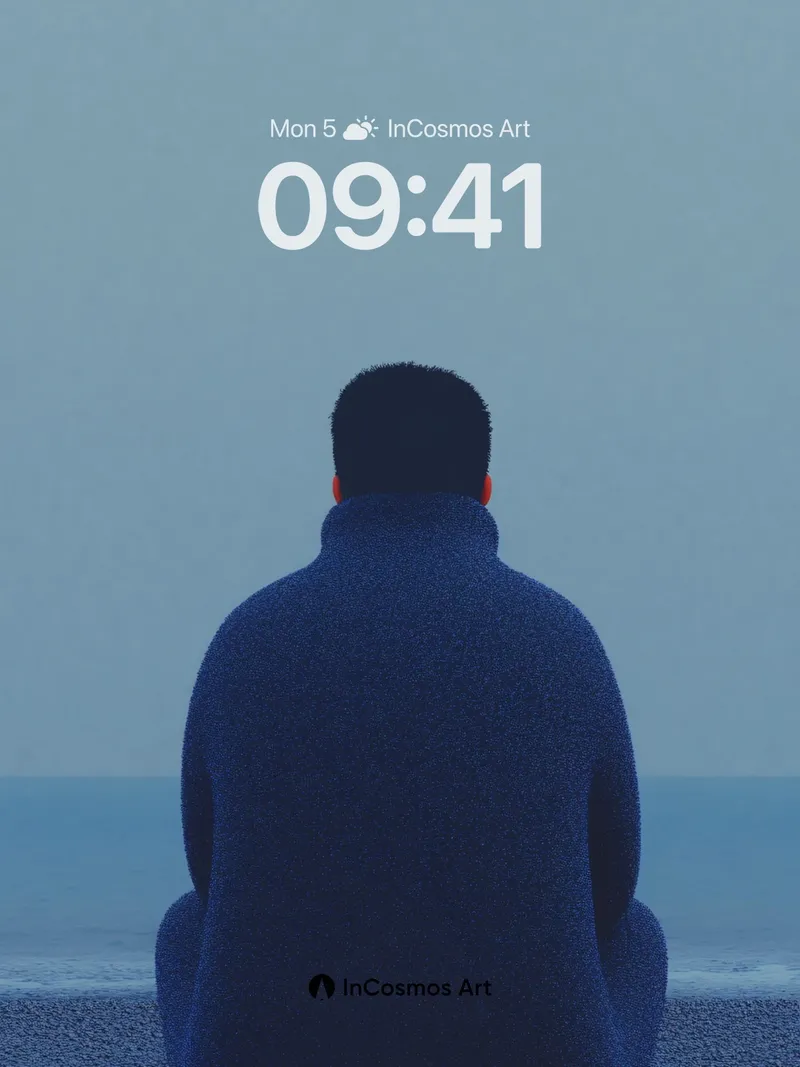
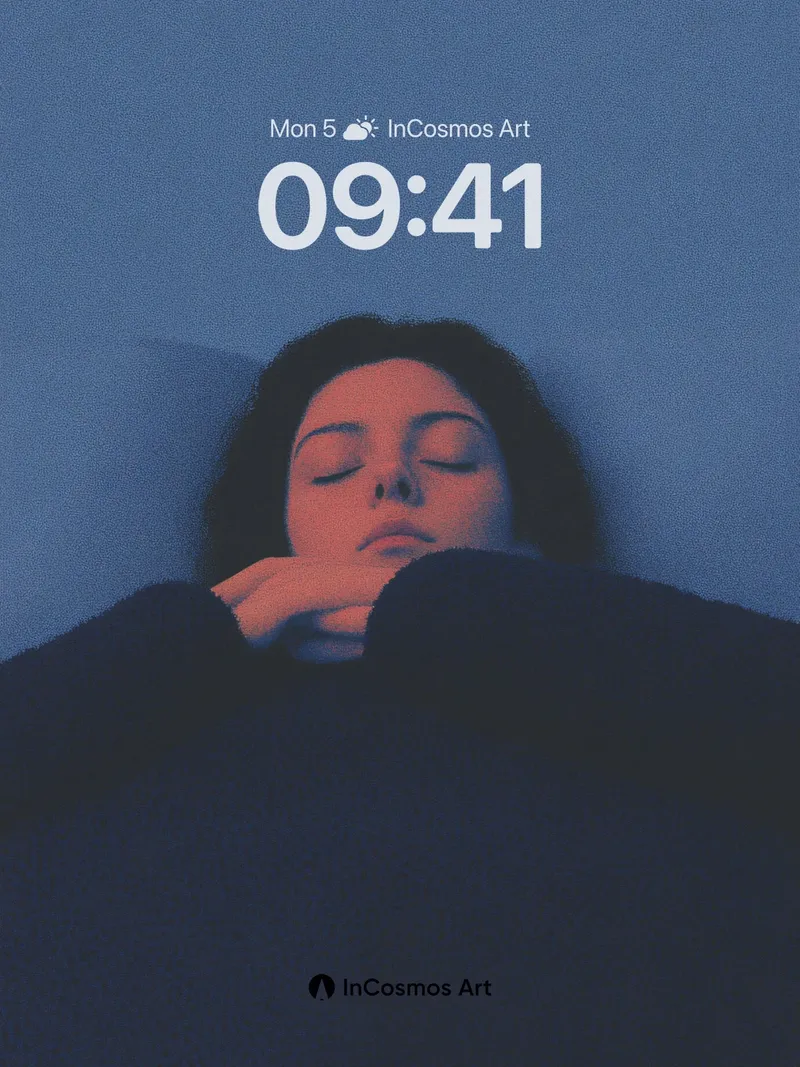
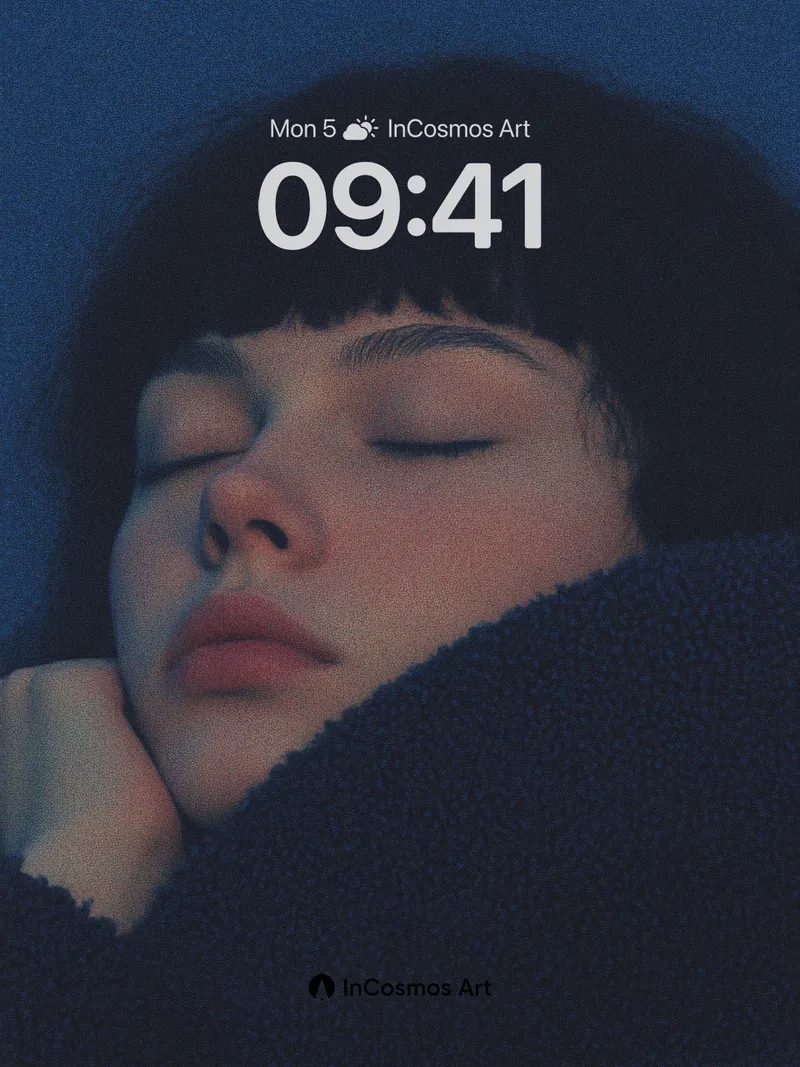
In the pauses between urban rhythms, humans respond to noise with silence. Blue becomes a vessel for emotion, holding unspoken fatigue and introspection. When light dims, cups remain still, and bodies curl beneath blankets, consciousness gently recedes. These fragments are not empty; they represent the breath of spirit in modern life. The position an individual occupies in space is no longer a physical coordinate but a boundary of psychological territory. Each closed eye is a pause from the world; each turned ear is a recalibration toward inner sound.
Forms of Solitude
Solitude is no longer defined by lack of company but as an intentional internal state. Against deep blue backgrounds, figures adopt withdrawn postures—hand resting on cheek, lying on bedding—forming self-contained structures. This is not escape but a filtering mechanism against environmental pressure. Visual simplification mirrors cognitive settling: backgrounds dissolve, focus narrows to facial contours and subtle movements, suggesting awareness detaches from external stimuli.
The Symbolism of Blue
Blue permeates all scenes, establishing a consistent emotional tone. It is neither cold nor melancholic but a transitional hue between wakefulness and dream. Its saturation shifts across psychological layers: deep blue signifies profound thought, light blue suggests brief respite. Warm light punctuates this coolness—such as the orange glow near a coffee cup—serving as an emotional anchor. This light does not dispel darkness but marks presence: within infinite silence, a single warmth confirms that self remains grounded.
Rituals of Silence
Recurring objects—cups, headphones, blankets—form a symbolic array of daily life. They do not serve function but participate in a silent ritual. A cup placed on a napkin, headphones covering ears, a blanket wrapping shoulders—each detail reinforces the theme of protection. This is not passive waiting but active creation of a safe zone where thought flows freely without interruption.
Presence in Modernity
Contemporary individuals often exist under multiple roles: worker, socializer, consumer. In these scenes, identities are stripped away, leaving only the essence of 'human'. No labels, no expressions, just the rhythm of breath and weight of body. This decontextualized presentation paradoxically highlights the value of mere existence. When external noise vanishes, inner voices finally emerge. Silence is not an end but a new beginning.