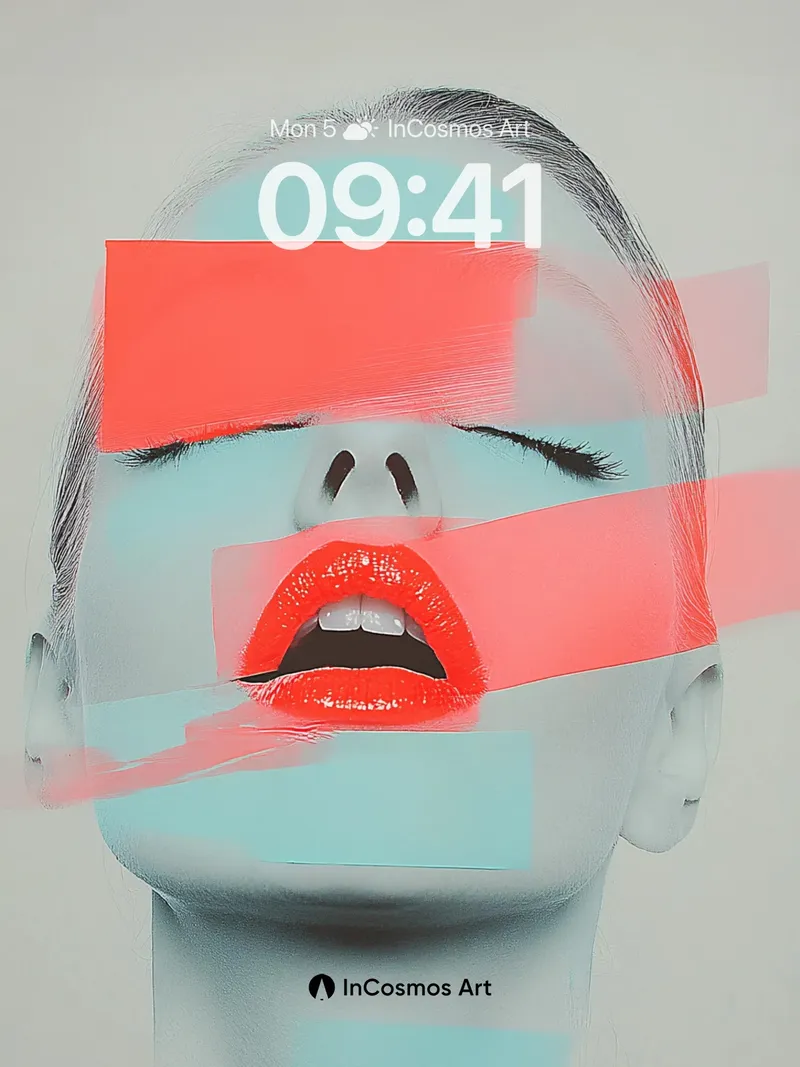
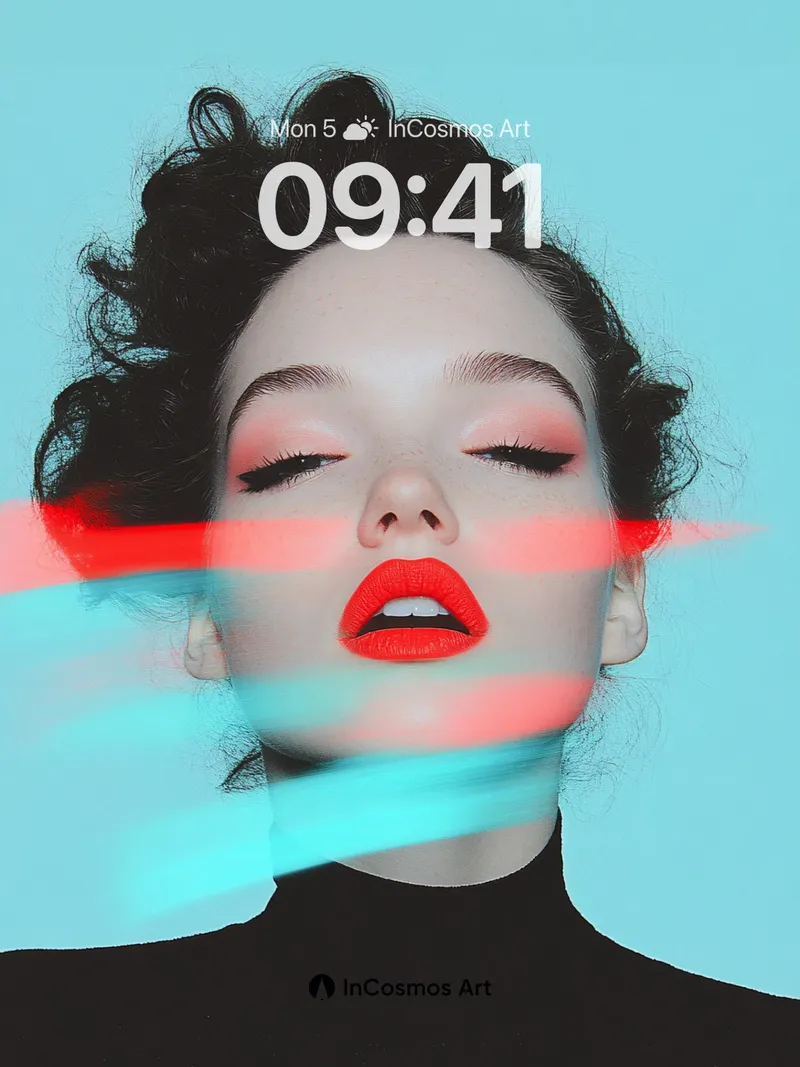
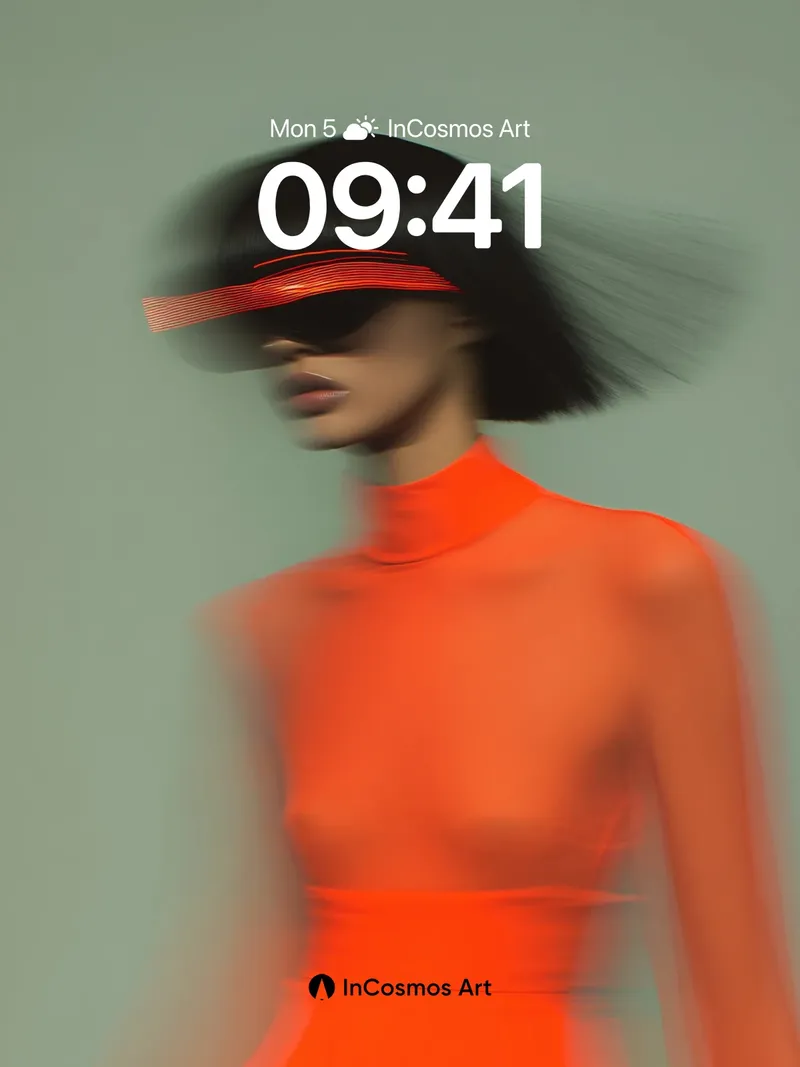
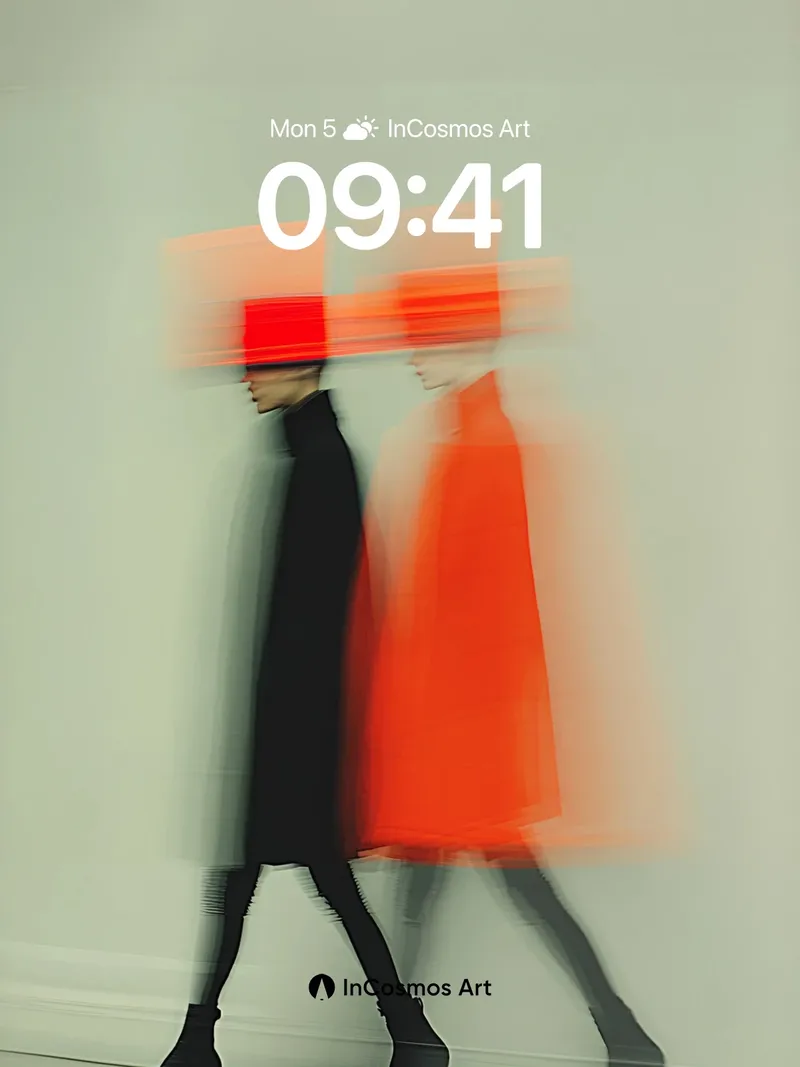
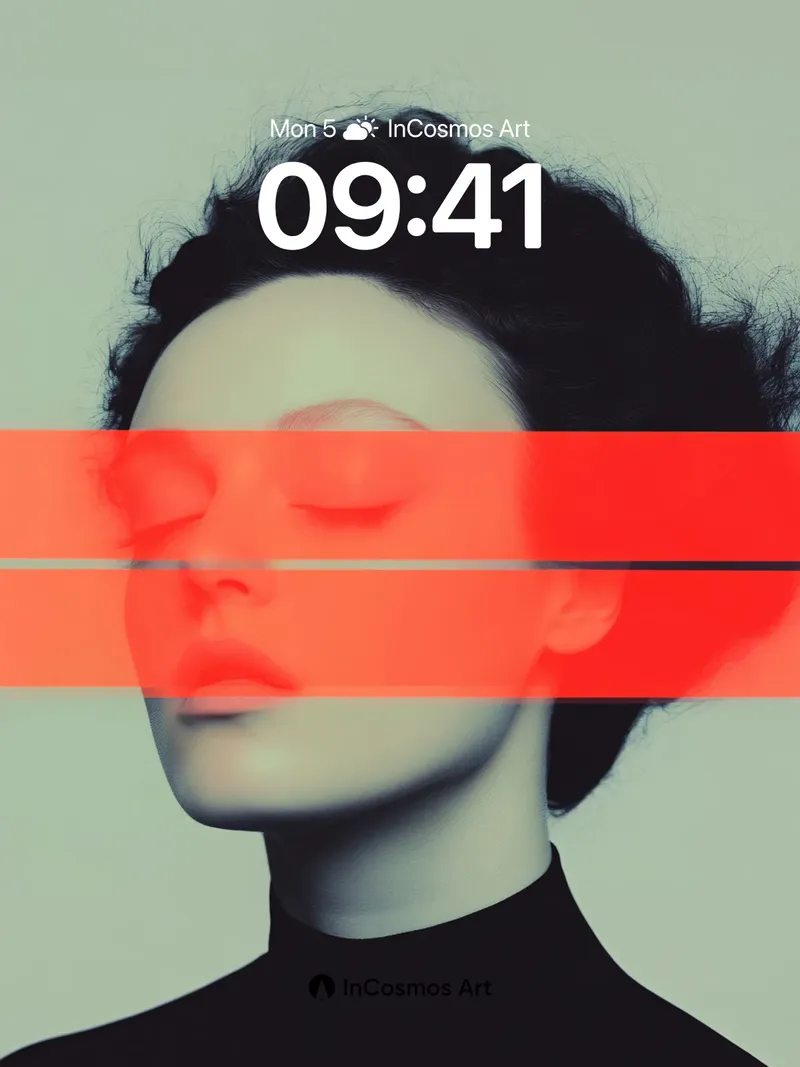
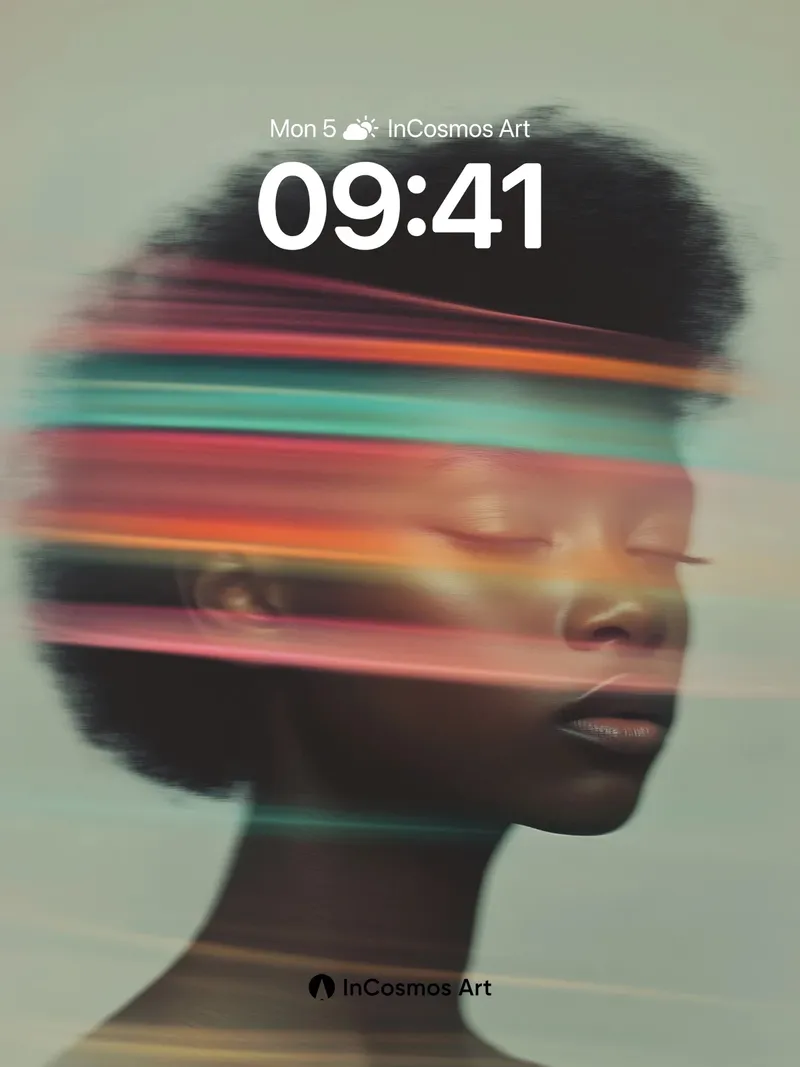
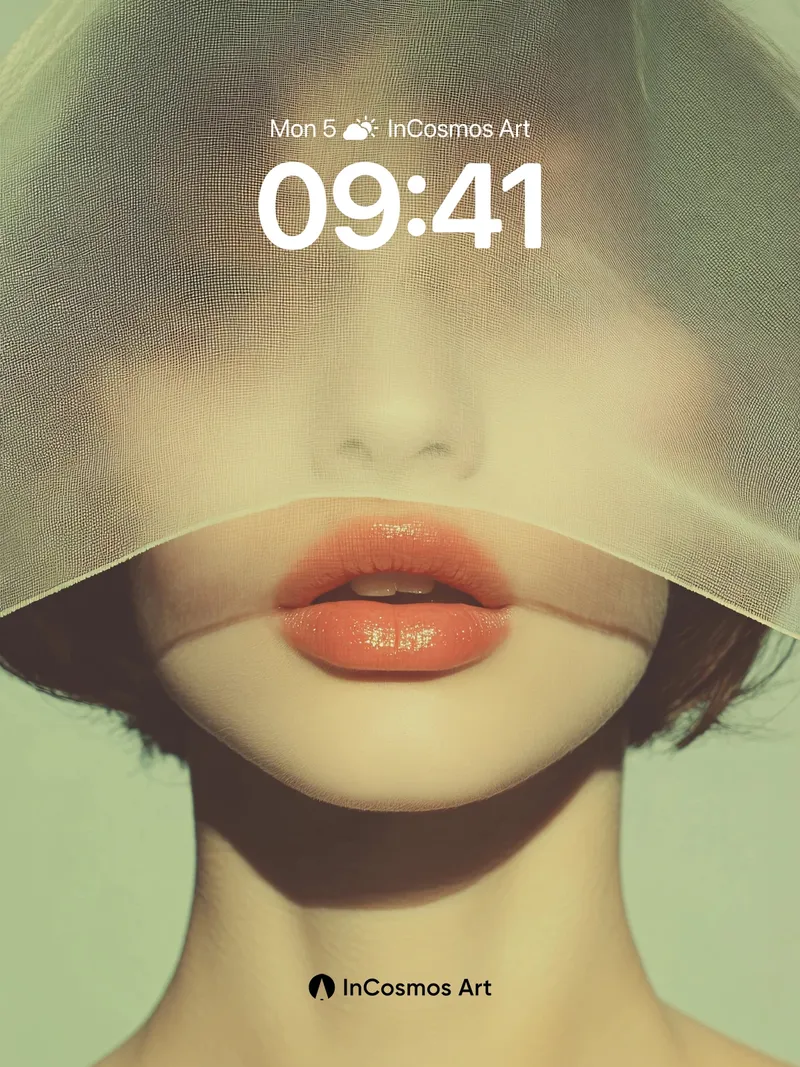
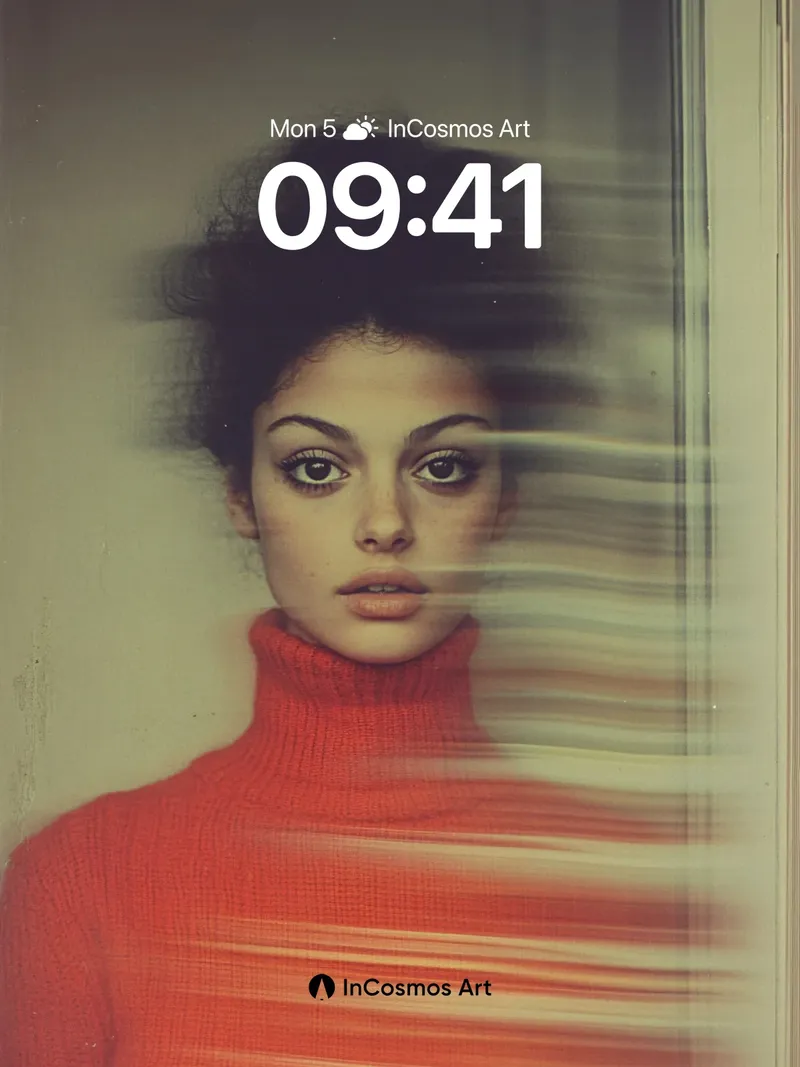
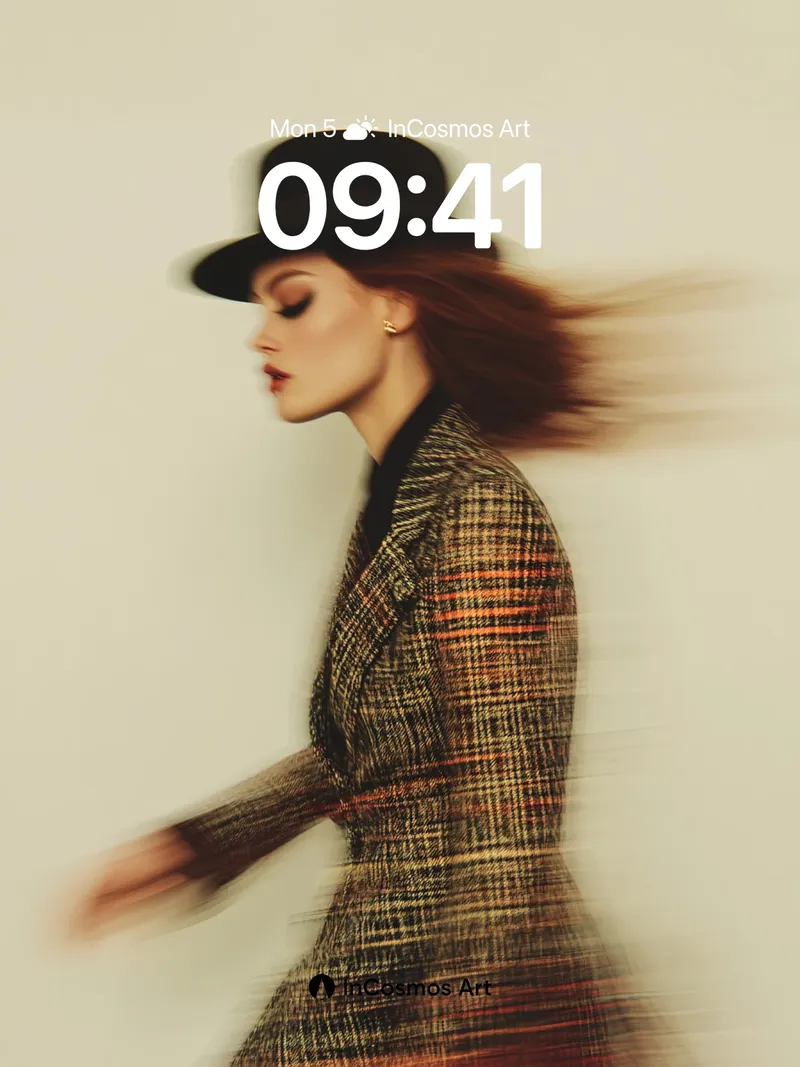
Between stillness and motion, color becomes language. Red cuts across faces like an incomplete command, disrupting sight and reshaping perception. Black silhouettes encase bodies—silent vessels, symbols of resistance. The blurred trails of models walking are not technical flaws but traces of time; they make moments tangible, giving posture weight. These images do not display clothing—they present a state: how modern individuals navigate balance between rules and freedom, visibility and invisibility.
The Politics of Color
Here, red is not merely emotional symbolism but a structural force. It slices across faces, creating breaks and pathways. This fragmentation echoes the disintegration of individual identity in contemporary society—cut by information streams, reassembled by algorithms, yet striving for wholeness. The gradient bands of orange and red resemble materialized data flows; they do not obscure but participate in narrative, becoming part of the subject.
The Gaze in Motion
Models' steps stretch into ghostly trails, as if souls glide through space. Heels strike rhythmically, yet position remains fluid. This dynamic blur challenges traditional photography's obsession with clarity, suggesting existence itself is process. Walking is not arrival but continuous self-definition. When bodies leave afterimages in light, those are extensions of memory and identity.
The Sanctuary of Black
Turtlenecks cover necks, forming closed boundaries. Black is more than pigment—it is refusal: refusal to be seen, refusal to be defined. It offers shelter and creates distance. In this context, garments cease to be decoration and become psychological barriers. Models face the lens with uniform poise, like individuals maintaining composure within systems, using silence to resist noise.
The Grammar of Emotion
Lips, eyes, hair, reassemble under red bands. Emotions are no longer continuous but segmented. Closed eyes suggest serenity; open ones signal alertness. This juxtaposition reveals the duality of human perception: we express while concealing. Visual fractures become metaphors for emotion—true feelings rarely transmit fully, requiring piecemeal reconstruction.