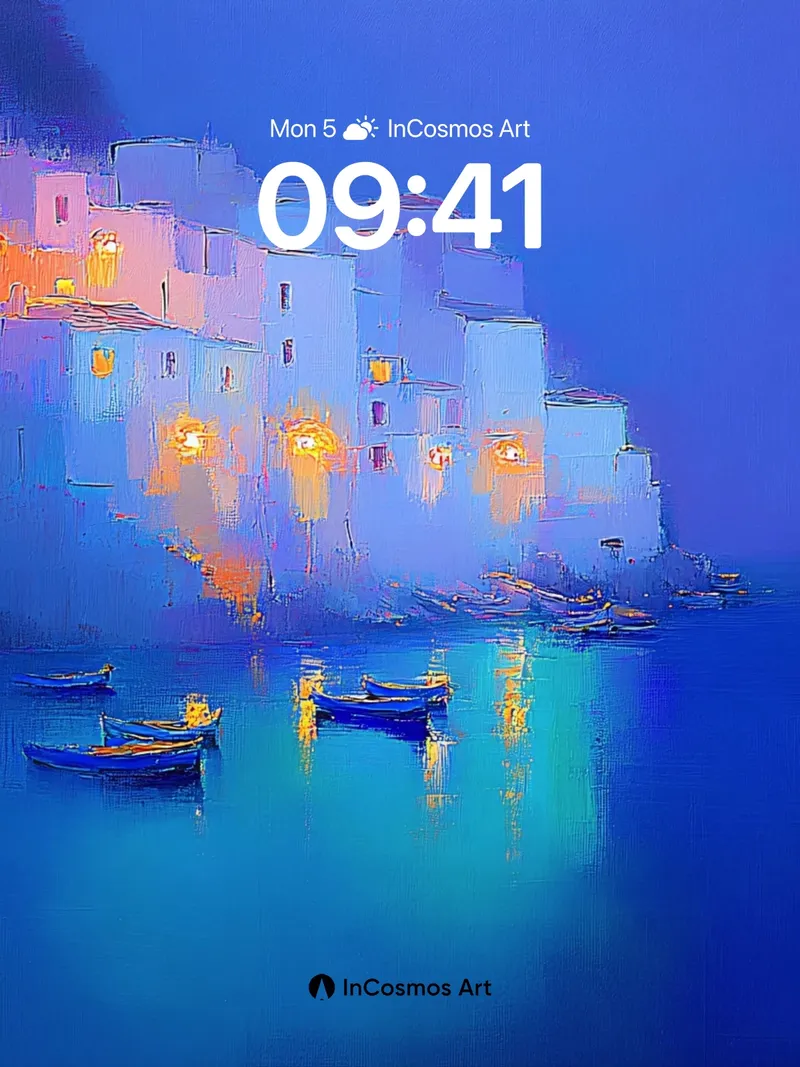
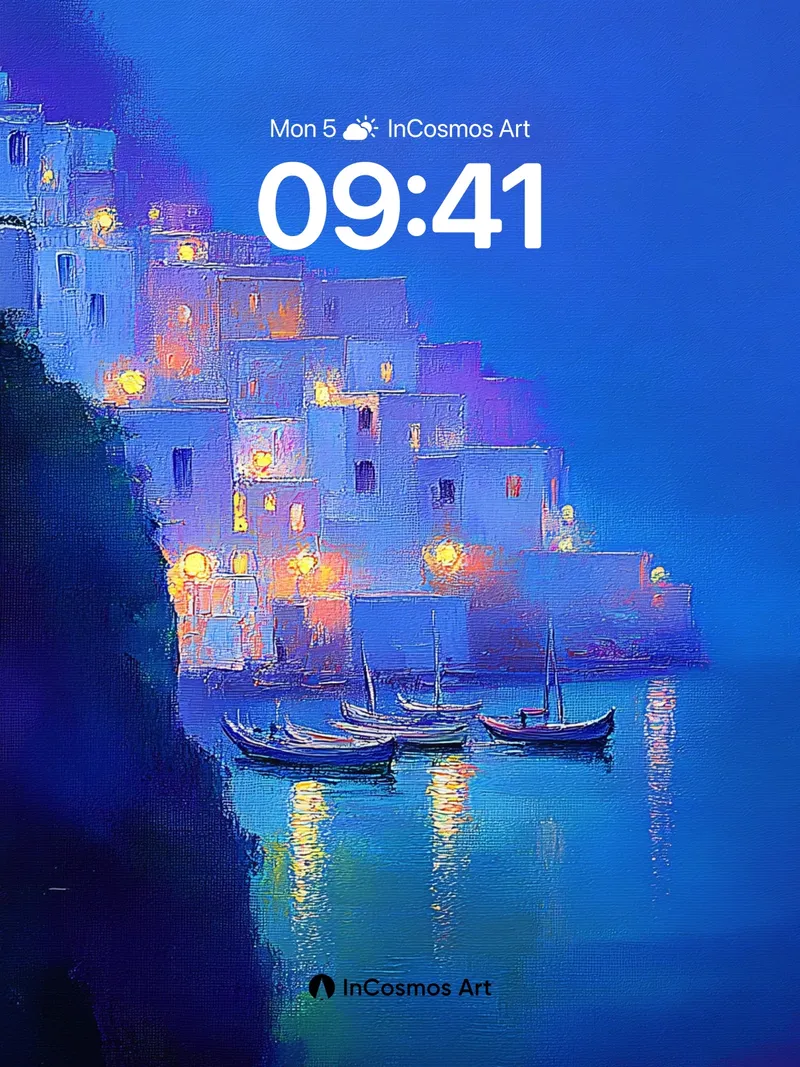
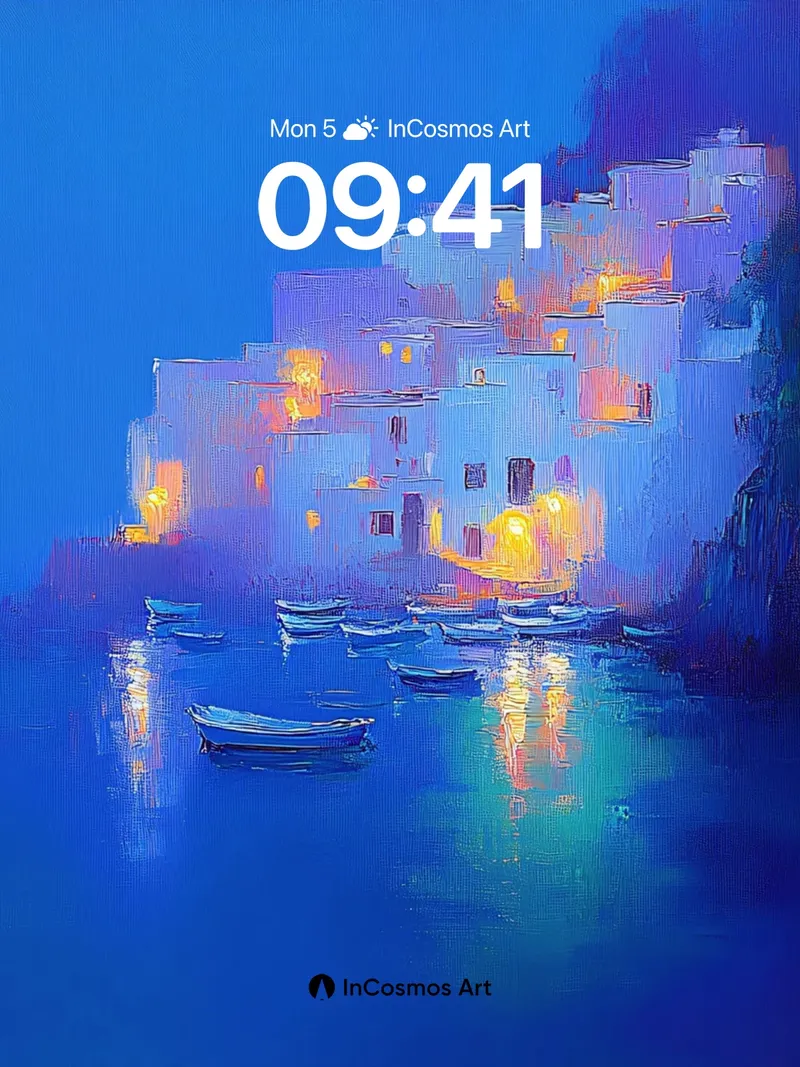
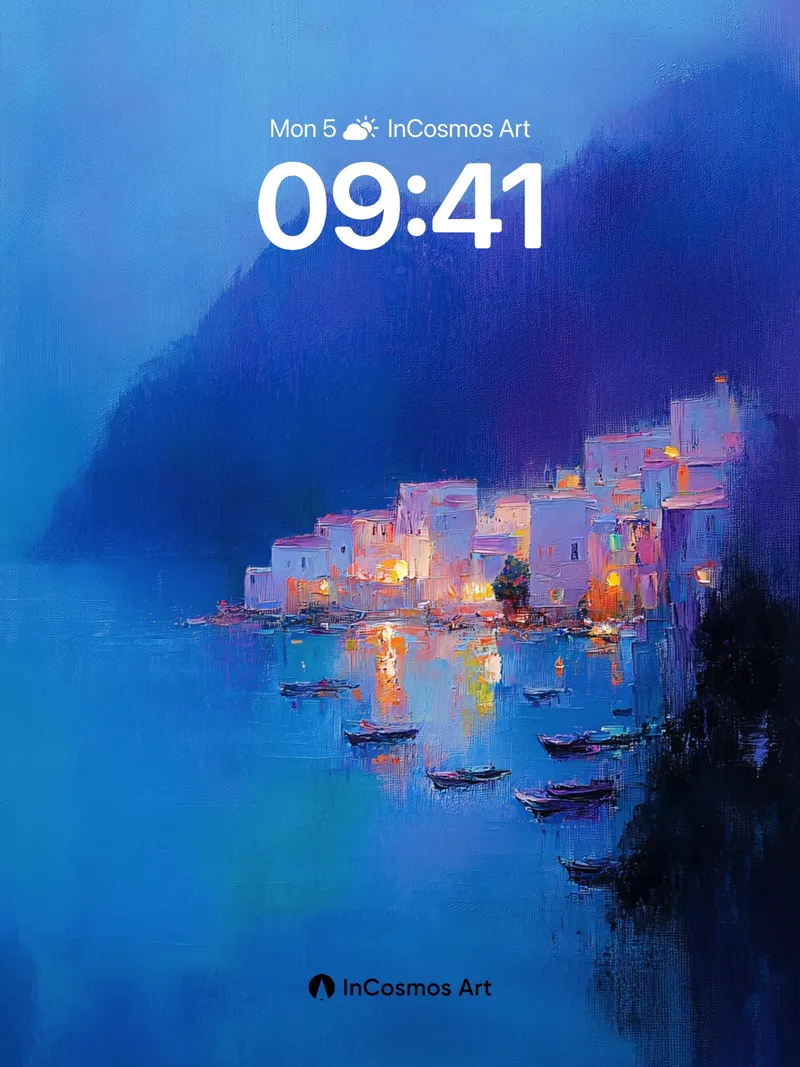
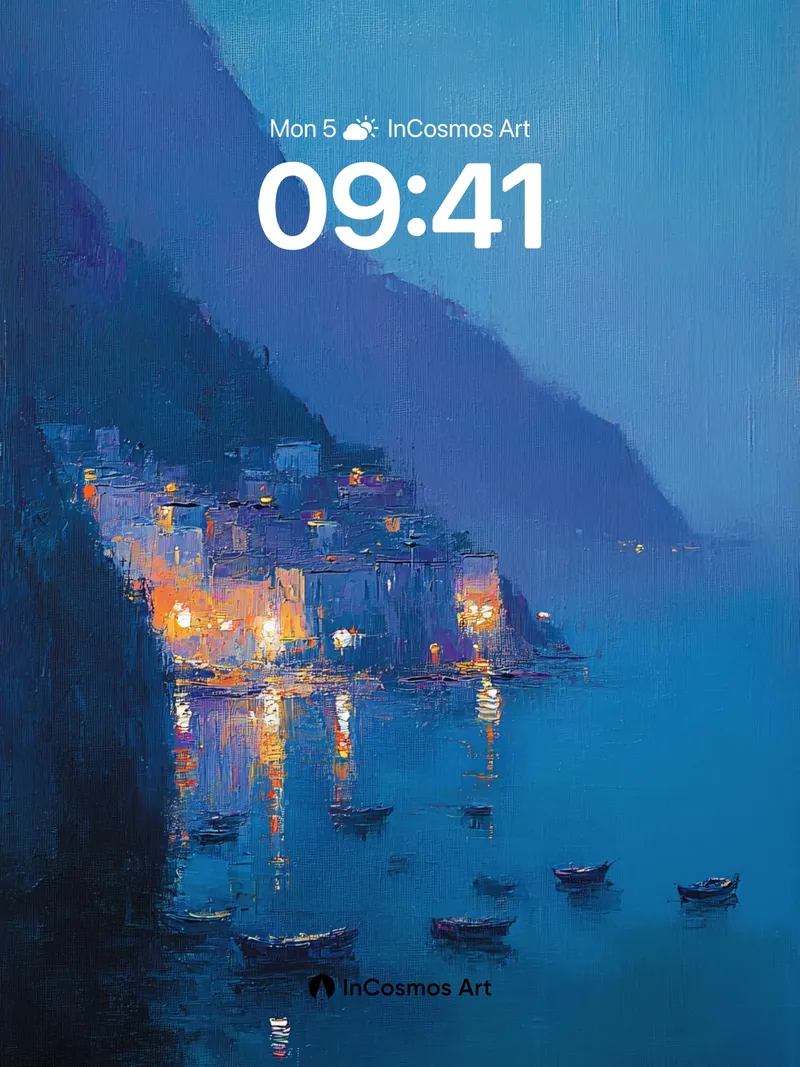
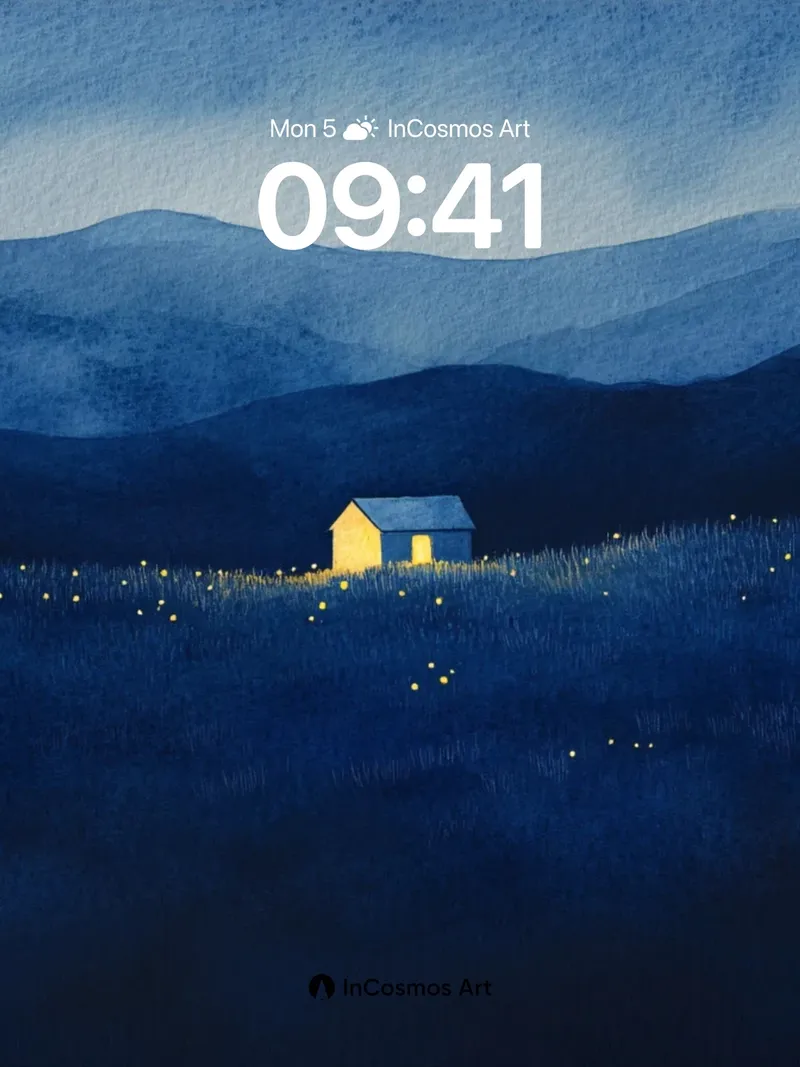
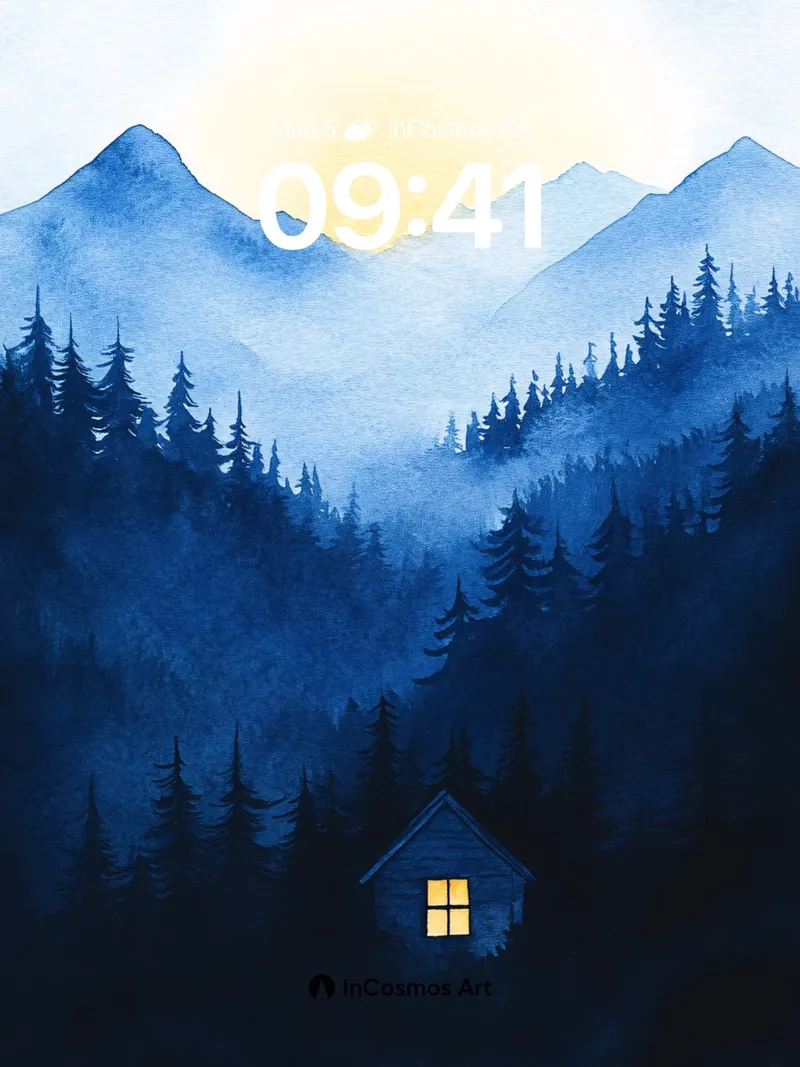
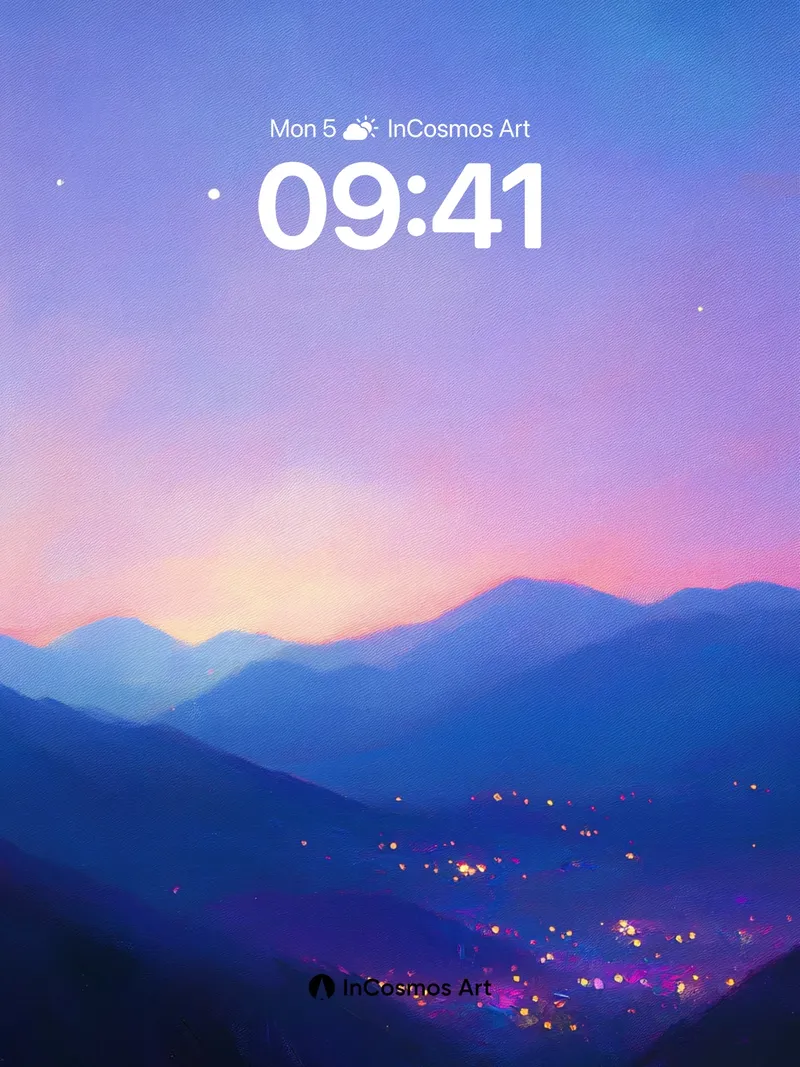
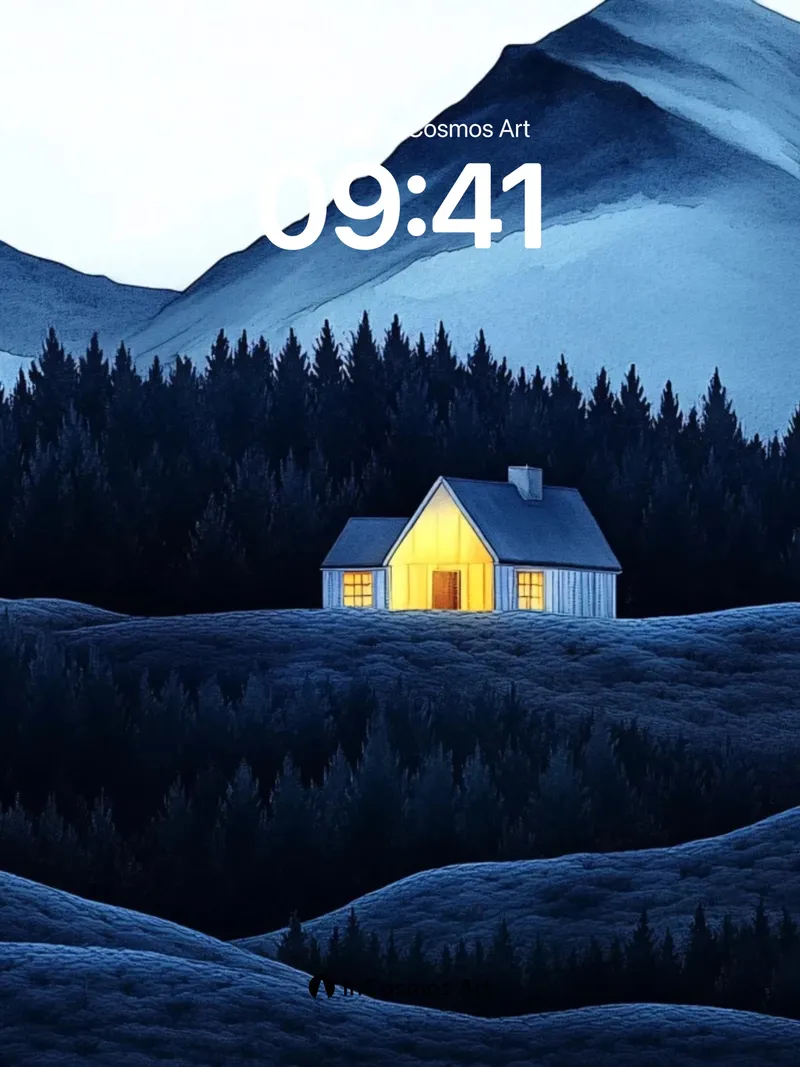
As dusk settles, mountains loom like ink stains, and sea water glows with a deep blue sheen. The village clings to the slope, white walls emerging from shadows, warm yellow lights spilling from windows like scattered sparks of life. Each light is a breath, a reply to solitude. Reflections ripple on the surface, time seemingly suspended. This is not urban noise nor industrial rhythm, but a moment of quiet coexistence between nature and humanity. The glow illuminates more than structures—it reveals vessels of memory: unspoken departures, journeys home, vigilance, and waiting.
The Temperature of Light
Light here is not decoration; it is proof of existence. After twilight, the lit windows become direct signals of human presence. Soft and unassuming, they pierce the darkness, serving as coordinates for mutual recognition. These faint yet resolute sources glow gently against the deep blue backdrop. They remind that even as the world quiets, life continues to burn.
The Mirror of Water
The water acts as a vast mirror, reflecting both village and sky. The reflections are not perfect—they flow, blur, tremble—much like memory itself: layered with clarity and ambiguity, reality and illusion. Boats rest at the shore, neither still nor moving, as if listening to waves and awaiting wind.
The Silence of Mountains
Mountains encircle the scene, defined yet silent. Their presence is background, eternal observation. Shadows cascade across slopes like earth's wrinkles, etching time and change. Amid this silence, human dwellings appear small, yet dignified through their lights. Mountains do not speak, but their silence speaks louder than any word.
The Edge of Night
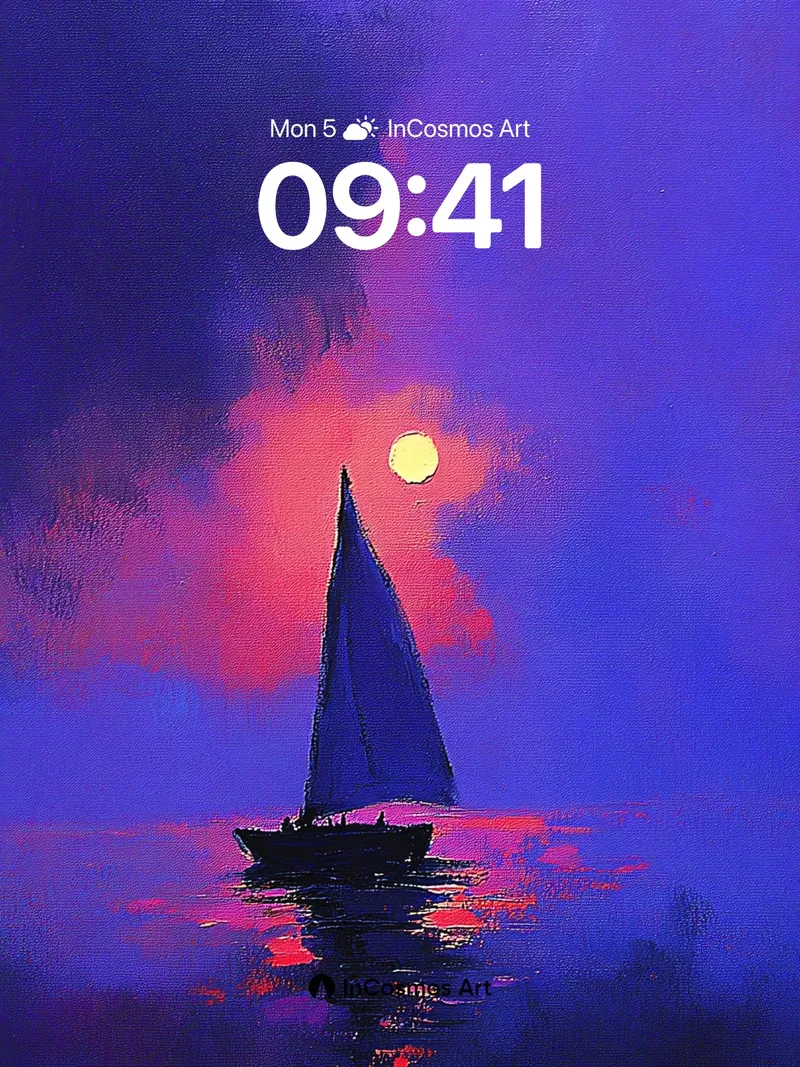
Heaven and earth merge without clear borders. Twilight deepens, sky shifting from purple to blue to black in smooth transition. Distant city lights flicker, suggesting another realm. Here, no neon, no billboards—only natural hues and human glimmers weave the night. This is night’s own order: slow, profound, deeply poetic.