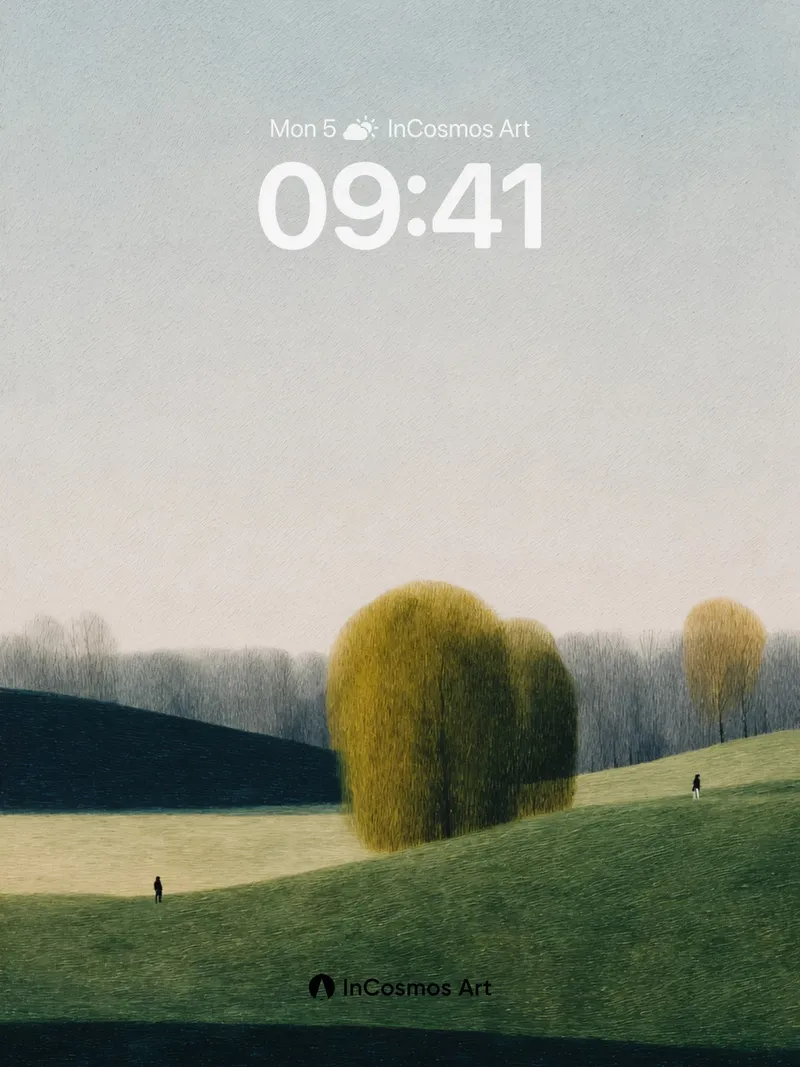
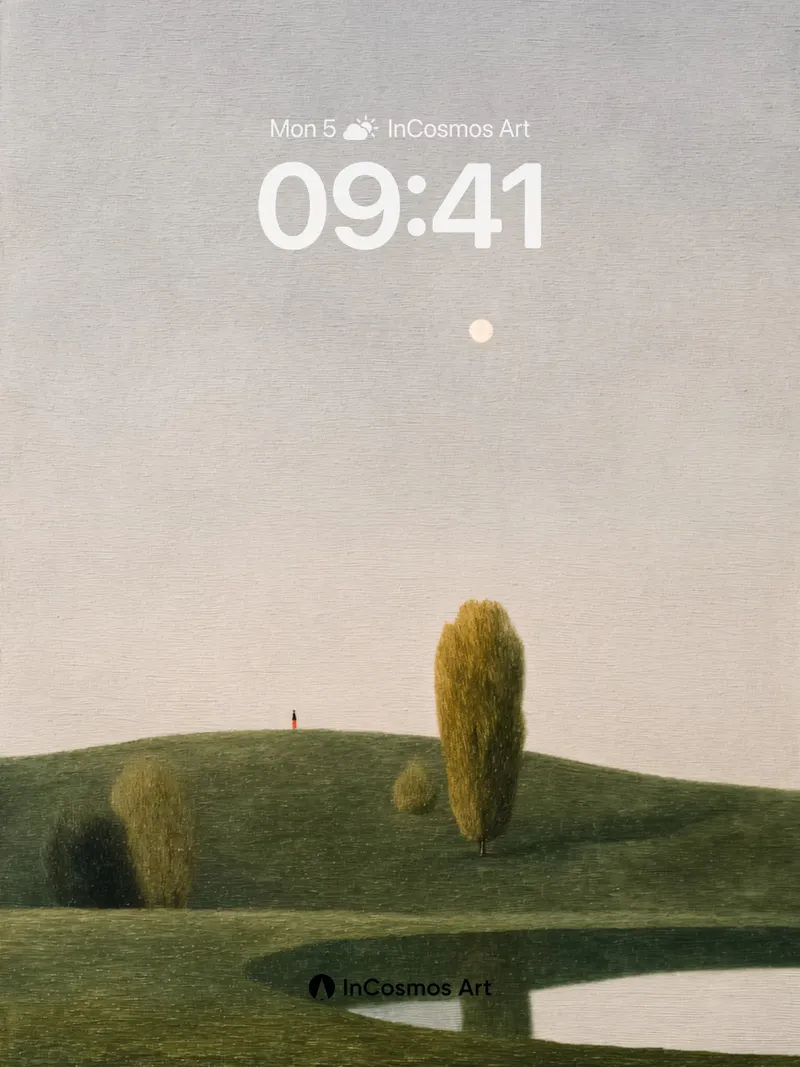
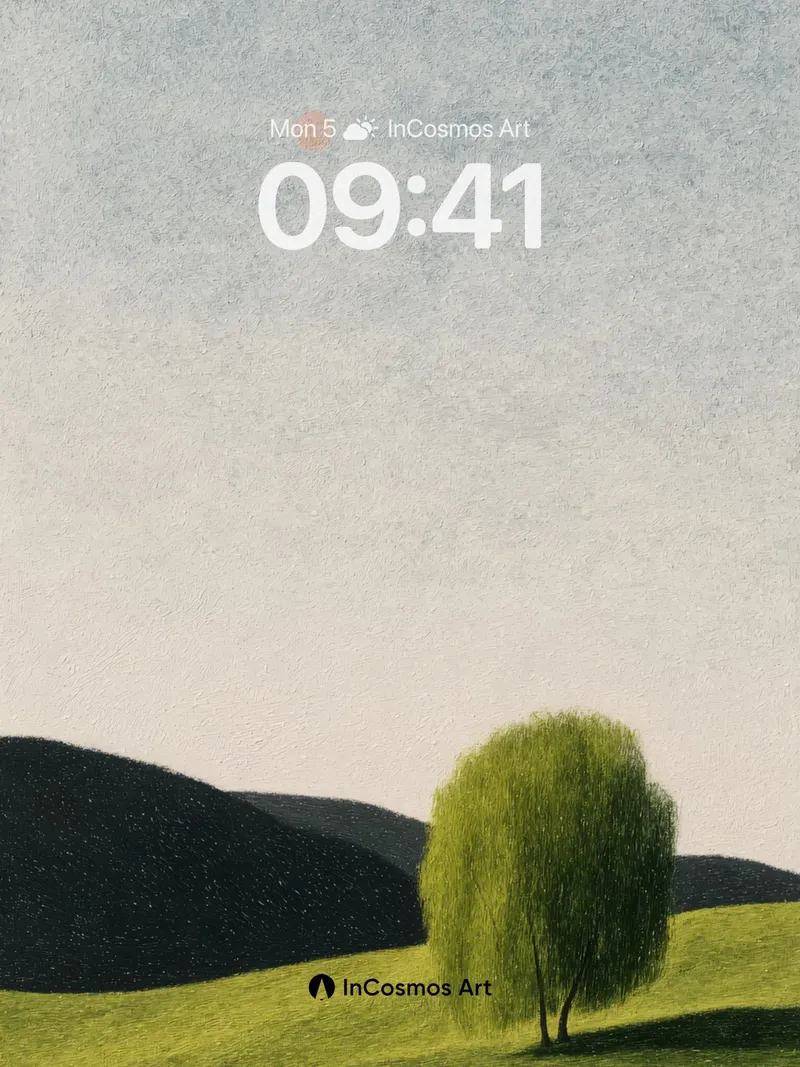
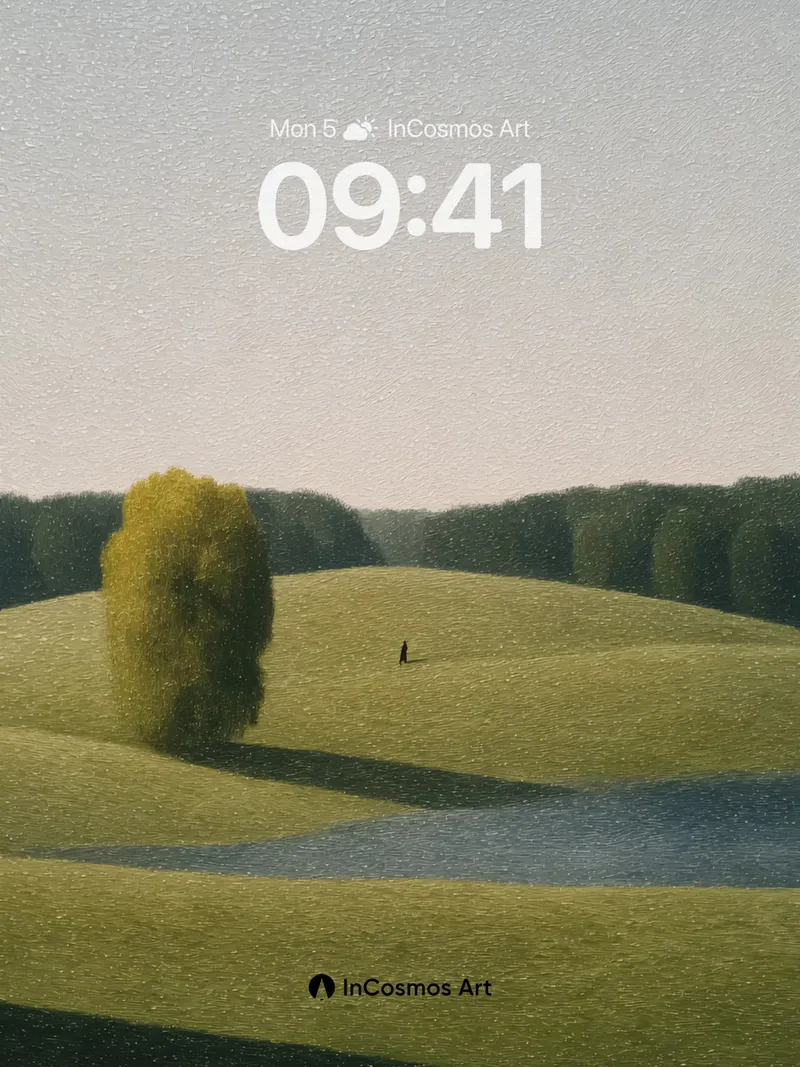
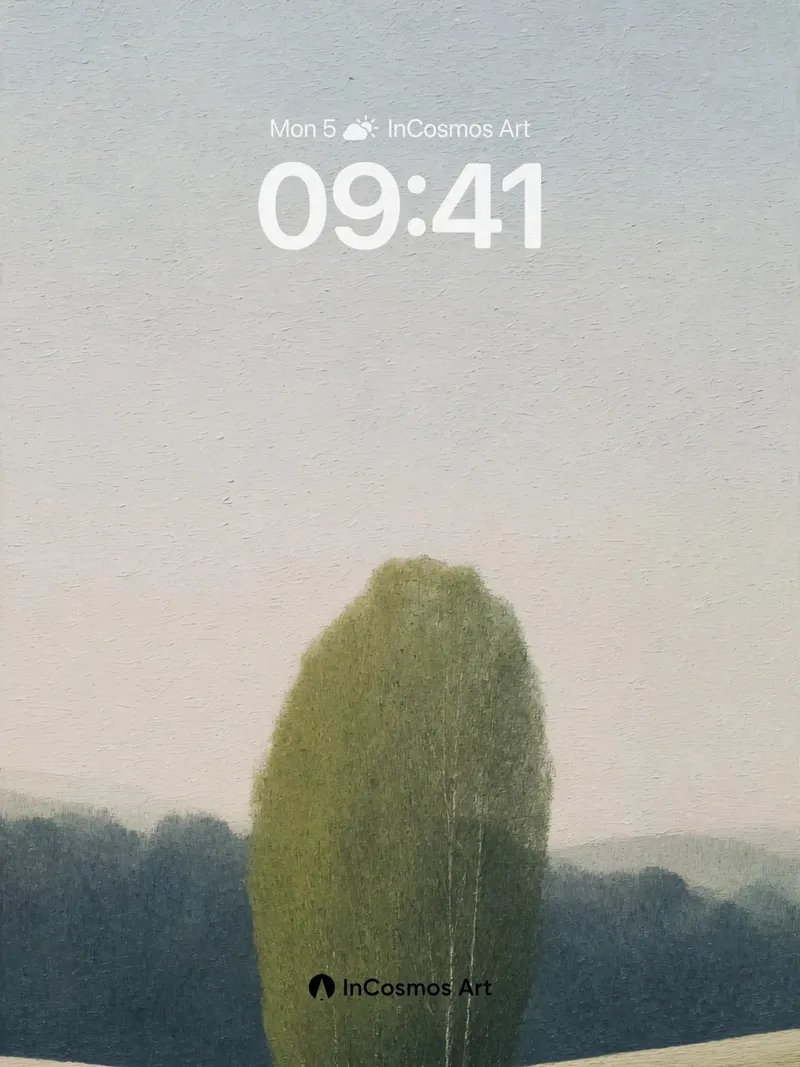
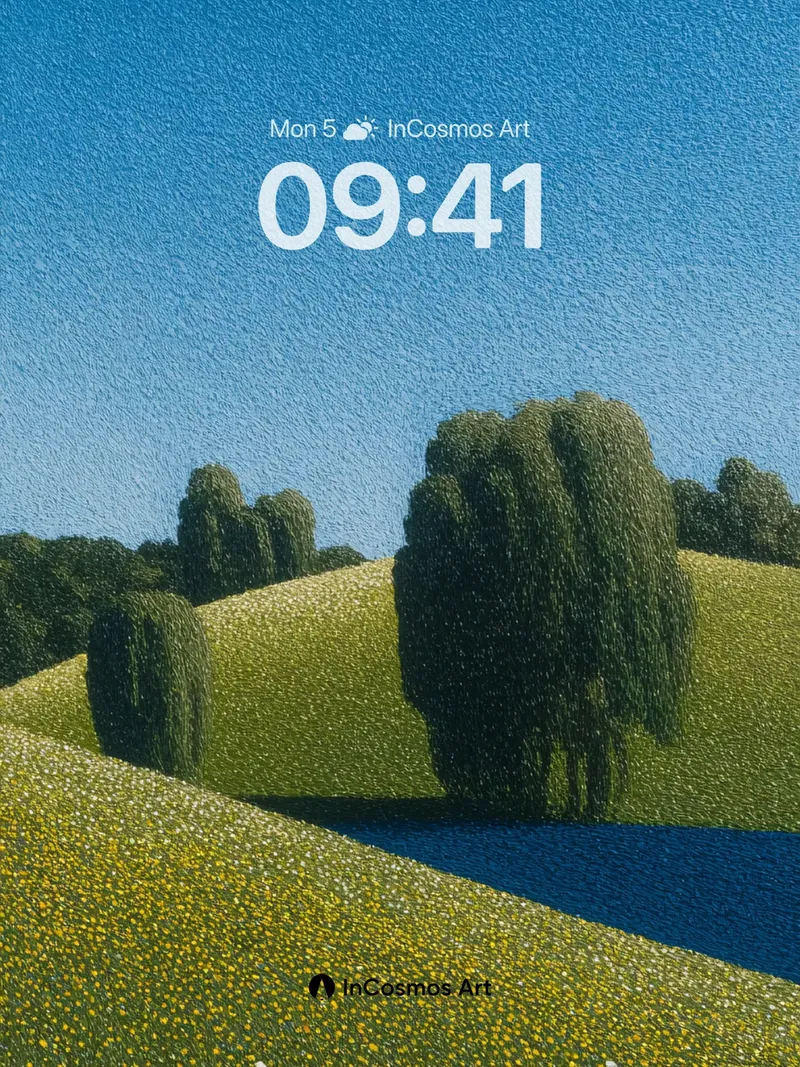
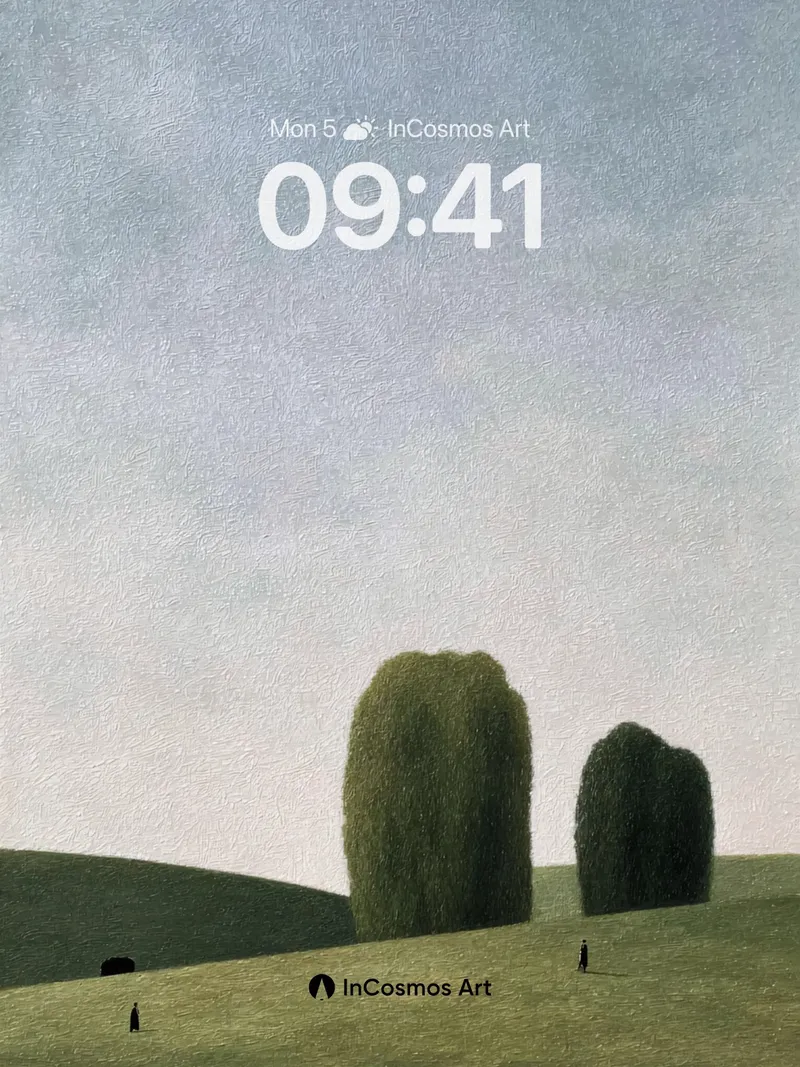
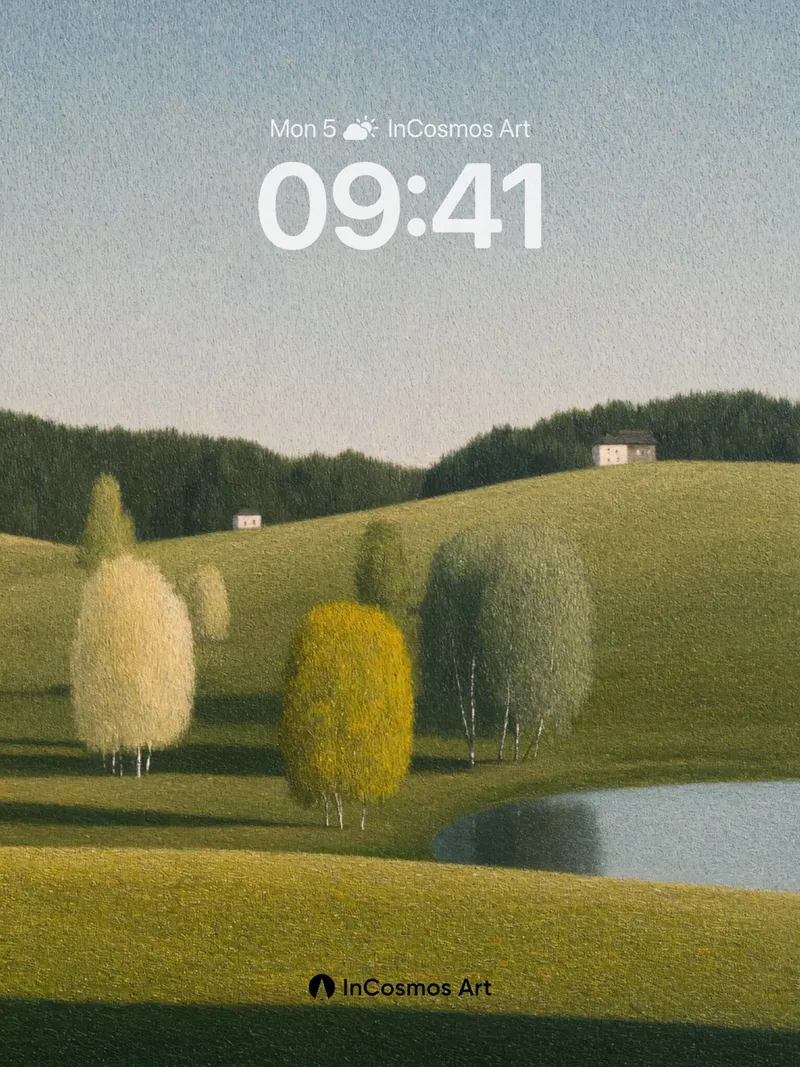
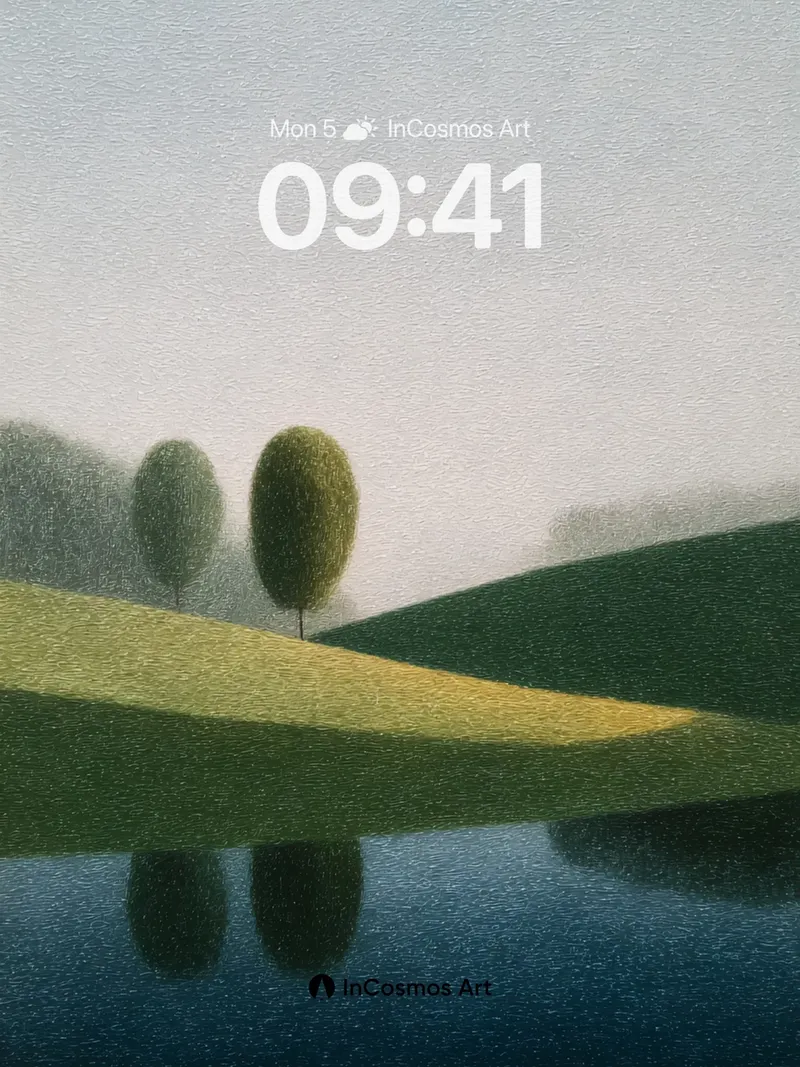
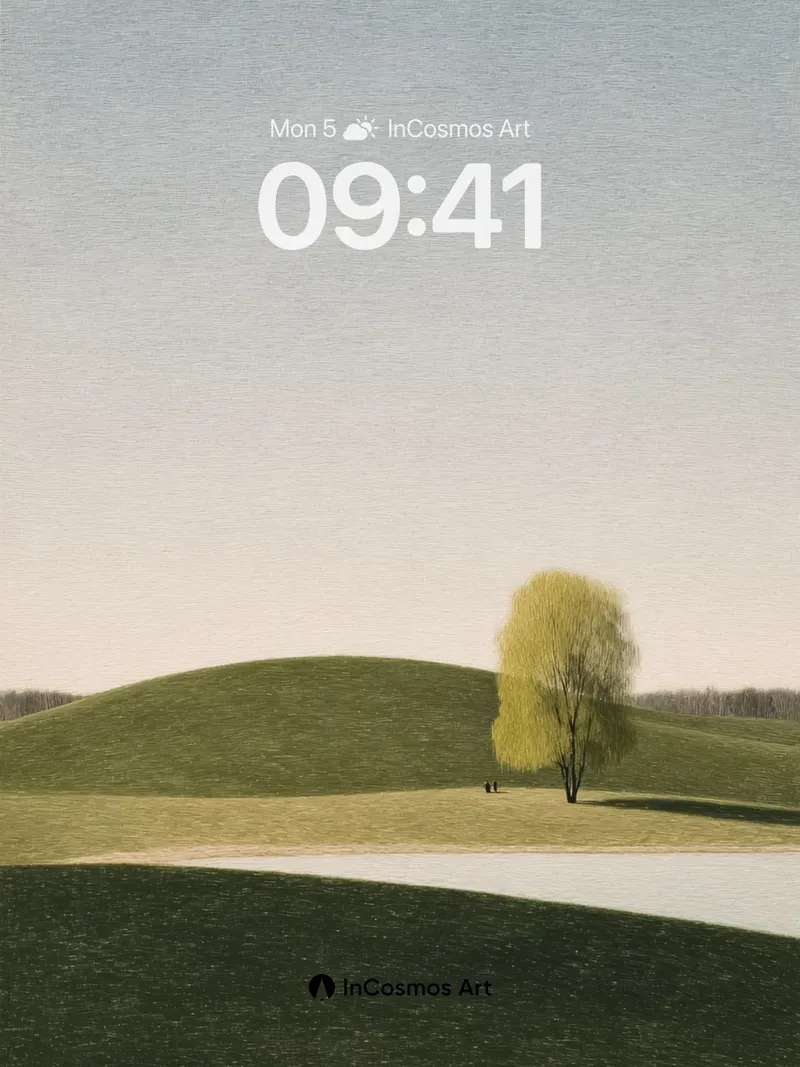
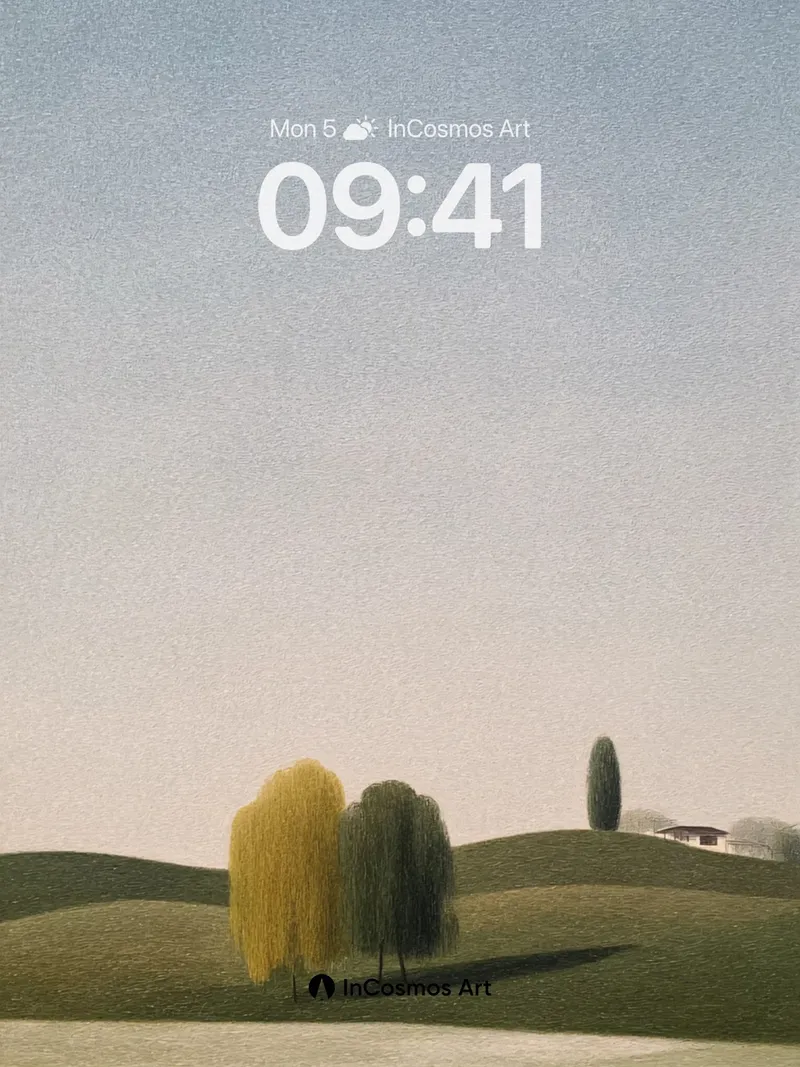
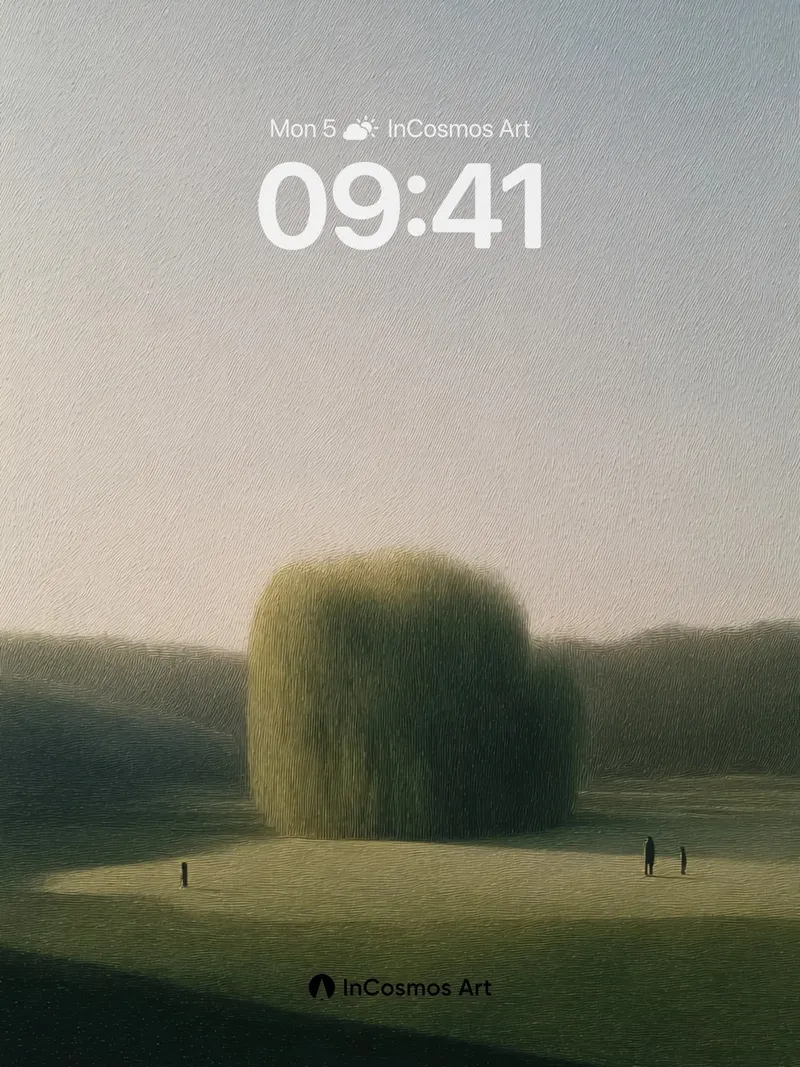
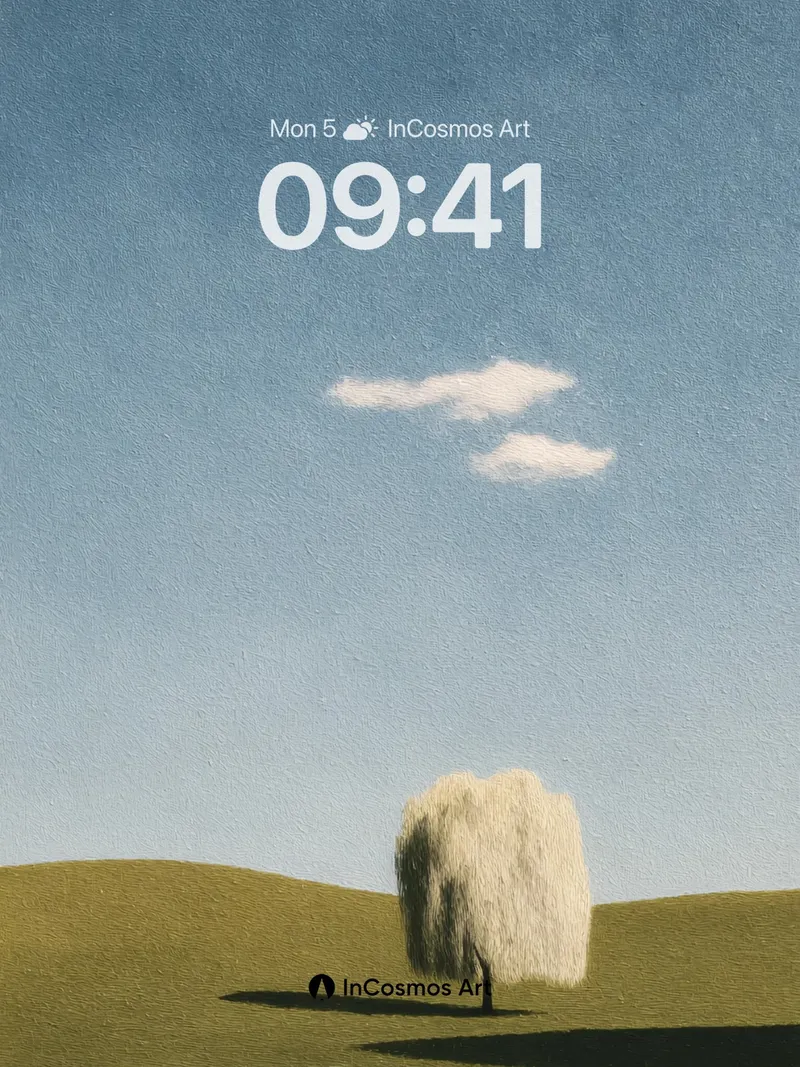
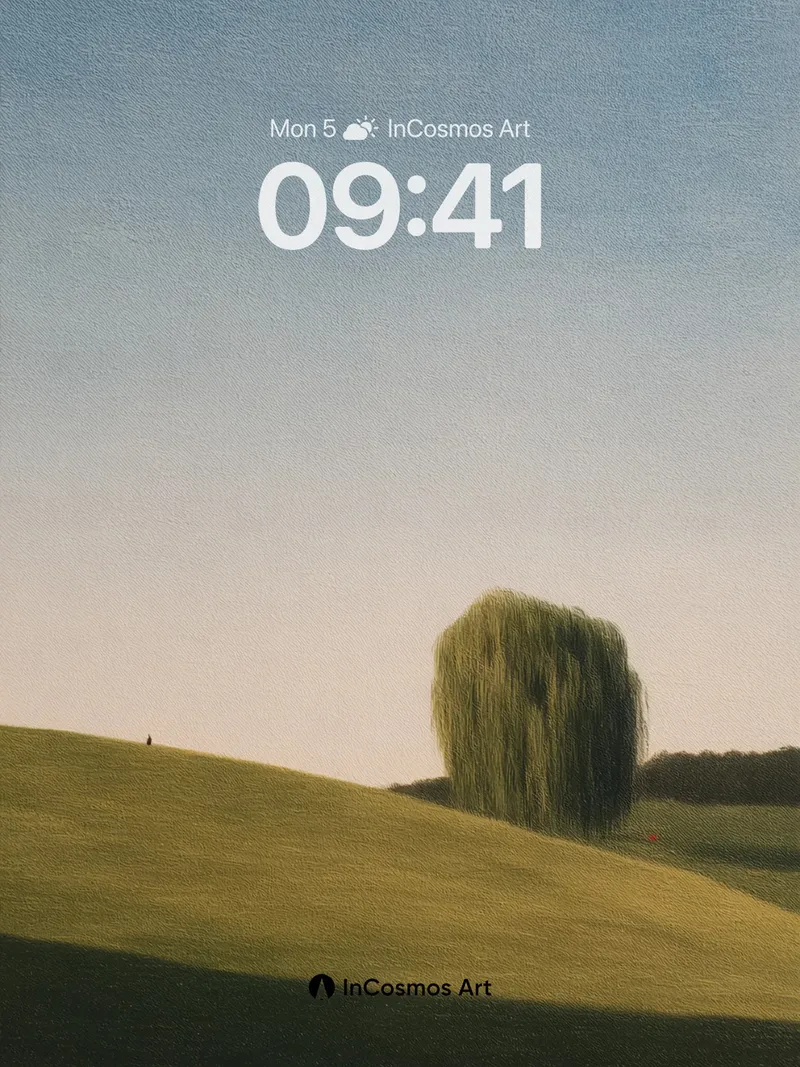
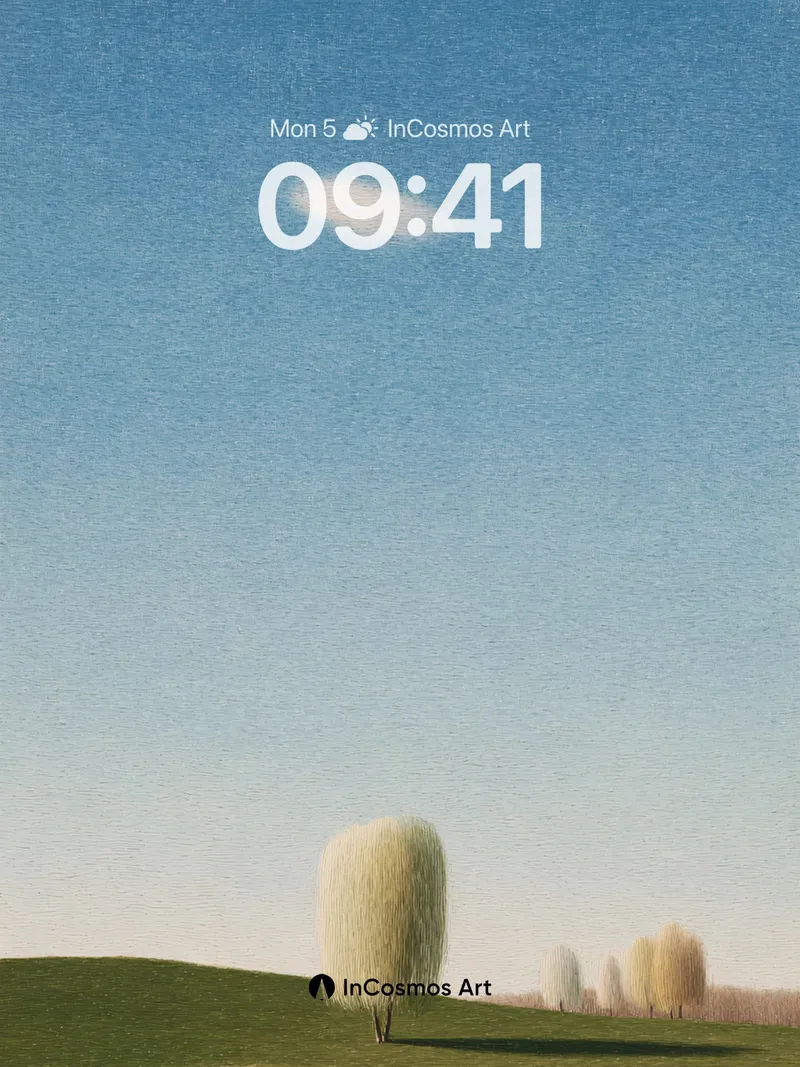
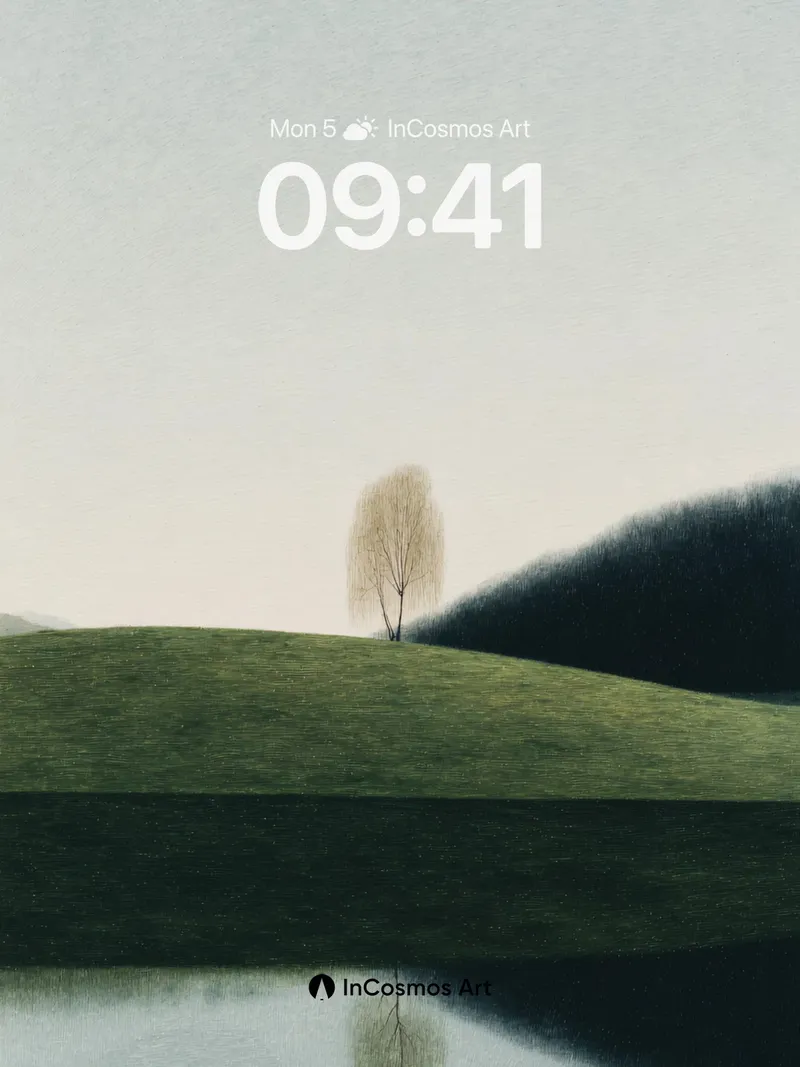
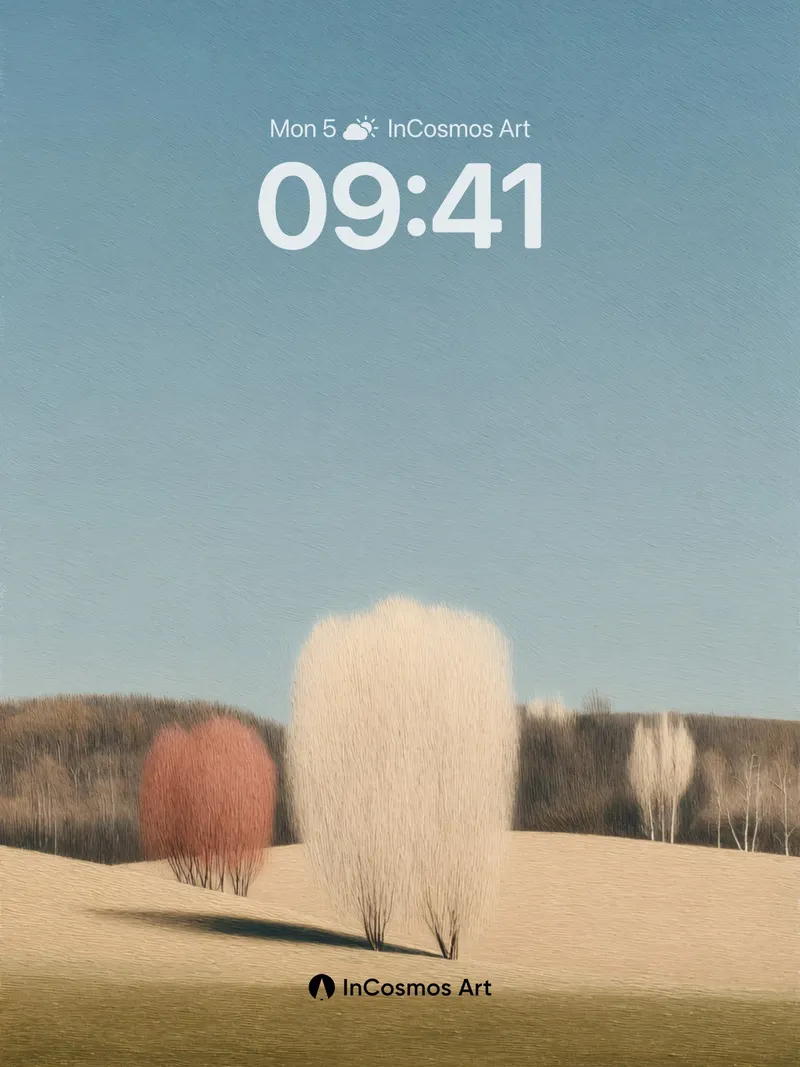
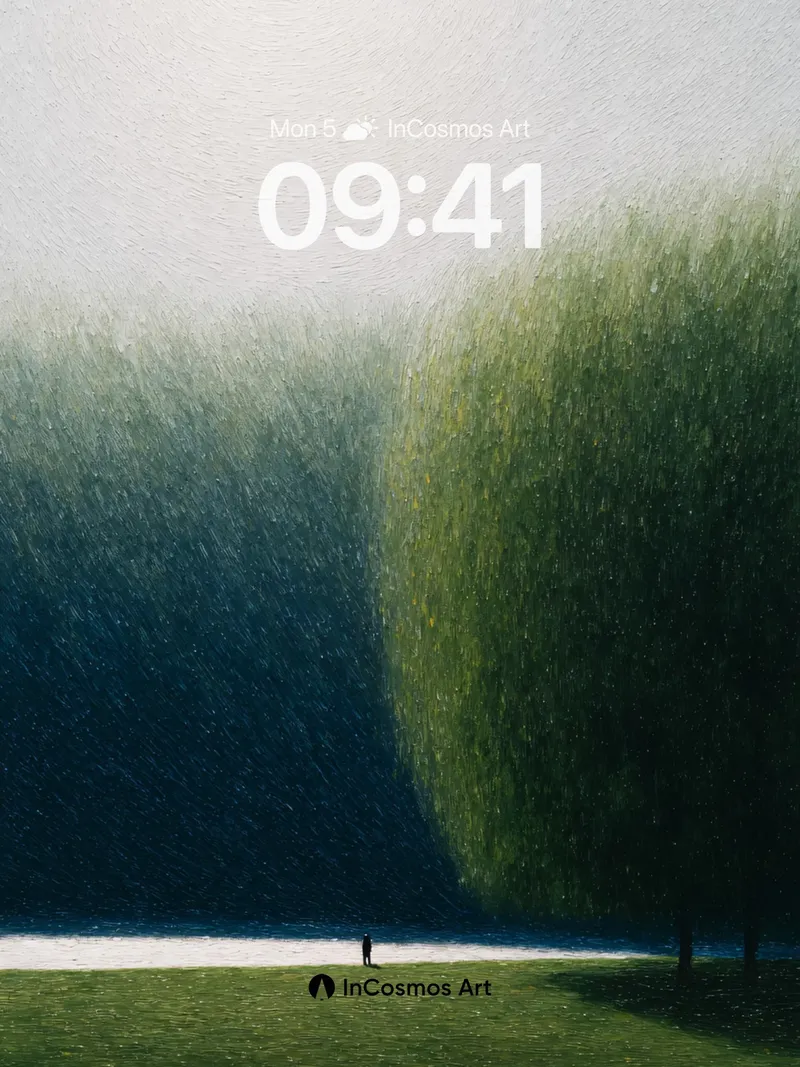
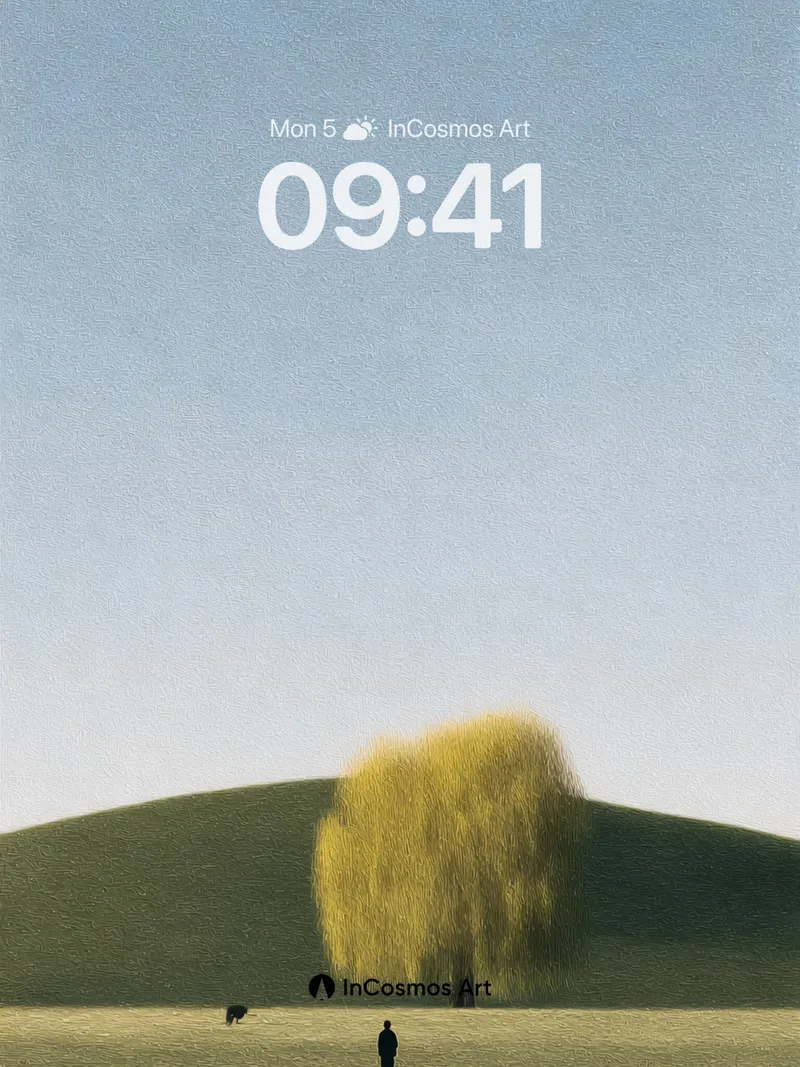
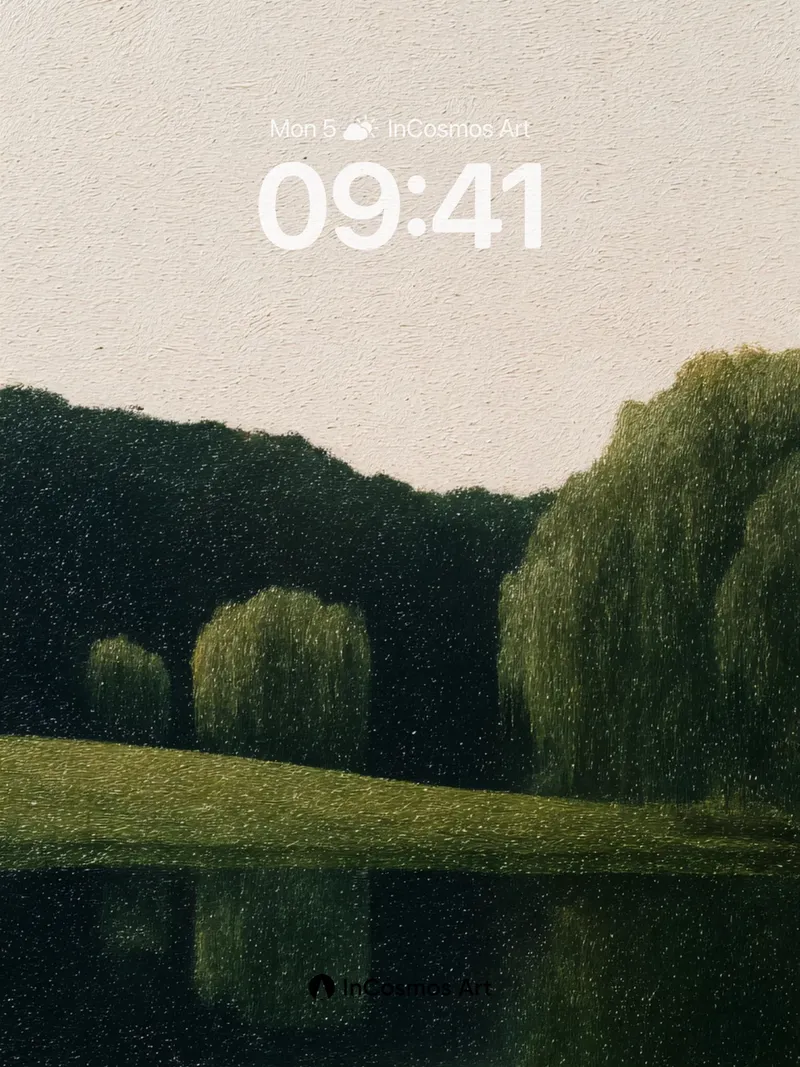
The water lies still, mirroring hills and tree silhouettes as if time has paused. Light moves slowly across the land, grass whispering in the breeze, distant houses standing silent like fragments of memory. These scenes do not merely depict nature but construct an emotional space—where subtle distance and resonance exist between human and environment. Each frame resembles an unfinished poem, using earth as paper and light as ink, writing meditations on presence and absence.
The Scale of Solitude
Human figures are deliberately reduced in scale, becoming mere points within vast natural structures. This is not dismissal but redefinition. When a silhouette appears on a slope, it no longer dominates; instead, it integrates into the rhythm of the whole. This visual retreat is a philosophical stance: acknowledging limitation while embracing expansive possibility.
The Narrative of Light
Moments of sunrise and sunset are repeatedly captured—the golden disc hovering above treetops or sinking beneath water. Changes in light mark time, yet also carry emotion. It illuminates meadows and casts long shadows, revealing the coexistence of brightness and darkness. In these interplays, nature reveals its inner cadence, while humans remain fleeting observers.
The Mirror of Water
The lake reflects reality and projects inner states. Trees, hills, skies overlap in its surface, forming a dual world. This symmetry is imperfect, yet carries a sense of order. It reminds us that external calm often stems from internal clarity. Ripples on the surface echo mental fluctuations—stillness conceals deep currents.
The Language of Silence
No sound exists, yet expression abounds. The rustle of leaves in wind, the gentle lap of waves against shore, sunlight filtering through branches—these silent details form nature’s grammar. They bypass language, reaching perception directly. In this wordless realm, one learns to listen rather than speak.