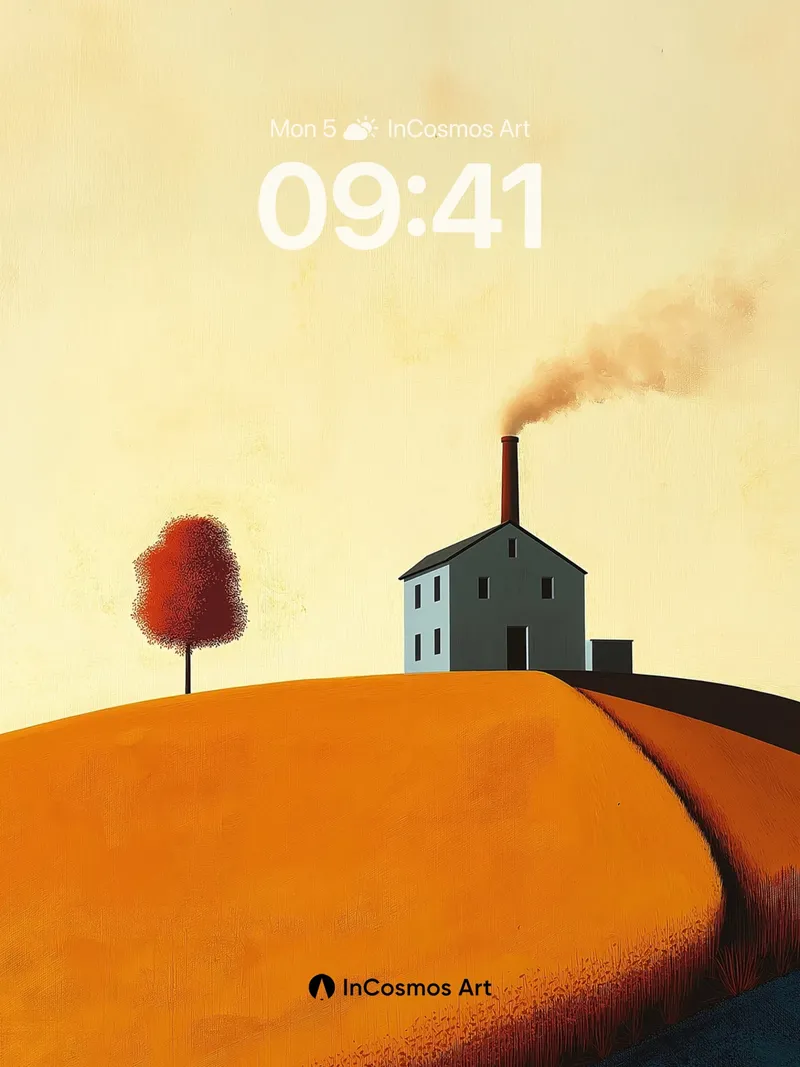
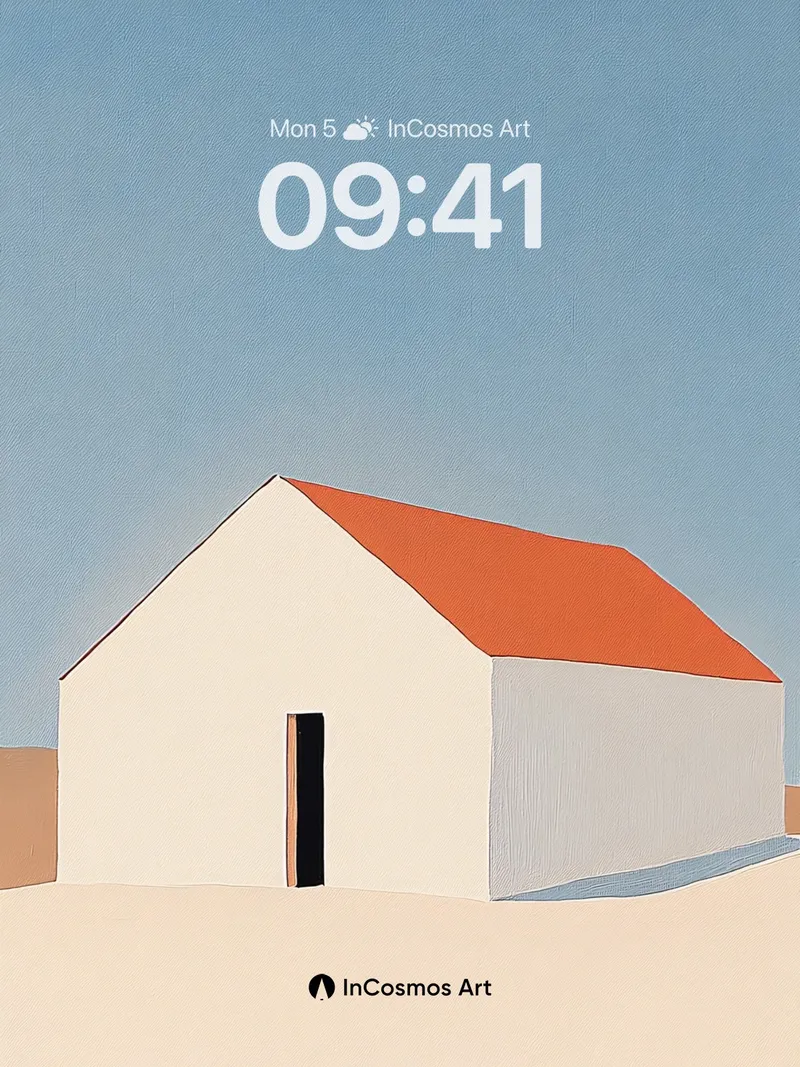
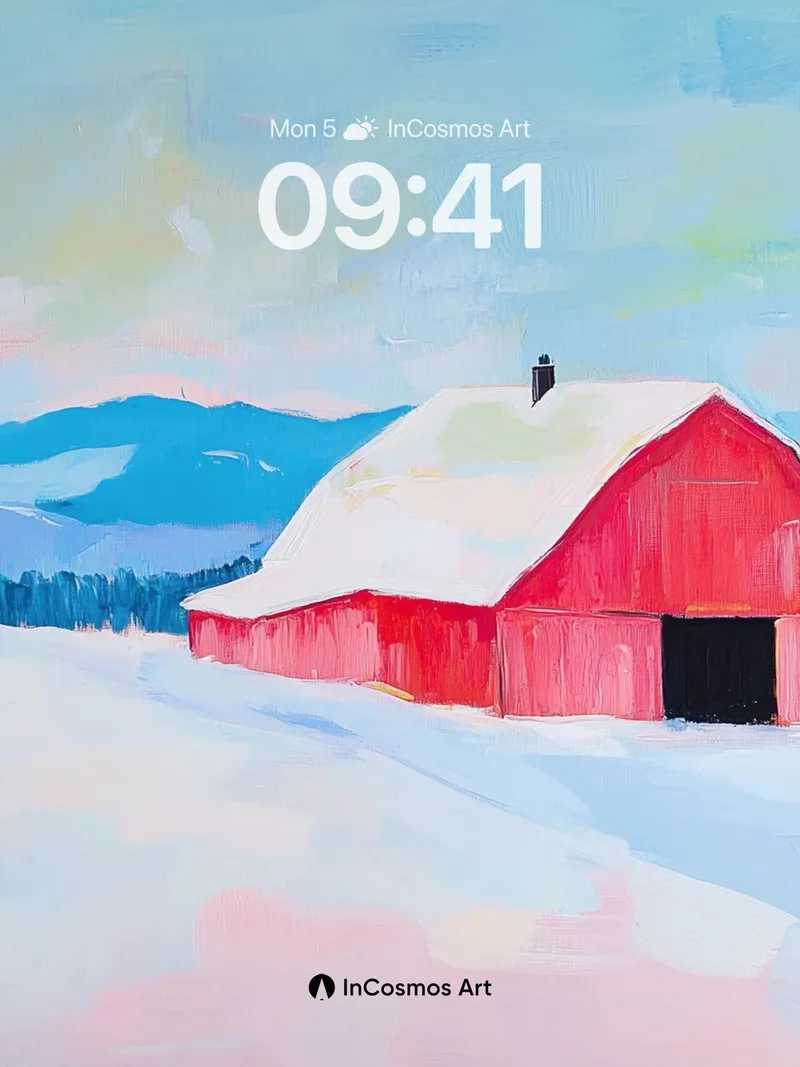
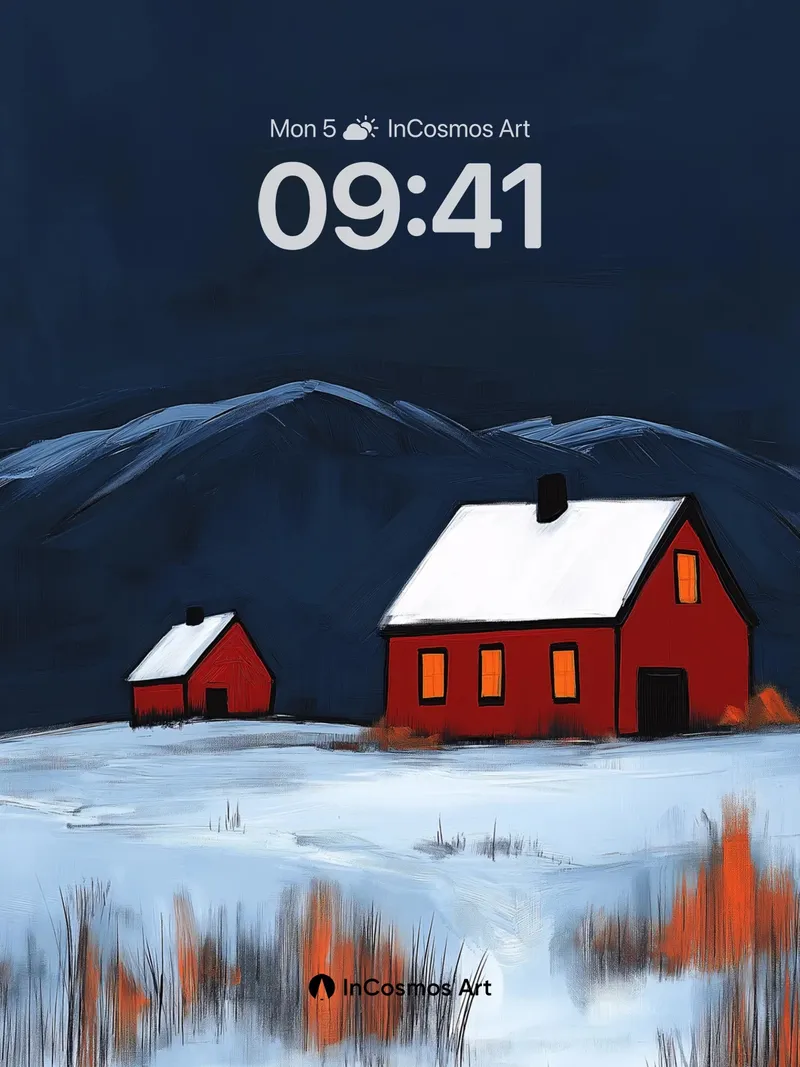
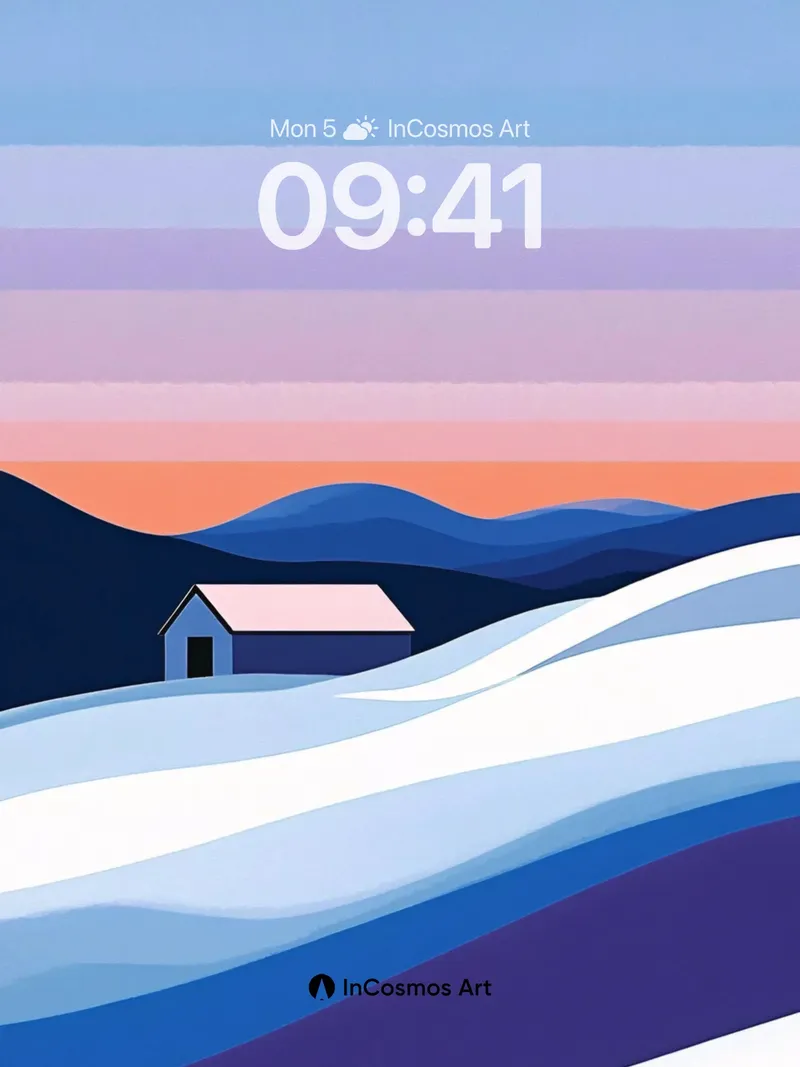
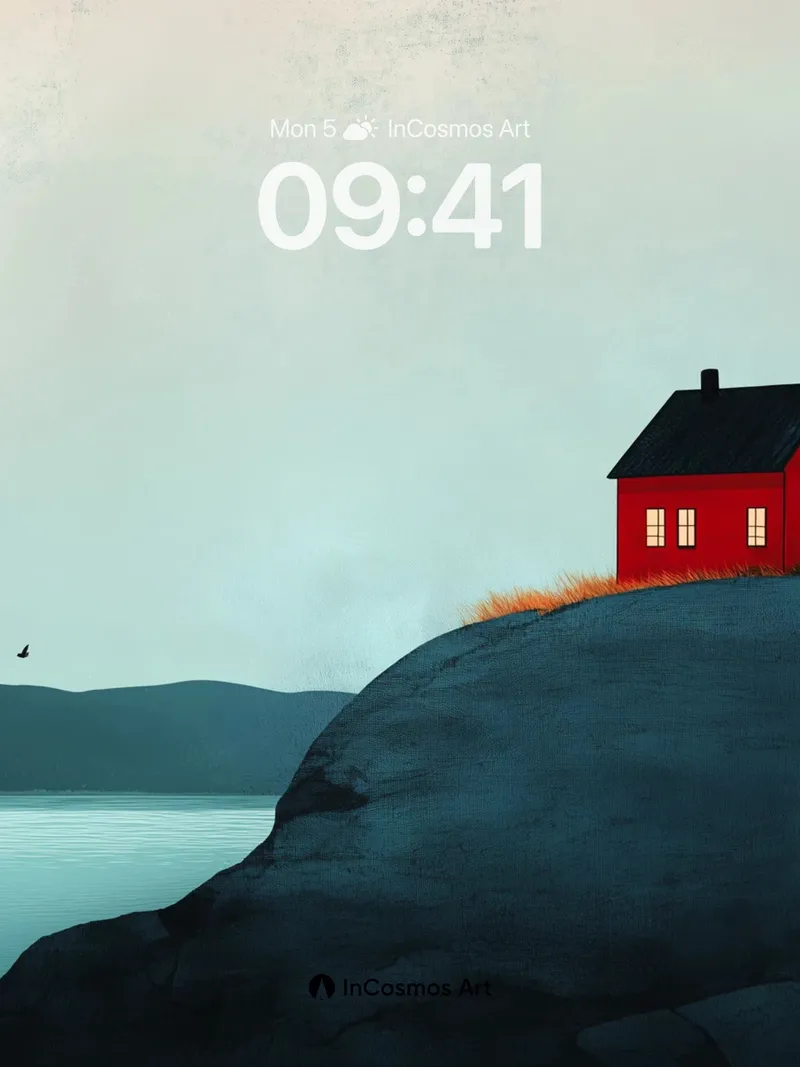
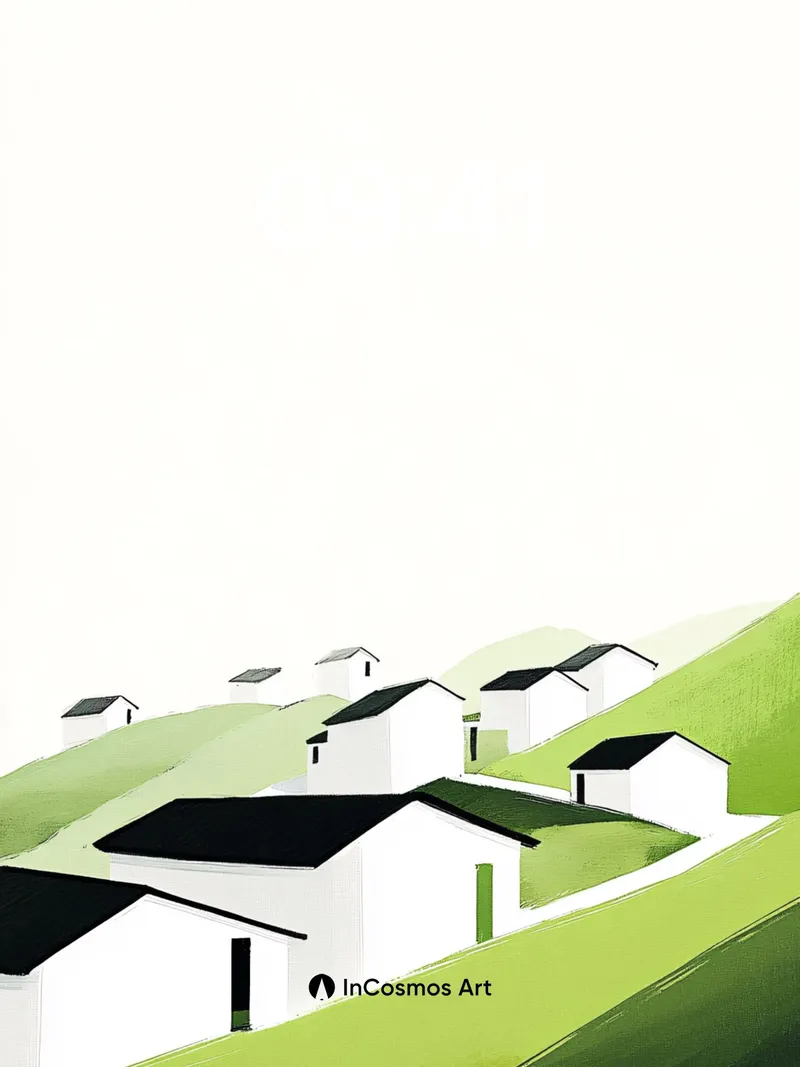
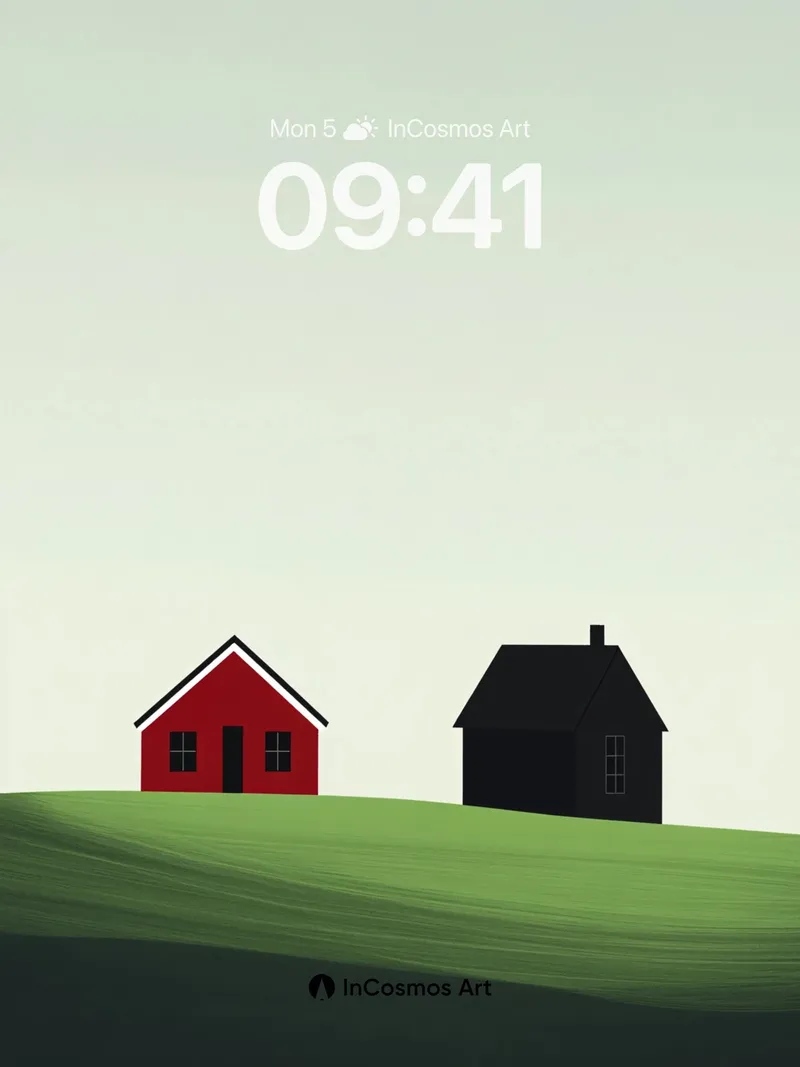
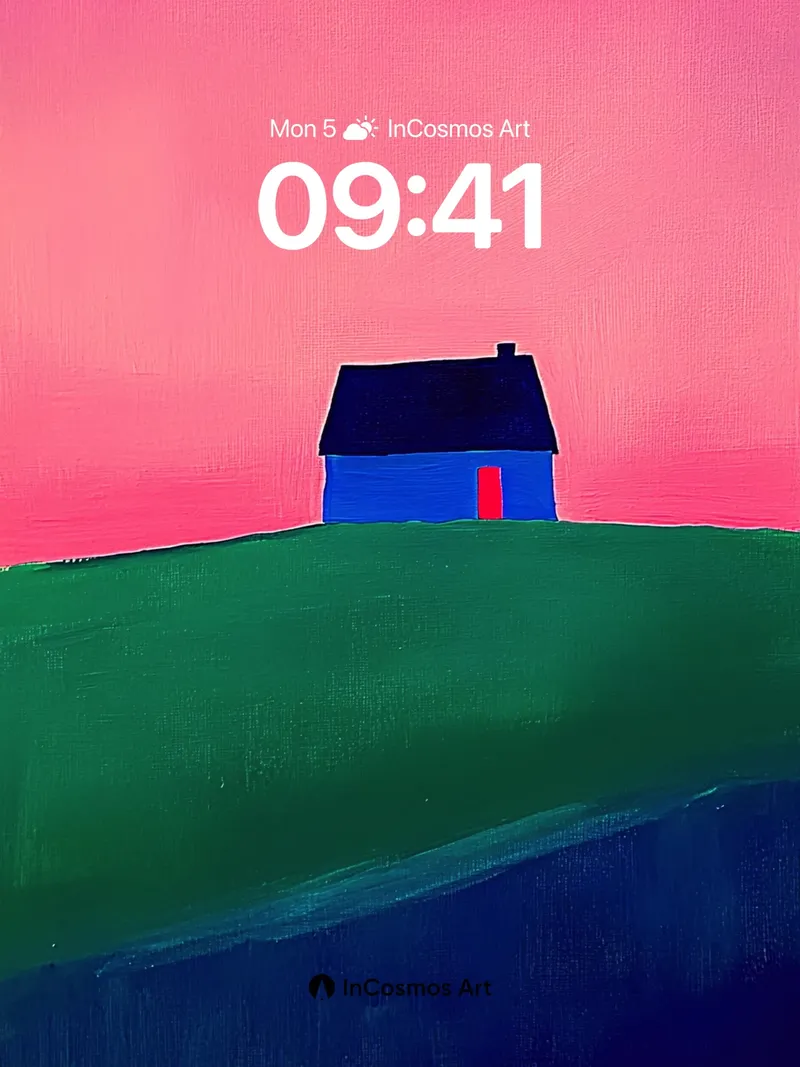
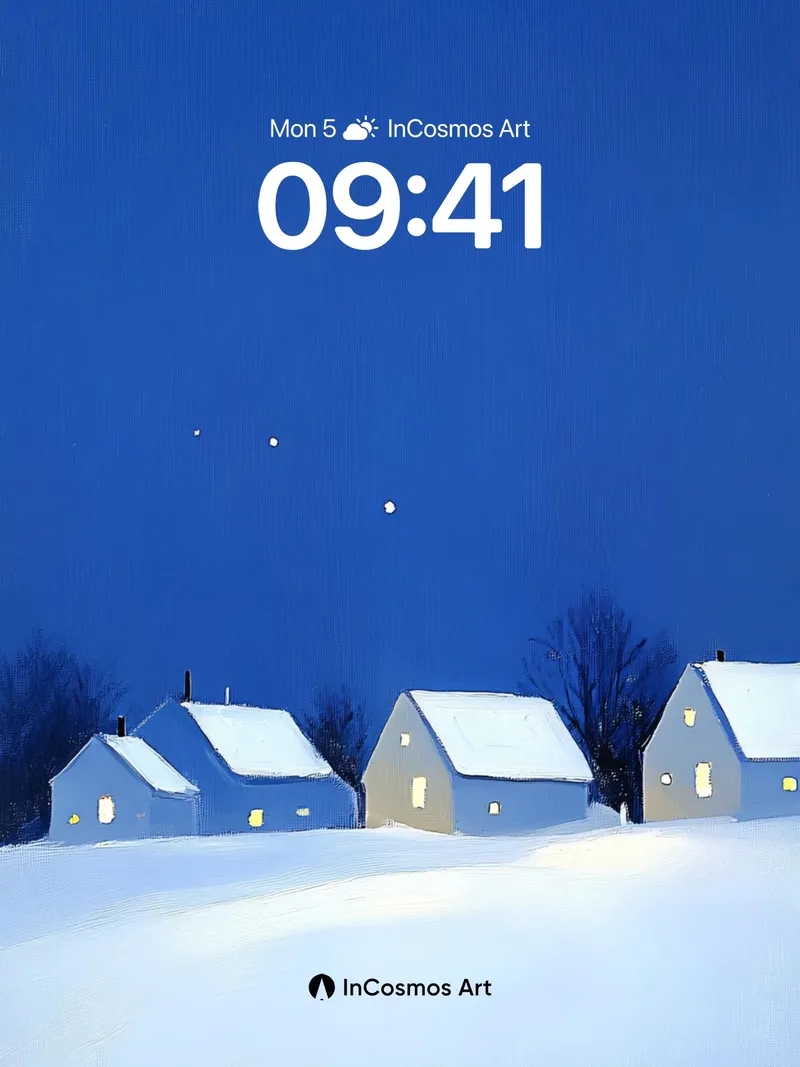
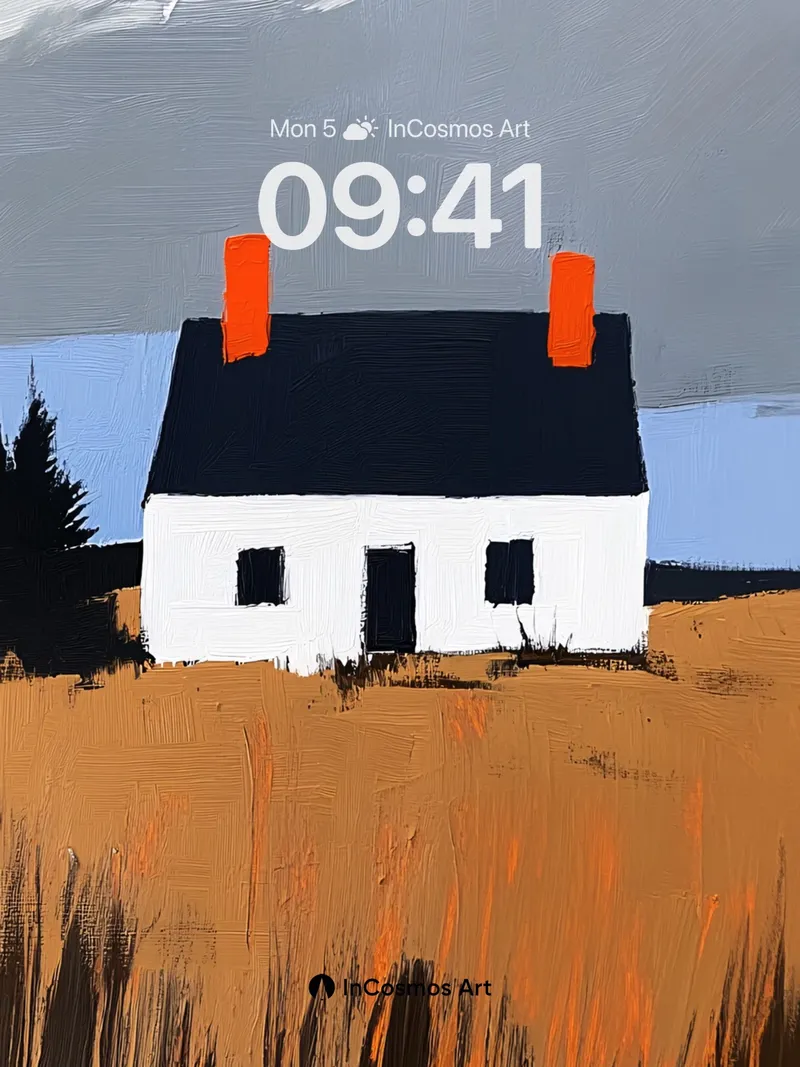
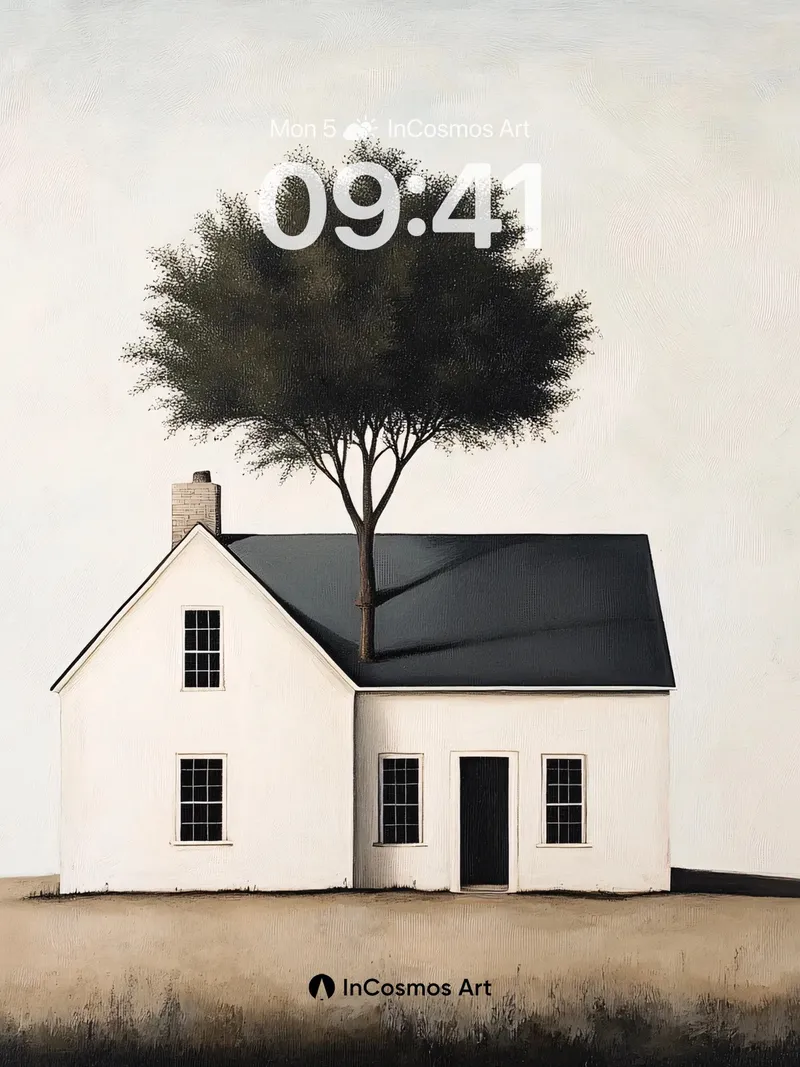
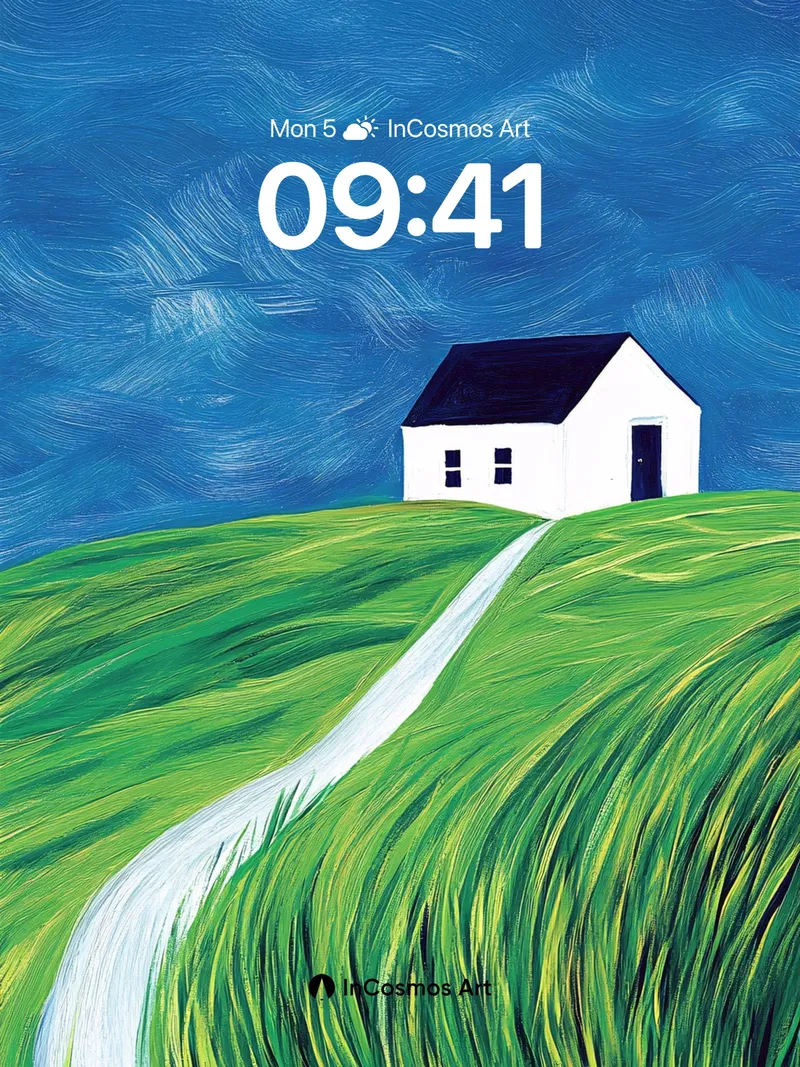
In boundless wilderness, a house stands alone. It does not cling to urban grids nor yield to human clamor. Its presence is a choice, a redefinition of space. Architecture becomes an emotional vessel, color a revealer of mood. White walls reflect the gray-blue sky, red chimneys pierce gloom, blue roofs whisper in twilight, orange-yellow windows emit human warmth. These structures are more than shelter—they are symbols of spiritual dwelling. Placed amid plains, snowfields, and hills, they seem to answer earth's call while rejecting worldly intrusion. Each house is a silent declaration—about individuality and nature, about how solitude transforms into poetry, about humanity's place in vastness.
Solitude as Aesthetic
Solitude is not absence but completeness. When isolated from others, a building's silhouette sharpens. Without nearby lights, one glowing window illuminates the entire night. This separation grants architecture ritualistic dignity, like a sacred altar. No ornamentation is needed to prove worth—existence itself suffices as expression. This mirrors modern longing: in an age of information overload, silence holds greater power than noise.
Language of Color
Color here is not decoration but meaning. Red signifies life and resistance, blue implies contemplation and distance, orange-yellow sparks memory, black marks time's sediment. Combinations form psychological maps reflecting inner worlds. The blue house under pink sky feels like a dream fallen to earth; the red house in snow burns like fire resisting cold. Color choices externalize self-identity.
Borders of Nature
The interaction between structure and terrain reveals human-environment tension. Some rest atop ridges, surveying land; others hide in valleys, humbly yielding. Paths wind toward solitary homes, symbolizing journey’s end or beginning. Land rises and falls like breath, vegetation shifts with seasons, yet houses remain still. This contrast highlights the dialectic of permanence and impermanence. Though artificial, buildings find their rhythm within natural cycles.
Dwelling as Philosophy
Habitation transcends physical need, entering philosophy. Where one chooses to live reflects lifestyle preference. Mountain dwellings reject convenience for peace; snowy red homes embrace harshness with warmth against indifference. These decisions embody a stance: willingly surrendering aspects of modernity for inner freedom. Houses thus cease being functional units and become embodiments of thought.