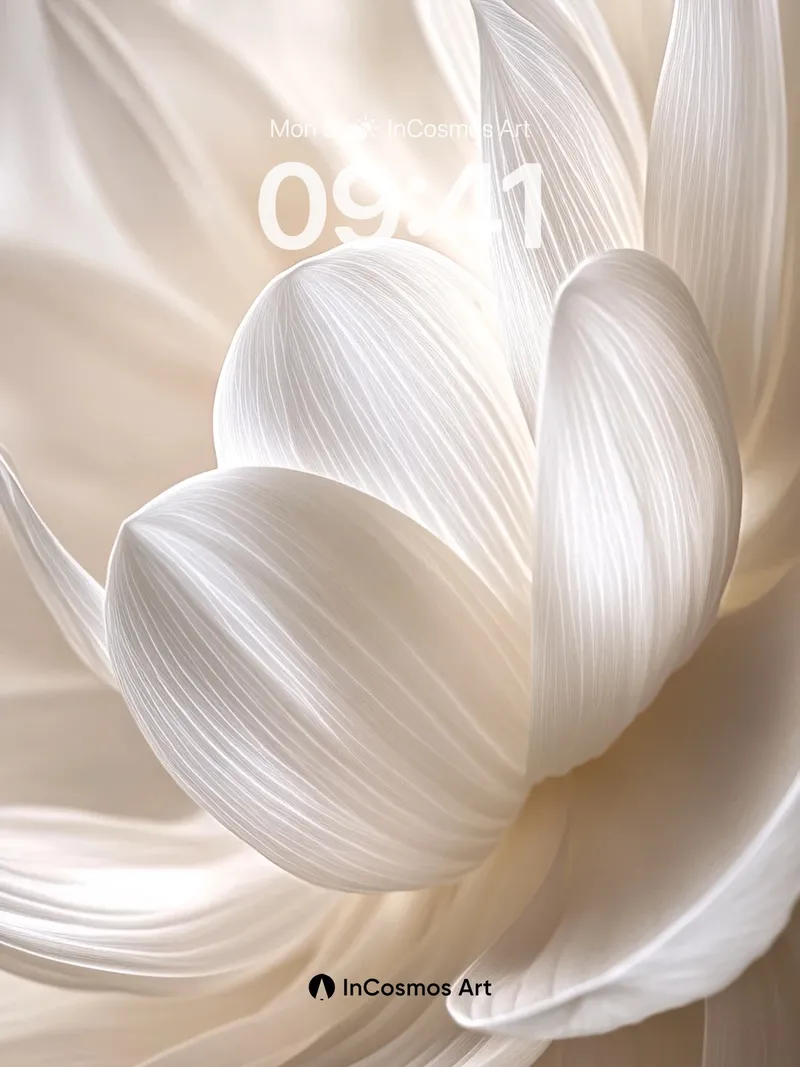
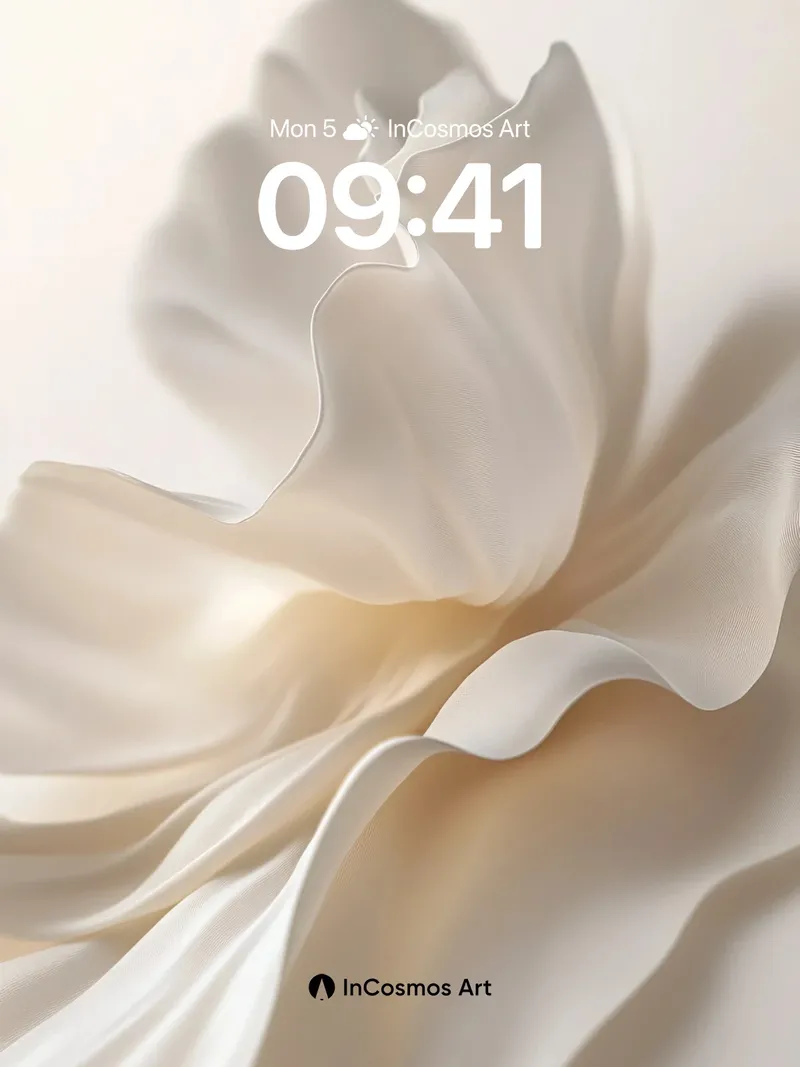
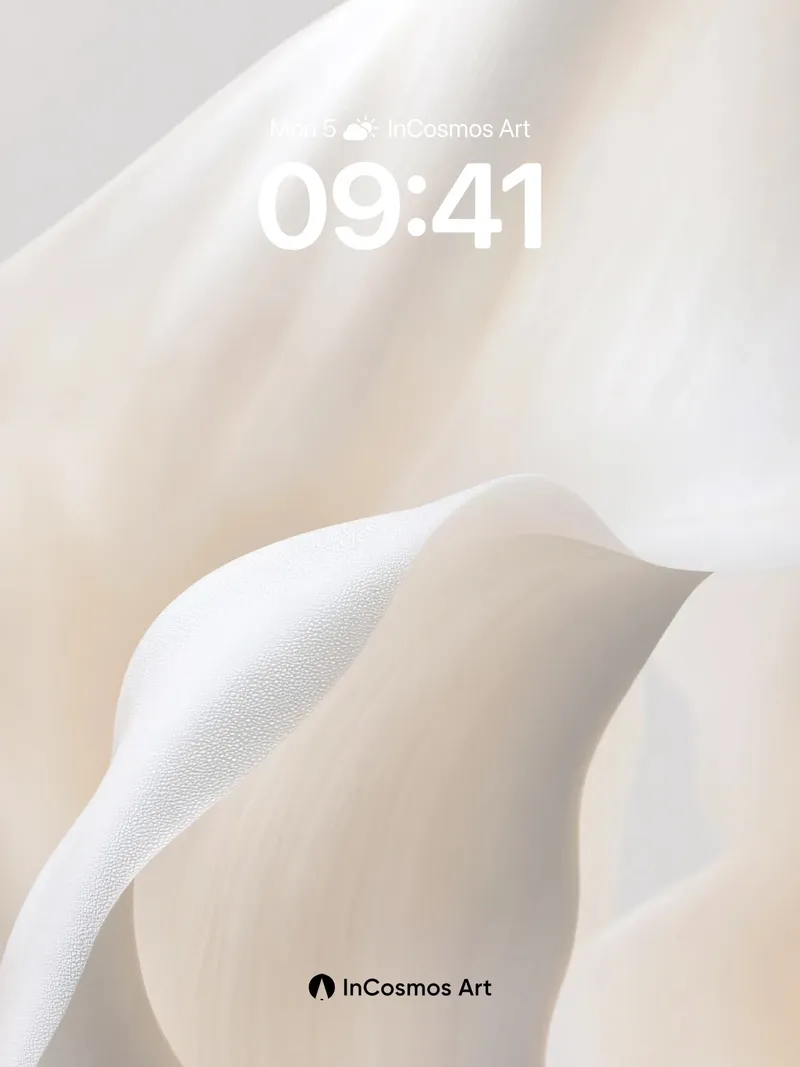
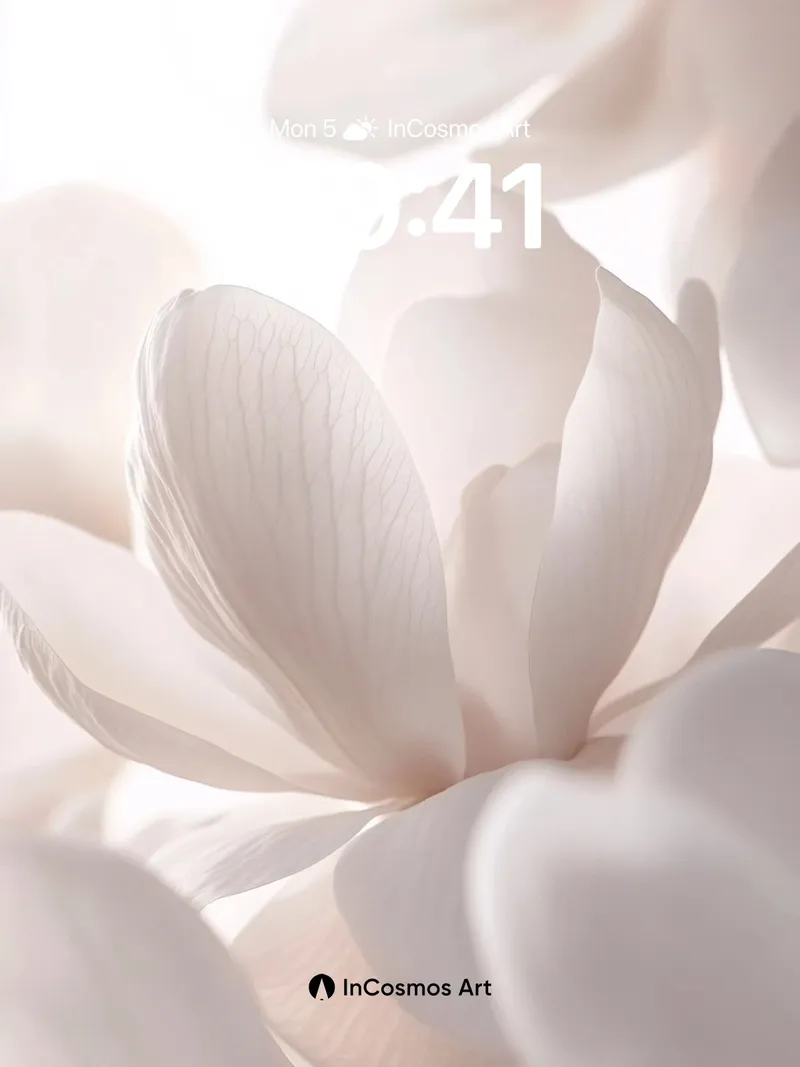
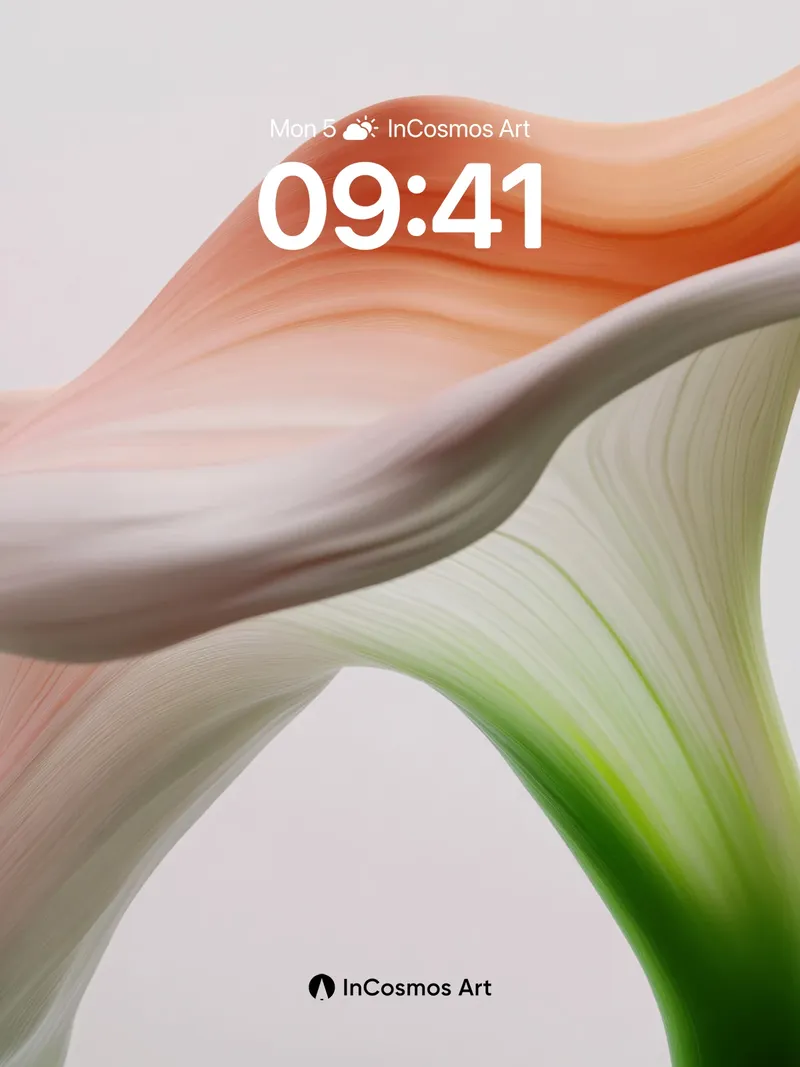
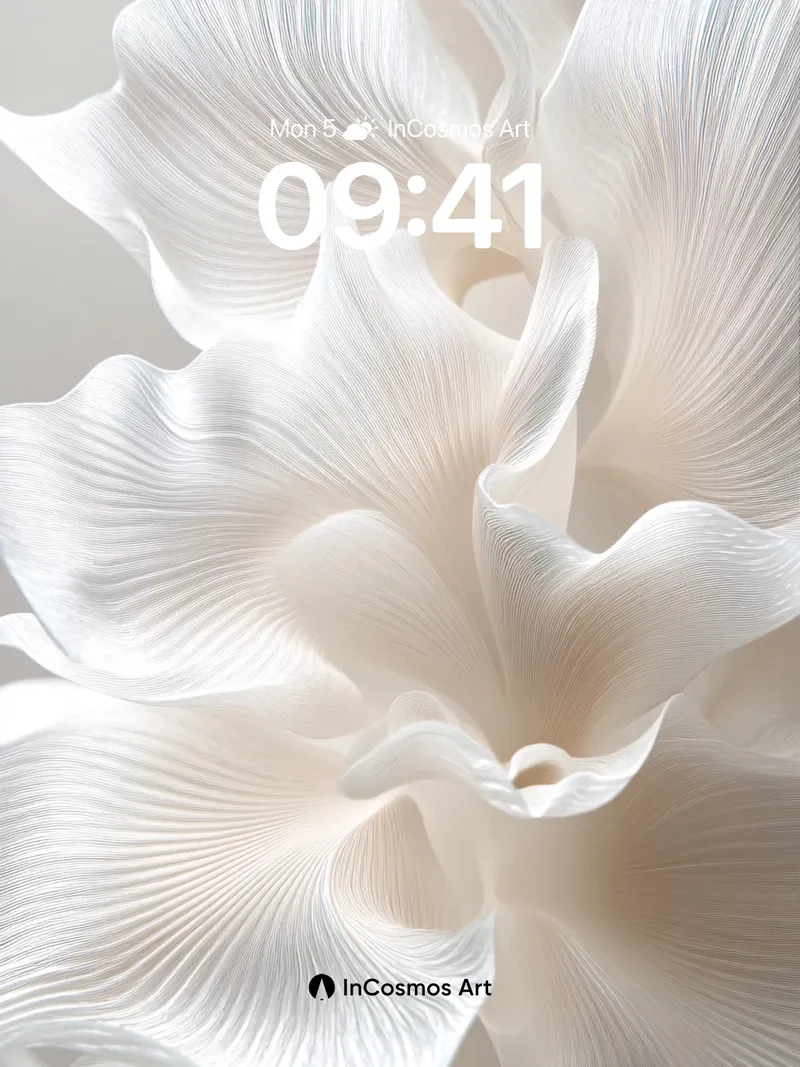
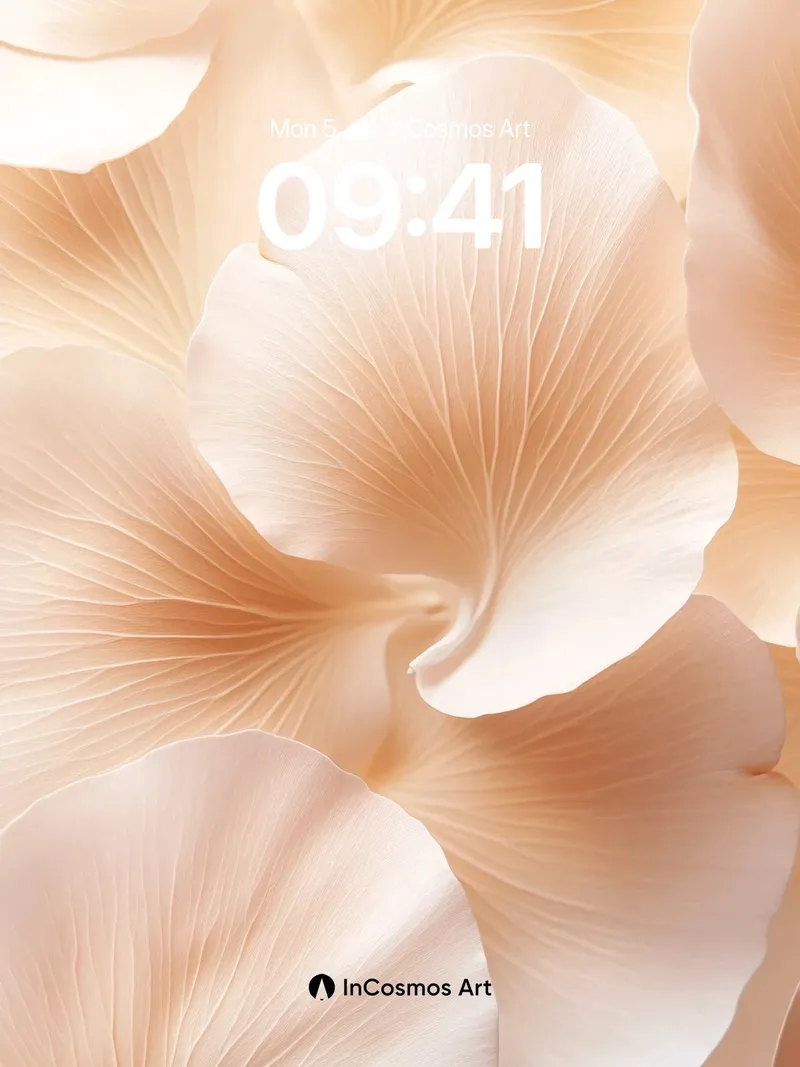
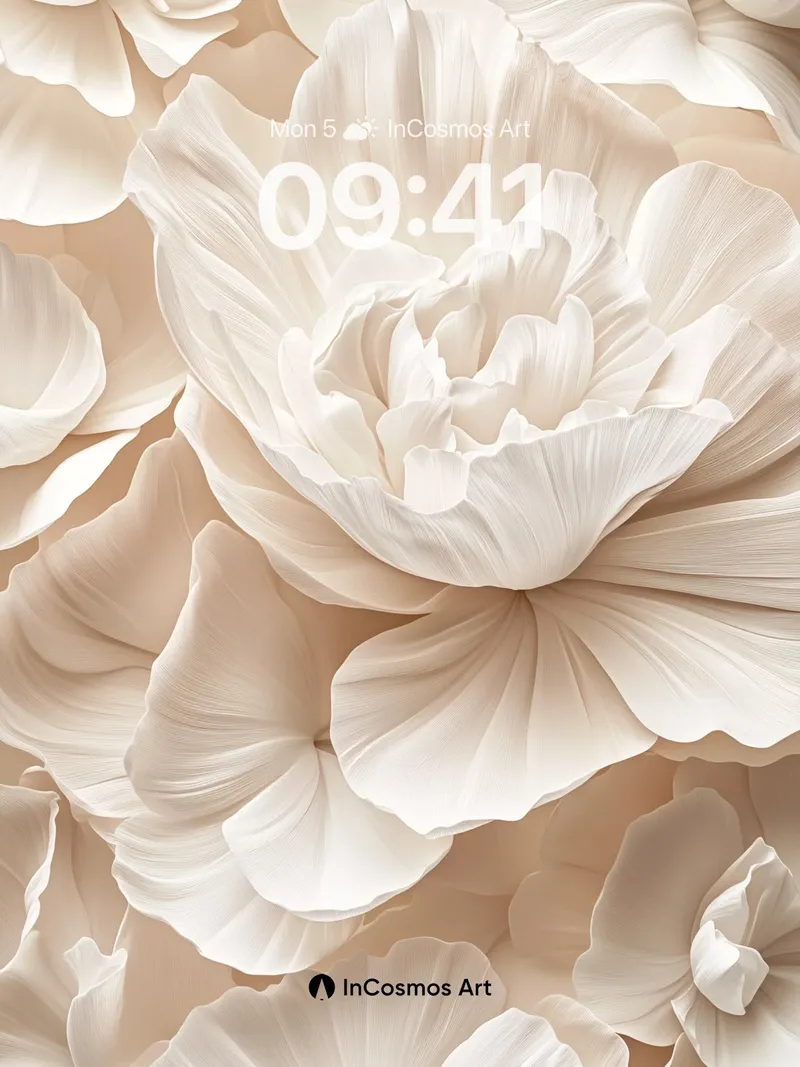
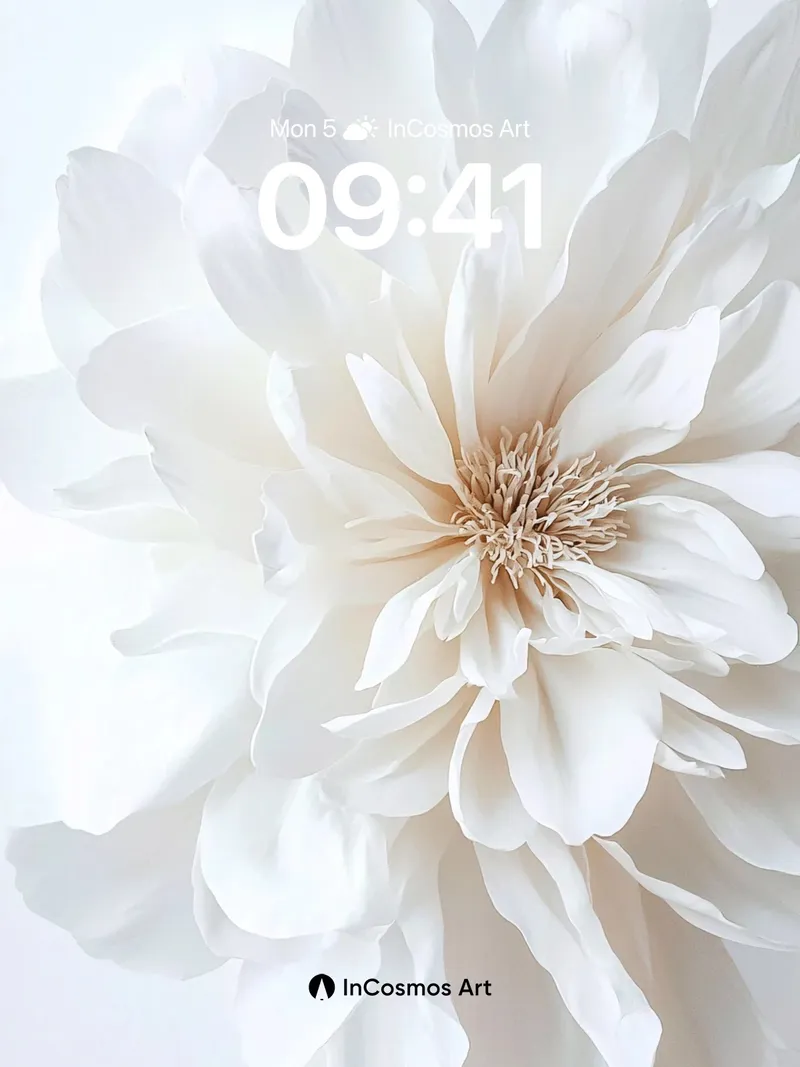
At the edge of light and shadow, petals unfold with the gentlest curvature, as if time itself has slowed. They do not compete or demand attention, yet their fine textures and soft curves form a silent order. This order is not born of geometric precision but from the rhythm of natural growth—each fold records the flow of moisture, each curl responds to the touch of air. This is more than botanical form; it is a way of being: unassuming, yet deeply resonant.
Structure Under Soft Light
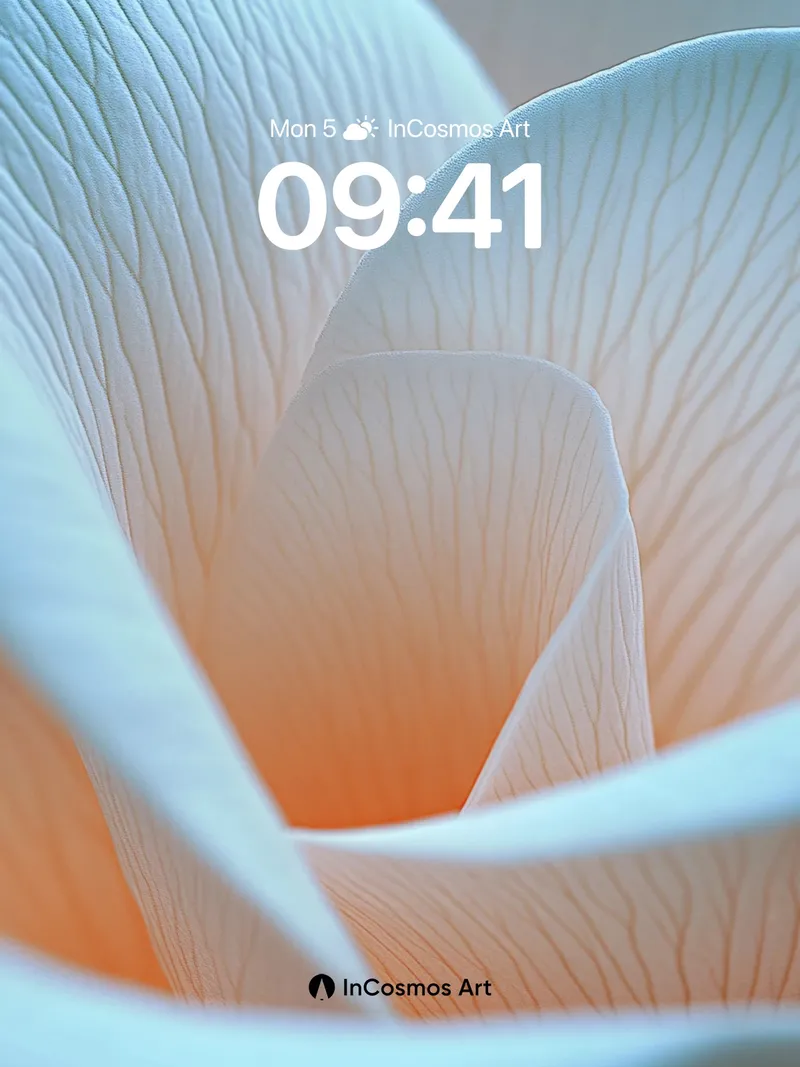
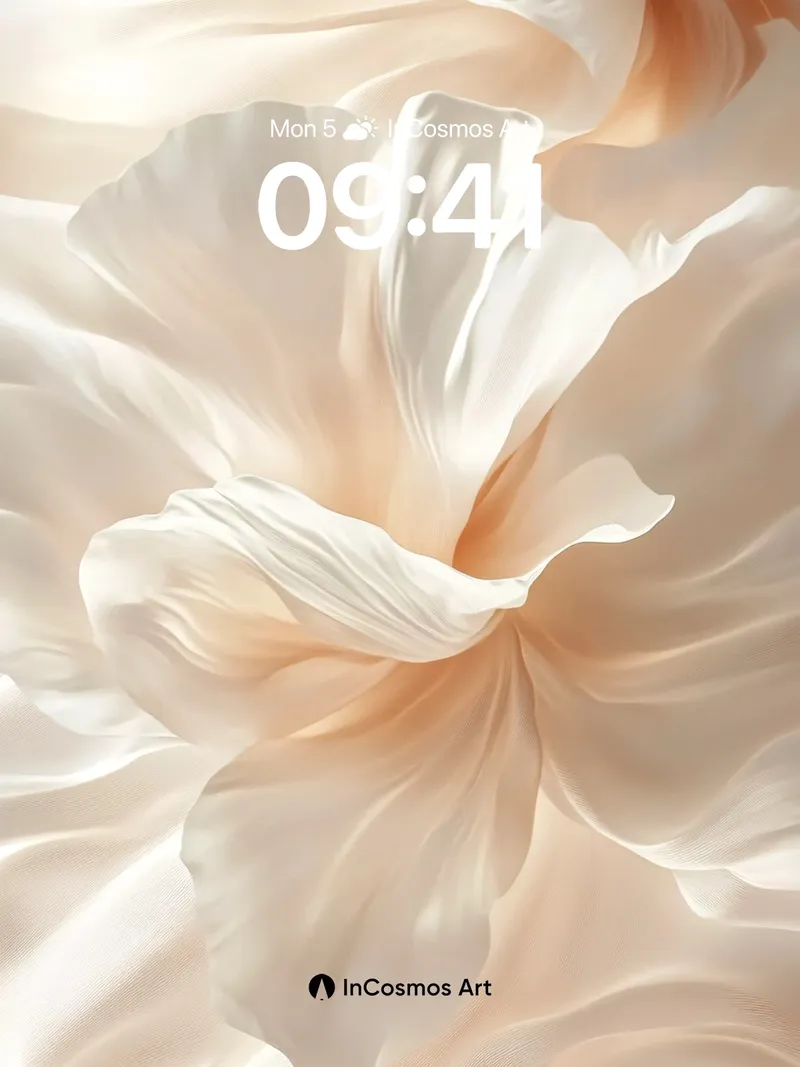
As light passes through the petals, it reveals a warm gradient of tones—from pale white at the edges to subtle orange at the center. This transition is not an aesthetic choice, but a physical truth—refraction, material thickness, cellular arrangement all contribute to visual harmony. Humans often seek to impose rules on nature, but here, rules dissolve into fluidity.
Texture as Memory
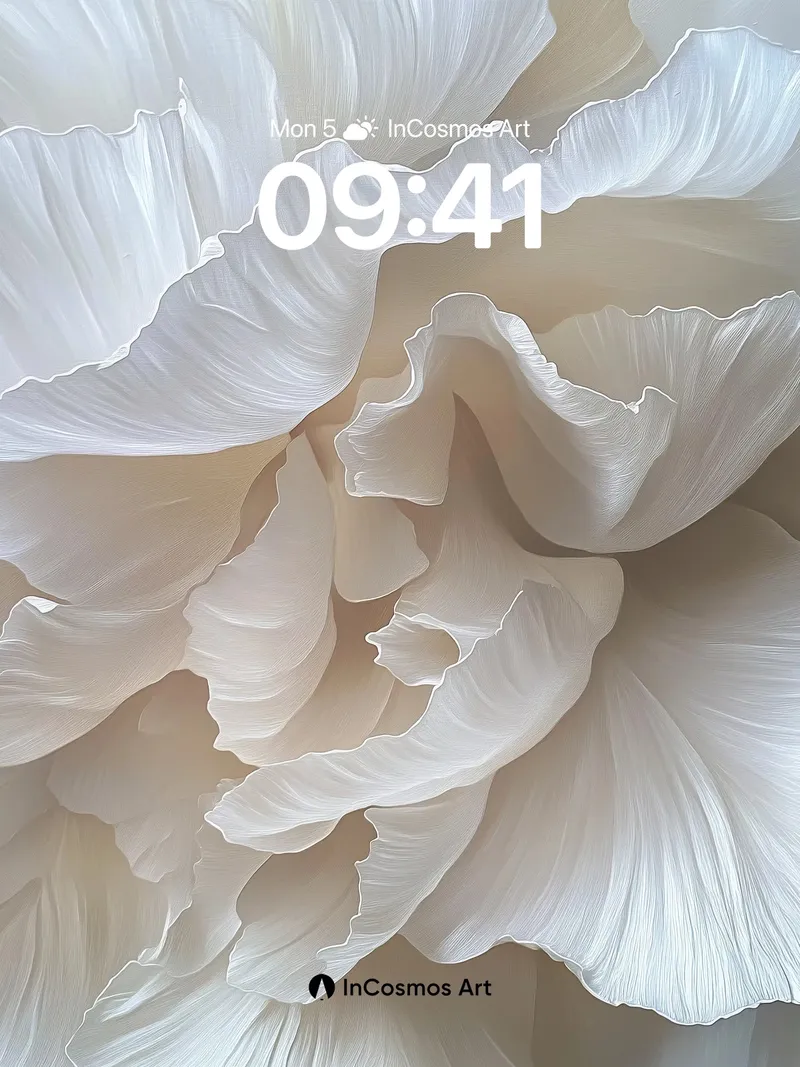
The veins on the petal surfaces are clearly visible, resembling river networks or neural pathways. These lines are not ornamentation—they are traces of life’s activity. They carry the paths of nutrient transport and reflect environmental shifts. When one gazes upon these patterns, they are reading an unwritten history—of growth, adaptation, and quiet endurance.
Abstract Concreteness
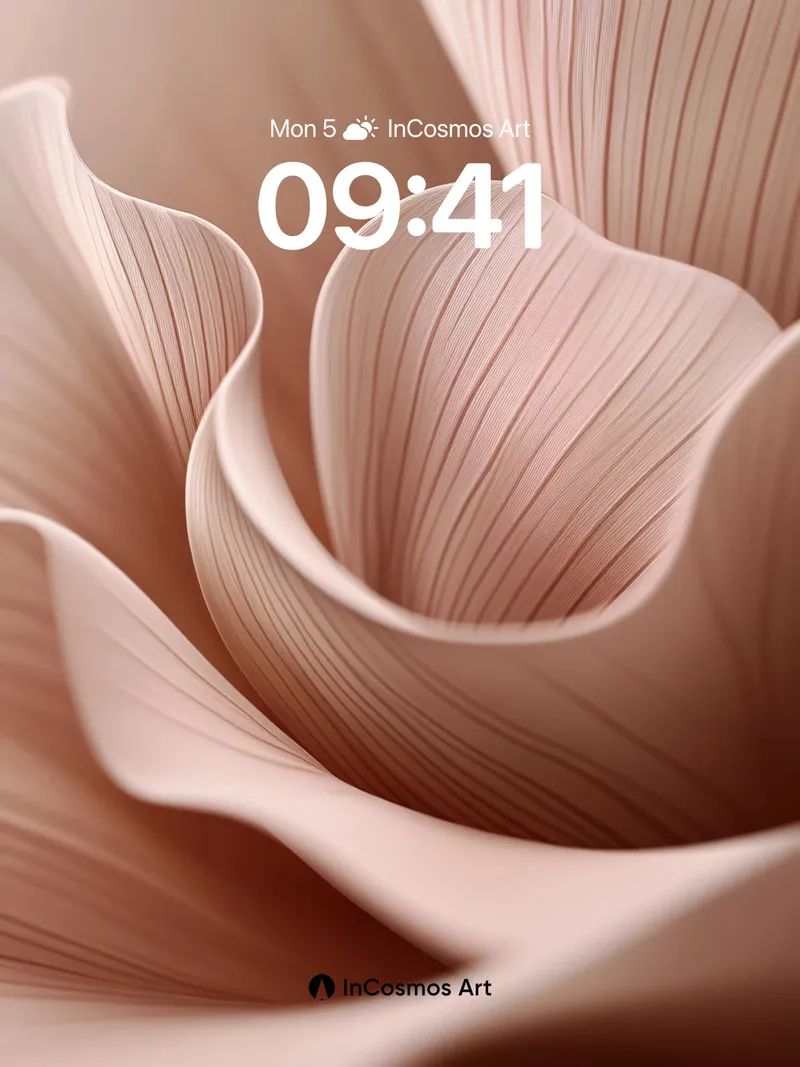
In some scenes, petals no longer appear distinct, transforming into abstract waves and curves. Colors merge, shapes blur, leaving only the dance of light and shadow. Here, nature ceases to be a recognizable object and becomes an emotional vessel. It invites viewers to step beyond the fixed idea of 'flower' and enter a broader realm of perception—one where form serves feeling, not definition.
Silent Ritual
These forms make no sound, yet they hold ritual significance. Their mere presence is a declaration: slow, continuous, wordless. In a fast-paced world, such silence feels rare and valuable. It reminds that beauty does not need noise, and meaning does not require urgency. True strength often lies within seemingly purposeless expansion.