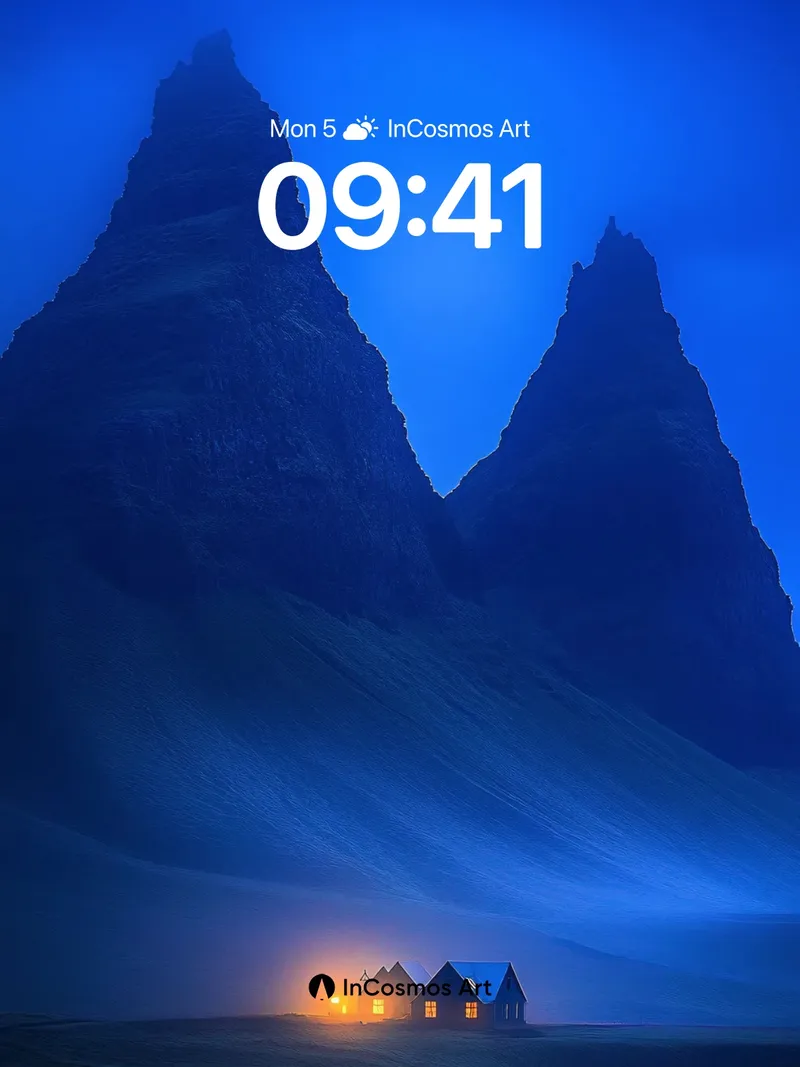
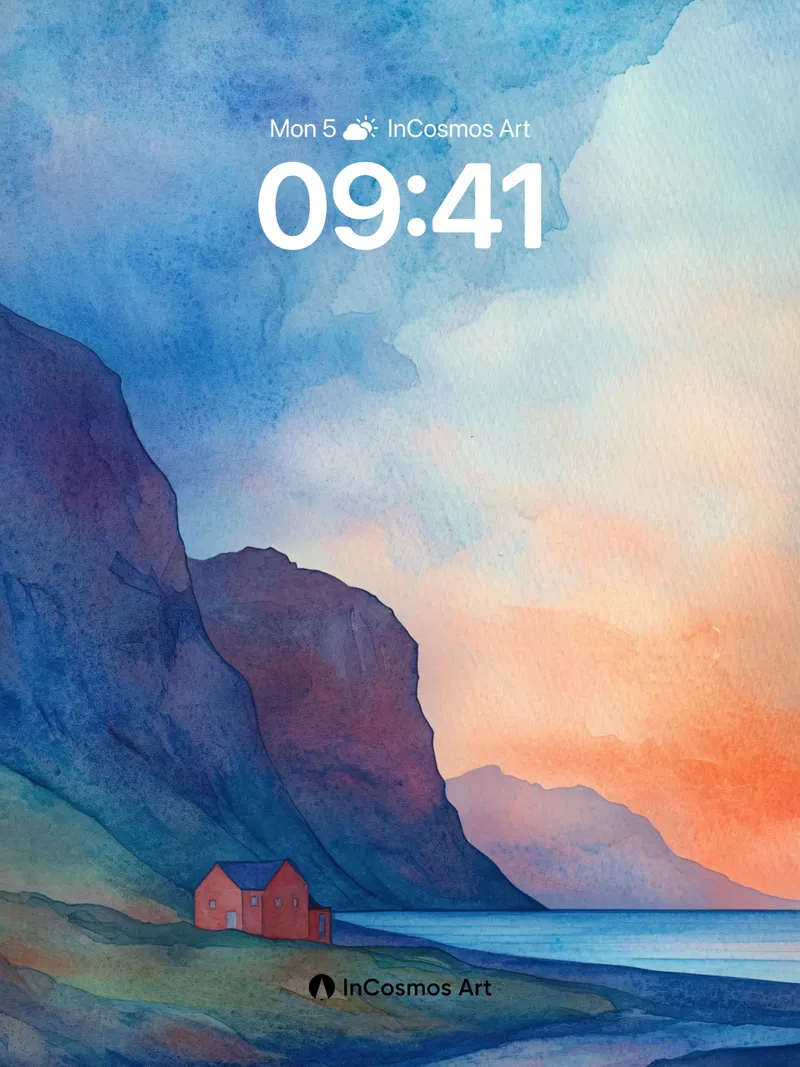
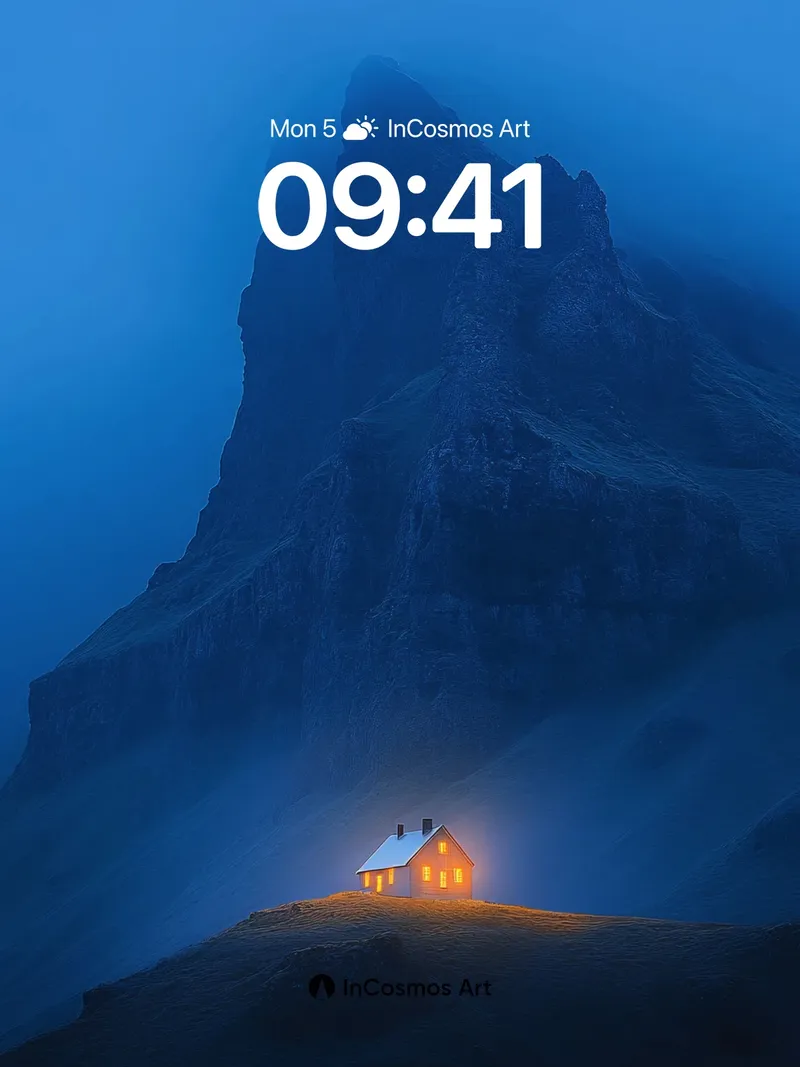
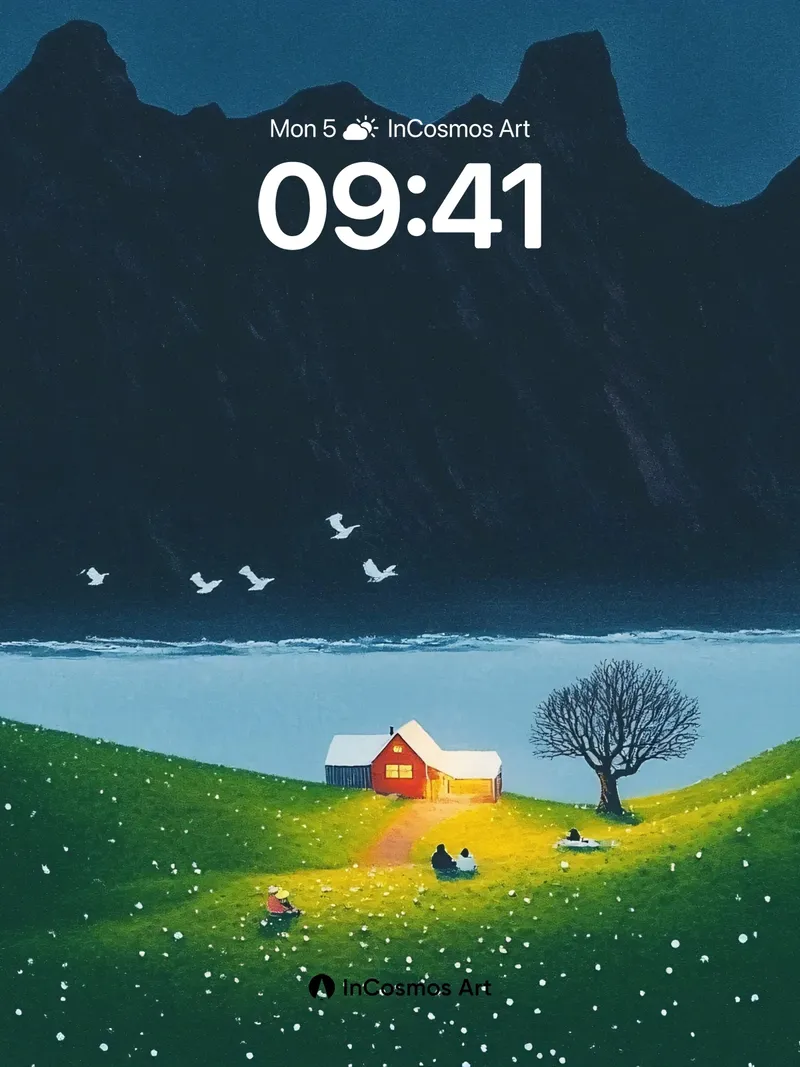
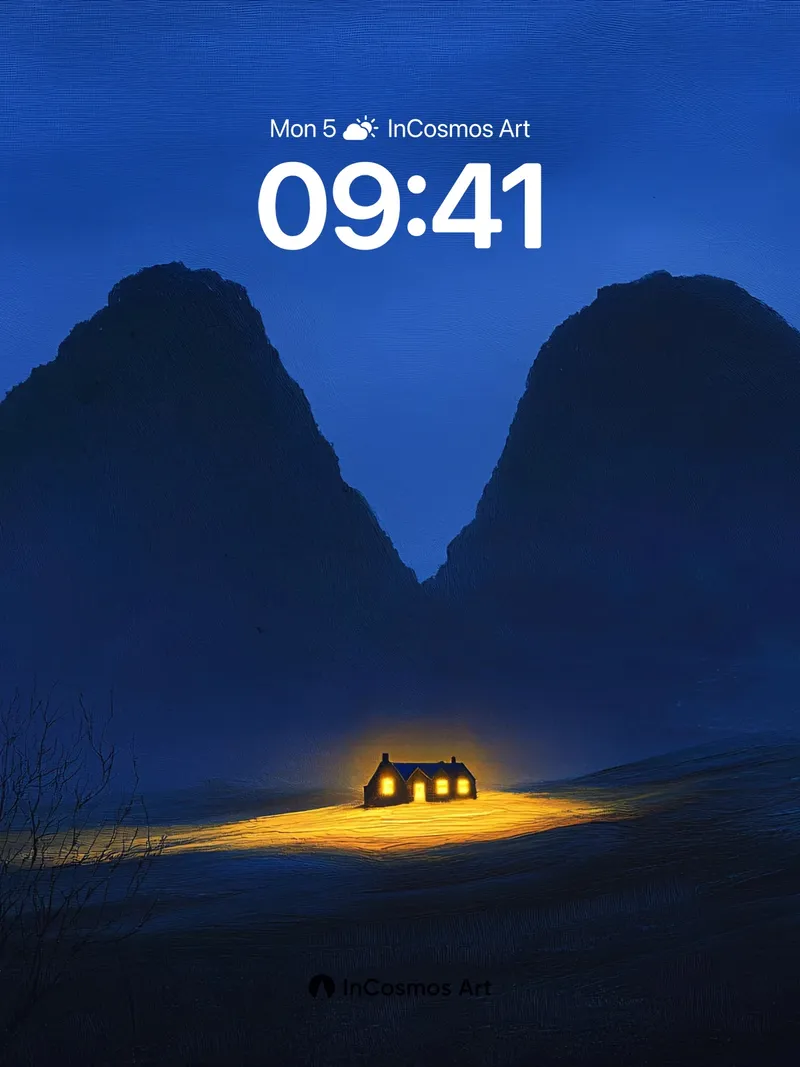
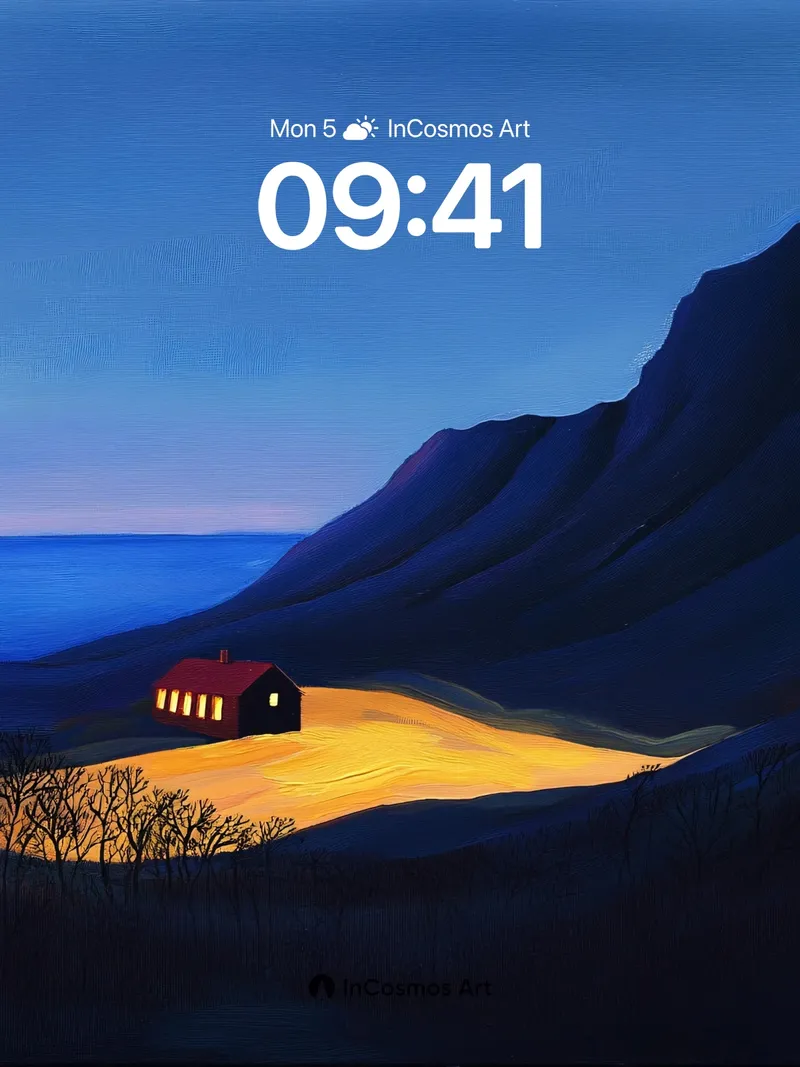
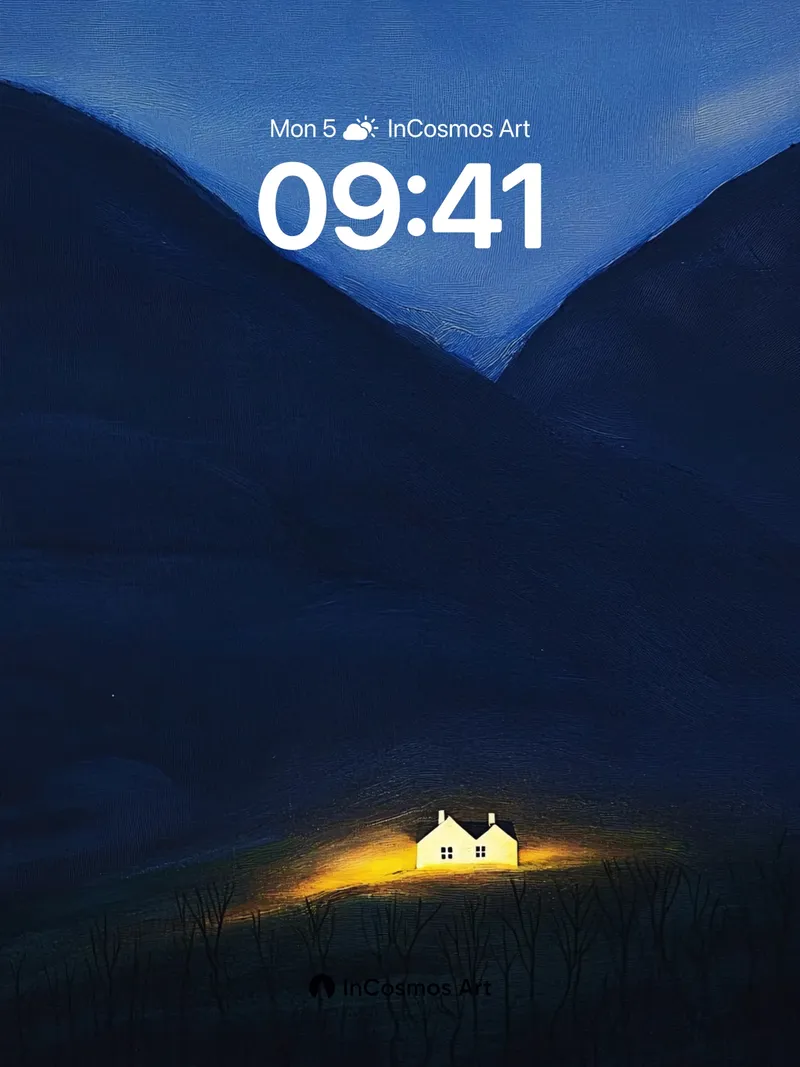
In boundless silence, a solitary house stands still. It does not cling to urban networks nor chase the clamor of crowds. Its presence is an act of resistance, a retreat from the rhythm of modern life. Light spills from within the windows, like faint sparks, carving warmth into the deep blue night. This light is not boastful—it is an affirmation of life: someone breathes here, someone waits here. Mountains surround it in quietude. They are witnesses to time, co-conspirators in solitude. Silent yet speaking through form, they convey permanence. This is not escapism, but conscious clarity. Removed from data streams and social algorithms, perception returns to its most primal state: listening to wind, watching snow, sensing temperature shifts. Architecture here loses functional definition, becoming a vessel for emotion. Snow on roofs, frost at doorsteps, moss at corners—each tells a story without words. Nightlight and daylight contours together form a complete world. As dawn breaks, the red-roofed house emerges along the shoreline, as if the earth opens its first eye. Water tones shift, clouds flow, natural order reasserts itself. People often equate solitude with emptiness, but here it reveals abundance. Solitude is not absence, but focus. In unpeopled places, one hears oneself more clearly. This is a gentle reaffirmation of individual inner space in contemporary society. We long to be seen, yet also need to be forgotten. The house exists at this balance point. It does not reject the world, only chooses another way to engage. It reminds us: true belonging may not lie in community, but in inner stillness.
Symbolic Meaning of the Mountain Backdrop
The mountains' grandeur is not merely geographical—they are psychological projections. They represent stability, immovable strength, and human awe before the unknown. In these scenes, the mountains are not oppressive, but protective silhouettes. Their shadows shelter the house, while their height grants vision. This relationship suggests an ideal living condition: independent yet supported. The mountains make solitude bearable, even desirable. They are silent companions—never intrusive, always present.
Philosophical Tension Between Light and Dark
Light radiates from windows, illuminating the ground in a warm circle. This area is safe, intimate, human. Beyond lies infinite darkness—not frightening, but cosmic calm. The boundary between light and dark blurs, interpenetrating. This visual transition mirrors human existence: we cannot fully control our environment, but we can safeguard inner light. Even if the outside is indifferent, the inside can burn.
Harmony Between Nature and Human-Made Objects
Though man-made, the house does not disrupt nature's unity. Its color, scale, and placement are carefully considered, merging with the terrain. The red house stands out against gray-blue tones, yet remains harmonious. It resembles a seed fallen onto soil, awaiting growth. This design reflects an ecological aesthetic: architecture should not dominate nature, but integrate. It becomes part of nature, not its opposite. This philosophy grows increasingly relevant in contemporary design, especially amid rising sustainability concerns.
Solitude as a Deliberate Lifestyle Choice
Modern society promotes connection and sharing, yet solitude holds value too. These scenes depict not abandonment, but intention. The house is far from roads, signals, neighbors. Yet it is not desolate—there is light, fire, traces of life. Solitude is redefined here: not loneliness, but focus; not isolation, but depth. When one stops relying on external validation, genuine connections with self and nature emerge. This is a return to simplicity, a form of spiritual freedom.