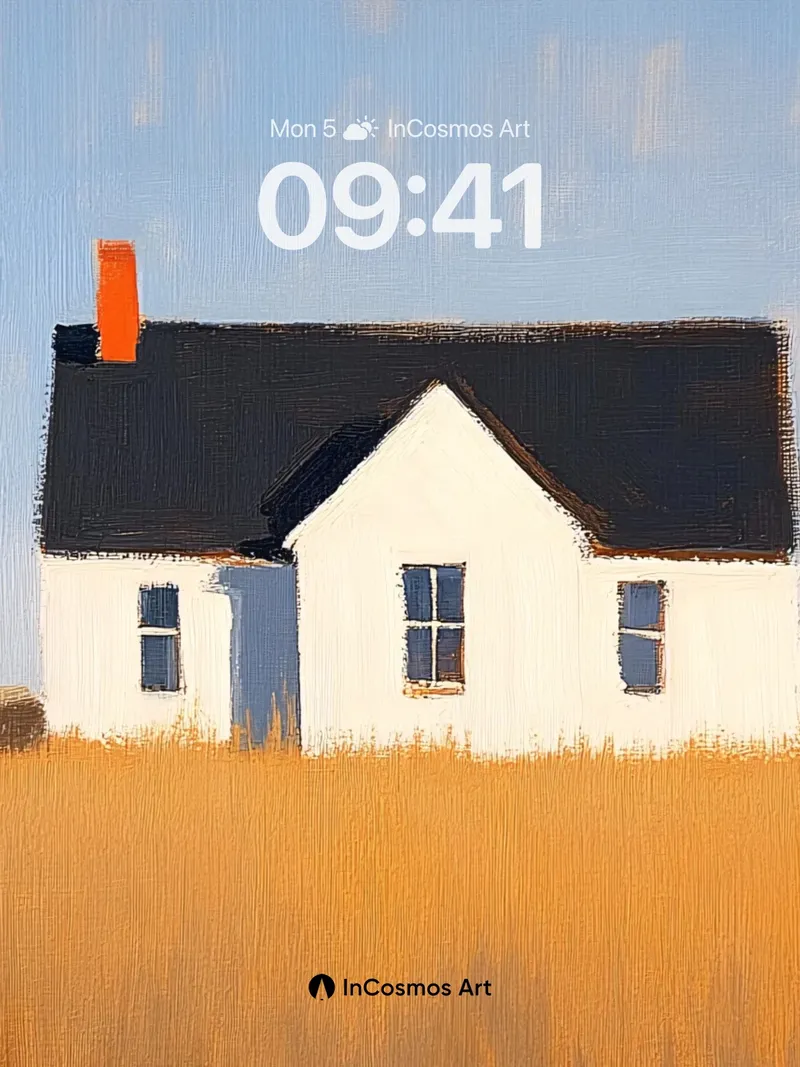
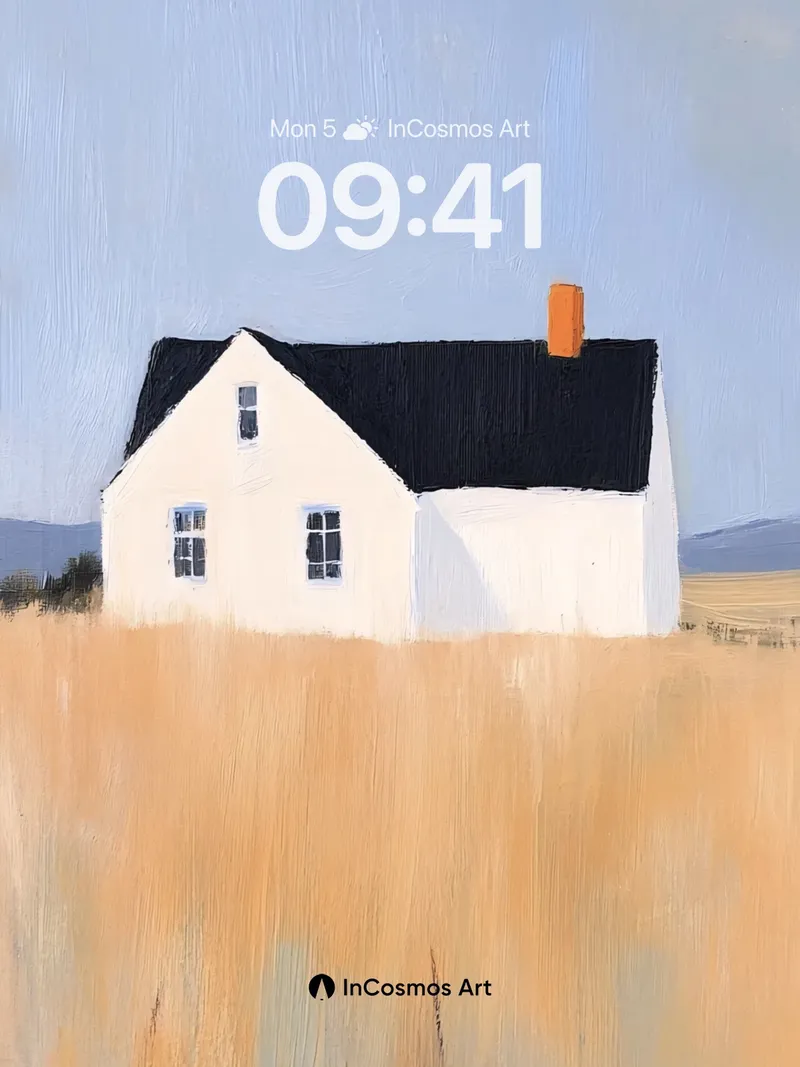
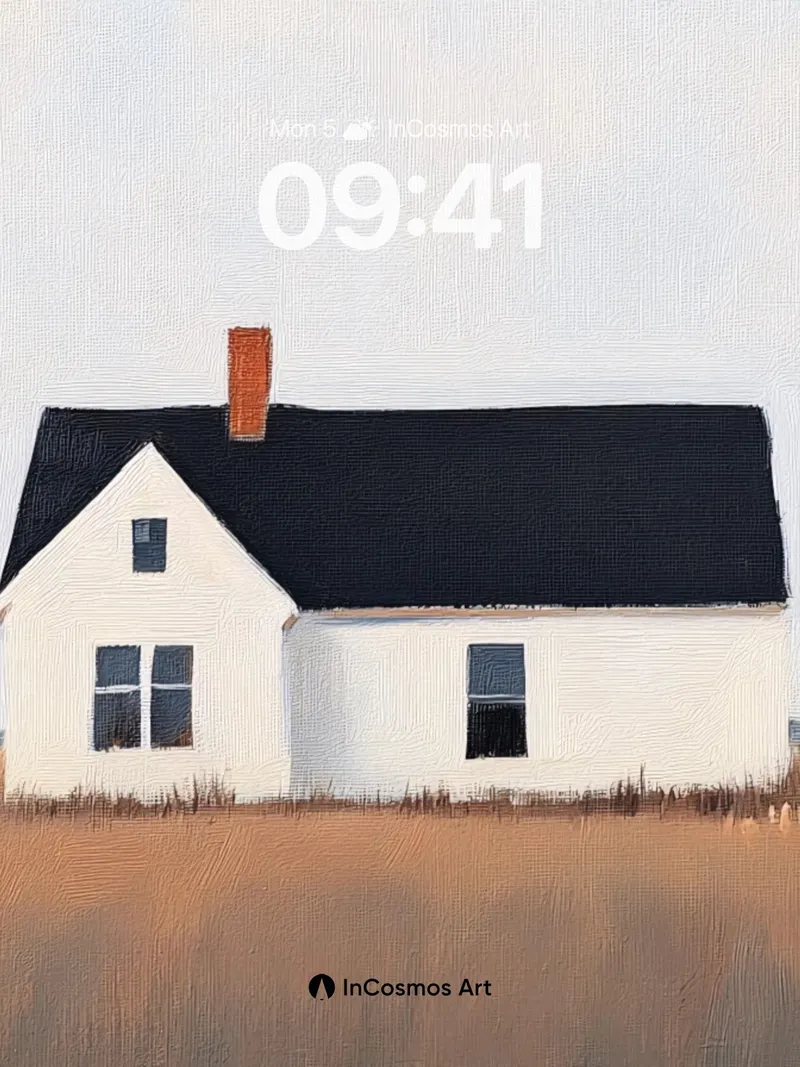
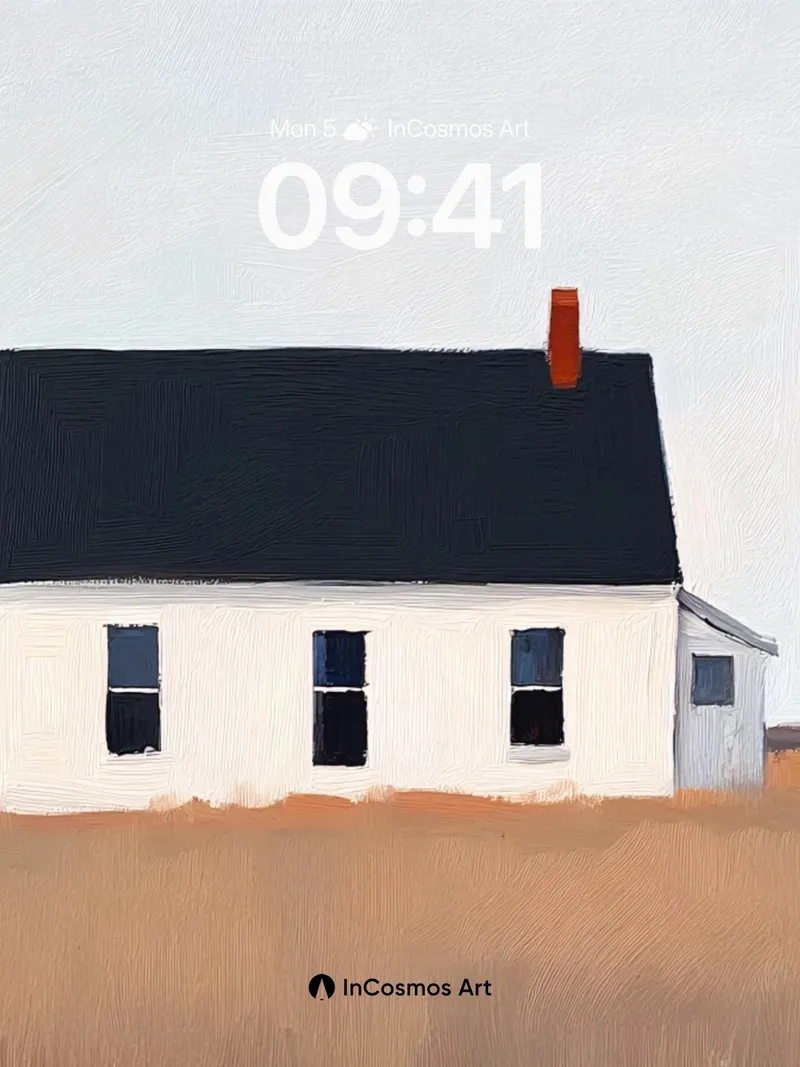
At the edge of an endless field, a white house stands still. It does not proclaim its presence but becomes the eye’s anchor through quiet simplicity. The roof is dark, the chimney bright red, like a seal pressed upon the earth. Its existence is not for visibility but for feeling. Here, architecture transcends utility; it becomes a vessel of emotion, a metaphor for solitude, silence, and belonging.
Symbol of Isolation
The house’s isolation forms its central narrative. Removed from people, turned away from noise, it faces only sky and land. This physical separation mirrors psychological states. In modern life, individuals often experience similar conditions—surrounded yet alienated. The house reminds that loneliness is not failure but a form of inner order. It refuses assimilation, chooses independence, akin to a spiritual self-possession.
Poetics of Space
The relationship between structure and nature is redefined. No walls, no yards—only boundless earth and sky. The house seems to grow from the ground or be gently placed by wind. Its proportions are clean, lines reserved, forming a subtle dialogue with wildness. This minimal spatial treatment amplifies presence. Emptiness is not void but fertile ground where meaning settles.
Silence in Color
White walls, black roof, red chimney—three hues create a near-ritualistic visual order. White signifies purity, black denotes stillness, red a faint signal of warning or hope. Colors do not dominate but quietly convey layered emotions. They function as a silent poem, expressing humanity’s enduring longing for home.
A Different Definition of Home
Traditionally, home is shelter, identity. Yet this house functions more as a mental waypoint—a place for pause, gaze, and reflection. It offers no warmth, no safety, but grants freedom. That freedom comes from breaking societal molds, confronting essence directly. It is a coordinate in wanderers’ minds, a utopia in urban dreams.