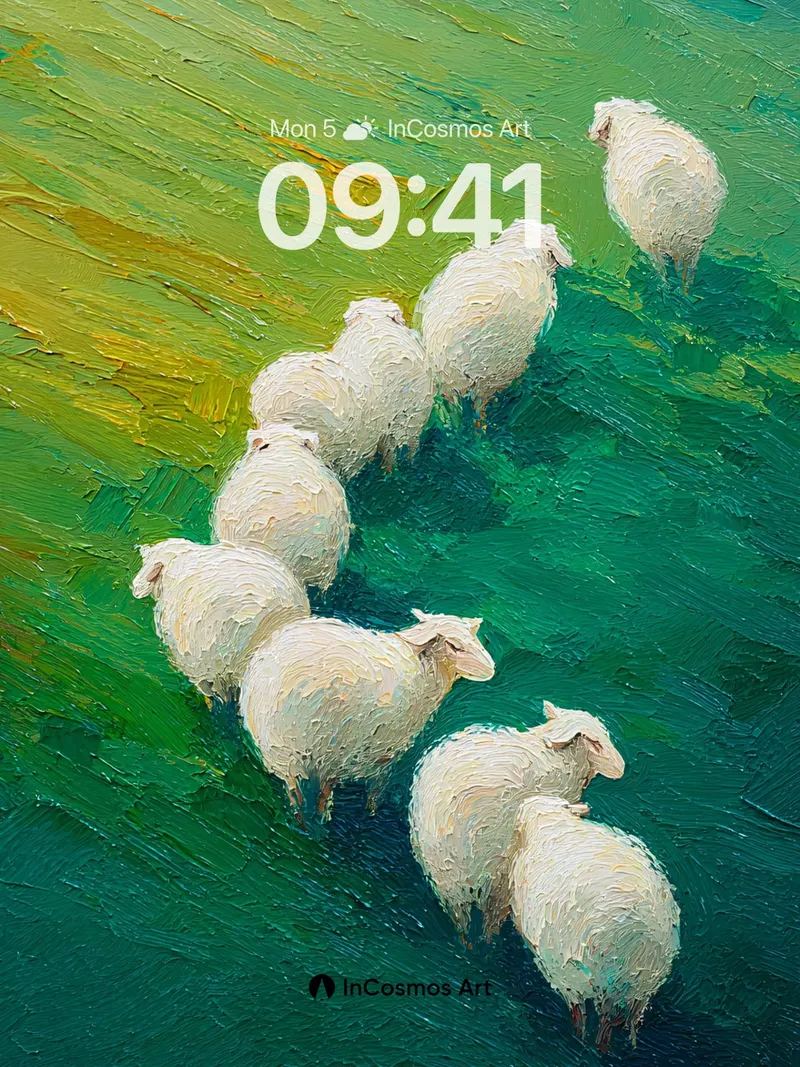
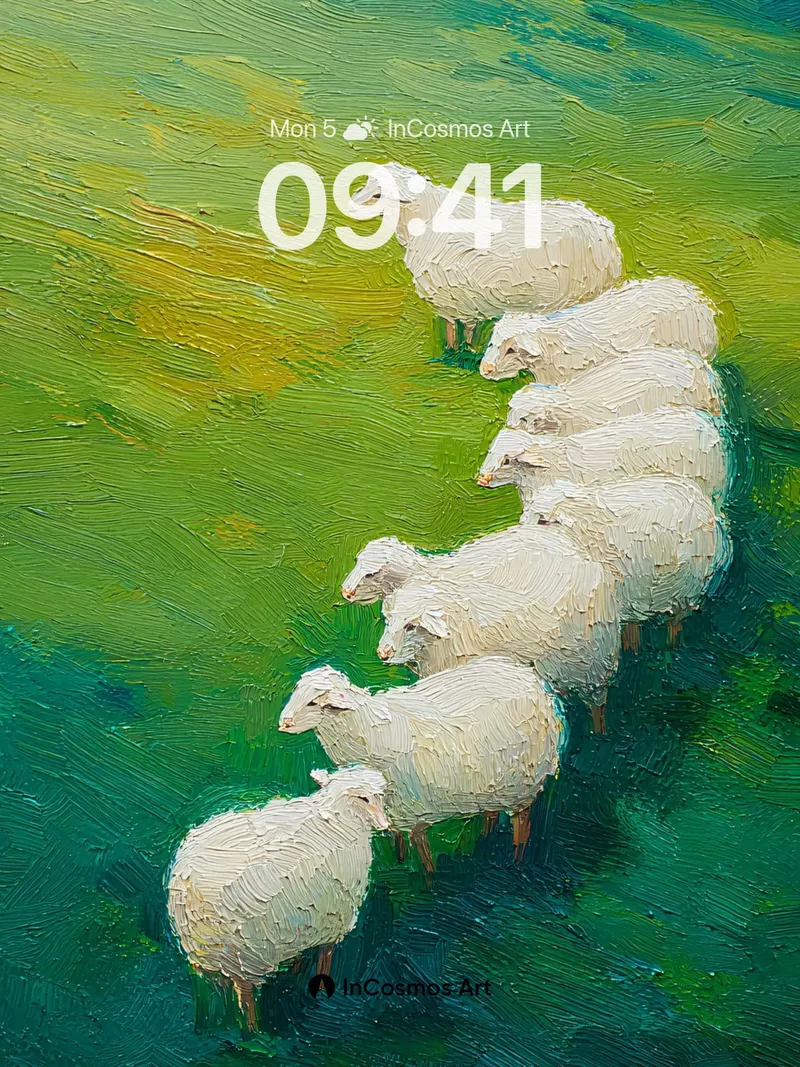
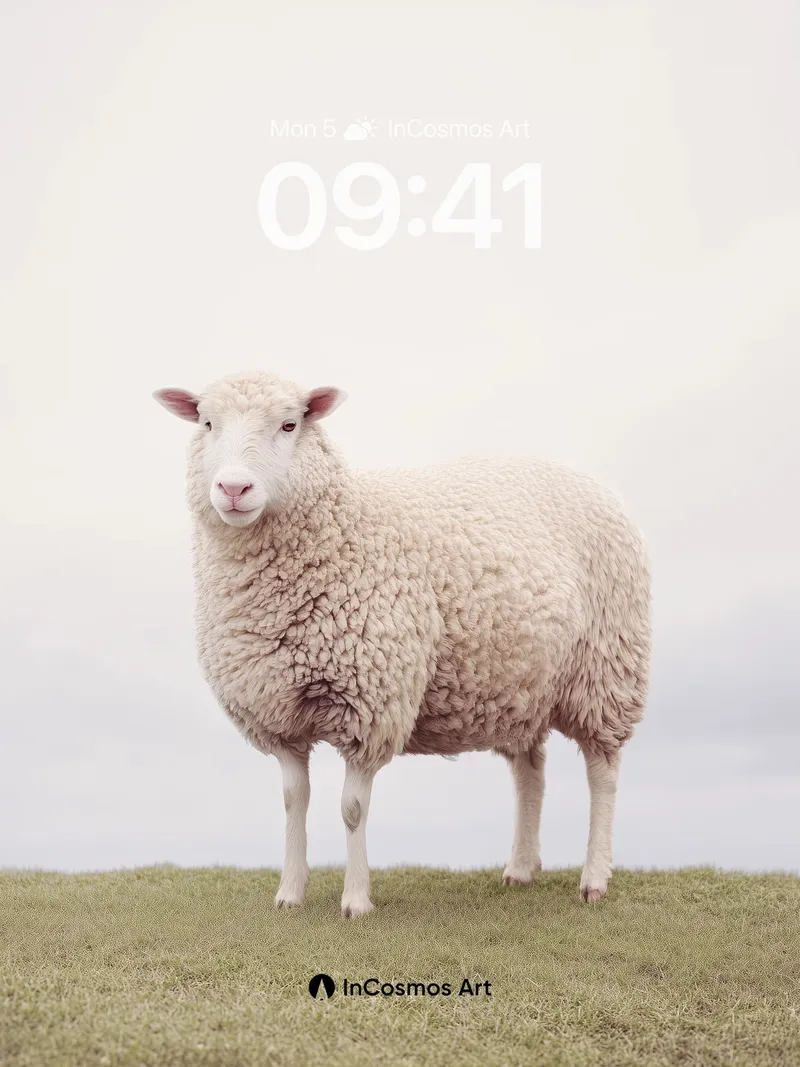
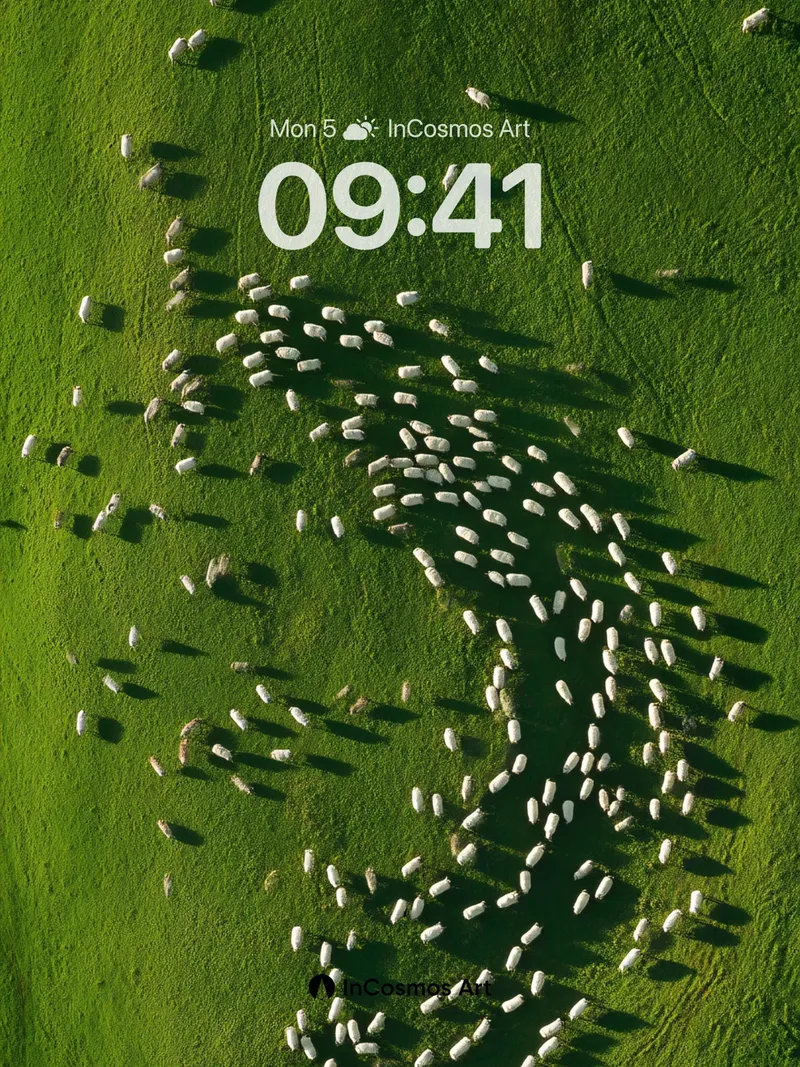
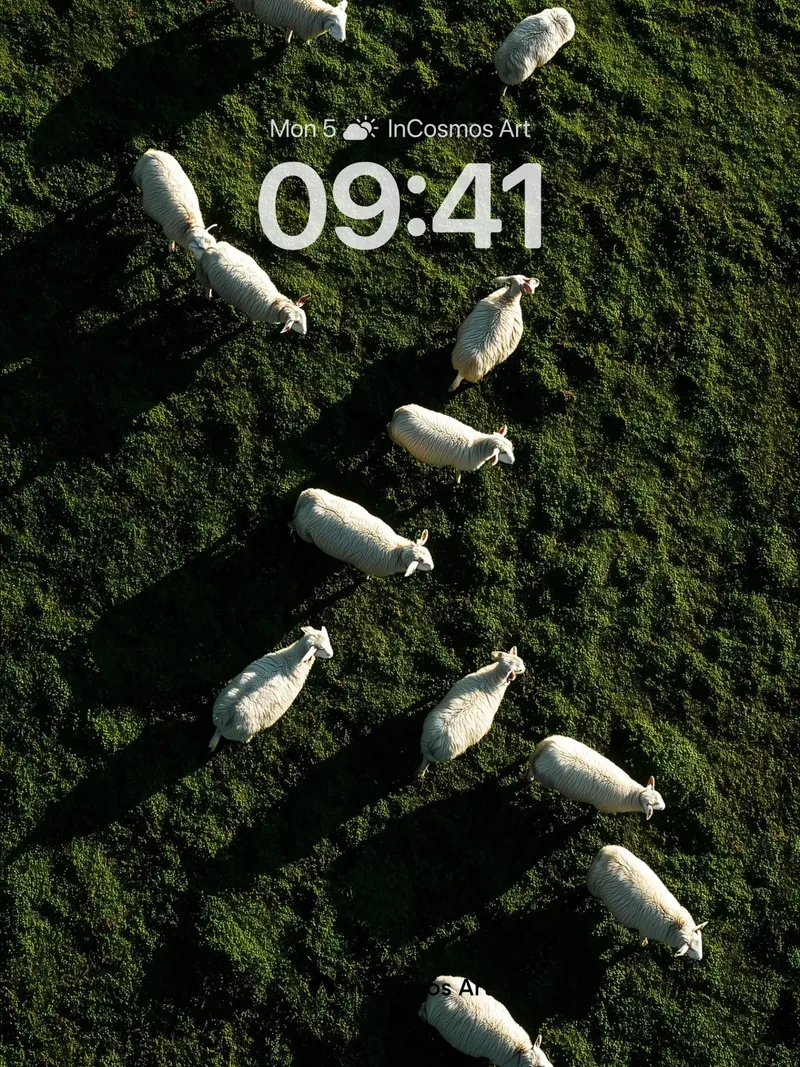
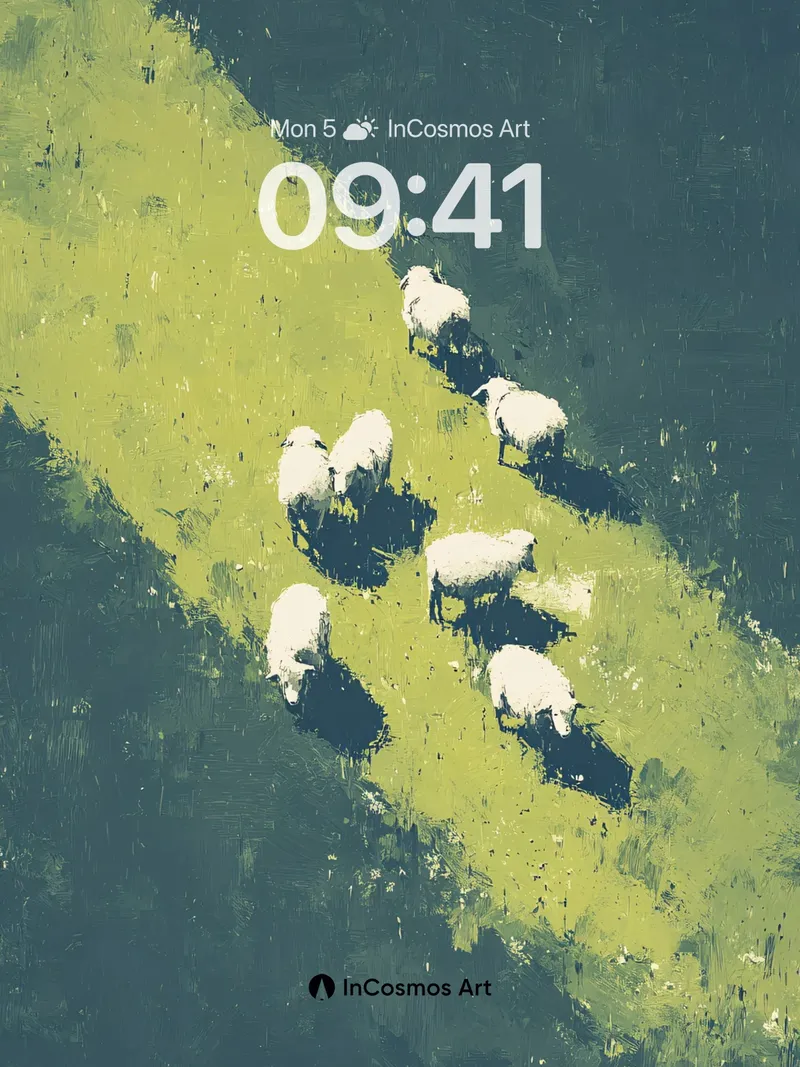
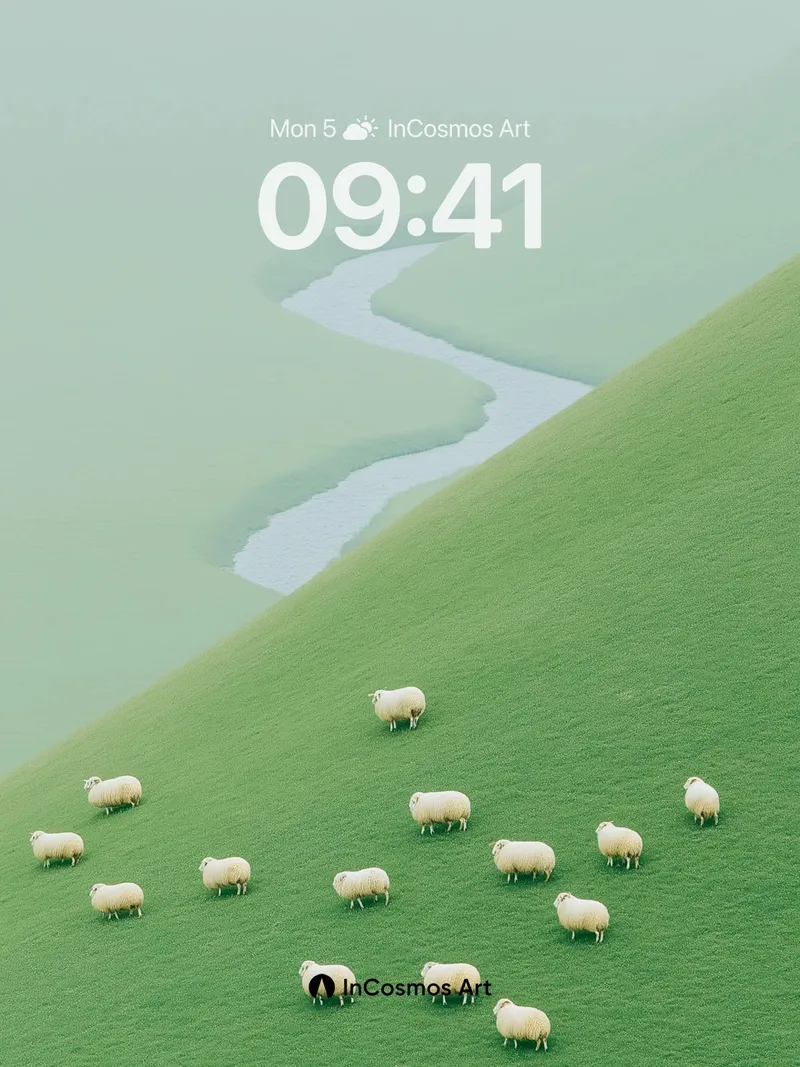
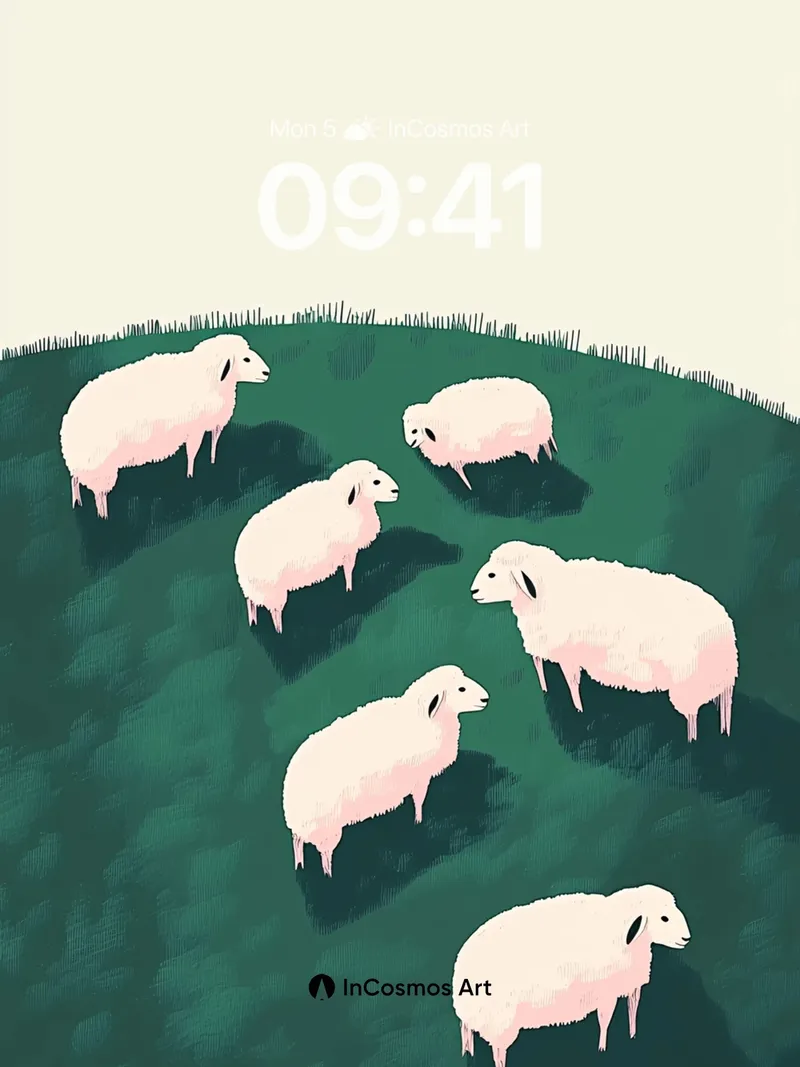
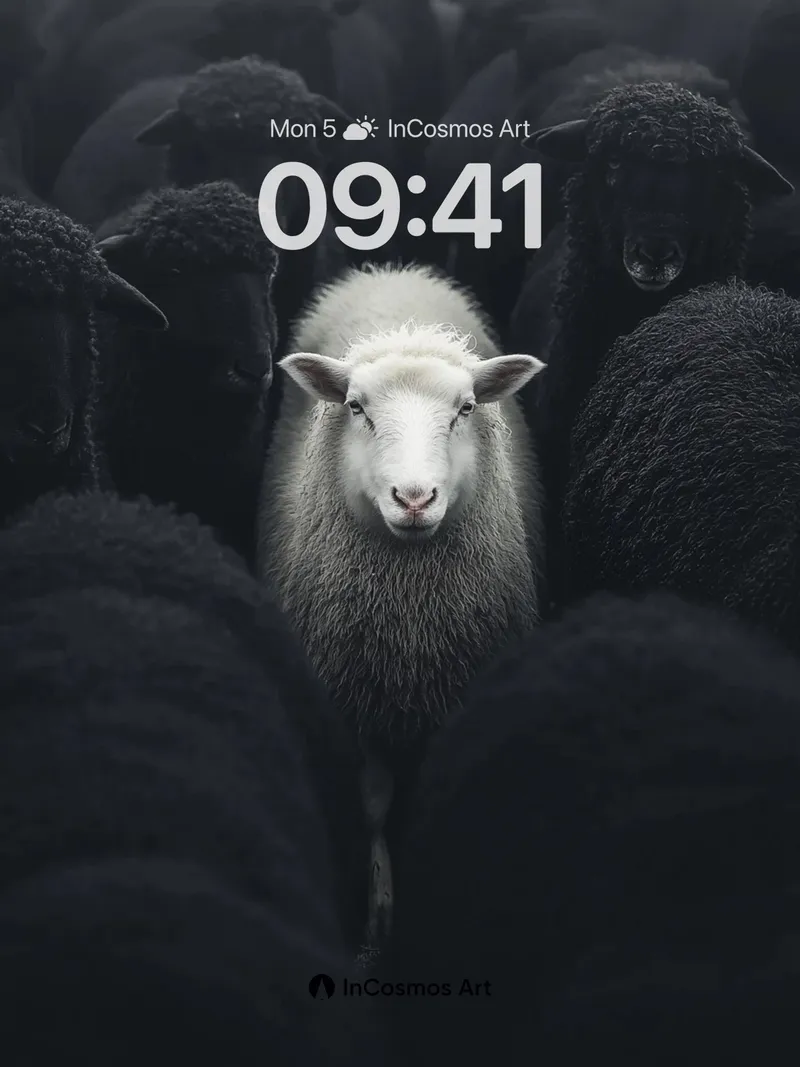
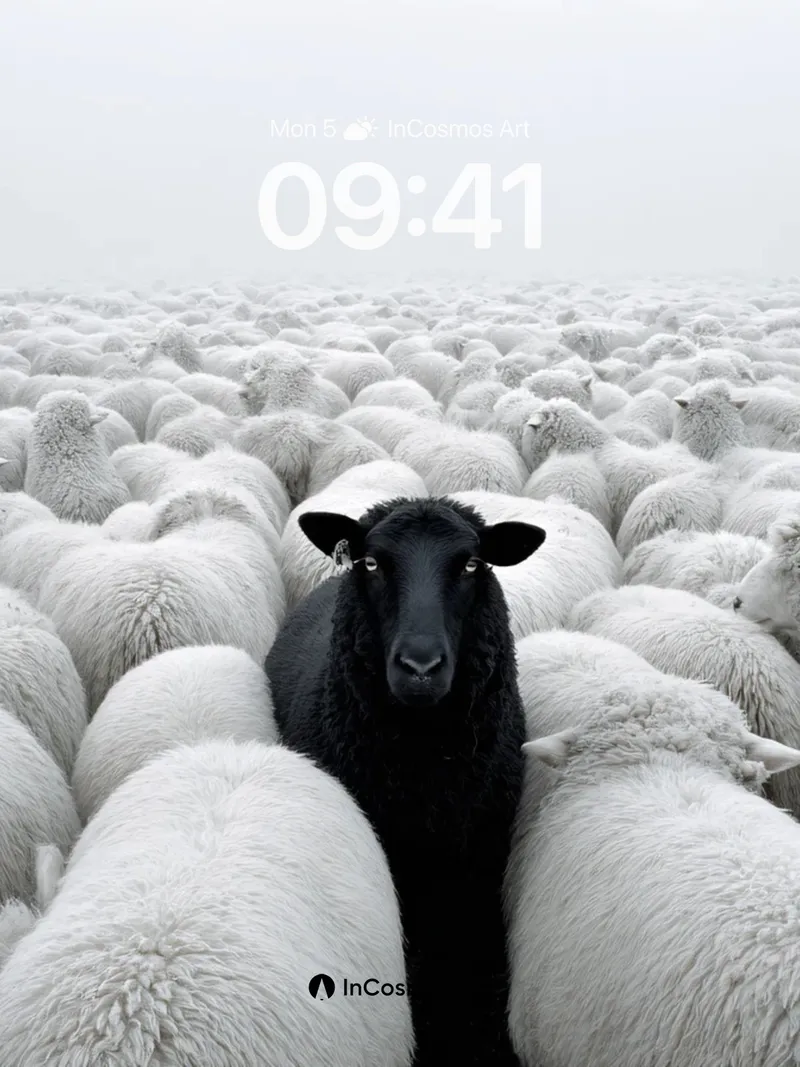
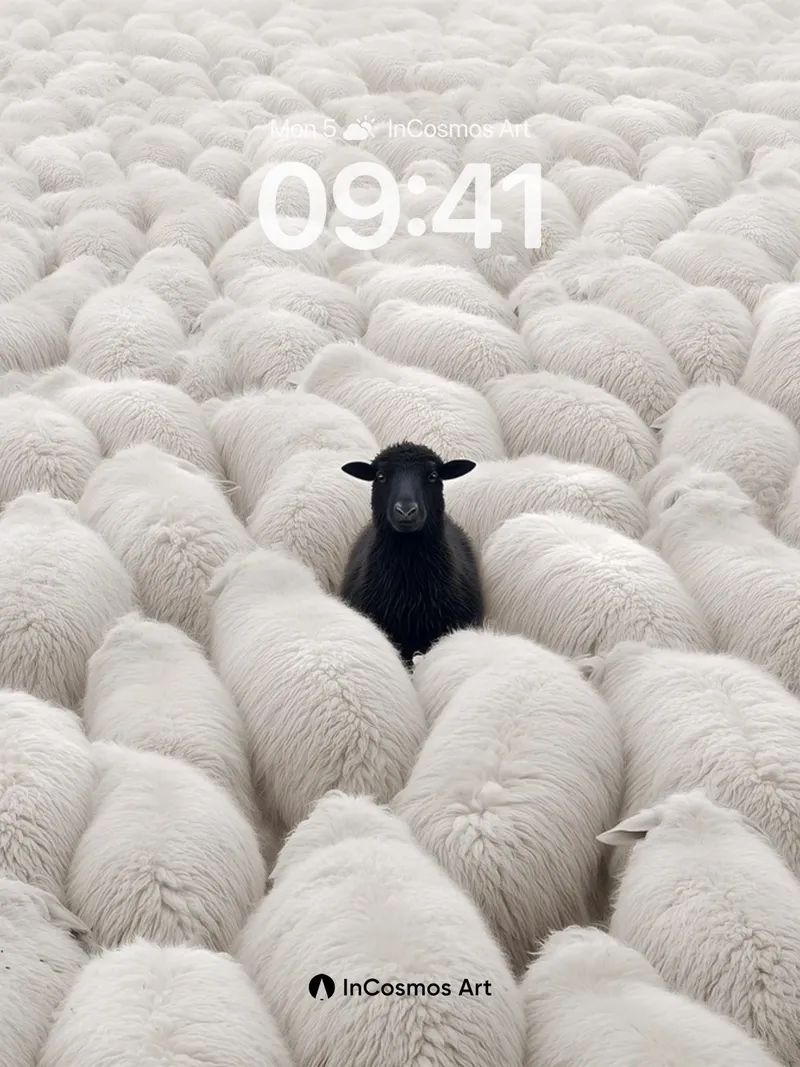
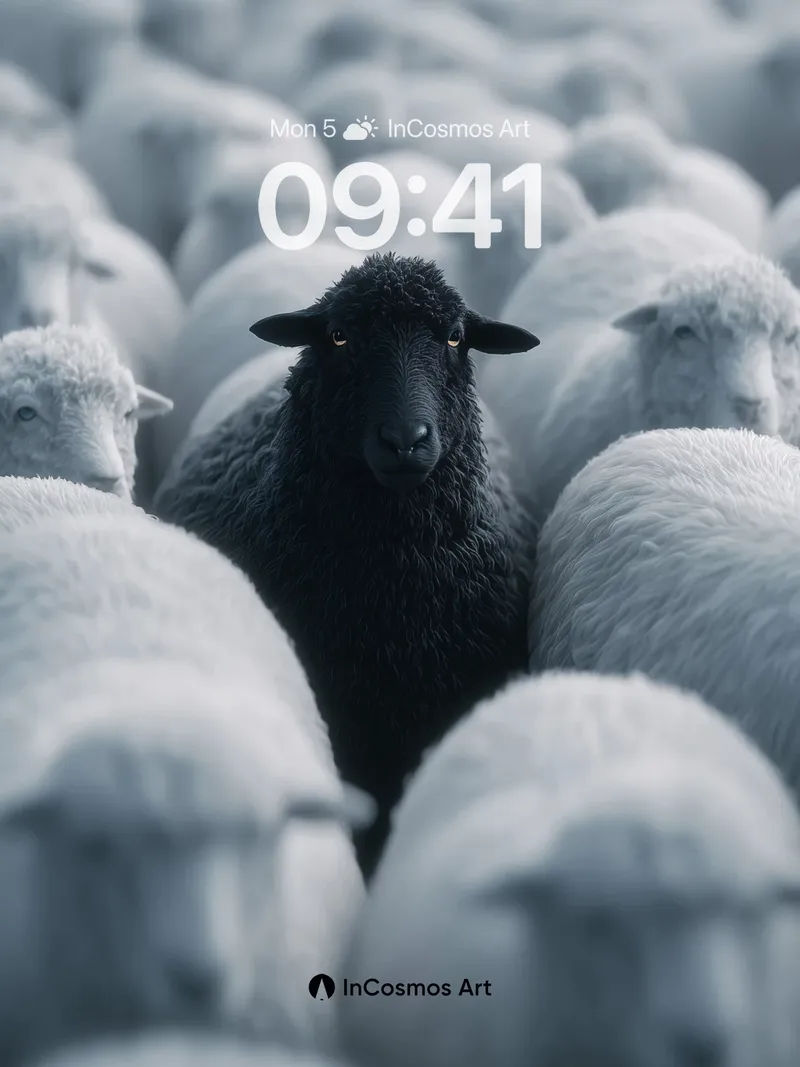
Across vast grasslands, sheep move in varied formations, creating a ritualistic sense of order. They line up in straight paths or spread into arcs, as if responding to an invisible rhythm. Behind this collective motion lies deeply rooted herd instinct—an unconscious adaptation to environmental shifts. Each sheep follows the group's trajectory, yet one often stands at the rear, its shadow elongated, seemingly contemplating whether to continue forward. This is not merely natural movement but a metaphor for human society—how individuals position themselves within collectives and express dissent in silence.
Rhythm of the Group
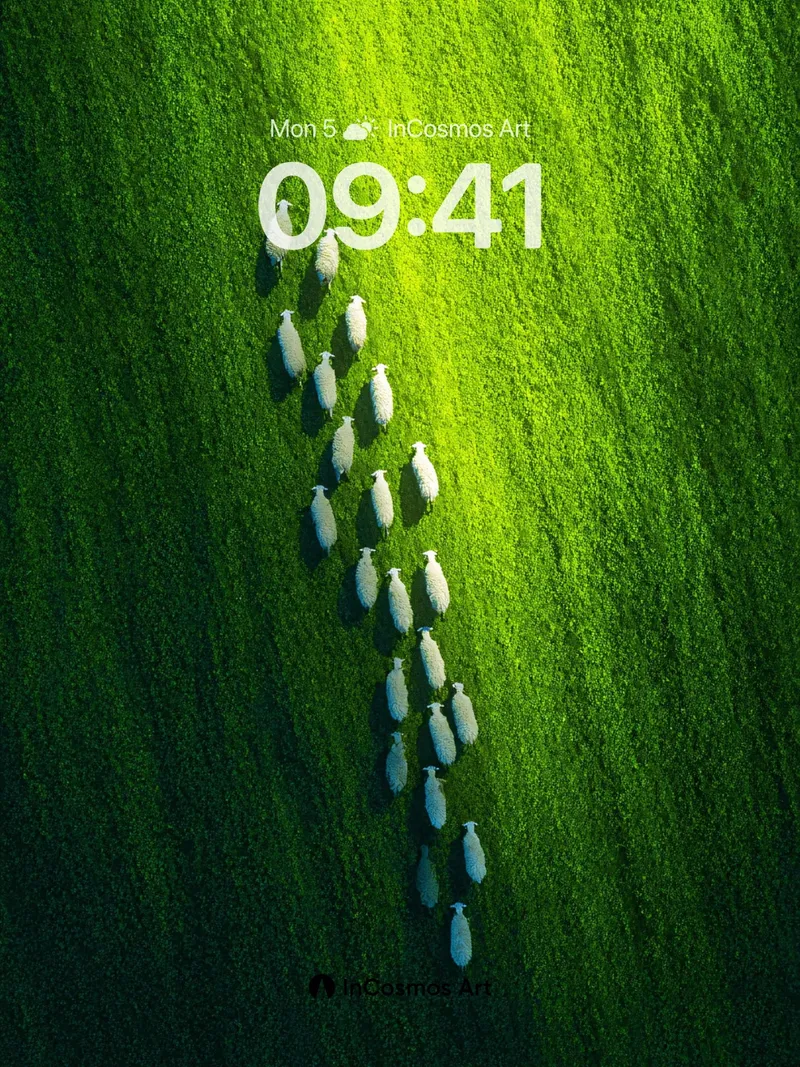
The movement patterns of sheep reveal one of nature's most fundamental social structures. When aligned in a single file, their motions synchronize, shadows overlapping to form a flowing white line. This arrangement is not accidental; it stems from survival logic, minimizing exposure to predators. Visually, such uniformity creates serene beauty, as if time has paused amid greenery. Yet beneath this harmony lies a survival calculus: followers are always safer than leaders, though no one questions the legitimacy of this rule.
The Lone Follower
In multiple scenes, one sheep remains at the end of the line, slightly separated from the rest. Its shadow is longest, clearest. It does not lead nor lag significantly—it simply exists. This position grants it a unique vantage point: neither pioneer nor follower. It may be assessing the path ahead or merely waiting for a signal. In human terms, such figures are often labeled 'nonconformists,' but in nature, they serve as essential stabilizers within the group.
Variations in Form
Sheep formations display diverse geometric arrangements: lines, curves, circles, even arrow-like shapes. These are not random but shaped by terrain, light, and group psychology. When sunlight slants across the field, casting sharp contrasts between light and dark zones, the flock naturally gravitates toward illuminated areas, forming striking visual compositions. This is more than spatial navigation—it becomes a philosophical exploration of visibility, presence, and absence.
Nature's Symbolic Language
Sheep behavior is often symbolic: representing obedience, repetition, unconscious conformity. Yet in certain moments, the flock exhibits remarkable organization and directionality, suggesting an internal navigational system. This paradox reminds us that so-called 'blindness' may be superficial; true intelligence often hides within simple patterns. Just as human civilization rests on countless small agreements, the order of the herd emerges from countless individual choices.