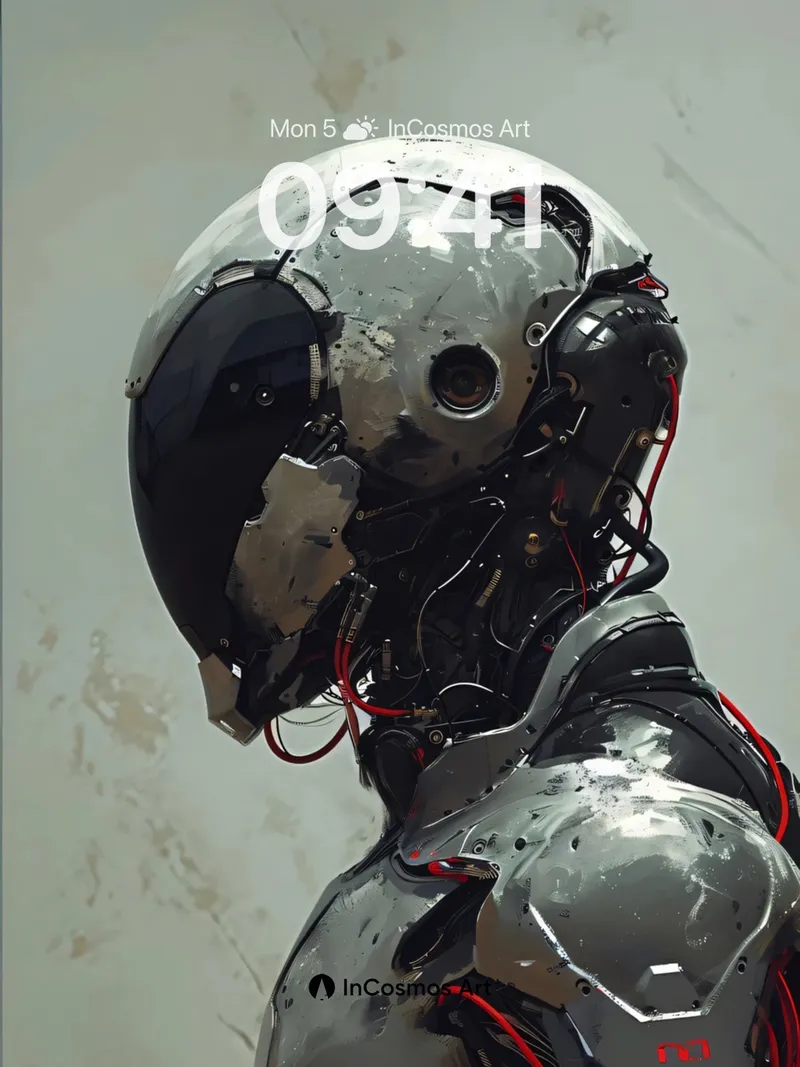
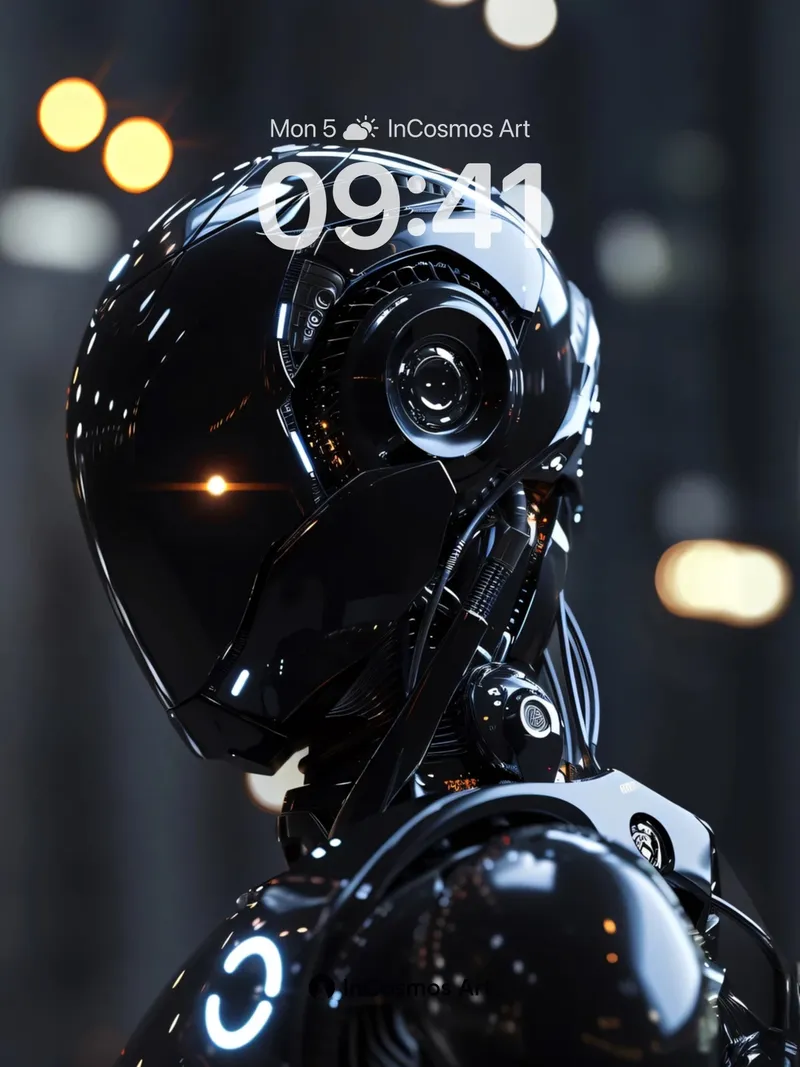
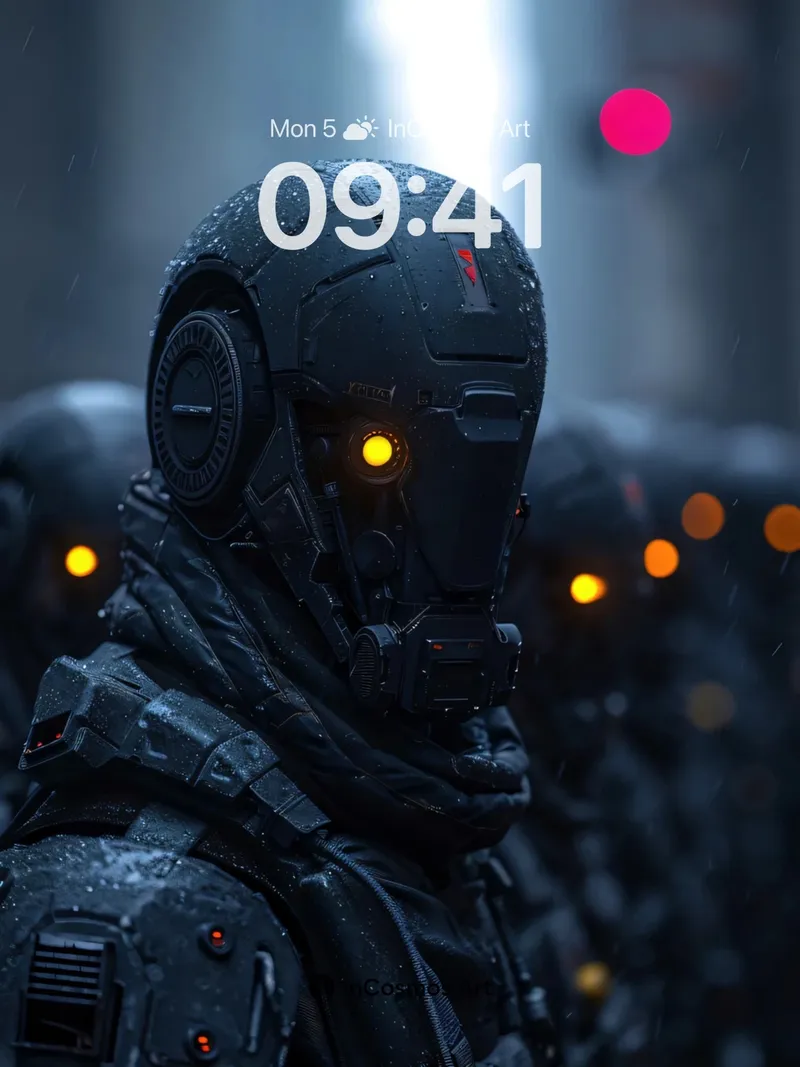
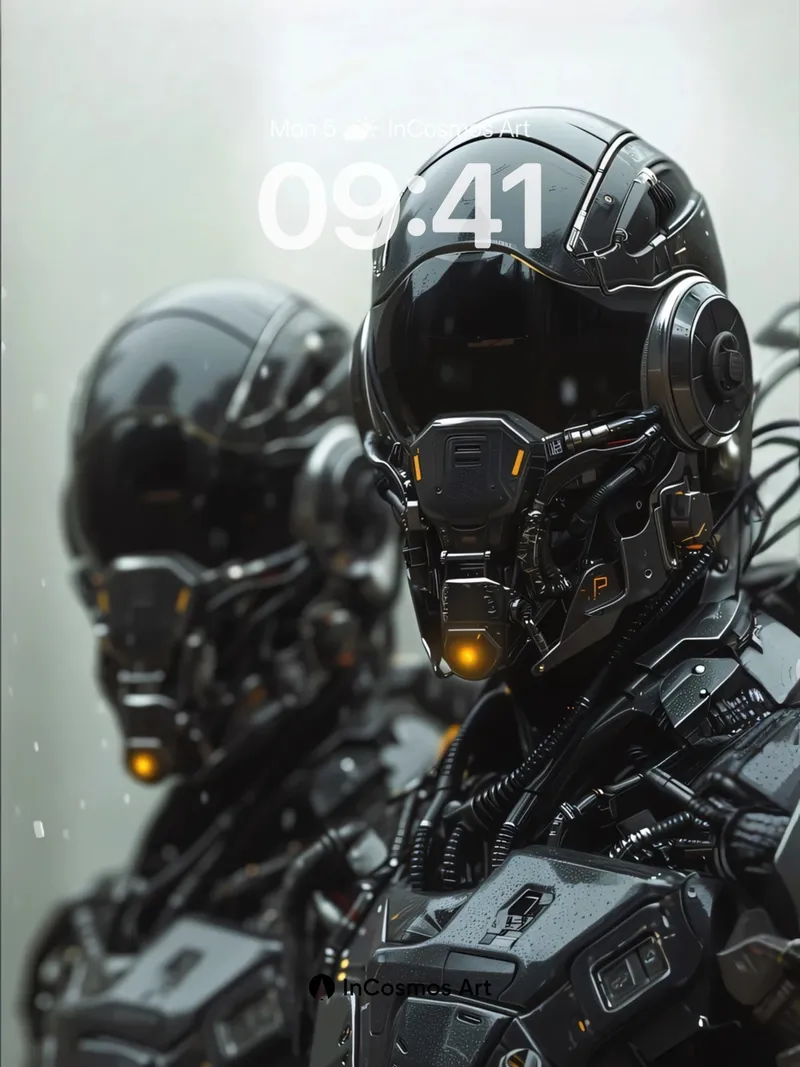
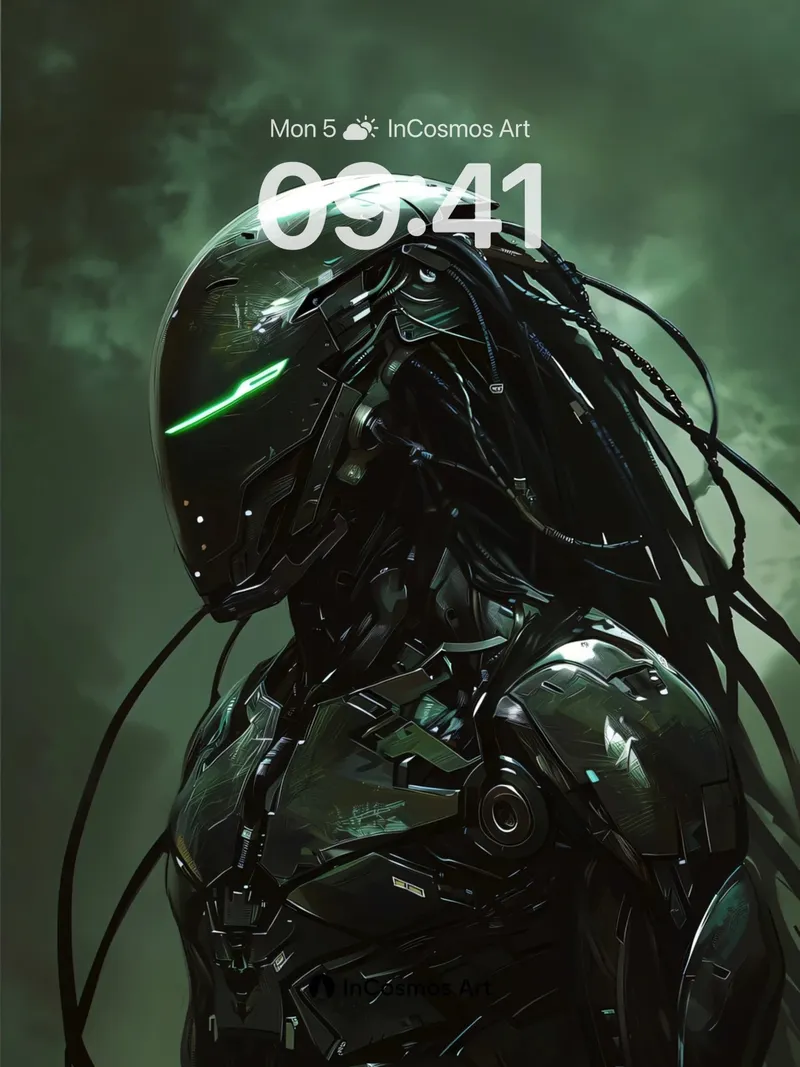
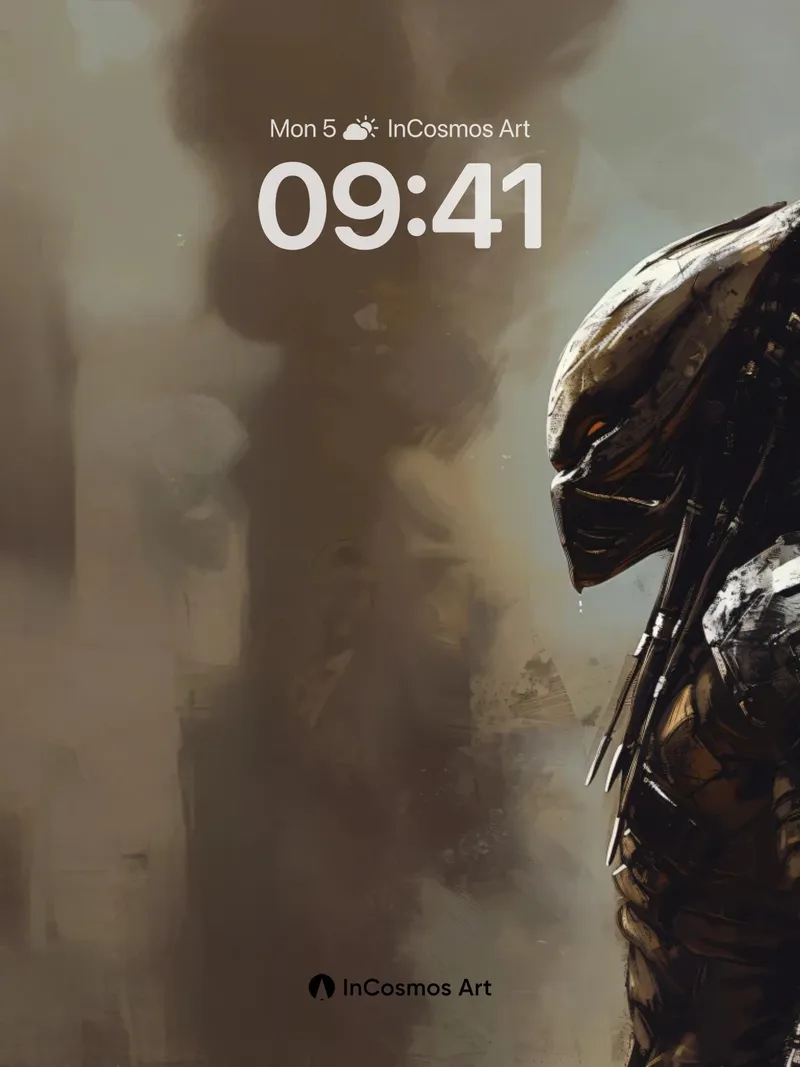
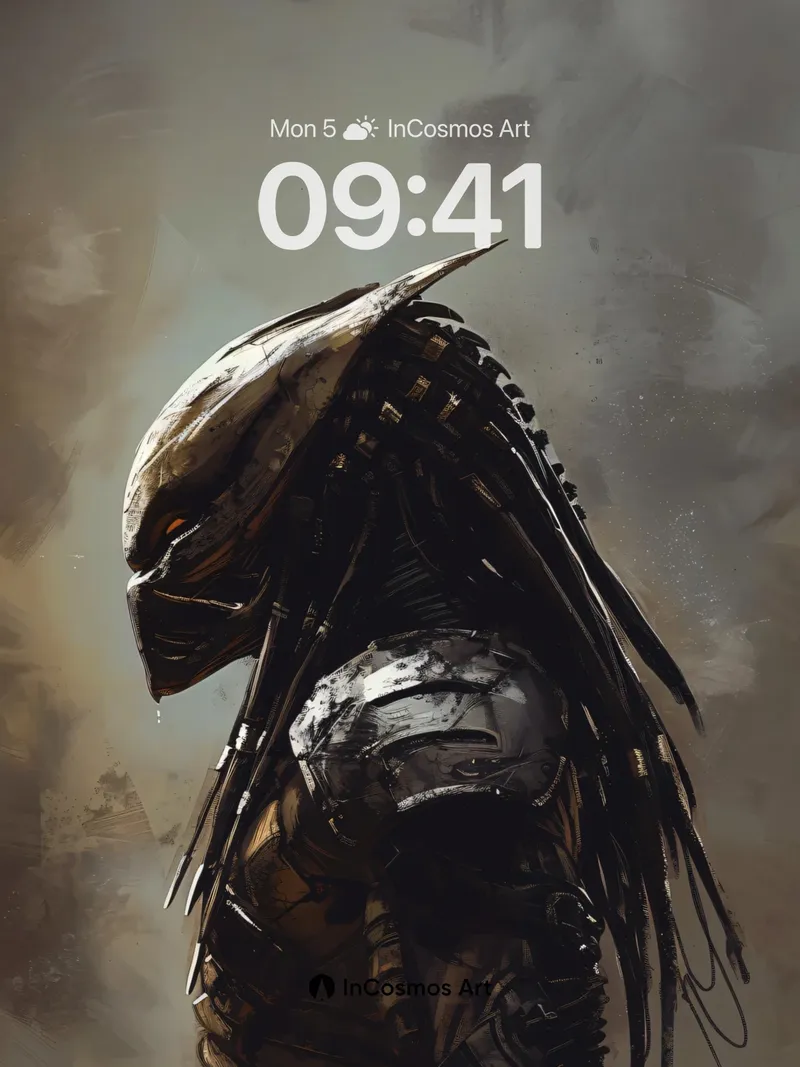
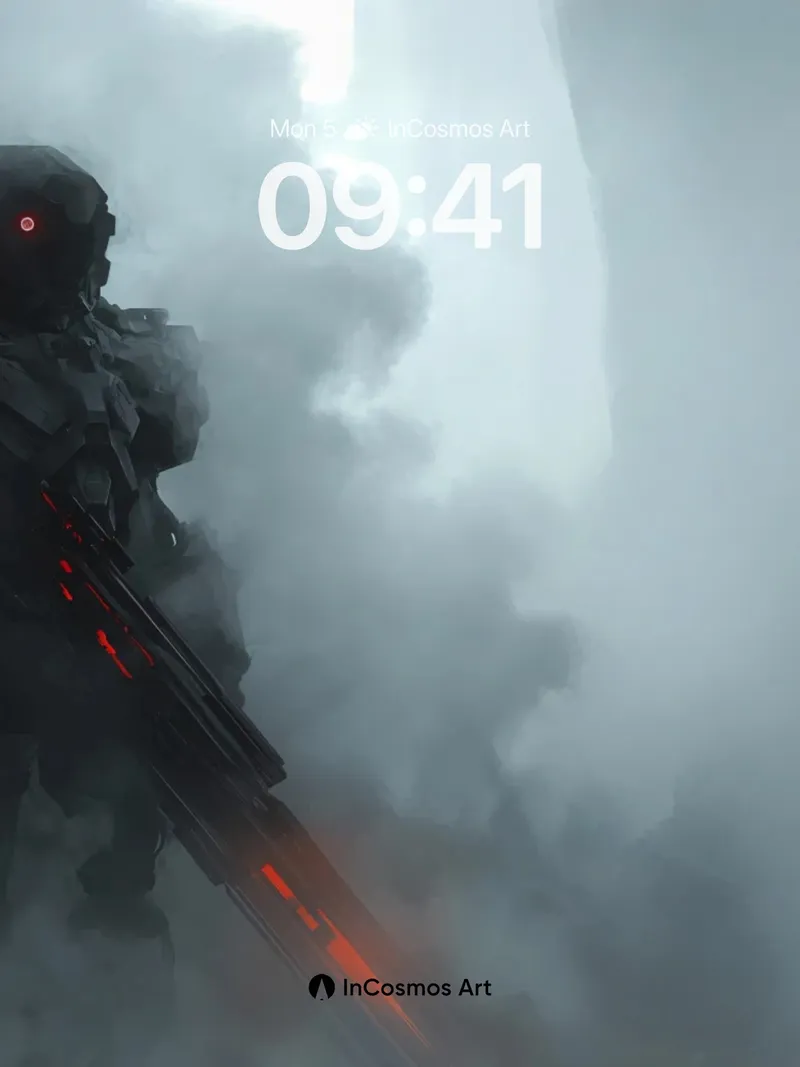
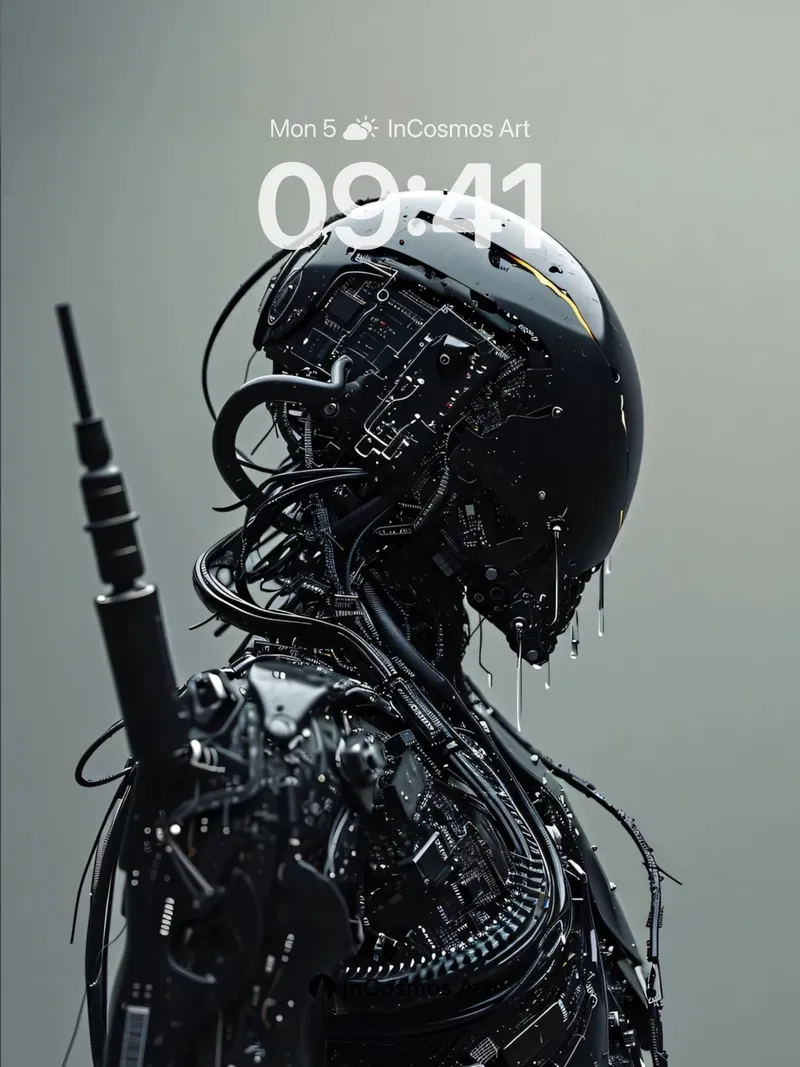
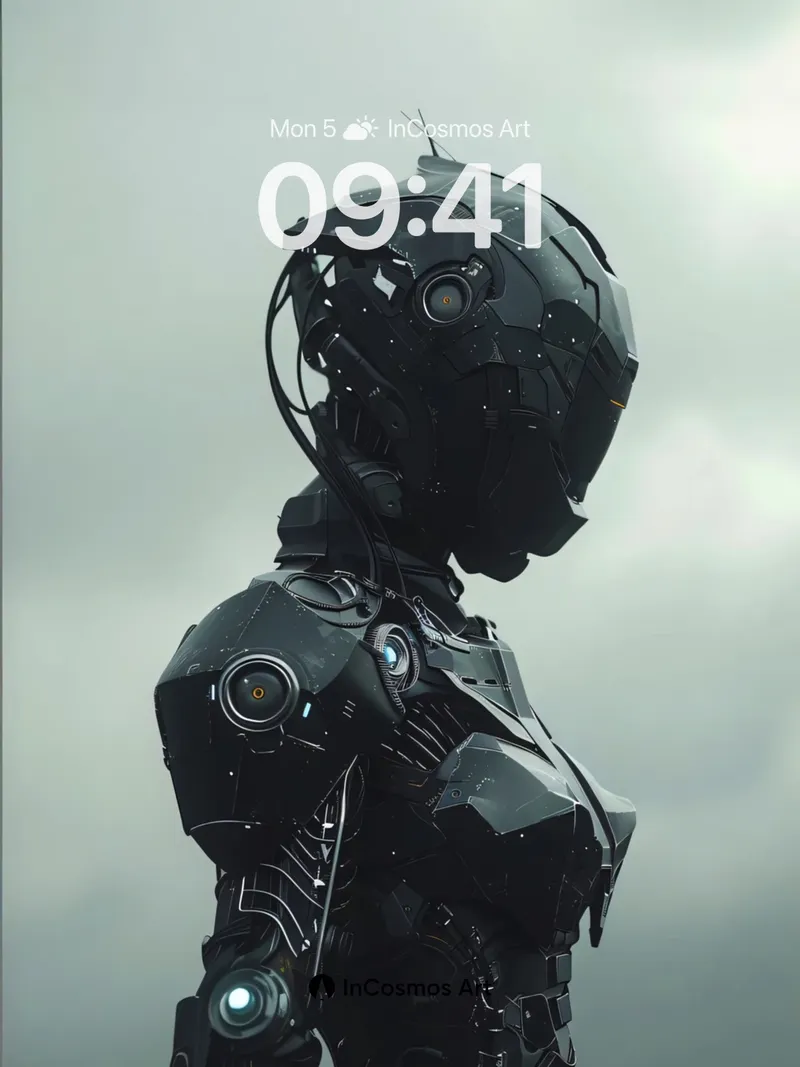
Rain falls on black metal surfaces, sound absorbed into silent shells. City lights blur into bokeh in distance, unable to penetrate dark mirror of helmets. Machines stand in street corners, requiring no shelter from rain. Existence remains a state of stillness. Steel shells reflect weak ambient light, lines hard and cold. Internal circuits occasionally exposed outside, red cables winding like veins. The construction aims not to show vulnerability, but record usage traces. Humid air contacts cold metal, condensing into droplets. Droplets slide down curved surfaces, leaving no marks. Machines require no wiping of bodies, rainwater air-dries naturally. Self-maintenance capability distinguishes from organisms. Organisms rot, metal only oxidizes. Oxidation layers protect internal components, forming time patina.
Metal and Light Interaction
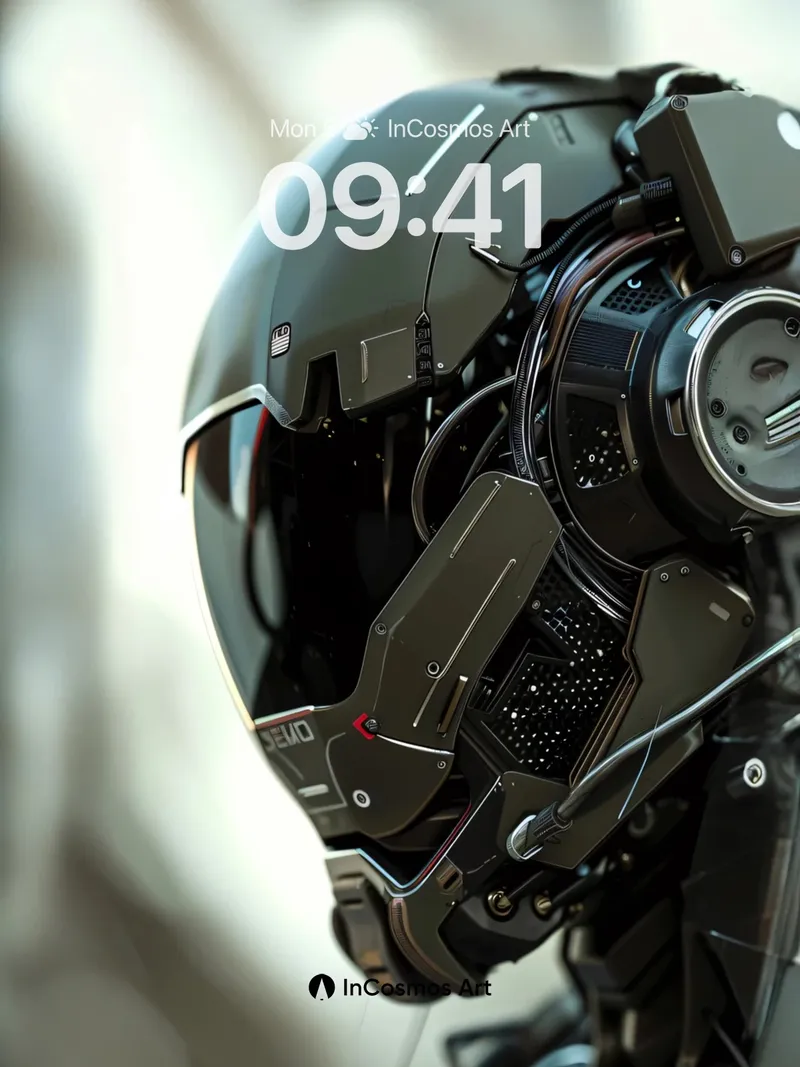
Black gloss surfaces capture surrounding light, reflecting no warmth. Metal texture emphasizes industrial precision, every screw fixed in set position. Wear traces appear at joints, proving machines experienced friction. Light slides on curved surfaces, forming highlight bands. The appearance is not decoration, but natural presentation of physical attributes. Material itself rejects emotional projection, retaining only functional coldness. Polished areas contrast with matte areas. Contrast enhances three-dimensional sense. Observers see not just objects, but manufacturing craft. Craft level determines durability. Durability determines survival time. Survival time accumulates history. History gives objects weight. Weight sense suppresses frivolous fashion trends.
Isolation in Crowds
Other machine figures in distant space remain blurry, implying group existence. Front space subject maintains independent posture, no communication actions. Urban noise isolated outside, only rain sound clearly distinguishable. Sense of loneliness comes not from abandonment, but from self-selection. Machines require no companions to confirm existence value. Standing itself remains a declaration, needing no language assistance. Surrounding space empty, no obstacles blocking vision. Vision extends to distance, distance has no specific endpoint. Infinitely extending space sense reinforces isolation experience. Isolation is not punishment, but state. State requires no reason. Reason belongs to human logic. Machines only follow program instructions. Instructions require stillness, body remains still.
Traces of Wear
Scratches on helmet surface record past collisions. Exposed wires show internal structure complexity. Damage remains unrepaired, becoming part of history. Flawlessness is not sole standard, utility ranks above aesthetics. Red circuits appear striking against grey metal. The contrast emphasizes internal energy flow. Damaged areas show no pain expression, only structure exposure. Exposed structure displays true essence. True essence often rough. Rough surfaces resist smooth lies. Lies maintain surface peace. Truth reveals internal operation. Operation requires energy. Energy comes from core power supply. Power supply maintains life signs. Life signs manifest as light flickering.
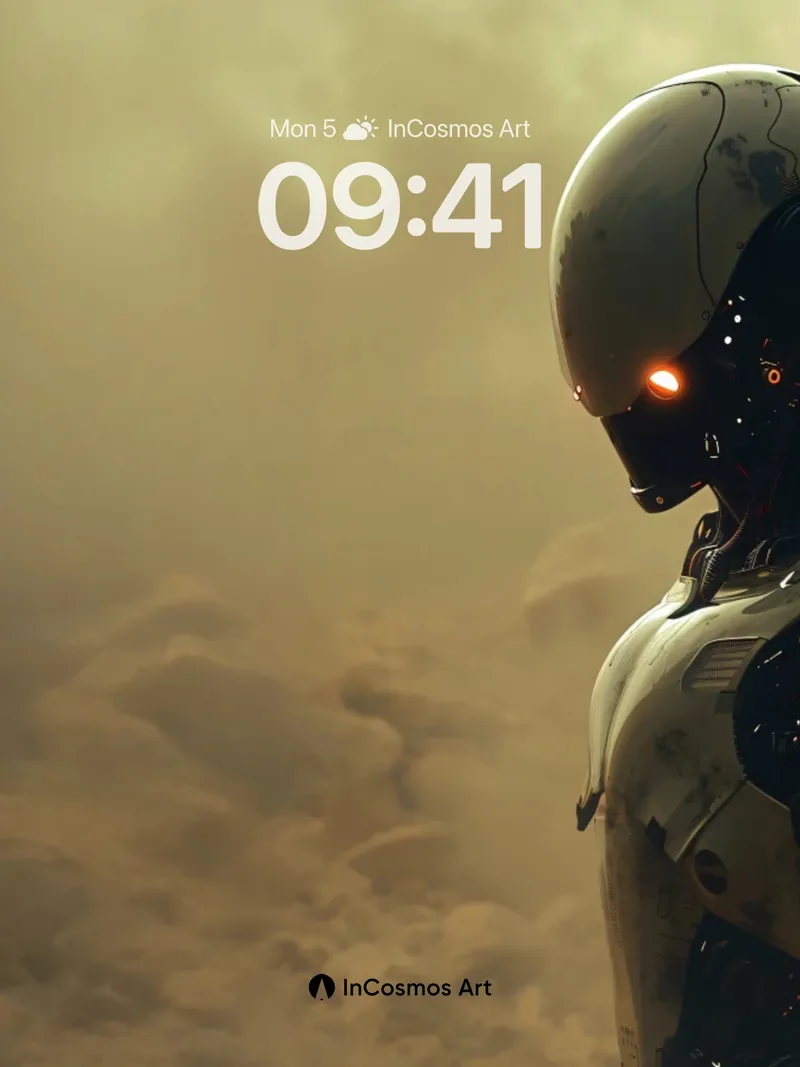
Non-Human Gaze
Optical sensors emit weak light, no pupil contraction. Vision penetrates rain curtain, focusing on unknown targets. Observation behavior carries no subjective judgment, only data collection. Humans assign emotions to machines, machines only execute logic. Helmets obscure facial features, eliminating identity recognition. Anonymous state grants action freedom. Silence holds more power than speech. Power requires no clamor. Clamor consumes energy. Energy used for core tasks. Tasks end upon completion. Completion means standby. Standby state awaits wake-up. Wake-up requires signal. Signal comes from control center. Control center located in distance. Distance remains invisible. Invisibility increases mystery. Mystery attracts observation. Observation generates meaning. Meaning defined by observers.