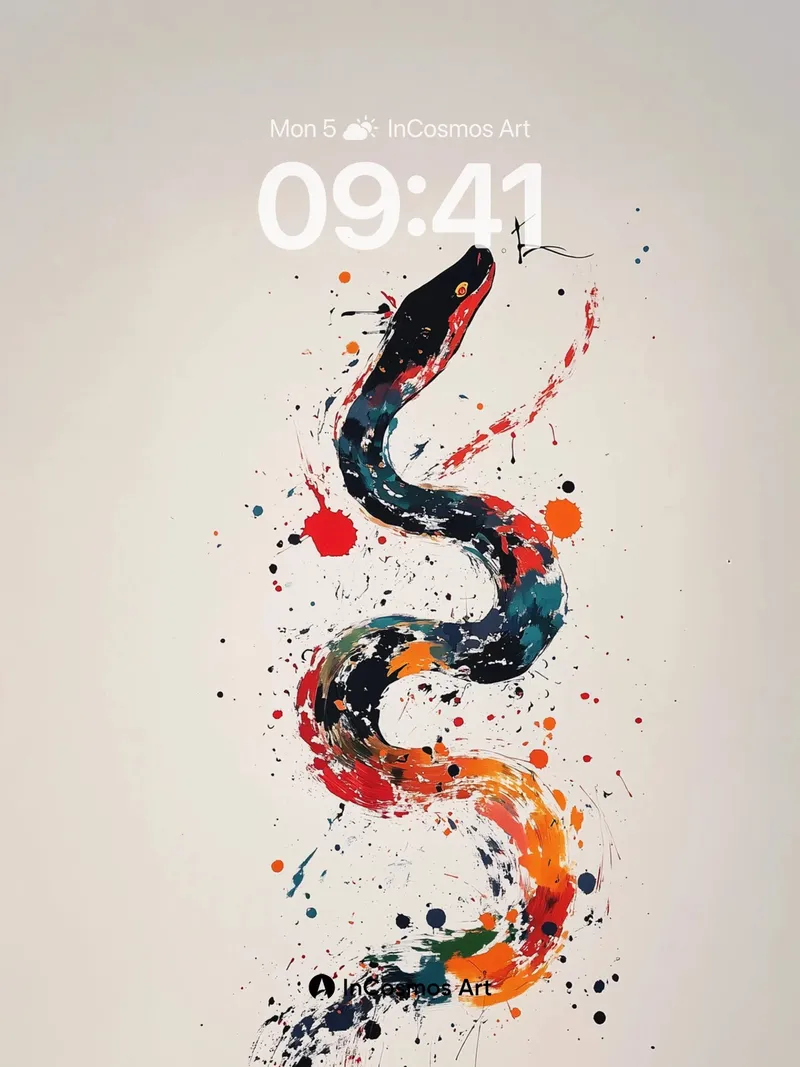
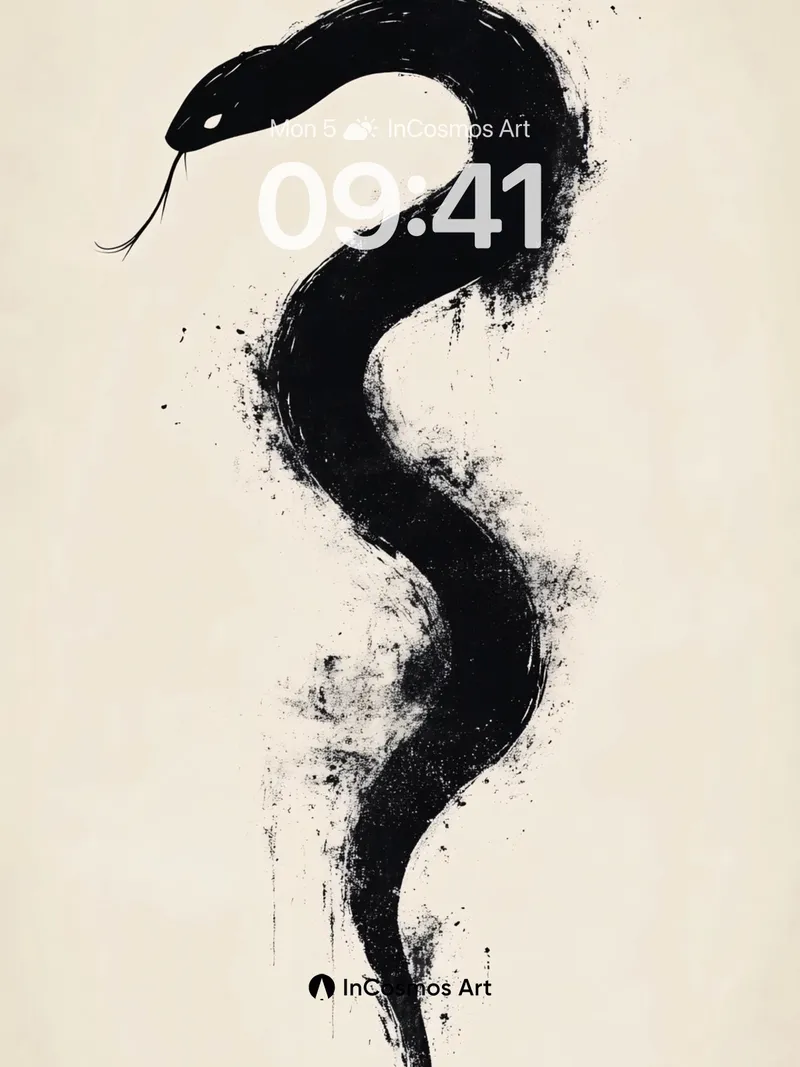
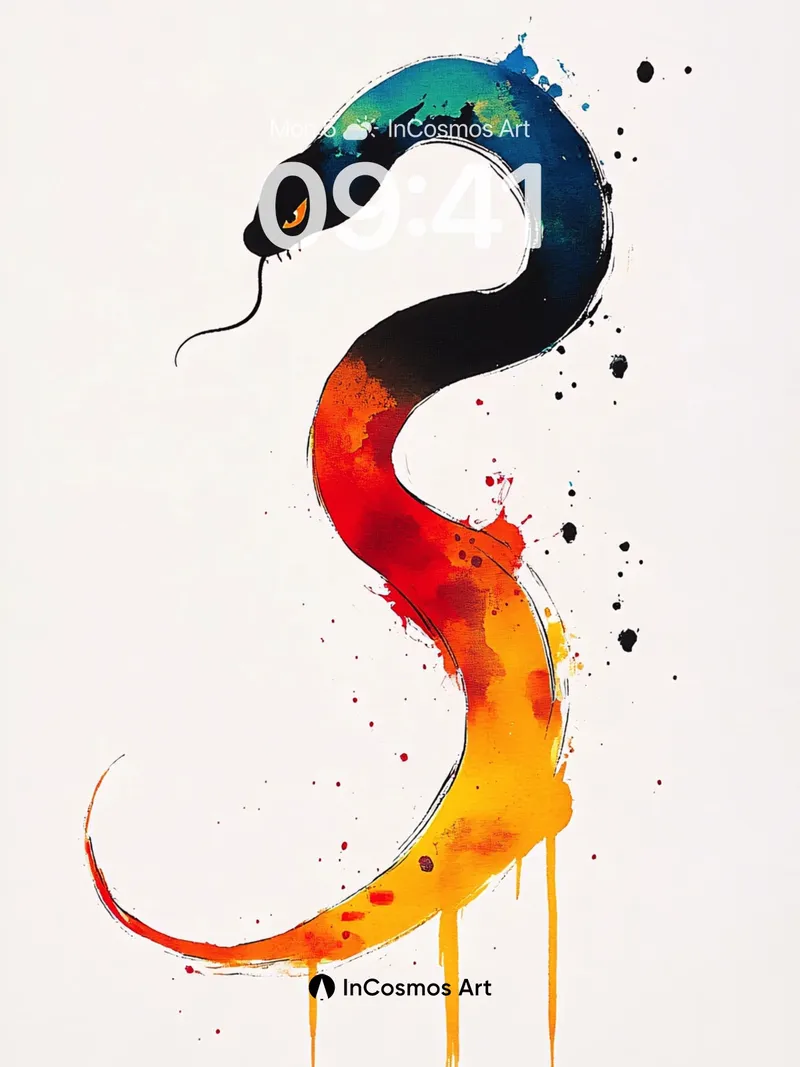
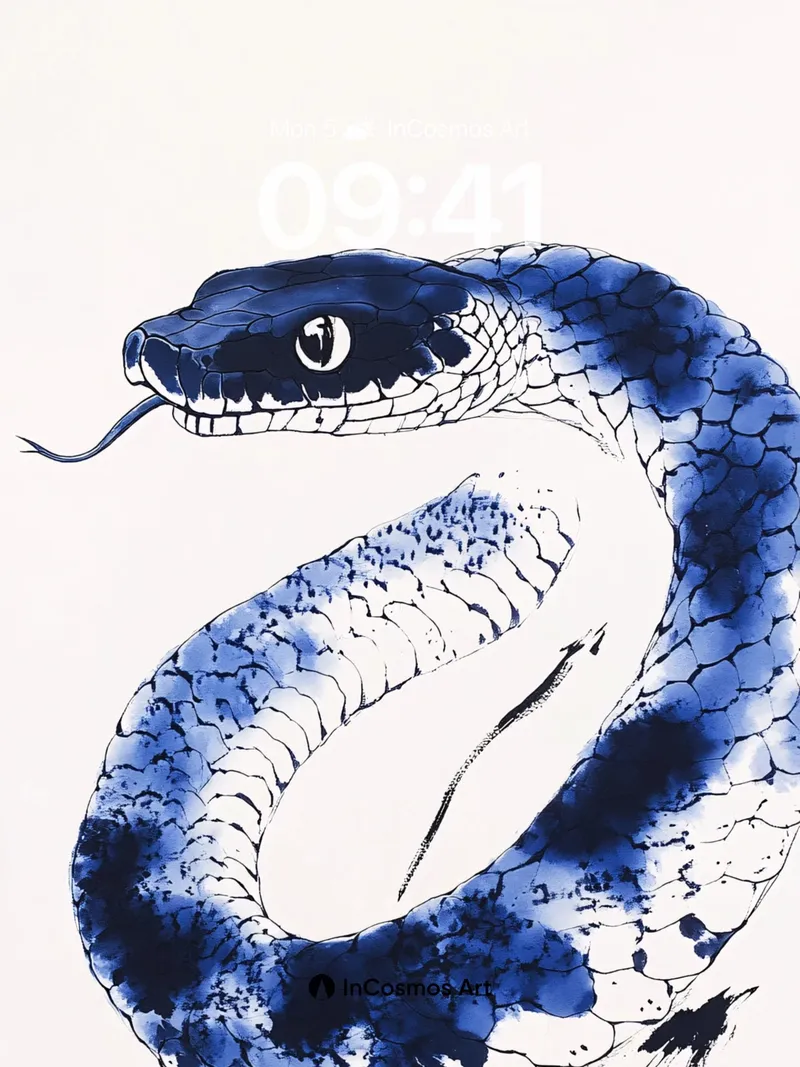
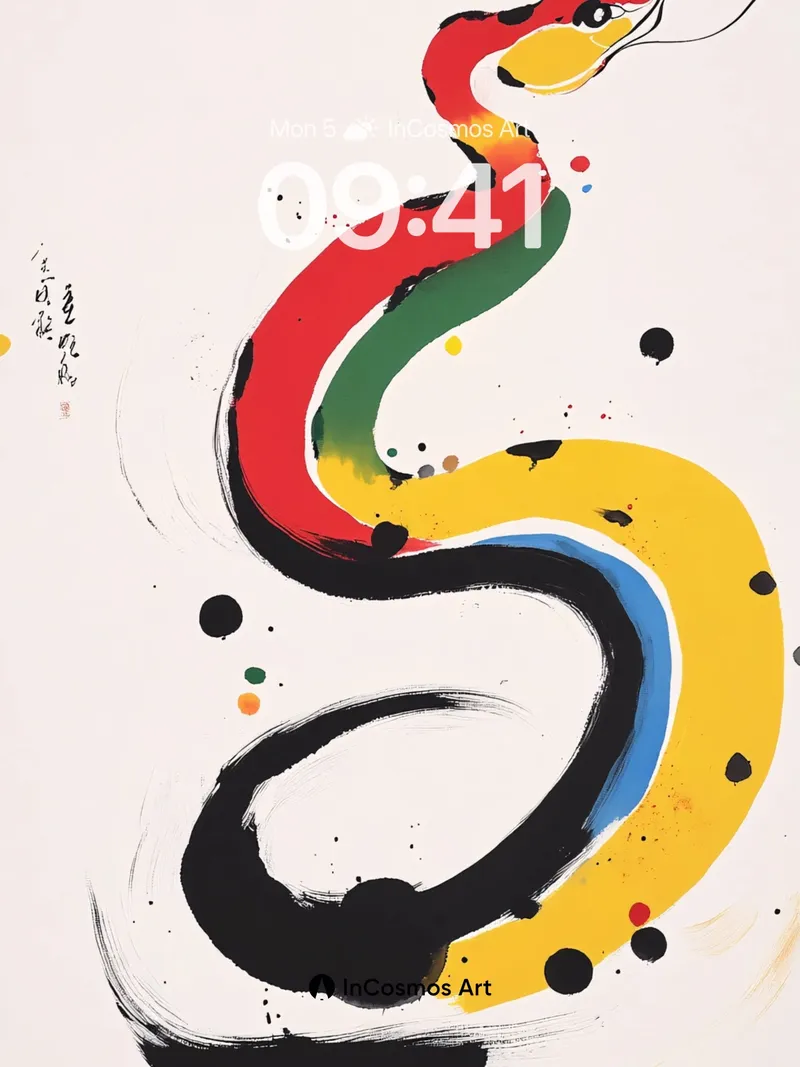
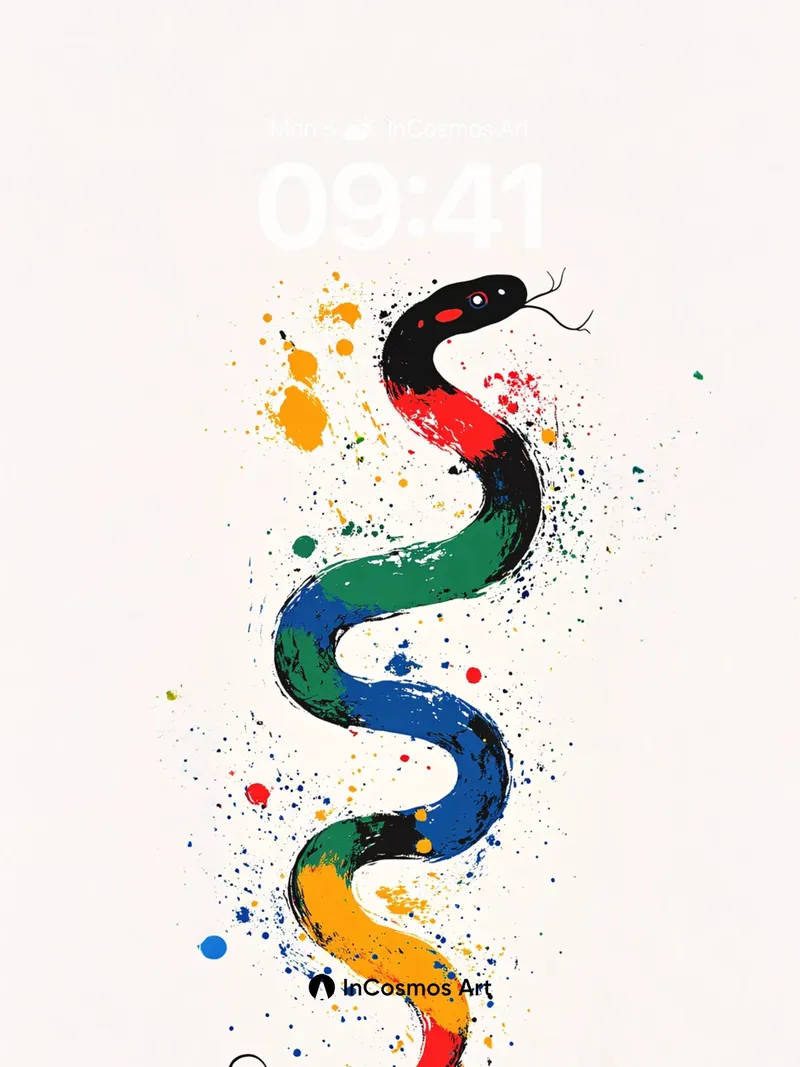
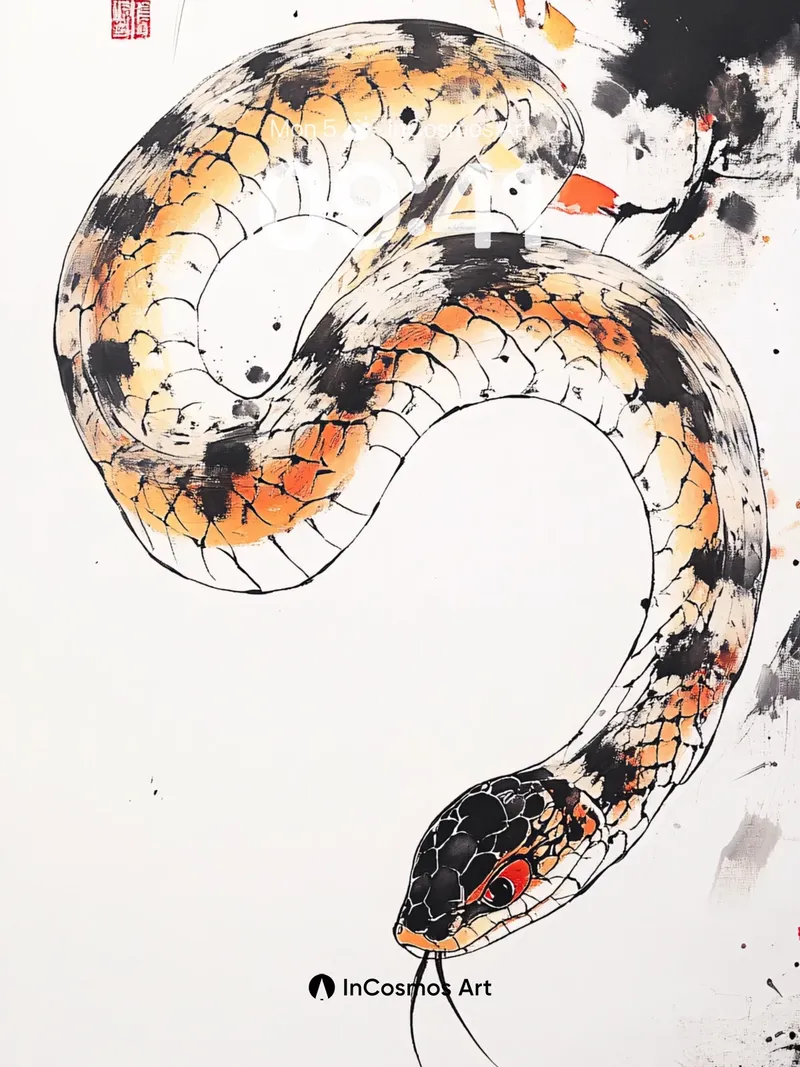
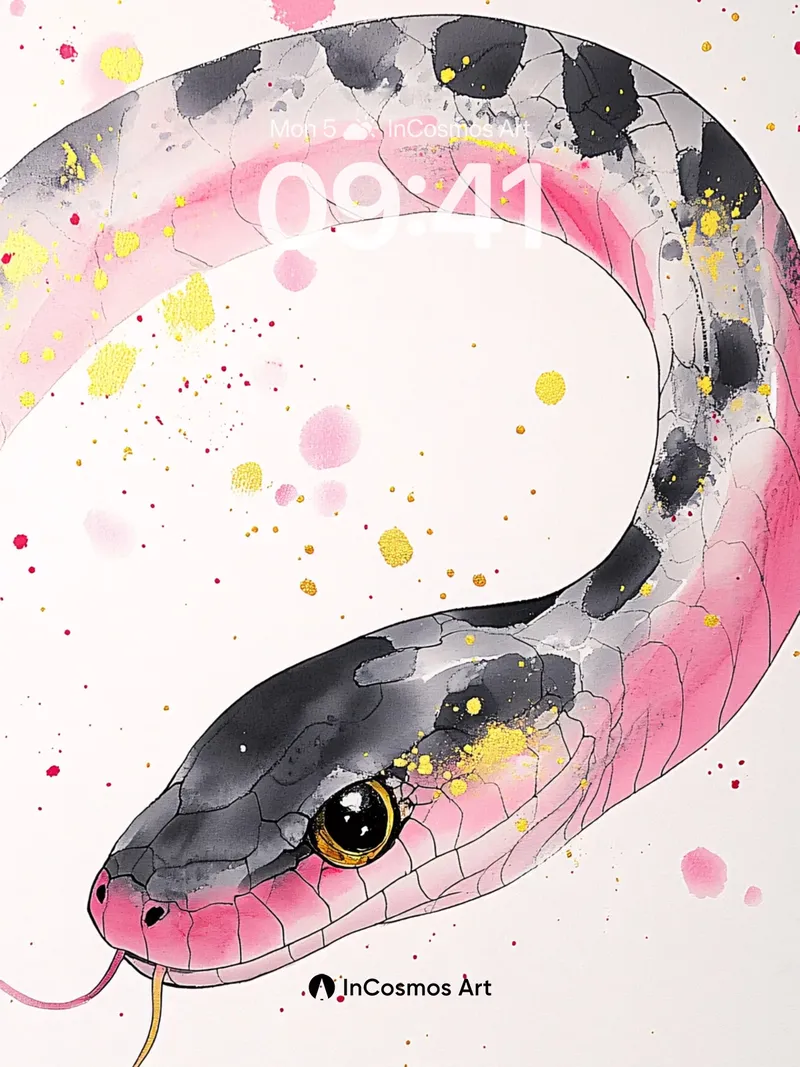
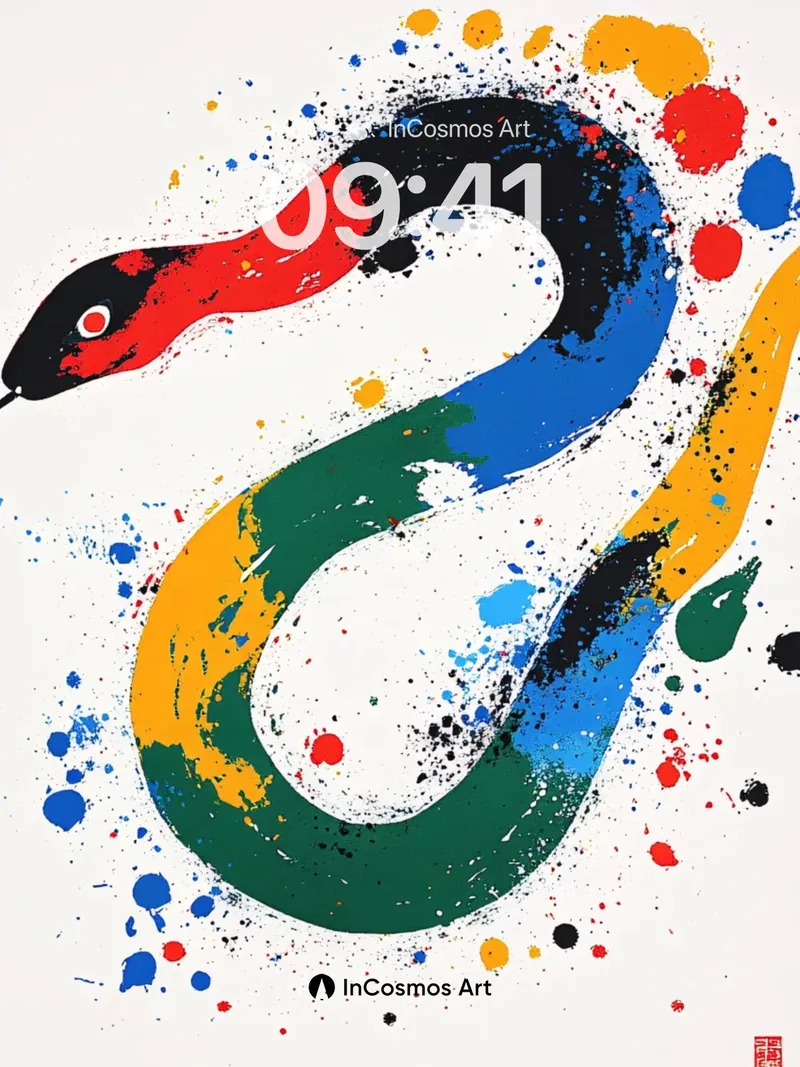
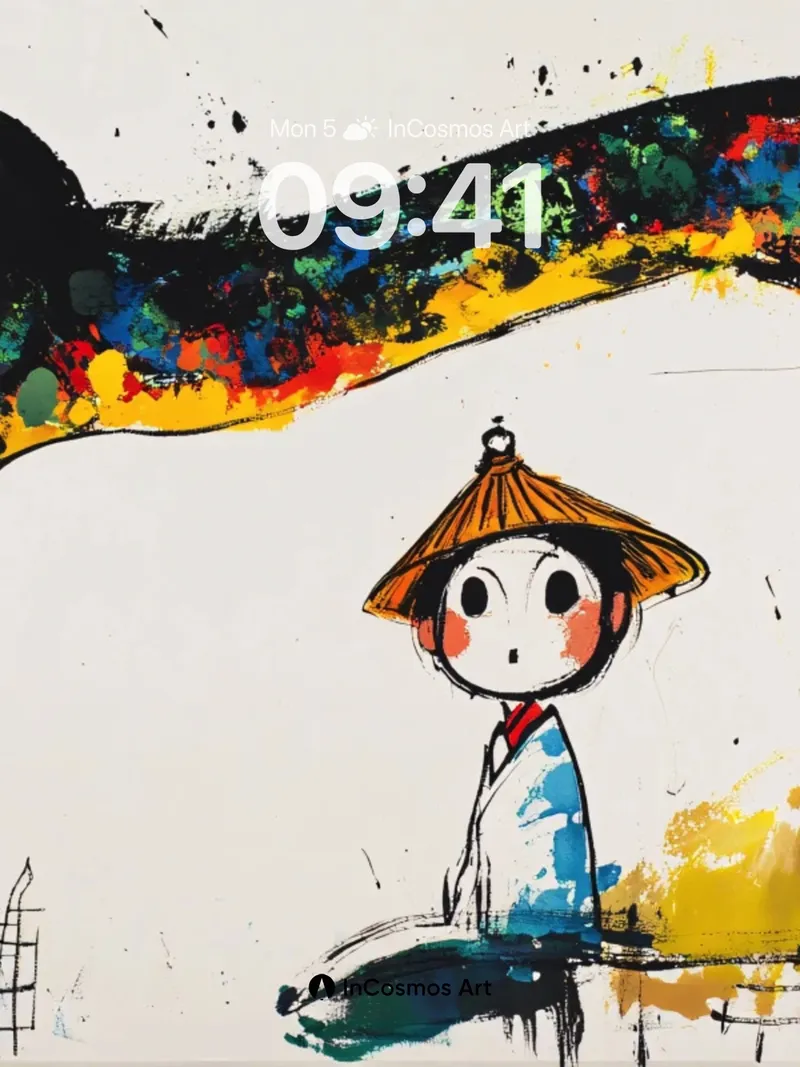
At the intersection of tradition and modernity, the snake is reimagined as a dynamic symbol of life. It transcends its role in the zodiac to become a cultural emblem of transformation, wisdom, and latent power. These works portray the serpent through diverse media—from bold ink splashes to delicate scales—each conveying a spiritual rhythm beyond physical form. The serpentine body coils like a river of time, its curves echoing natural rhythms while hinting at humanity’s deep-seated reverence for the unknown.
Multiple Identities of the Snake
The snake carries complex meanings in Eastern culture. It is the staff of healing deities, a metaphor for Daoist cultivation, and a mysterious figure in folklore. In these creations, the snake appears fiery, fluid, minimalist, or vibrant. Each approach seeks to capture the elusive spirituality of this non-human being.
Dialogue Between Ink and Light
Ink techniques dominate several pieces, where black-and-white contrasts create intense tension, punctuated by red eyes or golden spots that draw attention. This treatment not only reflects traditional painting language but also breathes modernity into the image. Splattered ink resembles released energy, suggesting the snake breaking free from the canvas into the viewer’s awareness.
Embodiment of Emotion
The coiled posture often suggests defense, yet here it becomes an accumulation of inner strength. Its head rises slightly, eyes sharp, tongue flicking—showing alertness and curiosity. This emotional expression avoids anthropomorphism, instead using composition, color, and brushwork to translate abstract psychological states into tangible forms.
Coexistence of Nature and Symbolism
Some compositions integrate blossoms and fruits, linking the snake with its environment. This is more than visual decoration; it functions as philosophical metaphor—life cycles, seasonal shifts, interdependence of existence. Here, the snake is both observer and participant, embodying the subtle, inseparable connections between all things.