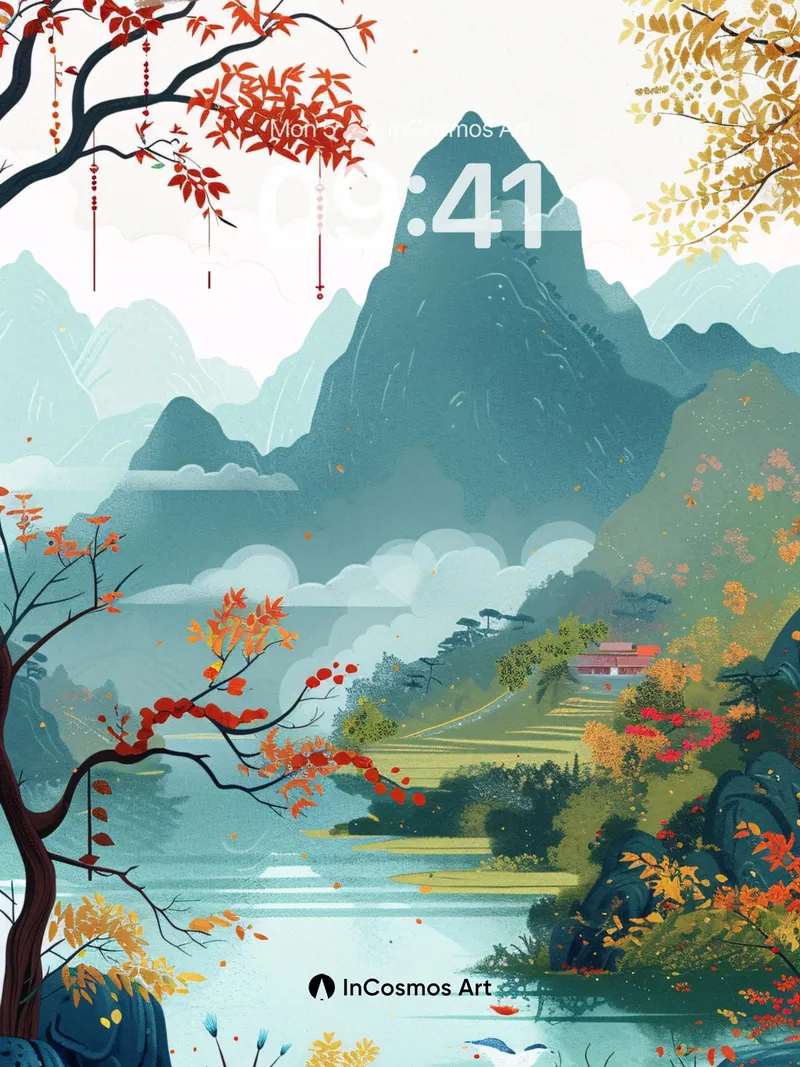
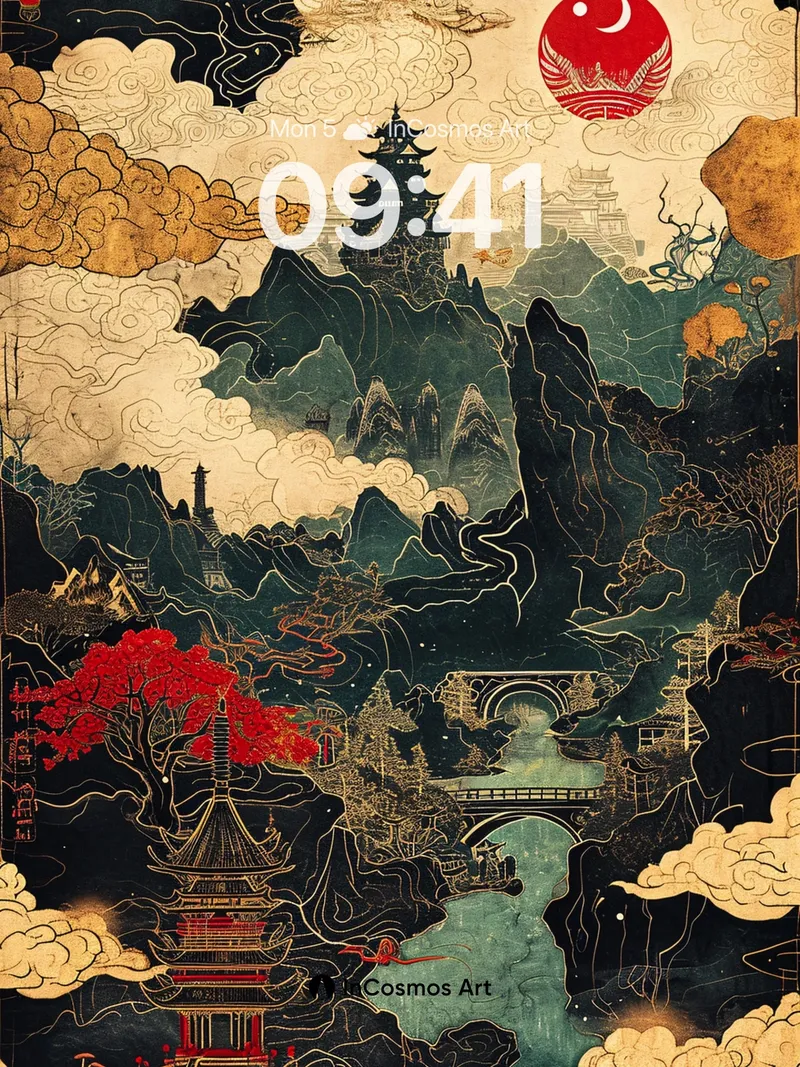
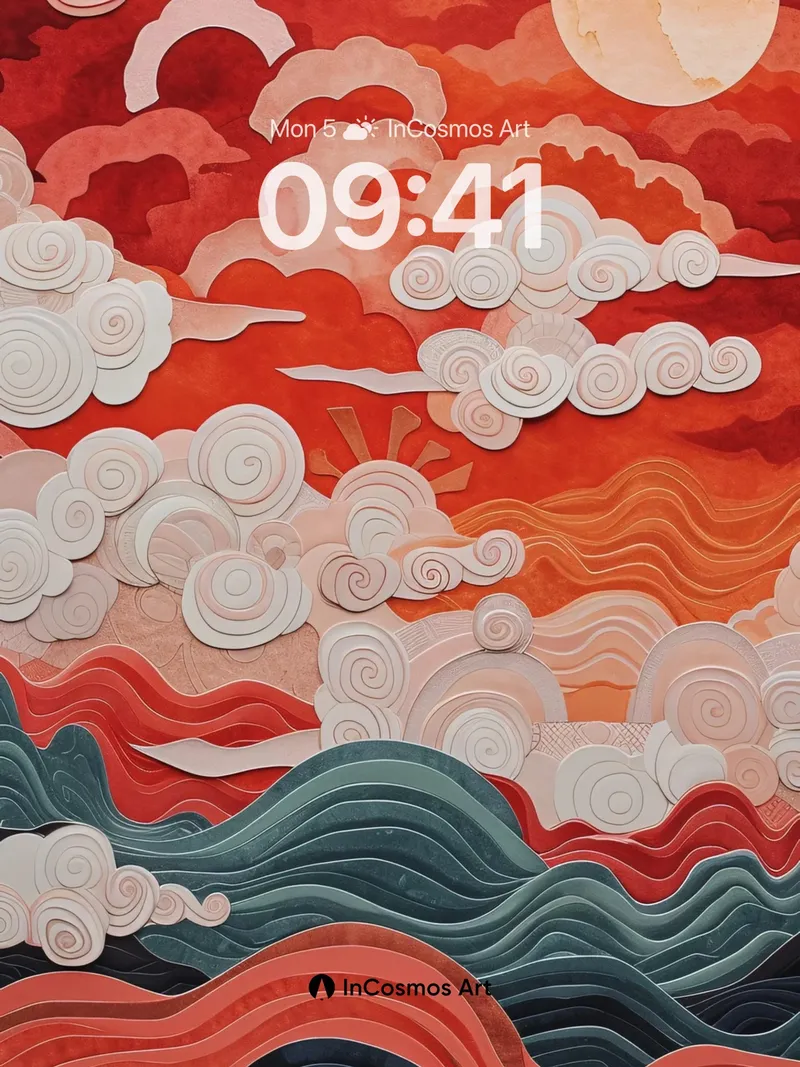
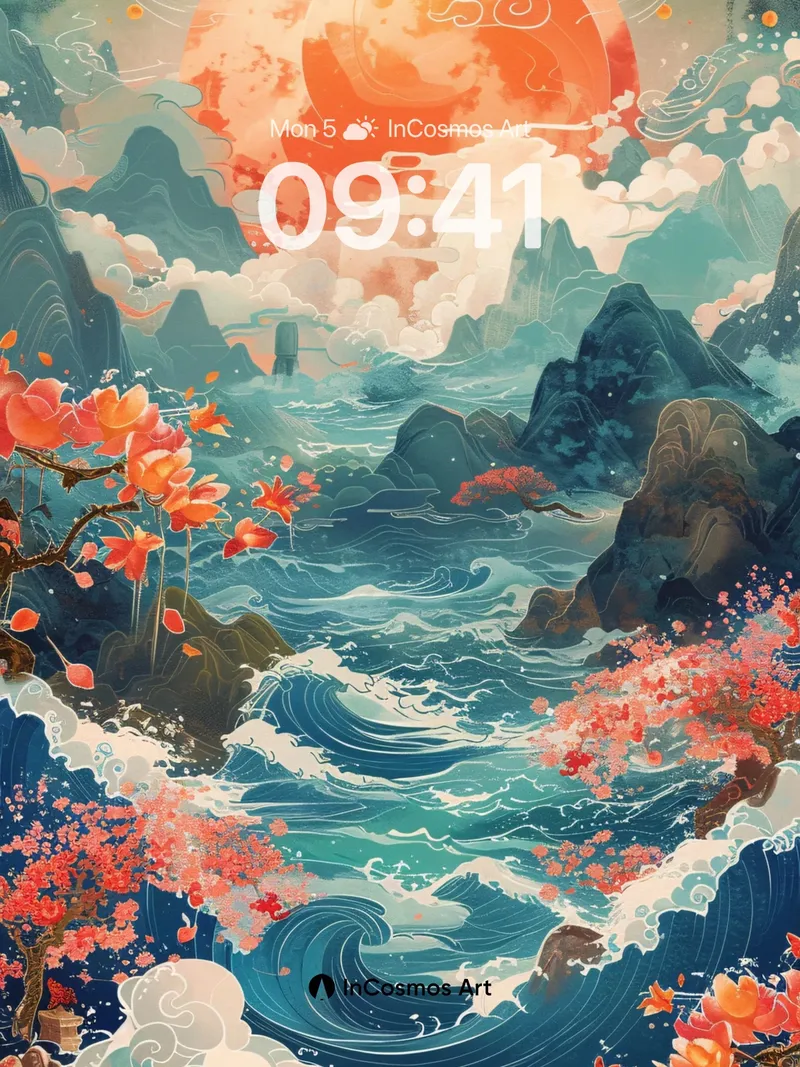
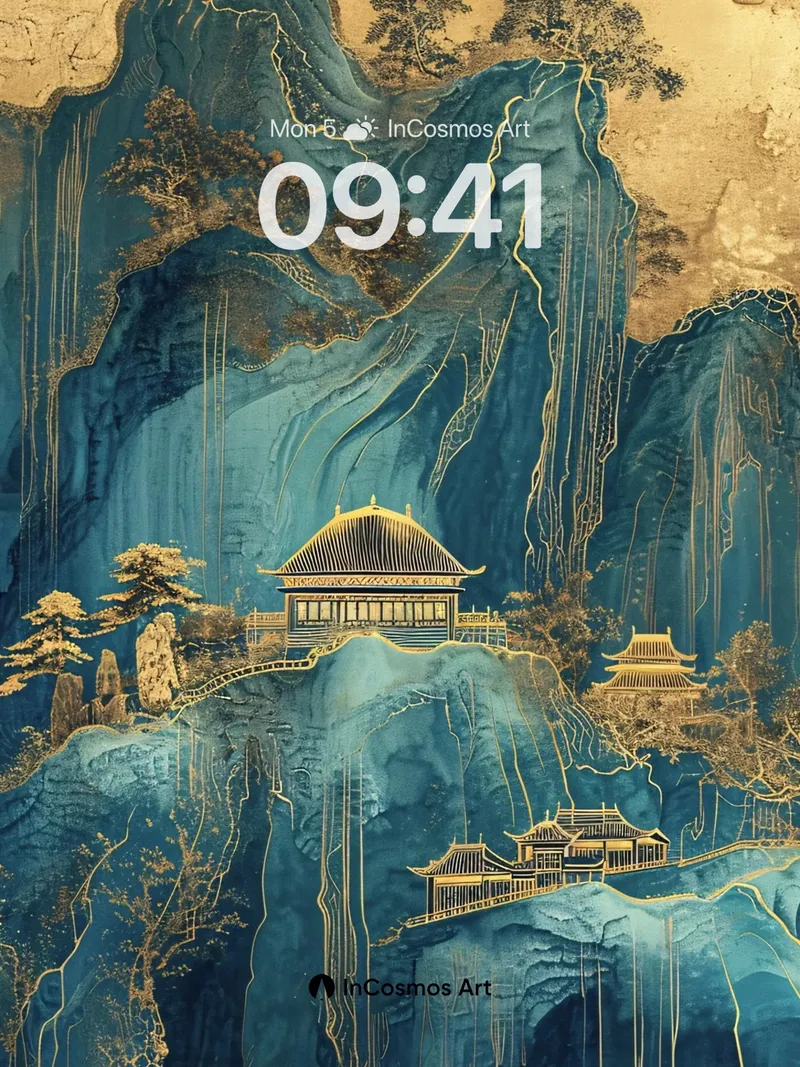
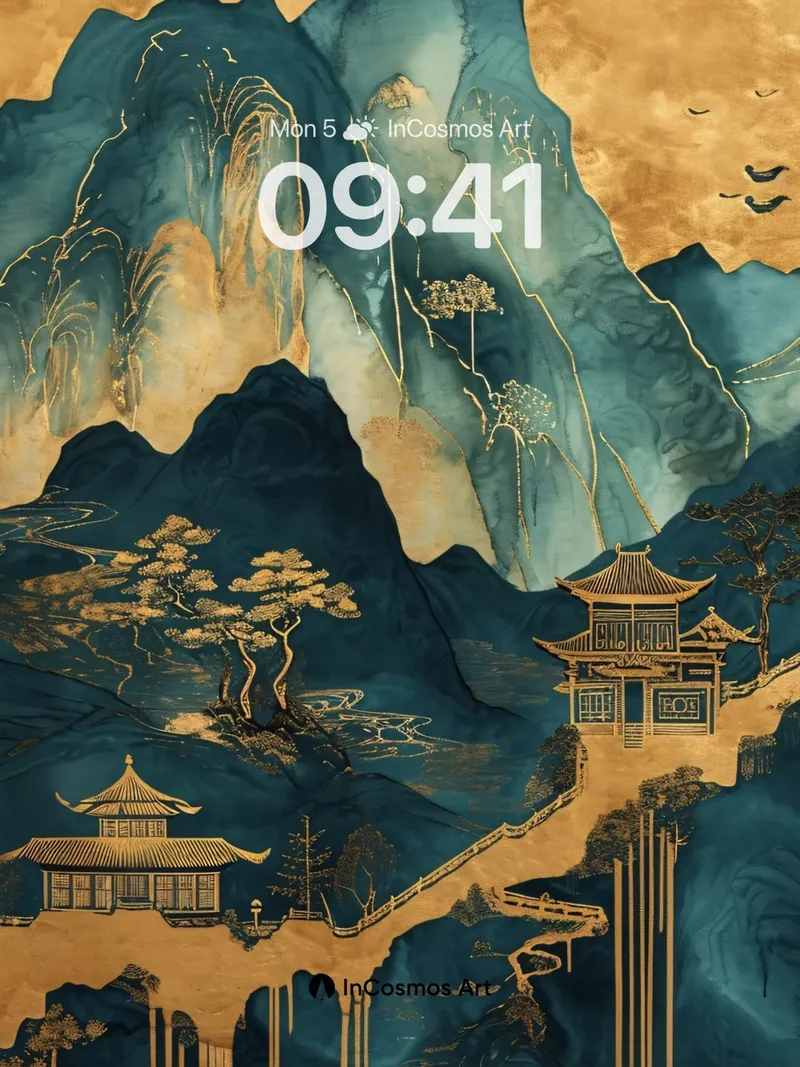
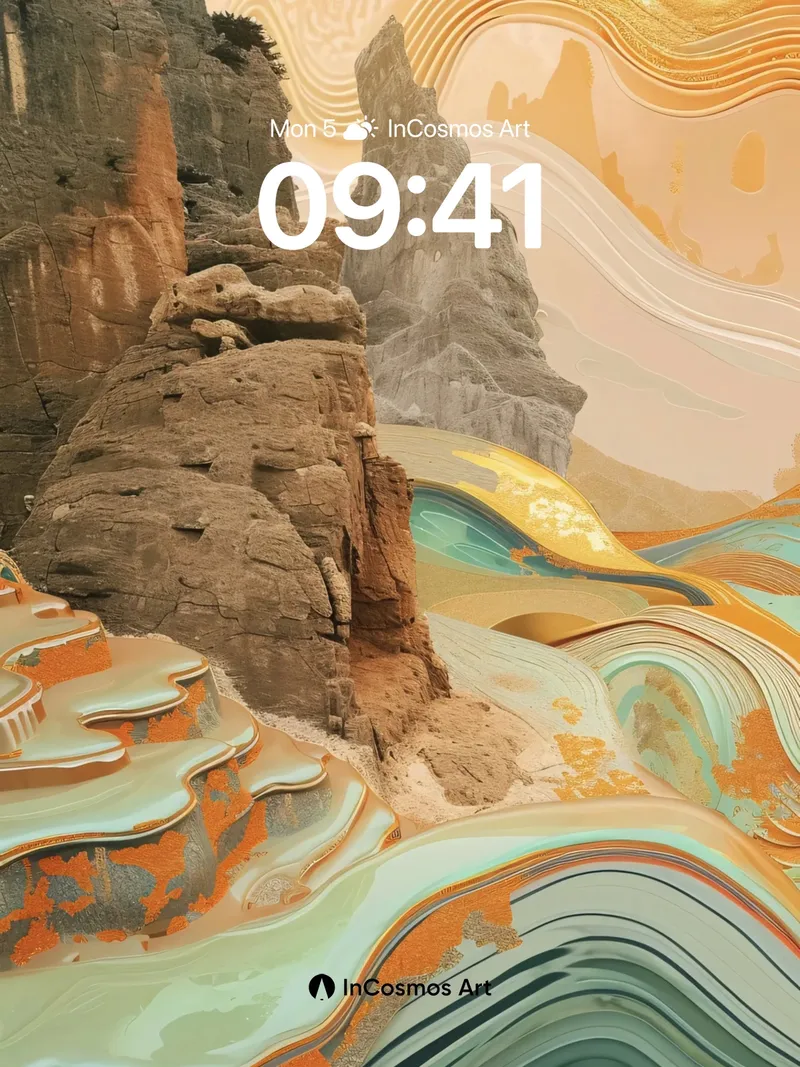
When traditional landscape imagery meets modern layering techniques, a visual language that feels both familiar and陌生 emerges. This is not a replication of the classical, but a re-encoding of space, color, and time. Mountains are no longer mere backgrounds; they become carriers of emotion. Pavilions are no longer isolated structures, but nodes of dialogue between humanity and nature. This style has appeared frequently in recent design practices. It does not pursue grand narratives, but uses delicate strokes to outline an introverted and profound Eastern temperament.
Restraint and Explosion of Color
In these works, the use of color presents a contradictory beauty. On one hand, traditional mineral colors like cyan-green, ochre, and gold leaf are extensively used to create a stable tone. On the other hand, high-saturation orange-reds and deep blues suddenly intervene, breaking the balance and bringing visual tension. This color strategy is not random collage, but a modern translation of the traditional concept of "assigning colors according to category." Color no longer merely serves the object, but becomes a direct expression of emotion.
The Breath of Lines
Lines here are no longer simple outlines, but possess a rhythm of breathing. Whether it is the undulation of mountains or the flow of clouds, the lines present an organic rhythm. This rhythm comes from the refinement of natural forms and also from the borrowing of calligraphic brushwork. The thickness, density, and curvature of the lines silently tell an inner order.
Folding and Extending Space
Traditional landscape painting emphasizes the "three distances" method, while in Neo-Chinese design, the treatment of space is more free. The boundaries between foreground, middle ground, and background are intentionally blurred, replaced by a layered, almost collaged spatial structure. This structure not only enhances the depth of the picture but also allows the viewer's gaze to wander between multiple layers, forming an immersive experience.
Symbiosis of Architecture and Nature
Architectural elements such as pavilions, towers, and bridges play an important role in these works. They are not isolated existences but are integrated with the natural landscape. The position, form, and proportion of the architecture are carefully designed to conform to visual aesthetics and also imply the wisdom of Feng Shui layout. This symbiotic relationship reflects the philosophical idea of "unity of heaven and humanity" in Eastern culture, but in modern expression, it tends more towards a poetic dwelling rather than a serious doctrine.