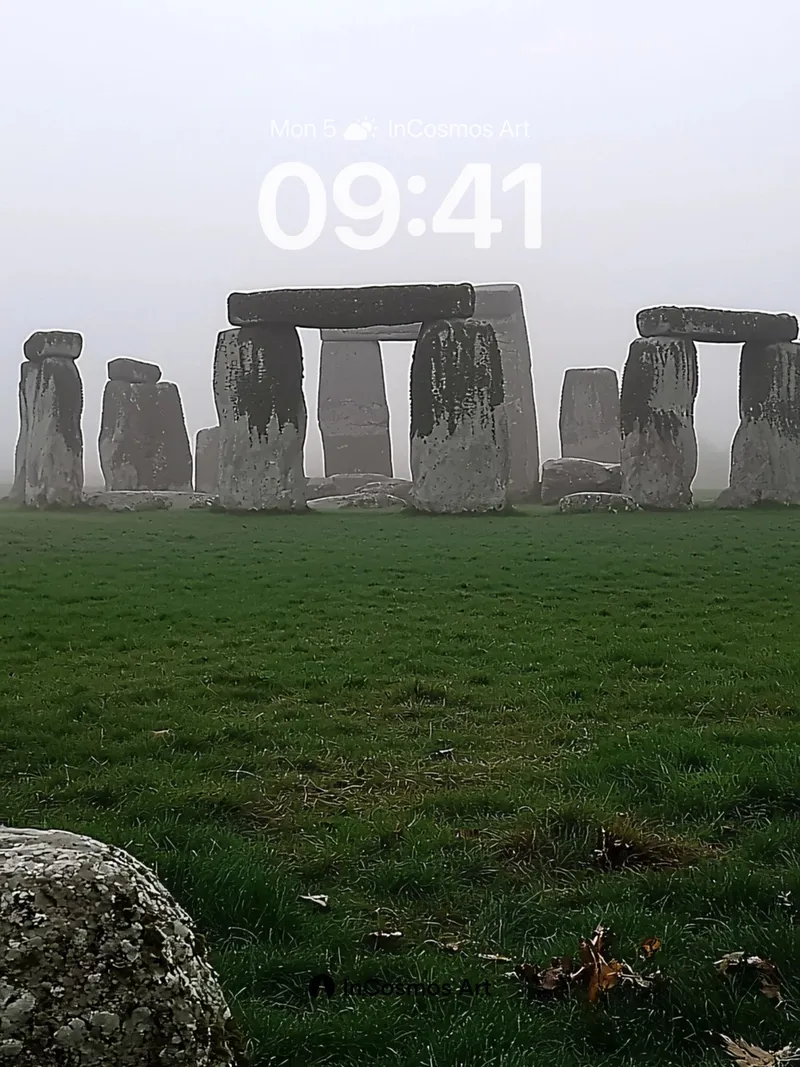
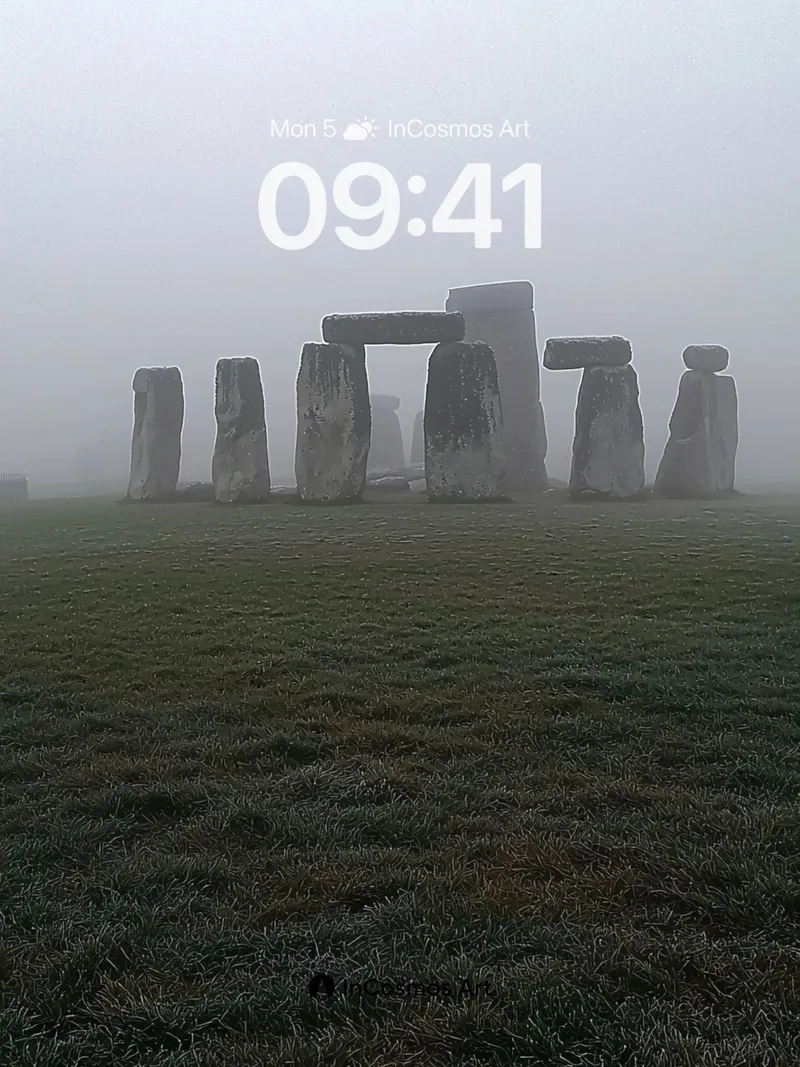
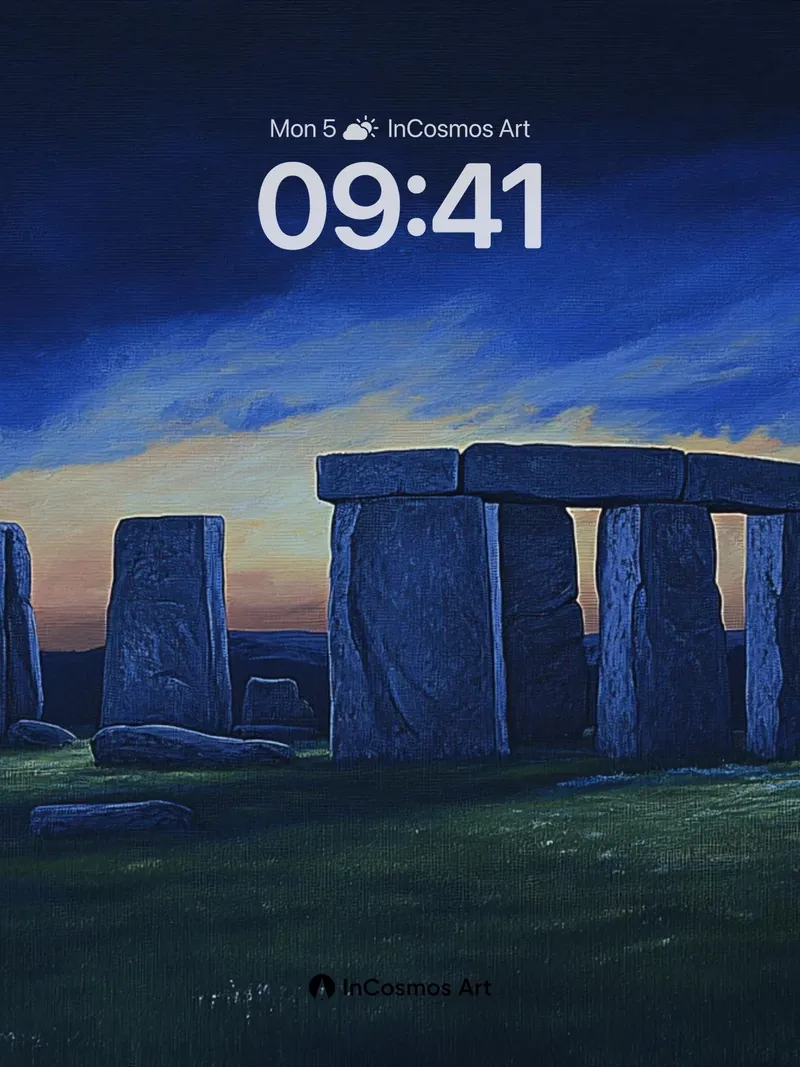
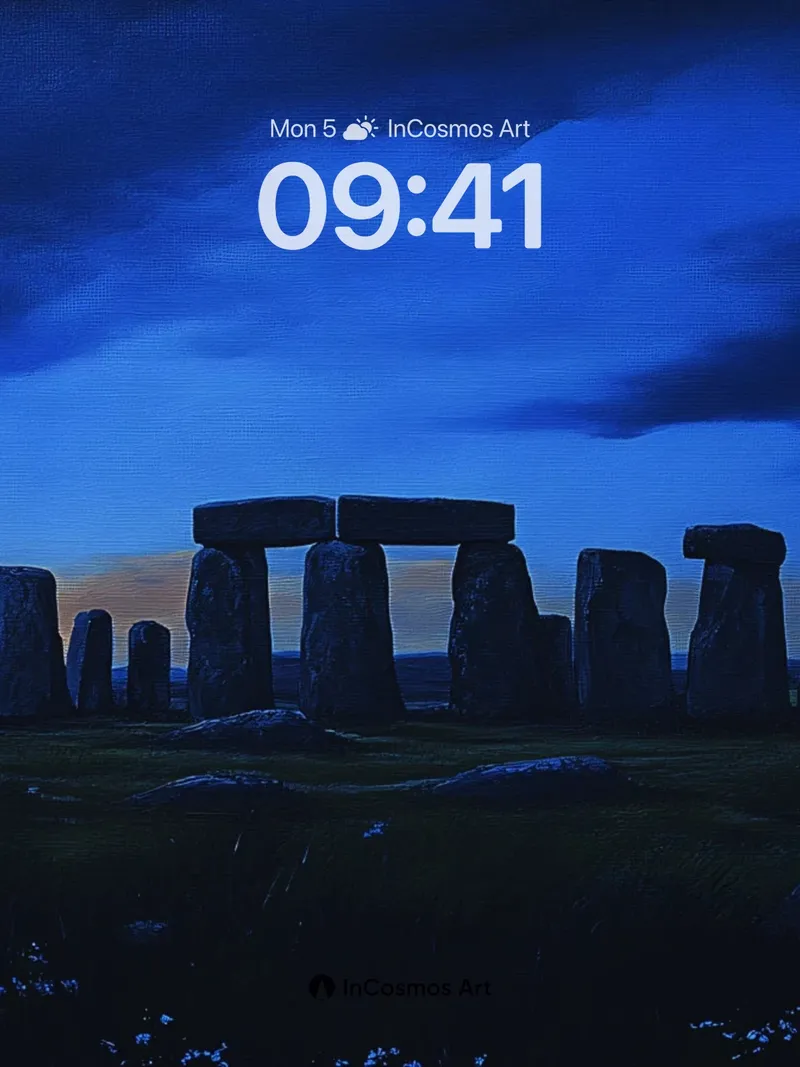
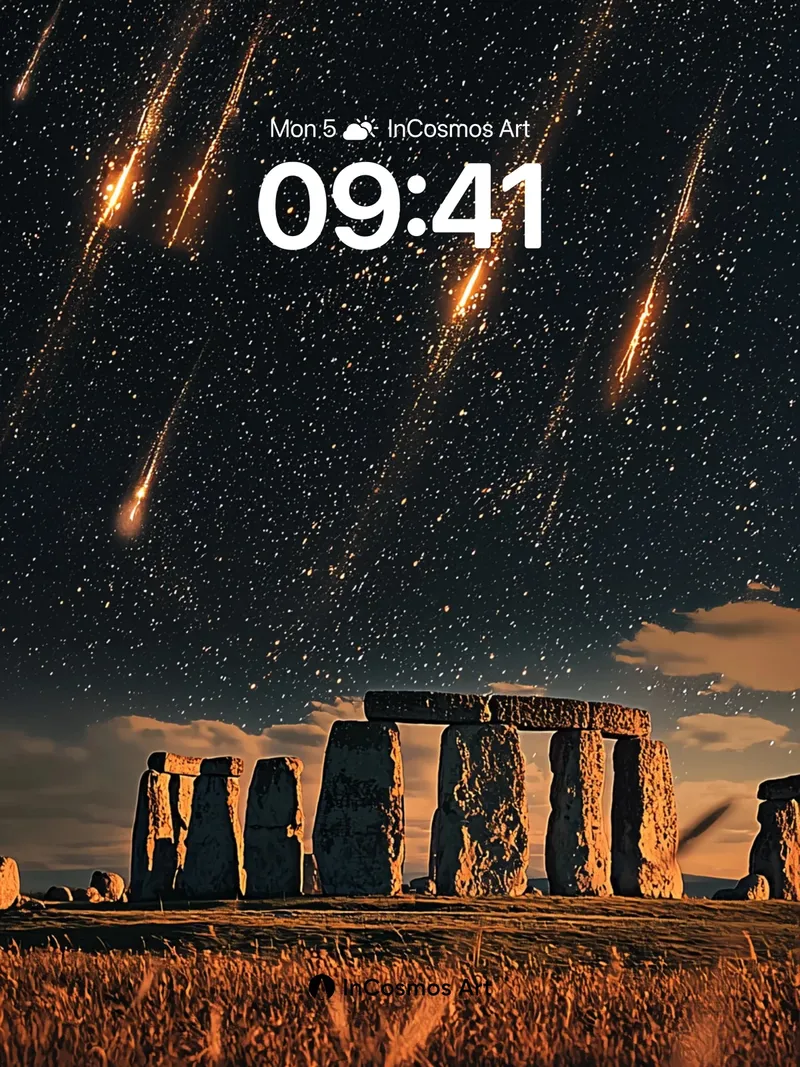
In the endless flow of time, Stonehenge stands firm upon the earth, like an ancient sentinel. It speaks not with words, yet communicates through silence. Each celestial shift cloaks it in new hues—fiery twilight, violet dawn, meteor-laced night, and snow-shrouded winter. These moments are not random but rhythmic interplays between natural cycles and human memory. The stones' forms are redefined by light, serving as both geographic markers and spiritual totems. Their presence transcends architecture, becoming vessels of collective unconsciousness. People pause here not to understand, but to feel. This is a resonance across millennia, a reverence for the unknown and a gaze toward eternity. When stars tear through darkness, when mist swallows horizons, Stonehenge remains, reminding of the weight of existence.
Symbolism of the Stones
The form of Stonehenge is simple yet solemn, its structure possessing an innate sacredness without ornamentation. Vertical pillars and horizontal lintels create gateways that seem to lead to another dimension. Such geometric forms recur in early civilizations, suggesting imaginations of order, cosmos, and divinity. The stones are not isolated; they form a network of mutual resonance, creating a closed ritual space. Each stone’s placement was calculated with astronomical precision, aligned with solar and lunar movements. This indicates builders possessed advanced knowledge of astronomy and perceived the universe as an intelligible order. Thus, Stonehenge is not merely a monument but a practical site of ancient astronomy.
Dance of Nature and Time
Natural forces continuously reshape Stonehenge’s appearance. Wind and frost erode surfaces, rain seeps into cracks, plants grow between stones. These processes are slow and irreversible, lending the stones a sense of life. Seasonal changes alter light and shadow—spring’s green, summer’s heat, autumn’s gold, winter’s pallor—all imprint upon the stones. Especially in morning fog or snowfall, Stonehenge appears more mystical, as if emerging from a dream. This dynamic transformation makes Stonehenge not a static relic but a living landscape. It integrates with its surroundings, shaped by nature while shaping it in return.
Construction of Spiritual Space
Human contemplation of Stonehenge is a spiritual act. It provokes thoughts on origin, end, being, and nothingness. Amidst modern urban rhythms, such places offer a counter-experience—distancing from technology, returning to origins. Visitors shed daily anxieties, entering a meditative state. Stonehenge does not provide answers, only questions. Its silence invites introspection, reconnecting individuals with Earth and cosmos. This connection is not religious but a universal human emotional need. Regardless of culture, facing such a vast ruin evokes humility and a sense of belonging.
Dialogue Across Eras
The historical significance of Stonehenge extends beyond archaeology. It is a witness to civilizational progress and a carrier of shared human memory. From Neolithic times to the digital age, humanity has sought meaning. Stonehenge responds to each era’s inquiries with unwavering presence. It lacks language yet possesses greater persuasiveness than any text. Its mere existence is a declaration: even the oldest civilizations leave traces, and these traces continue to influence future generations. This continuity forms the thread of human history, allowing individuals to find their place within it.