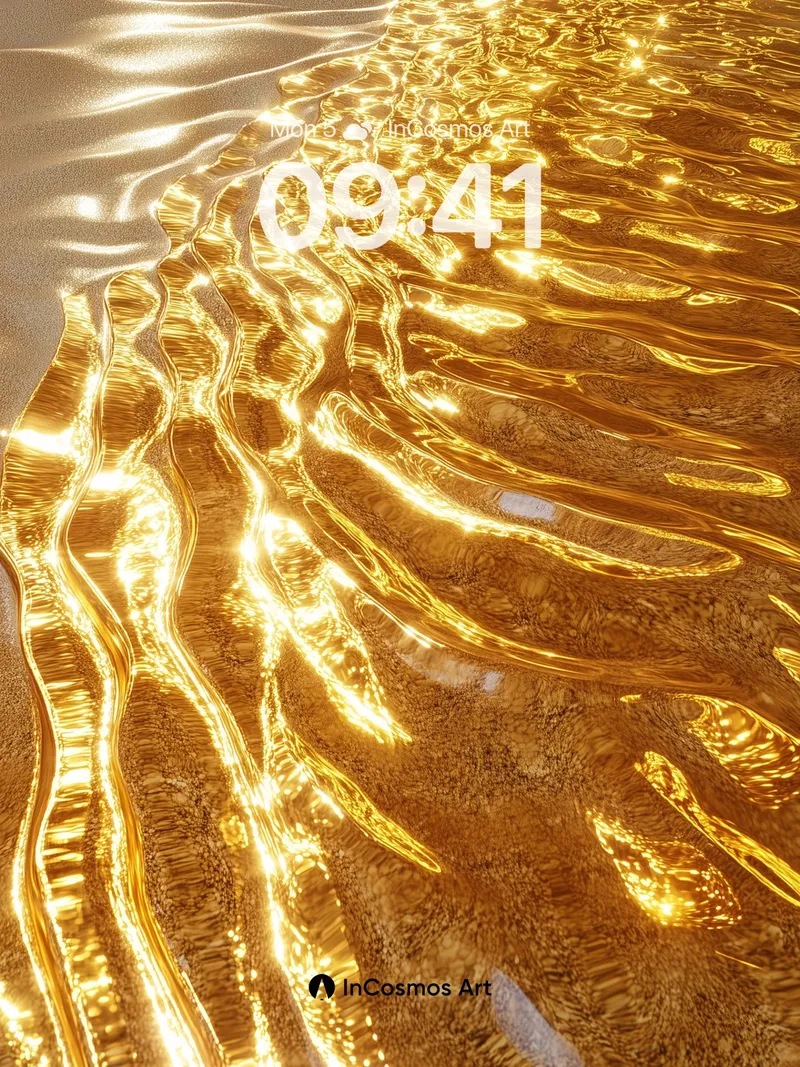
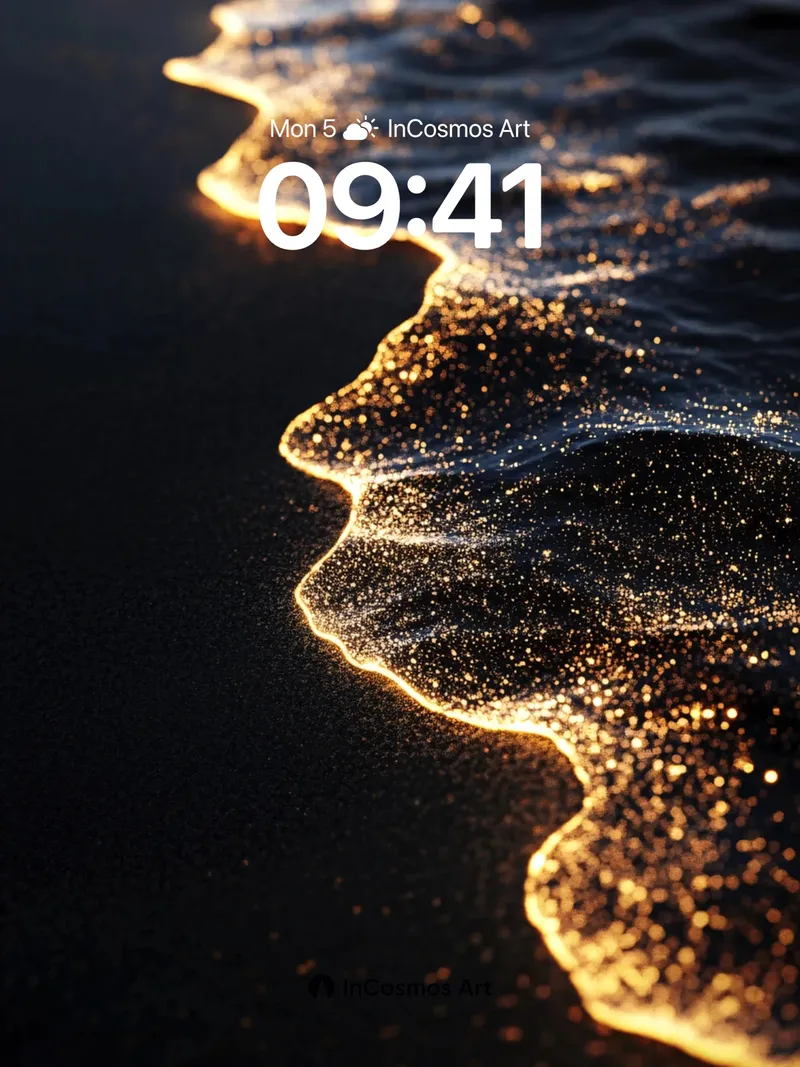
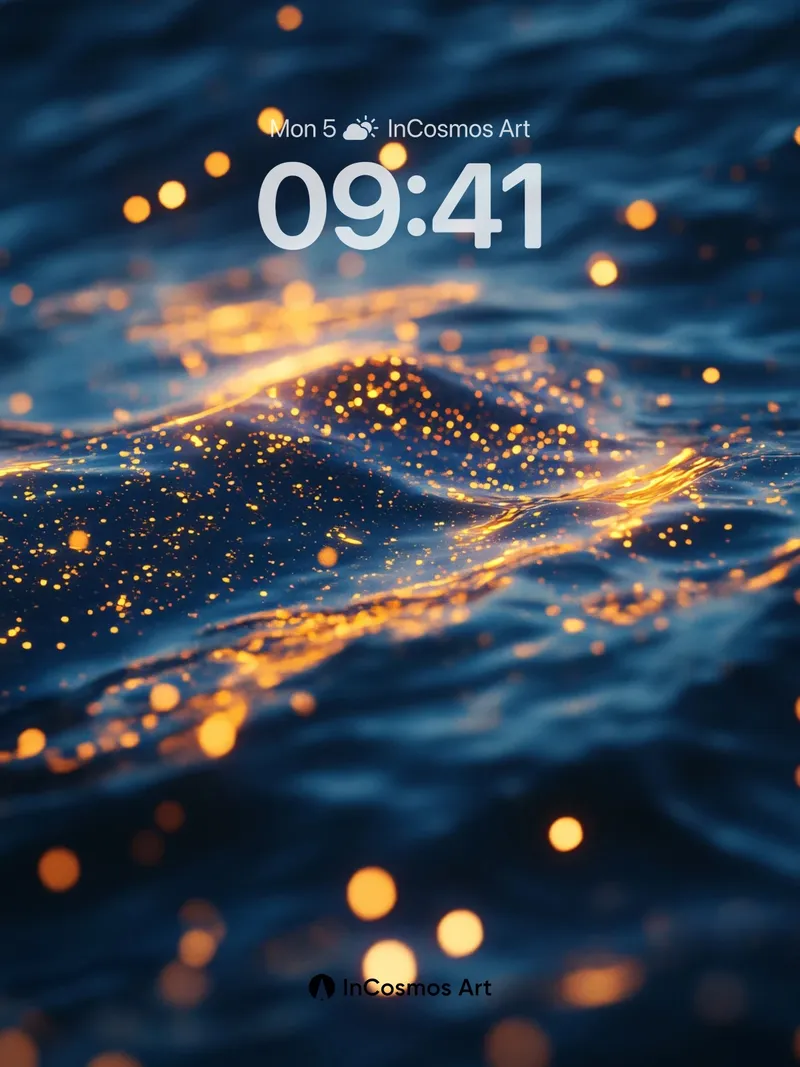
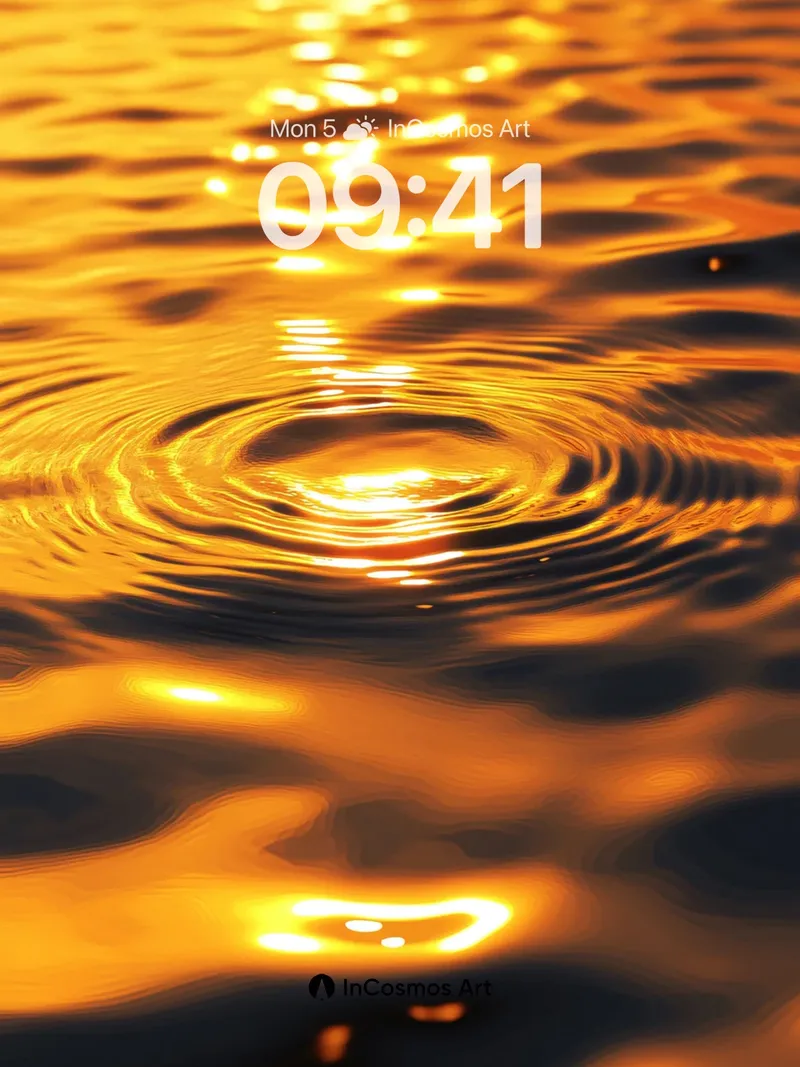
Sunlight penetrates the water surface, refracting ripples into flowing sheets of liquid gold. Each wave trace marks a moment in time, every fluctuation mirrors nature's breath. At the shoreline, where water meets sand, light fractures into countless shimmering specks, resembling the most intimate language between earth and sky. These moments are not still, but brief pauses within an eternal cycle—a gentle touch of perception against the boundary of order and chaos.
The Materialization of Light
When light enters water, it ceases to be mere energy and becomes visible form. The transparency of water allows light to stretch, twist, and split into dynamic geometric patterns. Golden glimmers spread across shallow beds like molten metal over land, or ancient, unfinished totems. This phenomenon is not only physical reflection but also a resonance of human perception with natural rhythms. In an era of advanced technology, people remain moved by primal light effects, indicating that the inner longing for pure beauty has never faded.
The Symbiosis of Sand and Water
Sand bears the imprints of water, while water brings life to sand. Under tidal forces, they continuously exchange positions and shape each other. Textures on the beach record wind direction, wave speed, and temperature shifts—each curve a geological archive. As night falls, dark sand contrasts with luminous edges along the waterline, as if the edge of the universe is lit. This is more than landform evolution; it reflects ecological equilibrium—an unspoken yet persistent force.
Nature’s Abstract Art
These scenes transcend literal representation and approach abstraction. The rhythm of waves, distribution of sparkles, and color gradients together form a non-human-made artwork. Without explicit themes, they hold infinite possibilities. Modern design often draws from such natural textures, transforming them into brand logos, architectural surfaces, or digital interfaces. Yet true beauty resides in irreplicable moments—artificial imitation can capture form but not essence.
Time in Liquid Form
Water’s flow is the most direct symbol of time. Each droplet’s journey repeats an ancient ritual: from source to sea, evaporation to precipitation. The flickering light acts as temporal markers, reminding us of the present moment. In urban fast-paced life, such imagery offers meditative solace, reconnecting individuals to slower, more essential modes of existence.