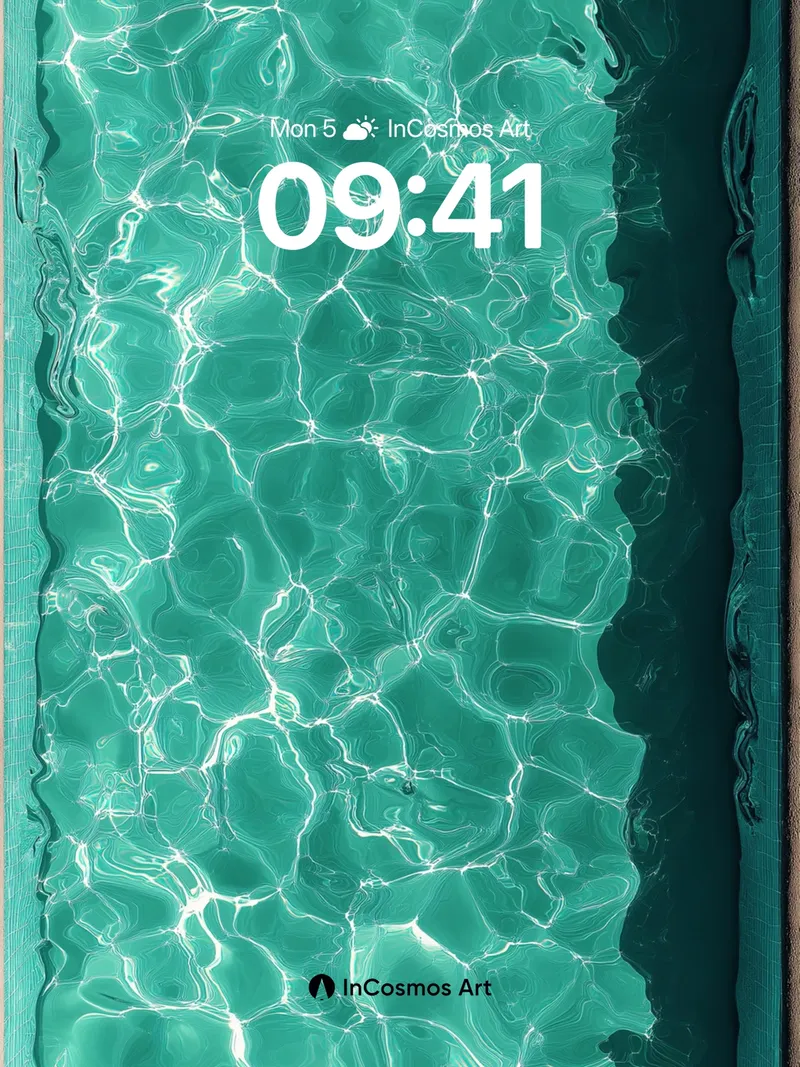
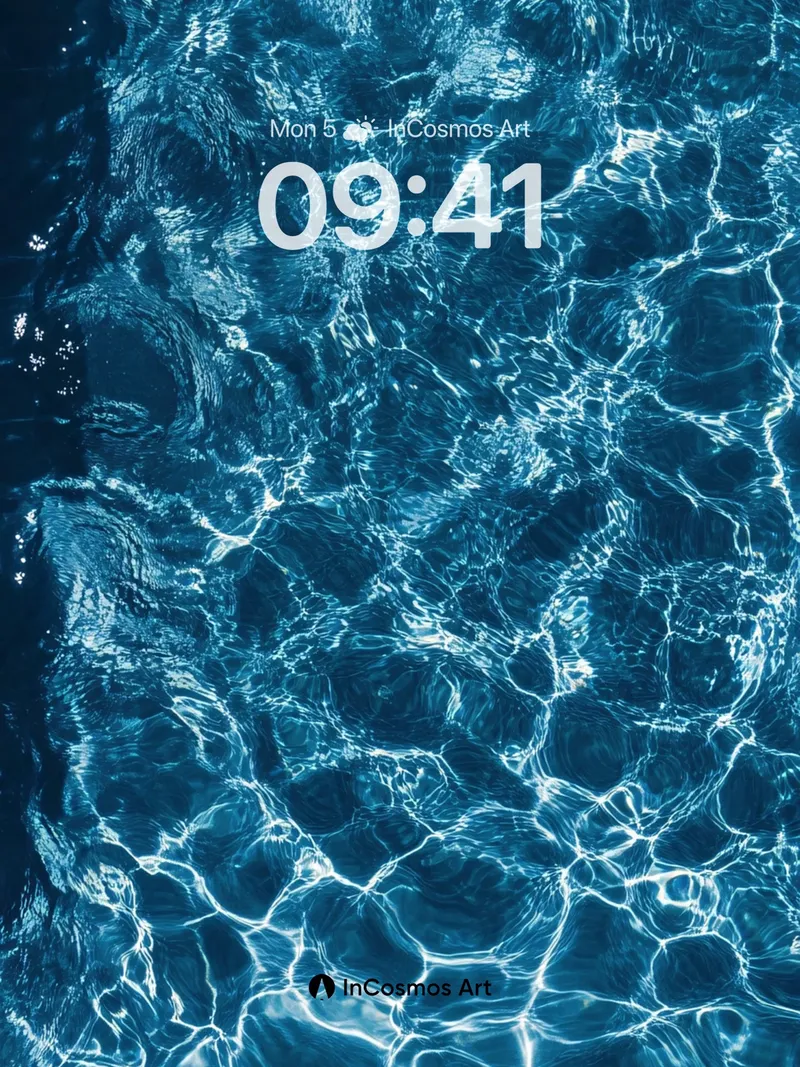
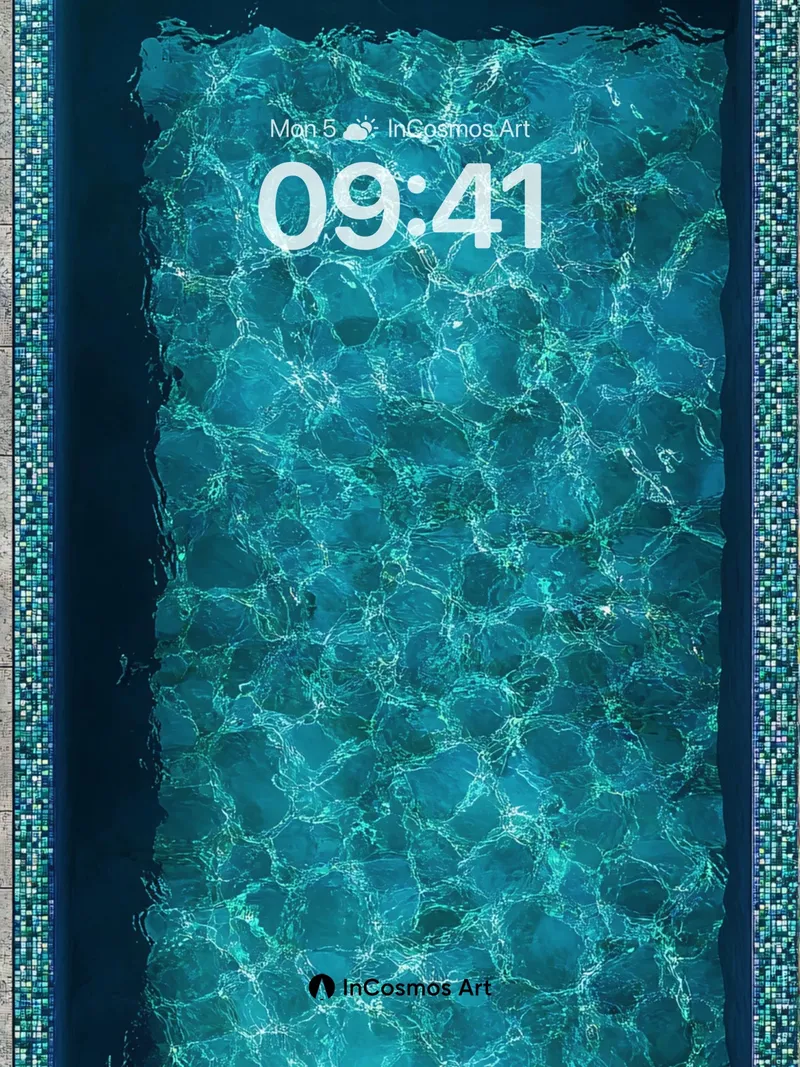
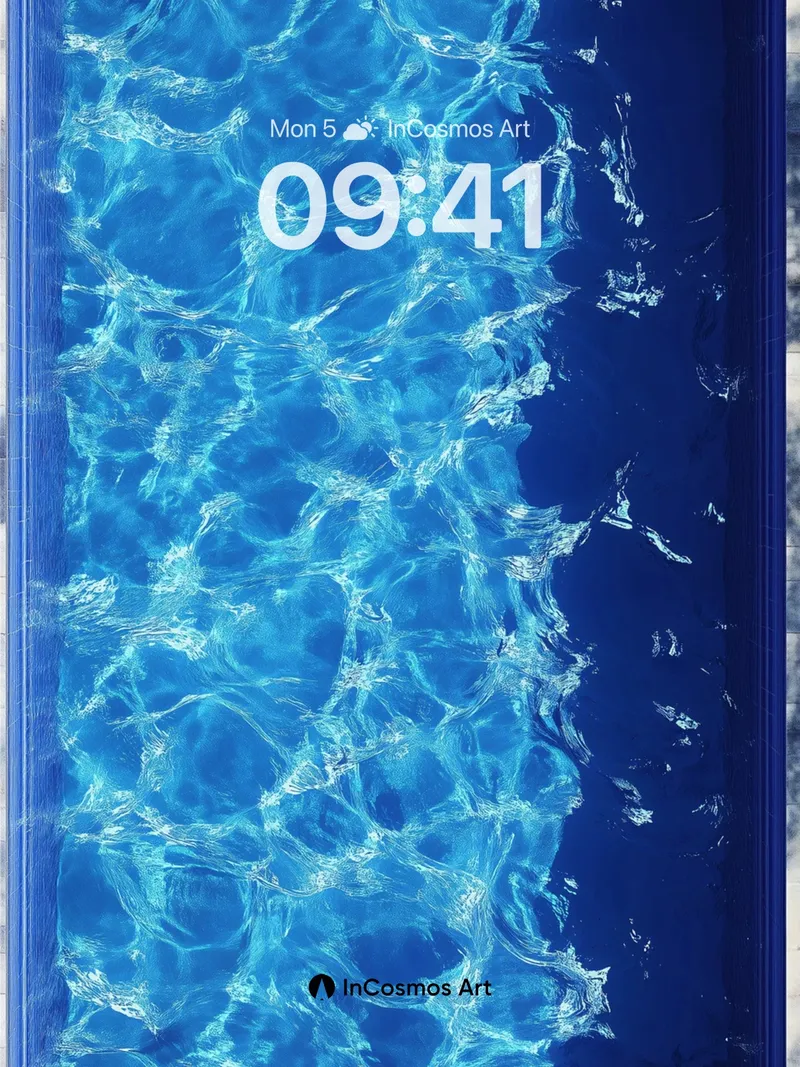
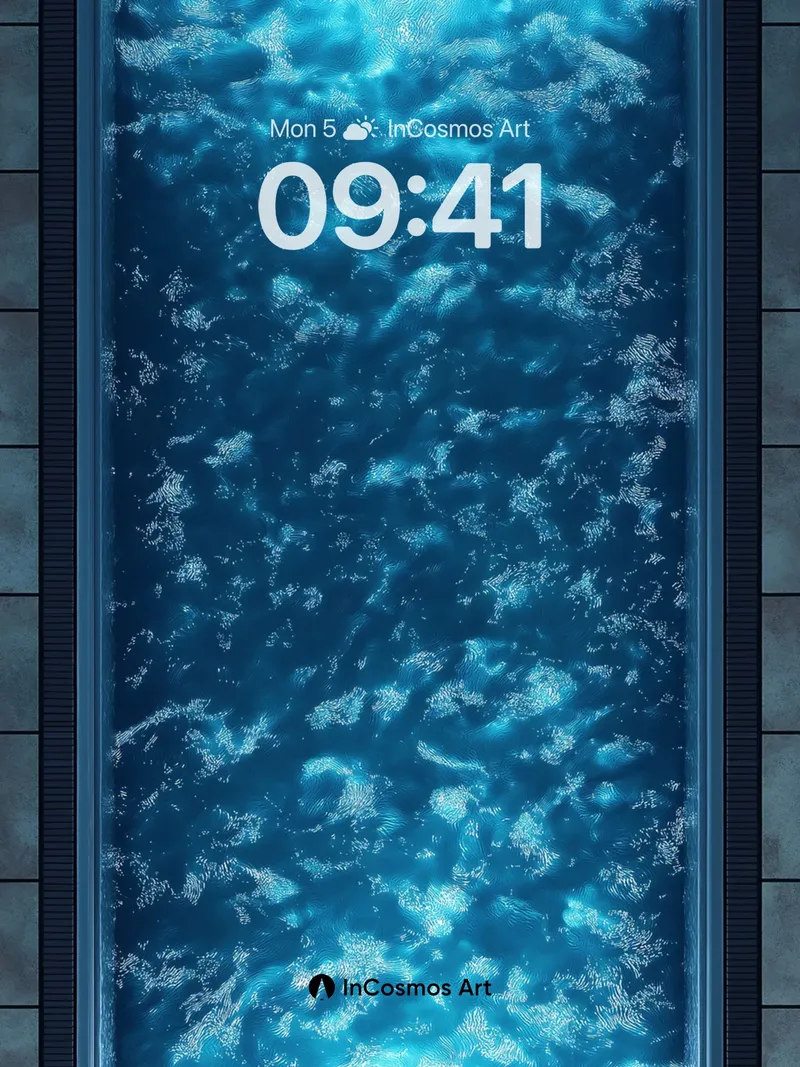
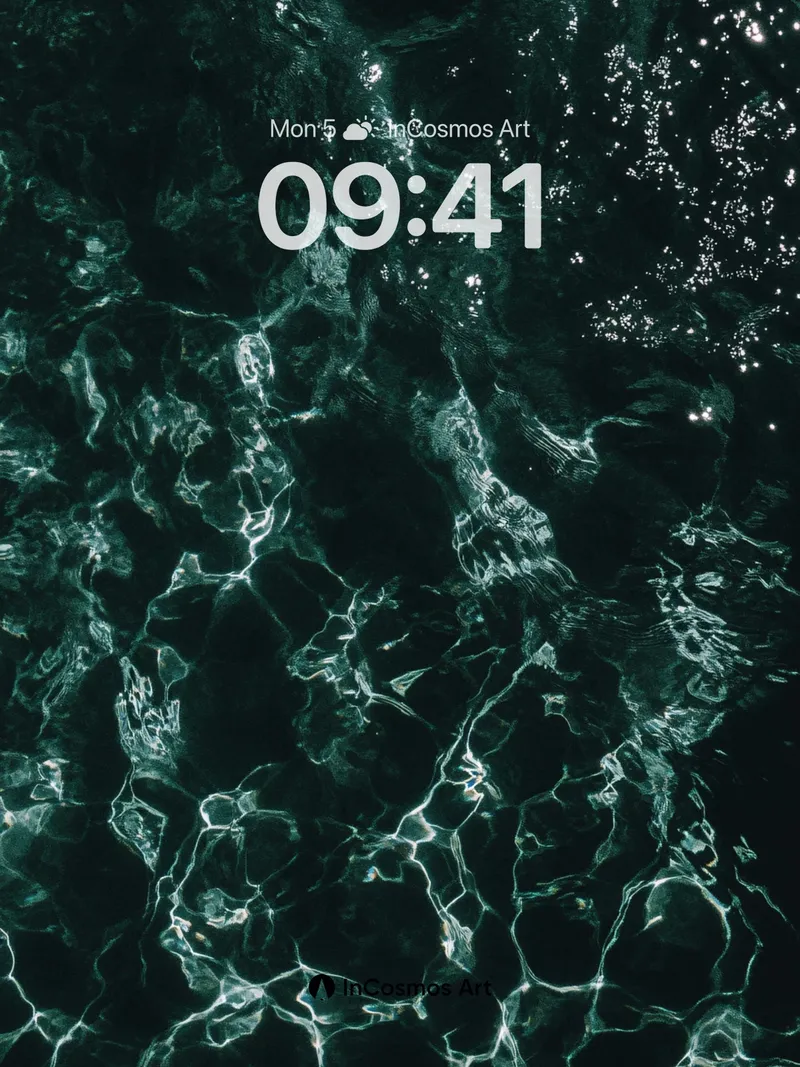
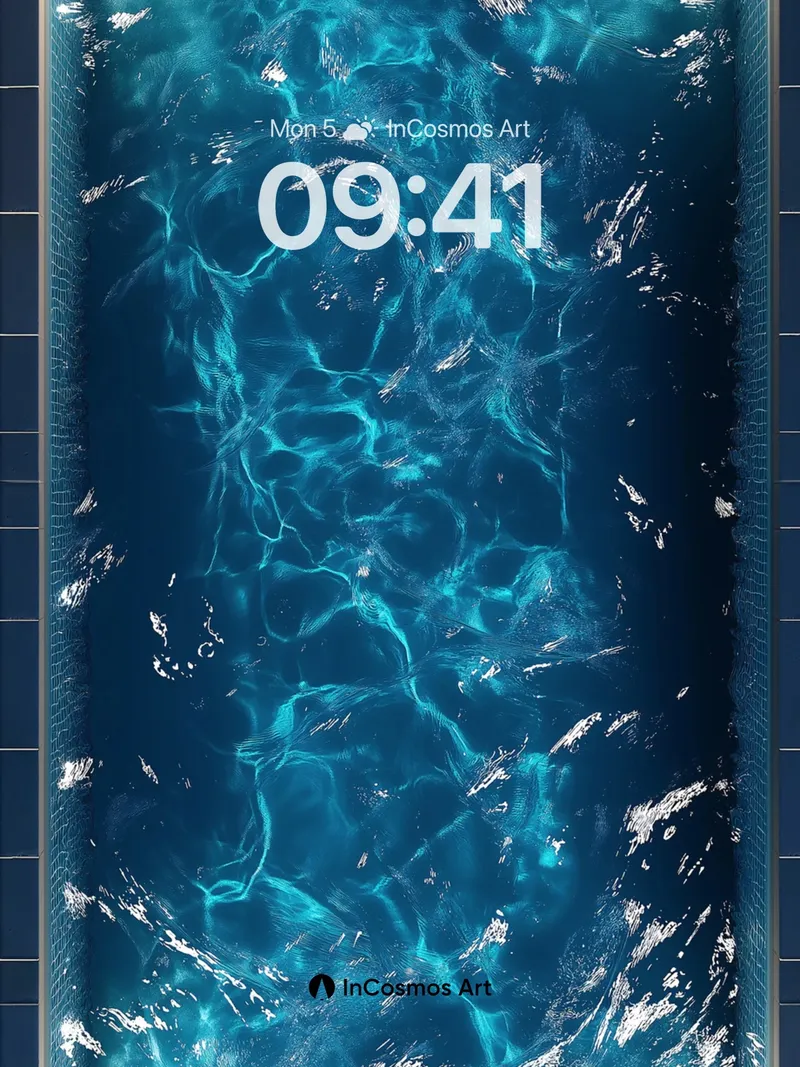
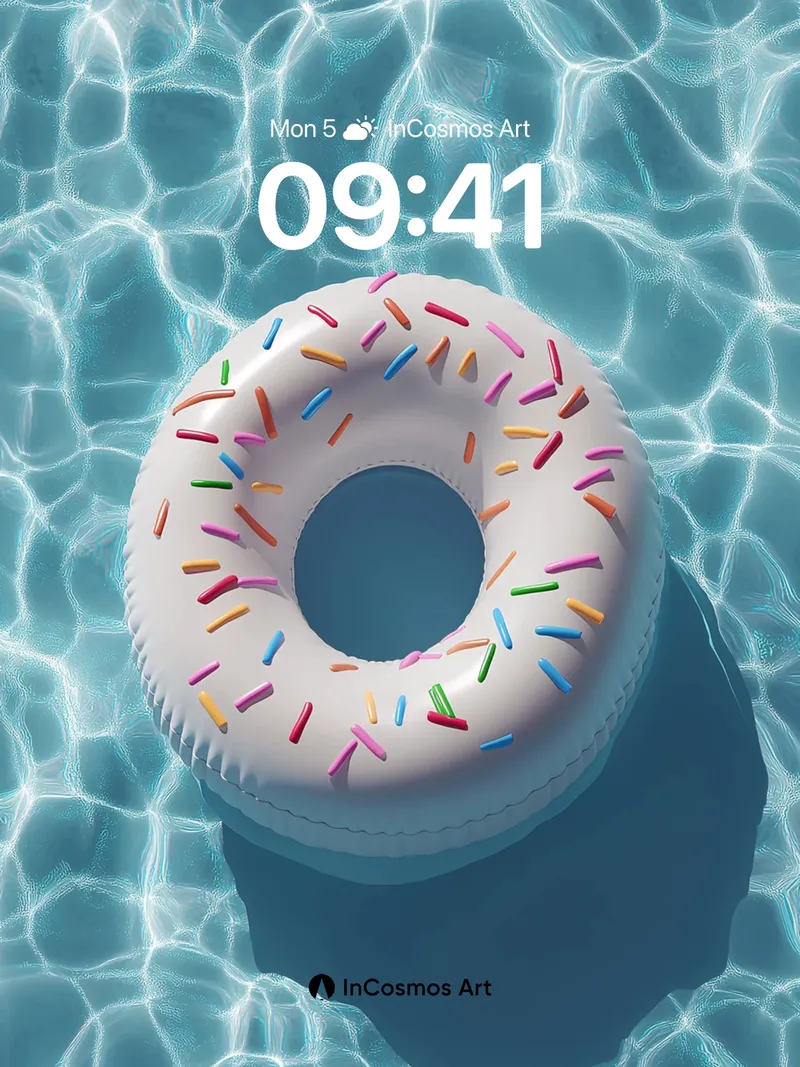
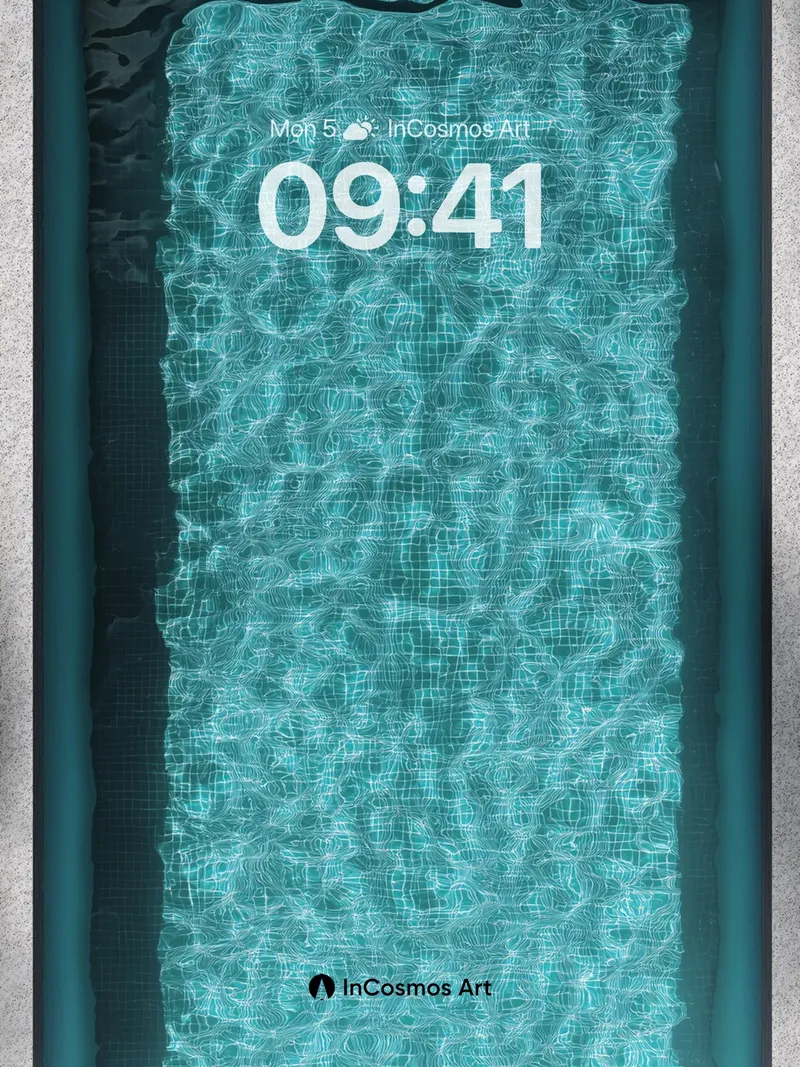
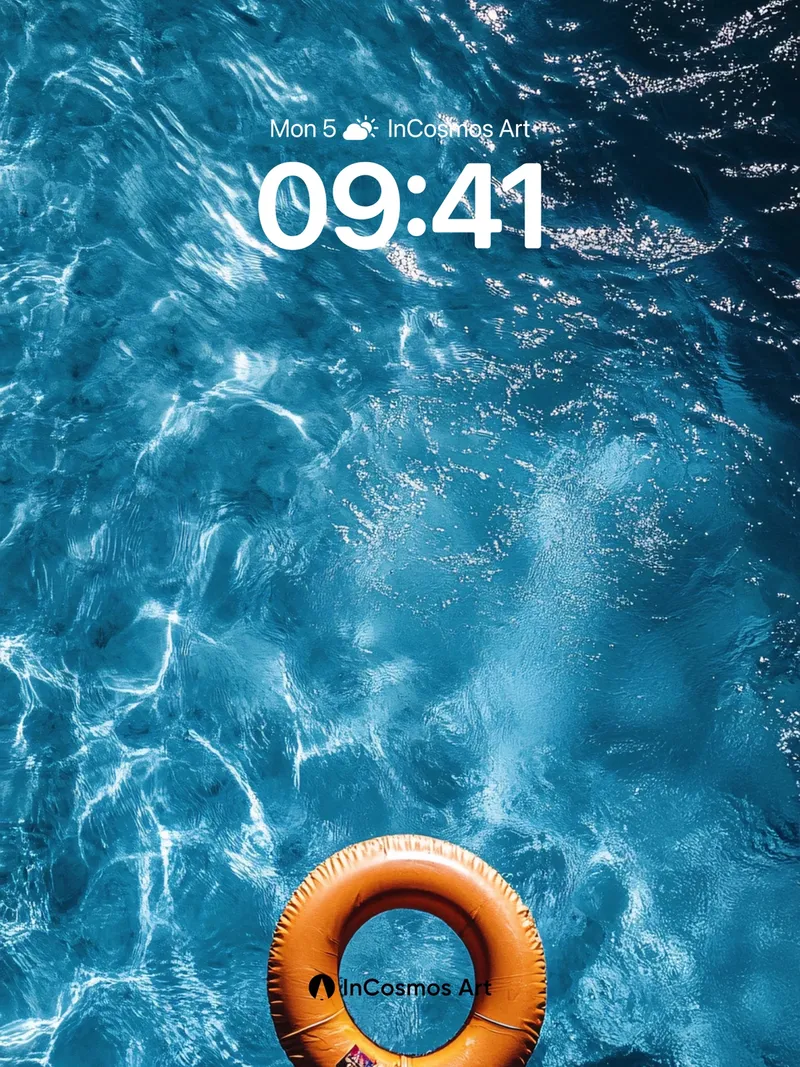
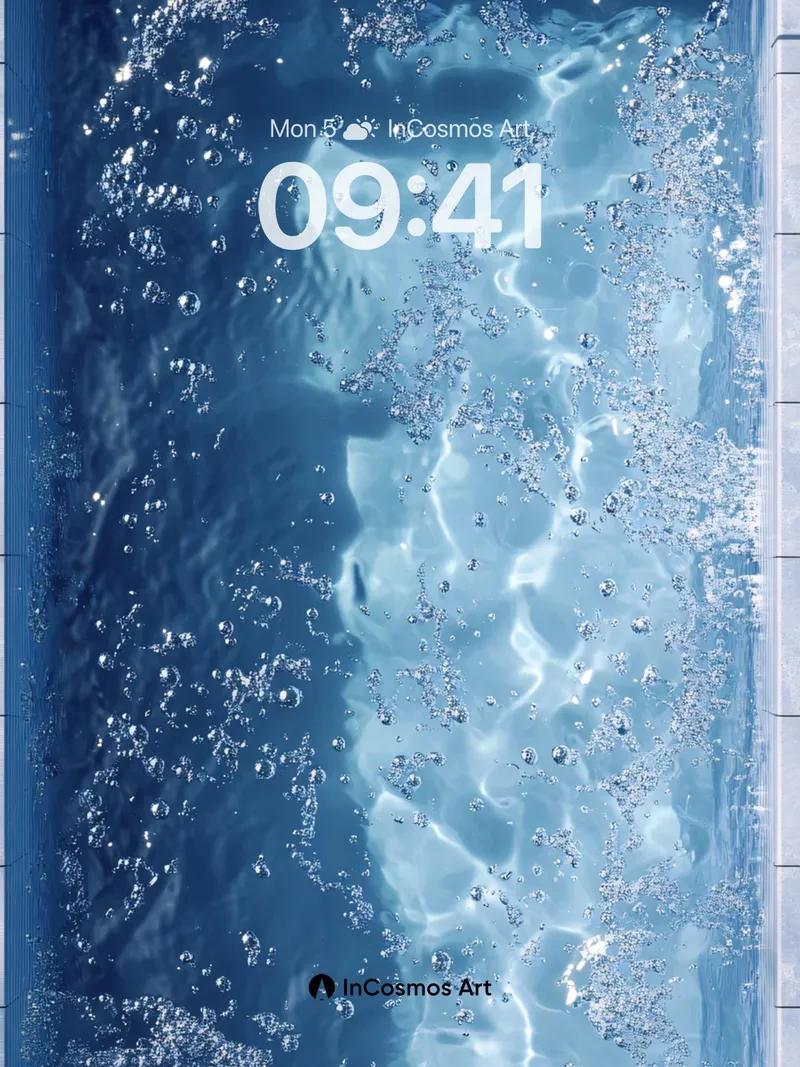
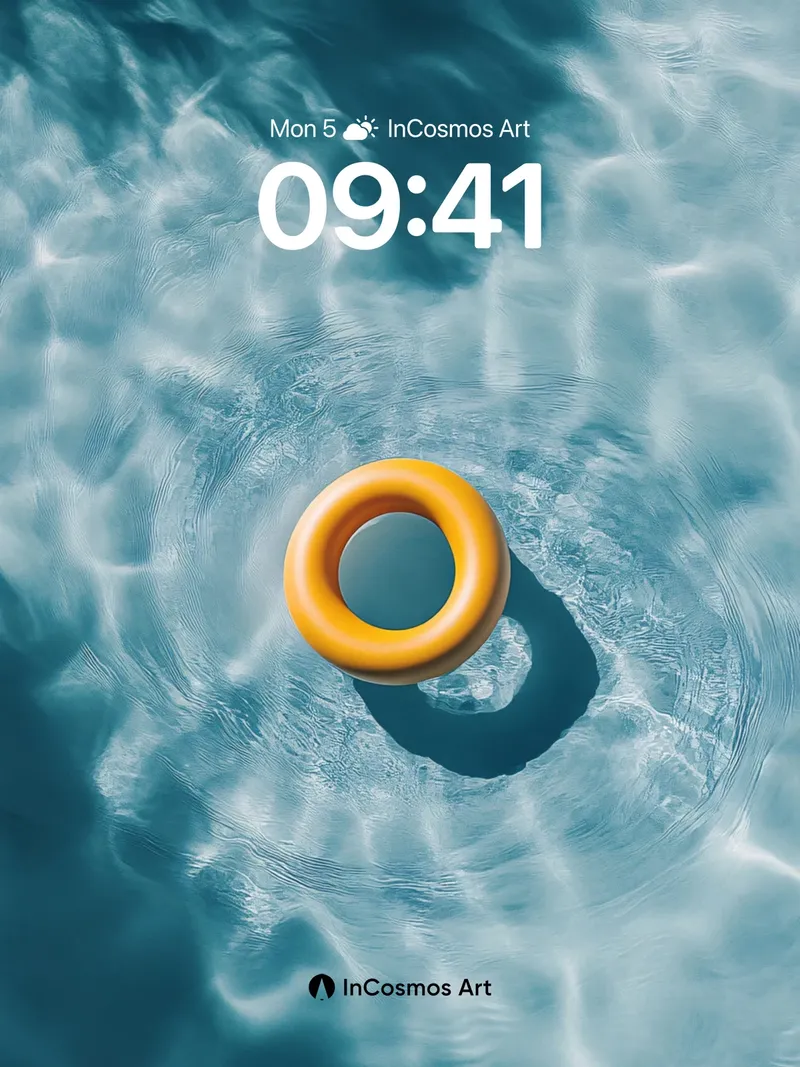
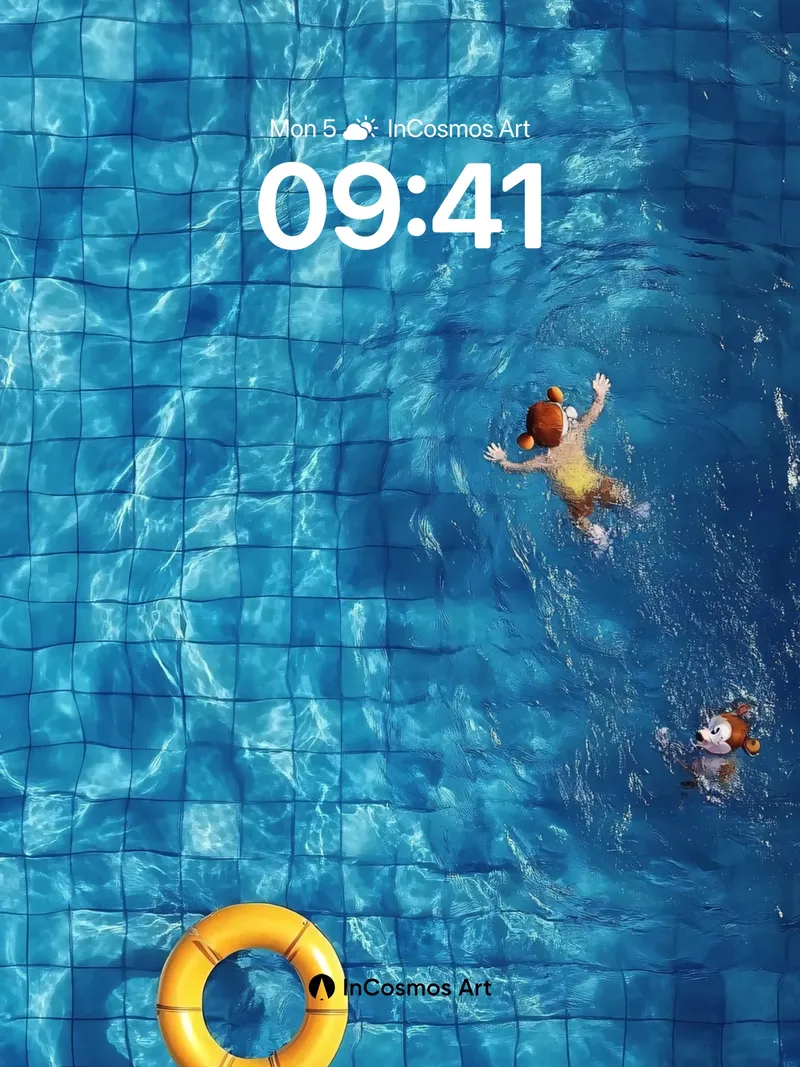
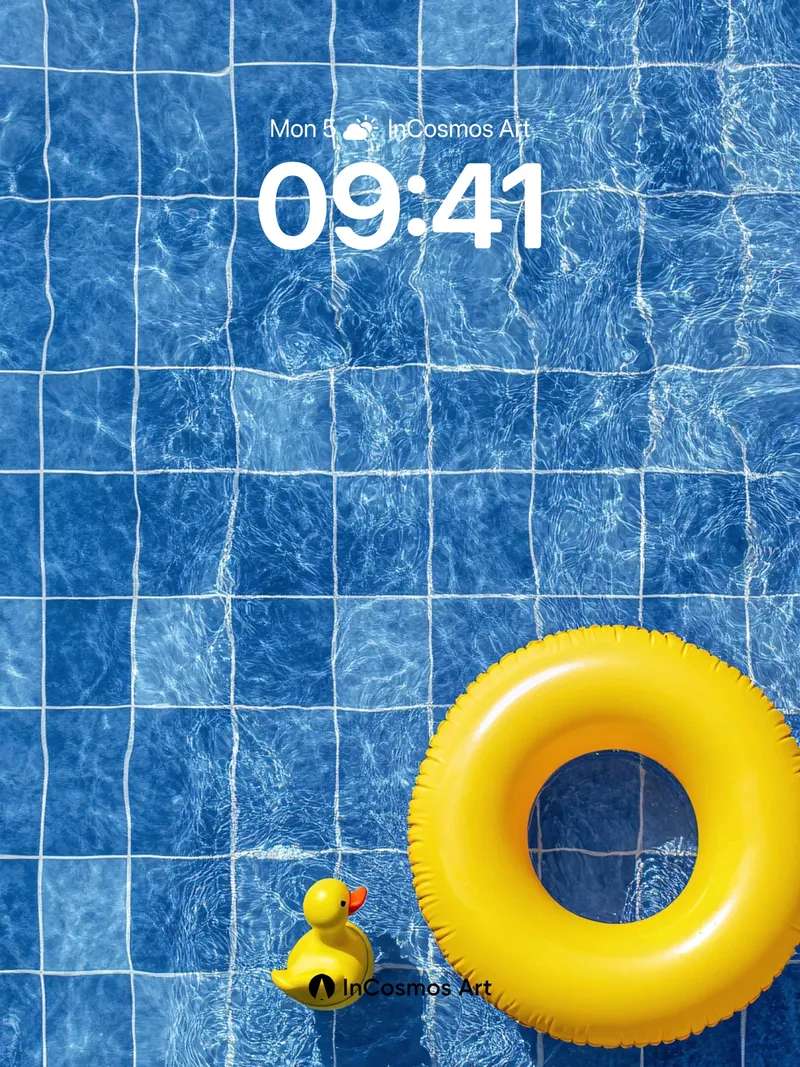
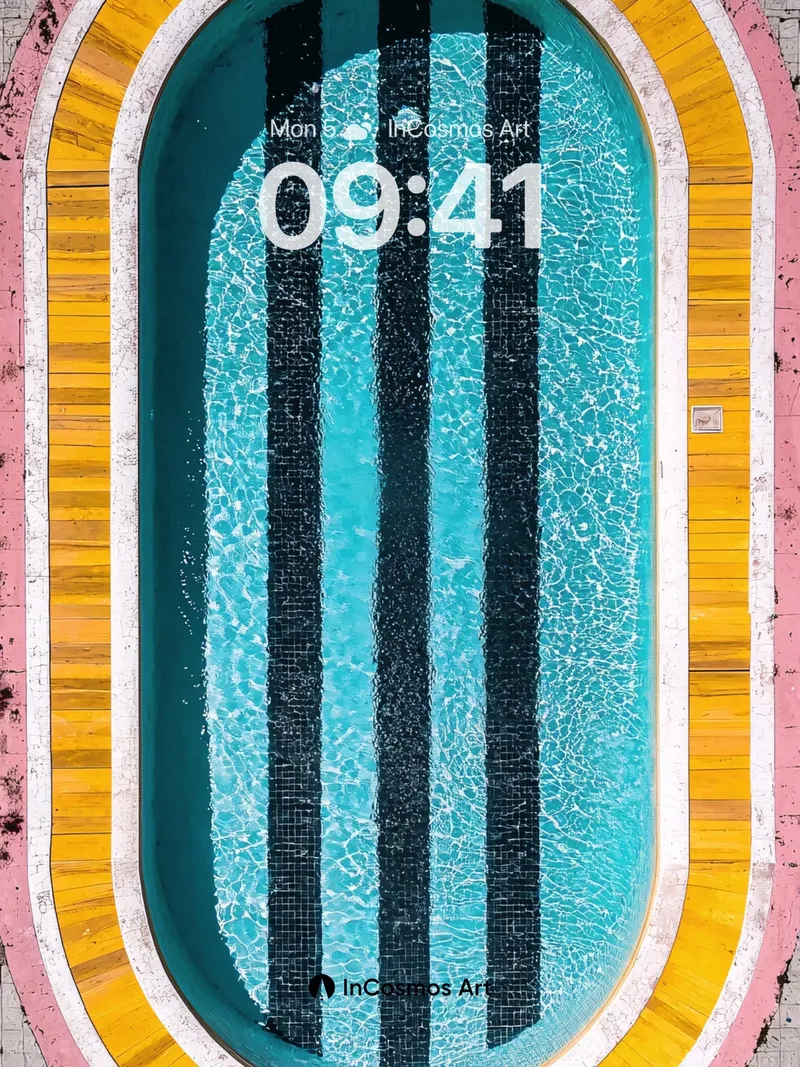
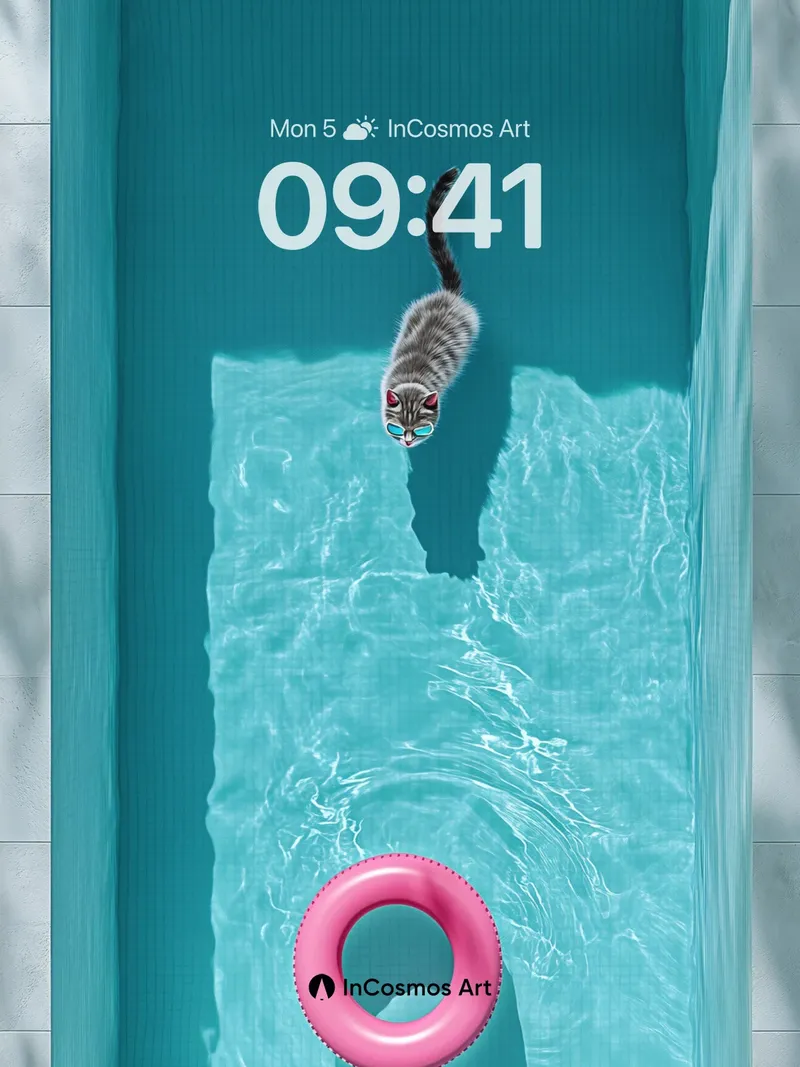
Beneath the surface lies the crease of time and the dance of light. Each ripple carries a different story—a cat wearing goggles testing shallow waters, like a philosopher lost in the human world; two children splashing in deep blue, laughter broken and reformed by waves. These rectangular spaces are not merely vessels for bodies but mirrors of emotion. They frame fluidity with geometric lines yet allow freedom to grow within boundaries. Water’s transparency reveals dual human desires: safety and adventure, also reflecting the coexistence of childhood and solitude. When the cat floats on the surface, it is not swimming but gazing at its own reflection; when children leap into water, they do not flee reality but rebuild an ancient connection.
The Grammar of Water
Water spreads across the pool floor, forming textures like language. Ripples act as punctuation, light patterns as syntax, each movement writing an unfinished sentence. Different shades of blue represent cognitive layers—shallow areas clearly visible, depths hidden and mysterious. This visual structure echoes how psychological space is built: calm on the surface, turbulent within. Water's constant change becomes an emotional metaphor—sometimes meditative stillness, sometimes joyful eruption, sometimes silent contemplation.
Freedom Within Boundaries
Rectangular pools are archetypes of modern civilization. Their rigid outlines constrain natural forms yet provide order for behavior. People learn control here, yet release instinct. Children tumble in water, seemingly chaotic, yet following intuitive bodily logic. The cat’s cautious posture represents another survival strategy—observe, test, adapt. Together, they reveal a truth: true freedom does not lie in breaking limits but in understanding and mastering them.
Dual Allegory of Children and Animals
The presence of cats and children creates cultural contrast. The cat, an independent entity, chooses whether to participate; the child, a social being, must learn cooperation and rules. Pink float nears the cat, yellow near the children—colors hinting at gender expectations and developmental stages. Yet water holds no bias; it accepts all forms, regardless of age or species. This reminds us that human classifications appear fragile before nature.
Dialogue of Light and Shadow
Light penetrates the surface, casting dappled patterns on the pool bottom. These shadows are not just physical phenomena but psychological projections. Bright zones symbolize openness and hope; darker areas conceal unknowns and fears. Yet it is this interplay of light and dark that completes the experience. Water’s clarity lets us see the abyss, and also ourselves. In this realm, everyone is both explorer and observed.