The black bear in contemporary culture is undergoing a quiet metamorphosis. No longer the fearsome beast of deep forests or the clumsy sidekick of fairy tales, the black bear slips into daily life in multiple guises — sometimes as a solitary thinker, sometimes as a gentle guardian holding a heart, sometimes as one silent face among many, sometimes as a maternal symbol wrapped in flowers and color. This transformation is not accidental; it is the result of human emotional projection and cultural reconfiguration.
The Silhouette of Solitude
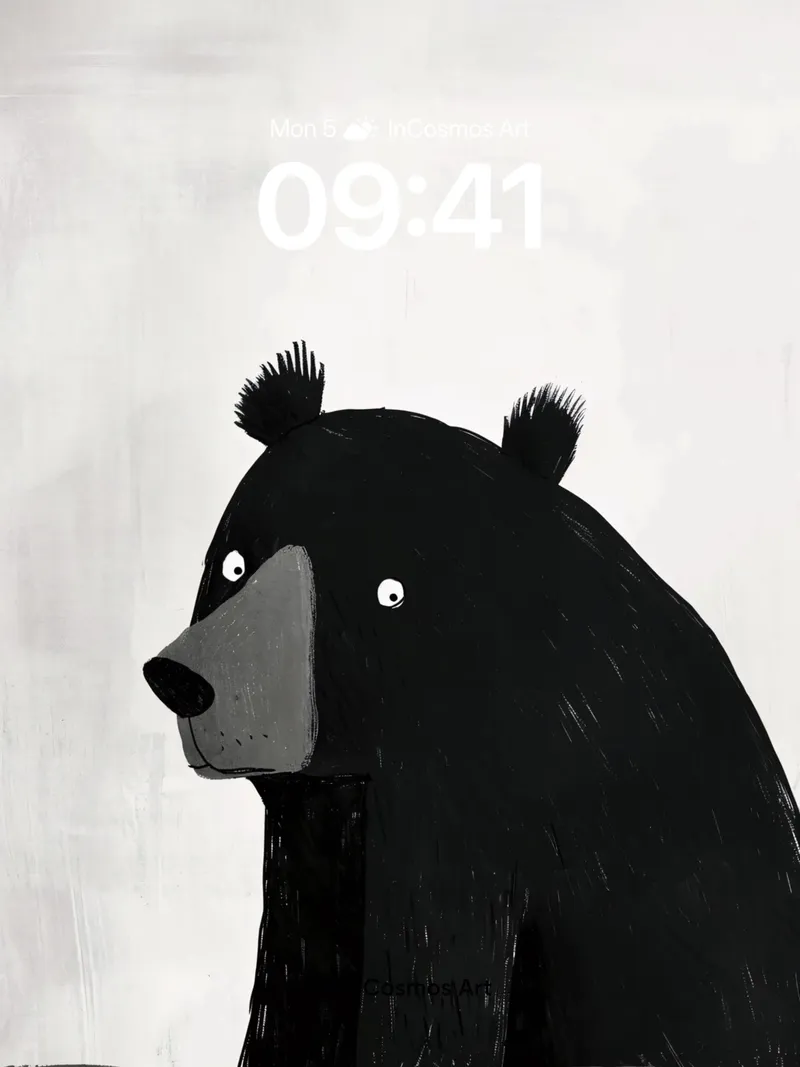
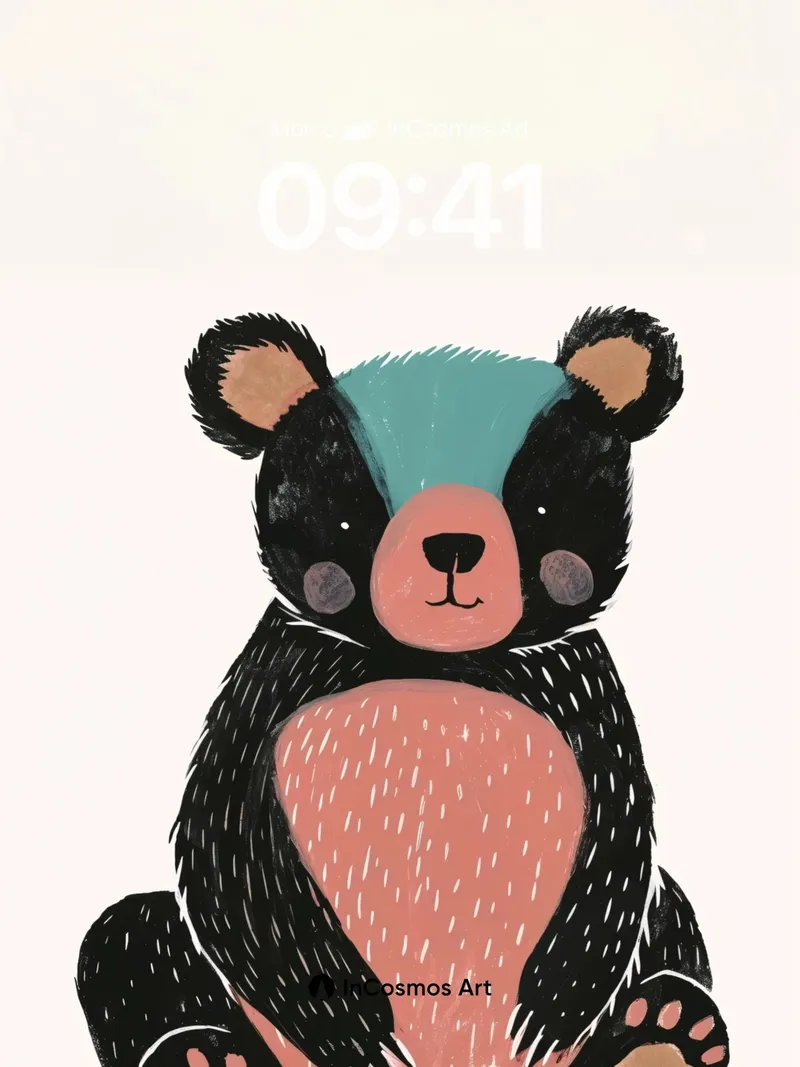
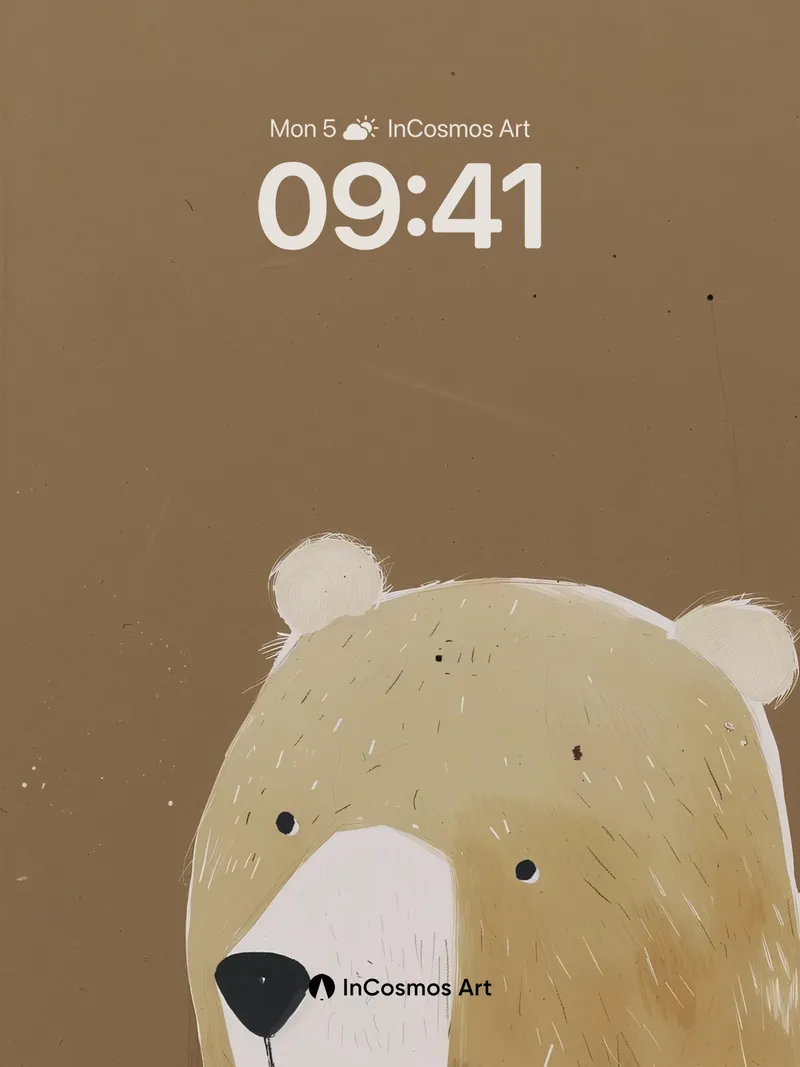
A black bear sits alone against a gray-white backdrop, eyes calm, posture restrained. No roar, no threat — only presence. This image strips away wildness but retains weight. Solitude here is not lack, but choice. The black bear becomes an embodiment of the modern inner state: silent amid noise, distant within crowds.
The Holder of Hearts
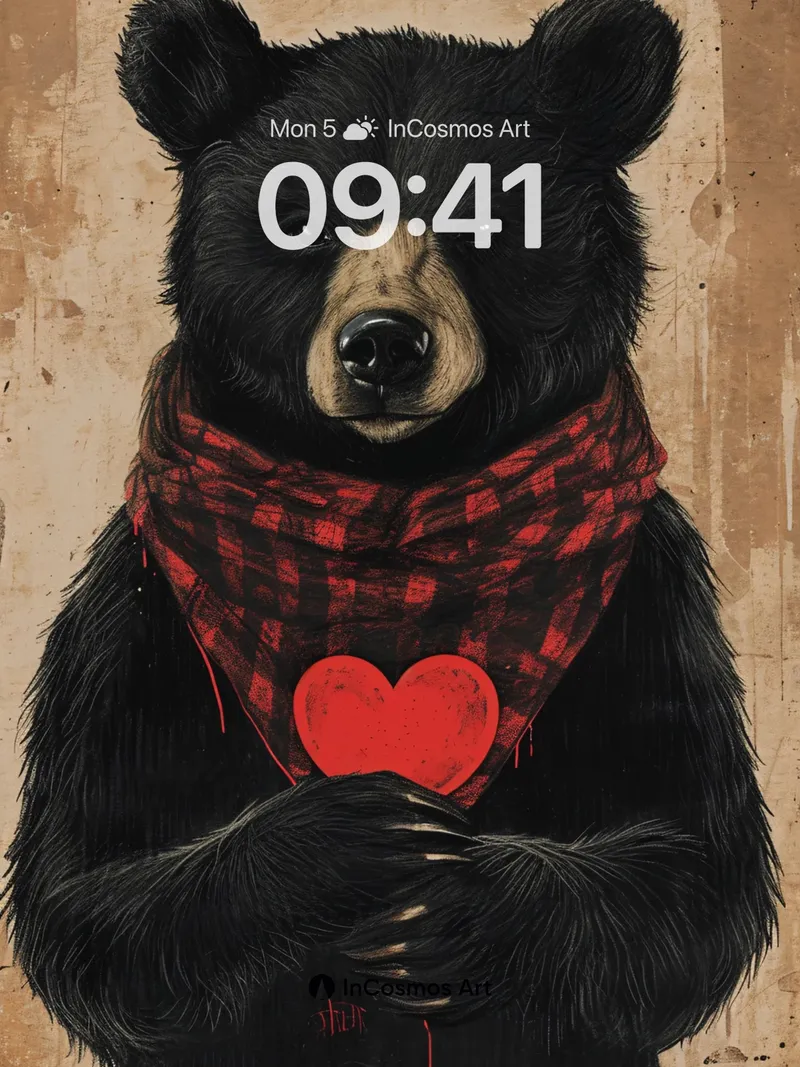
When the black bear wears a red-checkered scarf and cradles a bright red heart in its paws, symbolic meaning emerges. This is not sentimental excess, but restrained expression. The rough fur and soft heart create tension, suggesting strength and tenderness can coexist. The heart is not offered for exchange or display — simply held steady. Like how some people treat emotion: unshowy, but never released.
Gaze Against Geometry
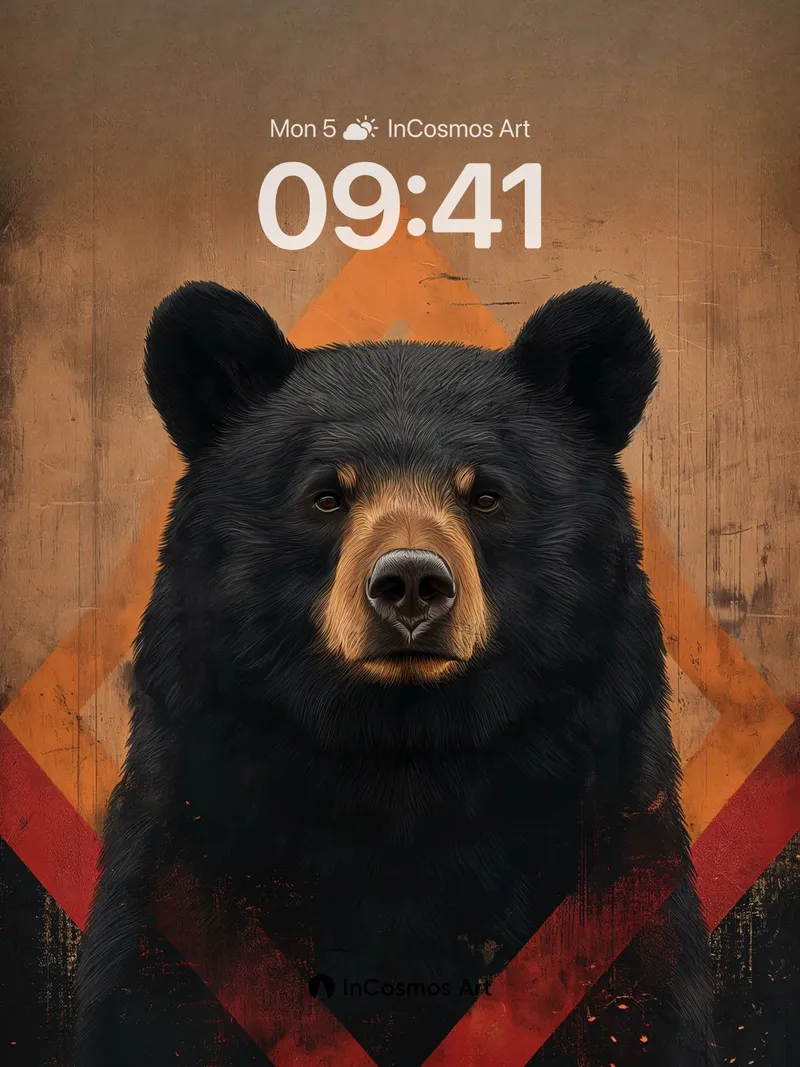
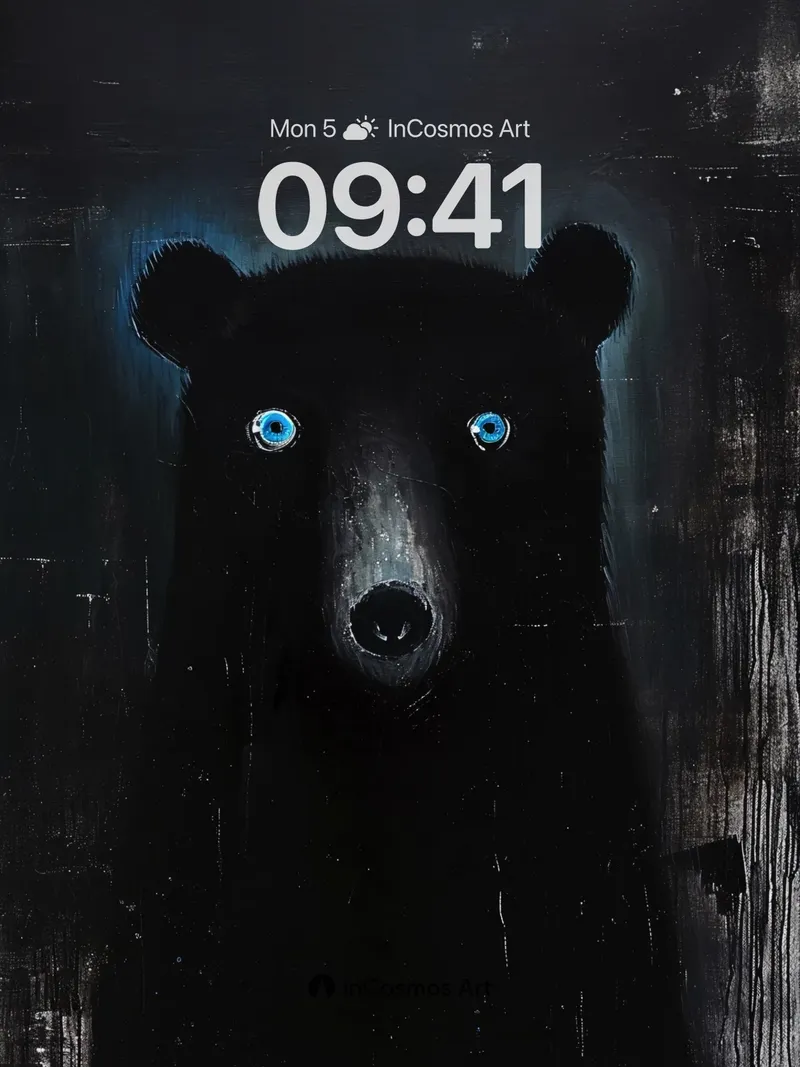
The black bear faces the viewer directly, backed by orange-red geometric shapes. The composition carries ritual weight — like a noble’s portrait or an ancestral totem. The geometry explains nothing, narrates nothing — it only frames. The bear’s gaze thus gains duality: both subject and object, both seeing and being seen. This mutual gaze creates subtle power dynamics, making it hard to look away.
Survivor Among Archives
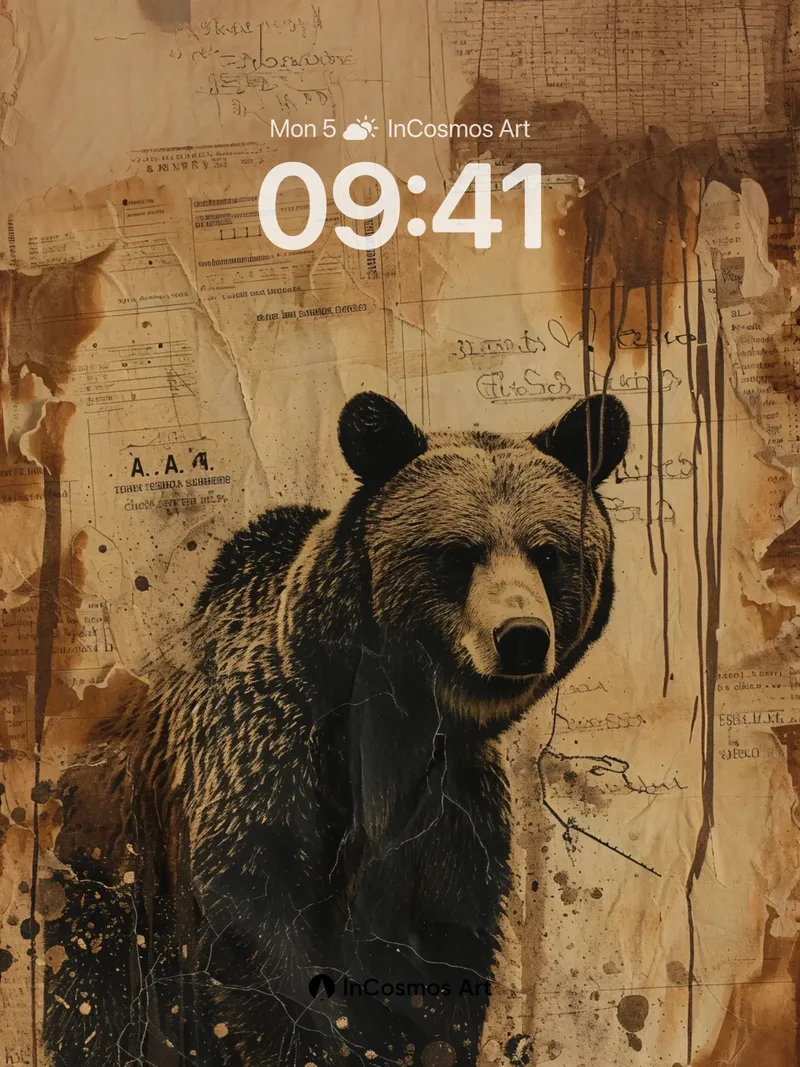
Yellowed papers, handwritten notes, ink drips — the black bear stands amid archive-like backgrounds, like a witness stepping out of historical cracks. Fur stained, eyes clear. This is not nostalgia, but physicalized memory. The black bear becomes a vessel of time, carrying unsorted pasts. The text is illegible, but the bear’s presence itself constitutes narrative.
Maternity Wrapped in Blossoms
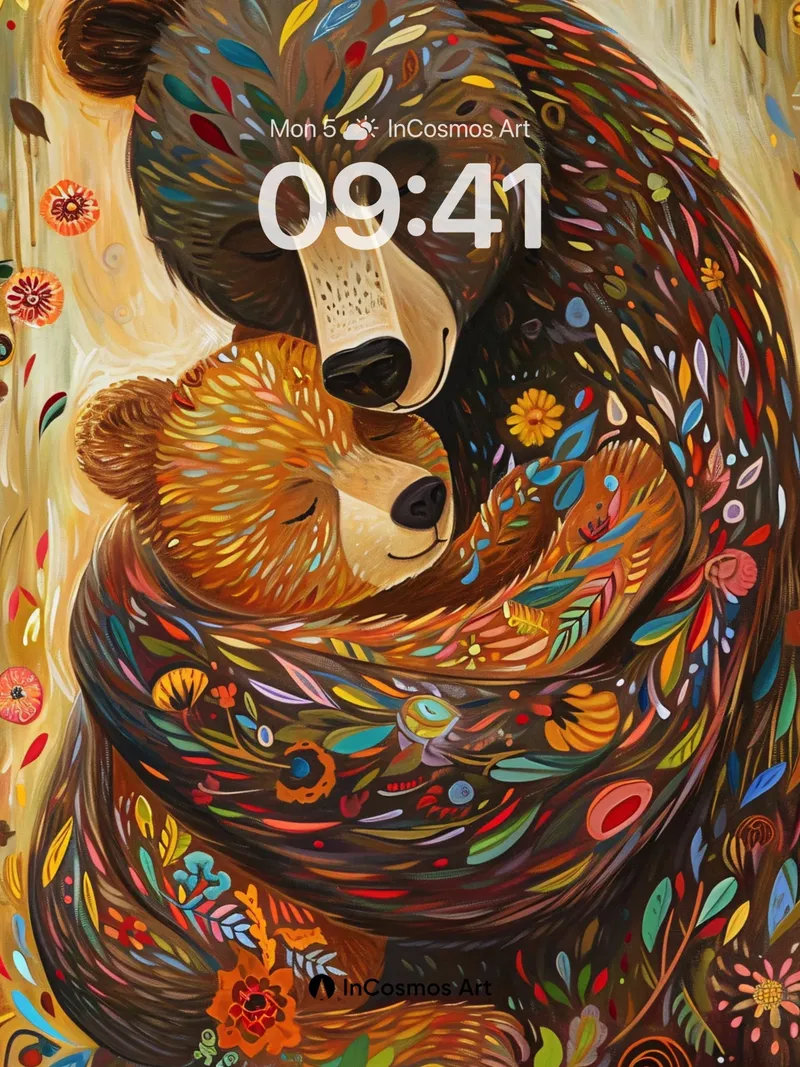
A large bear embraces a small one, surrounded by flowers, leaves, spirals. Colors saturated, lines flowing, highly decorative. This is not nature, but emotional landscape. Maternity here transforms into visual density: each flower is care, each leaf is shelter. The cub sleeps with closed eyes; the mother bows her head in guard — no words needed, form completes all expression.
The Nameless One in the Crowd
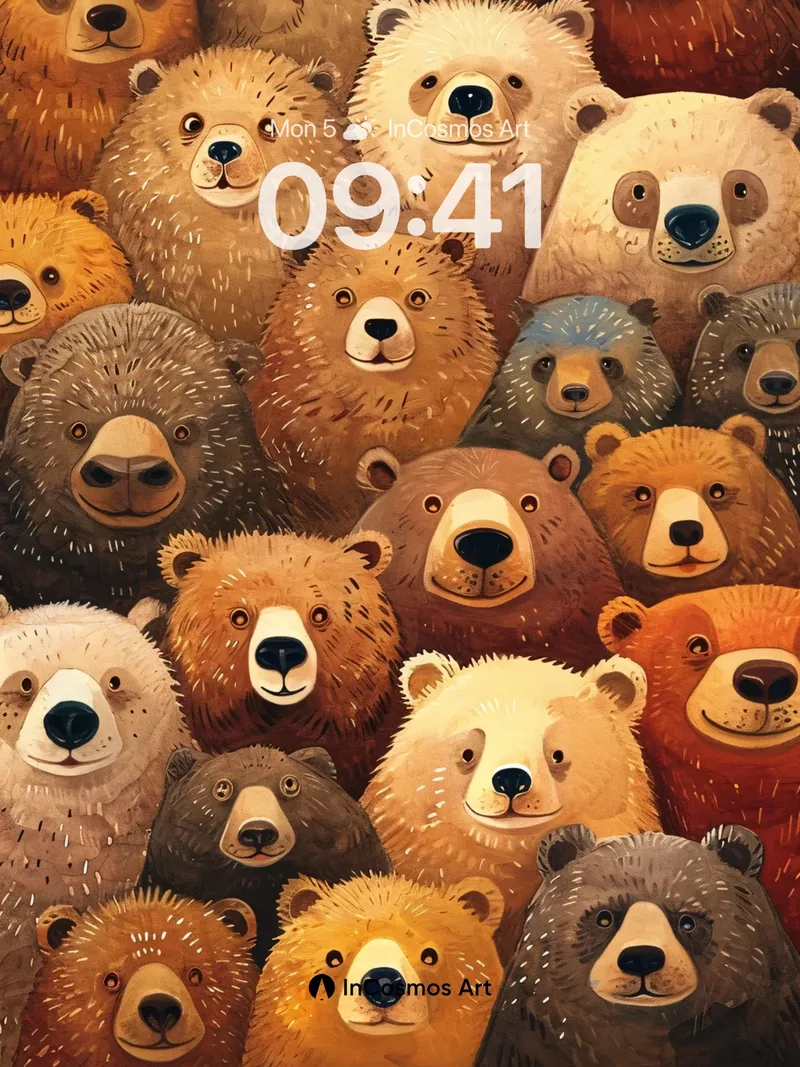
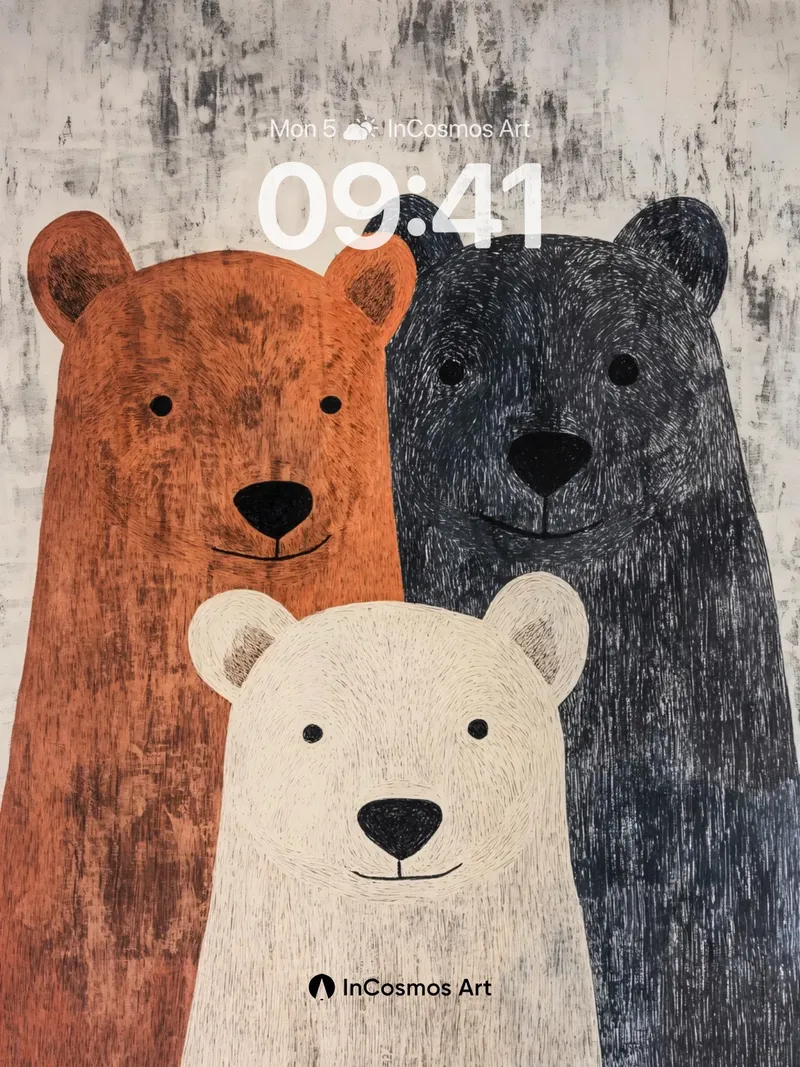
Dozens of bears fill the frame, varying in fur tone, similar in expression. No protagonist, no focus — only repetition and difference. This density dissolves individual uniqueness but reinforces collective presence. The bear is no longer “one particular bear,” but “many bears.” In the group, solitude dilutes, identity blurs, yet belonging quietly forms.
The Meaning of Metamorphosis
The seven forms of the black bear are, in truth, seven emotional models. From solitude to companionship, silence to expression, individual to collective, wildness to domestication — each transformation is humanity renaming its own states. The black bear offers no answers, only mirrors. To watch the black bear is to watch the unspoken parts of oneself.