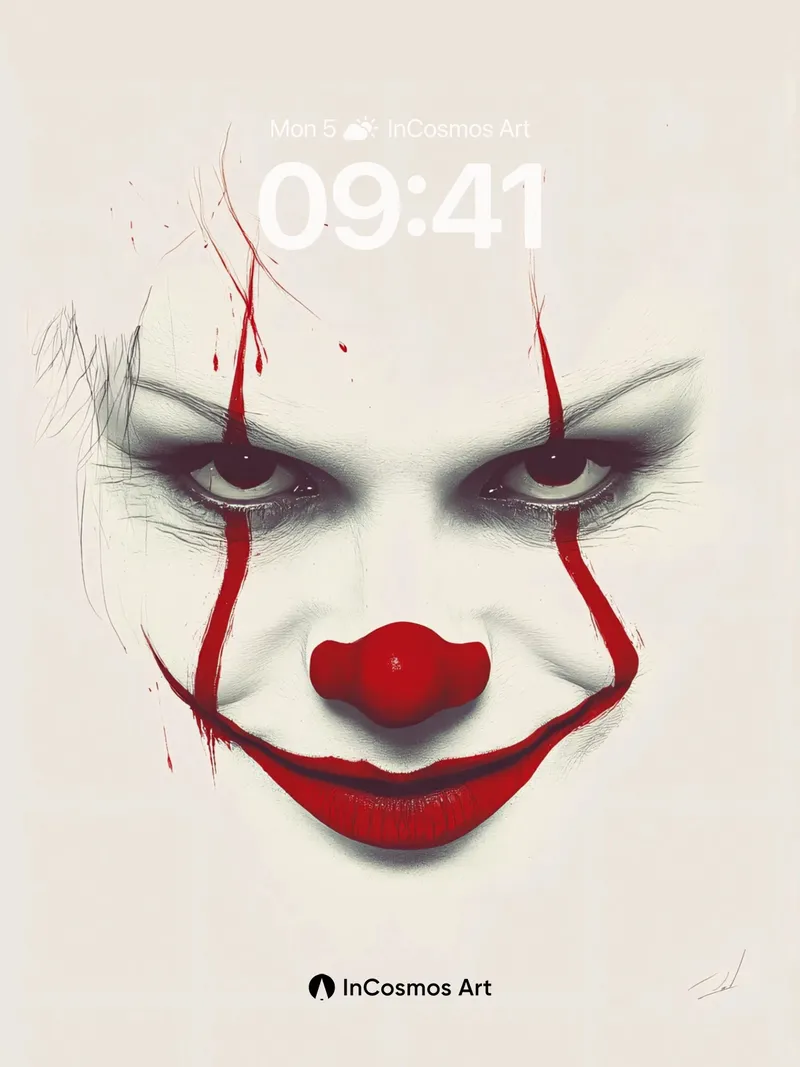
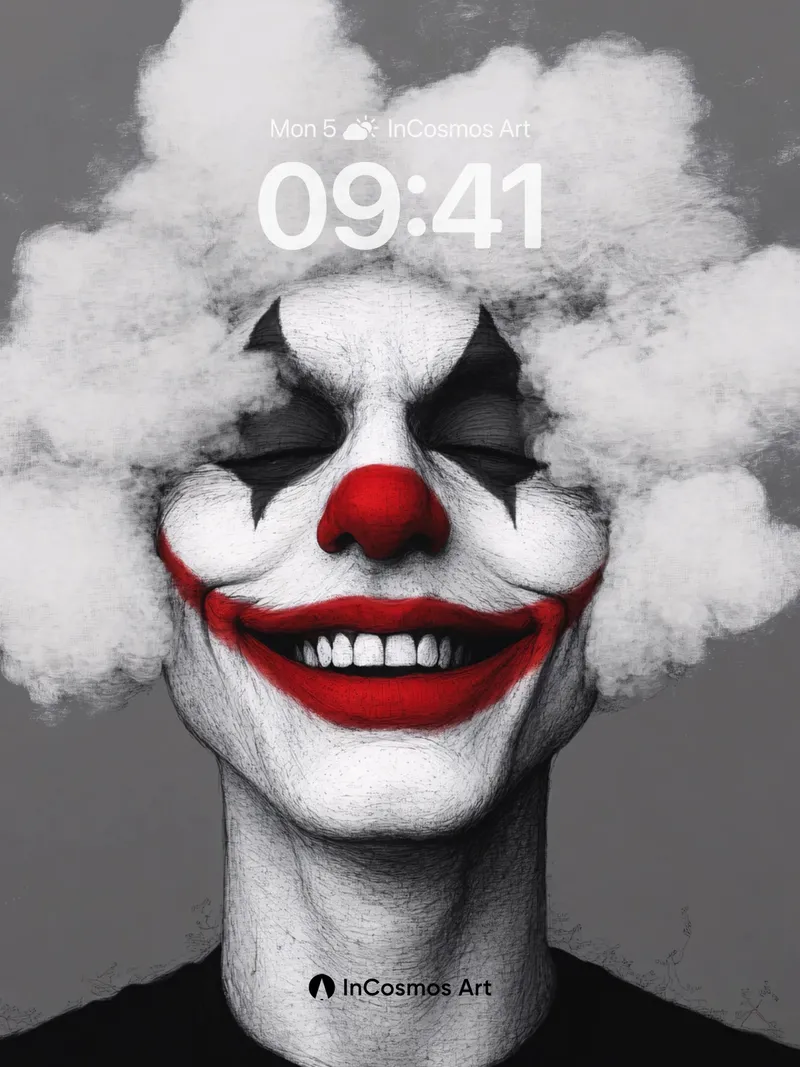
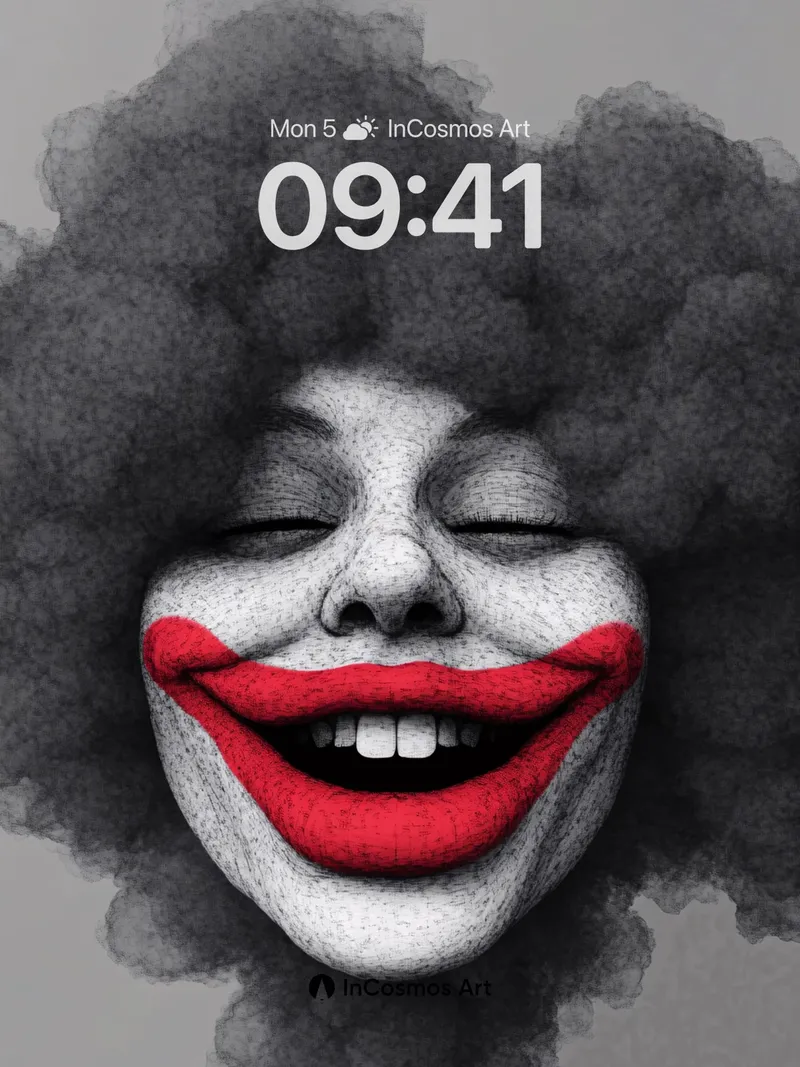
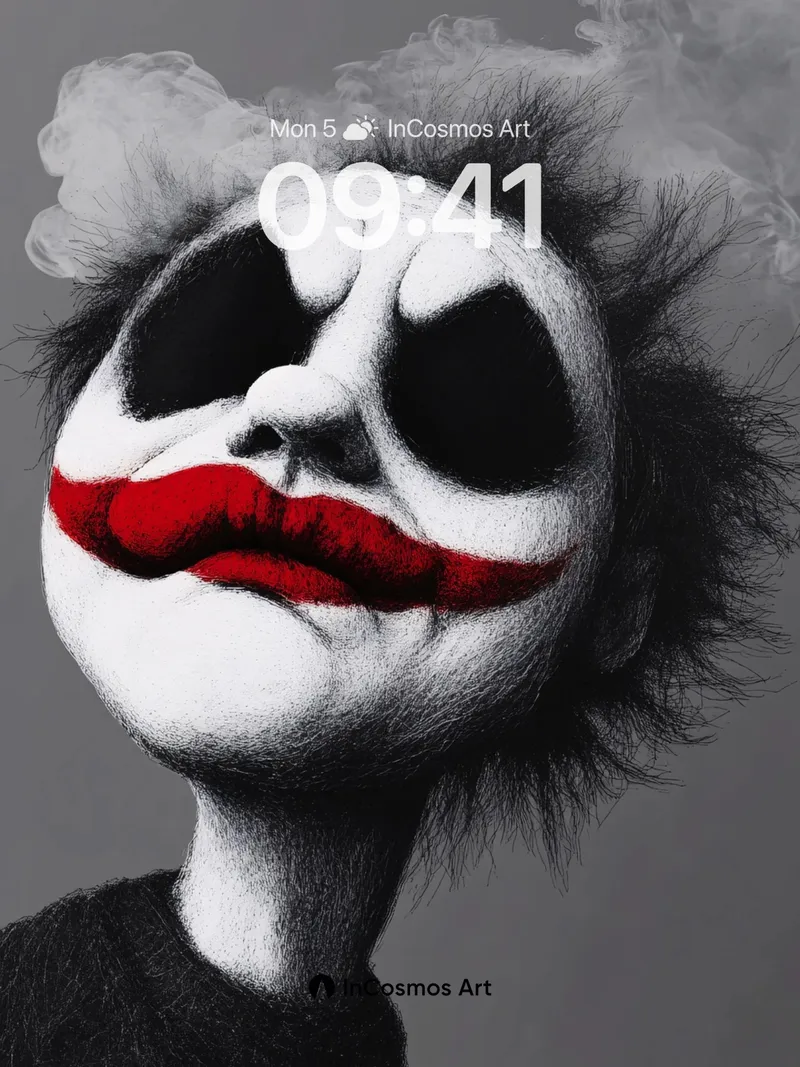
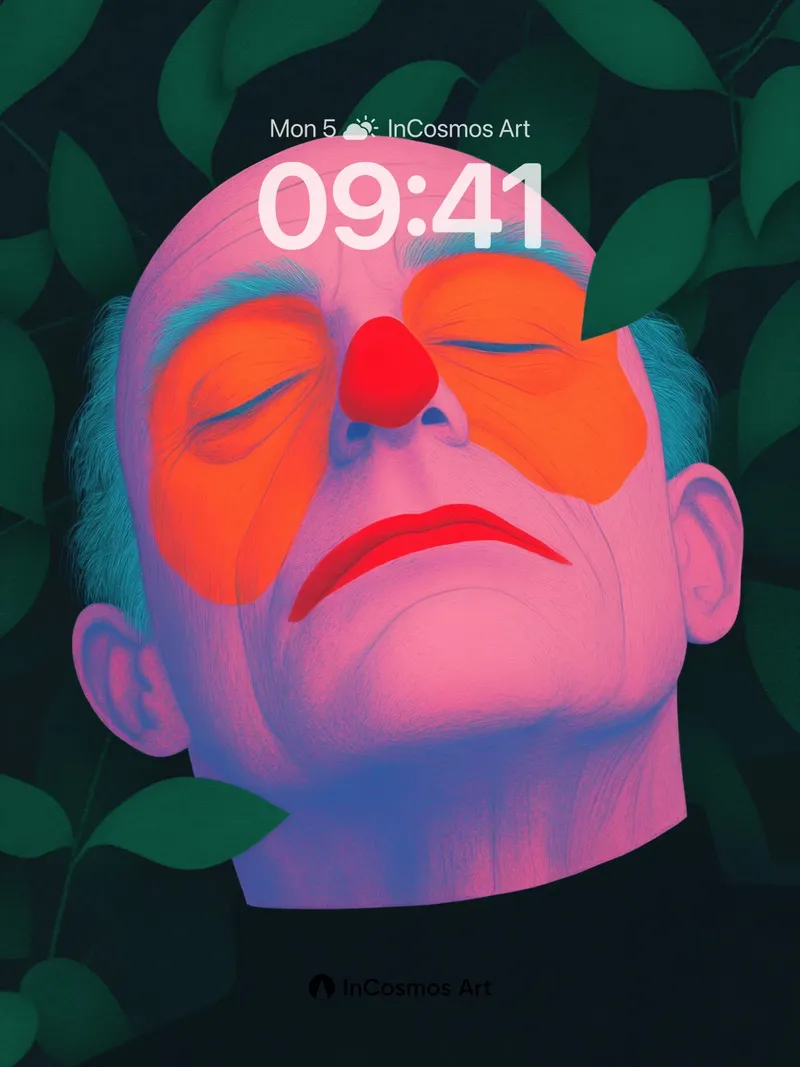
White faces painted with vivid red lines, smiles splitting at the corners like torn wounds. This is not mere performance but a tangible manifestation of deep human contradiction—laughter and fear coexisting under one mask. The clown’s makeup represents societal expectations of entertainment, yet also the suppression of genuine emotion. Red lips extend downward, resembling blood flowing from the eyes, hinting at violence beneath joy. This visual language recurs in contemporary culture, becoming a symbolic representation of collective anxiety. It is both a betrayal of childhood innocence and a satire of adult life.
Duality of Emotion
The clown figure constantly oscillates between joy and sorrow. Its exaggerated features serve as tools to attract attention, yet also conceal inner pain. When laughter echoes, audiences perceive mirth, but are actually confronting a meticulously crafted fear. This paradox defines modern psychological landscapes: people seek amusement, yet feel unease within the laughter. Emotional duality reaches its peak here, where joy and horror share the same face.
The Mask of Society
The clown’s white face symbolizes the 'normal' façade demanded by society. Everyone wears such masks to conform. The red lips, however, represent suppressed desires and anger spilling over. In workplaces, families, and social settings, expressions are continuously adjusted to maintain surface harmony. Thus, the clown’s smile becomes a mirror reflecting fragmented collective identity. It critiques identity construction, warning against artificial uniformity.
Aesthetic of Violent Beauty
These depictions are not accidental—they represent art’s exploration of extreme emotions. Blood-red lips, distorted contours, smoke-wreathed hair all challenge conventional aesthetics. They do not pursue beauty, but instead confront primal impulses. This violent beauty does not aim to frighten, but to expose darkness hidden beneath everyday life. Through exaggeration and deformation, artists transform unspeakable feelings into visible forms, forcing viewers to acknowledge overlooked truths.
Allegory of Modernity
The clown has become a metaphor for modern society. He is both a product of the entertainment industry and an embodiment of psychological crisis. In an era of information overload, people are expected to constantly produce happiness while sadness and rage are marginalized. Thus, the clown’s smile serves as a warning: when authentic emotions are systematically concealed, individuals lose the ability to recognize themselves. His presence reminds us that behind every laugh lies an unhealed wound.