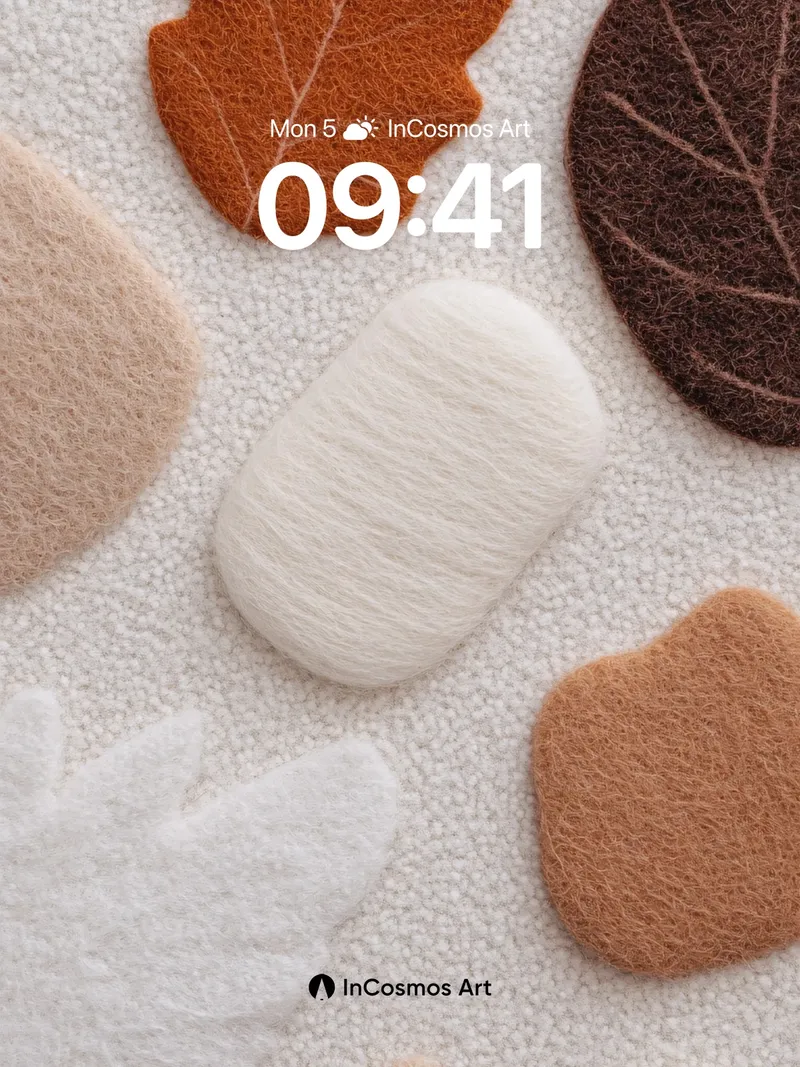
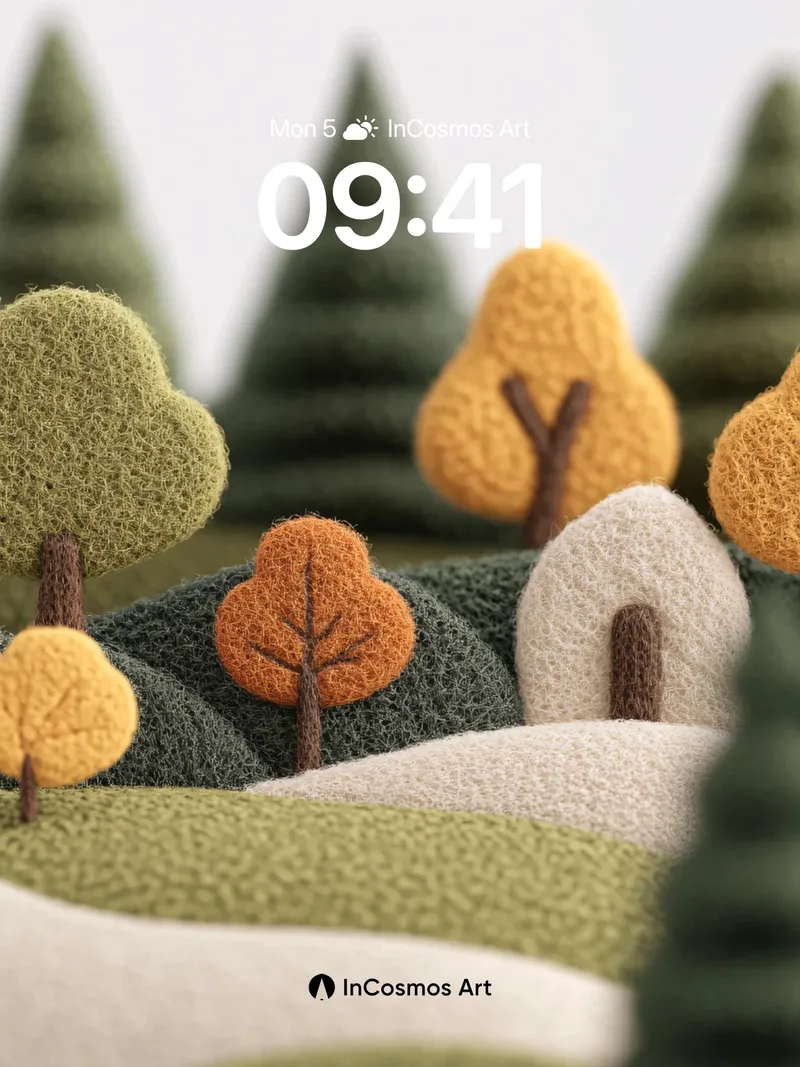
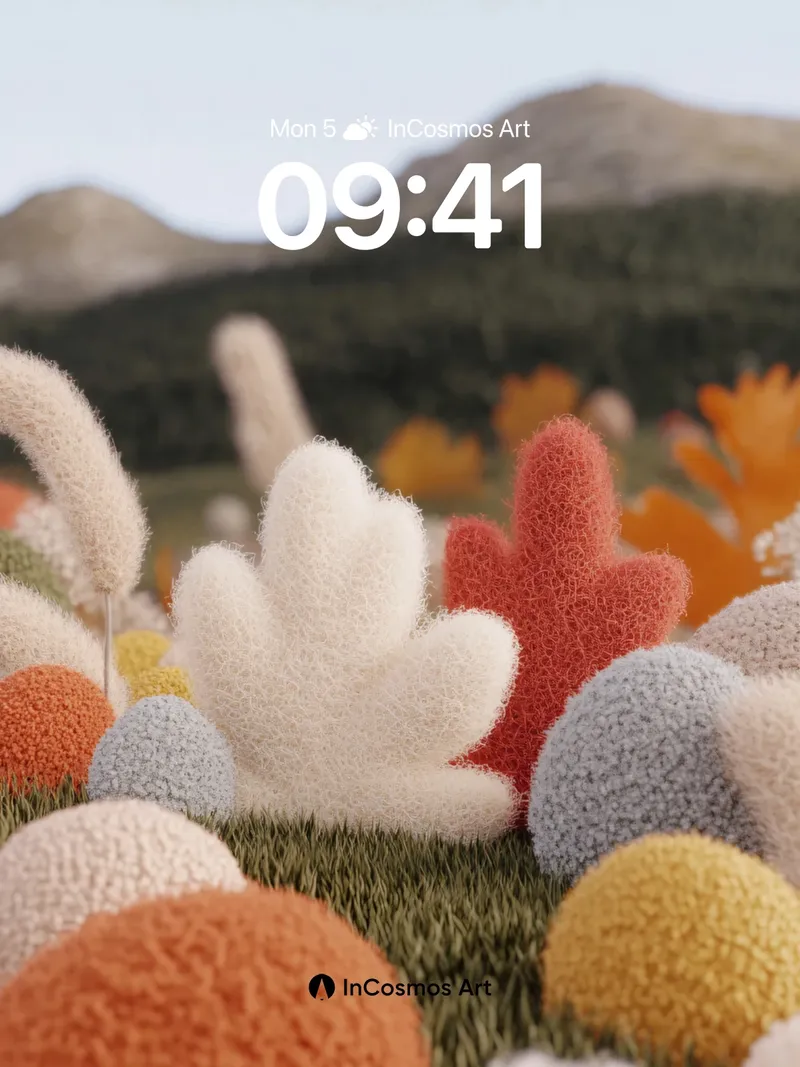
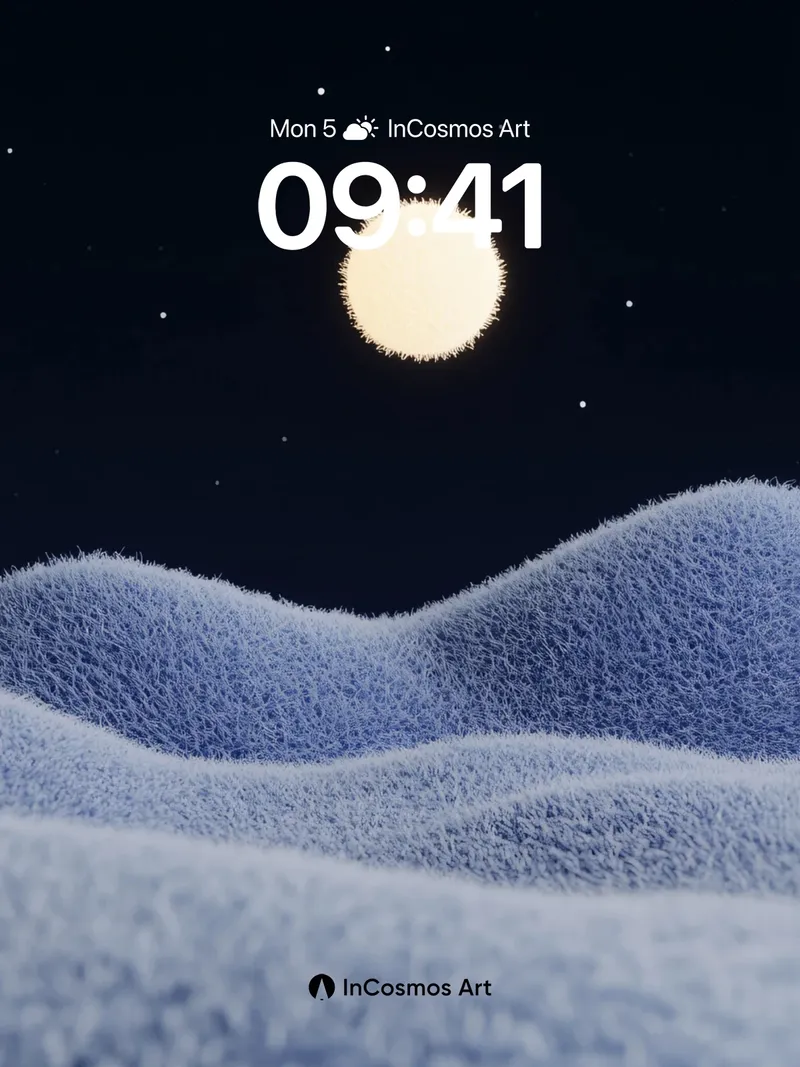
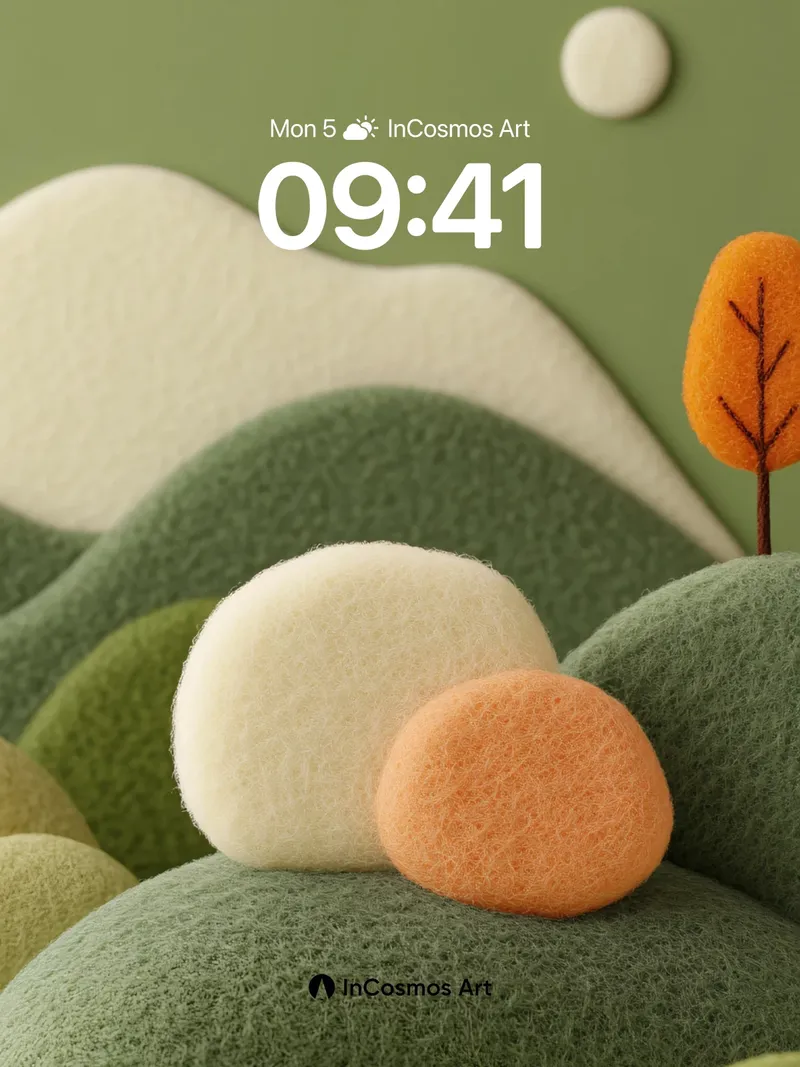
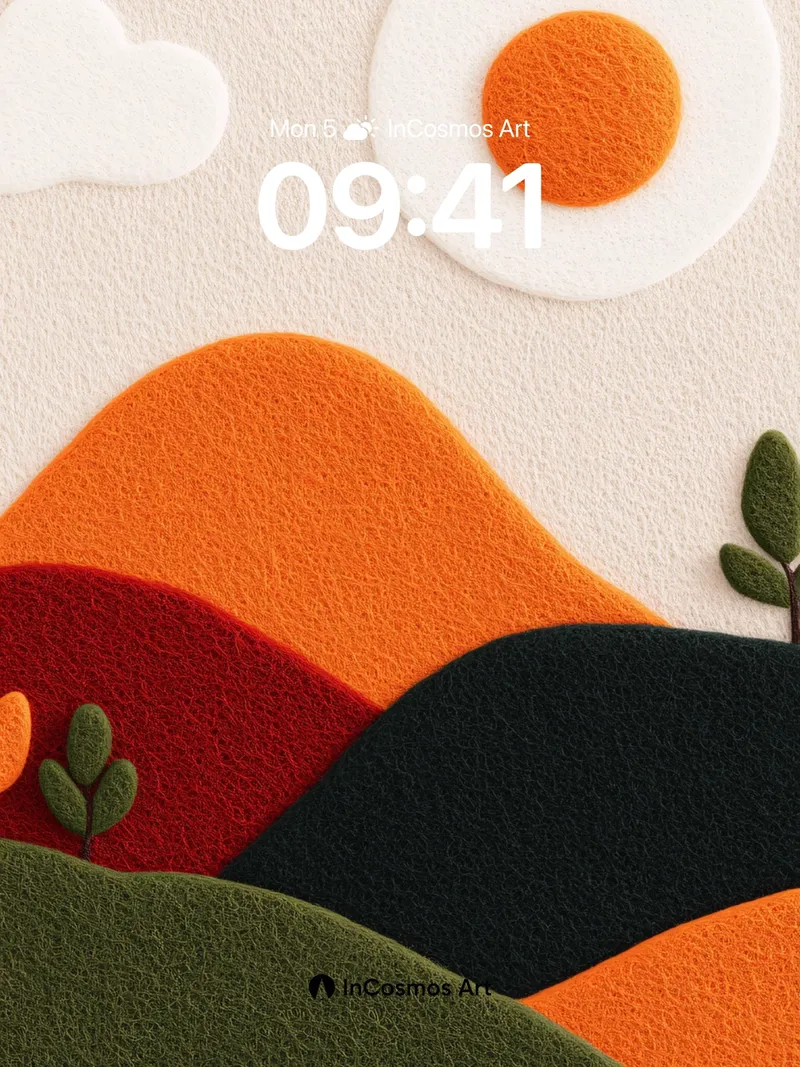
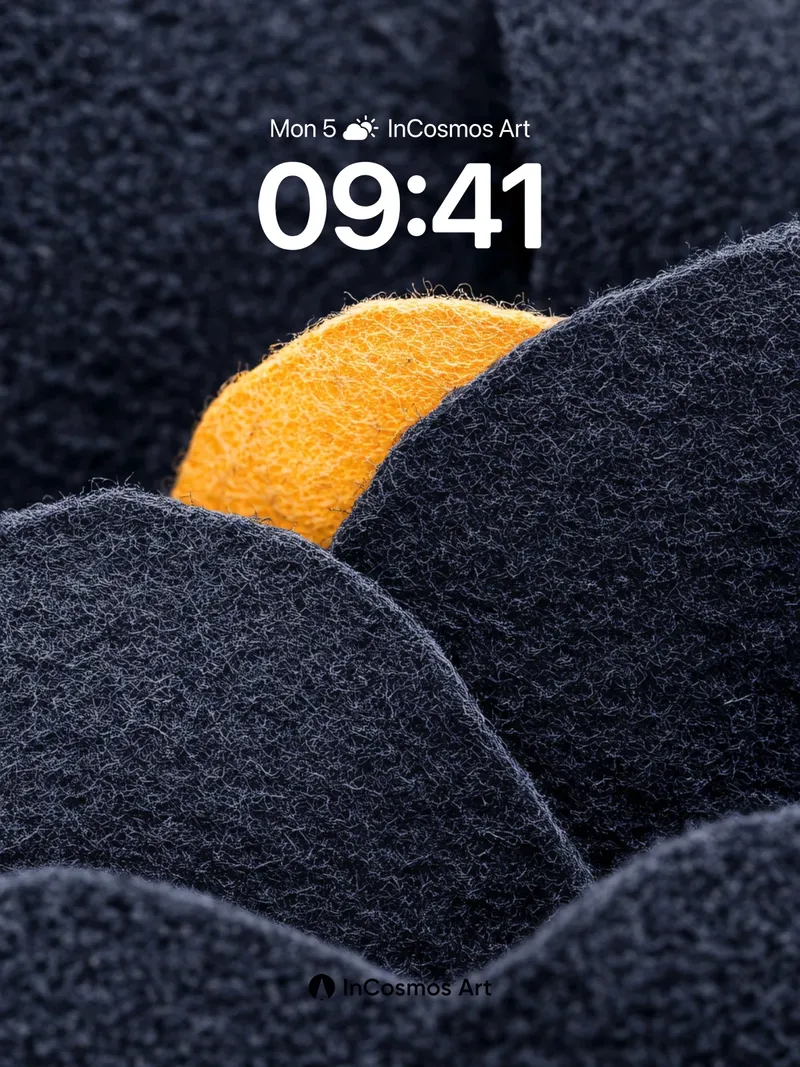
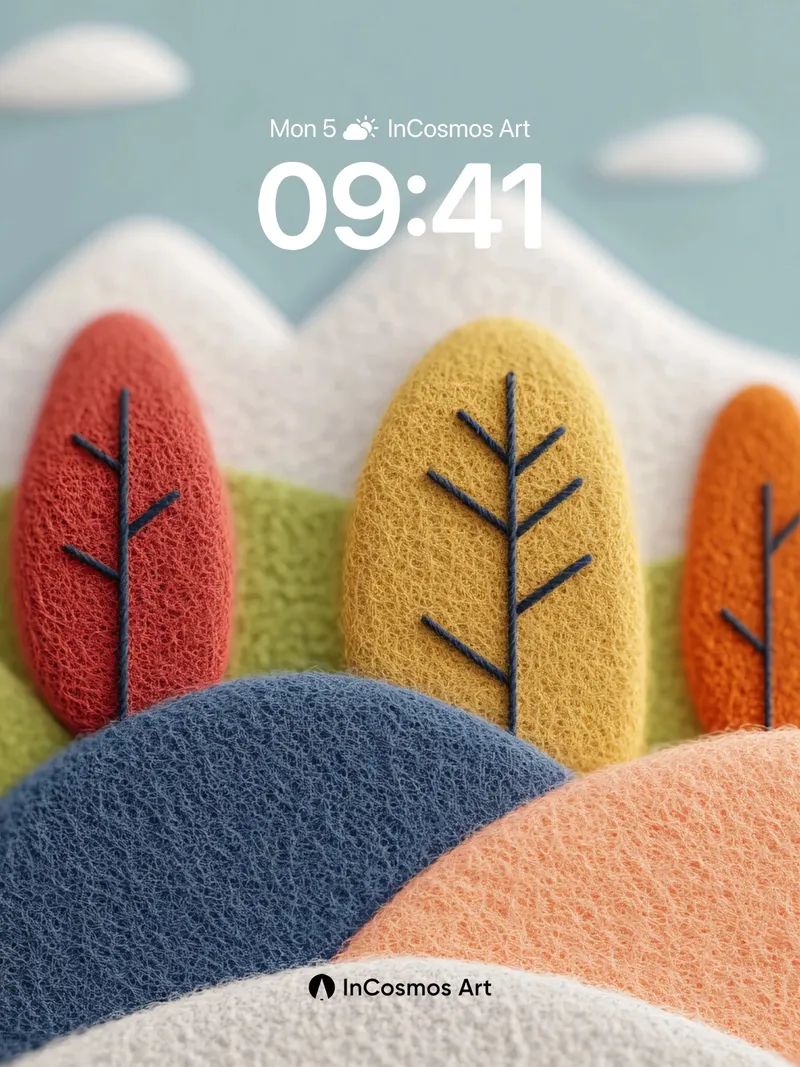
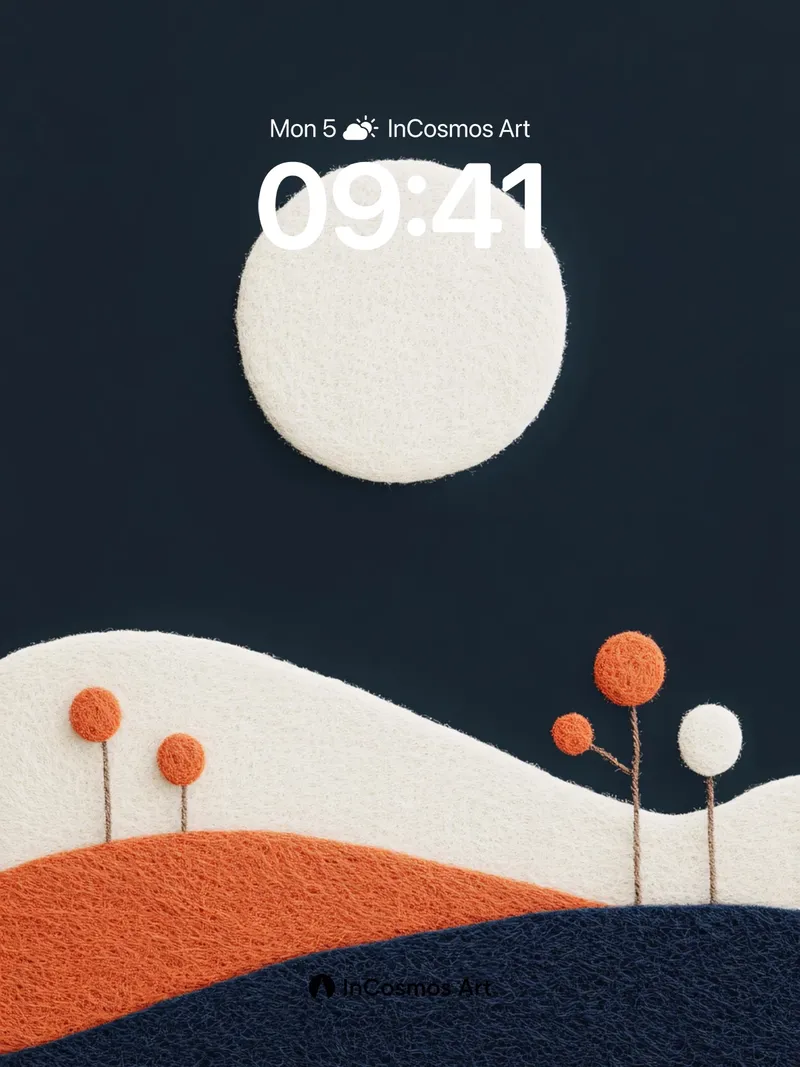
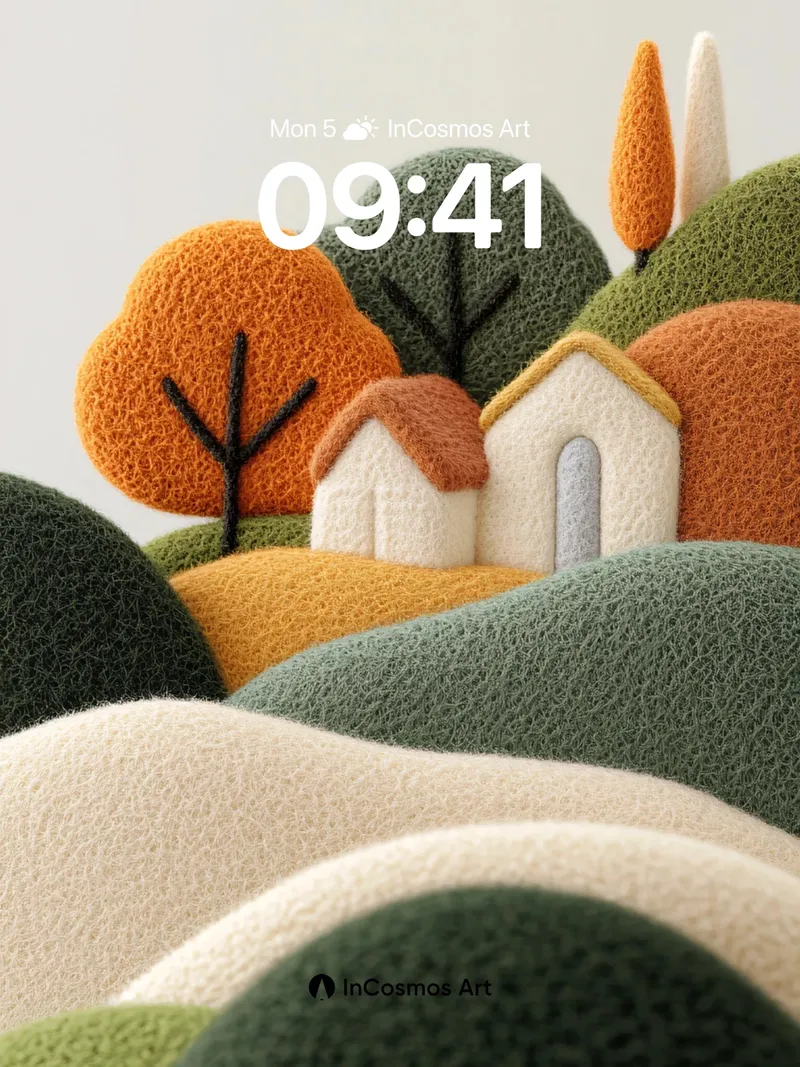
In an era dominated by hard screens and pixels, a texture known as felt is quietly making a return. It does not strive for perfect smoothness nor simulate realistic physical lighting, but instead uses an almost clumsy stacking to construct a warm, quiet, and breathable micro-world. The revival of this material serves as a gentle resistance to the over-digitization of modern life, reminding people that rough textures and the warmth of handmade crafts still possess the power to soothe the soul.
The Return of Tactility
The charm of felt lies in its unique physical texture. The entanglement and compression of fibers create an ambiguous state between solid and gas. It appears solid but feels subtly elastic and fluffy to the touch. This material rejects sharp edges; all boundaries are rounded and transition naturally. In visual communication, this roundness conveys a signal of harmlessness and inclusivity. When the eye glides over rolling hills or rounded pebbles, the brain receives not the coldness of geometric shapes, but a biological pleasure similar to petting an animal or hugging a soft pillow. This tactile synesthesia is a primal experience that no high-definition rendering can fully replace.
Minimalist Color Narrative
In this soft universe, color usage follows a restrained aesthetic. There are no eye-popping high-saturation impacts; instead, low-saturation Morandi tones or earth tones take center stage. Deep greens, ochres, charcoal grays, and off-whites seem to have settled through time, carrying an inherent matte tranquility. Color combinations often employ large areas of flat color blocks, distinguishing layers through subtle changes in brightness and purity rather than relying on complex shadows. This approach keeps the composition clean and pure, as if filtering out the noise of the world to leave only the essential emotional base. Each color ceases to be a mere visual signal and becomes a vessel for emotion, holding peace and serenity.
Abstract Natural Metaphors
The world constructed by felt is often an abstract refinement of natural landscapes. Undulating curves suggest the contours of mountains, circular blocks metaphorically represent the sun and moon, and tiny fiber bundles are shaped into trees or clouds. This abstraction is not intended to be unrecognizable but to strip away the complex details of reality, retaining the core spirit of things. Here, nature is no longer a grand narrative but a private landscape that has been miniaturized and softened. This approach dissolves the distance between humans and nature, making the viewer feel as though one could reach out to touch distant ridges or pluck the moon from the sky to play with. It is an attempt to privatize the grand world, endowing natural landscapes with an intimate, toy-like quality.
The Philosophy of Slow Living
The craft of felting itself is a slow-paced labor. The repeated piercing of needles and the layering of fibers require immense patience and time. The production process itself carries a meditative quality. When this craft translates into visual language, it conveys an admiration for "slowness." In the fast-paced urban life, this visual symbol becomes a form of psychological compensation. It suggests a lifestyle: no need to be constantly tense, no need to pursue extreme efficiency; one can allow oneself to be loosely entangled like wool fibers, enjoying moments of stagnation and relaxation. This philosophy of life does not preach through text but penetrates the viewer's subconscious directly through the temperature of the material.