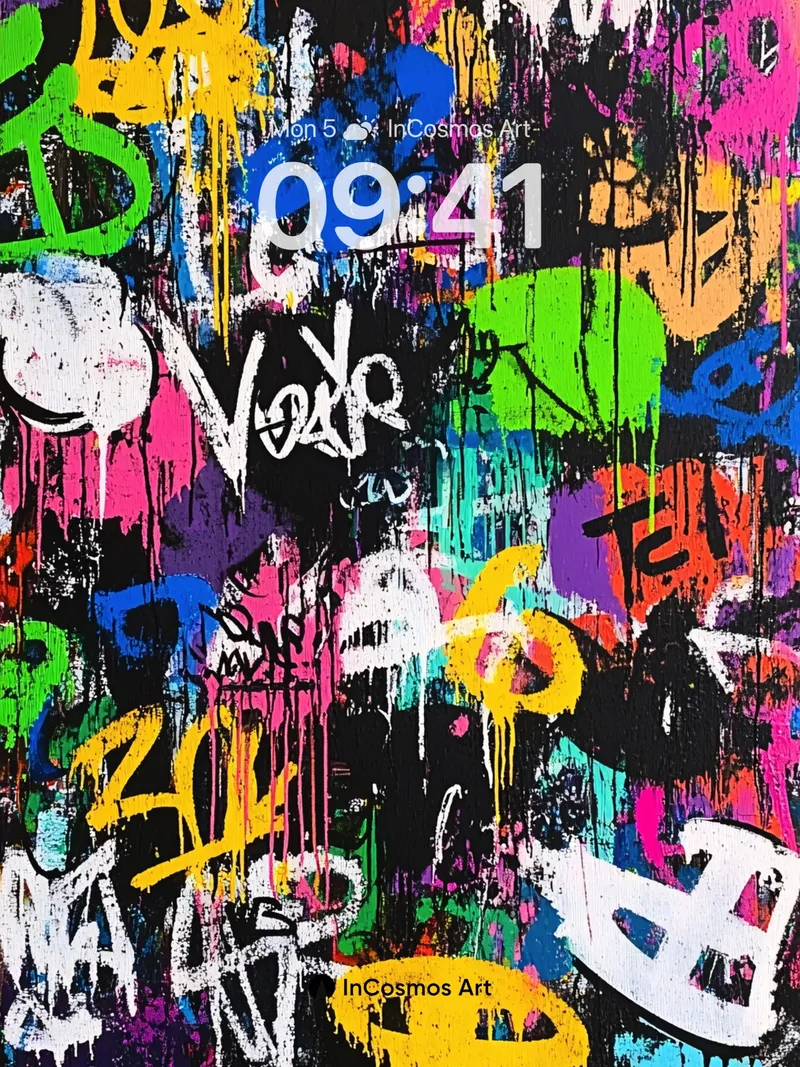
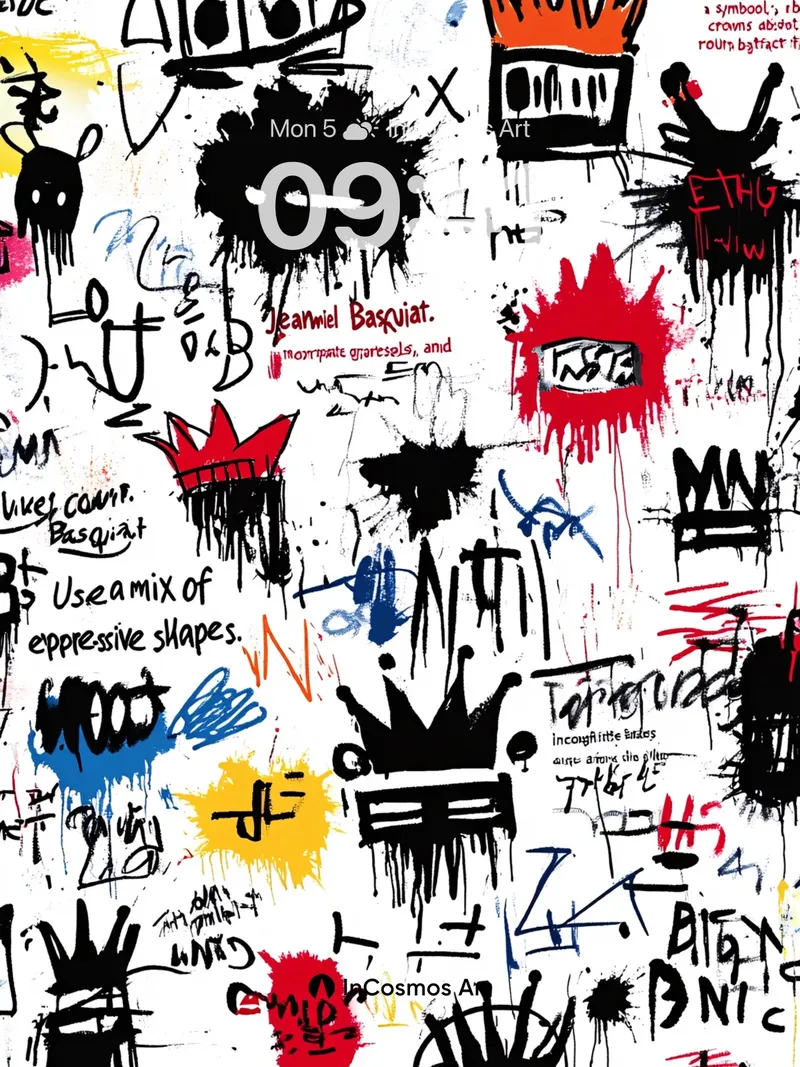
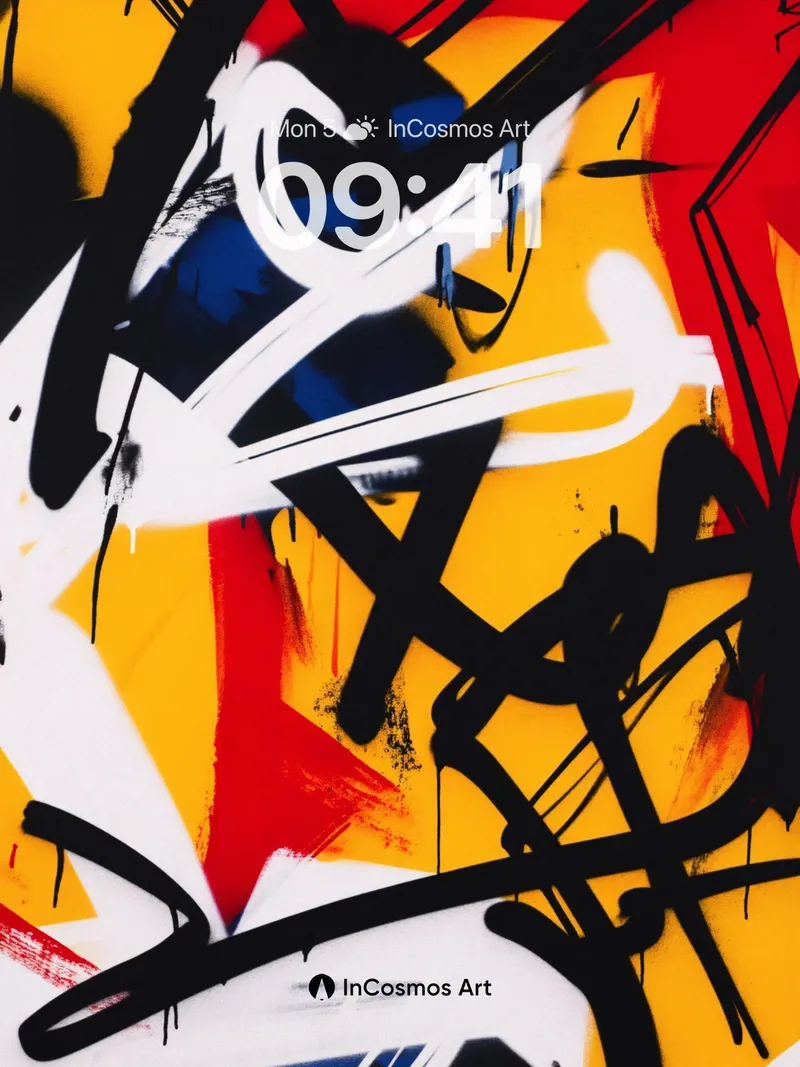
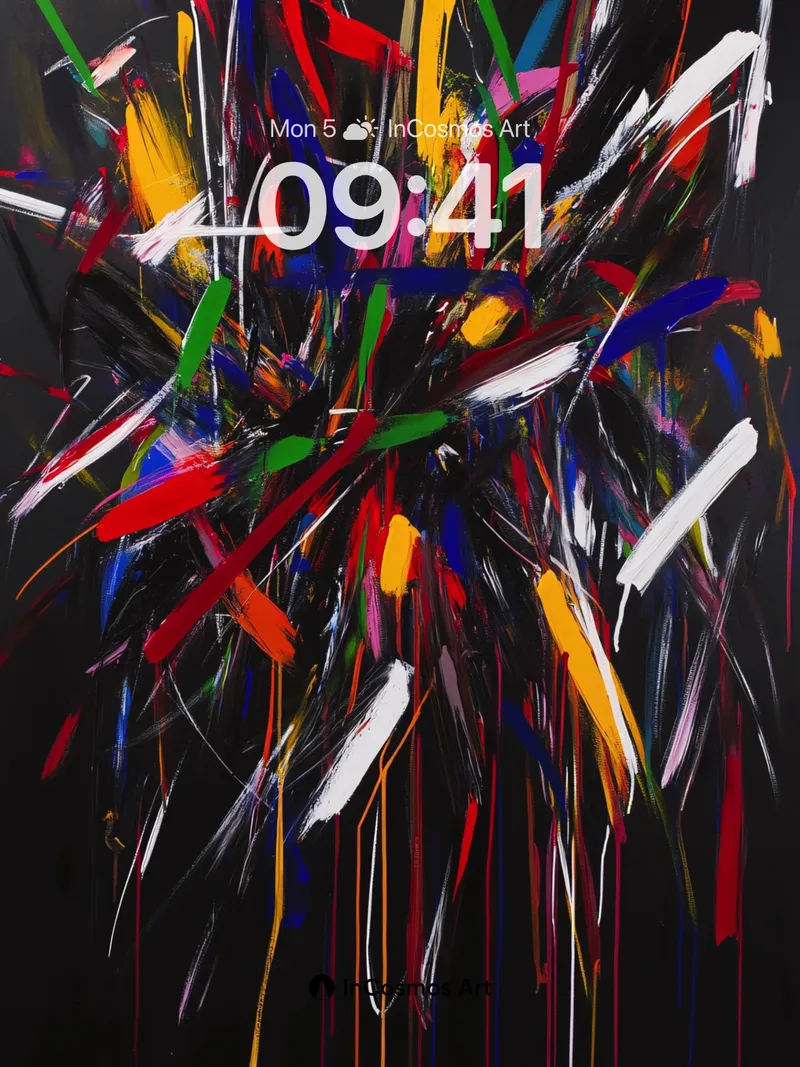
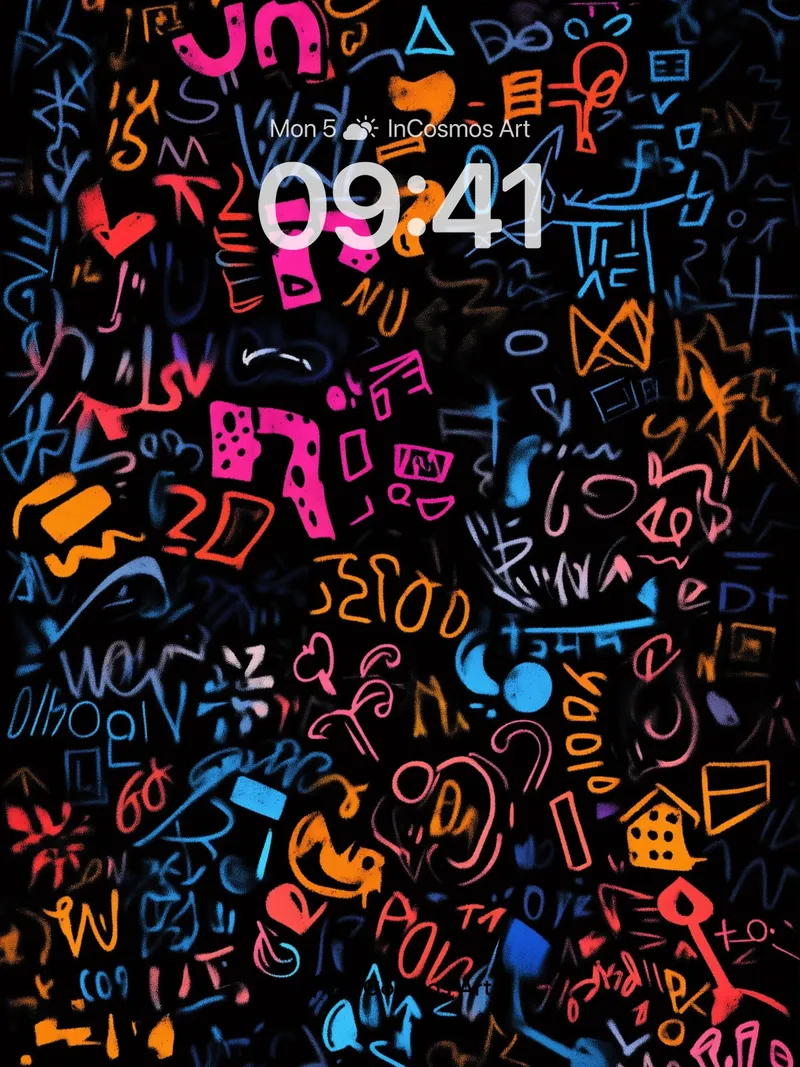
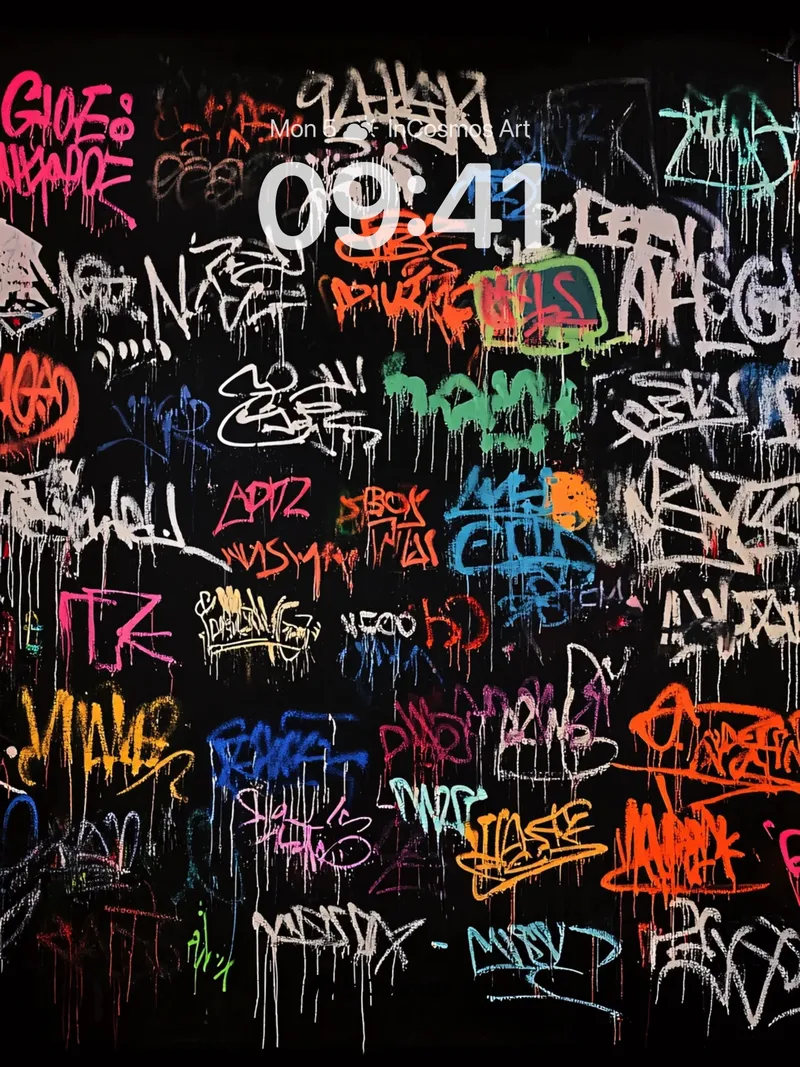
Color erupts from darkness, like a silent revolution. Ink, splatters, and lines weave into a net, covering the quiet background as if the city's breath were compressed into dynamic moments. These marks are not decoration—they are emotional relics: anger, ecstasy, loneliness, rebellion—layered over one another to form expression beyond language. Each stroke is a declaration; each drop of pigment carries an unsaid scream. This is not painting—it is documentation of survival.
The Grammar of Graffiti
Graffiti is not chaotic smearing; it has its own grammar. Thick black lines form skeletons, red spots pulse like heartbeats, blue circles signify moments of stillness. Symbols emerge from disorder, transmitting messages like code. Street artists write poems with spray paint, punctuate with scratches. This writing does not serve reading—it serves perception. It resists comprehension yet compels attention.
Ritual of Abstraction
Abstract art is an emotional ritual. When color detaches from representation, it becomes pure spiritual carrier. Yellow dots jump on black ground, like hope flickering in despair. The white background ceases to be empty—it becomes a vessel for all possibilities. The canvas is no longer flat; it extends space, externalizes consciousness. Viewers are invited into a boundless realm where thought roams freely.
Marks of Youth
The younger generation redefines expression through body and word. They deconstruct text, distort images, creating their own symbolic systems. 'Hip-hop poetry' is not merely a style—it is an attitude. It blends rhythm, color, and resistance, transforming cultural memory into visual energy. Every scratch questions mainstream narratives; every graffiti letter reconstructs authority.
The Chorus of Faces
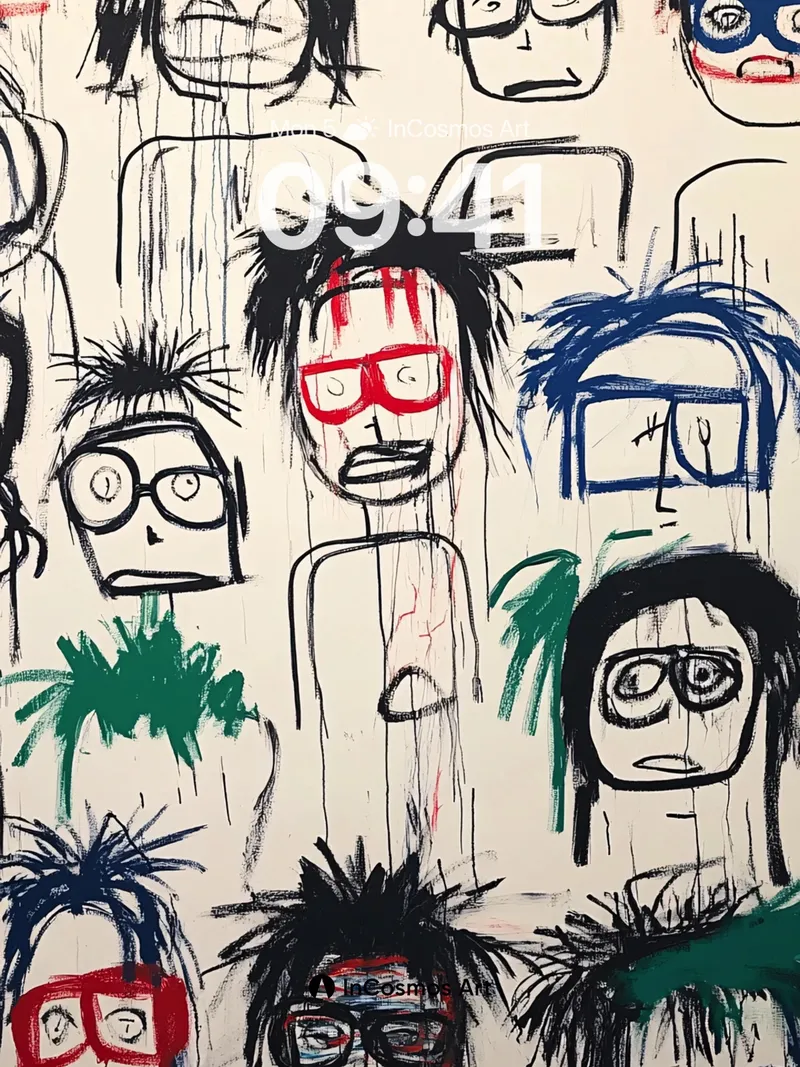
Repeating figures mirror society. They wear glasses, eyes glazed, hair disheveled—souls worn by modern life. These stick-figure portraits are not cartoons but snapshots of collective anxiety. Their expressions vary, yet they share a silent pain. This is a psychological map, a shared resonance among urban dwellers.
Satire of History
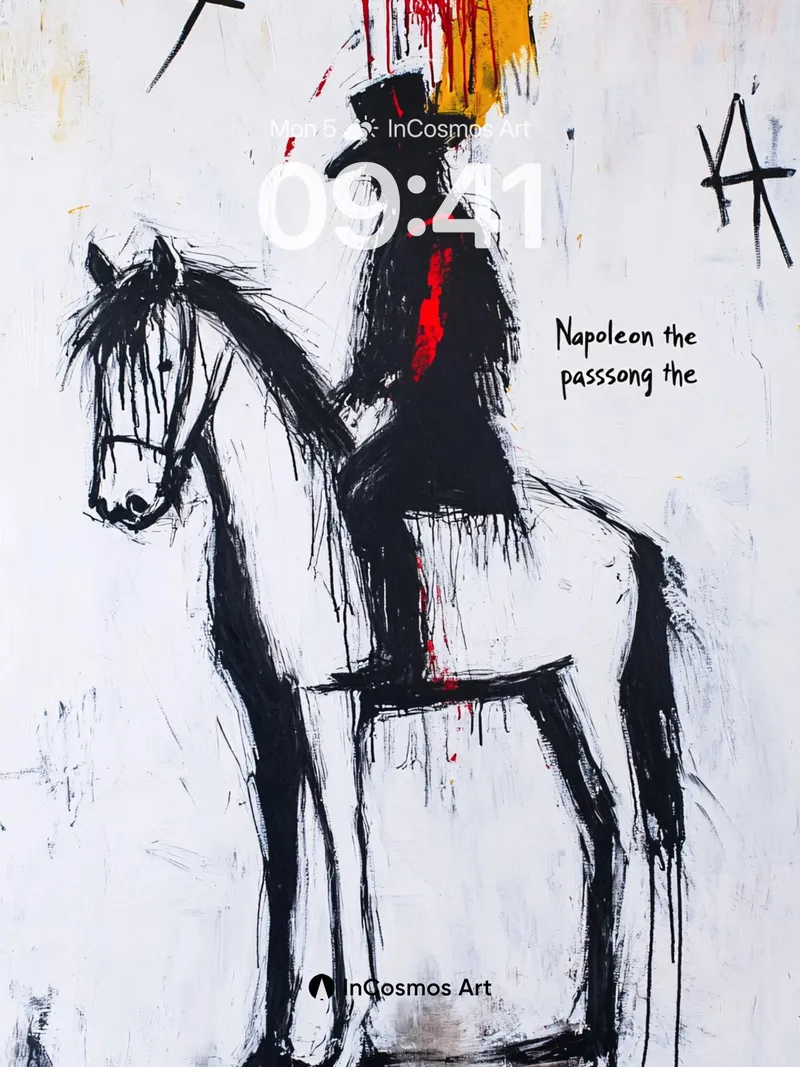
A rider appears on a gray-white field, crowned with red-yellow flags, draped in dark cloak. This is not a hero statue—it is satire of historical narrative. Text blurs, identity vanishes, leaving only silhouette. This work exposes how power is reduced to symbols, forgotten by time. It reminds: true strength lies not in crowns, but in people’s memory.