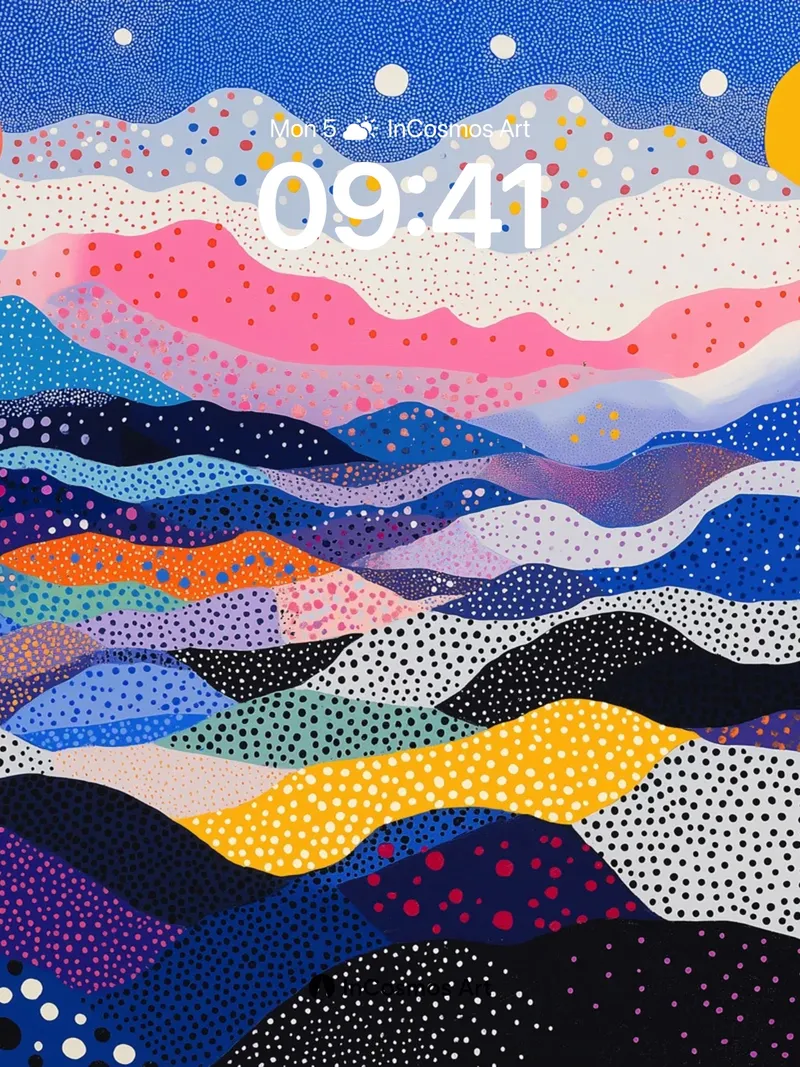
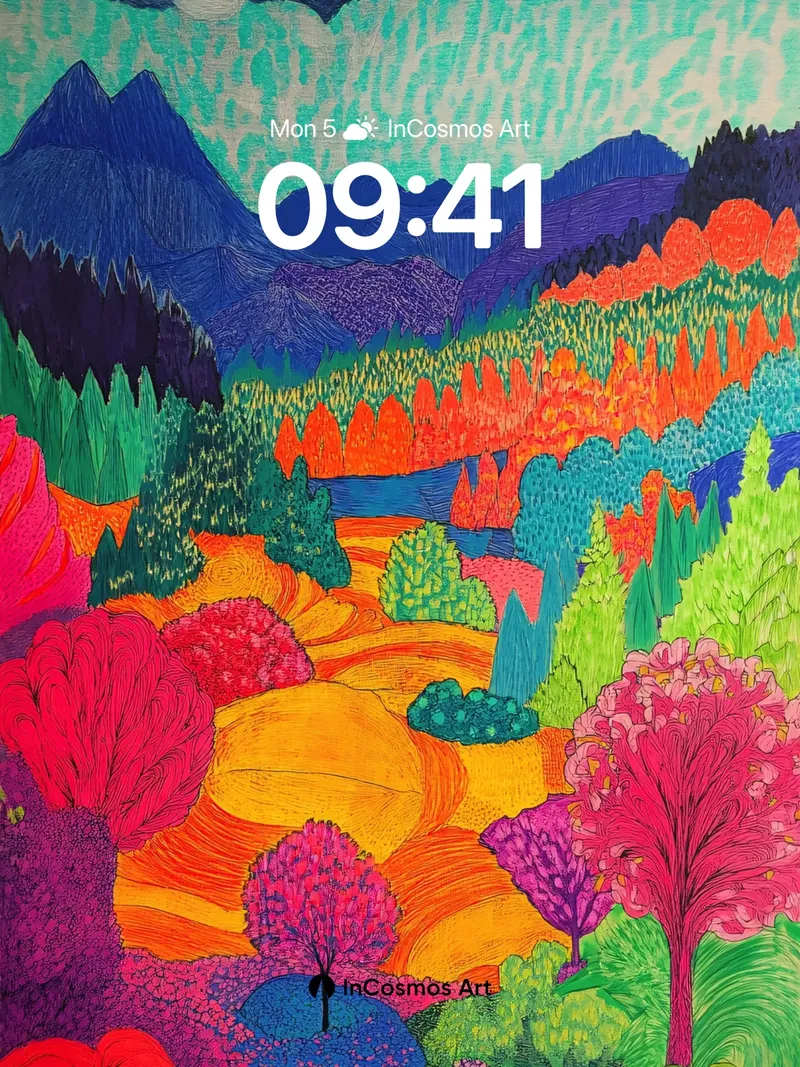
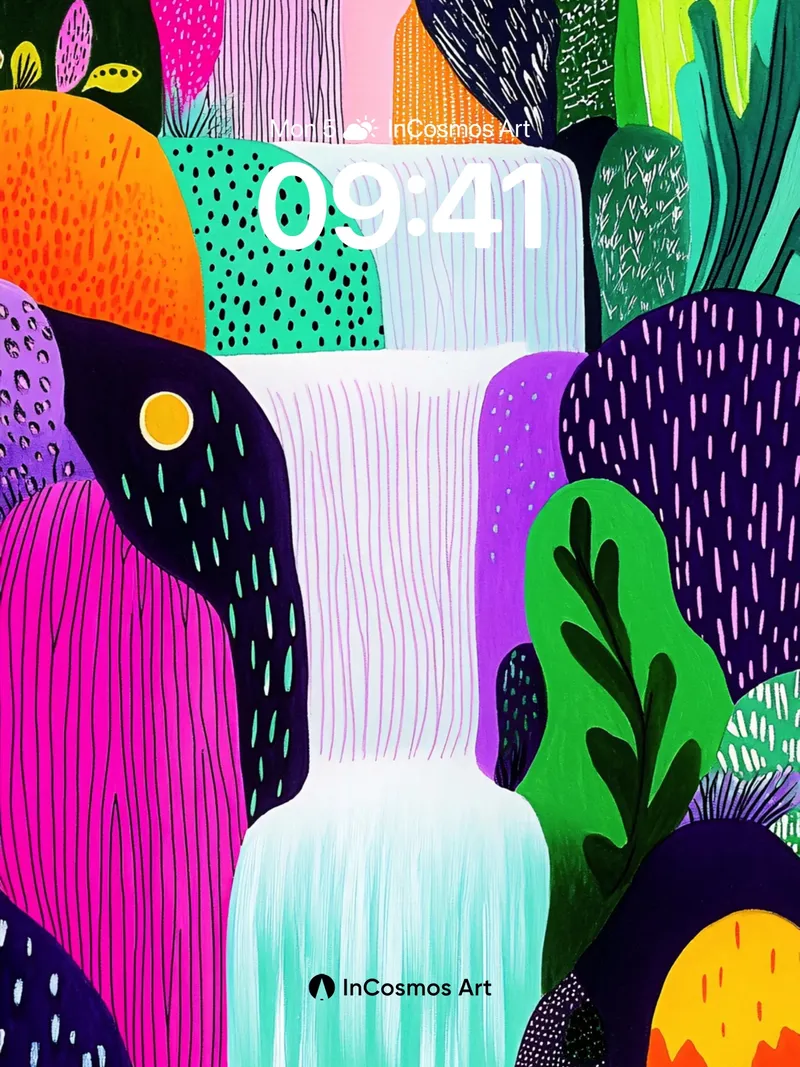
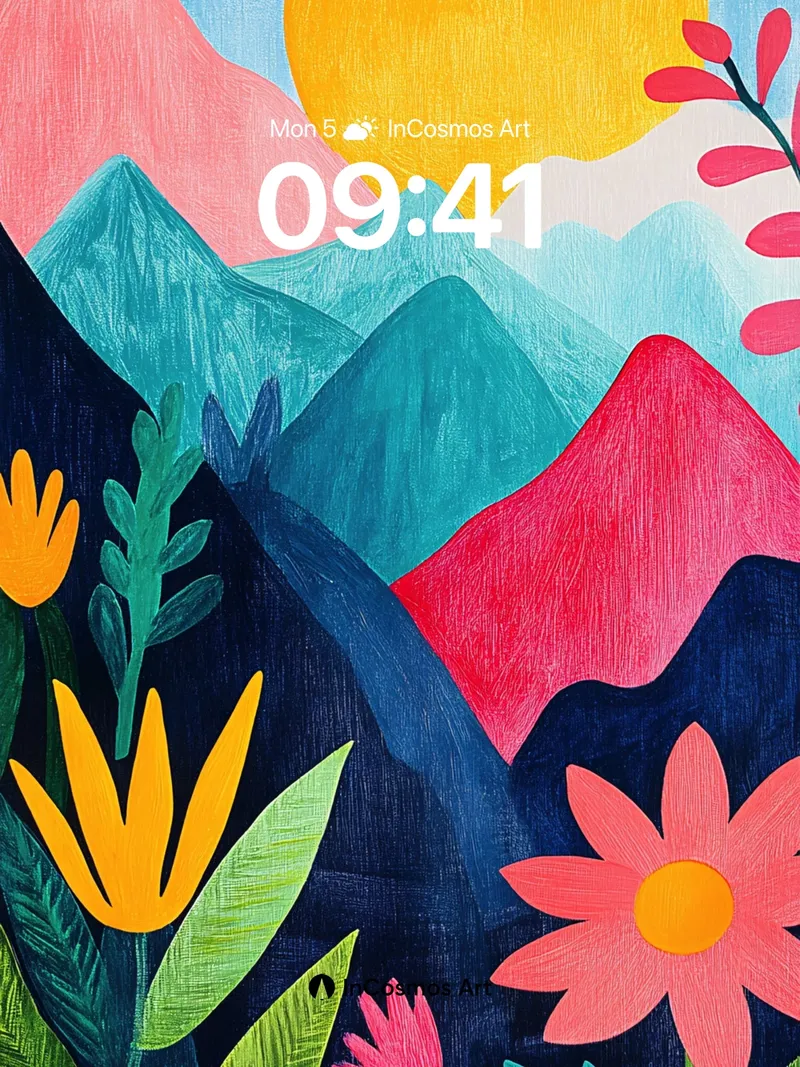
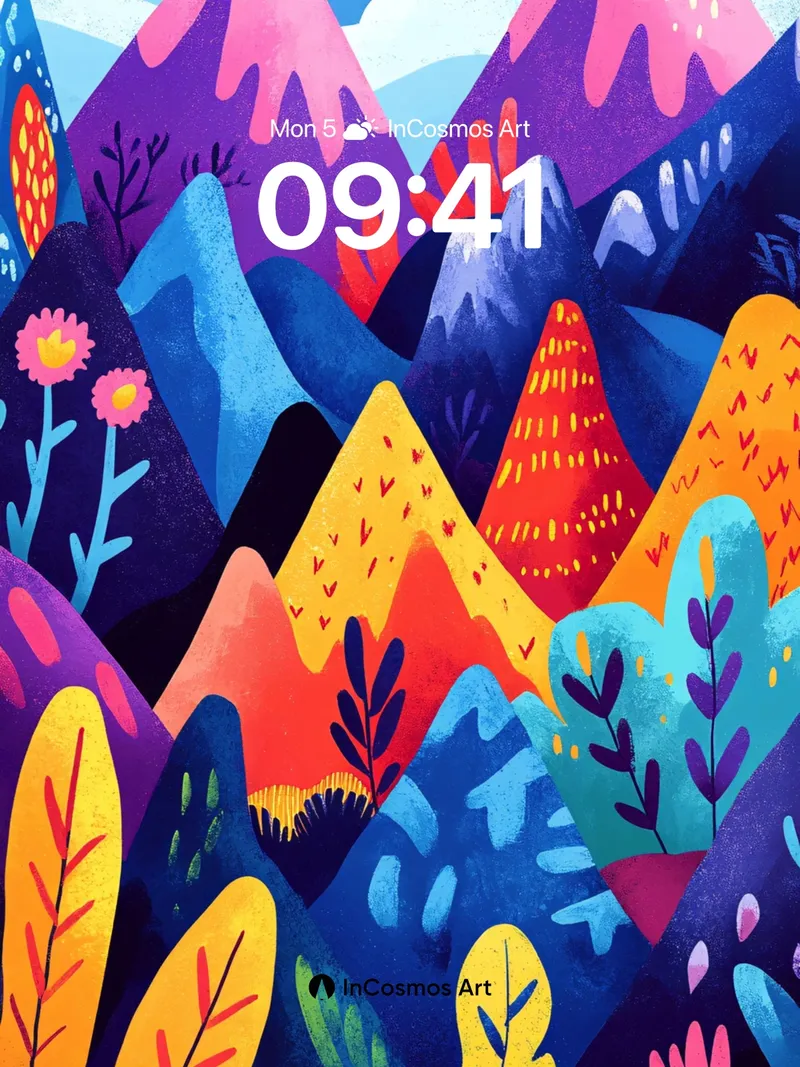
At the edge of light and color, nature is redefined. Mountains are no longer geographical outlines but emotional accumulations; forests cease to be silent, becoming rhythmic pulses. Every line carries unnamed feelings, every hue speaks a language beyond reality. These scenes are not copies of the world but reconstructions by the mind. They juxtapose geometric order with organic flow, creating visual domains both familiar and alien. This expression rejects singular narratives, embracing multiple sensory possibilities. Here, color is not decoration but subject, carrier of emotion, manifest image of memory.
Topography of Emotion
The earth is given emotional texture. Orange-red strata rise like heartbeats, purple mountains resemble frozen dreams. Plants are not biological forms but abstract symbols, their shapes and arrangements hinting at internal psychological states. Pink canopies resemble breathing lungs, blue-green shrubs mirror contemplative thoughts. Together, they form a new landscape language independent of real geography yet closer to the depths of human experience.
Philosophy of Color
Color functions as a philosophical instrument here. Contrast does not depict light and shadow but expresses tension between existence and void. High-saturation tones challenge visual habits, forcing recalibration of perception. Yellow signifies energy release, blue embodies deep stillness, red conveys primal impulse. This chromatic system defies natural laws but adheres to psychological logic. It reveals how humans encode complex emotions and memories through hues.
Ecology of Imagination
Nature exists within a fantastical ecosystem. Volcanic eruptions are not geological events but acts of creation; clouds are not meteorological phenomena but floating thoughts. All things may transform—trees bloom like star clusters, rivers flow like liquid light. This worldview dissolves boundaries between reality and fiction, constructing a realm of endless possibility. Here, growth is unbound by soil, rooted instead in imagination itself.
Poetics of Vision
These compositions possess strong rhythm. Repeating patterns form cadence, curves and angles alternate to create dynamic balance. Space does not follow perspective rules but uses warm-cool contrasts and size variations to suggest depth. This non-traditional spatial treatment immerses viewers in a dimension beyond physical limits. Vision becomes poetry, form equals content, structure equals meaning.