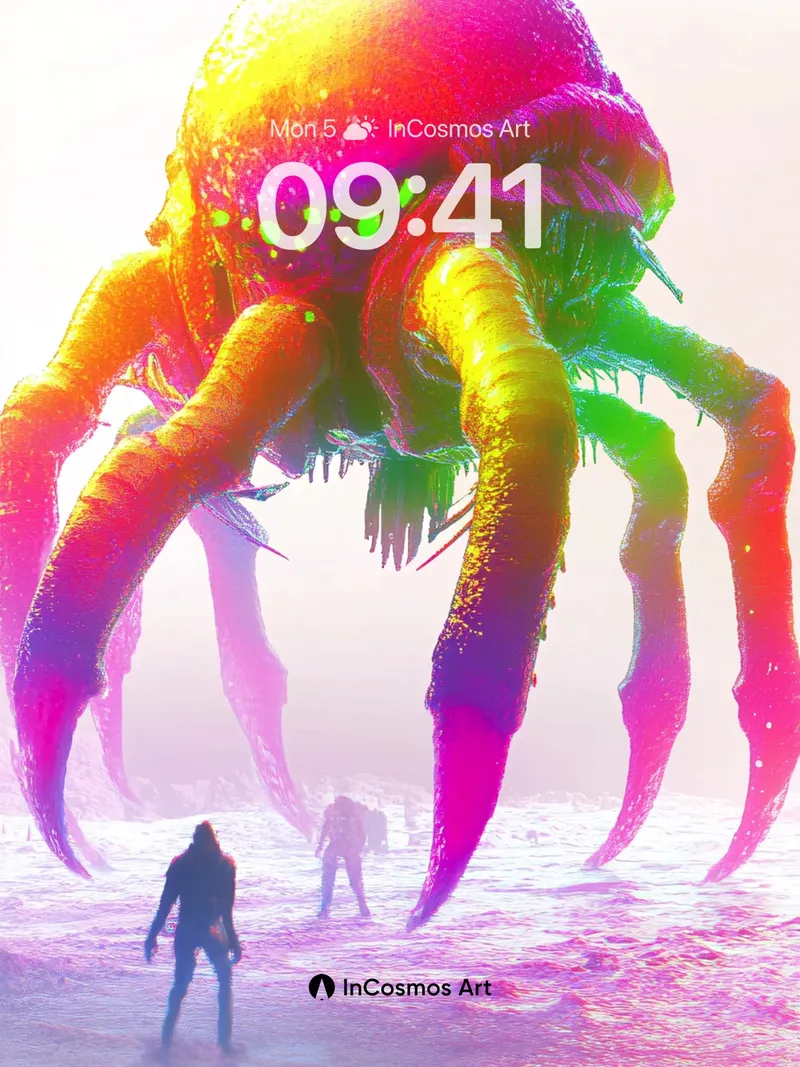
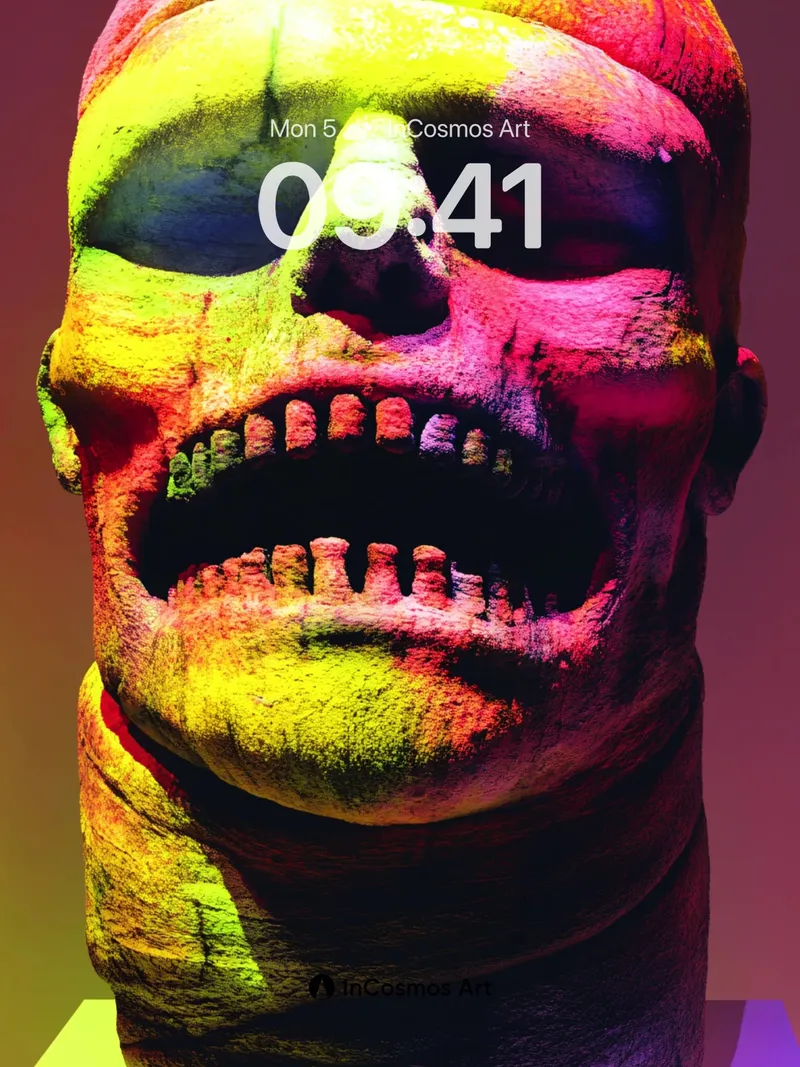
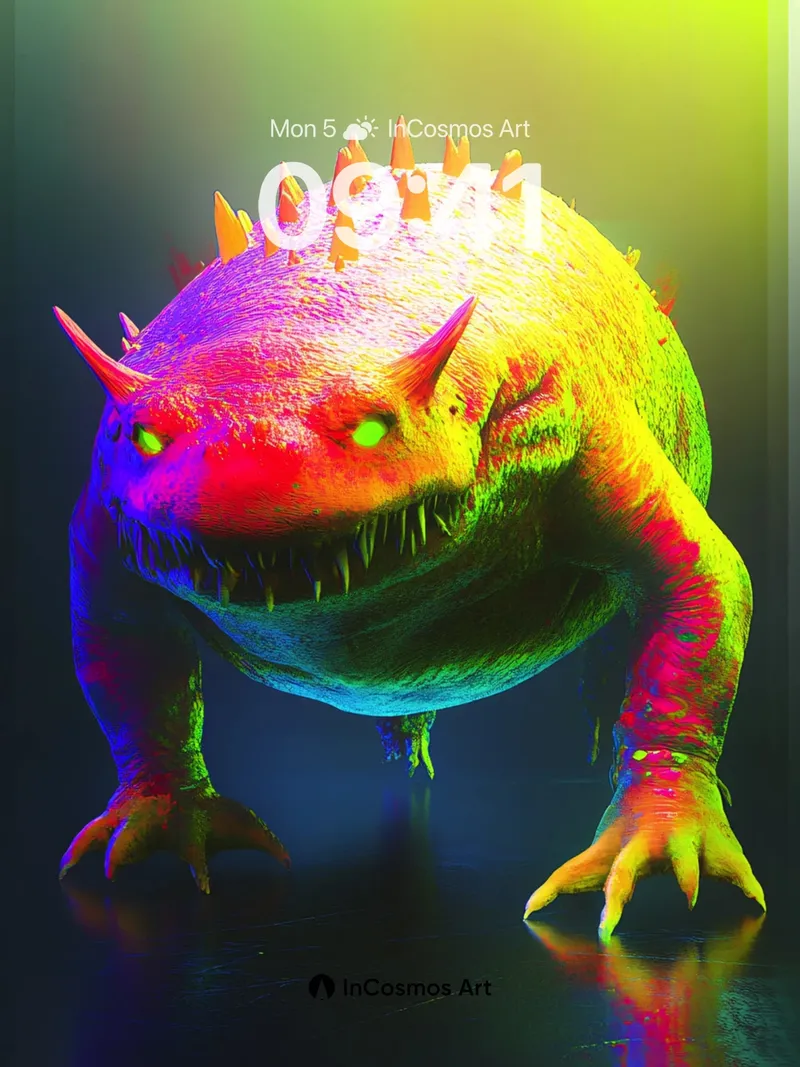
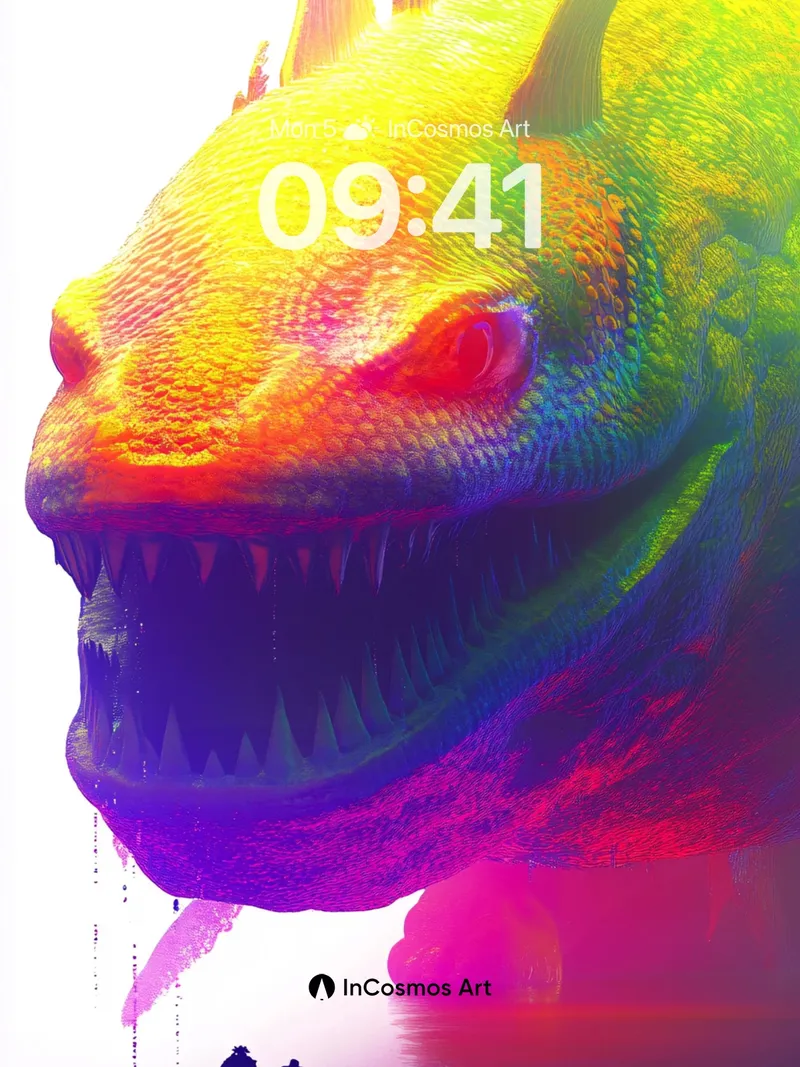
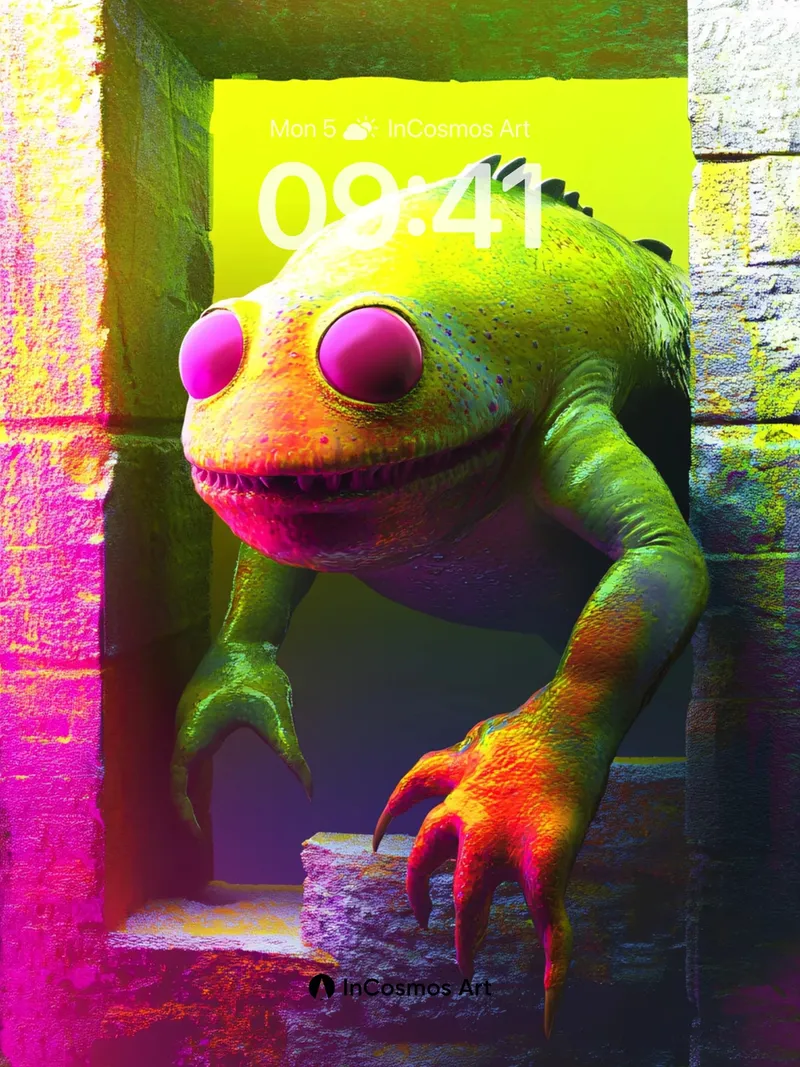
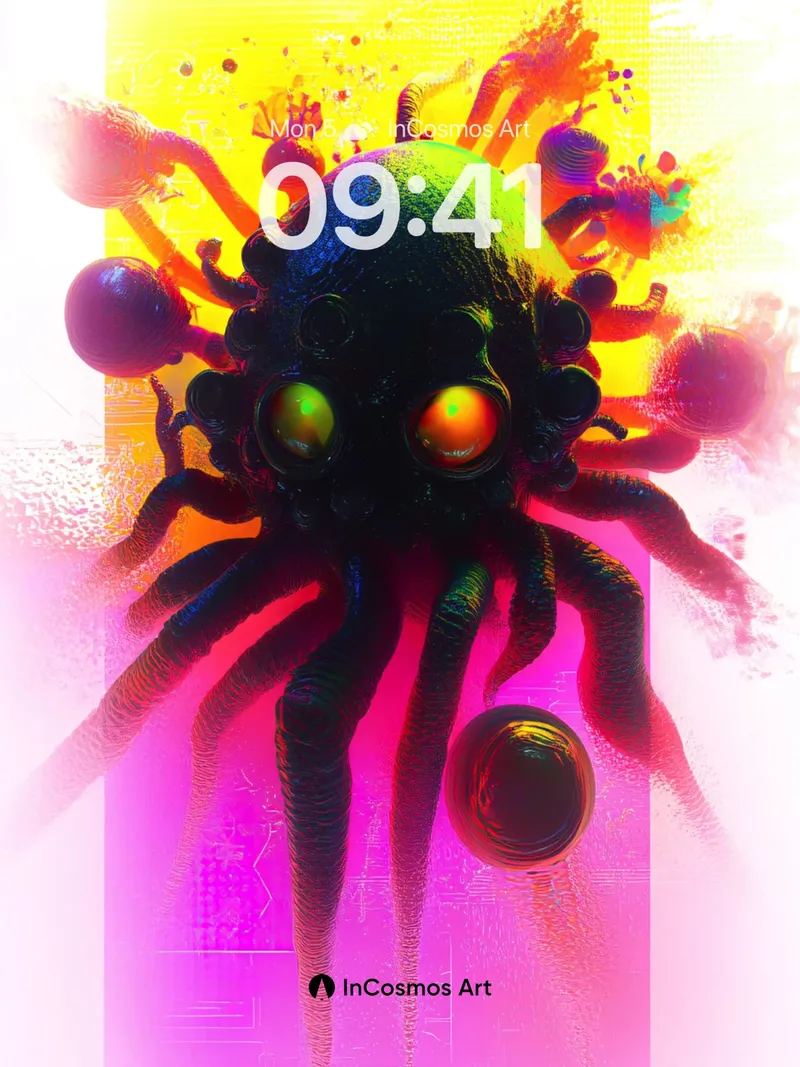
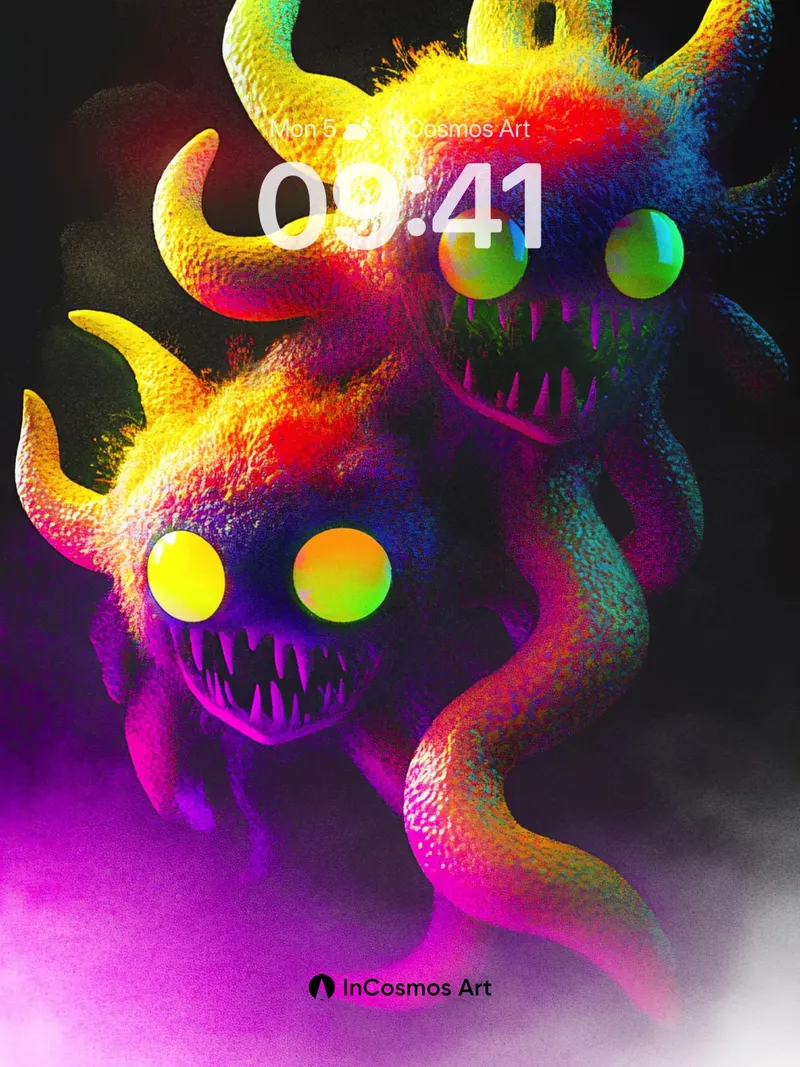
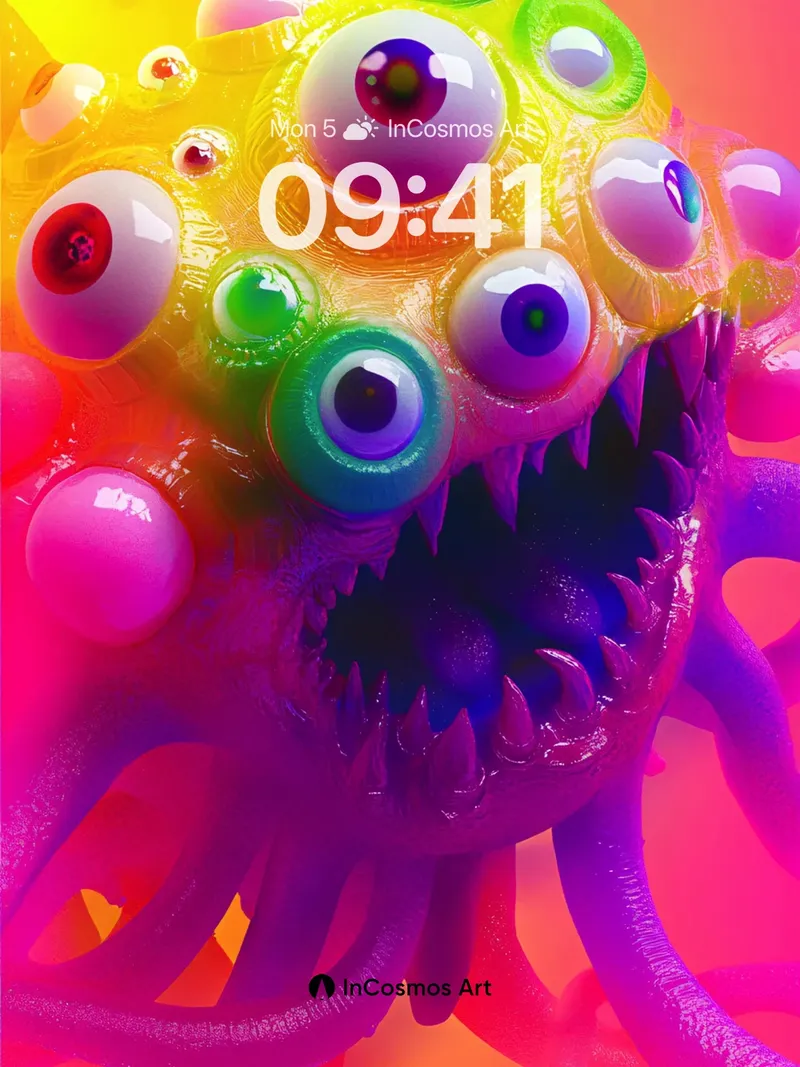
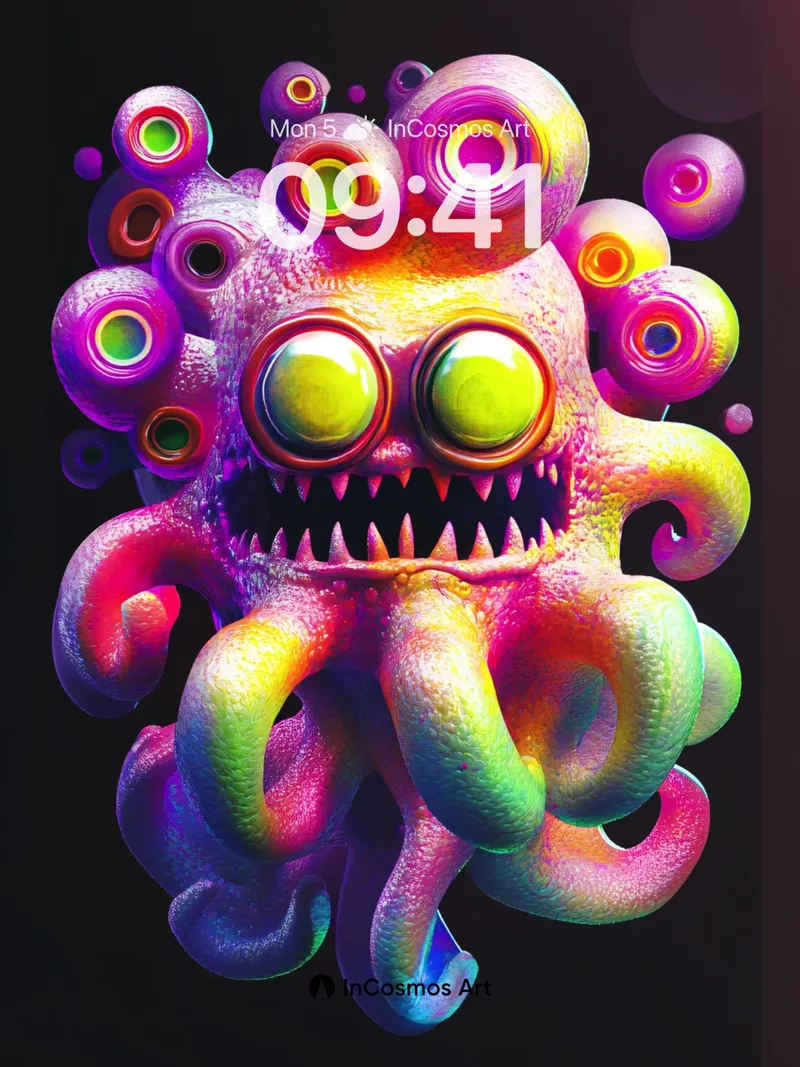
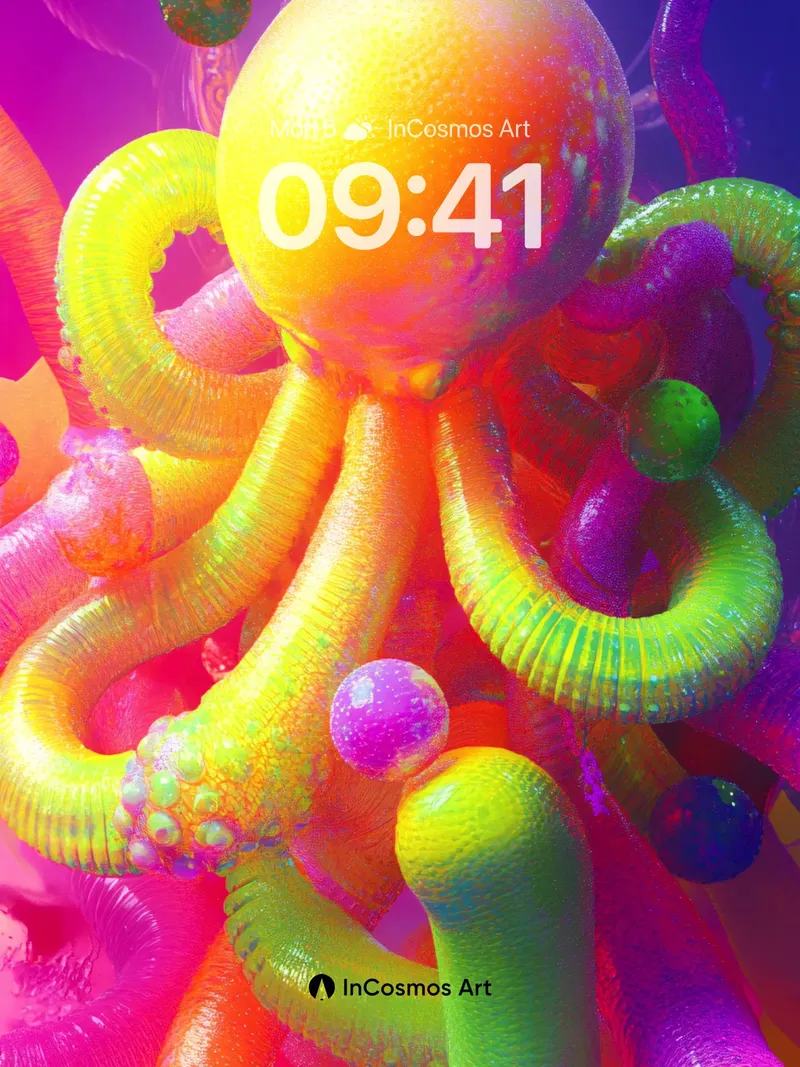
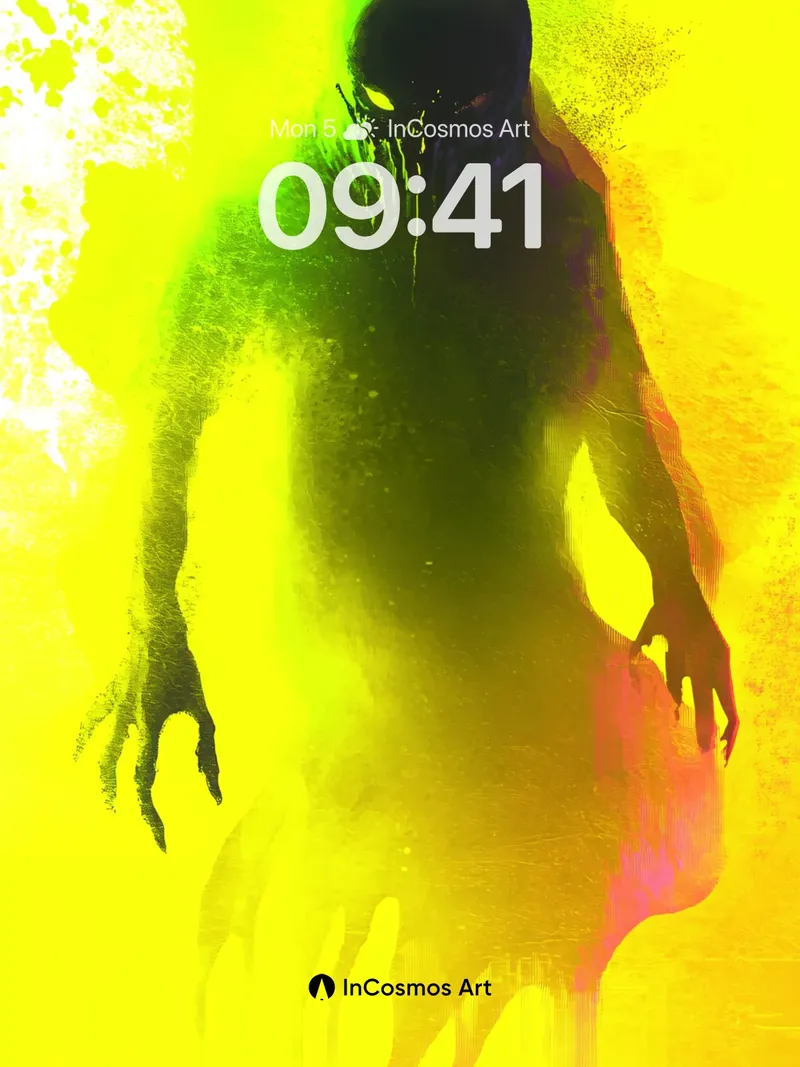
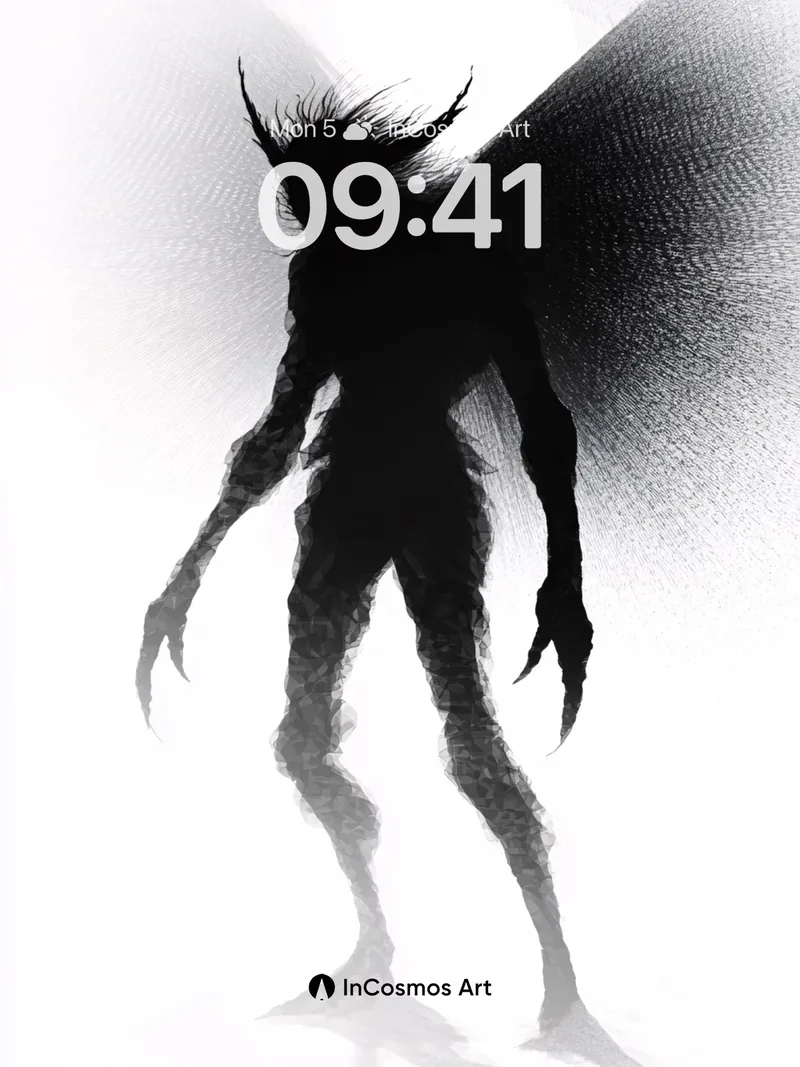
At the boundary between light and shadow, life emerges in unnatural forms. These entities do not belong to any biological taxonomy of the real world but are instead strange constructs woven from data, algorithms, and imagination. Their outlines blur, their shapes distort, yet within visual extremity lies a primordial sense of order. Color here is not mere decoration but a carrier of meaning—each saturated hue implies a psychological state or cultural metaphor. From silhouettes emerging from darkness to neon-encased multi-eyed monsters, and fluorescent tentacled beings, they collectively form a surreal ecosystem that challenges human definitions of 'normal'.
The Symbolic Language of Digital Life
These creatures transcend physical laws. Their bodies merge traits of insects, mammals, and marine life into unclassifiable hybrids. Eyes in number and placement no longer serve vision but symbolize information overload. Layered and graded colors mimic dynamic signal transmission in neural networks. This design language suggests the fragmented and overloaded perception of individuals in contemporary society, akin to identities constantly reconstructed amid an information flood.
Color as Emotional Code
Bright yellows, violets, and electric blues intertwine into a near-hallucinogenic visual rhythm. These hues are not chosen arbitrarily but echo emotional fluctuations modern humans experience in virtual realms. High-saturation red-green contrasts symbolize coexisting anxiety and excitement; warm-cold alternations reflect inner tension. When color escapes natural spectral limits, it becomes a direct translator of emotion, rendering invisible mental states into tangible forms.
Reverse Evolution of Imagination
These beings occupy no defined ecological niche and follow no Darwinian evolutionary logic. They are mirrors of human consciousness projected through technological media—collective embodiments of deep-seated fears and desires. Wing-like structures, spiky protrusions, multiple limbs all represent gestures toward unknown spaces. Their very existence is a declaration: in the digital age, creativity is no longer bound by material constraints but achieves alternative expressions through algorithmic and image-generation technologies.
The Collective Unconscious of Surreality
When multiple anomalies coexist in one visual field, they engage in silent dialogue. Though morphologically distinct, they share identical color grammar and structural logic. This hints at the homogenization trend in global digital culture and humanity's collective psychological response to technological change. They are not isolated monsters but embryonic forms of a new species group, foreshadowing potential future life forms.